Knowing how to treat heat exhaustion on a hiking trail comes down to four things: stop the exertion, get the person into shade, cool them with whatever water and airflow you have, and give small sips of fluid if they are fully alert. It takes about 30 minutes of real rest before you can judge whether they are improving. Anyone who is confused, faints, has a seizure, or cannot drink needs emergency help, not another sip of water.
Heat exhaustion is not the same thing as being tired or a little dehydrated. It is the body’s thermoregulation starting to fail after hours of exertion in hot conditions, and it is the last warning you get before heatstroke. On a remote trail, where the nearest help can be hours away, the treatment you improvise in the next ten minutes matters more than anything else in your pack.
This guide covers the field response first, then the mistakes that turn a manageable problem into a rescue. Nothing here replaces wilderness first aid training or medical advice. Anyone with symptoms after the hike should be evaluated by a doctor.
Table of Contents
- What You Need Before You Hike
- Step-by-Step: How to Treat Heat Exhaustion on a Hiking Trail
- 1. Recognize the signs and stop the hike immediately
- 2. Cool the person promptly with what the trail gives you
- 3. Give small sips of fluid only if the person is fully alert
- 4. Rest and monitor symptoms continuously
- 5. Decide whether to walk out or call for help
- Common Mistakes: What Makes Heat Illness Worse
- How to Prevent Heat Exhaustion on the Next Hike
- Frequently Asked Questions
- What is the difference between heat exhaustion and heatstroke on a hiking trail?
- Can someone with heat exhaustion safely continue hiking?
- What should I do if I have no cell service on the trail?
- Is heavy sweating a sign that heat illness is not serious?
- How can hikers prevent heat exhaustion during a hot-weather hike?
- Should I give water to someone who seems confused or unconscious?
What You Need Before You Hike
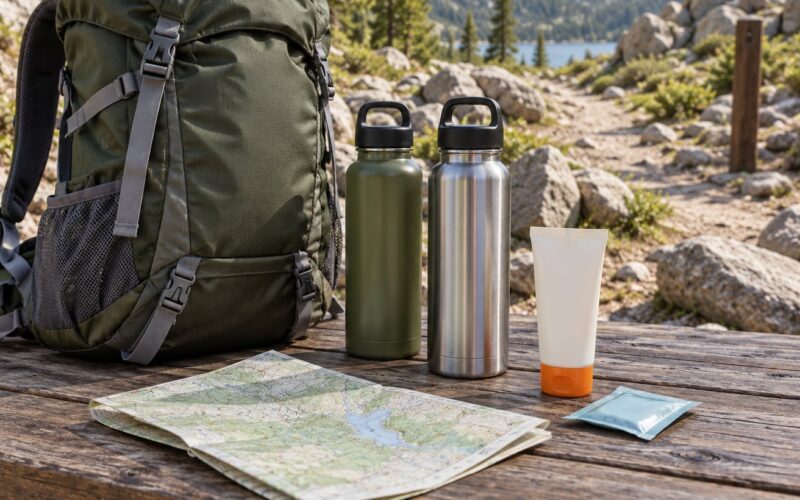
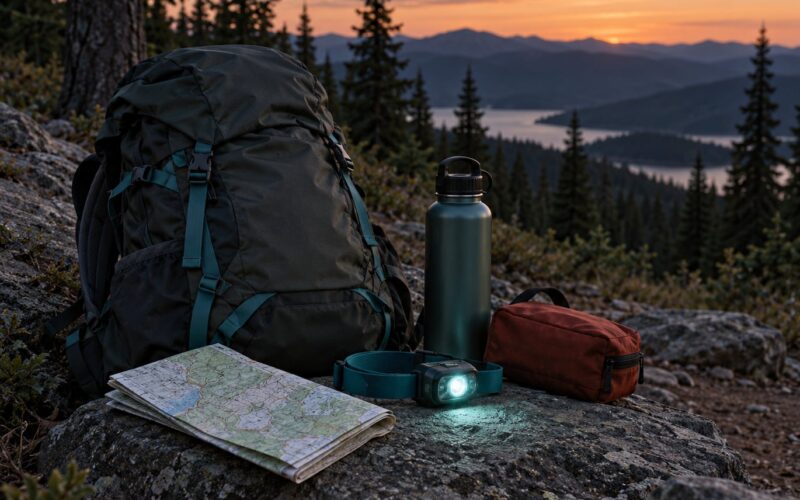
The treatment for heat exhaustion mostly uses what you are already carrying, which means the real work happens at the trailhead. If you do not have these six things, the response you can manage once symptoms start is much weaker.
- A phone with signal, plus a plan. Save the trail name, your last known junction or campsite, and the number for the local search-and-rescue or ranger station before you start. A phone that has dropped off the network is useless for passing a location, so pin your position as often as you can while you still have service.
- Water and an electrolyte option. Plain water handles most of the work on a normal hot day. An electrolyte tablet, powder mix, or sports drink covers the salt you lose in sweat, which matters more on long, sweaty days than most hikers expect.
- A cool place to sit. Note the shaded spots, the base of a big tree, a talus overhang, or a north-facing rock wall on your route. Open scree and exposed desert ridges are where cooling is hardest and where you will need the improvisation options below.
- Lightweight clothing you can open up. Long sleeves in a breathable fabric, a wide-brimmed hat, and a light layer you can remove give you surface area to wet and let air move across. Cotton is a poor choice because it holds heat once wet.
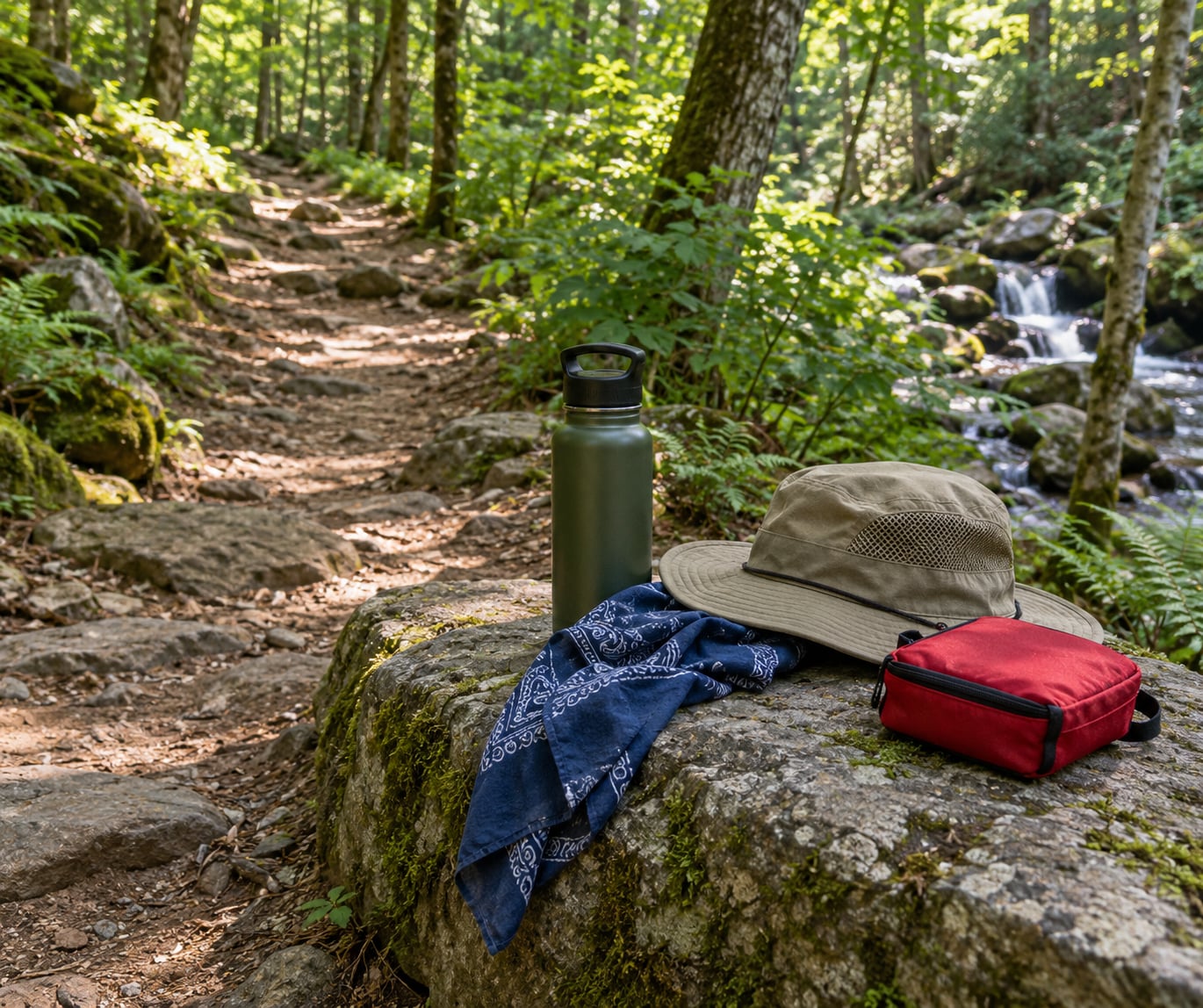
- A few basic first-aid supplies. A small towel or bandana that soaks and holds water, a windbreaker or poncho for airflow, and blister and wound care for the general kit.
- A companion and a check schedule. Hiking alone in heat is the single biggest risk multiplier. If you are in a group, agree on who watches whom and set a checkpoint every 30 to 60 minutes where each person answers three questions out loud: how are you feeling, do you have any symptoms, and do you need to stop.
You also need a decision made in advance, because hesitation costs time. Decide now what distance and what landmarks you will use for an evacuation call, and who in the group is authorized to make the call. A trail leader who assumes everyone else has the phone is how a rescue gets delayed by an hour.
Step-by-Step: How to Treat Heat Exhaustion on a Hiking Trail
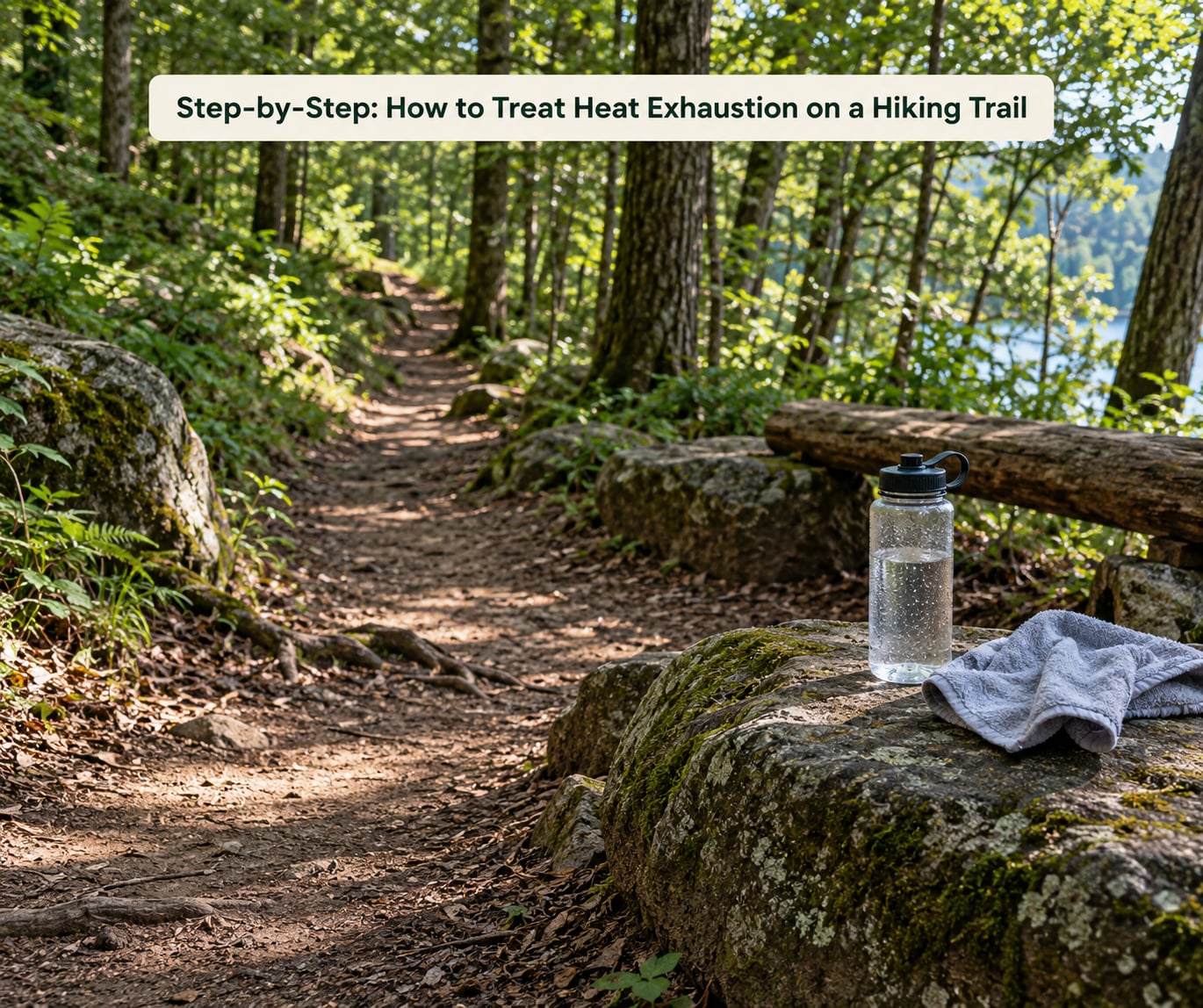
1. Recognize the signs and stop the hike immediately
Heat exhaustion announces itself with a cluster, not a single symptom. Look for heavy sweating, weakness, dizziness or lightheadedness, a throbbing headache, nausea or vomiting, muscle cramps, a fast weak pulse, and skin that is cool, pale, or flushed.
Behavior changes count. Someone who is unusually irritable, quiet, giddy, clumsy, or slow to answer a question may be more impaired than they look. Treat confusion, slurred speech, or stumbling as the most serious sign on the list, because it is the boundary between heat exhaustion and heatstroke.
When you see the cluster, stop walking. Have the person sit or lie down in shade, loosen or remove excess layers, and take stock of how responsive they are. Before you do anything else, ask them their name, where the trail started, and what the last mile marker said. A correct answer three times in a row matters more than any single reading.
2. Cool the person promptly with what the trail gives you
Move the person out of direct sun. If there is no natural shade, use a jacket, poncho, or spare shirt held on two trekking poles or sticks to make a crude shelter, or find a rock face that stays shaded through the afternoon.
Then wet whatever you have and get air moving. Soak a bandana or shirt and lay it across the neck, the armpits, and the groin, where blood runs close to the surface. Fan with a hat, a jacket, or a large leaf. Repeat the soaking as the cloth warms, because evaporative cooling only works while the water keeps evaporating.
If you have water, pour it over the head, neck, and forearms and keep the flow going rather than soaking once. Wetting the lower legs and feet helps too, especially with a breeze. Scratching a light sunburn with cool water feels good and is fine, but do not apply alcohol or oil-based products to hot skin, because they trap heat.
On a trail with no water at all, improvisation gets thinner but does not stop. Get the person into any shade you can build, cover them with whatever is light-colored and breathable, keep air moving across the skin, and treat the time out of the sun as the priority. Call for help rather than trying to improvise your way through worsening symptoms.
No cooling method on a trail replaces a medical evaluation. Rapid cooling buys time; it does not cancel the need for care afterward, particularly for anyone who was unconscious or confused.
3. Give small sips of fluid only if the person is fully alert
Water and electrolytes are only safe by mouth when someone is awake, oriented, and swallowing normally. Offer a sip every minute or two rather than half a bottle at once, and expect it to take time. Hikers on long hot days report small frequent sips working far better than draining a bottle in ten minutes, which usually comes straight back up.
Once they are drinking steadily, add salt and calories. An electrolyte tablet, a sports drink mixed at roughly half strength, or salty trail food all help. Half-strength mixing is the most commonly reported personal protocol in hiking forums because full-strength mixes often taste like too much and people stop drinking them.
Eating something alongside the fluid helps too. Nuts, dates, trail mix, or a bar give the gut something to work with and make the next few sips easier to keep down.
Skip alcohol, energy drinks, and anything caffeinated, because all three work against recovery. If someone is vomiting, pause fluids for ten to fifteen minutes, then try a smaller sip. Repeated vomiting with an inability to hold anything down is a rescue trigger, not a hydration problem you can outlast.
Do not force fluids into anyone who is drowsy, confused, or unconscious, and never try to pour liquid into the mouth of someone whose swallow reflex is not working. That water goes into the lungs instead of the stomach.
4. Rest and monitor symptoms continuously
Keep the person resting in the cool spot, feet slightly raised if they are comfortable, and stay with them. Nothing about the situation improves because you walked a quarter mile ahead to scout for shade.
Set a check every 10 to 15 minutes. Ask the same three orientation questions, watch skin color and sweating, and note the pulse in the wrist if you want a rough trend. Write the times down on paper or in your phone, along with when you started cooling, when the person last drank, and when they last vomited. Dispatchers ask for exactly this, and it is miserable to reconstruct later.
Watch the clock rather than your optimism. The recovery window on the trail is one to two hours of genuine rest, not the twenty minutes it takes to stop shaking. Feeling better after half an hour mostly means the adrenaline and the walking stopped, and hikers consistently report that they still felt wrecked long after the symptoms eased.
Delayed onset is real. Some people look fine the moment they sit down and deteriorate over the next 30 to 60 minutes, and some improve, walk for a mile, and crash again. This is the single most common reason a group turns around too early.
5. Decide whether to walk out or call for help
Call emergency services immediately if the person is confused, disoriented, or not making sense. Also call for fainting, a seizure, loss of consciousness, chest pain, difficulty breathing, vomiting that will not stop, a core temperature that feels very high, or an inability to keep fluids down. Any of these means heatstroke is likely, and heatstroke kills in minutes.
Walk out yourself only when the person is clearly improving after a full hour or more, is alert and oriented, can keep fluids down, and can walk steadily with support. In that case, turn the group around, move slowly, keep them drinking, keep the pace well below normal, and plan to end the hike at the trailhead rather than pushing for the summit or the far camp.
When you call, give your location in the order dispatchers want it: the trail name, the nearest junction or campsite and its distance and direction, your GPS coordinates or the map’s grid reference, the number of people in the group and how many are sick, the symptoms and when they started, and the access point a responder should use. Put your phone on speaker so whoever is with you can keep cooling the person while you talk.
Do not wait to see if it improves while you make the call. Cooling continues during the call and during the wait.
Common Mistakes: What Makes Heat Illness Worse
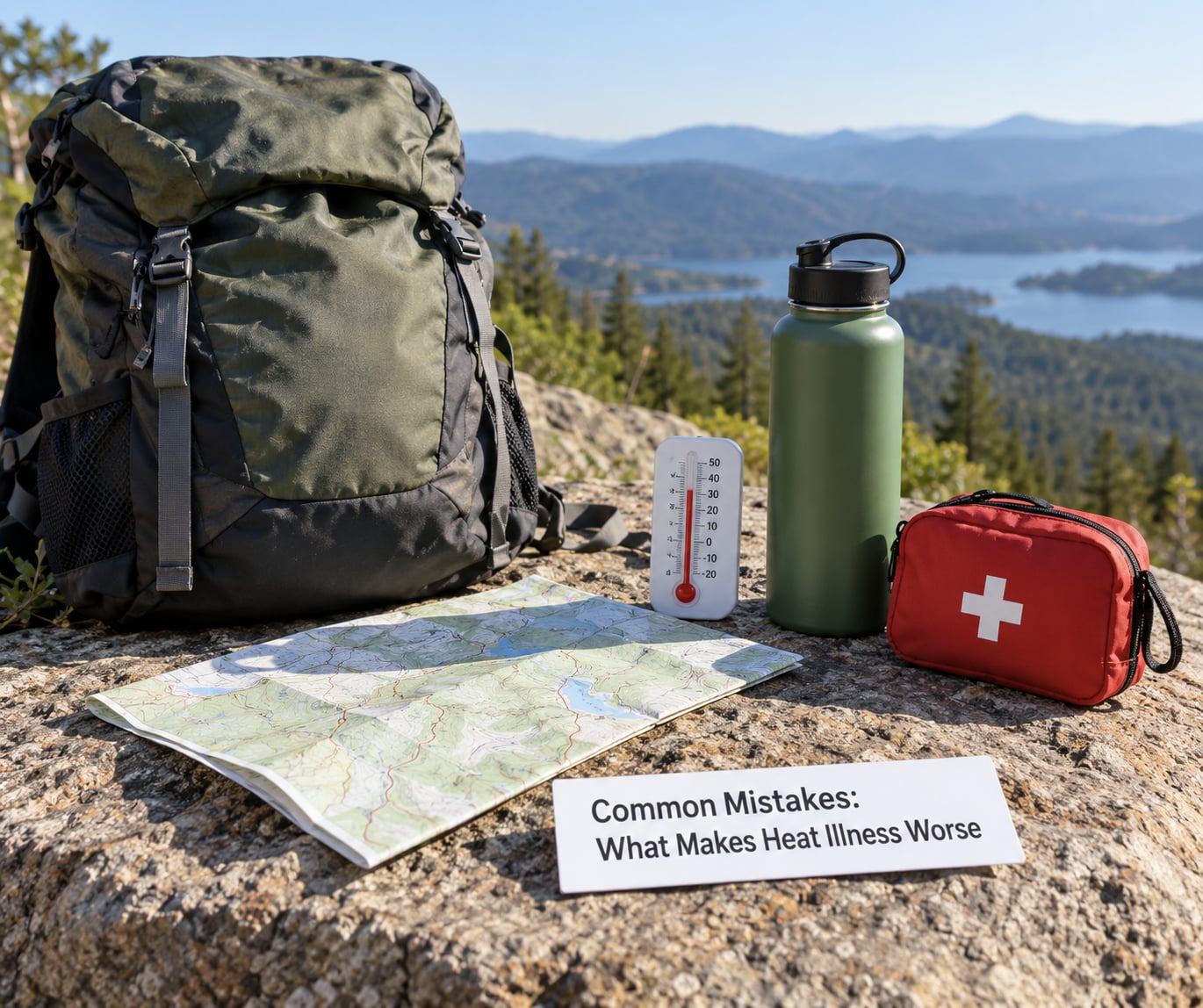
Continuing the hike to the next viewpoint. Every extra mile of walking adds heat load. Stop where you are, cool first, and decide from there. If a turnaround has not been discussed at the trailhead, decide in the shade with the whole group.
Leaving the person alone. Confusion and fainting can come in seconds, and a person found late is much harder to treat. One person stays with the patient continuously while another handles the phone, navigation, and the rest of the group.
Offering water to someone who is not fully alert. Drowsy or confused means no oral fluids. Stop, call, and cool.
Expecting one cold drink or a dry powder mix to fix it. Plain water and a single dose of salt are not a treatment for a core temperature that is already climbing. Sustained cooling over 20 to 30 minutes, not a one-time splash, is what moves the needle.
Not calling because the person is improving. Improvement over 20 minutes is not the same as recovery. Make the call if there was any confusion, any fainting, or any vomiting at all.
Going back to hard effort too soon. Once symptoms pass, the honest estimate is that you are not ready for the pace you started at. Return slow, keep drinking and eating, and consider a rest day after a serious episode.
Assuming the other hikers are fine. Children, older adults, and anyone carrying more weight than they are used to heat up faster and show fewer obvious signs. Ask each person directly and specifically, not “is everyone OK.”
How to Prevent Heat Exhaustion on the Next Hike
Start early. Leaving before sunrise puts the hardest walking in the coolest air and gets you above the treeline or across the open country before the temperature peaks. In summer, a trail that has some vertical gain is often better than a flat one in the same heat.
Carry more water than the forecast suggests, plan on drinking roughly a liter an hour in hot conditions, and more when the terrain is steep or the air is dry. Refill at every reliable source because running a quart low in July costs more time than carrying the weight would have.
Salt matters as much as volume on long days. Use an electrolyte product at about half strength, or eat salty food and drink water. Watch your urine: dark yellow is a signal to drink now, not later. It is the most reliable self-check available in the field, and nothing on the trail beats it.
Pace yourself and build in breaks. Sweat rate is a function of how fast you move as much as what the temperature is, and slowing down cools you faster than any gear choice. Acclimatize over a few days if you are coming to altitude, because dehydration and heat stress at 6,000 to 8,000 feet get blamed on altitude sickness when they are really heat and fluid problems.
Check the forecast and the heat index before you leave, not at the trailhead. Turn back early and without embarrassment. A shortened hike is a good day; a rescue is the other thing that can happen.
Frequently Asked Questions
What is the difference between heat exhaustion and heatstroke on a hiking trail?
Heat exhaustion is the earlier stage: heavy sweating, cool or pale skin, headache, nausea, dizziness, and weakness, with mental status still intact. Heatstroke is a core temperature above about 104F, with confusion, collapse, seizure, or loss of consciousness, and sweating may stop. Treat exhaustion in the field with rest, shade, cooling, and small sips of fluid. Heatstroke is a medical emergency that needs emergency services and rapid cooling.
Can someone with heat exhaustion safely continue hiking?
Usually not the same day. Once symptoms appear, the plan is to stop, cool, and rehydrate, then wait one to two hours of real rest and reassess. If the person is fully alert, drinking, and steady on their feet, they may walk out slowly with support and end the hike. Anyone who was confused, fainted, or vomited should get checked by a doctor before hiking hard again.
What should I do if I have no cell service on the trail?
Treat the situation exactly as you would while waiting for responders, because you may be waiting a long time. Keep the person in shade, keep cooling with water and airflow, keep offering small sips if they are alert, and note the time symptoms started. Send a healthy member of the group toward the trailhead or a known road or campsite to find signal, and leave a note or mark at the junction with the time and condition. Never leave a confused patient alone.
Is heavy sweating a sign that heat illness is not serious?
No. Sweating heavily is the classic sign of heat exhaustion, which is a medical emergency that can turn into heatstroke. Sweating is also the one thing you are relying on for cooling, so wet the skin and keep air moving to make that sweat work for you. The more worrying sign is sweating that stops while the person is still hot, because that points toward heatstroke and a failing thermoregulation system.
How can hikers prevent heat exhaustion during a hot-weather hike?
Start before sunrise, pace yourself, and build in regular breaks. Carry extra water and plan on about a liter an hour in hot conditions, plus an electrolyte source at roughly half strength, and eat salty food along the way. Wear light, loose, breathable clothing and a hat, check the heat index before you leave, and keep a buddy system where each person is asked directly about symptoms every 30 to 60 minutes.
Should I give water to someone who seems confused or unconscious?
No. Never give oral fluids to someone who is confused, drowsy, or unconscious, because their swallow reflex may not work and the water can go into the lungs. Confusion or loss of consciousness is a sign of heatstroke, not dehydration alone. Call emergency services, move them into shade, and begin rapid cooling by pouring water over the skin and fanning continuously while you wait.
The first thing to do is always the same: stop the walking, get the person into shade, and start cooling. Keep offering small sips of fluid and electrolytes as long as they are fully alert, and watch for confusion, fainting, or vomiting, because any of those mean you call for help rather than wait. Anyone who had a serious episode on the trail should see a doctor afterwards, and if you plan to hike in summer heat again, take a first aid course before the next trip.