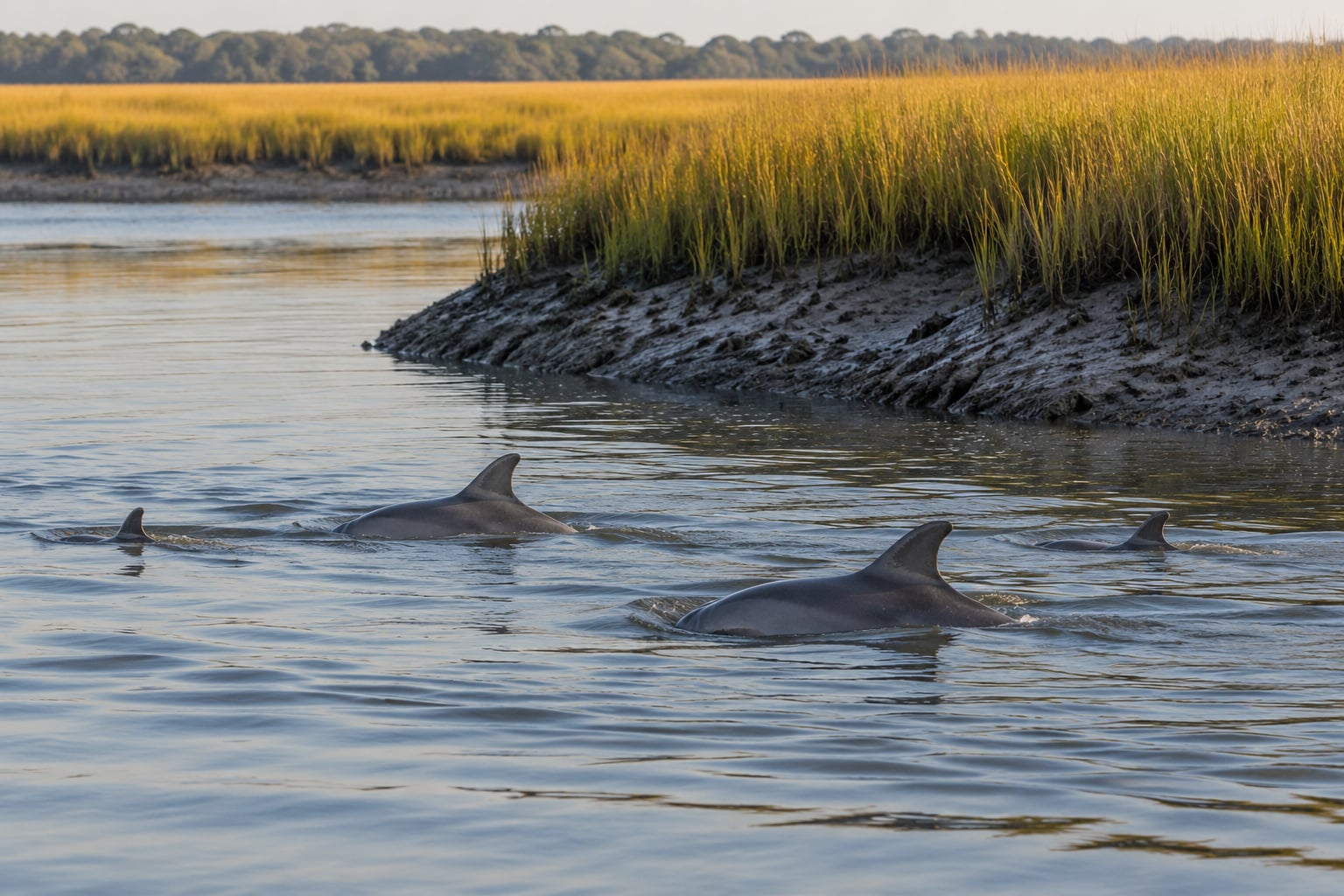
To find dolphins feeding in a tidal creek, work the ebb. Resident bottlenose dolphins drive baitfish out of the salt marsh as the tide drops, then herd them onto a sloped, soft-mud bank and beach themselves to eat. That window runs from roughly one to two hours after high slack water through low slack, twice a day, and nowhere near high tide.
Most people miss not because the spot is bad but because the timing is wrong. They show up at nine on the flood with high water over the mud and see dolphins cruising past, then conclude there is nothing to see. The skill is entirely in reading the tide table and the water in front of you.
What follows is the method I would hand a friend before their first trip: what to bring, where to stand, what to look for, and when to give up and move to the next creek.
Table of Contents
- What You Need for a Tidal Creek Dolphin Watch
- Step-by-Step: How to Find Dolphins Feeding in a Tidal Creek
- Step 1: Check the Tide and Current Conditions
- Step 2: Choose Productive Access Points
- Step 3: How Dolphins Feeding in a Tidal Creek Shows on the Surface
- Step 4: Confirm Feeding Behavior
- Step 5: Observe Quietly and Responsibly
- Common Mistakes That Cost You a Tidal Creek Feeding Window
- Frequently Asked Questions
- What tide is best for strand feeding dolphins?
- How long should I wait at a tidal creek before I leave?
- Can I see strand feeding dolphins from shore or from my dock?
- Which beach has the most dolphins?
- What does it mean when a dolphin is circling or staring at the bank?
- Is it legal to swim or kayak close to feeding dolphins?
- Start With the Tide, Current, and Wildlife Clues
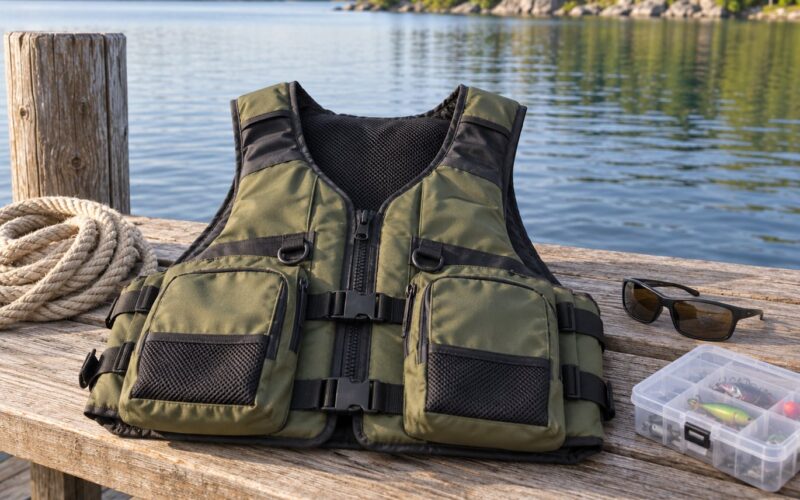
What You Need for a Tidal Creek Dolphin Watch
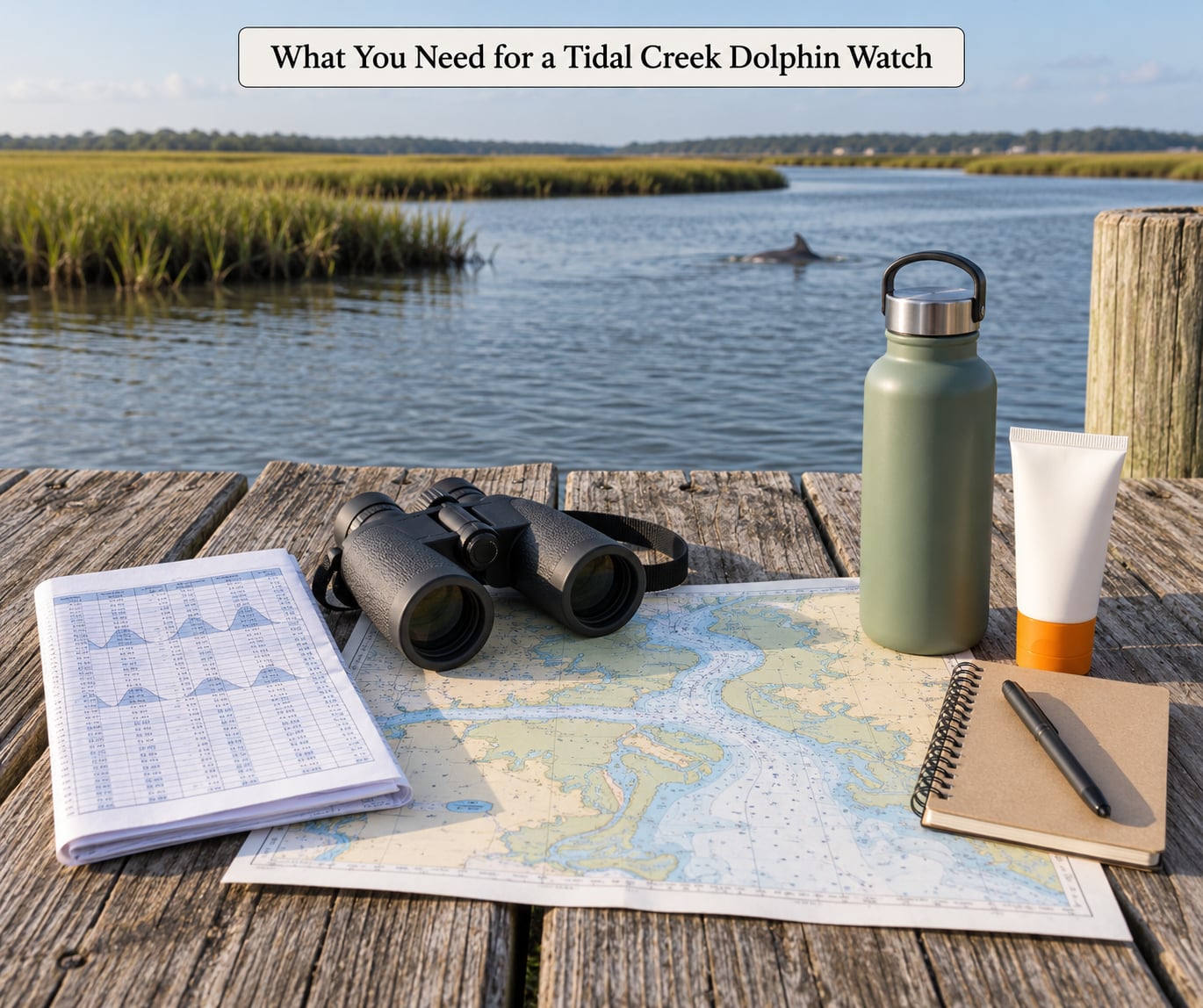
Tide data for the specific creek mouth, not the nearest city. Predictions are published per station, and a creek ten miles inland can be running a different height than the reference gauge.
A chart or satellite image of the creek so you can find the bends, marsh edges and access points before you are standing there guessing.
Binoculars. A 8×42 pair is the workhorse. If you have one, a spotting scope on a small tripod is worth the pack weight for watching a fixed mud bank at a mile.
A tide app that shows the height curve, not just the two high and low times, plus a wind forecast and a wind direction. A creek running with a stiff onshore breeze will look like glass and a creek running with a light breeze will show you every seam on the surface.
Sun protection, water, a hat, and something to sit on. You will be still for a while, and standing in full sun on an exposed bank drains you fast.
A notebook or your phone. Time of arrival, tide height, water temperature if you checked it, what you saw. A dozen logged sessions turns guessing into a method.
Access matters as much as gear. A private dock is a real advantage because locals with docks report activity right outside their backyards. A public boat launch, a bridge with a legal shoulder, or a marsh overlook trail all work, but check that you can legally stand there and that you are not trespassing on posted marsh reserve ground.
Step-by-Step: How to Find Dolphins Feeding in a Tidal Creek
Step 1: Check the Tide and Current Conditions
Open the tide curve for the nearest station and find two times: high slack and low slack. The window you want starts about one to two hours after high slack, when the water has dropped enough to begin draining the marsh, and runs to low slack.
Mark mid-ebb on your watch. If you cannot launch or reach the bank by mid-ebb, you are early, and if you are still there an hour after low slack you are watching a tide that has already given up the fish.
Add wind and water temperature to the read. Light wind exposes surface texture, and cooler water in the shallows concentrates baitfish. Local conditions and species behavior vary, so treat this as a starting pattern rather than a law.
Here is the version worth memorizing:
| Tide state | Chance of a feeding bout | What you should see |
|---|---|---|
| High slack | Low | Dolphins cruising the creek centerline, nowhere near the bank |
| Early ebb | Rising | Fish beginning to move down-creek, birds picking up along the edge |
| Mid-ebb | Best | Dolphins working the bank, mud skids appearing, repeated plunges |
| Low slack | Good, then fading | Last chance on the bank; dolphins drift off toward deeper water |
| Early flood | Low | Water returning over the flats, fish back inside the grass |
One honest caveat: research on Indo-Pacific bottlenose dolphins in Australian estuaries reports peak sightings one to two hours before high tide, the opposite of the Lowcountry strand-feeding window. Both are correct for their own place. In an estuary with wide mudflats, the ebb pulls fish off the flats and concentrates them; in a system where prey is dispersed across deeper water, the flood can concentrate it instead. Learn your creek’s pattern by logging.
Step 2: Choose Productive Access Points
Small to mid-sized creeks beat open front beaches every time. A beach is exposed on three sides, so a dolphin beaching there is risky for the animal. Inside a creek, the animals have a defined bank and cover within a body length of deep water.
Look for the places where deeper water meets shallow flats: creek mouths where two channels merge, inside bends, the sheltered side of a marsh edge, and the seam where current rips past a point. That seam is the line you scan, because feeding groups hold along moving water rather than in still water.
Bank substrate decides everything. You want sloped, soft, forgiving mud, the black pluff mud of the Lowcountry that lets a dolphin slide back into the water without tearing itself on a shell or an oyster bed. Hard flat sand, riprap, and exposed oyster reef are poor choices, and a steep undercut bank is worse.
Named examples people return to year after year include May River, Captain Sams Inlet, the Folly River, and the creeks around Broad Creek and Skull Creek near Hilton Head, plus Skull Creek and tidal reaches around Port Royal Sound and the Edisto. Treat any list as a starting point, not a guarantee, and verify current local access rules before you go.
Step 3: How Dolphins Feeding in a Tidal Creek Shows on the Surface
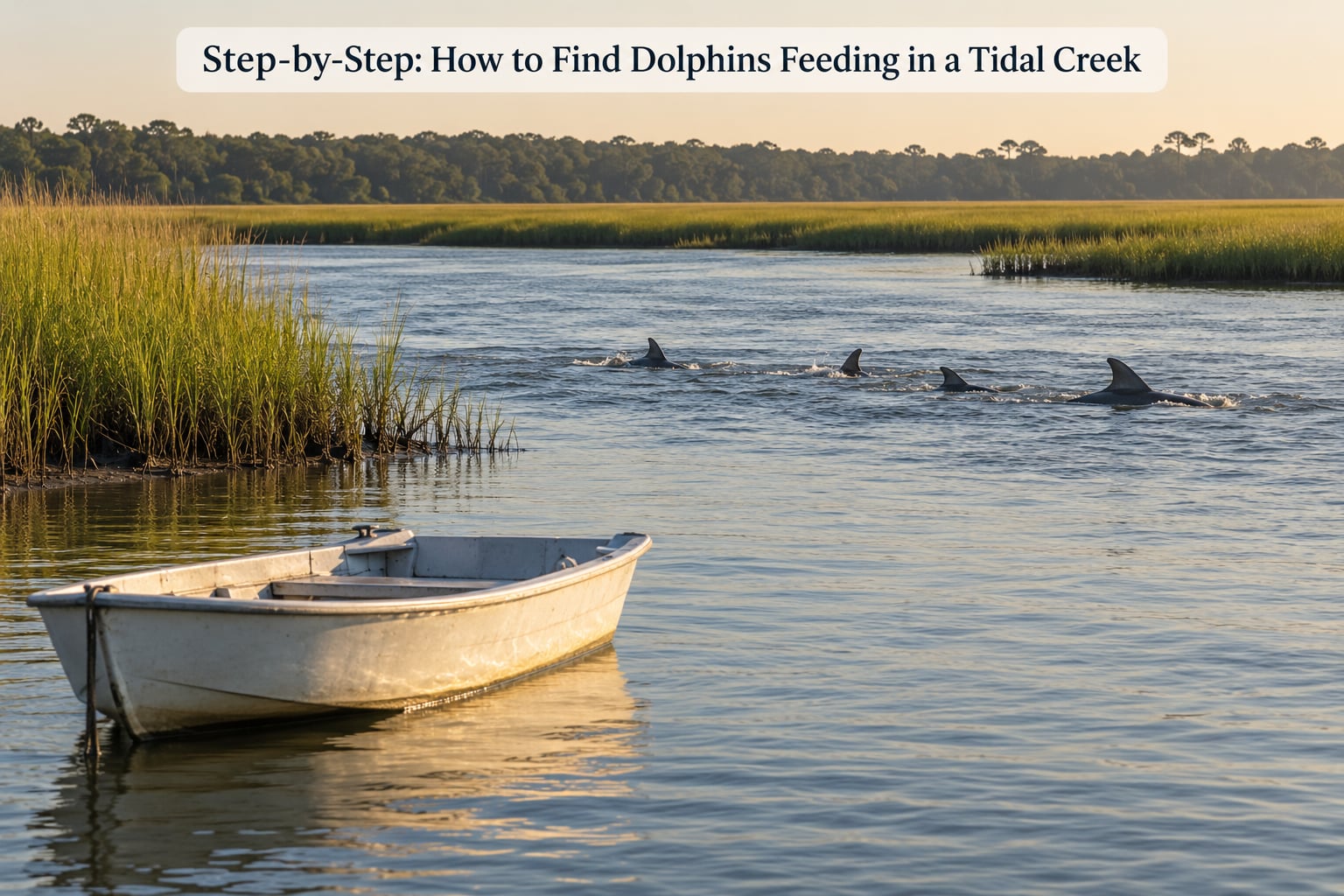
Scan the water line, not the open water. Dolphins on the move show a dorsal fin on a steady line, roughly one every ten seconds. Dolphins working prey show up in the same spot.
The tells, in the order they tend to appear:
- Birds first. Gulls, terns and wading birds concentrate on the bank, and pelicans drop onto a baitball. Birds are usually the earliest signal because they see the fish from the air.
- Mud skids. Fresh scrape marks and disturbed mud on the bank face mean a dolphin has just been there.
- Line up, not pass through. A group that stops, holds position and reappears at the same stretch of bank is working. A group that surfaces once and keeps going is traveling.
- The eye tilt. One animal stops with its head and eye angled toward the bank. Captain Rob Alexander of Beaufort Dolphin Adventures reads that posture as the last tell before the surge.
- Repeated splashing and bow wave. A burst of white water at the bank, then nothing, then another burst thirty seconds later.
Boots on the bank do not mean food was eaten. A feeding bout lasts roughly thirty seconds, and pods run three to six animals, with three most common.
Step 4: Confirm Feeding Behavior
Feeding and traveling look different at 200 yards once you know the difference. Feeding means coordinated repetition: three or four animals converging on one point, a splash, a surface, then the same pattern again at the same bank.
Watch for prey-chasing near the surface, splashing concentrated at the bank rather than spread along the channel, and a tight group that returns after a deep dive. Resting dolphins lie in a line or a loose cluster, roll without much splash, and stay put for many minutes.
Surfacing alone proves nothing. Dolphins surface to breathe and to move. The confirmation is repetition at one place, plus whatever the birds are doing.
If strand feeding does not materialize, you have not wasted the trip. Watch the ebb line where current rips past a point, watch creek mouths as fish gather at the junction, and look for bow-riding in slightly deeper water. Corridors and points feed even when the banks stay quiet.
Step 5: Observe Quietly and Responsibly
Approach behavior ends the hunt. A dolphin that has to work harder because a boat is idling beside it, or that has to re-approach from a different angle every time, gives up on that bank and often on that creek for the session.
NOAA guidance is a starting line, not a target. From shore, stay back at least 40 feet and 150 feet is better, which is roughly a soccer field from a public overlook. Boats should hold 50 yards. Drones are restricted to 1,000 feet from marine mammals, and in practice a drone on a creek is exactly the pressure these animals are most sensitive to.
Shut the engine down or idle at neutral before you arrive. Approach at an angle rather than head-on, hold a steady slow speed, and never circle a group. Do not feed, bait, surround, touch or swim with wild dolphins. Do not put a hand in the water near a feeding animal.
That last rule is not just etiquette. Wildlife agencies advise pregnant swimmers and anyone with open cuts or immune conditions to stay out of the water around wild dolphins because of zoonotic infection risk from contact with animals and the water they swim in. NOAA and your local stranding network publish current guidance.
If you see people harassing, feeding or crowding dolphins, note the time, location and what you saw, and report it to the state wildlife agency, the regional NOAA stranding hotline or the local marine mammal network. Crowding at well-known spots like Captain Sams Inlet, where tens of thousands of visitors a year converge on the same banks, is a documented problem rather than a bad-luck story.
Common Mistakes That Cost You a Tidal Creek Feeding Window
Arriving on the flood. The correction is simple: build your trip backward from low slack, not forward from sunrise. If you drive to a spot and the water is over the flats, the window has already closed.
Trusting a single tide prediction. Published tide tables are for a reference station, and a creek several miles inland can differ. Add wind, recent weather and water temperature, and keep a log, because your creek’s pattern will drift from the book.
Approaching too fast. Slow down at the mouth of the creek before you are inside it, drop to neutral, and let the dolphins come to you. Quiet arrival is the difference between a thirty-second bout and a dolphin that never comes back.
Reading surfacing as feeding. One fin on a straight line is travel. Look for three or more animals, repeated returns to the same bank, fresh mud skids and concentrated bird activity before you call it.
Searching without a chart. Ten minutes with a chart before you leave tells you where the bends, the seams and the soft banks are. Without one you are drifting a creek and hoping.
Ignoring boat and site restrictions. Marsh reserve permits, closed areas, shallow-draft limits, and no-wake zones are real. Check the state agency rules for the water you are on, and obey posted signage at the landing.
Staying after low slack. Give the tide about thirty minutes past low slack, then move. Use the remaining time to work the ebb line and a creek mouth, or drive to the next creek and catch the next ebb.
Frequently Asked Questions
What tide is best for strand feeding dolphins?
The falling tide, from roughly one to two hours after high slack water through low slack. As the water drops, it drains out of the salt marsh and funnels baitfish into narrow tidal creeks where dolphins can concentrate them. High tide rarely works, because the fish still have marsh grass to hide in. This window repeats twice a day, every day, year-round.
How long should I wait at a tidal creek before I leave?
Budget 90 minutes to two hours for one creek. Arrive at the start of mid-ebb, settle on one bank, and stay still. If nothing is working by thirty minutes past low slack, the tide has taken the fish back out of reach. Use the remaining daylight to work an ebb line or a creek mouth, or move to the next creek and catch the next ebb cycle.
Can I see strand feeding dolphins from shore or from my dock?
Yes, and shore or dock viewing is often better than a boat. The behavior is most visible from a fixed position on a sloped mud bank, and an engine idling nearby is the fastest way to end it. Stay at least 40 feet back, with 150 feet better, and stay off private and posted marsh property unless you have permission.
Which beach has the most dolphins?
Tidal creeks beat open front beaches. Dolphins beach themselves partly out of the water, and an open beach leaves them exposed on three sides, so the behavior is rarer and riskier there. Choose a small to mid-sized creek with a sloped, soft pluff-mud bank where deep water is a body length away. Creek mouths, inside bends and current seams are the best spots.
What does it mean when a dolphin is circling or staring at the bank?
It usually means reconnaissance, not curiosity about you. A dolphin that stops, holds position and angles its eye and head toward the bank is checking whether prey is there, and captains often read that posture as the final tell before a feeding surge. A group turning circles at the same point and diving repeatedly is coralling fish. Either way, stay back and let them work.
Is it legal to swim or kayak close to feeding dolphins?
Federal guidance is to stay 50 yards from dolphins by boat, and to let them come to you rather than approaching. Kayaks and paddleboards count. Do not feed, touch, chase, surround or swim with wild dolphins, and keep drones at least 1,000 feet away. Wildlife agencies also advise pregnant swimmers and people with open cuts or immune conditions to stay out of the water around wild dolphins.
Start With the Tide, Current, and Wildlife Clues
Check the tide curve for the creek mouth and plan to be on the bank by mid-ebb. Pick a small creek with a sloped soft-mud bank, a current seam, and legal access. Then scan the water line for the tells: birds on the bank, fresh mud skids, a group holding position instead of passing through, and one animal angling its eye toward the bank.
Then watch quietly, and leave them alone. That is the whole method.