Here is the short version: hunting license fees pay for conservation because state law requires that money stay inside the state wildlife agency, and the federal government matches it at roughly three federal dollars for every state dollar under the Pittman-Robertson Wildlife Restoration Act of 1937. A second stream runs in parallel, an excise tax on new firearms, ammunition and tackle paid by the manufacturer, which the U.S. Fish and Wildlife Service sends back to states each February.
That is the whole mechanism, and most people arguing about it have never seen it laid out end to end. So here is the chain, followed by the parts that genuinely matter: where a state license dollar goes, which projects qualify, what protects the money legally, and where the honest criticisms sit.
Table of Contents
- How Hunting License Fees Are Spent
- What Conservation Programs Do the Money Support
- Federal, State, and Local Funding
- How hunting license fees pay for conservation at the federal level
- How License Fees Support Habitat Restoration
- Why Hunters Pay for More Than Hunting
- How Much Money Is Involved?
- How States Account for the Money
- Can Hunting License Fees Really Protect Wildlife?
- Frequently Asked Questions
- Do all hunting license fees go directly to wildlife conservation?
- Why do hunting licenses help fund public lands and access?
- Is hunting license money used for endangered species conservation?
- Do federal hunting taxes and state license fees pay for different things?
- What happens if a state diverts hunting license revenue?
- How can I find out how my state spends hunting license revenue?
- Conclusion
How Hunting License Fees Are Spent
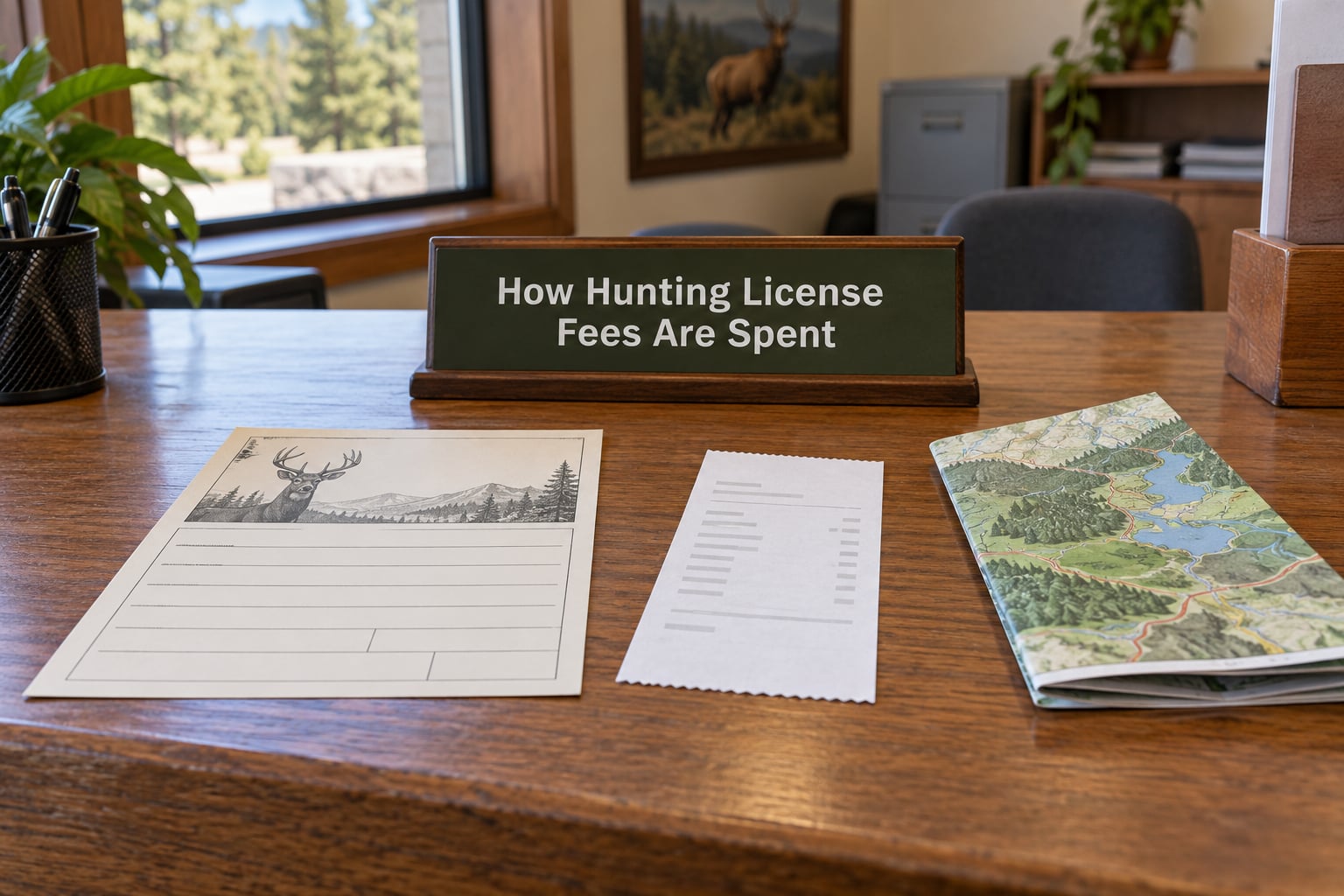
Three revenue streams feed the same system, and they behave differently, so it helps to keep them apart.
- State license revenue. What you pay the state at the counter. Restricted by state statute to fish and wildlife management and administration.
- Federal excise taxes. 11 percent on new long guns and ammunition, 10 percent on pistols and revolvers, deposited into the Wildlife Restoration Trust Fund. The manufacturer pays it, not you.
- Federal apportionment. Money the U.S. Fish and Wildlife Service distributes back to states, reimbursing up to 75 percent of the cost of approved projects.
The state money is the base. The federal money is the multiplier, and it is the multiplier that changes the scale of what a small agency can do. A state wildlife division funded almost entirely by license sales can only build a few projects a year. The same division drawing a federal match can fund a wetland restoration on a scale it could never finance alone.
What Conservation Programs Do the Money Support
Federal rules restrict how the funds can be spent, and the categories are narrower than most people assume. Six cover nearly everything.
- Habitat restoration and improvement. Wetland hydrology, prescribed fire, invasive plant removal, timber stand improvement on state-owned ground.
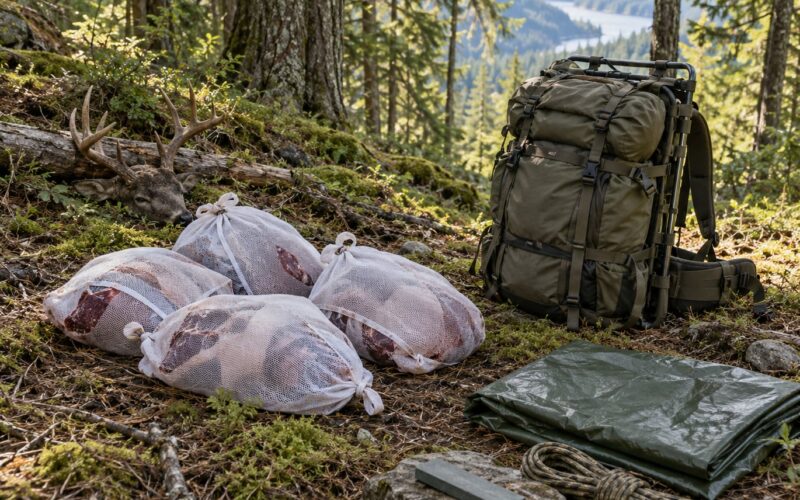
- Population surveys, research and monitoring. Deer spotlight counts, aerial elk surveys, fish stocking and creel data, disease surveillance such as chronic wasting disease work.
- Land acquisition. Buying parcels that block development and open them as wildlife management areas with hunting, fishing and birding access.
- Public access. Boat ramps, parking, trailheads, fishing piers, and the ungated roads that get you there.
- Hunter education. Mandatory safety courses, instructor training, mentored hunting programs.
- Public shooting ranges and equipment. Construction and maintenance, including the archery parks that double as youth outdoor education sites.
The line that surprises people most is nongame work. Pittman-Robertson funds do not have to go to animals people shoot. Bald eagle recovery, imperiled plant work, bat monitoring and amphibian surveys have all come out of the same dedicated pool, alongside the habitat stamp and other voluntary state programs.
Federal, State, and Local Funding
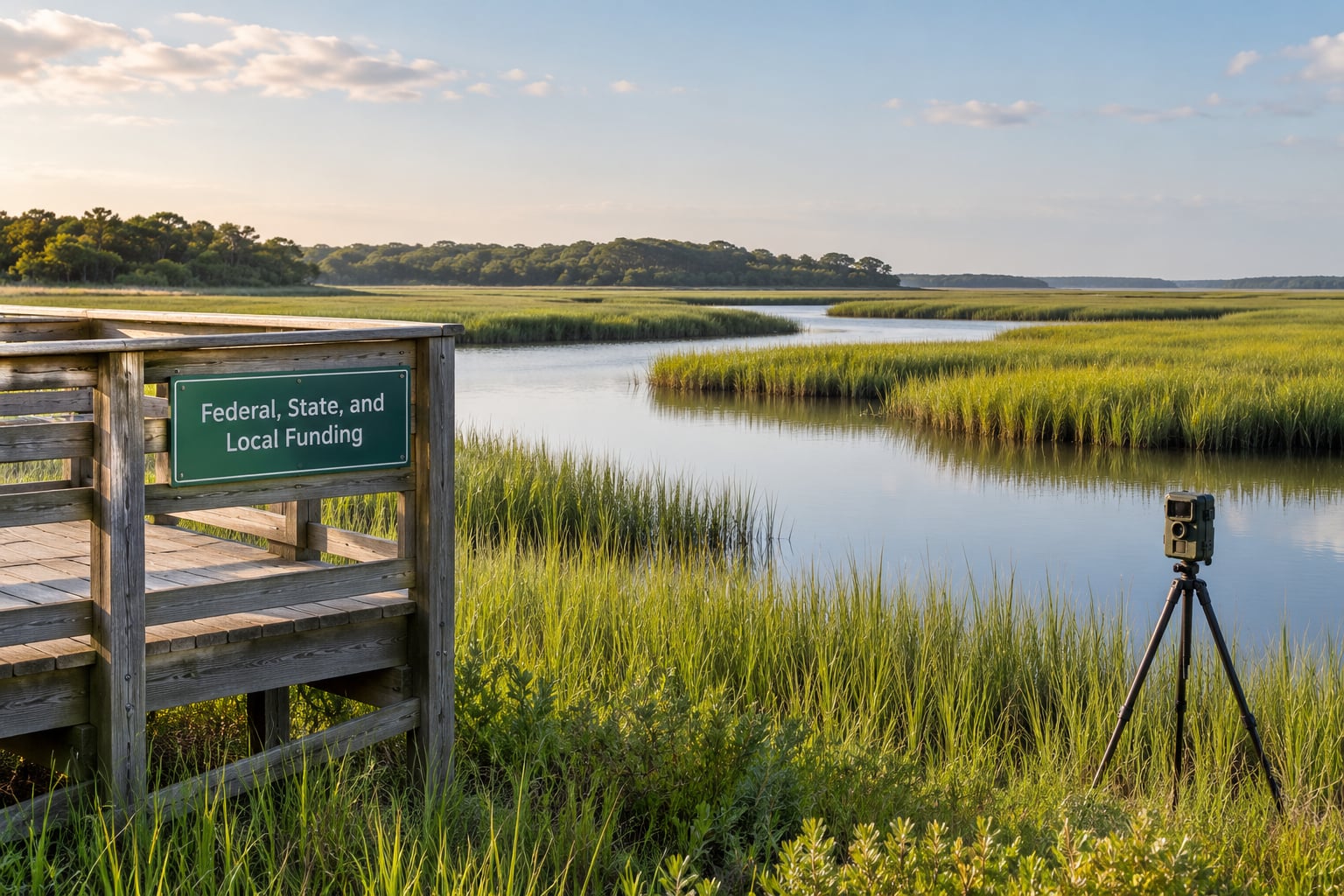
How hunting license fees pay for conservation at the federal level
The wildlife side comes from the Federal Aid in Wildlife Restoration Act of 1937. Its angling sister is the Dingell-Johnson Sport Fish Restoration Act of 1950, funded by a 10 percent tax on fishing tackle and a per-gallon tax on motorboat fuel. Together they run as the Wildlife and Sport Fish Restoration program, which has distributed more than 1.5 billion dollars a year in recent appropriations.
Three mechanics matter more than anything else in that program.
The 25 percent match. On an approved project, the federal government reimburses up to 75 percent of the cost. A wetland restoration approved at a cost of one million dollars requires a 250,000 dollar state commitment and brings down 750,000 in federal funds. Restricted license revenue is a natural match source because the state controls it and can release it on its own schedule.
The apportionment formula. Each February, the U.S. Fish and Wildlife Service divides the available money among states using two inputs: the land area of the state, and the number of paid hunting license holders. A big state with few hunters gets more per hunter; a small state with heavy participation gets a smaller share. This is why the total a state receives is not a simple function of how many people buy licenses there.
The forfeiture firewall. A state that diverts hunting license revenue out of its wildlife agency risks losing its entire federal apportionment. That is the legal mechanism behind the claim that state license money is protected, and it is the specific provision most competitors on this topic leave out. It is not an absolute bar, but it is a large stick hanging over state legislatures.
Local and regional partners sit underneath this. Soil and water conservation districts, land trusts, county parks departments and tribal natural resource programs routinely co-fund projects and match the same federal dollars.
How License Fees Support Habitat Restoration
Habitat is where the money shows up on the ground, and it is the clearest thing a license buyer can point to.
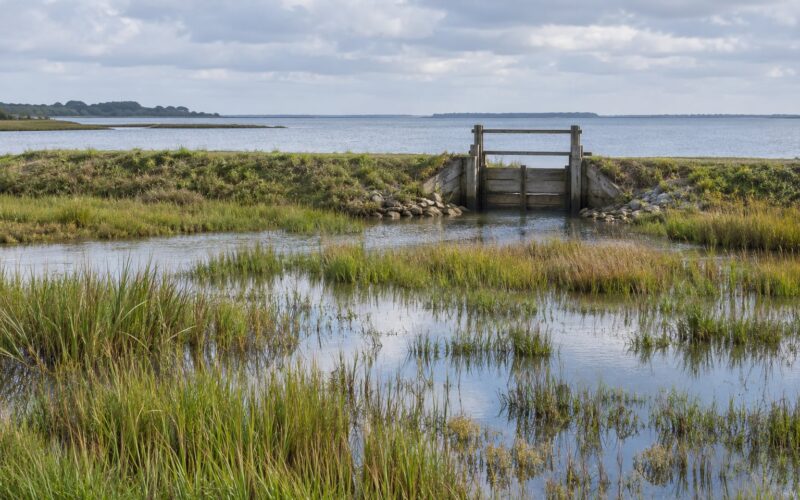
Wetland work is the classic example. Draining a marsh for farming in the first half of the last century removed the seasonal flooding that waterfowl and shorebirds depend on. Restoration puts the water back by plugging drainage ditches, re-contouring, and controlling invasion. The first federal project under the 1937 act was at Ogden Bay, Utah, in 1938.
Forest management works the same way at a different scale. Prescribed fire, thinning and snag retention on state forest lands change the understory that quail, grouse and elk actually use, and they reduce the fuel that turns a dry season into a wildfire.
Migration corridors are the newer frontier. Working groups now map mule deer and elk routes across state lines so a parcel bought in one state is not fenced off from the herd’s summer range in the next. Coastal work funds shoreline marsh and living shorelines that buffer both storms and sea-level rise, while paid nesting areas on agricultural ground keep grassland birds off ploughed ground.
The recovery results are visible enough to make the case. White-tailed deer went from a few hundred thousand animals early in the last century to roughly 30 million. Ohio closed deer hunting in 1903 and reopened it in 1943 after a restoration program; the state recorded 184,000 deer harvested in the 2019-20 season.
Why Hunters Pay for More Than Hunting
Here is the arithmetic that drives the debate. Roughly 6 percent of Americans hunt and about 15 percent fish. Around 148 million people watch wildlife each year without pulling a trigger. So a small minority of the population funds agencies that manage habitat, count animals and maintain access for everyone.
The items on those budgets are hard to fence off by species. A restored marsh is a duck hunting site in October and a birding site in May. A public range built with federal match funds is where a youth archery program runs on a Saturday. An ungated road a state agency maintains in August is the road a hiker uses in September.
That is the strongest version of the argument, and it is also the version that breaks down fastest when pushed. Licenses cover a large share of state wildlife agency budgets. They do not cover most conservation spending in the country, which is funded by general tax revenue, land-management appropriations and bond programs. Both statements are true, and arguing about which one matters more is why the question never gets settled.
How Much Money Is Involved?
There is no single national figure, because states differ in license price, participation and how broadly they define wildlife programs. What you can check are the rates and the program-level totals.
| Revenue stream | Rate | Who pays | Where it lands |
|---|---|---|---|
| State hunting license | Set by each state | The hunter, at the counter | State fish and wildlife agency |
| Federal long gun and ammunition excise | 11 percent | Manufacturer or importer | Wildlife Restoration Trust Fund |
| Federal pistol and revolver excise | 10 percent | Manufacturer or importer | Wildlife Restoration Trust Fund, partly restricted to education and ranges |
| Fishing tackle excise | 10 percent | Manufacturer or importer | Sport Fish Restoration Trust Fund |
| Motorboat fuel excise | Per gallon | Whoever fuels the boat | Sport Fish Restoration Trust Fund |
The excise taxes never appear on your receipt because they are charged to the manufacturer or importer and folded into the wholesale price before anything reaches a shelf. That is the answer to the most common objection on forums: you do pay it, you just never see the line item. It also means the tax is avoided entirely by buying used gear or hand-loading, a legal loophole that critics raise often and that nobody in the system defends.
By the numbers: the Pittman-Robertson program has distributed more than 25 billion dollars since 1937, and federal wildlife restoration appropriations ran at roughly 1.2 billion dollars in fiscal year 2023, with combined wildlife and sport fish restoration above 1.5 billion dollars. Total federal excise receipts get divided among the states, and how large your state’s cut is depends on its land area and licensed hunter count rather than on any one purchase.
How States Account for the Money
Restricted money is only as good as the reporting behind it, and every state has to publish it somewhere.
- Agency annual reports. Most state wildlife departments publish a yearly report with license sales by category, revenue by fund, and expenditures by program.
- Budget documents. The state legislature approves a departmental budget each session, broken out by fund, and the restricted license fund appears as its own line.
- Federal project lists. The U.S. Fish and Wildlife Service publishes annual apportionment tables by state and a list of approved projects.
- Public meetings and audits. Wildlife commission meetings are usually open, and the money is subject to the same audit requirements as the rest of the department.
To check your own state, find the license revenue figure in the latest annual report, pull the matching line from the federal apportionment table, then compare both against the projects your department lists as funded. Where a line has grown faster than the projects attached to it, that is a legitimate question to raise at a commission meeting, and the documents to raise it with are public.
Can Hunting License Fees Really Protect Wildlife?
The evidence supports a qualified yes. Funds raised under this system bought back deer populations, closed the extinction gap for bald eagles, restored tens of thousands of acres of wetland, and built the access most state wildlife areas depend on. Those are measurable outcomes, not talking points.
The limitations are equally real. License revenue cannot cover the mandates state agencies carry: invasive species, climate-driven range shifts, lead ammunition retirement, chronic wasting disease, and a growing list of imperiled species with no harvest to manage. When deer and waterfowl programs are ring-fenced and everything new comes out of the same shrinking pot, the budget pressure lands on the species with no constituency.
The funding base is also shrinking. Hunter participation has flattened over the past decade at around 14.4 million people, and because the apportionment formula counts paid license holders, a decline in one state reduces federal dollars flowing to that state. Agencies have responded with R3 programs, recruitment, retention and reactivation, and with diversifying the payer base. Some states sell a Wildlife Heritage style license that funds habitat work for people who never hunt or fish.
The fairest reading of the whole argument is this: hunting license fees pay for a meaningful and legally protected share of wildlife conservation in the United States, they leverage federal dollars at roughly three to one, and they fund work that benefits millions of people who never buy a license. They also do not pay for most of American conservation, and no amount of framing changes that. The questions worth arguing about are how to broaden the base and how to ring-fence money for species that have no harvest.
Frequently Asked Questions
Do all hunting license fees go directly to wildlife conservation?
No. A state license fee is legally restricted to fish and wildlife management, but it also pays agency administration, enforcement and salaries, not just field projects. Federal excise tax money follows the same logic: it funds approved projects rather than unrestricted conservation. Some states also allocate a share to nongame programs, which you will only find in the budget documents.
Why do hunting licenses help fund public lands and access?
Because access is an eligible federal expense. Pittman-Robertson funds can pay for boat ramps, parking, trailheads, fishing piers and the ungated roads that reach a management area. State license revenue is more flexible and often funds maintenance that federal rules do not cover, including keeping roads open outside the permit season.
Is hunting license money used for endangered species conservation?
Yes, though the amount is modest compared with dedicated recovery funding. Wildlife restoration funds support surveys, habitat work and monitoring for imperiled species, and recovery programs often receive dedicated revenue from state habitat stamps, candidate species tags and the Recovering America’s Wildlife Act. It is real work funded by a broader pool than most people assume.
Do federal hunting taxes and state license fees pay for different things?
They pay for overlapping but different things. Federal excise tax money arrives as a reimbursement, up to 75 percent of the cost of projects the U.S. Fish and Wildlife Service has approved. State license revenue covers match requirements, matching grants, unapproved work, administration and anything the federal rules do not cover. Neither replaces the other.
What happens if a state diverts hunting license revenue?
The statutory penalty is loss of federal apportionment. Pittman-Robertson requires that license-derived revenue be spent on fish and wildlife purposes, and a state that redirects it puts its entire federal wildlife restoration allocation at risk. That is the practical reason the money stays inside the agency, even when the budget gets tight.
How can I find out how my state spends hunting license revenue?
Start with the state wildlife department annual report, which should show license sales by category, revenue by fund and expenditures by program. Then compare it with the federal apportionment table and approved project list published by the U.S. Fish and Wildlife Service. Restricted fund lines also appear in the departmental budget approved each legislative session.
Conclusion
Start with the numbers in your own state. Pull the license revenue total from your wildlife department annual report, put it next to the federal apportionment your state received, and read the project list attached to both. Ten minutes of reading settles more arguments about how hunting license fees pay for conservation than a season of forum threads.