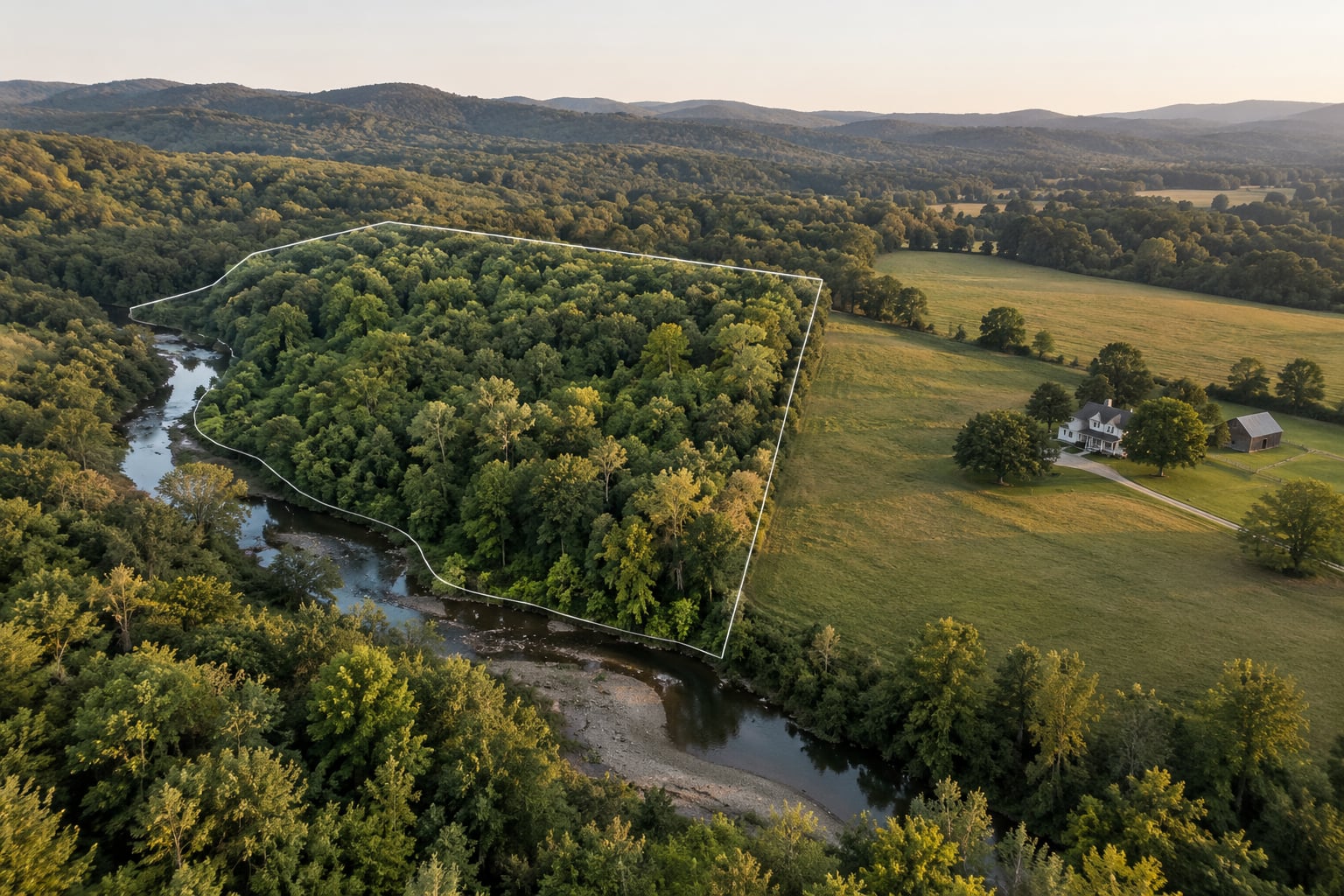
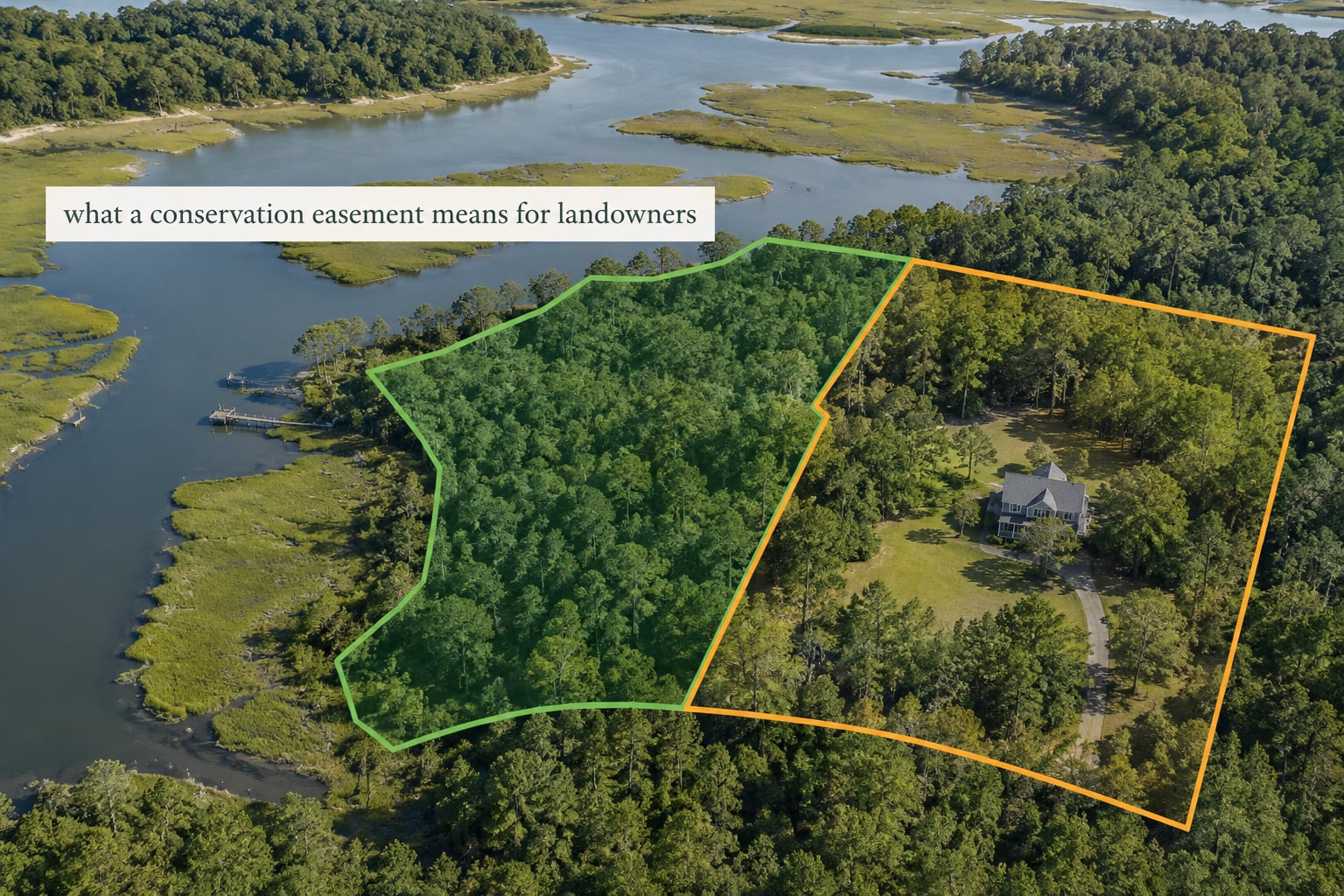
A conservation easement is a voluntary, recorded agreement between a landowner and a qualified conservation organization that permanently restricts certain uses of the property, usually development, in exchange for a charitable deduction and sometimes a payment. You keep the land, the deed and the everyday use of it. What changes is what you and every future owner may do with it.
Landowners ask this question at kitchen tables across the country, usually because a family parcel is coming up for a decision: keep it, sell it, or protect it. The arrangement sounds simple in a sentence, but it is a permanent legal instrument with real money attached, and the details live in the document. This guide walks through what the agreement covers, what it usually leaves alone, what it can cost you in time and fees, and what you should have reviewed before anyone signs.
This is general information, not legal or tax advice. Rules differ by state and change over time, so any real decision needs a conservation attorney and a qualified appraiser working on your specific parcel.
Table of Contents
- What a Conservation Easement Means for Landowners
- What the legal terms actually mean
- Who Creates and Holds a Conservation Easement?
- What Land Uses Usually Remain Allowed?
- What Restrictions Can an Easement Impose?
- How Compensation and Costs May Work
- What Are the Tax Implications?
- How Permanent Is a Conservation Easement?
- What Should Landowners Evaluate Before Signing?
- Set the goal first
- Read the baseline report carefully
- List the prohibited and reserved uses yourself
- Understand who enforces and how
- Get an independent appraisal and read it
- Model the tax outcome with a professional
- Budget the costs and the time
- Talk to the next generation
- How Does an Easement Affect Sale, Inheritance, and Future Owners?
- Frequently Asked Questions
- Does a conservation easement mean I no longer own my land?
- Can I build a house, farm, hunt, or fish under a conservation easement?
- Are conservation easements permanent?
- Does a conservation easement reduce the property’s market value?
- Can I sell land or change the property boundaries after granting an easement?
- What taxes or tax deductions may be available for a conservation easement?
- Conclusion
What a Conservation Easement Means for Landowners
In plain terms, a conservation easement is a promise you sign, record and hand to an organization, promising to use your land in certain ways forever. You stay the owner. The land trust or agency holding the easement becomes the party that monitors the land and enforces the promises you made.
Most easements are about land, not about public access. That distinction trips people up. A conservation easement is not a sale to the government, and it is not the same as donating the property. It is a partial transfer of control: you hand over the right to say no to certain future changes, and you keep everything else.
It is a serious and growing tool. Roughly 10.6 million private acres in the United States carry conservation easements, and more than a million acres are added each year. Farmers, ranchers, forest owners and families protecting acreage for the next generation are the usual parties.
What the legal terms actually mean
Three terms show up in every easement and are worth learning before you read any document. The grantor is you, the owner giving the easement. The grantee, also called the holder, is the land trust or government agency that receives and enforces it. An impermissible use is any activity the document prohibits, such as commercial construction or subdivision.
Two more terms follow you further into the paperwork. A baseline documentation report is the detailed description of the property’s condition, species and features at the moment the easement is signed. It matters because it is what the holder compares the land against on future monitoring visits. And a conservation plan, sometimes a management plan, sets out how you intend to use and care for the land so the conservation purposes are actually met.
Who Creates and Holds a Conservation Easement?
You create the easement, the qualified conservation organization holds it, and every future owner of the land is bound by it. The holder has two jobs: monitor the property to confirm you are complying, and enforce the restrictions if you are not.
For a charitable deduction under federal tax law, the holder must be a qualified conservation organization, which generally means a 501(c)(3) nonprofit, a public agency, or in some cases a government instrumentality. A for-profit company cannot hold a deductible easement. Many states also recognize a limited set of government bodies.
Most holders are land trusts, which can be national groups with local affiliates or independent community organizations. The Land Trust Alliance publishes Land Trust Standards and Practices, the widely used framework for how a land trust should handle land, money, conflicts and enforcement. Accreditations such as the Land Trust Accreditation Service are a useful signal when you are choosing one.
Private ownership and public access are separate questions. The easement deed does not create a public right of way. If you want hunting, fishing or trail access for the public, that is handled through a separate public access agreement, and you decide whether to sign one at all.
What Land Uses Usually Remain Allowed?
Most easements protect a resource by restricting development, not by ending use. Working farms, managed forest and recreation on the land usually continue. The exact answer lives in your document, so treat the table below as a map of the territory rather than a guarantee.
| Activity | Often still allowed | Often restricted or prohibited |
|---|---|---|
| Farming | Crop production, grazing, pasture management, existing farm buildings | New intensive tillage, conversion of woodland to cropland, large new structures |
| Forestry | Timber harvest under a forest plan, habitat improvement, invasive control | Clearcut conversion, removal of habitat trees, road building for access |
| Hunting and fishing | Private access for the owner, family, and invited guests | Commercial guiding operations, public access without a separate agreement |
| Recreation | Camping, hiking, birding on the owner’s own land | Motorized use off existing roads, trail construction, permanent campsites |
| Buildings | Repairing or replacing existing structures, one new residence in some easements | New commercial or industrial construction, subdivision, driveways in protected areas |
| Water and soil | Existing wells, streamside buffers, conservation practices on a schedule | New extraction, drainage or fill, degradation of wetlands and stream banks |
One detail worth asking about early is the protection area structure. Many easements divide the parcel into a highest protection area where nothing changes, a standard protection area where normal use continues, and sometimes a minimal protection area. Knowing which zone your buildings and fields fall into tells you more than any general summary.
What Restrictions Can an Easement Impose?
An easement can restrict any of the following, depending on the purposes it was created to serve. Development, subdivision and construction limits are the most common. Commercial and industrial activity is often barred entirely, along with billboards, extractive operations and surface mining.
Environmental restrictions are also common: limits on vegetation removal, wetland disturbance, soil disturbance, water withdrawal, and the use of chemicals or fertilizers near streams. Some easements control access, road building, fencing, or the number and location of new driveways.
Some documents add a subdivision allowance, meaning a defined number of future lots can be carved off, often with restrictions attached to each. Others reserve specific areas for a future building envelope, so a house can still go on the property but only in one surveyed location.
Avoid taking a universal rule at face value. What a conservation easement forbids depends entirely on the land, the resource, the state and the holder. Two easements on neighboring creek parcels can read nothing alike.
How Compensation and Costs May Work
Not every easement pays you. Most are donated, and the consideration is a charitable income tax deduction based on the value of the restrictions you give up. A smaller number are bought out, where a government agency or land trust purchases the development rights and pays you.
Funding is often stacked. A public grant program may cover part of the project, a private funder may buy a share of the easement value, and the landowner may donate the remainder. USDA programs such as the Conservation Reserve Program, the Agricultural Conservation Easement Program and the Environmental Quality Incentives Program come up often, and state programs run in parallel. LandCAN is a useful directory for what is funded in your area.
On the cost side, owners regularly budget roughly 30,000 to 50,000 US dollars in transaction costs for a conservation easement, with smaller parcels costing less and complex or multi-parcel deals costing more. That range typically breaks down into these categories:
- Appraisal by a qualified appraiser, which is often the single largest professional fee
- Legal fees for drafting, negotiation and a conservation attorney advising you separately from the holder
- Title work and insurance to confirm ownership and record the easement cleanly
- Survey of boundaries and protected areas, which is necessary on almost any easement
- Baseline report by biologists, botanists or wildlife specialists, plus any conservation plan
- Environmental review, occasionally including a Phase I environmental assessment
- Monitoring endowment, a fund the holder builds to pay for annual site visits forever
Some of these costs are reimbursable through the same grant programs that fund the easement itself. The transaction commonly takes six to twelve months, occasionally longer if matching funds or a state review sit in the middle of it.
What Are the Tax Implications?
Qualified conservation easements may qualify for a federal charitable income tax deduction under Internal Revenue Code Section 170(h), with the rules detailed in Treasury Regulation 1.170A-14. It is a deduction, not a tax credit, and the value deducted is the value of the restrictions, not the value of the land.
Two limits shape the deduction. You generally cannot deduct more than the property’s value, and you may only deduct the portion of that value attributable to the restrictions granted. In practice, a qualified appraiser works out both figures using what is known as the bundle of rights approach, which compares the property as it would be used with the easement against how it could otherwise be used.
Overstating a donated easement is the most common way landowners get into trouble. A 2017 Tax Court decision examined an easement deduction on a property that had sold soon after at a much higher figure, and the deduction was disallowed. The lesson that practitioners take from it: an appraisal must genuinely stand on its own, prepared by someone with the credentials to defend it.
Property tax treatment is a separate question, handled at the state and county level. Some states offer reduced rates or agricultural or forestry exemptions for eased land, and some jurisdictions reassess downward. Others do nothing. Ask the county assessor directly what changed in your parcel, and remember that an agricultural use exemption and a conservation easement are different programs.
One change is worth knowing: the 2017 Tax Cuts and Jobs Act repealed the estate tax deduction for conservation easements for decedents dying after 2017, unless the easement was created under a will or revocable trust that was in place before the change. Estate planning around easements has shifted since then, and that is a conversation for your tax adviser and estate attorney together.
Nothing here is tax advice. Have a conservation-aware CPA or tax attorney model your specific numbers before you sign anything.
How Permanent Is a Conservation Easement?
A conservation easement is designed to last forever. The holder’s interest runs with the land, so the restrictions bind every future owner, and no owner can simply decide to stop honoring it.
That is why people call it a one-way door. The document usually defines a narrow set of circumstances in which the easement could be extinguished: if the land is destroyed by fire or flood, if the holder no longer exists and cannot be replaced, or through a court process in rare cases. Practically, extinguishment almost never happens, and a court would ordinarily require the conservation purposes to be satisfied by substitute land of comparable quality.
Amendments and relaxations are possible, but they are hard. The typical process requires a written request, a conservation plan showing the resource is still protected, approval by the holder’s board, and often notice to the funder or public agency that paid for the easement. A boundary line adjustment to fix a survey error is usually easier than a substantive change.
Monitoring is less adversarial than most owners expect. Most land trusts make one or more site visits a year, and the great majority confirm that everything is fine. When something does go wrong, the usual path is written notice, a chance to correct, and escalation to legal action if the problem persists. Owners often accompany the monitor on the annual walk. Ask whether the holder also takes a right of first refusal on your land, because that can matter at sale.
What Should Landowners Evaluate Before Signing?
Work through this list with your own adviser, not the holder’s. The holder will answer your questions, but you need someone whose only job is your interests.
Set the goal first
Decide what you are trying to protect and for how long, and whether the payoff is tax, cash today, land protection, or all three. Easements built for the wrong goal are the ones families regret.
Read the baseline report carefully
Ask for a draft and read it as a public document, because it is one. It describes your land in detail, including species and improvements, and it becomes the yardstick for every future compliance dispute. Know what it says about what exists on your property now.
List the prohibited and reserved uses yourself
Do not skim. Write out every impermissible use, every reserved use that returns to you, and any subdivision allowance or building envelope. Ask how each activity you actually plan is treated.
Understand who enforces and how
Confirm the holder has the staff and the monitoring endowment to visit annually, and find out the notice and cure procedures. A holder without money is a weaker promise.
Get an independent appraisal and read it
The appraisal sets the deduction and the resale value. Confirm the appraiser is qualified and independent of the buyer, and understand how the before-and-after comparison was built.
Model the tax outcome with a professional
Bring the appraisal and your full financial picture to a tax adviser who works with easements. Ask what happens in the year of the donation, whether you carry a large deduction forward, and what your state does.
Budget the costs and the time
Get the fee estimate in writing before you commit, and check which line items a grant might cover. Plan on a year from first conversation to recorded easement.
Talk to the next generation
Tell heirs, spouse and anyone involved in the estate plan while everyone is still able to hear the tradeoffs. Perpetuity is easier to accept as a family decision than as a surprise in a probate file.
How Does an Easement Affect Sale, Inheritance, and Future Owners?
Because the easement runs with the land, it transfers automatically on a sale and applies to every heir. The new owner buys the property subject to the same restrictions, and the easement survives any change in ownership.
For a buyer, the easement is usually a price adjustment rather than a deal breaker. Appraisers value eased property using the same before-and-after comparison, so the discount is built into the number. A buyer who wants to build will pass, and a buyer who wants open space or working land is often glad to have it. The surprise most families encounter is not the restriction itself, but the difference between what the owner hoped for and what the market paid.
Lenders and title insurers handle easement land routinely, but the restriction must be disclosed in the title report. Estate planners can usually work around it, and heirs can farm, harvest, hunt and live on the property under the same rules the grantor accepted. The obligation transfers, not the ownership.
One practical note: the baseline report stays in the public record, and so does the easement. Buyers will read both. That is not a reason to avoid an easement, but it is a reason to be sure the description of your land is one you are comfortable publishing.
Frequently Asked Questions
Does a conservation easement mean I no longer own my land?
No. You keep ownership of the land, the deed and the title. What you give up is the right to make certain changes to how the property is used, permanently. The land trust or agency holding the easement monitors the property and enforces those restrictions, but it does not manage your farm, forest or fields, and it does not collect rent from you.
Can I build a house, farm, hunt, or fish under a conservation easement?
Usually yes to farming, forestry, hunting and fishing on your own land, and often yes to a new residence if the easement allows a building envelope or subdivision allowance. Many easements permit repair of existing structures while prohibiting new commercial or industrial construction. The specific answer is in your document, so check the prohibited and reserved use lists before you commit to any project.
Are conservation easements permanent?
Effectively yes. Most are drafted to last forever and run with the land, binding every future owner. Extinguishment is possible in narrow cases, such as destruction of the property by fire or flood, or the holder ceasing to exist, and it usually requires a court to be satisfied the conservation purpose is protected elsewhere. Substantive amendments are possible but difficult and require a plan, board approval and sometimes funder consent.
Does a conservation easement reduce the property’s market value?
It usually reduces what the property would sell for as raw land, and appraisers measure that gap directly by comparing the property with and without the restrictions. That same before-and-after figure sets the charitable deduction for a donated easement. The discount varies widely with location, zoning and demand, and eased land can still command full price from buyers who want protected, workable land rather than building sites.
Can I sell land or change the property boundaries after granting an easement?
You can sell it, and the easement transfers with the property to the new owner. You generally cannot redraw boundaries, move easements or carve off new parcels if the document prohibits subdivision, and boundary line adjustments to correct a survey error are a different and easier matter. Check the change-of-control and boundary provisions, and note that some land trusts also hold a right of first refusal on your land.
What taxes or tax deductions may be available for a conservation easement?
A qualifying easement may generate a federal charitable income tax deduction under Internal Revenue Code Section 170(h) for the value of the restrictions granted, not for the value of the land. Some states also offer reduced property taxes or agricultural and forestry exemptions, but that varies widely. The 2017 Tax Cuts and Jobs Act removed the estate tax deduction for most easements after 2017, so have a CPA or tax attorney who works with easements run your numbers.
Conclusion
A conservation easement trades a slice of future flexibility for a mix of protection, and occasionally for cash. You keep the land and the ordinary work of using it. You give up the right to develop, subdivide or change it in ways the holder is there to prevent, and you accept that the promise is meant to outlast you.
That trade is worth it for plenty of families protecting working farmland, forest, water or habitat. It is harder to accept once the deduction is claimed, the fees are spent and the heirs are looking at a permanently restricted property, which is why the order of operations matters. Write down your goals first, read the baseline report and the use lists in full, and get independent legal, tax and appraisal advice before you sign anything. A local land trust can tell you which programs fund work like yours, and what the transaction realistically involves in your county.