A national wildlife refuge is not a national park. Refuges are units of the National Wildlife Refuge System, owned and managed by the U.S. Fish and Wildlife Service to conserve fish, wildlife, plants and their habitats, and they often permit hunting, sport fishing, wildlife viewing and hiking. National parks are managed by the National Park Service, where hunting and resource extraction are generally prohibited.
That single difference cascades into everything else: who sets the rules, what the land was set aside to do, how developed it is, what it costs to enter, and whether you can take a deer. If you are trying to work out how national wildlife refuges differ from national parks, the answer is best understood as two separate federal systems with different missions sharing the word national.
I have put both side by side below, then broken down the practical parts that actually change how you plan a trip. Rules were last reviewed in October 2026.
Table of Contents
- How National Wildlife Refuges Differ From National Parks at a Glance
- What Is the Main Purpose of Each Type of Public Land?
- How Do Management and Conservation Goals Differ?
- Who manages each system, and under what law?
- Habitat work looks different on the two systems
- Which Activities Can Visitors Enjoy?
- Are National Wildlife Refuges Less Developed Than National Parks?
- What About Entrance Fees and Access?
- Which Is Better for Fishing, Hunting, Birding, and Paddling?
- National wildlife refuge vs national park for hunting
- For fishing
- For birding and photography
- For paddling
- Which One Should You Choose?
- Frequently Asked Questions
- Is a national wildlife refuge a national park?
- Who manages national wildlife refuges?
- Do national wildlife refuges allow hunting?
- What is not allowed in national wildlife refuges?
- Do national wildlife refuges charge an entrance fee?
- How much land does the Fish and Wildlife Service manage?
- Conclusion
How National Wildlife Refuges Differ From National Parks at a Glance
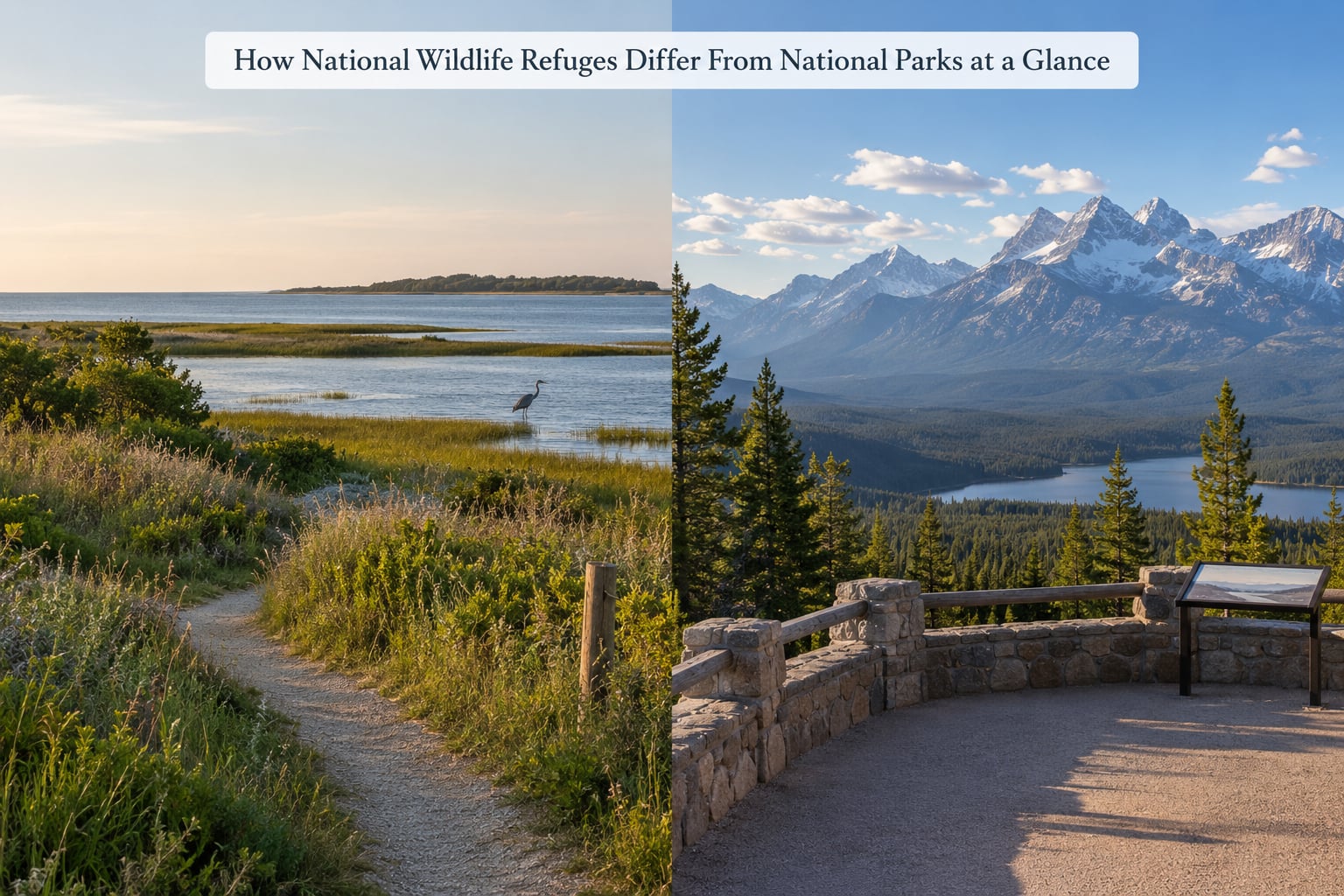
Here is the shortest version of the national wildlife refuge vs national park comparison. Both are units of federal public land inside the Department of the Interior, but they were created for different purposes and they operate under different rulebooks.
| Criterion | National wildlife refuge | National park |
|---|---|---|
| Managing agency | U.S. Fish and Wildlife Service | National Park Service |
| Primary purpose | Conserve fish, wildlife, plants and their habitat, including migratory species | Protect natural, scenic, historic and cultural resources for public enjoyment |
| Number of units | More than 560 refuges | More than 430 National Park System units, and only about 63 of those carry the national park title |
| Hunting | Often permitted under refuge-specific season, species and shot-type rules | Prohibited except where Congress specifically authorizes it, such as Alaska subsistence hunting |
| Sport fishing | Common, often with gear, bait and season limits set by the refuge | Allowed on many park waters under state rules |
| Trapping | Permitted on many refuges under specific regulations | Not permitted |
| Camping | At designated sites and, at some refuges, dispersed camping | At developed campgrounds and designated backcountry sites under park rules |
| Typical infrastructure | Auto tour roads, observation towers, short interpretive trails, a few visitor centers | Paved roads, shuttles, extensive trail networks, museums, campgrounds and concessions |
| Entrance fee | Usually free to enter; some charge a vehicle entrance fee | Many charge a vehicle entrance fee, and the America the Beautiful pass covers NPS units |
| Taking plants, rocks or other natural objects | Prohibited | Prohibited |
| Legal foundation | National Wildlife Refuge System Administration Act of 1966, Migratory Bird Treaty Act of 1918, and unit-specific acts | National Park Service Organic Act of 1916 and the act that created each individual unit |
One thing the table cannot show is scale. The Refuge System covers on the order of 92 million acres, more federal land than the National Park System. Most of it is water, wetlands and bottomland forest rather than scenic high country, which is why some of the largest refuges sit in Alaska.
What Is the Main Purpose of Each Type of Public Land?
A national wildlife refuge exists to conserve fish, wildlife, plants and their habitats. The U.S. Fish and Wildlife Service manages that land, and the unit’s own regulations decide whether the public may hunt, fish, trap, farm, or simply watch.
A national park exists to protect a broader mix of natural and cultural resources and to make them available for public enjoyment. Scenery, geology, historic structures and cultural landscapes sit at the center of the park mandate, and the National Park Service manages accordingly.
The refuge’s conservation-first purpose is also older than most people assume. The first federal refuges were created in the early 1900s to protect migratory birds and waterfowl, and several were set up explicitly so sportsmen could harvest game in a place where it was managed rather than extirpated. Consumptive use is part of the system’s original design, which is exactly why it looks so different from park rules.
How Do Management and Conservation Goals Differ?
The National Park Service and the U.S. Fish and Wildlife Service are separate agencies with separate mandates, even though both sit within the Department of the Interior. Parks manage for scenic and natural integrity plus interpretation. Refuges manage habitat first, and the public uses fit around the biological needs of wildlife.
Who manages each system, and under what law?
Congress authorizes most national wildlife refuges, and the Fish and Wildlife Service then writes refuge-specific regulations covering hunting, fishing, public access and permits. National Park System units are likewise created by Congress, but they are operated under the National Park Service Organic Act of 1916, the law that established the service and its conservation-and-enjoyment mandate.
The practical upshot is that refuge rules are written unit by unit. What is legal at one waterfowl refuge tells you very little about the refuge 200 miles away, because seasons, species, bag limits, shot types and closed areas all change from one management plan to the next. Forum readers on r/PublicLands and hunting forums hit this constantly, which is why general advice that hunting is simply allowed on refuges is not accurate enough to plan around.
Habitat work looks different on the two systems
Refuge managers spend much of their budget on habitat: water levels in managed impoundments, prescribed fire, invasive plant control, moist-soil management and waterfowl production areas. Some refuges actively draw down water in the fall and refill it in spring to create the exact conditions migrating shorebirds need to feed.
Parks do habitat work too, generally around ecosystem restoration and landscape protection. The difference is the end goal. On a refuge, the manager may deliberately leave a field fallow for a year to benefit geese. In a park, an untouched meadow is usually the goal itself.
Which Activities Can Visitors Enjoy?
Both systems support hiking, wildlife watching, photography, paddling and environmental education, but the list of permitted activities is longer on refuge land. Hunting, trapping and sport fishing are common there, and some refuges also allow farming, timber harvest or prescribed burns under permit.
On refuge land you will often find auto tour routes, observation and photography blinds, seasonal wildlife viewing platforms, waterfowl hunting areas and guided tours run by refuge staff. Fishing pressure is often higher than in parks because the fish are there on purpose.
On park land the activity list leans toward hiking, backpacking, scenic driving, boating, ranger programs and cultural interpretation. Campsites, maintained trails and visitor services are more reliable, and the interpretive story is usually about landscape and human history rather than harvest.
Do not read either list as universal. Refuge-specific rules override everything, and parks have their own prohibitions on drones, fires, collecting and off-trail damage. Both agencies publish the current rules for every unit.
Are National Wildlife Refuges Less Developed Than National Parks?
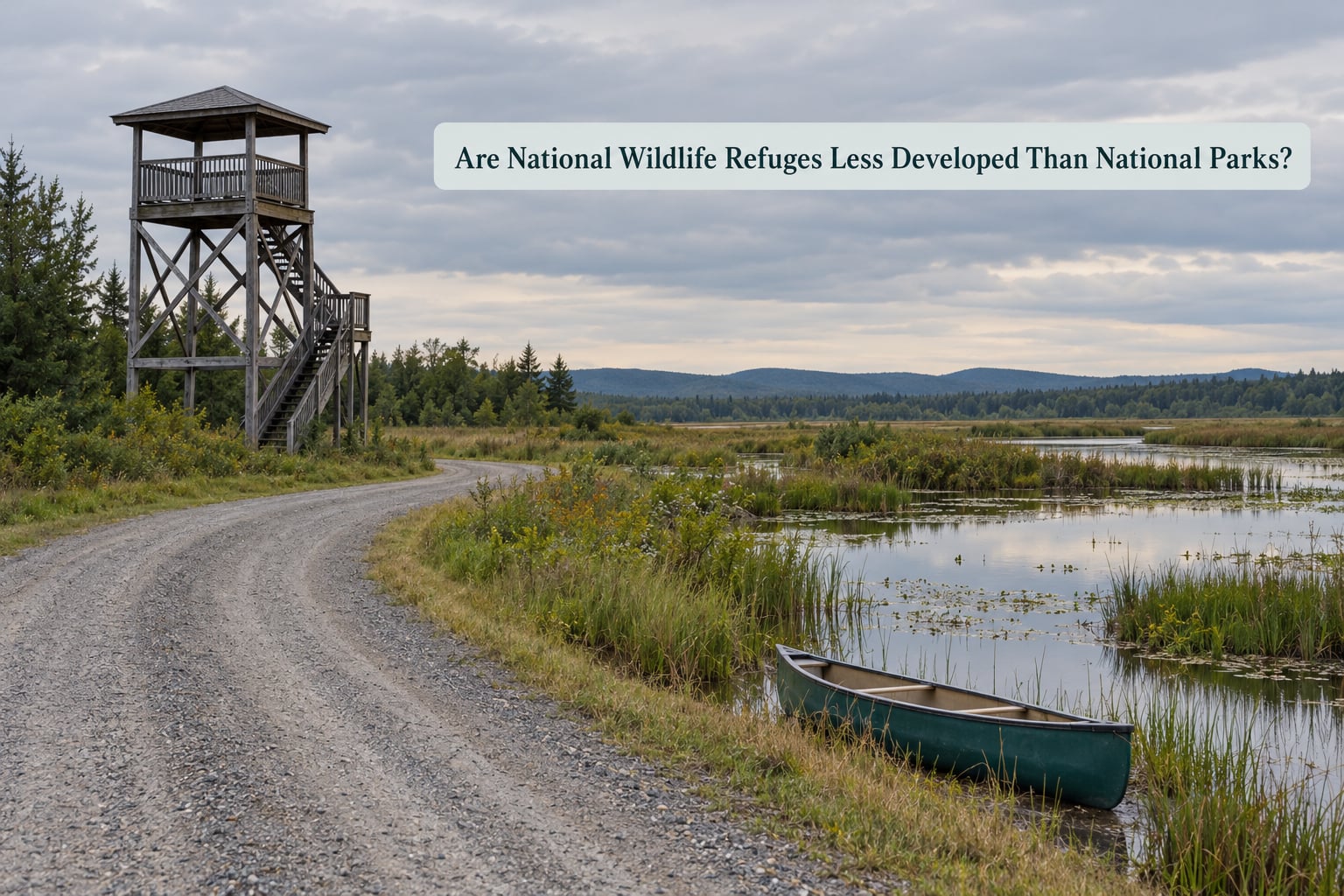
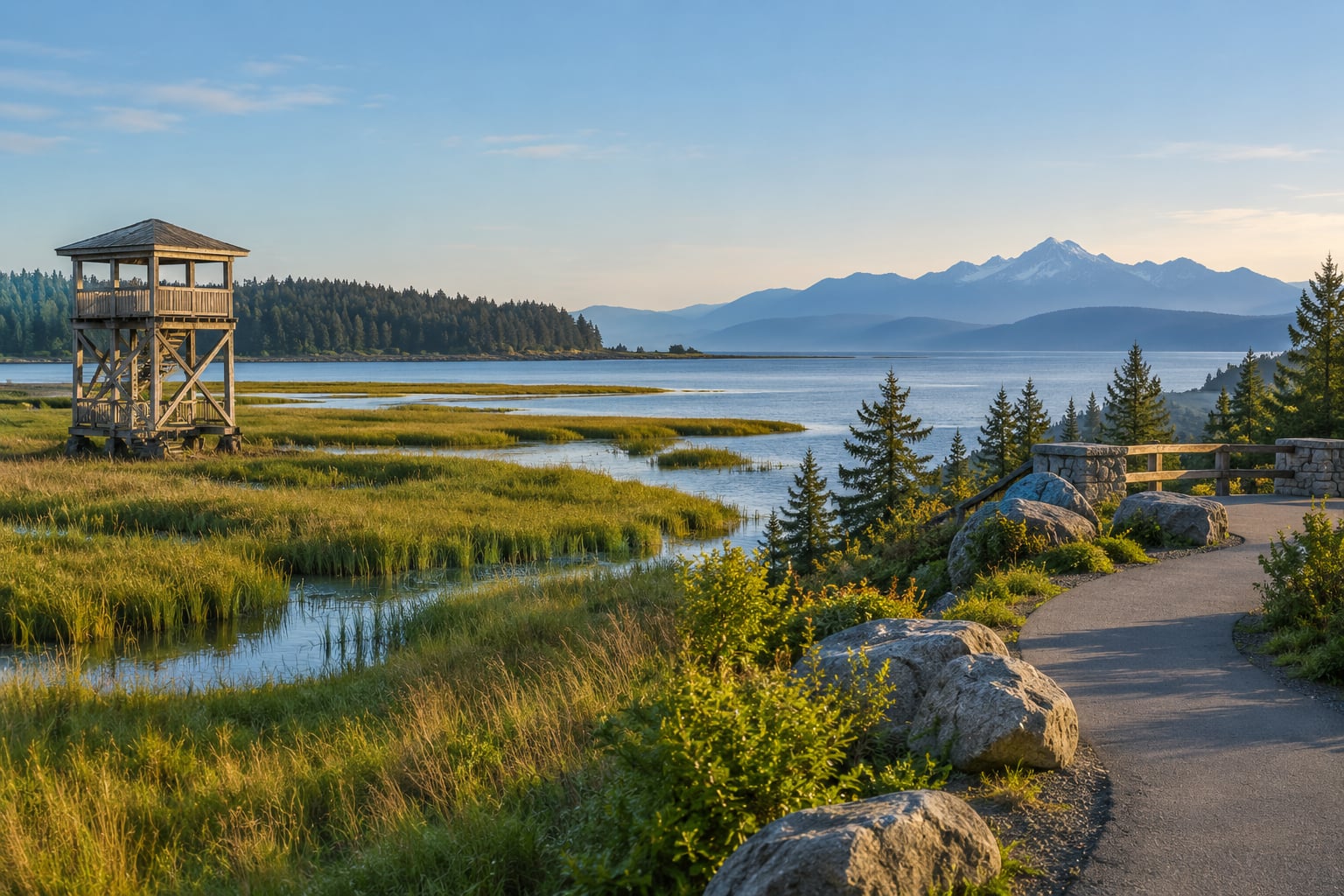
Usually, yes, though the gap is wide and uneven. A typical refuge might give you a gravel auto tour road, a short boardwalk, an observation tower and a small visitor center open a few hours a day. A major park might give you paved roads, a transit system, dozens of maintained trails, a museum, a lodge and campgrounds booked out months ahead.
That difference changes the trip more than it sounds. Refuge access is more likely to depend on a seasonal road opening, a private road crossing under an easement, or a boat launch that closes when water levels drop. A handful of refuges have almost no developed access at all, which is why backcountry travelers sometimes describe them as wildlife management areas rather than destinations.
The reverse also happens. Some refuges are well developed for birding, and a few have substantial visitor centers. The honest summary is that refuges are quieter, less predictable and less serviced, not that they are empty.
What About Entrance Fees and Access?
Most national wildlife refuges are free to enter. Some charge a vehicle entrance fee at a gate or landing, and a few run a commercial tour or permit system. The America the Beautiful annual pass covers National Park System units and national recreation areas, and it does not cover refuge entry fees, so a pass bought for a park trip will not get you through a refuge gate.
National parks are the opposite case. Many charge a vehicle entrance fee, and the ones that do usually honor the annual pass, which works well if you are doing a multi-day park loop.
Access rules differ more than fees do. Refuges close areas seasonally for nesting, calving or migration, and some are closed entirely during wildfire, hunting seasons or infrastructure work. Roads through refuges are often county-maintained rather than agency-maintained, so a paved map can be wrong. On park land, closures usually concern weather, wildfire and trail conditions, and are posted at the entrance.
Which Is Better for Fishing, Hunting, Birding, and Paddling?
The honest answer is that the refuge system wins on fish and game, and the park system usually wins on scenery and services. Pick by the activity you care about rather than by the word national.
National wildlife refuge vs national park for hunting
If you want to hunt, the refuge is almost always the answer, because national parks prohibit hunting unless Congress specifically authorized it for subsistence use, which is limited to Alaska’s park units. Refuges publish hunt units, species lists, season dates and shot-type rules for their own land, and many separate state waterfowl and deer hunting from federal land hunting.
Recent policy has moved in that direction. In August 2024 the Fish and Wildlife Service announced 53 new hunting and sport fishing opportunities on roughly 211,000 acres. A later proposal drew headlines claiming it would open about 95 percent of the Refuge System, which referred to some 92 million acres. Read carefully, that figure is the total size of the system, not 92 million newly opened acres, and much of that land was already open under existing regulations.
For fishing
Both systems allow sport fishing, and both usually follow state regulations for licensing and limits. Refuges add their own gear, bait, season and area closures, particularly around waterfowl production areas where bait fish collection is restricted. Managed impoundments and coastal marshes on refuges are managed to hold fish, which makes them productive water.
For birding and photography
Refuges win on bird density. Migratory species concentrate at refuges precisely because the habitat is managed for them, and the lower crowd levels mean you are more likely to have a blind or platform to yourself. Parks win when you want a reliable photo of a wide vista with a river running through it.
For paddling
Both systems have paddling opportunities, with permit rules on park waters and route-specific guidance on refuges. Refuges with coastal marshes, bottomland rivers and large impoundments give you long, slow routes through habitat that is hard to reach any other way. Parks tend to offer shorter, busier reaches with more developed put-ins.
Which One Should You Choose?
Choose a national park when the trip is about the view: iconic scenery, named landmarks, well-marked trails, reliable visitor services and the interpretive story of a place. Choose a national wildlife refuge when the trip is about animals, especially birds, or when you plan to fish or hunt.
A few specific cases. If you want solitude and fewer people in the photograph, a less-visited refuge wins easily. If you are bringing kids and want a paved trail, restrooms and a staffed visitor center, the park is the safer bet. If you are chasing a specific species on its migration, search the refuge system by species rather than by scenery.
Commercial guiding is different too. Outfitters operating on refuge land need a special use permit from the refuge, and the rules on guiding, client numbers and access routes are set unit by unit. Parks run their own concession and commercial use permits. If you are booking a trip, ask the operator which agency issued their permit.
One more piece of terminology that trips people up: only about 63 of the more than 430 National Park System units carry the national park title. The rest are national preserves, national seashores, national historical parks, national recreation areas and similar. So the phrase national park on a brochure may not mean what you think it means.
Frequently Asked Questions
Is a national wildlife refuge a national park?
No. A national wildlife refuge is a unit of the National Wildlife Refuge System, managed by the U.S. Fish and Wildlife Service to conserve fish, wildlife, plants and their habitats. A national park is managed by the National Park Service to protect natural, scenic, historic and cultural resources. Refuges often permit hunting, trapping and sport fishing, which parks generally do not.
Who manages national wildlife refuges?
The U.S. Fish and Wildlife Service manages every unit of the National Wildlife Refuge System, and most refuges are authorized by Congress. The agency writes refuge-specific regulations covering hunting seasons, fishing limits, public access and permits, so rules genuinely differ from one refuge to the next rather than following one system-wide template.
Do national wildlife refuges allow hunting?
Often yes, under rules written for that specific refuge. Refuges publish their own hunt units, species lists, season dates, bag limits and shot-type restrictions. National parks prohibit hunting unless Congress specifically authorized it, which today applies mainly to subsistence hunting in Alaska’s park units. Always check the refuge’s current hunting regulations and map before you travel.
What is not allowed in national wildlife refuges?
Taking plants, animals, rocks, minerals or other natural objects is prohibited, as are placing or moving items such as geocaches without authorization, damaging habitat, and using motor vehicles off designated routes where closed. Many refuges also restrict drones, fires, camping and public access during nesting or calving seasons. Specific prohibitions are listed in each refuge’s regulations.
Do national wildlife refuges charge an entrance fee?
Most do not, and entry to the refuge itself is usually free. Some refuges charge a vehicle entrance fee at a gate or boat landing, and a few run paid tours or require permits for commercial activities. The America the Beautiful annual pass applies to National Park System units and does not cover refuge entrance fees, so budget separately for each system.
How much land does the Fish and Wildlife Service manage?
The National Wildlife Refuge System covers roughly 92 million acres across more than 560 refuges and related waterfowl production areas, which is more federal land than the National Park System. The largest refuge units are in Alaska. Those totals include water and bottomland habitat, so the acreage figure is not a measure of scenery or hiking miles.
Conclusion
National parks are scenic and cultural destinations managed for enjoyment and protection. National wildlife refuges are habitat managed first, where fish and game harvest is often part of the design and most entry is free.
Before you go, open the specific unit’s page on the agency’s site and read three things: the current hunting or fishing regulations, any seasonal closures or access permits, and the fire and camping rules. That one page settles most of the questions people argue about on forums, and it changes from one refuge to the next.