To pack out a deer alone, field dress the animal where it lies, break it into bag-sized pieces, and carry everything to your truck yourself. Most solo hunters use one of two methods: the gutless field-debone, where you remove the meat without opening the body cavity, or a shock pouch shoulder carry of the whole carcass. Either way, the animal is bigger than your pack, so the real work is planning loads.
That last part is where a lot of first-timers underestimate the trip. A deer that dies a quarter mile from the truck on flat ground is a half-evening job. The same deer three miles in and 2,000 feet up becomes a two-day project.
Table of Contents
- What You Need
- Step-by-Step: How to Pack Out a Deer Alone
- Confirm the Harvest Is Legal and Safe
- Create a Safe Field-Dressing Area
- Field-Dress the Deer Without Losing Control
- Cool the Carcass Quickly
- Secure and Load the Deer
- Check the Load Before Leaving
- Common Mistakes and Solo-Hunting Fixes
- Frequently Asked Questions
- How long do you have to field dress a deer after you shoot it?
- Do you need to gut a deer before packing it out?
- Can you leave a deer overnight without gutting it?
- What is the best pack for packing out deer meat?
- How many trips does it take to pack out a deer solo?
- When should I ask for help instead of packing out alone?
- Conclusion
What You Need
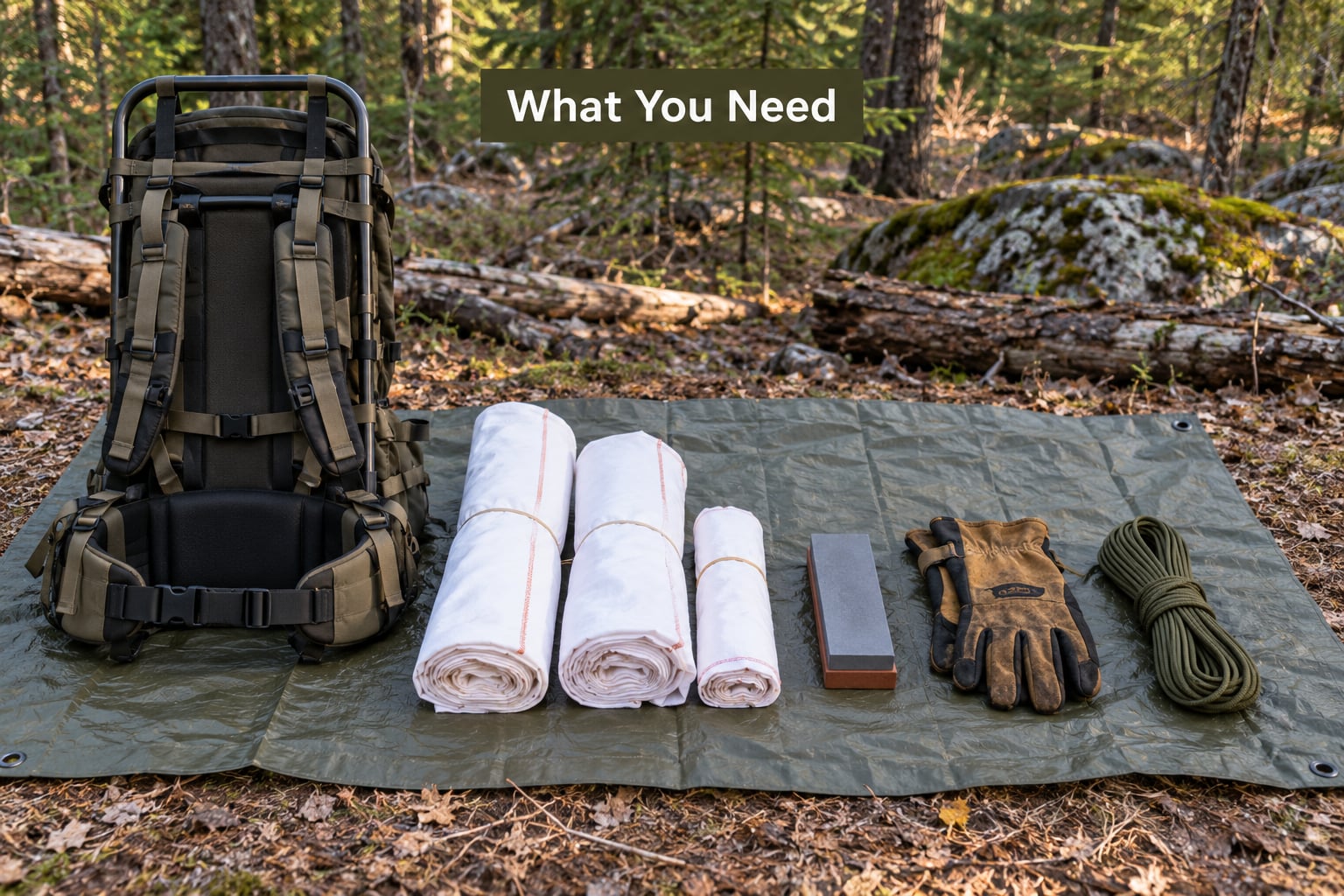
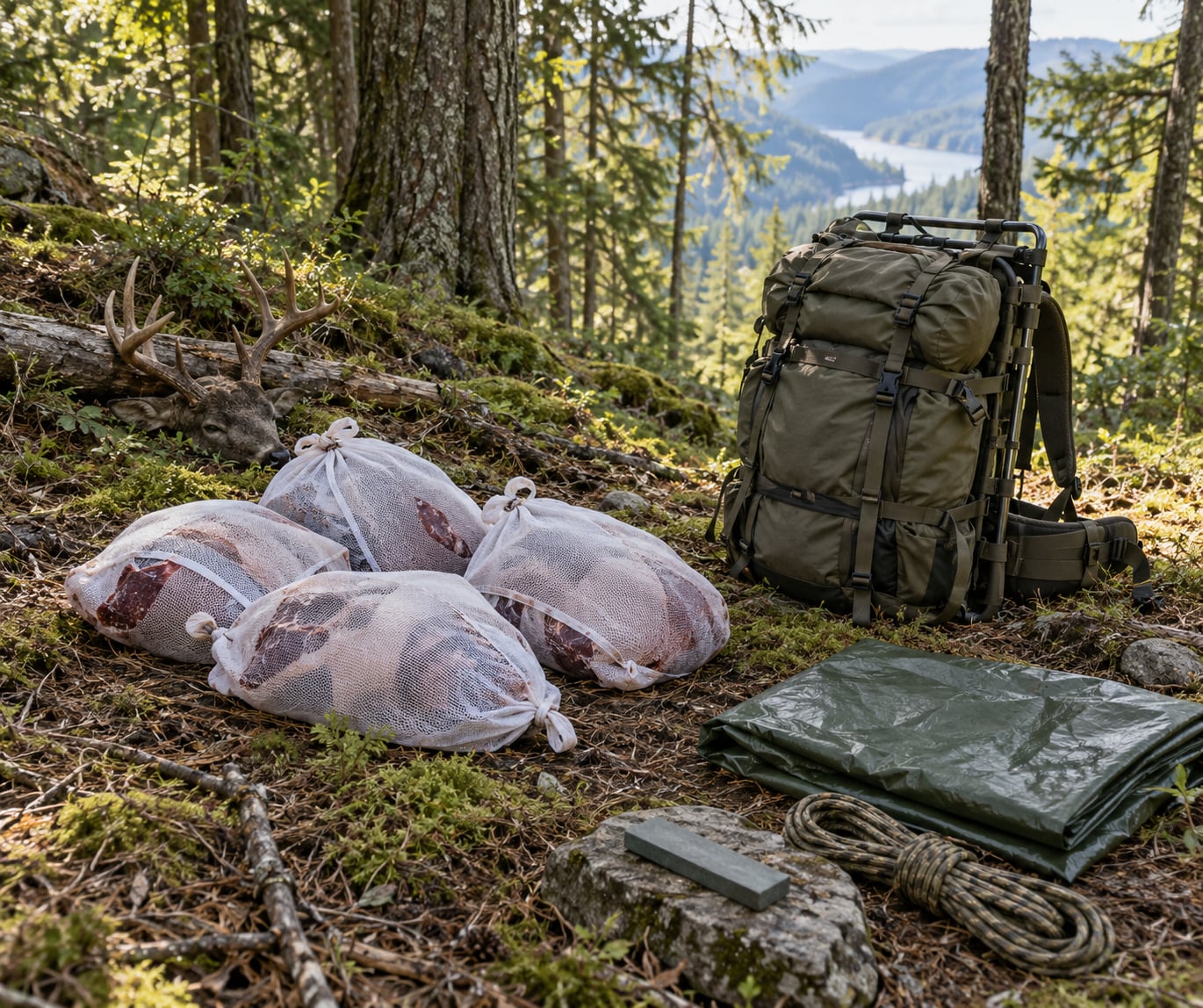
A solo packout kit is short. Anything you can attach to your pack frame or hang from your belt at the start of the day belongs on the list.
- A frame pack or hunting pack. A framed internal meat sling distributes weight across your hips and shoulders instead of hanging off your lower back. Hunters on the Rokslide forum report that a 70 pound load in a pack with an internal meat sling feels closer to 50 than the same load stuffed into an ordinary daypack.
- Breathable game bags, three to four of them. Mesh or ripstop bags let heat escape. Plastic grocery bags trap steam and turn meat soggy by the second trip.
- A sharp knife. A fixed blade or a replaceable-blade knife, plus a sharpening stone in your pocket. A dull blade turns a 90-minute breakdown into three hours and wrecks your grip on the joints.
- Nitrile gloves, a handful of wet wipes and a garbage bag. Gloves keep blood off your hands and off the knife handle, which is the difference between a controlled cut and a slip.
- A gut hook, paracord and a small game tarp. The hook keeps your hand away from the viscera, the cord closes and straps bags, and the tarp becomes your work surface, rain cover and carcass cover.
- A headlamp and a spare battery. Breakdown work runs long, and you do not want to be cutting by flashlight on the trail at dusk.
- Your license, tag and permit. Tag the deer before you process it. Carrying it on your person, not in the truck, keeps it with you if you make extra trips.
- Water, layers, a first aid kit and a charged phone or satellite messenger. Solo work with a heavy animal is exactly when a sprained ankle turns into a night in the woods.
- A vehicle with real cargo space. Clear the back seat, fold it flat and confirm your straps reach the tie-down points before the season starts.
Check your state’s hunting regulations before the season, not at the tree. Tagging deadlines, retrieval rules and what you may leave in the field vary by state, and some require you to recover the edible meat.
Step-by-Step: How to Pack Out a Deer Alone
Confirm the Harvest Is Legal and Safe
Before you touch the animal, confirm the deer is within your licensed season, unit, bag limit and method, then attach the tag where your state requires it. Some states require tagging at the animal rather than at the truck.
Identify the animal from a distance, note the sex and antler count, and photograph the shot placement if your regulations require it. If the deer is on a steep pitch, in a hole, against a rock pile or near open water, do not move it. Mark the spot and come back with a plan.
Create a Safe Field-Dressing Area
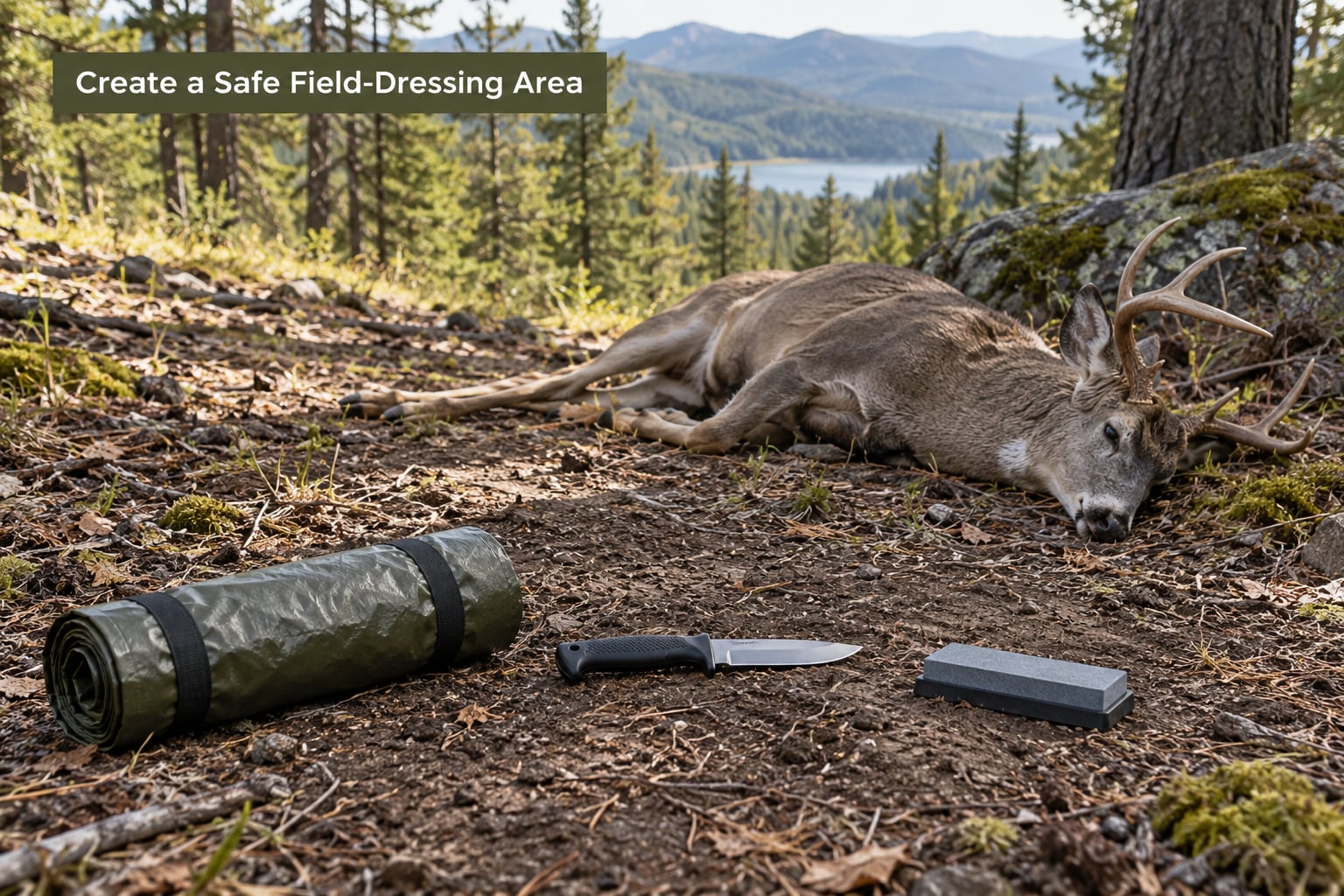
Your work area matters more than most hunters expect. Pick flat or gently sloped ground with something solid to back against, away from water and away from any travel path where another hunter might walk into a blade.
Lay the tarp down, lay out your knife, stone, gloves and cord in the order you will use them, and position the carcass so it will not roll. A deer on a slope can start sliding the moment you open the body, and that is how cuts happen.
Field-Dress the Deer Without Losing Control
Decide your method before the first cut, because the choice drives how many trips you make.
The gutless method means removing the meat without opening the body cavity. The Alaska Department of Fish and Game publishes a step-by-step guide to this technique, and most Western states recommend it because a sealed carcass stays clean, loses less weight and is far easier to handle alone. Skin the outside, cut the loin and backstrap along the spine, remove the hind legs at the ball joint and the front quarters at the shoulder seam, then lift the tenderloins from inside the chest. Nothing is dragged, and you can start bagging within minutes.
The alternative is to open the carcass and remove the organs. Hunters use it when they want the hide off quickly, when cold weather makes spoilage a non-issue, or when their processor prefers a gutted animal. It takes longer, adds weight to what you carry out, and means working inside the ribcage with a knife, which is the least stable part of the whole process.
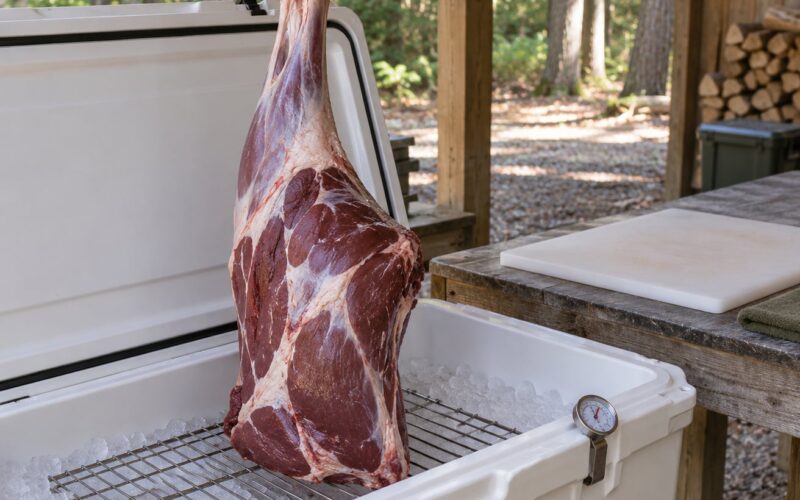
For most solo hunters, quartering with the bone in sits between the two. Separate the hind leg at the ball joint and the rear knuckle, then take the front shoulder off at the seam. A first-year hunter on the Rokslide forum packed a yearling bull out solo in two trips from a quarter mile away with only 120 feet of climb.
Whatever you choose, keep the blade sharp, keep the cutting hand on the flat of the bone rather than pressing through it, and never try to force a joint with your thumb behind the edge. If a joint will not open, reposition rather than press harder. The adrenaline rush after the shot is real, so take a minute before you make the first cut.
Bag each piece immediately. An ArcheryTalk thread describes a common two-trip layout: two quarters and the loins on the first load, the remaining quarters plus head and cape on the second.
Cool the Carcass Quickly
Cooling is where solo packouts get rushed. USDA guidance puts the temperature danger zone between 40 and 140 degrees Fahrenheit, and whole cuts of venison need to reach 145 degrees Fahrenheit when cooked.
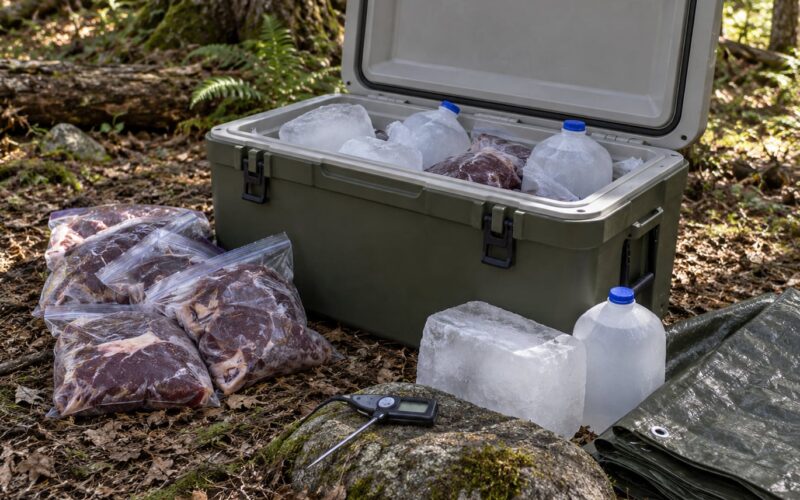
Get the meat off the ground and out of the sun immediately, keep bags shaded and slightly open to airflow, and never let a sealed bag sit in warm grass. If you have ice in a cooler at the truck, get the first load down and iced before you make the second trip.
If your processor requires the carcass delivered in a specific condition, confirm the window with them before the season. Some want the animal gutted, some want the hide on, and some charge more for a carcass that has been sitting.
Secure and Load the Deer
Load from the bottom up and put the heaviest pieces closest to your back, resting against your shoulder blades. The hip belt goes over your hip bones, not around the side of your hips, because that is the only place your skeleton can actually carry the weight.
Lift with your legs, keep the load close to your body, and never try to hoist a whole quarter in one motion if it means twisting. Buckle the compression straps so the load cannot bounce, and confirm the bag cannot swing into your knees when you step downhill.
At the truck, lay the bags flat in the cargo area and strap them down so a hard stop does not launch 70 pounds of venison at your windshield. Keep them out of sight if you intend to make a second run.
Check the Load Before Leaving
Run a ten-second inspection before you shut the door: straps tight, knife sheathed and not loose in the cargo area, load balanced over the axle, license and tag accessible, phone charged, route and daylight checked.
Then re-read the plan. One hunter on the Rokslide needed two and a half days to pack out two 6-point bulls that died 40 yards apart, three miles in and 2,000 feet up. Knowing that number in advance is the difference between a plan and a rescue.
Common Mistakes and Solo-Hunting Fixes
Working with a dull knife. The blade snags on fascia, your grip slides and the job doubles in time. Carry a stone and touch it up at every break.
Bagging meat and leaving it in the sun. A full bag sitting in warm ground can spoil before your second trip starts. Keep bags shaded, slightly open and off the ground, and get the first load to the cooler before you head back.
Loading too much on the first trip. Overpacking leads to shoulder injury on the trail and a fourth trip at dusk. Cap loads at what you can walk out steadily for an hour.
Ignoring terrain speed. One solo hunter took four 70 pound bags up a steep rocky slope and needed most of a day to cover half a mile. Walk the route empty before you commit to it loaded.
Leaving the tag in the truck. If you are making multiple trips back to the vehicle, keep your license, tag and permit on your body. Some states require the tag to travel with the animal.
Leaving emergency gear at the truck. Leave the first aid kit, headlamp, extra layers, water and your communication device with you on every load. Set them at the tree before you start cutting so a fall does not strand you without them.
One more honest limit: if the deer is a heavy mature bull and the walk out is long or steep, call a packer or a partner. Every year hunters lose animals to scavengers or spoil meat they were too stubborn to leave.
Frequently Asked Questions
How long do you have to field dress a deer after you shoot it?
In warm weather, start the field dressing immediately. The standard food-safety guidance keeps whole cuts of venison out of the 40 to 140 degree Fahrenheit danger zone for as short a time as possible, and get the meat cooled within two hours. In cold weather you have more slack, but freezing solid meat makes the breakdown slower and harder. Many solo hunters gutless the animal first because it takes less time and less knife work than opening the body cavity.
Do you need to gut a deer before packing it out?
No. The gutless method removes the meat without opening the body cavity, which keeps the carcass clean, lighter and easier to bag. The Alaska Department of Fish and Game publishes a step-by-step guide to the technique. You can still gut the animal first if your processor requires it, or if the hide and cape are part of what you want to take. Choose the method that fits the weather, your time and your pack capacity.
Can you leave a deer overnight without gutting it?
It depends entirely on your state regulations, and this is where you check the hunting regulations book rather than guess. Many states require tagged animals to be retrieved within a set number of days and require you to remove the edible meat. Leaving a carcass overnight also invites scavengers, rodents and bears, and in warm weather it spoils. If you must leave it, at minimum cool it, cover it and mark the location clearly before you return.
What is the best pack for packing out deer meat?
A frame pack or hunting pack with an internal meat sling is the most common choice because it moves the load onto your hips. Hunters report that a 70 pound load in a pack with a meat sling feels much lighter than the same weight crammed into a daypack. A shoulder-carry shock pouch works well for whole-carcass loads of smaller deer. Whichever you use, the hip belt must sit on your hip bones and the heavy pieces go against your shoulder blades.
How many trips does it take to pack out a deer solo?
Two or three trips is typical for a deer within half a mile of the truck. A yearling bull came out in two trips from a quarter mile with 120 feet of climb. Larger animals and rough terrain push it much further: one hunter needed four heavy bags and most of a day for half a mile of steep rock. Measure your route empty first, decide how many loads you can carry steadily, and add one trip of slack for weather and daylight.
When should I ask for help instead of packing out alone?
Ask for help when the animal is a heavy mature bull, the walk out is more than a couple of miles, the terrain is steep or loose, or you have any injury that affects balance and grip. Long carries with heavy loads cause most backcountry hunting injuries, and a fall with a loaded frame pack rarely improves on its own. A packer or a partner is cheaper than losing the meat to a scavenger, or worse, spending a night in the woods because your shoulder gave out halfway up.
Conclusion
Start by reading your state’s tagging and retrieval rules and confirming your license and tag are on your person. Then lay out the kit on a tarp before the first cut: sharp knife, stone, gloves, cord, game bags, headlamp, water and first aid.
Choose the method that matches the weather and the distance, set the carcass where it will not roll, and bag the meat as you cut it. Get the first load iced before you go back for the second.
Load heavy pieces low against your shoulder blades, strap everything down, and run one last check on the load before you shut the door. That last inspection is what gets you home with the deer.