Warm meat spoils in a truck bed faster than most new hunters expect, and the damage happens before you ever get home. The whole job is simple: get the carcass below 40°F as fast as possible, then keep it cold, dry and shaded for every mile of the trip. Most of the work happens in the first 30 minutes after the kill, and a cooler is only the last step.
Get the meat cold quickly by skinning and quartering it, bagging it in clean leakproof game bags, and packing it in a pre-chilled cooler surrounded by frozen packs. Keep the cooler out of direct sun, drain meltwater so it never soaks the meat, and refrigerate or process the harvest as soon as you arrive. In 2026 summer conditions that means a two-person crew working fast, not a slow afternoon at the treeline.
Below 40°F the growth of bacteria slows dramatically, and above 40°F it accelerates. USDA guidance treats 40°F to 140°F as the danger zone, and game meat does not get any exemption from that range. A deer that cools to 40°F quickly will keep for weeks in a cold cooler; the same deer left in the sun may be tainted by evening.
Table of Contents
- What You Need
- Step-by-Step: How to Transport Game Meat in Hot Weather
- Step 1: Field dress the animal immediately
- Step 2: Get out of the sun before you skin
- Step 3: Skin and quarter for faster cooling
- How to Prepare the Meat for Transport
- Step 4: Pre-chill the cooler and pack it in layers
- How to Keep Game Meat Cold While Traveling
- How to Check the Cooler During the Trip
- Common Mistakes
- What to do once you get home
- Frequently Asked Questions
- How long will deer meat last in 70 degree weather?
- How long can game meat stay in a cooler in hot weather?
- Should I hang deer meat if it is over 80 degrees?
- How much ice do I need in a cooler for a deer?
- Do you wash game meat before hanging it or bagging it?
- Can you process a deer right away?
- Conclusion
What You Need
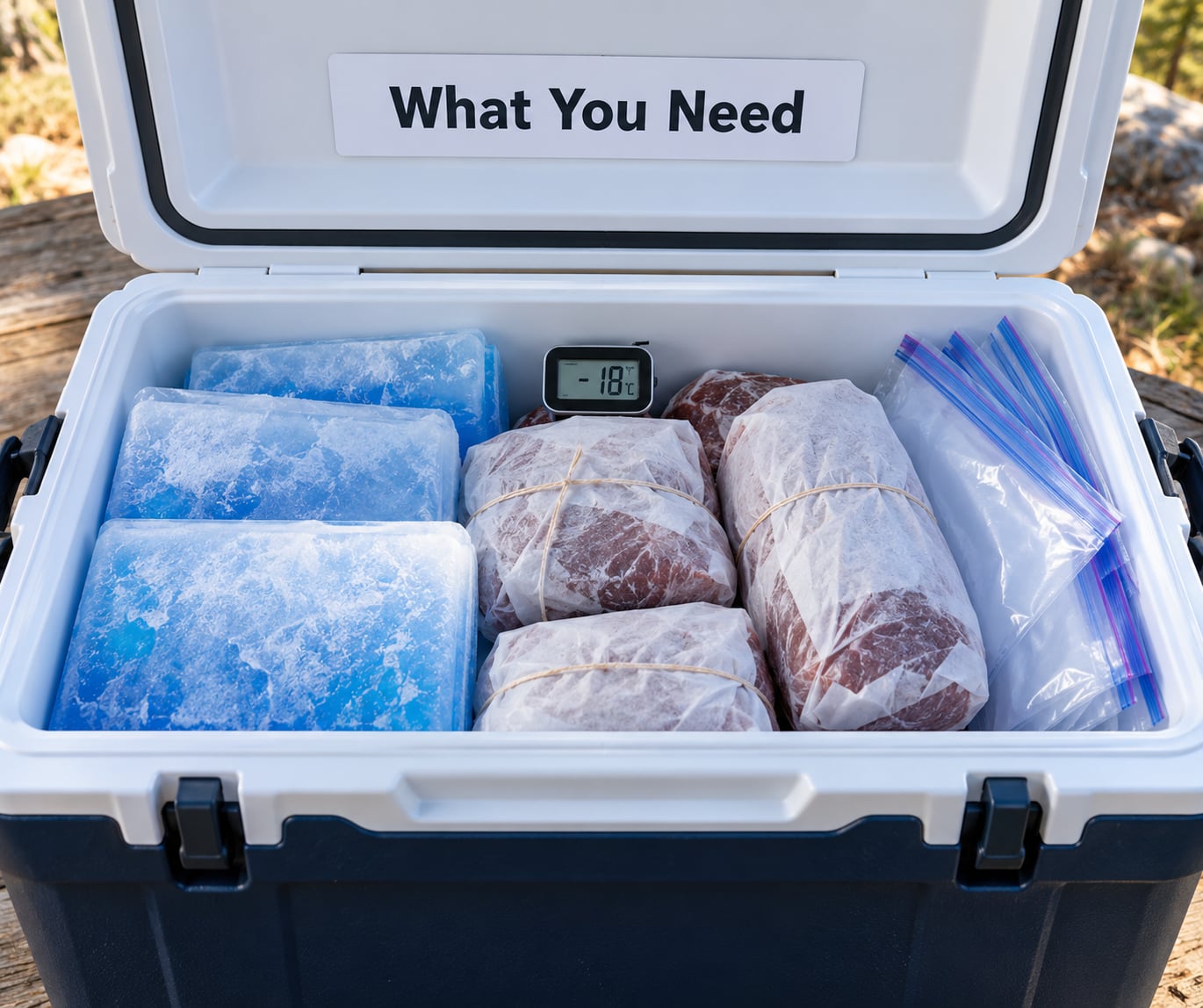
Assemble the kit before the hunt, not after the shot. Once you are kneeling over a carcass in the heat, nothing is more annoying than digging through a truck bed looking for a bag.
- A hard-sided cooler sized for the whole animal. A whitetail doe fits a 100-quart cooler in quarters. A bull elk will not, and splitting the load beats gambling on one oversized tub.
- Frozen jugs and block ice. Freeze gallon milk jugs and 2-liter bottles the night before. Hunters on hunting forums call this the single most reliable trick in warm weather, because jugs hold cold far longer than a bag of loose cubes.
- Clean food-safe containers or game bags. Heavy-duty plastic bags, leakproof tote liners or breathable cotton game bags all work, as long as they are clean and dry.
- Absorbent material. Old towels, a roll of paper towels or a rag in the bottom of the cooler catches meltwater before it turns your venison into a sponge.
- A meat thermometer. Push probes into thick muscle groups rather than guessing through a bag.
- A tarp or poncho. Shade over the work area and over the cooler in the truck bed does more than any cold pack.
- Rubber gloves and a bucket. Hot-weather field dressing is a messy job, and gloves with a grip handle gutting in slippery conditions better than bare hands.
Toss a plastic bag and a spare pair of gloves in with the kit. Bags full of entrails and a blowfly cloud will derail any drive home if you have to stop unexpectedly.
Step-by-Step: How to Transport Game Meat in Hot Weather
Body heat is the reason summer kills go bad. Muscles keep generating heat after death because circulation has stopped and the tissue is still metabolizing, so a fresh carcass holds heat after it is off the animal. Between 70°F and 120°F, bacteria on the surface can double roughly every 20 minutes. That is the number that should set your pace.
Use this reference table to decide how much time you actually have once the animal is down.
| Air temperature | Realistic safe window | What to do |
|---|---|---|
| Below 40°F | Days | Hanging is fine. Cool first, then bag. |
| 40°F to 50°F | Up to 24 hours without ice | Skin and quarter as soon as practical. Ice on hand is still worth it. |
| 50°F to 65°F | 3 to 6 hours | Do not hang. Quarter, bag and ice immediately. |
| 65°F to 80°F | 2 to 3 hours | Prop the cavity open, get shade working, start cooling before you finish skinning. |
| Above 80°F | Under 2 hours | Skin and quarter on the spot. Get it on ice before anything else. |
Step 1: Field dress the animal immediately
Open the belly cavity right away and prop it with a stick so air can move through it. A closed cavity holds heat and trapped moisture against the bone, which is exactly where bone souring starts.
Get the entrails out, then move them well away from where you will be working. Keeping the gut pile close attracts flies, and blowflies lay eggs that survive a short drive.
Step 2: Get out of the sun before you skin
A skinned carcass in direct sun is worse off than a hide-on carcass in shade, because the hide slows heat loss while the exposed muscle surface picks up radiant heat fast. Build a tarp canopy first, then work underneath it.
Step 3: Skin and quarter for faster cooling
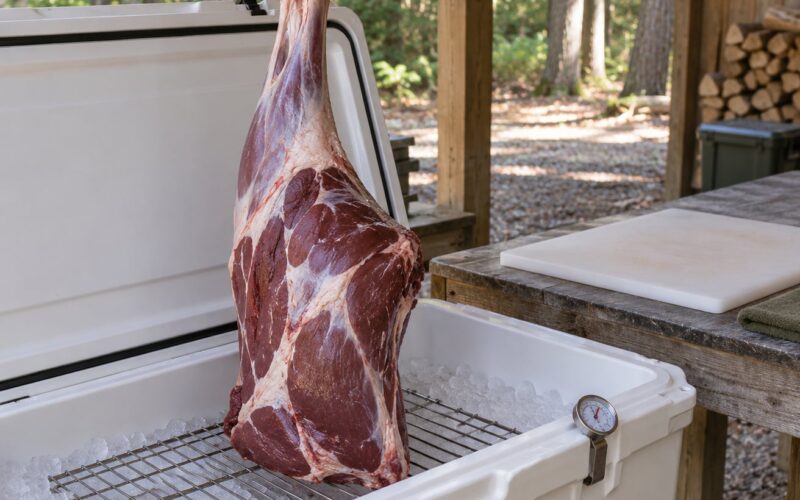
Skin the animal, then quarter it into pieces small enough that a probe thermometer can reach the center of each one. Deer, elk and smaller game are usually quartered at the shoulder and hip; a large bull may need the hindquarters and fore quarters broken down further.
Deboning the shoulders and loin helps the most, because bone conducts heat out slowly and the tissue around a bone holds warmth longest. Ball joints and the area under the front shoulder spoil first.
How to Prepare the Meat for Transport
Rinse contamination off with cold water if the carcass is muddy, then let it air-dry. Hunters argue about washing, and the balanced answer is that cold water is fine as long as the meat dries quickly. What accelerates spoilage is washing the carcass and then sealing it up wet.
Dry the surface thoroughly, then package each piece. Keep the bag snug rather than air-filled; a loose bag holds air that sits warm against the meat. Do not overpack the cooler, either, because airflow around the packages is part of what keeps them cold.
Step 4: Pre-chill the cooler and pack it in layers
Pre-chilling matters. A room-temperature cooler needs hours to pull a warm carcass down, and that delay happens while you are driving. Load the cooler with frozen jugs and ice ahead of time, or at minimum run it empty with a handful of ice while you dress the animal.
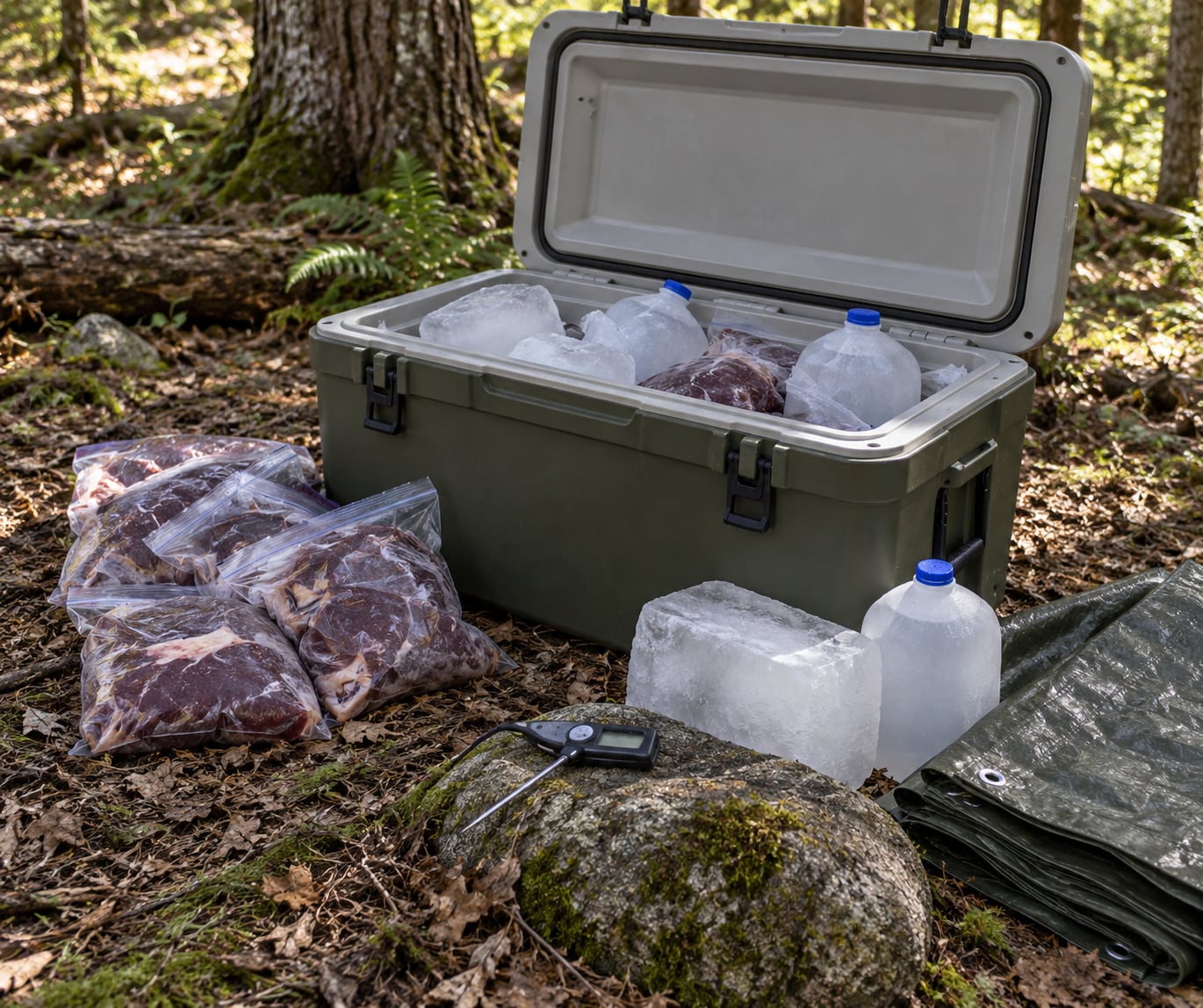
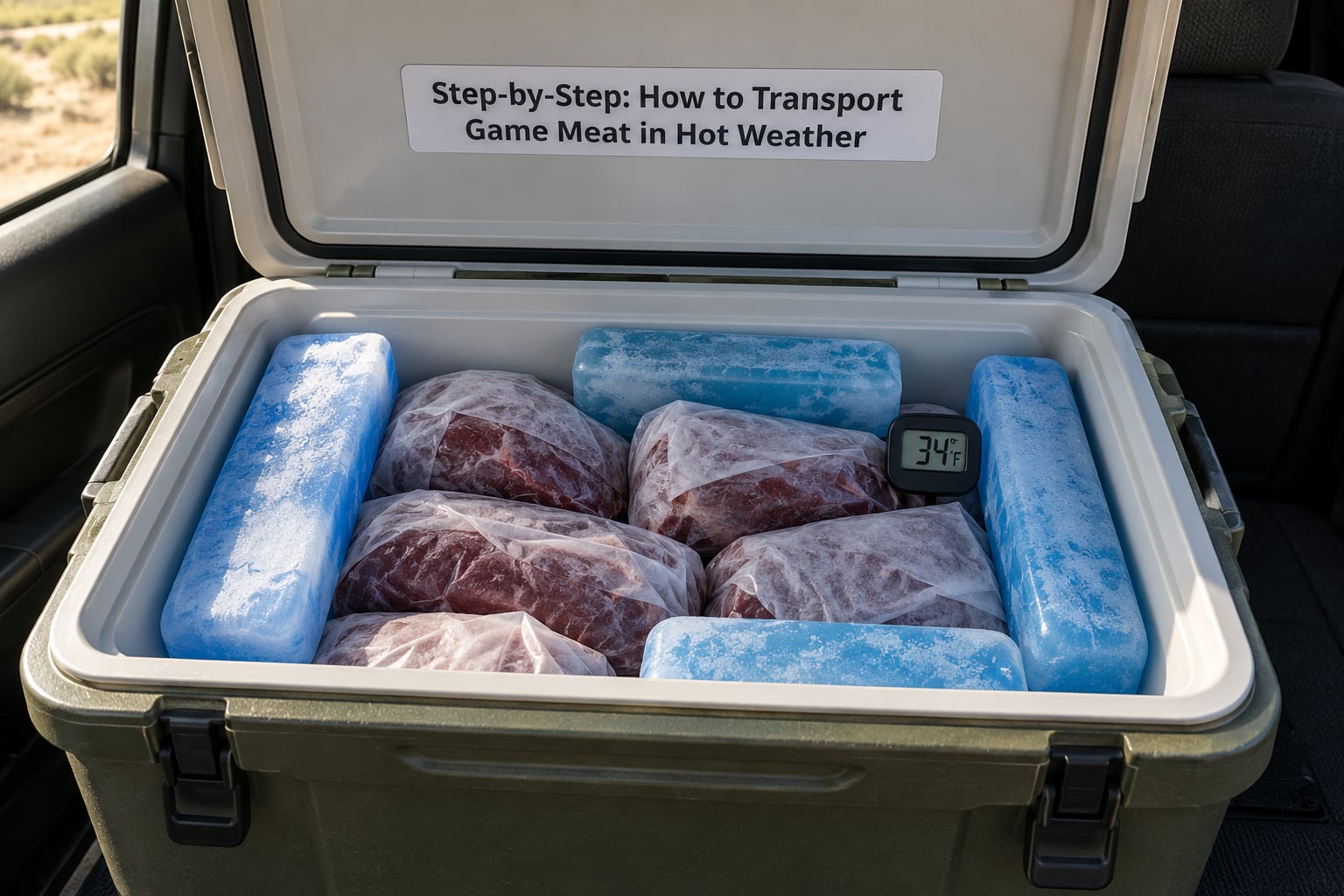
Pack in layers from the bottom: a bed of frozen jugs and block ice, then the bagged meat, then absorbent towels, then more jugs and loose ice, and fill the headspace to the brim. Hunters on archerytalk.com describe exactly this order and the same reason for it: contact with ice on both sides of the meat.
Keep meltwater away from the meat. Drainage matters in summer because a cooler full of blood-colored water at 70°F is a warm liquid bath, and soaked meat loses its flavor long before it turns unsafe. Place a perforated rack or a folded towel under the packages if you cannot drain as you go.
How to Keep Game Meat Cold While Traveling
Never let the cooler ride on a truck roof or a hood. Sunlight on a dark truck bed can push interior temperatures well above the outside air, which is how good deer get lost on the trip home.
A truck cap or canopy helps but does not solve it, so treat any parked truck in the sun as a hot box. Keep the cooler in the passenger compartment, out of direct sun, and take the last driving break when the meat does rather than when your legs do.
Pre-chilled bottles of frozen water, cheap and heavy, beat bags of cubed ice on hot days. Block ice is slower to melt than cubes. Dry ice works for long holds, but it needs ventilation and it can freeze meat solid, so keep it away from direct contact with the packages.
If you have no cooler at all, you have options. Shade, moving air and clean cloth strips to deter magpies and ravens beat almost everything else. A tarp over stacked gear creates a serviceable insulated box. Hunters have also held meat for days by rotating it: take it out at sundown, hang it in the moving air to cool toward 40°F, then rebag it and cover it with sleeping bags during the day heat.
How to Check the Cooler During the Trip
Check the cooler at every fuel stop and every hour, whichever comes first. Open it fast, look at the ice, and check one package with the thermometer.
If ice is gone but the meat still reads near 40°F, you are fine for now; add bags of ice or a jug from a gas station cooler. If the meat is climbing toward 50°F, the setup is failing and you need more cold mass now, not at the next rest area.
Watch for signs of trouble that show up before the smell does: meat temperature rising, meltwater with a strong odor, or a cooler that has been sitting open. In warm weather the failure mode is usually too much time, not too little ice, so the honest fix is to cut the drive short.
Common Mistakes
- Hanging meat above 80°F. Air flow will not save it. Skin, quarter and ice instead; the advice from hunting organizations is unambiguous on this.
- Loose ice soaking the meat. Ice that melts into the bags gives you a warm bath. Use frozen jugs against the meat and loose ice only in the headspace.
- Wrapping hot meat. Covering meat before it is cold traps the heat. Chill first, cover second.
- A cooler that is too small. Overfilled coolers lose air circulation and hold less usable cold. Two half loads beat one crammed one.
- Leaving the cooler in a hot vehicle. Every hour parked in sun is an hour of spoilage you already spent working to prevent.
- Assuming ice alone makes it safe. Ice slows growth; it does not reverse it. Once meat has sat warm, freezing does not fix the taste.
- Hanging high to dodge bears. Bears climb. A tree cache at head height is an invitation, not a defense.
- Using cheesecloth as fly protection. Blowflies deposit eggs through it. Real game bags or tight heavy-duty bags do the job.
What to do once you get home
Skip the aging period on warm-weather kills. University extension guidance on whole game suggests aging windows of about 3 days for antelope, 7 days for deer and up to 14 days for bull elk and moose, but those assume the meat has been cooled quickly and kept cold. When a carcass has had a hot, slow first day, cut and process it right away.
Cut, wrap and get it into a refrigerator at 40°F or below, or into the freezer. In the refrigerator, keep raw game meat on the lowest shelf in a pan so nothing drips onto other food. If you cook the meat instead, cook to the safe minimum internal temperature: 145°F for whole cuts, 160°F for ground meat and 165°F for poultry, with a rest time.
Ask your state wildlife agency about tagging, evidence of sex and species, and chronic wasting disease bagging rules before you plan a trip across a state line. Rules vary by state and by the disease status of the country you are leaving, and they are not something to guess at.
If you are shipping instead of driving, use a soft-sided cooler as a checked bag and an overnight or two-day carrier, and check the carrier’s rules on perishables before you book. Plan on freezing the meat first if you have the option.
Frequently Asked Questions
How long will deer meat last in 70 degree weather?
Once field dressed, you realistically have 3 to 6 hours before bacterial growth starts to affect quality, and about 2 to 3 hours in the 65 to 80 degree range. Skin, quarter and bag the deer inside that window, then put it on ice. Meat cooled to 40°F quickly can hold for weeks; meat left warm overnight is usually already tainted.
How long can game meat stay in a cooler in hot weather?
A well-packed cooler holding a whole deer or elk can stay at or under 40°F for a full day or more in summer heat, especially with frozen jugs against the meat. Block ice and jugs outlast cubed ice. Check hourly on long drives, keep the cooler shaded and closed, and treat a rising temperature as a signal to add ice or stop.
Should I hang deer meat if it is over 80 degrees?
No. Above 80 degrees, air flow will not cool the carcass fast enough and warm nights trap heat in the meat. Skin and quarter it as soon as you can, bag it and put it on ice. Hanging works in cool, dry, well ventilated conditions, usually between 40 degrees and freezing, which is not what summer gives you.
How much ice do I need in a cooler for a deer?
Pack enough that the meat touches cold on every side, then fill the headspace. A common setup is a bed of frozen jugs or block ice on the bottom, bagged meat on top, towels over that, and jugs plus loose ice to the brim. Plan on at least half the cooler’s volume in frozen mass for a full day in summer heat.
Do you wash game meat before hanging it or bagging it?
A rinse with cold water is fine for removing dirt and blood, but dry the surface thoroughly before the meat goes into a bag. Sealing wet meat in a warm environment speeds bacterial growth and dulls the flavor. Wash early, air-dry well and keep the carcass shaded and moving air until the surface is dry.
Can you process a deer right away?
Yes, and in hot weather you should. Once the meat is fully cooled, cut and process it the same day rather than aging it. If you cook instead of refrigerating, take whole cuts to 145 degrees Fahrenheit, ground meat to 160 and poultry to 165, measured in the thickest part with a thermometer.
Conclusion
Pre-chill the cooler the night before, get shade over the animal, and skin and quarter it before the heat does the work for you. Bag the meat dry, pack it against frozen jugs, drain the meltwater and keep the cooler out of a hot truck bed.
Then get it into a refrigerator at 40°F or below, or process it the same day you arrive. That is the entire difference between a good summer deer and one you give away.