Most wild hog tastes bad for one of four reasons: the animal was an old boar with dense muscle, the meat is so lean it has no fat to keep it moist, the scent glands were not removed cleanly, or it was cooked hot and fast like domestic pork. Fix those four things and a young wild pig is genuinely good eating, closer to a well-cooked domestic shoulder than to venison. This guide covers how to cook wild hog so it tastes good, from trimming the carcass to the thermometer reading that ends the cook.
A young pig under about 50 pounds is the best meat. An old sow or mature boar is a different proposition entirely: mostly usable as ground meat, sausage, or a long braise. Knowing which animal you have in the freezer tells you more about the final plate than any seasoning will.
The pattern that works every time is simple: trim well, add fat the animal never gave you, brown the outside hard, then cook low and slow with liquid until the connective tissue turns to gelatin. Rest it properly and slice it against the grain.
Table of Contents
- What You Need
- Step-by-Step: How to Cook Wild Hog So It Tastes Good
- 1. Trim the Meat and Remove Silver Skin
- 2. Brine or Season Before Cooking
- 3. Choose the Right Cooking Method
- 4. Cook to a Safe Internal Temperature
- 5. Rest, Slice, and Finish the Dish
- Common Mistakes
- Frequently Asked Questions
- What is the safest internal temperature for wild hog?
- How can I remove the gamey taste from wild hog meat?
- Should wild hog be brined before cooking?
- What is the best way to cook a whole wild hog shoulder?
- Can I cook wild hog on a grill, and how long does it take?
- How should cooked wild hog be stored?
- Conclusion
What You Need
The tool list for this is short, and most of it you already own. What is hard to do without is a thermometer, because wild hog lies to you on every other signal: color, texture, and time.
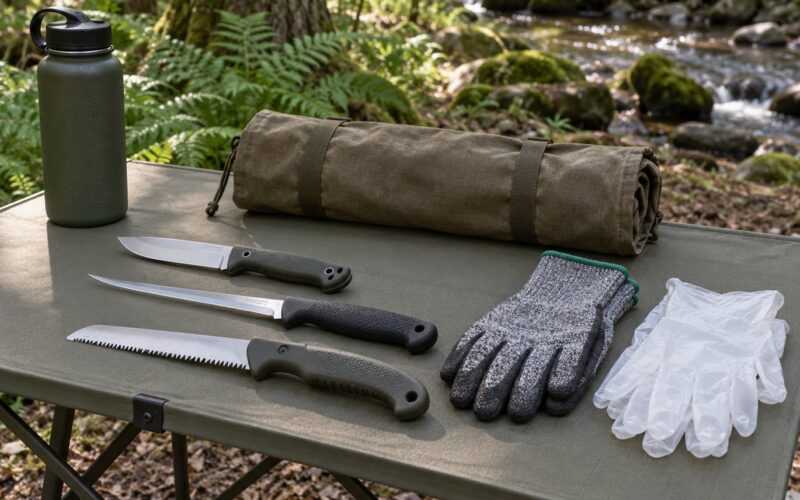
- A sharp boning knife and a second, duller knife for breaking down the shoulder and ham.
- A sturdy cutting board, ideally grooved on one side so juice runs off the meat instead of under it.
- An instant-read thermometer with a thin probe. A chunky dial probe drilled into a shoulder reads late and lies to you.
- A heavy pan, Dutch oven, or roasting pan with a lid. The lid matters more than the brand, because covered cooking is what tenderizes.
- Fat you did not get from the animal. Bacon, a strip of pork belly, oil, or butter. Wild hog needs this added, always.
- Salt, black pepper, and aromatics: garlic, onion, celery, bay leaf, and something acidic like cider vinegar or tomato.
- Brine ingredients, optional: kosher salt, sugar, and water for a wet brine, or just salt for a dry brine.
One more piece of gear pays for itself fast: a large bowl or bucket deep enough to submerge the meat. Brining, buttermilk soaking, and ice-water soaking all need the same container.
Step-by-Step: How to Cook Wild Hog So It Tastes Good
The order below is deliberate. Trimming before seasoning, seasoning before heat, and resting after heat each fix a different problem, and skipping one leaves you with dry meat.
1. Trim the Meat and Remove Silver Skin
Trim the fat and the membrane off, because that is where the gamey flavor hides and where the meat refuses to become tender. Silver skin is the thin, glossy sheet on the surface of a shoulder or ham; slide your boning knife under it, press flat against the meat, and saw it off in long strokes.
Cut the meat into even portions, roughly two to three inch chunks for braising. Uneven pieces cook at different rates, and the small ones turn dry while the large ones are still tough.
Trim the tenderloin completely, removing every scrap of sinew and surface fat. It has no fat of its own to spare, and the sinew stays rubbery no matter how long you cook it.
2. Brine or Season Before Cooking
A brine works in two directions: salt seasons the meat deep into the muscle, and the soak draws out blood and stronger odors from the surface. For a simple wet brine, dissolve a quarter cup of kosher salt and a quarter cup of brown sugar per gallon of cold water, submerge the meat, and refrigerate 4 to 12 hours.
A dry brine is easier and nearly as good. Salt the meat at roughly one tablespoon per pound, leave it uncovered on a rack in the refrigerator for up to 24 hours, and let it go slightly tacky and dark before cooking. That surface is where the crust comes from.
For taint specifically, cooks on the AskCulinary and homestead forums describe dicing the meat, covering it with onions, red wine and a splash of red wine vinegar, and changing the liquid every 12 to 16 hours over two to three days. That does not erase boar taint, but it takes the edge off noticeably. Never count seasoning as a cure for it.
3. Choose the Right Cooking Method
Match the method to the cut, and match the cut to the animal. Braising is the most forgiving and the most likely to rescue a tough piece; roasting is for the tender cuts; pressure cooking collapses connective tissue in a fraction of the time.
- Roasting: tenderloin and loin. High heat, short time, no liquid. This is the one cut that wants to be treated like domestic pork.
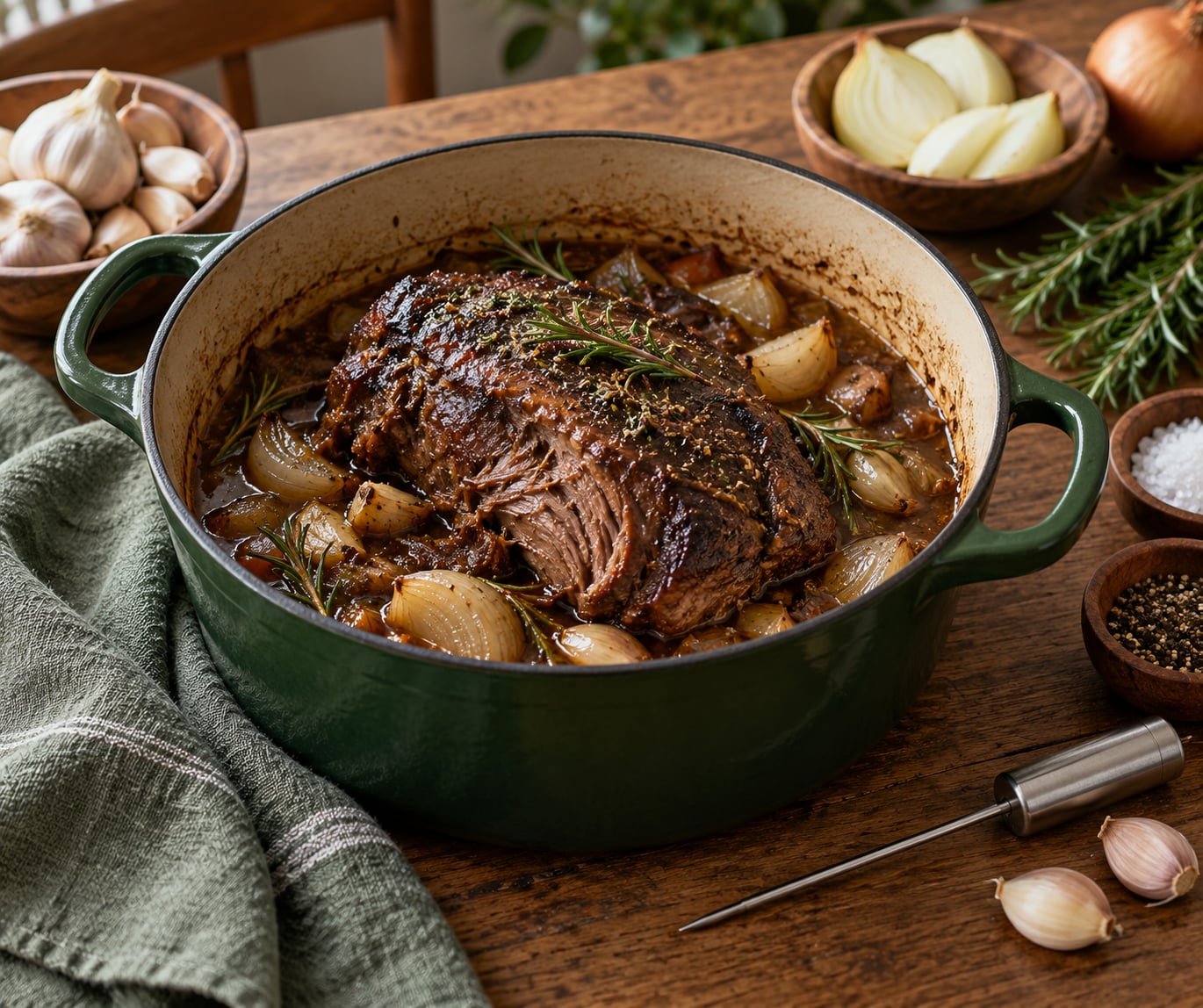
- Braising: shoulder, ham, shank. Sear hard, then covered at 300 to 325 F with liquid halfway up the meat for two to four hours.
- Grilling over live coals: shoulder or a whole shoulder over real coals at 185 to 190 F, bone side down, without flipping, as described on the ArcheryTalk wild boar cooking thread, until the internal temperature reaches 185 F.
- Foil and smoke: rear quarters or belly wrapped in foil, smoked low and slow, unwrapped near the end for bark. The BBQ Brethren crowd and the smokers on r/smoking both cure their rear quarters first.
- Pressure cooker: shoulder or shank, 45 to 60 minutes at high pressure with a cup of liquid, then a 15 minute natural release. Fall-apart results from an hour of work in twenty minutes.
4. Cook to a Safe Internal Temperature
Cook wild hog to at least 160 F internal and verify it with a thermometer, according to USDA guidance for whole cuts of wild game. Color is not a signal here; wild hog stays dark after cooking, and clear juice is not a guarantee. Some hunters also cook to 170 F to put trichinae concerns fully behind them, which costs you moisture you cannot spare on this meat.
Push the probe into the thickest part of the muscle, away from bone and away from the pan wall. Check the two or three thickest spots on a shoulder, since they read differently from each other.
| Cut | Best method | Oven temperature | Approximate time | Pull temperature |
|---|---|---|---|---|
| Tenderloin | Sear or roast | 425 F | 12 to 18 minutes | 145 to 150 F |
| Loin chops | Pan or grill | Hot, seared | 4 to 6 minutes per side | 145 to 150 F |
| Shoulder | Braise | 300 to 325 F | 2.5 to 4 hours | 190 to 200 F |
| Fresh ham | Braise | 300 to 325 F | 3 to 4 hours | 190 to 200 F |
| Jowl and belly | Roast or braise | 325 F | 2.5 to 3.5 hours | 190 to 195 F |
| Ribs | Smoke or braise | 275 to 300 F | 3 to 4 hours | 185 to 190 F |
| Ground pork | Any pan cook | Medium heat | Brown fully, 160 F | 160 F minimum |
Pull shoulder and ham in the 190 to 200 F range, past the safety minimum, because collagen only converts to gelatin with sustained heat. Carryover cooking adds another 5 to 10 F on the way to the table, so pull a touch early.
5. Rest, Slice, and Finish the Dish
Rest the meat 30 minutes for a shoulder or 15 minutes for a tenderloin. Resting lets the muscle fibers relax and reabsorb the juice that pushed out during cooking, and it is the cheapest improvement in this whole process.
Slice across the grain. Look at the finished cut, find the direction the fibers run, and cut perpendicular to them, which shortens the strands and makes tough meat feel tender. Thin slices and a heavy knife work better than thick ones.
Finish with a sharp, acidic sauce. Something like cider vinegar, mustard and brown sugar, or a pan gravy made from the braising liquid and the bones, cuts the richness of a fatty shoulder and gives a lean cut something to land on.
Common Mistakes
Nearly every disappointing plate of wild hog traces back to one of these.
- Cooking it like domestic pork. Roasting a shoulder at 375 F squeezes the moisture out of lean muscle in a way that domestic pork can survive. Fix: 300 to 325 F, covered, with liquid in the pan.
- Leaving the silver skin on. That membrane does not render and stays rubbery no matter how long you cook. Fix: remove it before the meat goes anywhere near heat.
- Nicking the scent glands. Cutting into a gland releases the taint into surrounding meat. Fix: cut the gland out whole, clean margin included, as hunters explain on the 2coolfishing wild hog thread.
- Skipping the thermometer. Pulling at a guessed time is why the same recipe fails for someone else. Fix: probe the thickest part and trust the number.
- Overcrowding the pan. Sear in batches so every surface browns. Steam from crowding prevents browning and drops the pan temperature.
- Over-salting a brine. Salt accumulates in the braising liquid and in the reduction at the end. Fix: measure the brine, use it lightly, and season to taste at the table.
- Slicing straight off the heat. Cut too soon and the juice runs onto the board. Fix: rest, then slice against the grain.
- Hanging a carcass in warm weather. Advice on the GON forum splits between 7 to 10 days of aging in ice and processing immediately. Both can work, but above roughly 40 F ambient, process the meat instead.
One more that belongs here: cooling. A field-killed carcass needs to come down out of the 40 to 140 F danger zone quickly. Get it into a cooler with ice within a couple of hours and get it to a refrigerator or freezer that day.
Frequently Asked Questions
What is the safest internal temperature for wild hog?
USDA guidance is at least 160 F internal for whole cuts of wild hog, measured in the thickest part of the muscle with a thermometer. Some hunters cook to 170 F to settle trichinae concerns completely. Shoulder and ham are usually pulled higher still, at 190 to 200 F, because collagen needs sustained heat to become gelatin.
How can I remove the gamey taste from wild hog meat?
Start with the glands: cut out every scent gland whole, including a clean margin of surrounding meat, because a nick releases the taint. Then soak the meat in an acidic marinade of onions, red wine and vinegar for two to three days, changing the liquid daily. A brine or buttermilk soak helps pull blood and surface odor. Nothing removes taint completely, and heavy seasoning only hides it.
Should wild hog be brined before cooking?
Yes, especially for shoulder, ham and anything coming off an older animal. A wet brine of a quarter cup kosher salt and a quarter cup sugar per gallon, submerged 4 to 12 hours, seasons deep into the muscle and draws out surface odor. A dry brine at about one tablespoon per pound, 4 to 24 hours uncovered in the refrigerator, gives you better crust and simpler cleanup.
What is the best way to cook a whole wild hog shoulder?
Brown it first in a hot pan or Dutch oven, then cover it with bacon and aromatics, add broth or water to come halfway up the meat, and braise at 300 to 325 F until a probe slides into the connective tissue with no resistance, usually 2.5 to 4 hours. Pull around 190 to 200 F, rest 30 minutes, and slice across the grain.
Can I cook wild hog on a grill, and how long does it take?
Yes. Shoulder and ham work as a two-zone cook over real coals, keeping a surface temperature near 185 to 190 F, bone side down, without flipping, and taking the internal temperature to 185 F or higher. Expect four to six hours for a whole shoulder. Tenderloin and loin chops go over direct heat, 4 to 6 minutes per side, pulled at 145 to 150 F.
How should cooked wild hog be stored?
Refrigerate cooked meat at 40 F or below and use it within three to four days. For larger kills, freeze it in meal-sized portions in vacuum bags, pressed flat so it freezes fast and stacks well. Vacuum-packed portions hold quality for several months. Shoulder, ham and jowl also cure well, and cured rear quarters smoke into ham that keeps far longer than fresh meat.
Conclusion
Four things decide whether wild hog tastes good: take the silver skin off, cut out every scent gland whole, add fat the animal did not have, and cook it slowly with liquid until a probe goes into the shoulder without resistance. Check the temperature instead of guessing, hit at least 160 F, rest the meat, and slice it across the grain.
A young wild pig handled that way is a genuinely good meal. Pick one method this weekend, start with the shoulder, and save the tenderloin for a fast sear.