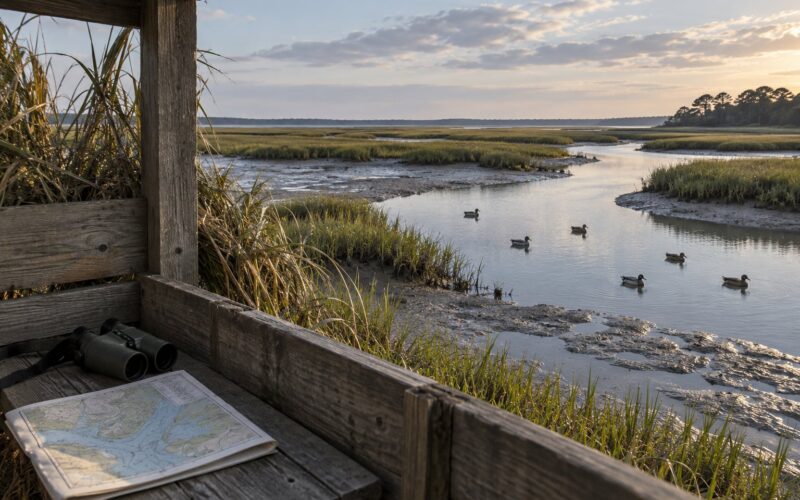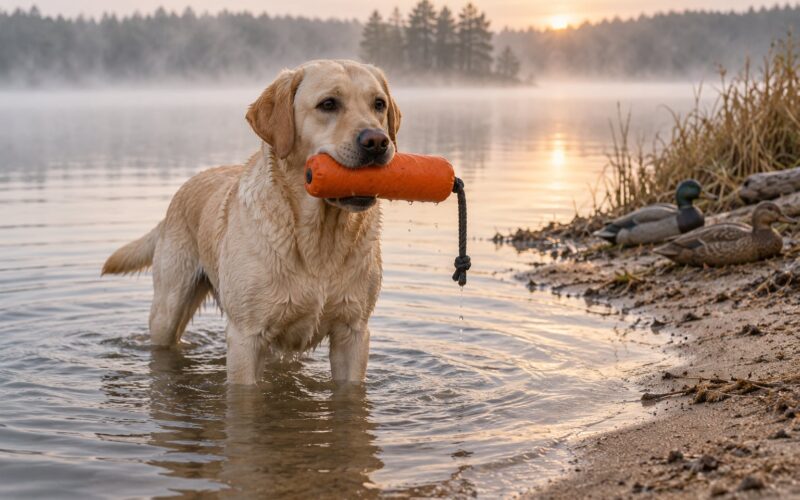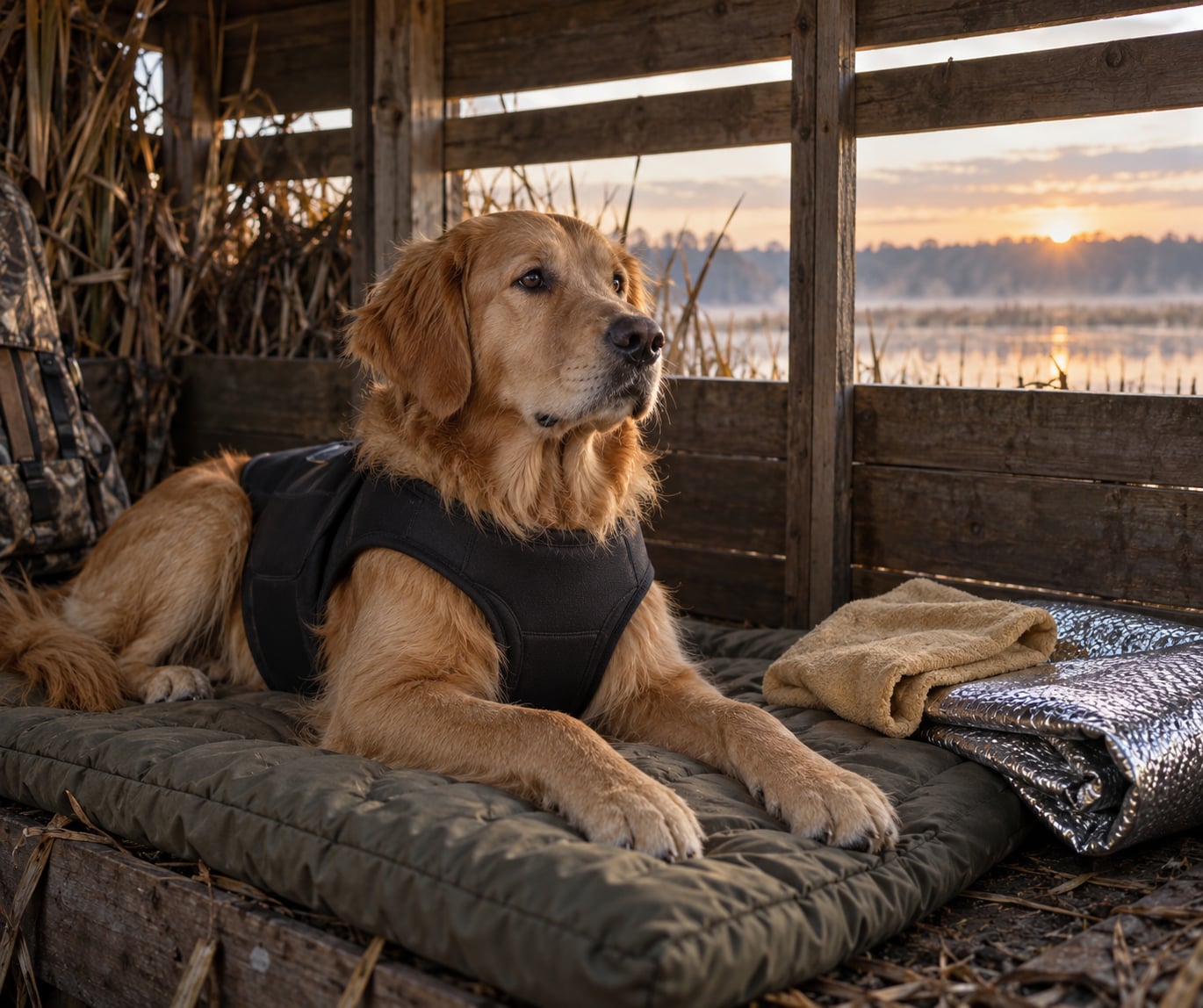
How to keep a retriever warm in cold water comes down to three things: limit the time your dog spends soaked, get that wet coat dry and out of the wind between retrieves, and give the dog a warm, sheltered place to sit while it waits for the next shot. A neoprene dog vest helps with the first, but it cannot do the work alone. Most retrievers handle an early-season morning fine and run into trouble when the air drops below freezing and the wind comes off open water.
The uncomfortable part is that a well-trained retriever will keep working long past the point where it is cold. Obedience is the whole reason you got a bird dog, and it is also the reason you have to set the temperature limit instead of reading it off the dog.
Nothing here is complicated, and none of it takes more than a few minutes per shooting rotation. The plan below covers gear, a step-by-step protocol, and the point where you stop the hunt. Updated for 2026 waterfowl seasons.
Table of Contents
- What You Need Before Your Retriever Gets Wet
- How to Keep a Retriever Warm in Cold Water: Step by Step
- 1. Check the water and weather before your retriever swims
- 2. Warm the retriever before it enters the water
- 3. Limit time in the water
- 4. Dry and monitor your retriever after the swim
- 5. Know when to stop and get veterinary help
- Common Mistakes That Put a Retriever in Cold Water Danger
- Frequently Asked Questions
- Do neoprene dog vests work for cold water?
- How cold is too cold for a retriever to swim?
- How do I know if my dog is hypothermic?
- Should I dry my dog off between every retrieve?
- How do I warm a wet dog up in the truck?
- Is it ever safe to let a retriever retrieve a bird off ice?
- Start Here Tomorrow Morning
What You Need Before Your Retriever Gets Wet
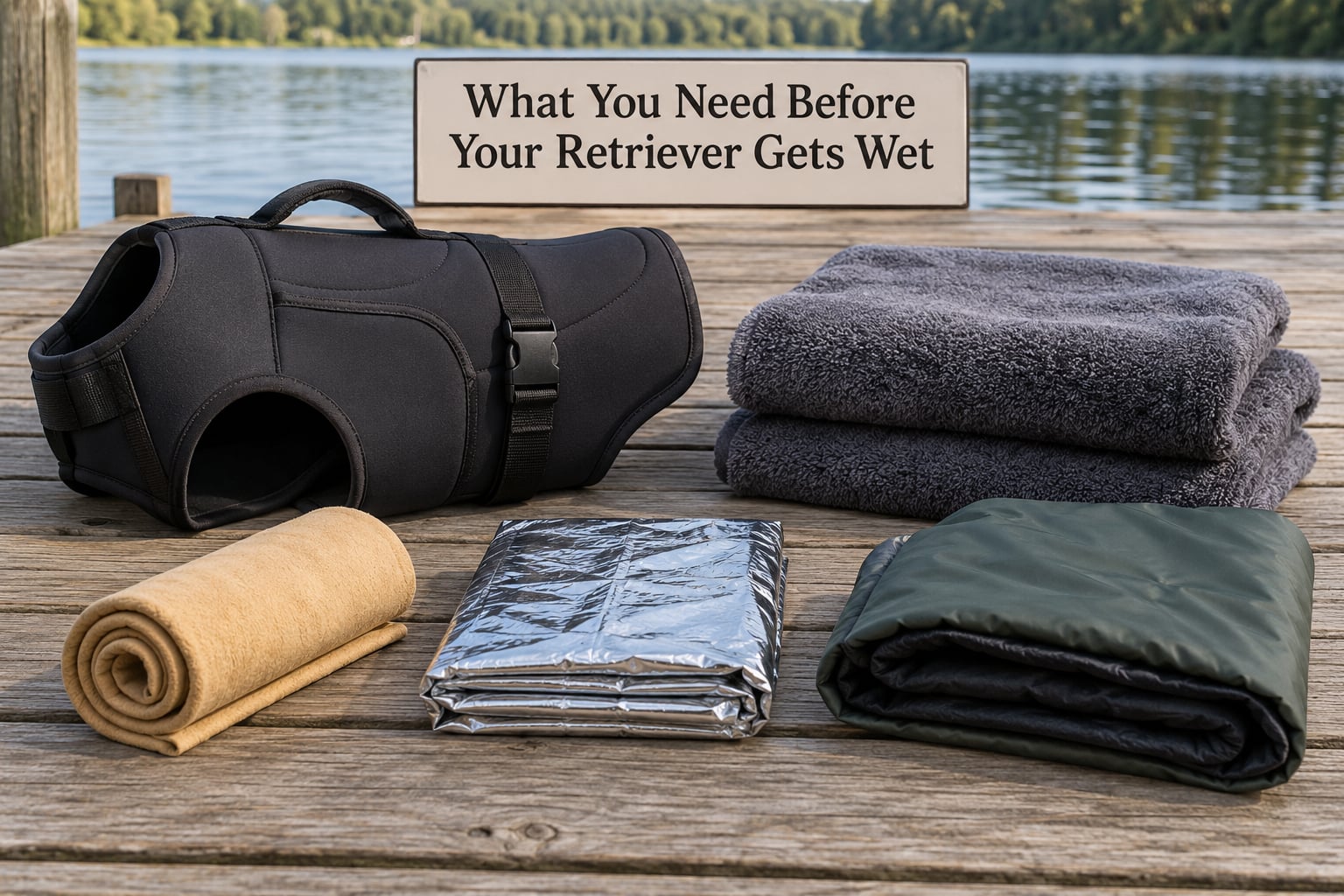
Assemble this kit the night before, not in the truck at 5 a.m. Everything on it is ordinary gear that fits in a blind bag.
- A well-fitting neoprene dog vest. Five-millimeter neoprene with an adjustable torso strap, grab handles for lifting the dog into a boat or over a gunnel, and enough shoulder room to run flat out.
- Two or three dry towels and a chamois cloth. Towels blot, chamois wicks water out of the undercoat where a towel just pushes it around.
- A windproof recovery blanket or dry jacket. Anything that stops wind moving across a wet coat is worth more than another layer on an already soaking dog.
- A mylar thermal blanket and a pair of hand warmers for emergency warming away from the truck.
- An insulated dog pad and a windbreak for the blind or boat, so the dog is not sitting on cold wet ground in moving air.
- Fresh drinking water. Cold, hard working dogs drink more than you expect.
- A rectal thermometer and a spare vest in the bag. Knowing the exact stage changes how quickly you act.
- Blanketing for the crate or dog box. On the drive there and back, most heat loss happens in a parked vehicle.
Two of those items do more work than people expect: the chamois and the windbreak. Owners on the waterfowl forums consistently report that keeping a dog out of the wind and off cold wet ground makes a visible difference between retrieves.
How to Keep a Retriever Warm in Cold Water: Step by Step
1. Check the water and weather before your retriever swims
Cold stress is a combination, not a single number. Water temperature, air temperature, wind speed, current, and how long the dog stays soaked all stack up, and so does the dog’s age, coat density, body condition, and health. An indoor house dog that never sees winter is far less cold-tolerant than a kennel dog acclimated to it.
Use these figures as a starting point, not a permission slip. Sources differ on the wind threshold, and both figures circulate because both are defensible: many handlers flag hypothermia risk around 55F water combined with 40F air and 10 to 20 mph wind.
| Water | Air | Wind | Risk | Action |
|---|---|---|---|---|
| Above 60F | Above 45F | Light | Low | Work normally, dry between retrieves |
| 55 to 60F | 35 to 45F | Under 10 mph | Moderate | Vest on, limit to short bursts, dry fully |
| 45 to 55F | 32 to 40F | 10 to 20 mph | High | Vest plus windproof layer, one retrieve at a time, short rotations |
| Below 45F | Below 32F | Any | Severe | Skip open water, or end the hunt early |
The dog’s behaviour beats the table. If your retriever hesitates at the waterline, lifts its paw on the way back, or turns to watch you instead of chasing, shorten the outing regardless of what the thermometer says. Thin-coated, senior, puppy, and arthritic dogs belong one tier higher than the table shows.
Never send a dog onto ice to retrieve a bird. Ice is thinnest in the middle of a pond, which is exactly where the bird lands, and there are documented cases of handlers having to walk away while a dog fought its way back up after breaking through. Call the bird lost.
2. Warm the retriever before it enters the water
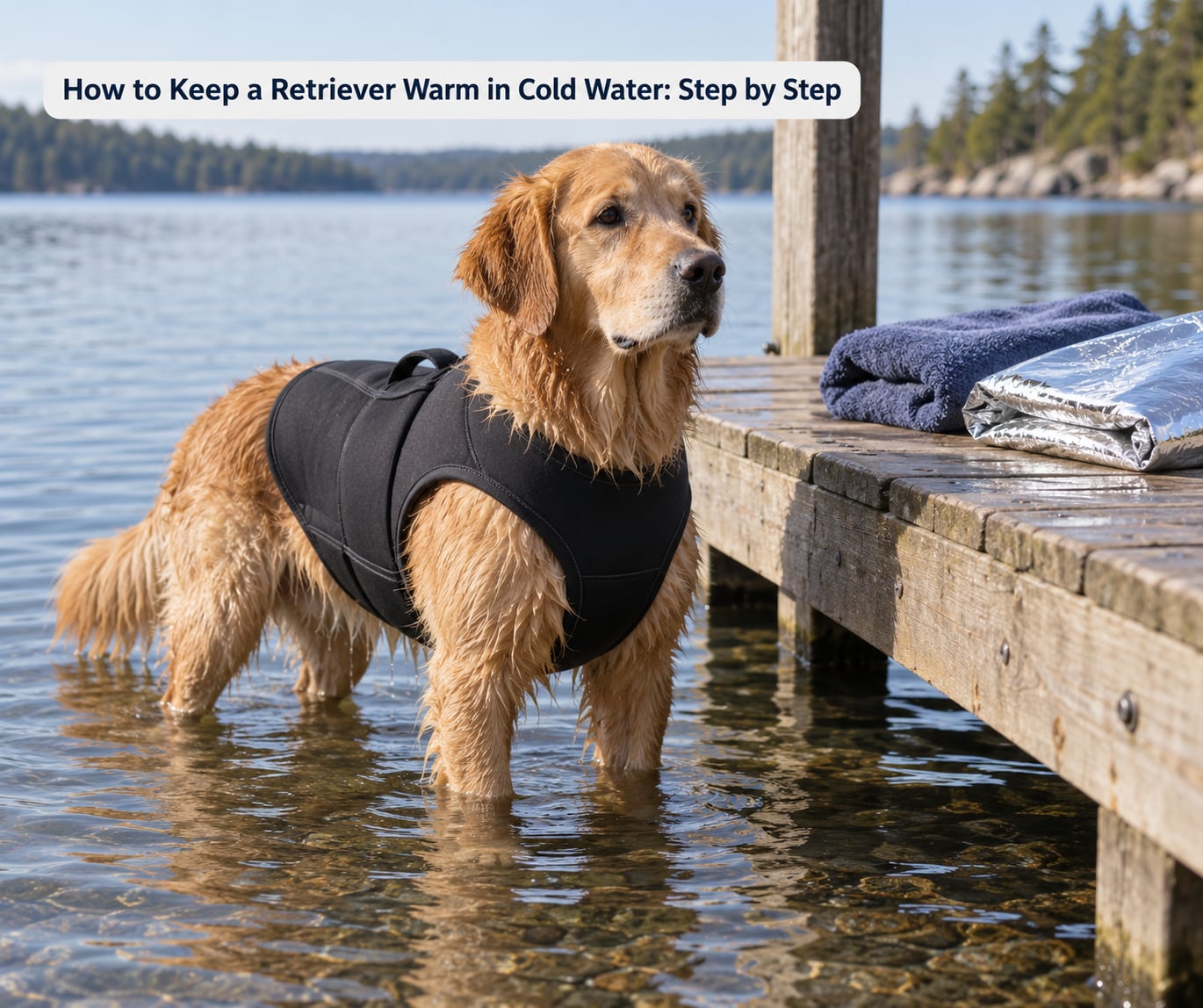
Warmth before the swim buys you minutes of core temperature once the dog is wet. Start with a windproof dry coat over the torso, or a neoprene vest if you are hunting flooded timber where cuts and barb wire matter as much as warmth. Add a neoprene layer under the vest when the water is near 50F.
Fit is everything. The vest should be snug through the torso without pulling across the shoulders or armpits. Check for chafing, restricted shoulder movement, and seams that dig in. Owners report infections under the front legs from vests that rubbed, and seams that failed within a season, so test a new vest on land for a few sessions before the first cold hunt.
You will know it works when the dog moves like it is not wearing anything: full extension through the shoulders, no rubbing at the armpits after 20 minutes, and no hesitation at the waterline.
3. Limit time in the water
Work in short bursts, not continuous trips. Bring the dog back to a dry seat on a dog stand or the boat floor rather than letting it sit knee-deep waiting on a bird that is not coming back.
Dry it every single time it comes back, and pay attention to how fast it dries. A dog that shakes and runs off looking lively after five minutes is in better shape than one that stands damp and shivering in the wind for forty minutes. Many owners take the vest off after a retrieve specifically so the dog can shake and run to get the coat dry.
Pull the dog out of the water before you see trouble. Persistent shivering that will not stop with movement, slowing down, weakness, confusion, or a retriever that looks unusually tired after an easy swim all mean the cold has outrun the dog.
Between shooting rotations, keep the blood moving with bumper throws on land. It costs a few minutes and gives you an easy look at how the dog is moving.
4. Dry and monitor your retriever after the swim
Move to a sheltered, wind-free spot. Remove any wet vest, blot the coat with towels, then run the chamois through the undercoat in the direction the hair lies. Rubbing hard with a towel is fine for the muscle, but the goal right now is removing water, not generating friction.
Offer fresh water. Then watch the dog for a few minutes rather than loading up instantly. A dog that shivers for a few minutes after coming out of the cold, then shakes it off, moves normally, and wants to go back to work is usually reacting normally. A dog that stays shaky, gets sluggish, shows pale or white gums, or seems confused is not.
Check the paws, ear tips, and tail tip while you are at it. Frostbite on those extremities is the second most common cold injury, and frostbitten tissue often goes on to pull heat from the core. Do not rub frostbitten skin and do not apply direct heat.
5. Know when to stop and get veterinary help
Normal canine core temperature runs about 101 to 102F, and hypothermia is generally called below 97F. A rectal thermometer tells you the stage in a way that behaviour alone cannot.
| Stage | Core temperature | Signs | Action |
|---|---|---|---|
| Normal | 101 to 102F | Alert, eager, normal gait | Keep working the plan |
| Mild | 96 to 99F | Shivering, moving a little stiffly | Out of water, dry, warm, monitor closely |
| Moderate | 90 to 95F | Strong shivering slowing to none, weakness, lethargy, pale gums | Stop the hunt, active warming, vet call now |
| Severe | 82 to 90F | Stupor, loss of coordination, collapse, slow or absent breathing | Emergency vet immediately, warm on the way |
A dog that stops shivering is not getting better. Shivering is the body’s last effort to make heat, so when it stops while the dog is still wet and cold, things are going the wrong way.
To warm a dog in the field, get the wet coat off first, then use your own body heat and a warm coat wrapped around the dog, and add a mylar blanket plus hand warmers outside the blanket but never directly against the skin. Move the dog to the vehicle and run the heater if you can. Do not use human medication and do not put a heating pad directly on a wet dog, because skin that cold burns easily and you will not see it happen.
Suspected hypothermia needs a veterinarian, the same day, every time. If the nearest clinic is 45 minutes away, call ahead while you warm the dog so they can tell you what they want you to do on the road. Dogs with a fever, heart or endocrine disease, or a recent surgery need a vet’s answer before any cold water work at all.
Common Mistakes That Put a Retriever in Cold Water Danger
Leaving the dog wet and waiting too long to dry it. Between retrieves is where most heat loss happens, not during the swim. Dry every trip, then get the dog out of the wind and off wet ground. Fix it with a dog stand, an insulated pad, and a windbreak in the blind.
Believing the vest does the work. No vest prevents hypothermia. A soaked neoprene vest can hold cold water against the dog and leave it colder than a wet dog that can simply shake dry. Treat the vest as one layer in a plan, and test its fit on land first.
Using human medication. Human pain relievers and cold medicines are dangerous for dogs. Keep them out of the blind bag entirely and call your veterinarian for dosing advice.
Overheating a wet dog. Too much heat, applied too fast, burns skin the dog cannot report feeling. Warm gradually, use a barrier layer, and stop if the dog pants hard or seems distressed.
Fitting gear too loose or too tight. A loose vest shifts and catches on brush; a tight one restricts the shoulder and rubs. Adjust until the dog runs flat and shows no rubbing marks after a session.
Relying on the coat alone. A wet undercoat holds almost no insulating air. A dog that looks fine coming out of the water can cool steadily for the next half hour, so keep watching after the towel work is done.
Continuing past the warning signs. Eagerness is not proof the dog is comfortable. If it will not go back in, shivers hard and continuously, or seems confused, the hunt is over whether or not the duck is still out there.
Three habits fix most of it. Work with a buddy so one person is always watching the dog while the other handles the gun. Keep sessions short, with a fixed interval for full drying. And keep the same warm-up and recovery routine every outing so it becomes automatic.
One extra habit worth adding: split the feed on cold days. A small mid-day portion, the full ration after the hunt, and no full stomach before work. Dogs burning hard energy in the cold need more calories than they get on a mild day.
Frequently Asked Questions
Do neoprene dog vests work for cold water?
A neoprene vest helps by adding insulation and, in timber, cut and barb wire protection. It does not prevent hypothermia, and it can backfire if it holds cold water against the coat. Fit matters more than brand: snug through the torso, free through the shoulders, no rubbing at the armpits. Test any new vest on land before cold water season.
How cold is too cold for a retriever to swim?
Most handlers flag risk around 55F water combined with 40F air and 10 to 20 mph wind. Below 45F water and freezing air, most retrievers should stay out of open water. Treat these as starting points rather than rules, and shorten the outing if your dog hesitates at the waterline, lifts its paws, or looks tired after an easy swim.
How do I know if my dog is hypothermic?
Shivering that will not stop is the first sign, followed by stiffness, weakness, pale or white gums, lethargy, and loss of coordination. A rectal thermometer confirms it: normal canine core temperature is about 101 to 102F, and hypothermia is generally below 97F. A dog that stops shivering while still wet and cold is getting worse, not better.
Should I dry my dog off between every retrieve?
Yes. Dry after every single retrieve, not once at the end of the rotation. Towels blot the outer coat and a chamois cloth wicks water out of the undercoat where towels just push it around. Time it: a dog that shakes, runs, and looks lively within five minutes is in better shape than one left damp and shivering in the wind.
How do I warm a wet dog up in the truck?
Get the wet coat off first, then use your own body heat and a warm coat wrapped around the dog, with a mylar blanket and hand warmers outside the blanket and never against the skin. Run the vehicle heater and give fresh water. Never use human medication, and never put a heating pad directly on a wet dog, because cold skin burns without showing it.
Is it ever safe to let a retriever retrieve a bird off ice?
No. Ice is thinnest in the middle of a pond, which is exactly where a downed bird lands. Retrievers have broken through pockets of open water and struggled to climb back up. If a bird lands on ice, mark it and let it go. Call your veterinarian before the season if your dog swims on ice during training, and keep training in open water.
Start Here Tomorrow Morning
Put together the kit tonight: vest, chamois, towels, windproof layer, mylar blanket, pad, windbreak, thermometer. Then work the plan in order. Check the water and wind, vest the dog up warm, keep retrieves short, dry the coat every single trip, and keep the dog off wet ground and out of moving air between shots. The first hour is where you set the limit. If your dog tells you it is cold, believe it and go home warm.