Learning how to call mallards for beginners comes down to restraint. Set a modest spread of decoys within effective visual range of your position, stay still, and blow one short call at the birds that are already moving. Most beginners lose mallards by calling too much, moving too much, or packing the water with decoys.
The good news is that a beginner setup is genuinely simple. Ten to twelve mallard decoys, a legal position with a view of the flight line, and one soft mallard-tone call cover almost everything. You can put a working spread together in about twenty minutes and learn the mechanics of the call in an afternoon.
Table of Contents
- What You Need
- Step-by-Step
- Choose a Legal Hunting Area
- Set Up Your Decoys
- Work the Approach Quietly
- Confirm the Shot and Recover Safely
- Common Mistakes
- Frequently Asked Questions
- How many mallard decoys should a beginner use?
- Is it better to place decoys in open water or near cover?
- What time of day is best for calling mallards?
- Do mallards respond better to decoy movement or a calling bird?
- Can beginners call mallards without a bird call?
- What should I do if mallards approach but do not come within range?
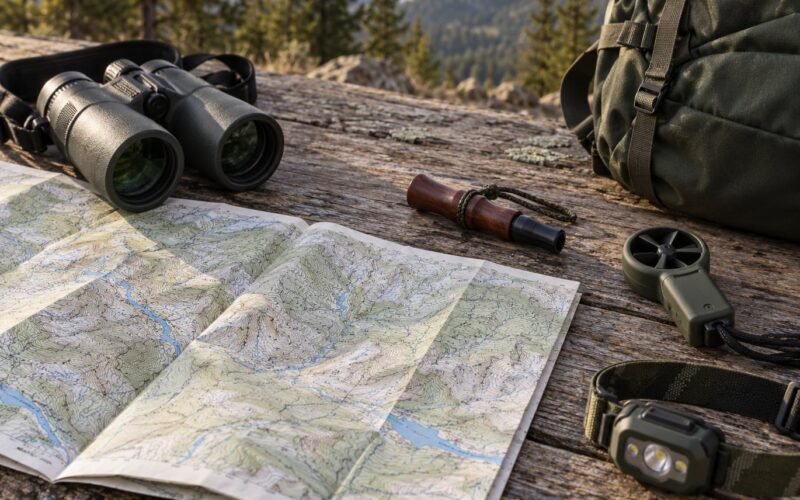
What You Need
Start with the essentials. Everything else on the list is optional, and buying it early is the fastest way to spend money and still sound bad.
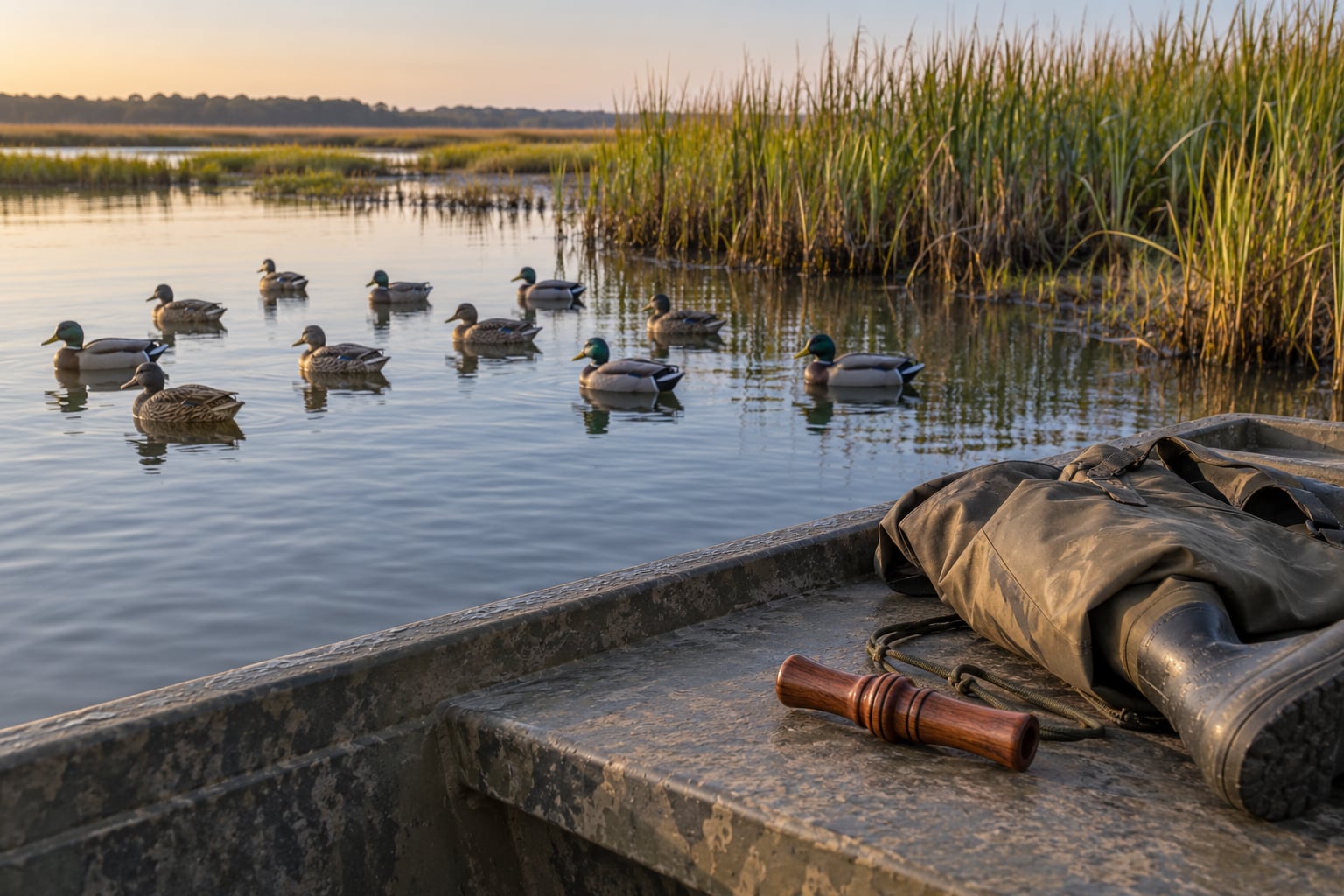
- Mallard decoys. A dozen is plenty for a beginner. Mix poses so the group does not look like a row of clones, and put a few on the water to break the surface reflection.
- A shotgun and legal shells. Waterfowl shot must be non-toxic, and most states cap the number of shells in the gun. Know your state’s rules before the season opens.
- Waders, gloves and neutral outerwear. Something that breaks up your outline and keeps you warm and dry through a long sit.
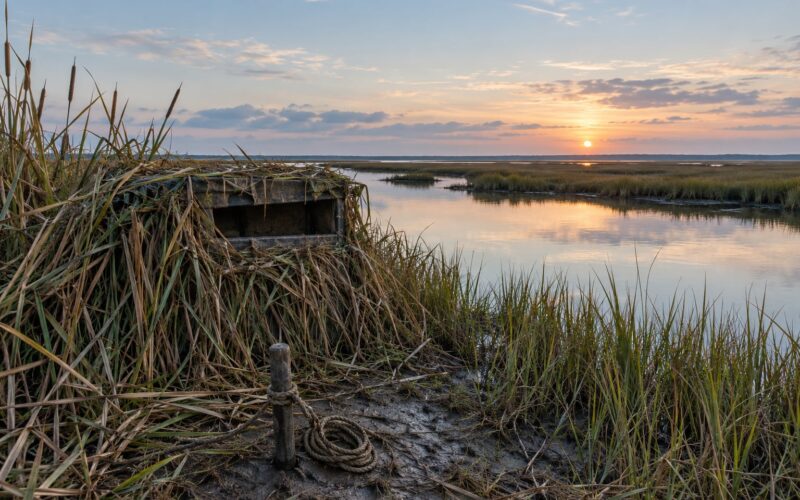
- A concealed position. A portable blind, a layout blind among grass or reeds, or simply sitting against a shoreline bank with camo netting over a frame.
- Water or flooded edge habitat. A tidal creek, saltwater marsh edge, flooded timber pocket or farm pond. Coastal ground tends to hold mallards that already know the area.
- A valid license and identification. Your state waterfowl license, any required permit or stamp, and the federal duck stamp where it applies.
- One mallard call. A soft mallard tone in the beginner range is more useful than an expensive loud one. You are after believable birds, not distant ones.
Two optional items earn their keep later. A phone or small recorder lets you play back your own quack, which is the fastest way to hear the squeak in it. Water-and-wind motion decoys, or a few decoys rigged to drift, give your spread movement for free.
Step-by-Step
Choose a Legal Hunting Area
Pick ground you can reach legally and reach early. Public marshes, state wildlife areas, refuges and private land all carry different rules about access, season dates, species limits and which shot is required, so read the current regulations for your area before you drive out.
Position yourself where mallards already feed or rest, and look for the shortest route birds must take to reach you. A point, a creek mouth, a pocket in flooded timber or the downwind edge of a marsh gives you a natural funnel. Set up well back from open water and never walk a shoreline straight toward birds that are already settled.
Set Up Your Decoys
Place decoys in open water or along the flooded edge, inside the range where a real bird still looks like a real bird. Roughly 15 to 25 yards is the working distance for a beginner spread, and beyond that the birds read it as a cartoon.
Leave yourself a clear approach lane. Birds want an open path to check the group, so a wall of decoys with no gap will send them past instead of into it. Put a few decoys on the water, angle the group slightly into the wind, and give it one open side rather than a perfect ring.
Work the Approach Quietly
Once birds are up, stay down. Restrained movement is the whole trick: slow, deliberate, and no standing up to see. Watch body language as they come in. A bird circling the spread is deciding, and calling over it while it decides usually pushes it out.
Most of how to call mallards for beginners is really learning when not to use the call. Blow one short greeting note as birds first show interest, then stop talking. Adjust volume with distance, quieter for birds at 60 yards and firmer for birds crossing 200 yards.
Confirm the Shot and Recover Safely
Wait until you have a clear identification: drake or hen, species and sex within your legal limits. Take the shot only inside the effective range you know for your load, and only with a clear field of fire behind the bird.
Recover birds only after the area is quiet and you know no one is still shooting. Stay low, keep your barrel pointed in a safe direction the whole time, and check your state’s retrieval rules and any closed-zone boundaries before you push back into the open.
Common Mistakes
Nearly every bad hunt I have seen traces back to one of these seven errors.
- Overcrowding the spread. More than about 15 decoys spreads birds too thin and increases the chance someone hits a pattern with no birds in it. Fix: twelve decoys, spaced like birds resting on water.
- Placing decoys in an unrealistic position. Decoys in a straight line, dead in the wind, or floating in open water with nothing around them do not read as a feeding group. Fix: break the pattern and add motion.
- Moving too much. Standing up, walking the bank or shifting in the blind kills more birds than any calling mistake. Fix: commit to a position for 30 minutes before you judge it.
- Calling at the wrong time. The classic beginner failure is a long hail and comeback blown at birds that are not working. Fix: call only when birds are visible and moving toward you.
- Calling too loudly. Volume does not carry further than you think on cold, still mornings. Fix: blow quietly and add pressure only when birds are far.
- Ignoring wind and water conditions. Flat water in no wind makes a spread look like plastic. Fix: call less and move your decoys, or pick a spot with moving water.
- Skipping the regulations. Season dates, species limits and shot type are not details. Fix: read the state’s waterfowl booklet before the first sit of the season.
Two habits worth picking up early. Keep the call in your pocket once the shooting starts, and listen instead. Experienced callers describe the same habit: they watch birds fly, note the real cadence, and quietly adjust.
Frequently Asked Questions
How many mallard decoys should a beginner use?
Ten to twelve mallard decoys is the right starting number, plus three or four in a different species if you have them. That is enough to read as a feeding group at 20 yards without turning into a wall. Add more only if the birds are working well and you are still getting limits.
Is it better to place decoys in open water or near cover?
Both work, for different reasons. Decoys in open water pull birds that are already moving across a pond, while decoys tucked near a bank or timber edge draw birds that were hiding in the first place. Many beginners do best by placing part of the spread in open water and part along the cover line.
What time of day is best for calling mallards?
The first 30 to 60 minutes of shooting light, when mallards are actively feeding and moving, give you the most calling opportunities. Birds are often still tucked up later in the morning. A late afternoon position can also produce birds, but the morning flight is where beginners learn the most quickly.
Do mallards respond better to decoy movement or a calling bird?
Movement wins more often. A spread that ripples, drifts or gets knocked by wind looks alive and is believable without you making a sound. A calling bird only helps when other mallards are already visible and working. Add your voice second, never first, or the birds may learn the call belongs to something that is not there.
Can beginners call mallards without a bird call?
Yes, and a quiet spread is a perfectly good first-year setup. Many mallards come in on decoys alone during early season or low pressure. If you do blow, keep it short and soft, and only when birds are working. Learning to sit still and read the flight is more valuable than any call you can buy.
What should I do if mallards approach but do not come within range?
Stop calling and let them drift. Check three things: whether birds are landing long because your spread sits too far away, whether there is any wind to give your decoys motion, and whether you are calling over birds that were already circling. Most hung-up groups settle on their own once you go quiet.
If you do only one thing before your next sit, pick the position and ignore the gear. Find water where mallards must pass your setup, read the state’s waterfowl rules, and put out twelve decoys with an open lane on one side.
Then stay put. That is the short version of how to call mallards for beginners: one short call on birds that are already moving, and silence for everything else. Sit still long enough for the spread to earn the birds.