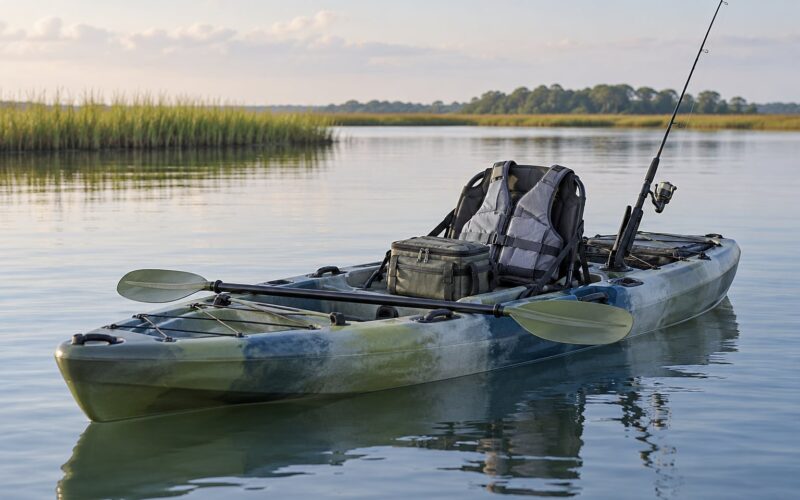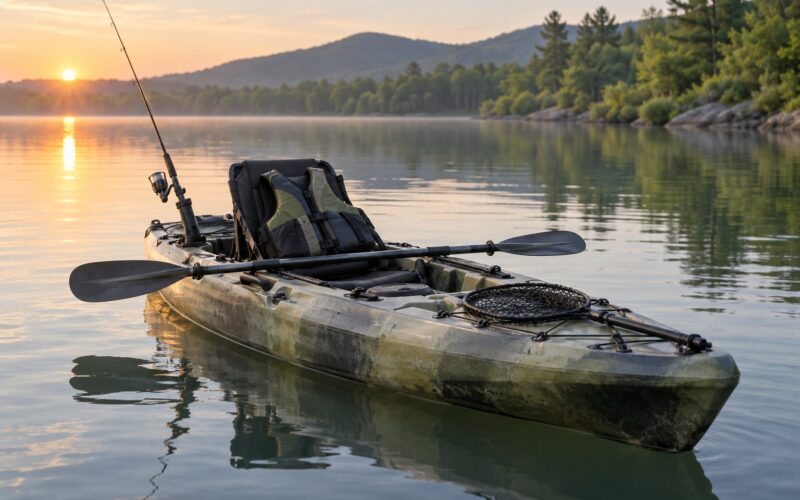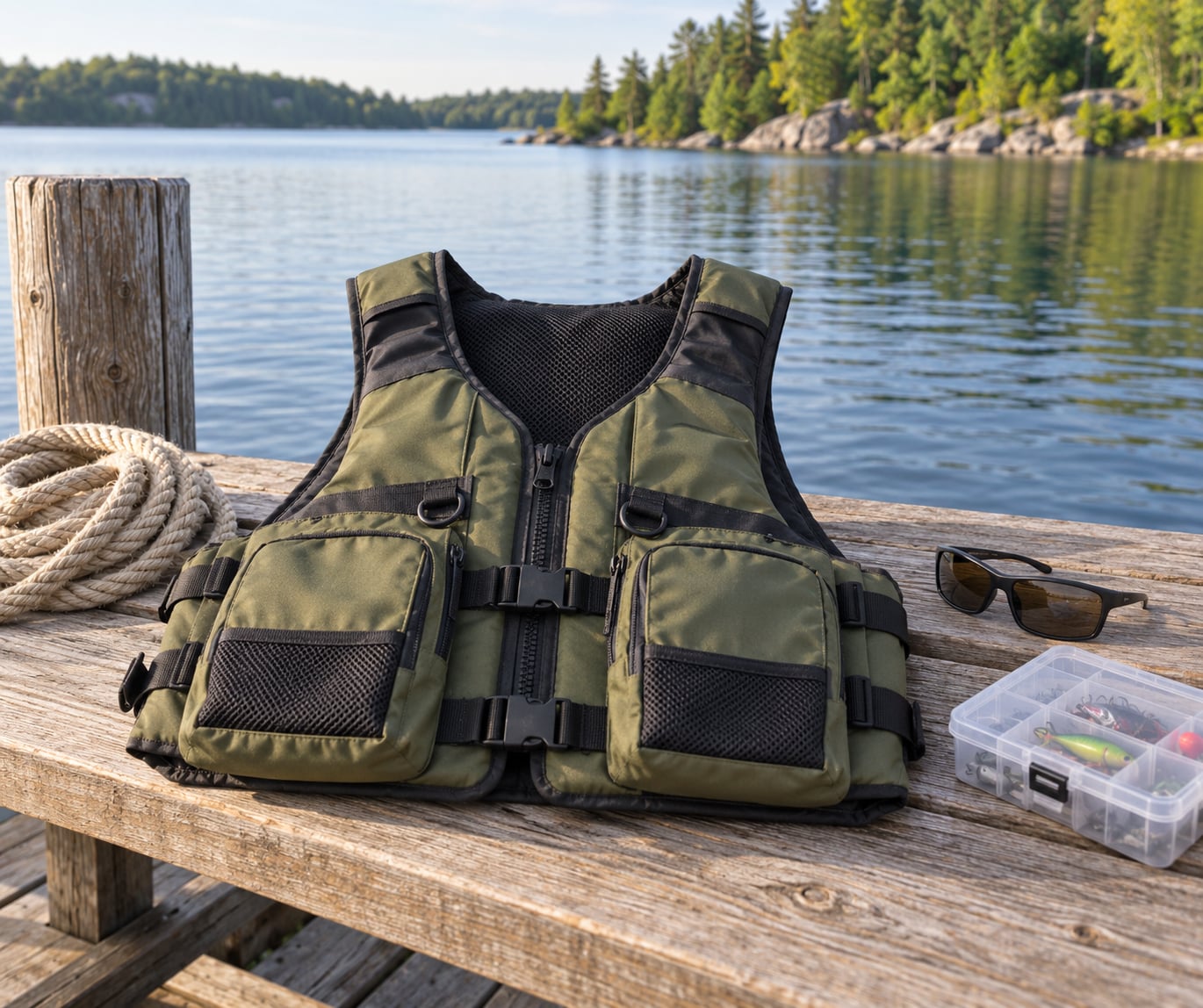
For most anglers, the best life jacket for fishing is a US Coast Guard (USCG) approved personal flotation device — usually a Type III flotation aid or a Type V special-use device — chosen for the water you actually fish, fitted snugly enough that it cannot ride above your chin, and comfortable enough that you never take it off.
That last point decides more outcomes than any spec sheet. The vest that lives in the truck is not protecting you. Wearability, not buoyancy rating, is the thing that matters most.
Here is the short version of the whole decision. Calm inland water and most small boats point to a foam Type III vest you can cast in. Cold water, moving water, and high-speed boats point away from a thin inflatable and toward foam with real insulation. Offshore work adds a third layer of safety, because offshore is the only category where buoyancy alone is not enough. Read on for how to work through each of those.
Updated for 2026.
Table of Contents
- What You Need
- How to Choose a Life Jacket for Fishing: Step-by-Step
- Start With the Right Approval and Level
- Match the Life Jacket to Your Fishing Activity
- Check Fit, Buoyancy, and Range
- Look for Fishing-Specific Comfort and Features
- Test It Before the Water
- Common Mistakes
- Frequently Asked Questions
- What type of life jacket is best for fishing?
- Are inflatable fishing life jackets safe for beginners?
- Should I wear a life jacket on a calm lake?
- How do I know if a fishing life jacket fits properly?
- Can I use a regular boat life jacket for fishing?
- How should I care for and store a fishing PFD?
- Bottom Line
What You Need
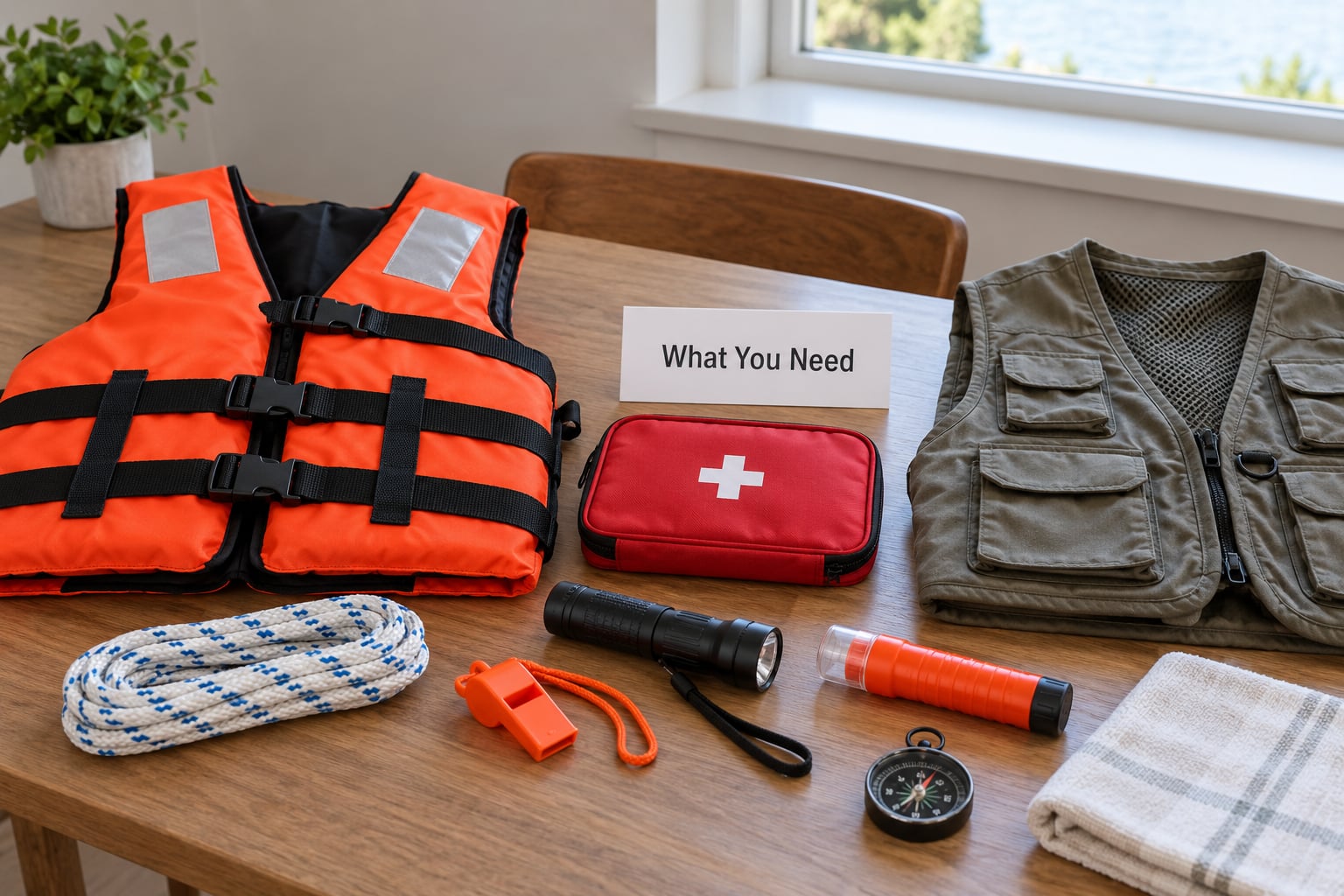
Gather a handful of facts before you start shopping. Without them, every jacket looks equally plausible and you are choosing on color.
- The approval label. Look for a USCG approval marking on the inside of every candidate. If there is no label with a buoyancy rating, it is not legal equipment on most waters.
- Your water. Pond, reservoir, river, lake, coastal, or open ocean. Each carries different exposure and different survival time.
- Your boat and how you sit in it. A sit-on-top kayak needs a low or mesh back. A high-backed seat, a casting platform, or a full console changes everything.
- Chest measurement and weight. Both, because labels list a range for both and the two do not always agree with each other.
- The layers you will actually wear. A rain shell in October or chest waders change how a vest fits.
- Water temperature. This decides foam versus inflatable faster than anything else.
- Whether you fish alone. If the answer is yes, your device has to work when you cannot reach it.
Skip the shopping until you can answer those seven. It takes ten minutes and saves a return trip.
One clarification before the steps. A life jacket and a PFD are not two different products. “PFD” is the official Coast Guard term for every approved flotation device, and anglers use “life jacket” and “life vest” for the same object in everyday speech. What separates a true life preserver from a flotation aid is narrower: a preserver is designed to turn an unconscious wearer face-up, and a flotation aid is not.
That distinction matters more than the naming debate anglers have about it, because it tells you which failure you are protected against.
How to Choose a Life Jacket for Fishing: Step-by-Step
Start With the Right Approval and Level
Start by reading the approval label, then identify which of the five USCG types you are looking at. The type tells you the buoyancy in pounds, whether it turns an unconscious wearer face-up, and what water it was designed for.
| Type | Adult buoyancy | Turns an unconscious wearer face-up | Designed for | Anglers |
|---|---|---|---|---|
| Type I, offshore life jacket | 33 lb minimum | Yes | Rough open water, high-speed boats | Offshore only |
| Type II, near-shore buoyant vest | 15.5 lb minimum | Yes | Calm, sheltered water near a shore | Occasionally, but bulky |
| Type III, flotation aid | 15.5 lb minimum | No | Calm, inland water, general boating | The everyday choice |
| Type IV, cushion or buoyant aid | Not a wearable device | No | Throwable emergency flotation | Carry as a backup, never wear |
| Type V, special-use device | 15.5 lb minimum | Depends on the label | Specific labeled activities, including some fishing designs | Common and approved |
Most fishing PFDs on the market are labeled Type III, and many purpose-built fishing vests carry a Type V label naming the specific activity they were approved for. Both are legal. A Type V vest that says “fishing” is approved for fishing, and a Type V labeled for a particular discipline or a specific brand’s intended use may not cover every angler automatically, so read the wording on the label rather than assuming.
A few angler debates come back to this table every year. Someone will argue that a Type III will leave an unconscious swimmer face-down in the water, and they are right that the design does not guarantee it. A Type I offshore jacket is built specifically to roll you face-up and is the answer when that scenario is realistic.
The size code on the label is worth reading once too. A “50” means a 50 lb adult buoyancy rating, a “50S” is the smaller version of the same rating for a chest measurement in the child range, and “50N” and “50MDP” cover other chest and body measurements. These are chest-measurement codes, not age codes. Measure your chest and match the number before you match the letter.
Match the Life Jacket to Your Fishing Activity
Match the device to the exposure you actually have. Here is the mapping that most anglers need, and the one place where an inflatable can quietly be the wrong answer.
| How you fish | What works | Watch out for |
|---|---|---|
| Wading a river or stream | Foam Type III with multiple adjustment points, or a fishing vest with a secure crotch strap | Loose shoulder straps let it ride over your head in current |
| Fly fishing, waist deep | Low-profile foam vest with zippered fly pockets and mesh or ventilated side panels | Buckles that dig in when you bend forward |
| Shore and bank fishing | Anything comfortable and approved; a simple foam vest usually wins | Not wearing it because you stayed on the bank |
| Small jon or bass boat | Foam Type III, worn and zipped before the cast | Capsize with gear aboard; foam keeps you at the surface immediately |
| Sit-on-top kayak | Foam or inflatable with a high back that clears the seat | A low back panel that fights the seat back all day |
| Sit-inside kayak | Foam with minimal side flotation, or an inflatable belt | Side panels that catch your paddle strokes |
| Cold water, early season | Insulated foam Type III or Type V | A thin inflatable gives you almost no insulation in near-freezing water |
| Offshore or high-speed | Type I, worn and fastened before leaving the dock | Nothing. This is the category with no shortcuts |
Cold water is the row people skip and the one that changes the answer most. In water near freezing, a low-buoyancy inflatable leaves you floating at the surface but freezing, and survival time in that water can be measured in tens of minutes. Insulated foam, which doubles as a thermal layer, is the correct answer there.
Anglers on fishing forums raise one inflatable failure mode more than any other, and it deserves its own warning. An inflatable without a crotch strap, or with a strap that is left loose, can ride up over your head in the water and come off entirely. If you buy an inflatable, the crotch strap is not an accessory.
Check Fit, Buoyancy, and Range
Check fit by measurement, then by moving. A vest that fits well will not move when you do.
- Measure your chest in inches over the thickest part of your torso, and compare it to the range printed on the label. Most adults fall between 32 and 52 inches.
- Check the weight range too. If your weight sits at the top of the range or above it, go up a size rather than trusting the chest number alone.
- Try it over your fishing layers. A rain shell or waders can add two inches of depth. Try the vest over what you will actually wear on the water, not over a t-shirt in a store.
- Do the shoulder-lift test. Grasp the shoulders and pull up firmly. The vest should not rise above your chin or ears.
- Sit, stand, and reach overhead. Fasten everything, then cast, reel, and lean over the gunwale. A vest that rides up when you lean forward is sized wrong.
If you cannot fasten the last strap, or if the closure only works when you hold your breath, the fit is wrong. Return it.
On buoyancy, the USCG minimum for an adult is 15.5 lb of flotation. More is better for cold water and heavy clothing, not for mobility. Anglers on forums make the same trade-off in reverse from divers: they give up insulation and bulk because they need to cast and fight fish for hours, and the vest that wins is the one they forget they are wearing.
Look for Fishing-Specific Comfort and Features
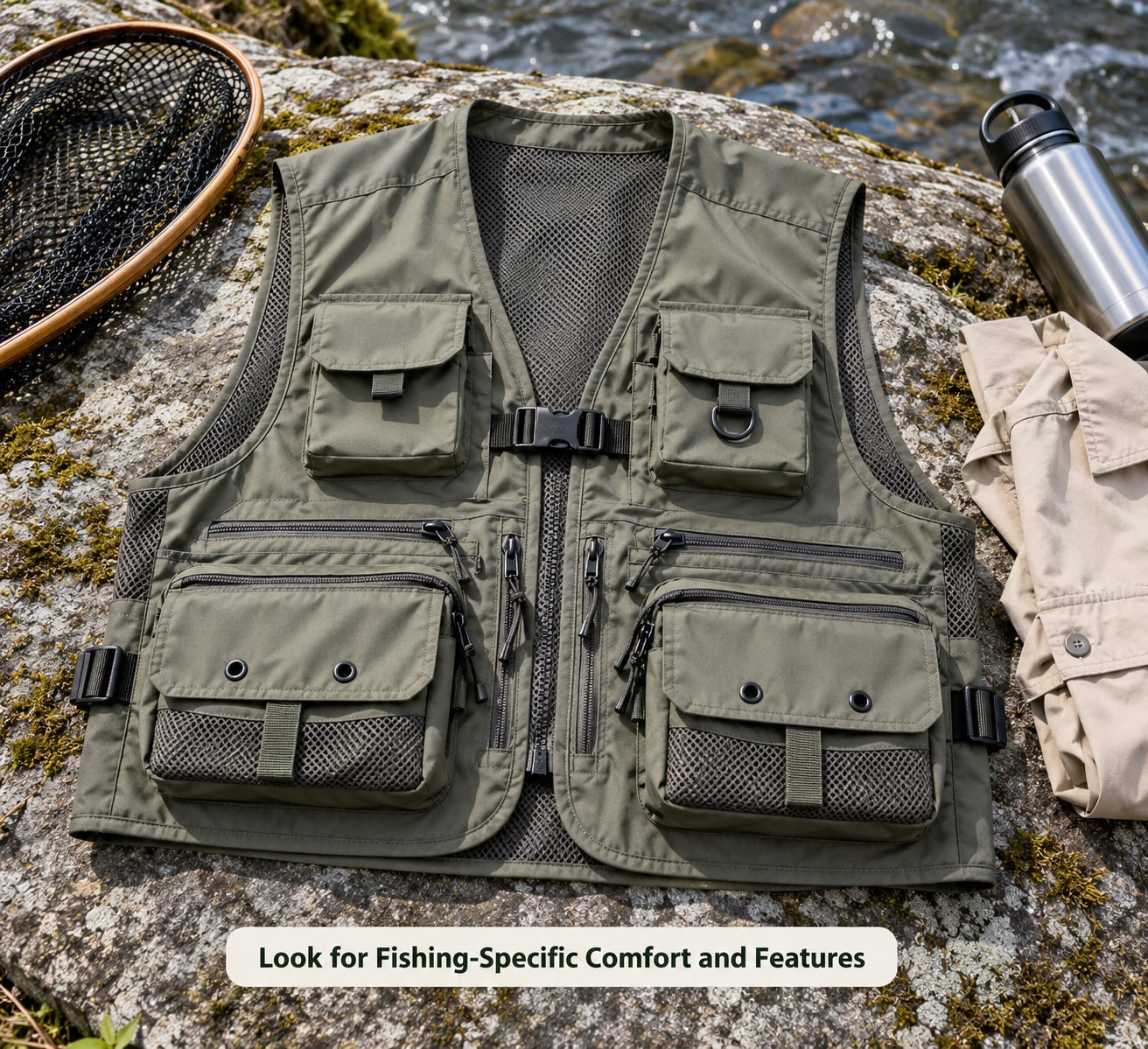
Once fit and type are settled, judge the features that decide whether you keep wearing the thing. These matter because they show up in a dozen fishing conversations: pockets, closures, ventilation, and drainage.
- Zippered, self-draining pockets large enough for a fly box or a handful of lures. Anglers describe a vest without usable pockets as safety equipment they carry but never wear.
- A crotch strap on any inflatable, plus a grab handle behind the shoulders.
- Rod holder loops and lash tabs for a spare rod or a net, so the gear is not in your hand.
- A retractable tool clip for pliers and forceps, which otherwise end up in your teeth.
- Ventilation in the form of a mesh back or ventilated panels for summer heat, or a high back if you sit in a tall seat.
- Reflective trim and a whistle for low light and early starts.
- Buckles you can work with cold hands and a front entry that does not require reaching behind your neck.
For fly fishing, specifically, look for a low-profile front that leaves your chest clear for a line strip and a vest that does not cover the top of your waders. For kayak fishing, check the back panel against your seat height before anything else, because a mismatch there is uncomfortable all day.
Skip the oversized competition-style vests. They are built for racing, not for carrying a net and a thermos, and many are not Coast Guard approved for ordinary use.
Test It Before the Water
Run a dry check on your dock, tailgate, or floor before the first trip of the season. It takes five minutes and it catches nearly every problem you can buy.
Fasten every closure in order. Then lift both arms over your head, bend forward as if setting a hook, sit down, stand up, and shrug your shoulders hard. Anything that shifts more than an inch, rides above your chin, or needs re-adjusting after you moved is not the right vest.
For an inflatable, do the same test with the bladder inflated and the gas cylinder armed, so you know it holds position when it is full. Confirm the indicator shows a fresh cylinder and that you know which activation method you have: automatic, manual pull cord, or a hybrid that keeps foam backing with the bladder as backup.
Automatic models inflate when the hydrostatic sensor detects water pressure at depth. Manual models need a pull cord or a button. Anglers who fish alone tend to prefer automatic precisely because it works when a cold shock or a stroke means they cannot reach a cord.
Finally, read the label out loud once. If you cannot state the type and the buoyancy rating from memory, that is the label you will fail to check before you need it.
Common Mistakes
These are the mistakes that show up again and again, with the correction for each.
- Buying one size too loose. A PFD that shifts can ride over your head or come off in moving water. Fix: re-measure and go up or down a size, then re-run the shoulder-lift test.
- Choosing a thin inflatable for cold or moving water. You get surface flotation with almost no insulation. Fix: use an insulated foam vest below roughly 50 F water temperatures, and treat an inflatable as warm-weather equipment.
- Ignoring the weight range. A chest measurement match does not cover a body that exceeds the stated weight. Fix: follow whichever of the two measurements puts you in the larger size.
- Treating pockets as flotation. Storage is a convenience, not a safety feature. Fix: judge buoyancy, type, and fit first, then treat pockets as a comfort question.
- Wearing it over bulky layers that change the fit. Fix: buy for the layer, or pick a vest with enough adjustment range to cinch down over what you have on.
- Failing to inspect an inflatable before the season. A fired cylinder that was never replaced looks exactly like a working vest from the outside. Fix: before the first trip, open the bladder, check the cylinder date and indicator, verify the inflator mechanism, and re-pack it with a fresh cylinder per the manufacturer’s instructions.
- Assuming a vest you carry counts. Laws in most states require a USCG-approved device aboard, and many require children to wear one. Wearing one is the part that saves you.
Frequently Asked Questions
What type of life jacket is best for fishing?
A USCG-approved Type III flotation aid is the best general choice for most anglers on inland water and small boats. Pick a foam model with a crotch strap if the water is cold or moving, and a low-profile inflatable only in warm water where you will not be swamped for long. Match the vest to your chest measurement and wear it from the dock onward.
Are inflatable fishing life jackets safe for beginners?
They can be, but only with attention. An inflatable must be inspected and re-armed with a fresh CO2 cylinder every time it fires, and it needs a crotch strap so it cannot ride over your head. Beginners usually do better starting with an approved foam vest, which needs no servicing and floats the instant you hit the water. Move to an inflatable once you have a pre-season re-pack routine you actually follow.
Should I wear a life jacket on a calm lake?
Yes. Calm water hides the most common angling accident, which is falling out of a boat or a kayak while standing to cast or reach for a fish. Anglers are often alone, and a vest keeps an exhausted or unconscious person at the surface where a paddle or a boat hook can reach them. In most states a person must also be wearing one when the law requires it to be carried.
How do I know if a fishing life jacket fits properly?
Measure your chest and your weight, match both to the range printed on the label, then fasten every strap and pull hard on the shoulders. The vest should not rise above your chin or ears. Sit down, stand, and cast overhead, and if it shifts noticeably or has to be re-adjusted after you move, it is the wrong size.
Can I use a regular boat life jacket for fishing?
Yes, as long as it is USCG approved and fits. A Type III flotation aid is the standard boating device and works well from a boat, and purpose-built fishing vests are usually Type III or Type V designs with added pockets and a fishing-specific back panel. Avoid competition vests, which are not approved for general use and often lack the durability and buoyancy you need on the water.
How should I care for and store a fishing PFD?
Rinse it in fresh water after use, let it dry fully in the shade away from heat and direct sun, and check the label and closures while it is dry. Store it loosely rather than compressed. Foam vests need no servicing beyond that. Inflatable models need the bladder opened and inspected, a fresh CO2 cylinder, and re-packing with the manufacturer’s kit at least once a season, plus after every deployment.
Bottom Line
Decide the water first, then the type. Inland water and small boats get an approved foam Type III or a Type V fishing vest that fits your chest over your layers. Cold or moving water gets insulated foam, never a thin inflatable. Offshore gets a Type I worn before you leave the dock. Then buy the one you will keep on all day, run the shoulder-lift test in your garage, and fasten it every single trip.