To catch striped bass in brackish water, put a bait or lure into moving water at low light and work the seam where fast current meets slow water, mostly during the first two hours of the incoming tide and the last two hours of the outgoing tide. Most of the season’s fish come from that sequence: read the tide, find structure that concentrates forage, and match whatever the marsh is full of. Slack water is usually the worst of it, and the middle of the channel is almost always empty.
Everything below assumes tidal water — a creek, a river mouth, an estuary, a sound or a bay. If you came from freshwater lakes, the two things that trip people up are the current and the rules, and both get covered here.
Start with your state or provincial wildlife agency page before the first trip. Tidal waters and inland waters usually run different seasons, different hours and different size limits for the same species, and brackish stripers often sit in a protected slot with a seasonal closure underneath it. The rules are not the boring part of this sport; they are the part that keeps it open to everyone.
Table of Contents
- What You Need for How to Catch Striped Bass in Brackish Water
- Step-by-Step: How to Catch Striped Bass in Brackish Water
- Read the Brackish Water Before You Fish
- Choose a Rig That Matches the Current
- Present the Bait or Lure Naturally
- Set the Hook and Fight the Fish
- How Far Up a Tidal River Do Stripers Go?
- Common Mistakes When Catching Striped Bass in Brackish Water
- Frequently Asked Questions
- Are striped bass the same in brackish water as in saltwater?
- What is the best tide for catching striped bass in brackish water?
- Is live bait or a lure better for striped bass in an estuary?
- What size lure works best for striped bass in brackish water?
- Can beginners catch striped bass in tidal creeks?
- Do I need a saltwater rod and reel for brackish fishing?
- Conclusion
What You Need for How to Catch Striped Bass in Brackish Water
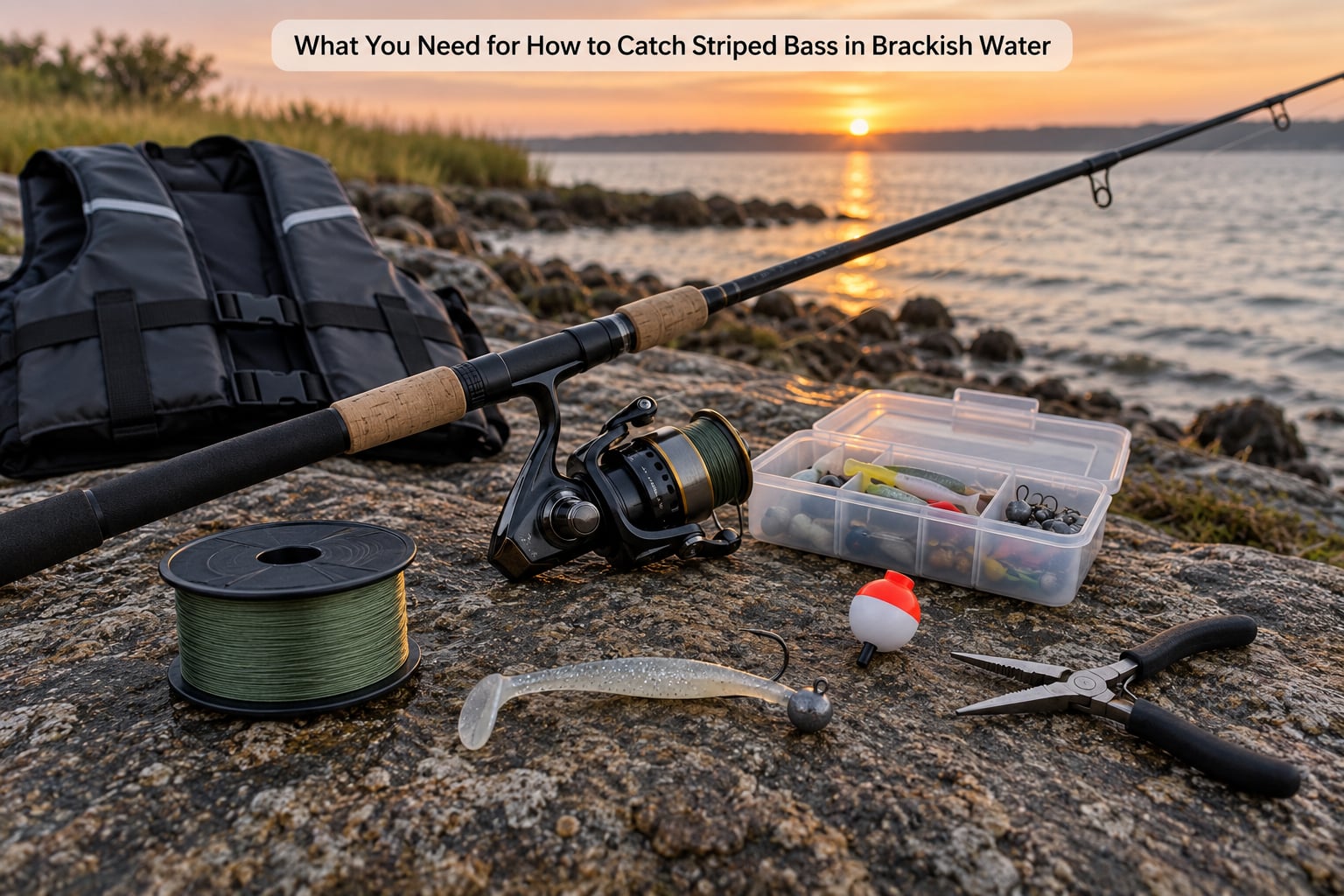
Gear choice in brackish water comes down to three questions: how deep is the water, how hard is the current, and what are you hooking into. Rocks, pilings, oysters and submerged debris chew through line faster than anything in a lake, so the terminal tackle matters as much as the rod.
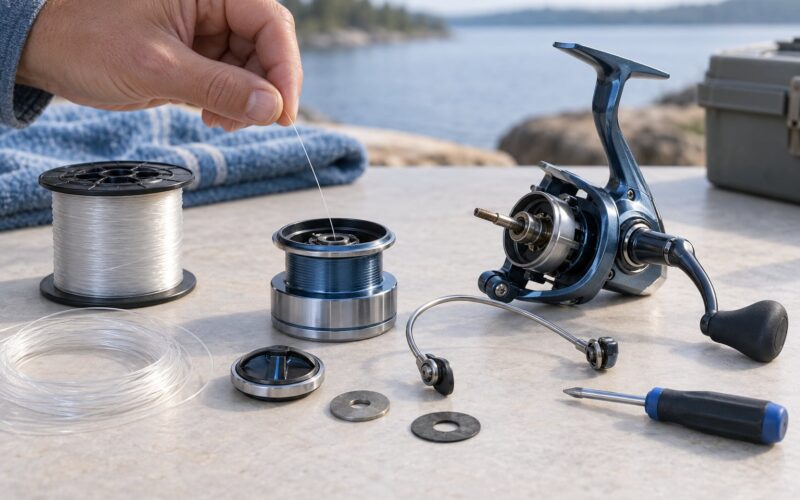
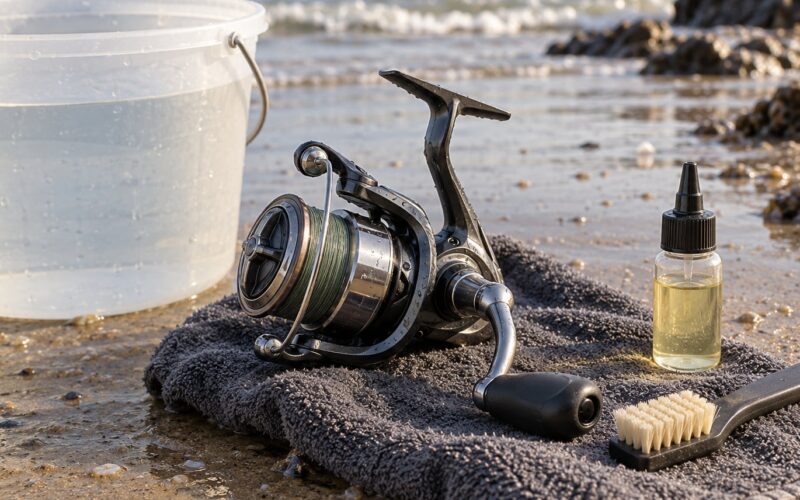
Rod and reel. A 7- to 9-foot medium-action spinning rod handles surf, jetty and marsh bank work from shore. A conventional outfit with a levelwind or a baitcasting reel in a graphite rod gives you better control when a fish runs you under a dock. For small-boat work, a 6- to 7-foot medium rod is plenty. Buy saltwater-rated reels with sealed bearings and a drag that stops rather than drags.
Line and leader. 20- to 30-pound braided main line is the standard for casting weight and for surviving structure, because it has almost no stretch. Pair it with 20- to 40-pound fluorocarbon leader and a barrel swivel or snap swivel, and check the knot and the swivel every trip. Anglers coming from freshwater often run a single diameter and regret it the first time a striper turns a sharp corner around a piling.
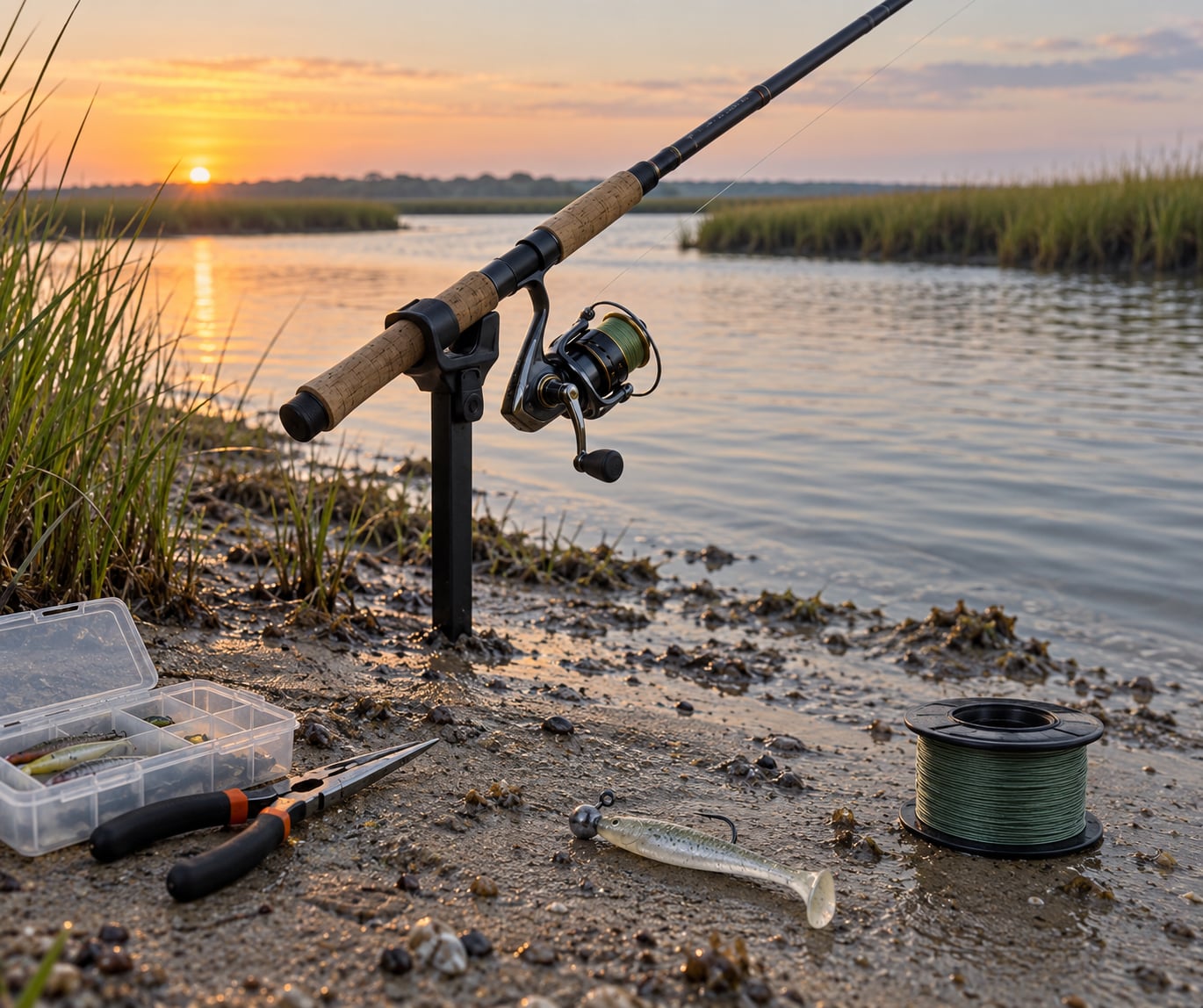
Terminal tackle. Size down as current picks up. In slow water, 1/8- to 1/4-ounce jigheads, 1- to 2-ounce sinkers and 4- to 6-inch soft plastics work. In a ripping inlet, go 1/2 ounce or heavier with a 6- to 8-inch paddle tail, and drop to a bucktail or spoon you can hold in the seam. Circle hooks sized 1/0 to 2/0 suit chunk baits; a 3/0 to 5/0 treble fits plugs and metal lips.
Baits and lures. Bring a spread rather than a single tool: bucktail, a spoon, a soft plastic paddle tail with a jighead, a plug or crankbait that runs shallow, a topwater popper for low light, and cut mackerel or bunker chunks. Menhaden are the anchor forage in most estuaries, with mackerel, sand eels and small herring close behind. Live bait works too, and a float rig is the easy way to fish it without losing the whole thing on every cast.
Tools and safety. Split-ring pliers, line cutters, a spare swivel and clip, a ruler or tape measure for slot limits, and a camera. Wear a properly fitted life vest, especially on jetty rocks and marsh banks with soft mud, and carry a headlamp with a red mode if you plan to fish under bridges after dark. A tide table and a phone with a weather app are more useful than any gadget you can buy.
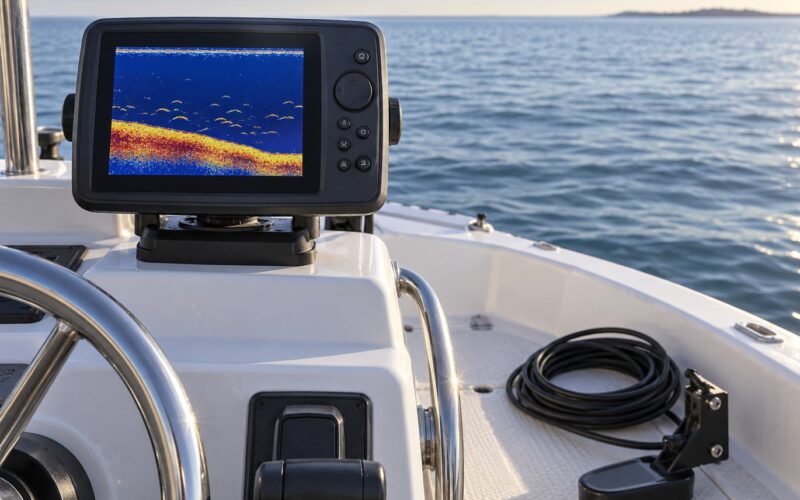
Optional but useful: a shallow depth sounder, a handheld salinity meter if you are chasing the salinity line specifically, and polarized glasses. In brackish water, polarized lenses are not a luxury. Surface glare on a flat is what hides the blowups that give away a feeding school.
Step-by-Step: How to Catch Striped Bass in Brackish Water
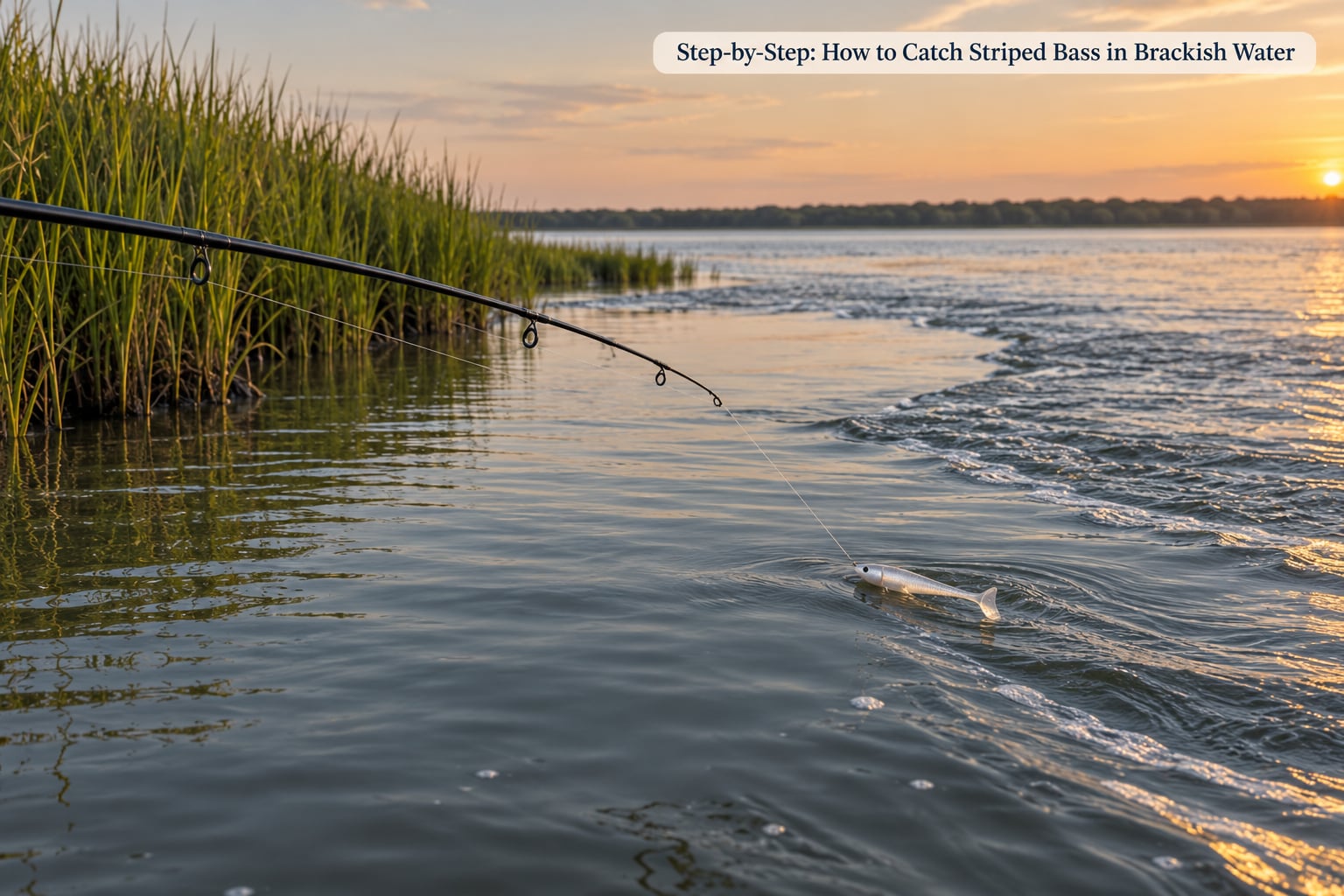
Here is the process in the order that works, from standing on the bank to releasing the fish. Each step has a way to tell it worked, so you know whether to adjust or keep going.
Read the Brackish Water Before You Fish
Brackish water is a mix of fresh and salt water, usually somewhere between 0.5 and 30 parts per thousand of salinity, and it changes continuously as the tide fills and drains the estuary. The useful part is the gradient: salinity is lowest at the head of a river or the head of a creek, rises toward the mouth, and drops again as you go out to sea. Stripers are anadromous, spending their whole life cycle shuttling between those zones, and the brackish reach is the factory that feeds them.
They hold just below and slightly downstream of forage concentrations, where the tidal flow delivers food into water slow enough to ambush from. That means the edge matters more than the spot. Creek mouths, drop-offs, channel edges, marsh grass lines, docks and the shadow under a bridge all give you the same thing: a place where moving water meets still water and a fish can sit in the seam.
Tide phase sets the tempo. Fish the water when it is moving hardest, not when the tide chart says “high.”
- First two hours of incoming. Fish push into the creek and the river, feeding hard on whatever the push brings with it. Work the mouth and the up-current edge of structure. This is usually the best window of the whole cycle.
- Slack water. The current stops, forage stops moving in, and the fish go quiet. Use it to relocate, check the rules, or fish a tidal flat that only gets exposed now. Expect slow fishing.
- Last two hours of outgoing. Fish hold on the down-current side of structure, picking off bait pushed past them. Work the downstream face of drop-offs and the seams where fast water spills into the channel. The bite picks back up.
Water temperature matters more than the calendar. Stripers get active in the low 50s Fahrenheit and feed hard from the upper 50s through the warm months, when baitfish are thick in the marsh. Along most of the Atlantic coast that puts the best fishing from late spring into early fall, with the spring run up the river and the fall run back down brackishing the calendar on either end. A warm winter can shift those dates; a cold spring pushes them out.
Weather matters too, and not only the forecast. Wind and a falling tide drop the dissolved oxygen in shallow brackish water, and stripers will leave a flat for a drop-off. Heavy rain is the bigger surprise: a freshet drops salinity across the whole reach, and fish slide seaward toward saltier water until the line settles back. The week after a big rain is often the best fishing of the month. Anglers on SurfTalk and PAFlyFish keep asking the same question — how far up do they go before the water is too fresh — and the honest answer is that it moves with the salinity line rather than any fixed mile marker.
Check the water for blowing and popping before you cast. Surface activity at first and last light is a fish telling you exactly where it is, and most people learn to fish brackish water the same way: pick up polarized glasses, look up the rip line, see the swirl, and put a bucktail right in it.
Choose a Rig That Matches the Current
Four setups cover almost every brackish situation, and the right one depends on how fast the water is moving and how much structure you have to fight.
Bottom fishing works best in slow or slack water over mud, sand and clam flats, and it is the most forgiving way to put a striper in the boat. A 7-foot medium rod, a 3- to 5-ounce sinker and a dropper rig with a cut bait on a circle hook will hold a fish off the bottom while you work a flat. In a good incoming push, a 5-ounce sinker stays put where 2 ounces drifts away.
Drifting live bait is the most consistent method in an estuary with real current. A float rig with a 4- to 6-ounce weight, a ball-bearing swivel and 3 feet of leader lets the bait swim while the rod tip tracks the line. Let the drift run thirty seconds to two minutes, then reel up, reset and go again. Bump the weight up when the current beats your drift rate, down when the bait keeps coming back to the boat.
Slow trolling covers the water you cannot reach by casting from the bank. A medium rod with a downrigger, planer board or weighted line at 2 to 4 knots puts a paddle tail or swimming plug through the same seams at the same speed, for a couple of anglers or anyone covering a lot of water in a day.
Lure fishing is the answer when the fish are keyed to a bait school and refusing dead bait, and when you are casting from a spot where a drift cannot reach. It is also the only one of the four that works well at night under bridge and dock lights, where stripers gather around the glow to feed on insects and small bait pushed in by the flood.
Two adjustments cover most rigs. Shorten the leader to 18 inches or less when fish are crushing it and you need more feel for the take. Lengthen it to 3 or 4 feet when you are trolling or drifting behind a busy boat, so the line does not spook the fish. Match the weight to the current first; everything else is secondary.
Present the Bait or Lure Naturally
Match the hatch without overthinking it. Menhaden chunks or a tan soft plastic on a 1/8-ounce jighead cover a huge share of strikes in Atlantic estuaries. Mackerel is the better choice in southern waters and deeper channels, sand eels and herring work in the northern reaches, and gaspereau is worth having in the fall. If you are not sure, look at what the terns, skimmers and gulls are hitting. That is your forage list for free.
With a lure, the pause does more work than the reel. A bucktail or spoon worked with a hard retrieve, then stopped dead for two or three seconds, gives a fish a chance to commit. That pause-then-bump rhythm is what separates an angler who catches stripers from one who watches people catch stripers.
Work the edges rather than the middle. Cast past a point and reel along the seam where the current changes color or speed, keep the lure in the last few feet before the drop-off, and slow everything down near the channel. A soft plastic with a slow, twitching retrieve and a wide gap between pulls will out-catch a straight retrieve on most marsh edges, and it keeps the lure in the strike zone longer.
Add scent only when the water is warmer and the fish are feeding lazily. It is a real part of the equation, but it is not a substitute for putting the bait in the right water.
Set the Hook and Fight the Fish
A striper usually tells you it is there before you know it. The line goes taut, stops, then gets pulled in one long run, or the bobber simply disappears underwater without the rod ever loading. Both mean fish. Do not strike; set the hook with a firm, steady pull while lowering the rod, and keep pulling until you feel the weight settle instead of giving slack.
Once the hook is set, keep steady pressure and let the rod do the work. Never lift a fish off the bottom by cranking the reel — that is how hooks tear free and how a striper gets lost. If the fish runs, give line with the drag and lower the tip. If it stops, gain line slowly. When a striper is close, it usually makes one more run, and getting the rod tip under the line at that moment is the difference between a landed fish and a story.
Land it where you can. A net or a lip-grip under a bridge, jetty or dock is much safer than lifting a fish over your knees in current. For release, wet your hands first, keep the fish in the water while you work, and cut the line with pliers rather than yanking it through the jaw. Minimize air exposure, aim for under ten seconds out of the water, and put a legal fish back. Handling practices like these are the difference between a striper you photograph and a slot-limit fish that never makes it to spawn.
How Far Up a Tidal River Do Stripers Go?
Stripers go upriver as far as the water stays salty enough for their gills and their body chemistry, which is a behavioral barrier rather than a wall. In most coastal rivers that puts the upper end of the brackish reach somewhere in the middle, and the line shifts up and down with the tide, the season and the rainfall. Anglers on the big Atlantic rivers keep reporting fish pushing well above the familiar lower estuary boundaries in the spring, especially after a wet winter, and pushing back seaward within days of a heavy rain.
The practical takeaway is to fish the salinity edge, not a mile marker. If you find baitfish holding in water that still tastes faintly salty on a hot day, stripers are usually within casting distance. If the river is running like fresh water all the way to the road bridge, you are probably at the end of the line and should move back down toward the mouth.
Common Mistakes When Catching Striped Bass in Brackish Water
Almost every skunking trip in brackish water traces back to one of these, and each one has a simple fix.
Fishing slack water and blaming the spot. The fish are not where you left them; the current moved them. Fish the first two hours of the flood and the last two hours of the ebb instead of the middle of the chart.
Using too little tackle for the current. If your soft plastic is bowing or your sinker is not staying on the bottom, the water is doing the fishing, not you. Go up a size and re-cast.
Running a leader too light for the cover. Rocks, oyster beds and pilings cut line. A heavier fluorocarbon leader with a swivel costs one knot and saves the season.
Ignoring the regulations. Tidal and inland rules differ, and brackish stripers frequently fall under a slot limit with a closed season below it. Check the agency page the morning you go, not the night before you assume.
Casting lures you cannot throw accurately. Oversized plugs and heavy metal lips wreck surf casting for beginners, and a lure you cannot place is a lure you are not fishing. Start with a bucktail or a 4- to 5-inch soft plastic you can hit a piling with.
Striking too early. Bait and soft plastics need a pull to set the hook, not a snap of the wrist. Wait for the load, then set it smoothly.
Skipping the hazard check. Slipping rocks, submerged timber, riptides, lightning and a tide that is coming in faster than you planned all end trips early. Check the tide, tell someone your plan, and know when you are leaving.
A few habits worth keeping: fish the first and last light, watch for birds working the surface before you make a cast, and treat any hotspot list you read online as a starting point rather than a fact. Local knowledge on the boards, at the launch ramp or from a shop behind the counter will beat a decade-old internet map almost every time.
Frequently Asked Questions
Are striped bass the same in brackish water as in saltwater?
Same species, different neighborhood. Atlantic striped bass use brackish reaches as a feeding and staging area because the forage is concentrated there, and they move between the river, the estuary and the open ocean on a schedule driven by tide, temperature and salinity. The gear and the rules are what change: brackish fishing usually means tighter line, heavier leaders and a closer read on the tide.
What is the best tide for catching striped bass in brackish water?
The first two hours of the incoming tide and the last two hours of the outgoing tide. Both windows push or pull baitfish into the structure where stripers hold, and the bite is usually hardest on the moving water, not the turn. Slack water is the quietest part of the cycle, so use it to move to new water rather than expecting a feed.
Is live bait or a lure better for striped bass in an estuary?
Live or cut bait wins when the fish are feeding on a specific forage and the water is moving, which is most of the estuary in spring and fall. Lures take over when the fish are keyed to a bait school and ignoring dead bait, when you are fishing structure from a fixed position, and at night under bridge lights, where artificial movement holds up better than anything on a float. Carry both.
What size lure works best for striped bass in brackish water?
Match the lure to the forage, not to the fish. A 4- to 6-inch soft plastic on a 1/8- to 1/4-ounce jighead covers most marsh and estuary fishing, while 6- to 8-inch paddle tails and larger metal lips suit bigger stripers in deeper channels. Use bucktails and spoons in the mid 50s to 70s Fahrenheit, and step up to larger plugs in the cold, when the fish slow down and stop chasing small bait.
Can beginners catch striped bass in tidal creeks?
Yes, and tidal creeks are one of the most forgiving places to start. Small stripers push well up into the marsh at high water, the current runs slower than a river, and the water is clear enough to see the seam you are casting to. Learn one tide, one bait and one structure, and the first fish usually comes faster than most beginners expect.
Do I need a saltwater rod and reel for brackish fishing?
You need gear that handles the environment, which in practice means a saltwater-rated reel with sealed bearings, 20- to 30-pound braid, a fluorocarbon leader in the 20- to 40-pound range and a swivel. You do not need the most expensive rod on the dock. A 7- to 9-foot medium-action spinning setup covers most shore, jetty and marsh work and is the easiest upgrade from freshwater.
Conclusion
Do three things before you make your first cast. Check the rules for the exact water you are fishing, because tidal and inland regulations for striped bass often differ. Pick one structure — a creek mouth, a drop-off, a marsh edge, a bridge shadow — and time your arrival for the first two hours of the flood or the last two of the ebb. Then bring a setup matched to the current: a 7- to 9-foot rod, 20- to 30-pound braid, a 20- to 40-pound leader, and a spread of bucktail, a soft plastic and cut bait.
From there it is patience and observation. Watch for blowing fish before you cast, adjust your weight when the water moves faster than your gear, keep the pressure steady when a fish is on, and spend ten seconds or less out of the water with every striper you release. Learn to read the brackish water and how to catch striped bass in brackish water stops being a matter of luck.