To fish a jetty safely, you check the tide table and swell forecast before you drive, wear a personal flotation device and grippy footwear, cast only from stable footing with your back to the water, and pack up before the surf builds. Learn how to fish a jetty safely below, step by step.
A jetty is any man-made structure that runs out into salt water — a rock groyne, a timber pier, a concrete loading jetty, a floating pontoon. Jetties are popular with shore anglers because they put deep-water species within casting distance of a car park, and because fish genuinely concentrate around the structure. Pilings and rock break the current, marine growth holds baitfish, and predators patrol the edge.
What makes them dangerous is the same thing that makes them productive: a narrow, wave-washed surface with a drop into deeper water on both flanks. Experienced anglers talk about the seaward side, which takes the full ocean swell, and the calmer bay side. Beginners tend to stand wherever is empty, which is often the exposed end of the structure in a rising tide.
A few things worth knowing before you go. Jetties concentrate fish, so they are worth the trip. Most operational loading jetties are closed to fishing by the local authority, so check before you park. And the fishing is never the dangerous part — the footing is. Get that right and the rest is a normal morning on the rocks.
Table of Contents
- What You Need
- The non-negotiable items
- Tackle that keeps you safe
- Before You Go: a short routine
- How to Fish a Jetty Safely: Step-by-Step
- Check the Jetty and Weather Before You Leave
- Choose a Safe Entry and Set Up Away from the Edge
- Wear the Right Gear and Protect Yourself from Splashing Water
- Rig and Cast Without Turning Your Back on the Water
- Move Along the Jetty Slowly and Watch Every Step
- Handle Fish and Leave the Jetty Before Conditions Change
- Common Mistakes
- Frequently Asked Questions
- Do you need a life jacket on a jetty?
- Is it safe to take children fishing on a jetty?
- When should you stop fishing a jetty and go in?
- How do you avoid slipping on wet jetty rocks?
- What should you do if you fall off a jetty into the water?
- Conclusion
What You Need
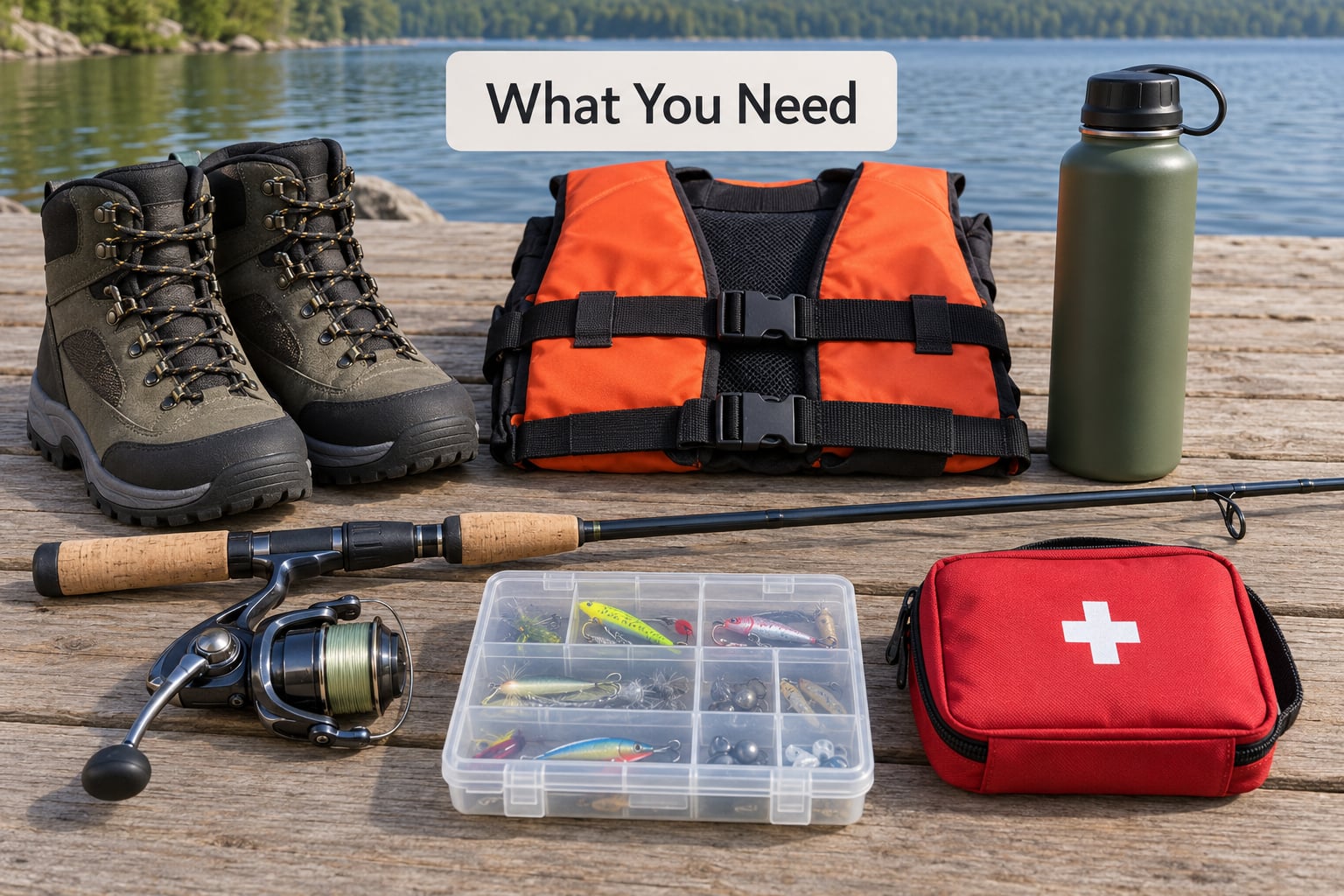
Safety gear on a jetty is not a shopping list, it is a set of answers to specific failures. Wet rock is the top one, so footwear and a flotation device come first. Everything else supports those two.
The non-negotiable items
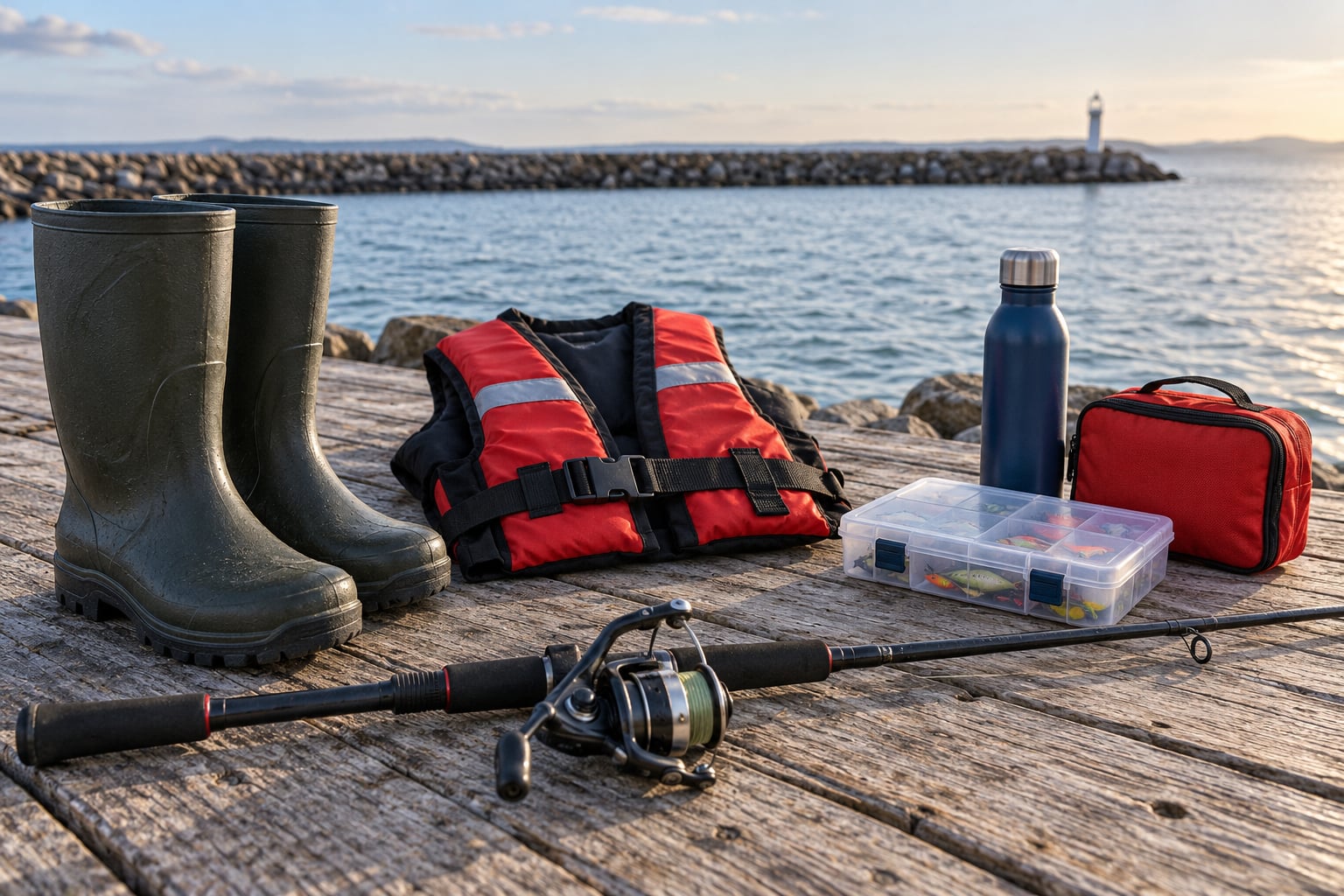
- A personal flotation device you actually put on. Not one that sits in the car. On a jetty, a sudden drop into moving water with cold shock on contact will shock you far more than you expect.
- Footwear with grippy rubber soles. Smooth-soled trainers, slip-ons and worn canvas are the single most common reason people end up in the water.
- A charged phone in a waterproof pouch, and a buddy who knows your plan. Tell someone the jetty name, your arrival time and when you expect to be back.
- Water and sun protection. There is no shade and no fresh water on a jetty. A litre bottle, a brimmed hat and sunscreen go in the same bag as the tackle.
- A line cutter or small knife clipped where you can reach it. Hook removal while fighting a fish with wet hands is how anglers get hurt.
Tackle that keeps you safe
A medium to heavy spinning outfit, a 7 foot-plus rod and a mono leader in the 20 to 30 pound range cover most jetty work. The leader matters because jetty structure eats soft plastic. Longer rods cast further, which means fewer forward casts into other people’s lines near a crowded rail. Keep hooks barbless where regulations require it and carry a fish gripper so you never need to grab a leader in a swell.
| Item | Why it matters on a jetty | When you need it |
|---|---|---|
| Personal flotation device | A fall from a wave-washed surface puts you in moving water immediately | Every trip, worn not carried |
| Grippy rubber-soled boots or waders | Wet rock, algae and barnacles remove all friction | Every trip |
| Headlamp plus a backup light | Dawn and dusk sessions leave you without natural sight lines to the edge | Before dark or at first light |
| Phone, whistle and tide app | Rescue is faster when someone knows where you are and when you return | Every trip |
| Extra layer and waterproof shell | Wind-driven spray strips heat faster than you expect on an exposed flank | Any exposed or seaward position |
| Fishing licence and local rules | Closures and structure limits are enforced, not advisory | Before you leave home |
Before You Go: a short routine
Do these five things at home, on the phone, not on the rocks. It takes ten minutes and it decides whether the trip is worth making.
- Read the tide table for your arrival window, not just the high and low times. Note when the current reverses.
- Read the swell forecast and the surf report for the specific beach or breakwater.
- Check the marine forecast for wind and any thunderstorm risk.
- Confirm the jetty is open. Port authorities and council works departments post closures for repair and storm damage.
- Message a buddy your plan and your expected return time.
How to Fish a Jetty Safely: Step-by-Step
Check the Jetty and Weather Before You Leave
Look at four things before the car keys come out: the forecast, the tide, the surf and the access status. Any one of them can end the trip, and all four are free to check.
Wind is the quiet danger. A light offshore breeze can make a jetty pleasant; a strong onshore wind turns the same structure into a spray machine that soaks you in minutes and cuts your visibility. Thunderstorms are an absolute no-go on an exposed structure — if lightning is within roughly 10 miles, do not be on a jetty, because there is nowhere to shelter.
Tide timing matters twice over. For safety, rising water eats your footing as the hours pass; a spot that was two metres above the water at low slack can be a metre above it on the flood. For fishing, moving current is when the bite happens. Anglers on the iFish jetty thread put it plainly: near the tide swings is the best, because the current carries bait along the structure.
Surf is the third check. Look for a period where the sets arrive roughly on time and the broken water is not already reaching the rocks at low tide. Also check water temperature and bring the right layer. A jetty in cold water with a wetsuit-less angler is a cold-shock scenario, not an inconvenience.
Regions differ, so local knowledge matters. US Atlantic jetties run swell hard onto exposed flanks and are often rebuilt after storms, leaving fresh rubble and rebar. US Pacific jetties are shorter, rock-armoured and popular with harbour seals and sea lions, so give the rocks a wide berth. Gulf jetties carry a serious heat and lightning profile, with cold shock also a factor in winter. Australian loading jetties are commonly closed to fishing and can host crocodiles in northern waters. UK groynes are short rock barriers that fall sharply into water on the seaward flank.
Finally, check the jetty’s structural condition. Fresh concrete, welded repair plates, missing deck boards or a section roped off mean that part of the structure is out. Walk past it rather than over it.
Choose a Safe Entry and Set Up Away from the Edge
Set up in the middle of the structure and further back from the drop than instinct suggests. Three arm spans from the edge is a reasonable rule of thumb for most anglers on a calm day, and more in any swell.
Approach along the structure rather than down it if the ground allows. Wet rock, raked rubble and rusted grating are all common, and the first step onto a jetty tells you more than any photograph. Where the surface is uneven, keep three points of contact — two feet and a hand, or two hands and one foot — and move one limb at a time.
Pick a level spot with firm ground under both feet and a clear path back. You want to be able to step away from a hooked fish without swinging your rod into a neighbour, and you want an escape route that does not cross wet rock. Many beginners set up at the tip of a jetty because it is quieter; the tip is also the narrowest, most exposed and most slippery part of it.
If you cannot find firm ground within a couple of metres of the rail, move. Wet rock, algae and barnacle shell are not worth the fish.
Wear the Right Gear and Protect Yourself from Splashing Water
Dress for wind, spray and sun rather than for the forecast temperature at the car park. A windproof outer layer over a mid layer, a brimmed hat, and sleeves you do not mind soaking. Long trousers also protect against hook and leader contact, which is more common than anglers admit.
Put the flotation device on before you step onto the structure, not after you feel a wave hit you. On many jetties a waist-belt PFD sits awkwardly over tackle and can snag a loaded hook, so a well-fitted offshore or over-the-shoulder model is the better choice. If nothing else, wear it.
Stay hydrated and keep eating. Small children and dogs need their own rules, and they are stricter than the adults: keep them away from the edge with a physical barrier or a lead line, not a verbal reminder, and take the dog off the rocks entirely if it will not be led. Fishing with kids on a jetty works well when everyone stays at the rail end near the car and nobody moves down the structure.
Decide before you go whether you are solo or with a partner. Fishing alone from a jetty is fine on a settled, busy day with people around. Fishing alone at dawn, at night, or in anything rough is a different proposition, and the sensible version of that trip is to fish from the shore nearby instead, where a fall means wet feet rather than open water.
None of this feels dramatic on a settled day, and that is exactly why it works. Most of how to fish a jetty safely is dull preparation done before the car starts, not improvisation once you are standing out there.
Rig and Cast Without Turning Your Back on the Water
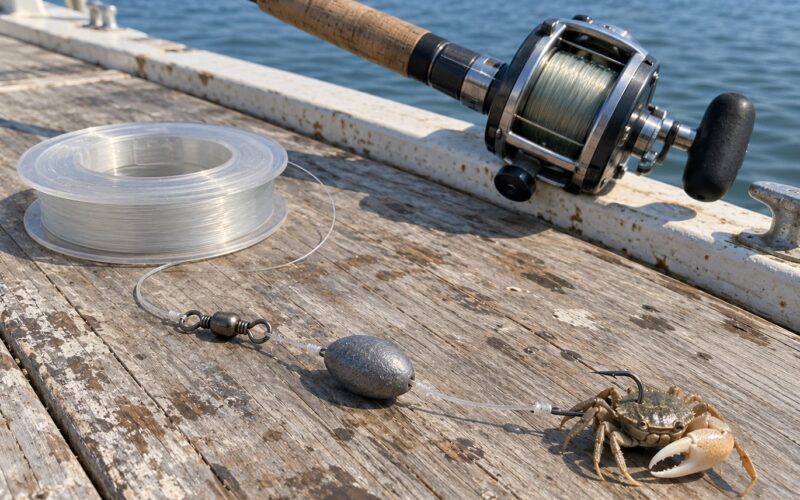
The safest cast on a jetty is the one you do not have to make. Beginners usually carry more gear than they need, so pick one rod and a simple rig: a running sinker rig or a dropper rig, live or cut bait, and a float if the current allows one.
Fish hold tight to the structure. Anglers across the forum results keep saying the same thing — the pilings are where the fish are. That makes a vertical drop beside a piling more productive than a long cast, and a dropped bait under a float cork easier to control than a lure fired into a busy sky. It also puts less line in the air above other people.
Before every cast, check three things: both feet planted and roughly shoulder width apart, your line clear of your own feet and gear, and a clear lane with nobody downwind of your line. Then cast with your body facing the target rather than swinging the rod across your hips. Backing up to a wave-washed edge for a longer cast is how rods and anglers end up in the water together.
Keep the rod under control. Point it, do not lay it flat, and never leave a loaded rod leaning against a railing where a wave can take it. When a fish is on, keep the rod tip high and let the reel do the work. Sudden backward movement is what puts a light angler off balance; the fix is a heavier rod and a shorter, more controlled retrieve.
Pick your lure weight for the loss you can accept. Jetty rubble and rusted rebar will take a soft plastic or a jig with no negotiation, so use something you are content to leave behind.
Move Along the Jetty Slowly and Watch Every Step
Most of the risk on a jetty happens while moving, not while fishing. Walk slower than feels necessary. Scan the surface a full stride ahead for rusted grating, gaps between decking, weed, loose gravel and raked rock.
Clear your line before you move. Dragging a hooked rig along a jetty is how other anglers lose tackle and how people get hurt, so bring the rod up, pinch the line, and walk it to a new spot before you cast again.
On a rocky jetty where regulations allow, handlining is slower but safer than casting. It keeps the line under control and makes it far easier to feel a bite through a heavy wave wash. Many regulars on the jetty threads describe exactly this approach — a lightly weighted bait cast near the rocks and let the current carry it.
Give other anglers room. Do not set a cart or bait bucket against a railing in front of someone, do not stand behind a person fighting a fish, and leave space to reel. Crossing lines are raised on more than one forum thread and they are entirely avoidable.
Know your limit and set it before you are tired. Most falls happen late in a session when attention drops. If the crowd is so dense that you cannot walk without squeezing past people with rods out, or if you are climbing over railings to get a better angle, the structure has become more dangerous than the fish are worth.
Handle Fish and Leave the Jetty Before Conditions Change
Lift the fish with a gripper, keep it low and off the edge, and remove the hook with pliers or a line cutter rather than your fingers. Wet hands plus a barbed hook is the most predictable minor injury on a jetty, and it is avoidable. Keep the fish in the water as long as regulations allow, respect size and bag limits, and note that some jetties are no-take zones.
Keep hands, feet and loose gear away from the water’s edge. Loading jetties in warm water can host large predators near the line, so the rule there is simple: no dangling bait below the surface, no hands in the water, no landing a fish over the edge.
Pack out your waste, line and bait scraps. Loose line on a jetty is a hazard for other anglers and for wildlife.
Then watch the conditions rather than the clock. If the swell has started arriving out of pattern, if the broken water is reaching the rocks where you are standing, if the wind has backed onshore, or if you are now fishing alone in fading light, that is your signal. Load up and go in.
If you do fall in, the order matters. Float first — do not stand up in moving water, because that is what pulls people under. Protect your head, swim parallel to the break rather than straight out against an outflow, and signal loudly for help. If someone else is in the water, call emergency services first and keep pointing at them until help arrives, rather than entering the water yourself.
Common Mistakes
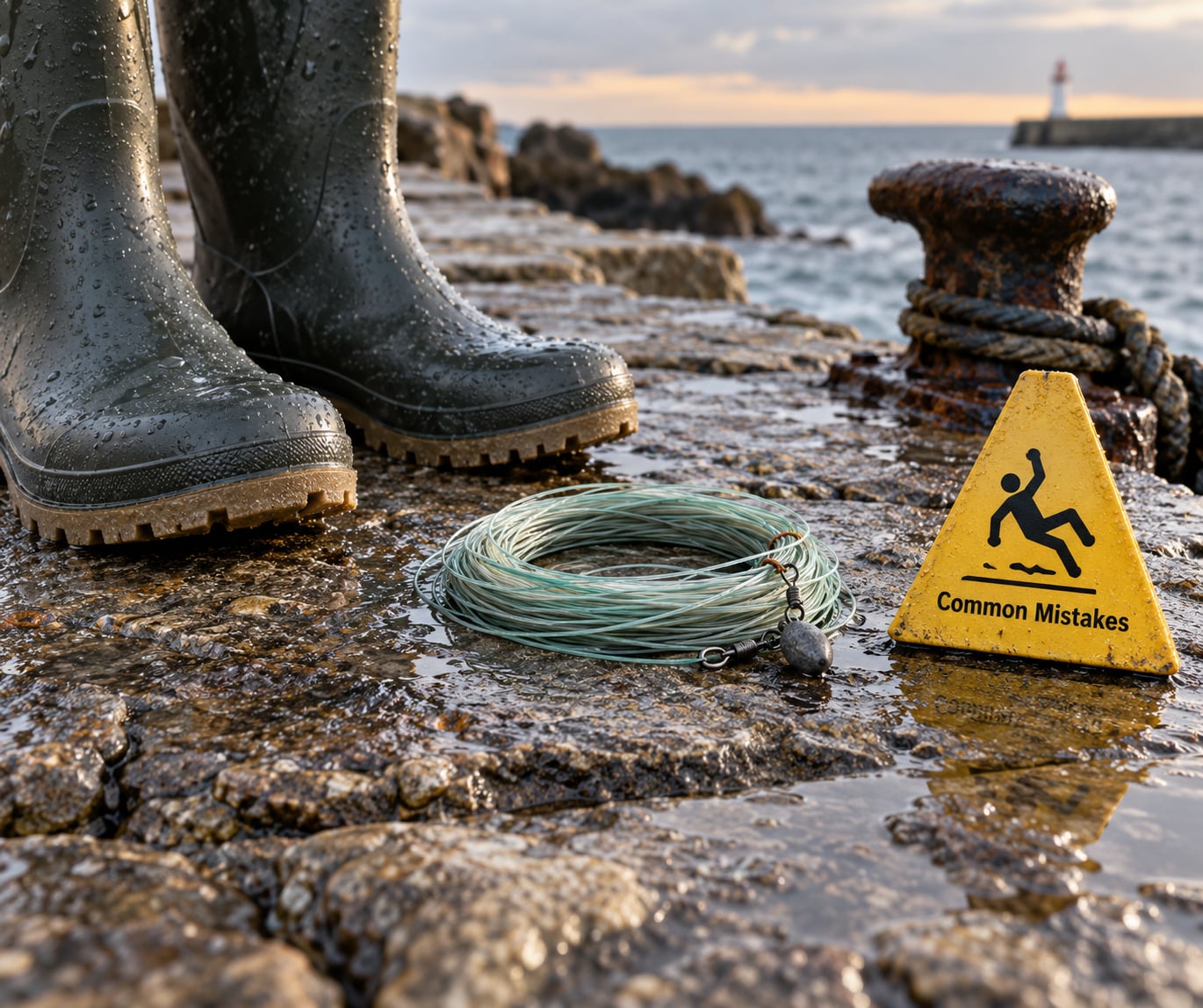
Almost every jetty accident I have read about comes back to one of these. They are all cheap to fix before you leave home.
- Fishing alone at dawn or dusk. Correction: fish with a partner, or fish the shore nearby instead where a fall is survivable and nobody is watching for you.
- Ignoring the tide table. Correction: read the tide for your arrival window and plan to be off the structure as water covers the footings you used to stand on.
- Wearing trainers or worn soles. Correction: rubber grippy soles, or waders with studs, on every wet-rock trip.
- Standing at the jetty tip or the exposed flank. Correction: move back from the edge and work from the wider middle section.
- Casting with an unstable stance or from a wet spot. Correction: plant both feet on firm level ground first, and cast toward a clear lane rather than across your body.
- Casting into other people’s lines. Correction: look behind and above before every cast, use the structure rather than long range, and pick a float over a long cast on a crowded deck.
- Leaving a loaded rod unattended. Correction: keep the rod in your hand or hooked in a rod holder, tip up and away from the water.
- Staying when the surf builds. Correction: set a leave time before you start and obey it even when the fishing is good, which is exactly when it will be.
- Fishing a closed or restricted jetty. Correction: check port authority and council notices before you drive; most operational loading jetties are closed to fishing.
- Trusting a calm horizon. Correction: watch the break for several minutes before committing. Sneaker waves arrive out of sequence and much larger than the sets around them, and calm-looking water is exactly when they slip through.
Frequently Asked Questions
Do you need a life jacket on a jetty?
Yes. Most jetty drownings happen to capable swimmers on calm days, because a fall into moving water with cold shock removes the ability to swim within seconds. Wear a properly fitted PFD from the moment you step on the structure, not when conditions turn. Choose a model without a waist belt if you fish, since a belt over a loaded hook or a full bait bag is a snag risk of its own. This is the easiest safety habit on this whole page to build, and the hardest one to add later.
Is it safe to take children fishing on a jetty?
It can be, with firm rules. Stay at the wide, dry end of the structure near your vehicle, well back from the edge, and do not walk down the length of the jetty with young children. A physical barrier or a lead line beats a verbal reminder every time. Pack food and a change of clothes, set a short session, and leave before anyone gets tired or bored. Keep dogs off the rocks entirely unless they will be led without argument.
When should you stop fishing a jetty and go in?
Stop and leave when the swell starts arriving out of pattern, when broken water reaches the rocks where you are standing, when wind backs onshore and drives spray over the deck, when visibility drops in fading light, or when you are alone and outnumbered by the crowd. Set a leave time before you start and keep to it, because the pull to stay is strongest when the bite is on and the light is going. If you are hesitating, that hesitation is your answer.
How do you avoid slipping on wet jetty rocks?
Keep three points of contact while moving, and use footwear with grippy rubber soles rather than smooth trainers or worn canvas. Look a stride ahead for algae, weed, barnacle shell, rusted grating and loose raked rubble, and move over those surfaces slowly rather than quickly. Set up on firm, level ground well back from the edge instead of at the tip. Wet rock is the most common cause of falls on a jetty, and it causes more of them than rough water does.
What should you do if you fall off a jetty into the water?
Float first and do not try to stand up, because standing in moving water is what pulls swimmers under. Keep your head above water, protect it, and swim parallel to the break instead of fighting an outflow straight out. Signal loudly for help and shout your position. If another angler is in the water, call emergency services before doing anything else and keep pointing at them so rescuers can track the person, rather than entering the water yourself.
Conclusion
The safest way to learn how to fish a jetty safely is to start with a conservative plan. Check conditions before you drive, go with a buddy, wear the flotation device and the grippy boots, set up well back from the edge, and leave before the situation becomes difficult rather than after.
Your first action is simple: check the local rules, weather, tide table and access status for that specific jetty. Everything else on this page follows from what those four checks tell you. Update this guide for 2026 season and before any trip where the forecast looks uncertain.