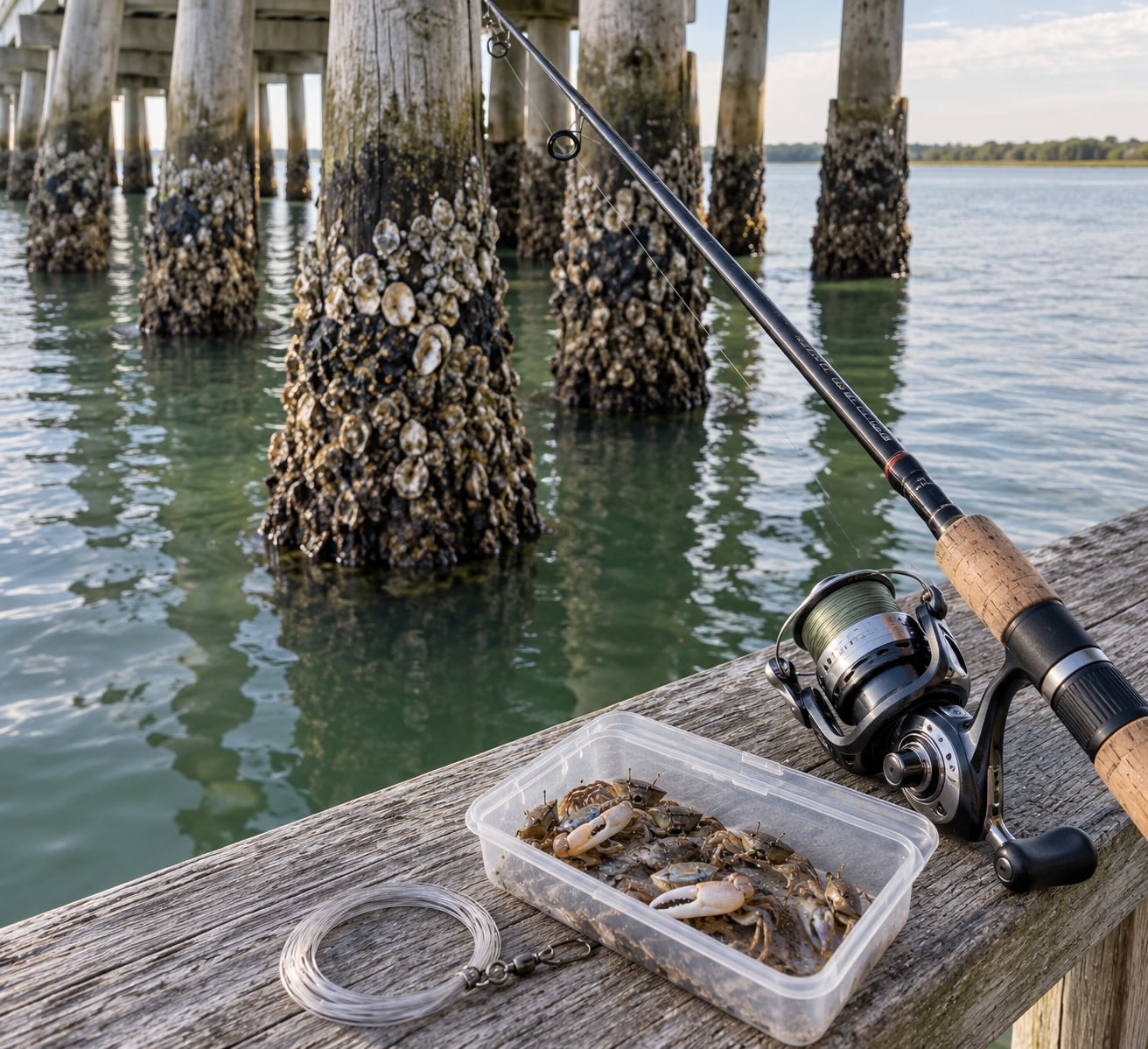
Learning how to catch sheepshead around pilings comes down to three things: a natural bait held within a foot of the timber, a line with no slack in it, and a hook set the moment the line changes tension. Sheepshead (Archosargus probatocephalus) crush barnacles and oysters off hard structure, so a barnacle-encrusted piling concentrates them in a small, predictable pocket. Nearly every miss comes down to bait theft and a bite too light to feel.
These fish are hard-bodied, banded like a school uniform, and armed with flat front teeth that do not quit until the shell is gone. They will not chase a plastic lure, and a small jig hurtling past does very little for them. That is good news for a pier angler with a bucket of fiddler crabs and an hour before the tide turns.
The method below is what works around bridge pilings, dock pilings, jetties and seawalls, from a boat, a kayak, or from shore under a span. Set aside about two hours for a slow session on one structure, and expect the bites to come in waves rather than steady. Updated for 2026; regulations change, so check the current rules for the water you are on before you launch.
Table of Contents
- What You Need
- How to Catch Sheepshead Around Pilings: Step-by-Step
- How to Catch Sheepshead Around Pilings with the Right Tide
- How to Catch Sheepshead Around Pilings with Effective Bait
- Set the Hook and Fight Sheepshead Confidently
- Common Mistakes
- Frequently Asked Questions
- What is the best bait for catching sheepshead around pilings?
- What tide is best for fishing sheepshead around pilings?
- What size hook and leader should I use for sheepshead?
- Why is my sheepshead bait falling off near the pilings?
- How do I get a sheepshead unstuck from structure?
- Conclusion
What You Need
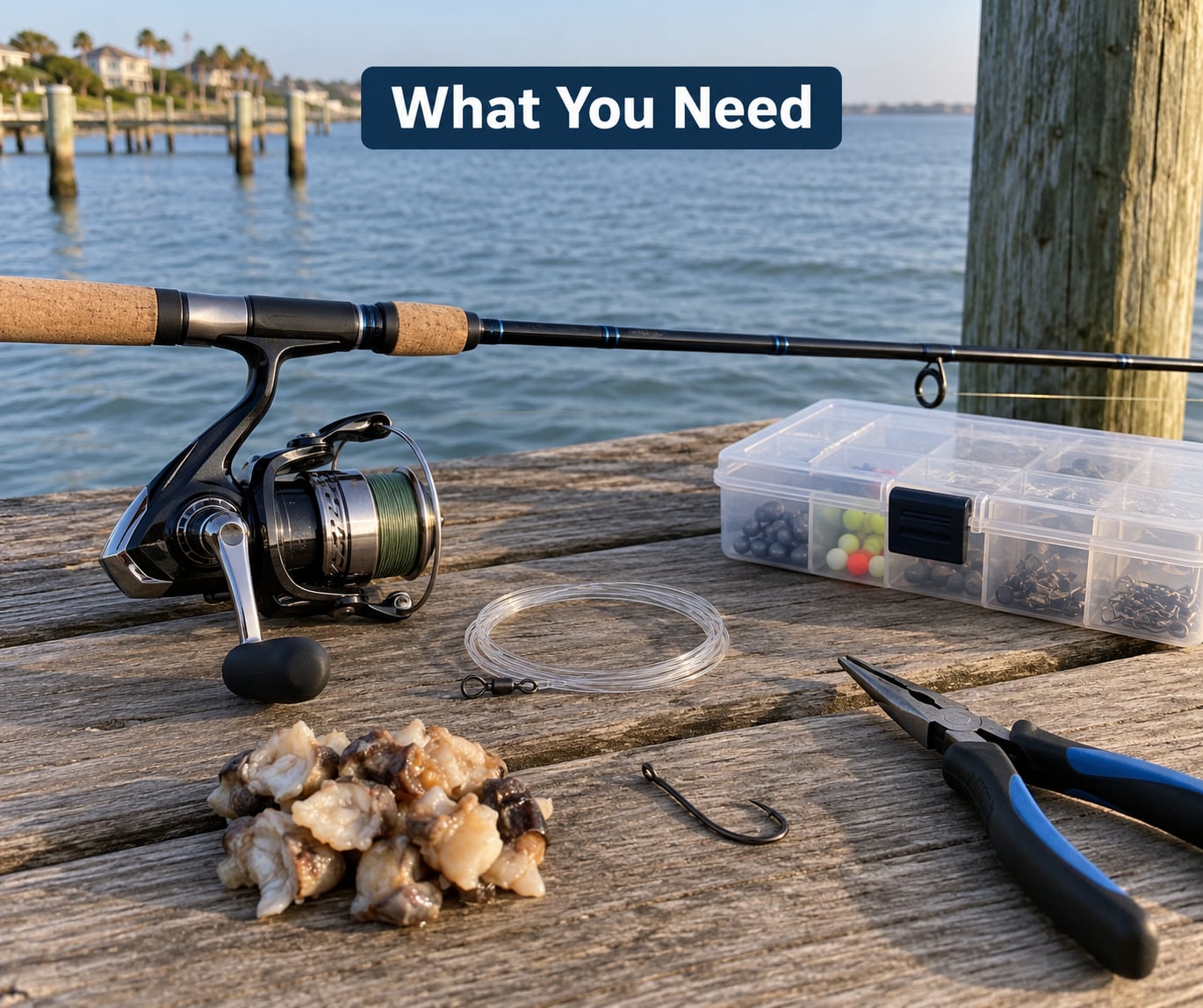
Sheepshead fishing around pilings is not a heavy-cover job, and the gear list is short. What matters is a sensitive rod tip and a leader heavy enough that a blue crab in a barnacle patch does not snap you off.
- Rod: A 6 foot 6 inch to 7 foot medium to medium-heavy spinning rod with a fast tip. Sensitivity beats power here, because the pickup is a nudge rather than a slam.
- Reel: A size 2000 to 3000 spinning reel with a smooth drag you can feather with one finger. If you are standing on a jetty or working a slick under a bridge, a 2500 gives you enough line and line retrieval.
- Main line: 20 to 30 pound braid, or 15 to 20 pound mono if you are casting a long way from shore. Braid keeps you connected to subtle line movement.
- Leader: 20 pound braid tied to a 25 to 30 pound fluorocarbon leader, 12 to 18 inches long. Fluorocarbon blends into the green-brown water and holds out to barnacle edges.
- Hook: A 1/0 or 1/0 to 1 circle hook covers most pilings fishing. Step up to a 2/0 for large sheepshead and a 3/0 when you are rigging whole oysters or big blue crab.
- Weight: Jighead weight follows depth and current. Three-quarter ounce in shallow water or light flow, 1 ounce as a default, 2 ounces in real current, and 2 to 3 ounces when you are fishing a bridge 30 feet or deeper.
- Bait: Fiddler crabs, mud or blue crab, live or ghost shrimp, oysters, and barnacles scraped right off the piling. Bring more than you think you need.
- Hand tools: Split-ring or needle-nose pliers, a dehooking tool, and line cutters. Sheepshead teeth will chew through leader and fingers.
- Safety and setup gear: A personal flotation device, an anchor with line for holding position above a structure, a tide and current reference, and a second person if you are fishing from a jetty or pier in current.
One item most beginners leave off the list is a slicker or wet rag. Holding a crab while you thread a hook with bare, dry hands is how you lose it.
How to Catch Sheepshead Around Pilings: Step-by-Step
Here is the whole method in eight moves, before the detail.
- Pick a piling with heavy marine growth.
- Anchor up-current and drift back, or set up so the current flows past you.
- Tie a jighead or circle hook to a 12 to 18 inch fluorocarbon leader.
- Rig the bait so the hook point is buried in it.
- Drop the weight to the bottom, point the rod down, and pull the slack out.
- Hold the bait within an inch or two of the timber and watch the line.
- Set the hook on the first change in tension.
- Keep a bowed rod and pump the fish away from the piling before you hand-land it.
How to Catch Sheepshead Around Pilings with the Right Tide
Fishing a tide with moving water beats slack water almost every time, and a falling tide is usually the better half of the flood. Sheepshead feed on the current carrying food past them, so the best bites come when the flow has a direction and some speed, typically between about one and three knots.
The key is where the current breaks. Every piling has a calm pocket on the face the flow is not hitting directly, usually around the downstream side or just past the shadow of the timber, and that pocket is where the fish sit. Anglers on r/saltwaterfishing put it plainly: you want the bait in the spot the current is not reaching, not in the wash pouring past it. Fish the eddy line itself as it shifts, and let the bait hang in the slack behind the piling rather than slapping the wood.
Light and time of day matter less than most anglers expect, though dawn and the last two hours of daylight are reliably good. Overcast winter days are as productive as clear ones, and even a dull, dirty blow can put fish on structure because the water is stirred up and visibility is low. Check the local weather, tide table, and any current restrictions for the channel or inlet you are fishing, since bridge approaches can carry far more water than the flat you are standing on.
How to Catch Sheepshead Around Pilings with Effective Bait
Fiddler crab is the consensus first choice, and it wins because it is durable, it stays on the hook, and a sheepshead spends real time crushing it. A small blue or mud crab is the upgrade when the fish are big. Shrimp, live or ghost, work best where there are not a lot of tiny fish competing for them.
Rig the bait so the point is covered. Thread the hook through the body of the crab or the tail of the shrimp, then push the point back into the flesh where the eye cannot see it. Two fiddler crabs on one hook is a trick longtime pier anglers use, and it hides the point and gives the fish something to hold. Bait theft is much less of a problem when there is no exposed point for a fish to mash and drop.
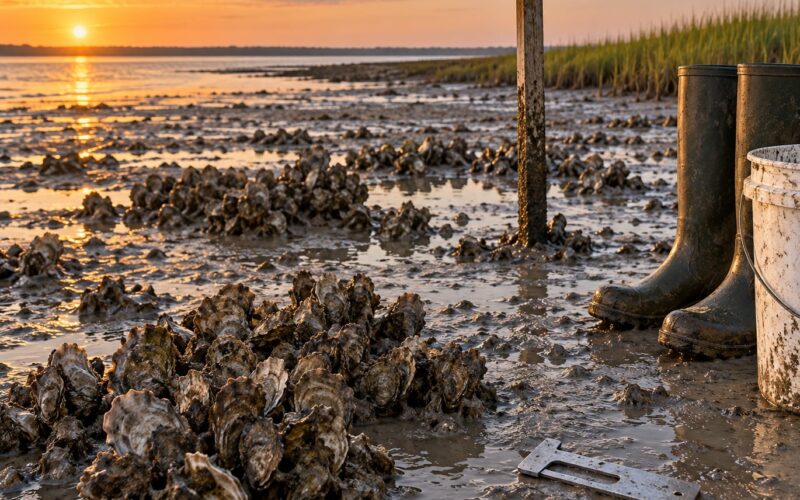
Barnacles scraped off the piling work, and they are free. Fishermen have long fished the growth taken straight from the structure in front of them. Oysters on pilings are usually too small to bother with, and taking too much from one piling is a good way to clean it out. Bring oysters if you can get them, but do not strip a public structure for bait.
Keep the bait cold and covered. Live shrimp go in a bucket with an aerator or a small amount of crushed ice, and crabs go in a damp towel in a shaded bucket. Warm bait falls apart on the hook, and a sheepshead that picks it apart in two seconds teaches you nothing.
Where you hold the bait depends on the fish. Around a bridge, hold it tight to the piling just above the growth line. On a pressured pier, keep the bait two to three feet below the surface instead of putting it on the bottom, which is the local advice one beginner on r/floridafishing received after catching a single small fish under a busy dock full of catfish and jacks. Two to three feet down keeps you on the sheepshead and off the bottom-hugging crowd.
Set the Hook and Fight Sheepshead Confidently
Set the hook on the first change in line tension, not on a second jolt. Sheepshead give a tap or a pickup that feels like a small current shift, and by the time you feel a hard pull the fish has often crushed the bait and dropped it.
Here is the timing most anglers get wrong. At one second, you might feel the bait move a few inches and go dead, which is the fish nudging it. At two seconds, the line sags or twitches, which is the fish picking it up. By three seconds you are usually looking at an empty hook. Reel fast through the first two or three inches of resistance, then bow the rod and keep the drag tight. Keep the rod pointed at the bait, which is the same way you detect the bite, and keep the line as tight as the structure allows.
That last point matters more than the bait. On a GON forum thread, anglers described the same sequence: drop the line beside the piling until the weight touches bottom, then point the rod down and pull the slack out so you can watch the line for the first sign of movement. If the line is slack, the tap goes into nothing.
Once hooked, the fish dives for the timber because that is where it lives. Position the boat or kayak so the fish has open water to run into, keep the rod bowed, and pump short, hard lifts to gain line while lowering between pumps so the fish cannot surge. Never drag it around the piling and never try to horse it in one pass. Bring it alongside, get a wet hand on the leader behind the head, and use a dehooking tool because those teeth are no joke.
Fish pressed against structure is normal, not a sign you picked a bad spot. An r/pondpounder kayaking the Chesapeake Bay Bridge-Tunnel came home with a couple of sheepshead in the box while tautog were out of season, and it took the same vertical approach around pilings as pier anglers use.
Common Mistakes
Almost every bad sheepshead session traces back to one of these, and each one has a simple fix.
- Fishing the wrong side of the piling. The face taking the full blast of current is nearly empty. Move to the calm pocket on the face the water is not hitting and re-drop the same bait.
- Too-light tackle. A light rig gets crushed in barnacle edges and loses fish. Bump up to a heavier leader or a larger jighead rather than fighting the structure with finesse.
- Over-heavy tackle. A 2 ounce weight where the water moves at half a knot will rip your bait off the bottom and kill every bite. Match the weight to the depth and the flow.
- Presenting the bait too high. Some fish will take it, but the ones holding tight to the structure are the ones you came for. Work the bottom unless you are on a crowded pier.
- Pulling too quickly. A fast, jerky retrieve pulls bait away from a fish that was already committing. Work the jighead a couple of inches off the bottom in slow bumps, as anglers on pensacolafishingforum.com described, or hold it still.
- Leaving slack in the line. Slack is why bites are missed. Point the rod down, feel for the bottom, and reel until the line is tight before you fish.
- Ignoring wind and current. Set up so the current brings fish to you and the wind is not pushing you off your anchor. Position is the cheapest advantage in this whole method.
- Moving on after a couple of bait thefts. One angler on r/saltwaterfishing fed 8 to 10 fiddler crabs to the first two pilings without a single hookup before the fish turned on. Bait theft usually means the hook is exposed, the bait is stale, or the fish are not ready yet. Re-rig and stay.
- Keeping fish you should release. Bag limits, size limits and slot rules for sheepshead differ by state. Learn the rules for your water, use a dehooker, and release quickly.
Two more habits pay off all season. Chumming with crushed oyster shell or a chum block at the upstream face of a pile creates a slick that pulls fish in from down-current, and a heavy pile usually holds more than a light one, so work your way along a bridge instead of hammering one timber.
Frequently Asked Questions
What is the best bait for catching sheepshead around pilings?
Fiddler crab is the most reliable first choice, because sheepshead spend time crushing it and the shell survives a strike. Mud or blue crab works well on bigger fish. Live or ghost shrimp shine where few small fish compete. Bury the hook point in the bait, and consider two fiddler crabs on one hook so the point stays hidden and bait theft drops.
What tide is best for fishing sheepshead around pilings?
Moving water beats slack water, and a falling tide is usually the better half of the flood. Target a flow of roughly one to three knots and fish the calm pocket on the face of the piling that the current is not hitting directly, often the downstream side. Keep the bait inside that slack rather than in the wash pouring past the timber.
What size hook and leader should I use for sheepshead?
A 1/0 or 1/0 to 1 circle hook covers most pilings fishing, with a 2/0 for large sheepshead and a 3/0 for whole oysters or big blue crab. Run 20 pound braid to a 25 to 30 pound fluorocarbon leader, 12 to 18 inches long. That length keeps the bait inside the strike zone and short enough that heavy fish stay clear of the barnacles.
Why is my sheepshead bait falling off near the pilings?
Three causes account for most of it. An exposed hook point gets crushed and dropped, a weight that is too heavy for the depth tears the bait off the bottom, and a stale or warm bait falls apart on its own. Bury the point in the bait, drop to a lighter jighead, and keep crab and shrimp cold. If fish are stealing without hooking, re-rig and stay put before moving on.
How do I get a sheepshead unstuck from structure?
Give the fish open water to run into before it hooks up, with the boat or kayak set off the structure. Keep the rod bowed, pump short lifts to take line, and lower between pumps so the fish cannot surge. If it does reach the timber, do not pull hard against it. Either let the line go slack and hope it works free, or cut it and re-rig. Use a dehooking tool on the teeth.
Conclusion
On your next trip, start at a piling with the heaviest barnacle and oyster growth you can find, and set up so the current brings fish to your side. Time it to moving water, preferably on the falling tide, and drop a fresh fiddler crab rigged with the point buried within a couple of inches of the timber. Watch the line with the rod pointed down, set the hook on the first change in tension, and keep steady pressure the whole way in. Those four habits account for more sheepshead than any lure ever sold.