To catch tarpon from a small boat, find rolling silver kings in shallow water, cut the motor, get up-current of the school, and pitch bait 10 to 15 feet ahead of where the fish are traveling. Then set the hook hard with a strip-strike and bow the rod to the fish on every jump.
That is the whole method, but a 16-foot jon boat or skiff changes the details that bigger-water guides never bother with. You have less room to reposition, a lower gunwale to fight over, and no second angler holding a net. Everything below is built around that constraint.
Tarpon, or Megalops atlanticus, gulp surface air through a modified swim bladder, which is why a rolling school tells you exactly where a fish is without any electronics. Anglers have been chasing those rolls from small platforms for a century, and most of the technique comes down to reading water, presenting bait without scaring the school, and staying upright when a 100-pound fish leaves the water next to you.
If you are new to saltwater, the gear list below is deliberately short. It is what fits in a tackle locker, not what a full boat would carry.
Table of Contents
- What You Need
- Gear that decides most of it
- Safety and boat items
- Step-by-Step: How to Catch Tarpon From a Small Boat
- 1. Plan the Tide, Weather, and Water
- 2. Choose a Productive Small-Boat Spot
- 3. Position the Boat Without Losing Control
- 4. Select Bait and Present It Naturally
- 5. Set the Hook and Stay Connected
- 6. Fight the Tarpon Without Losing the Fish
- Jump by jump
- What works and what does not
- 7. Land, Handle, and Release the Tarpon
- Common Mistakes and the Fix for Each
- Frequently Asked Questions
- Can you catch tarpon from a small boat?
- What bait do you use to catch tarpon?
- What pound line should you use for tarpon?
- Why do tarpon throw hooks?
- Do I need a trolling motor to fish tarpon?
- Can you eat tarpon?
- Conclusion
What You Need
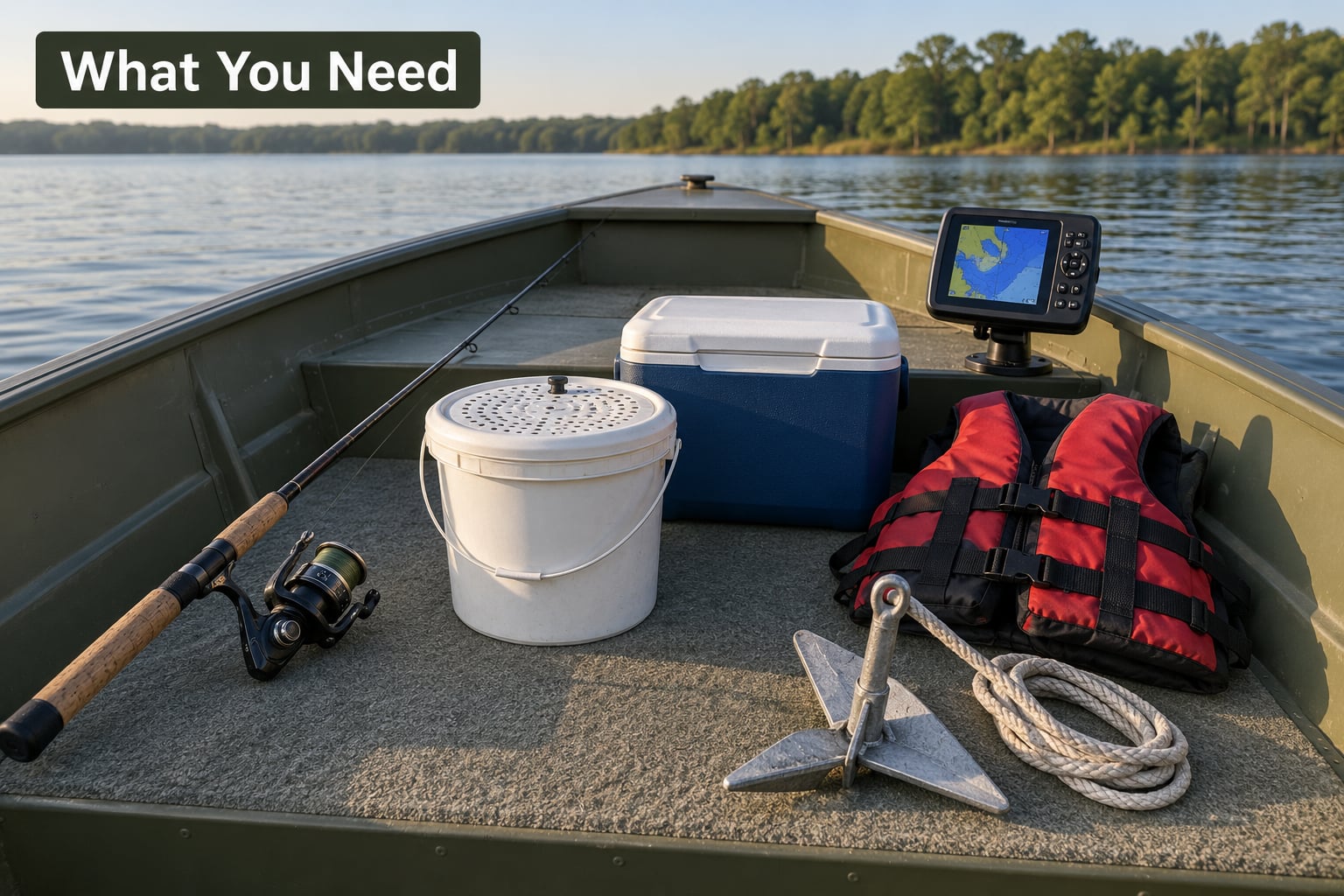
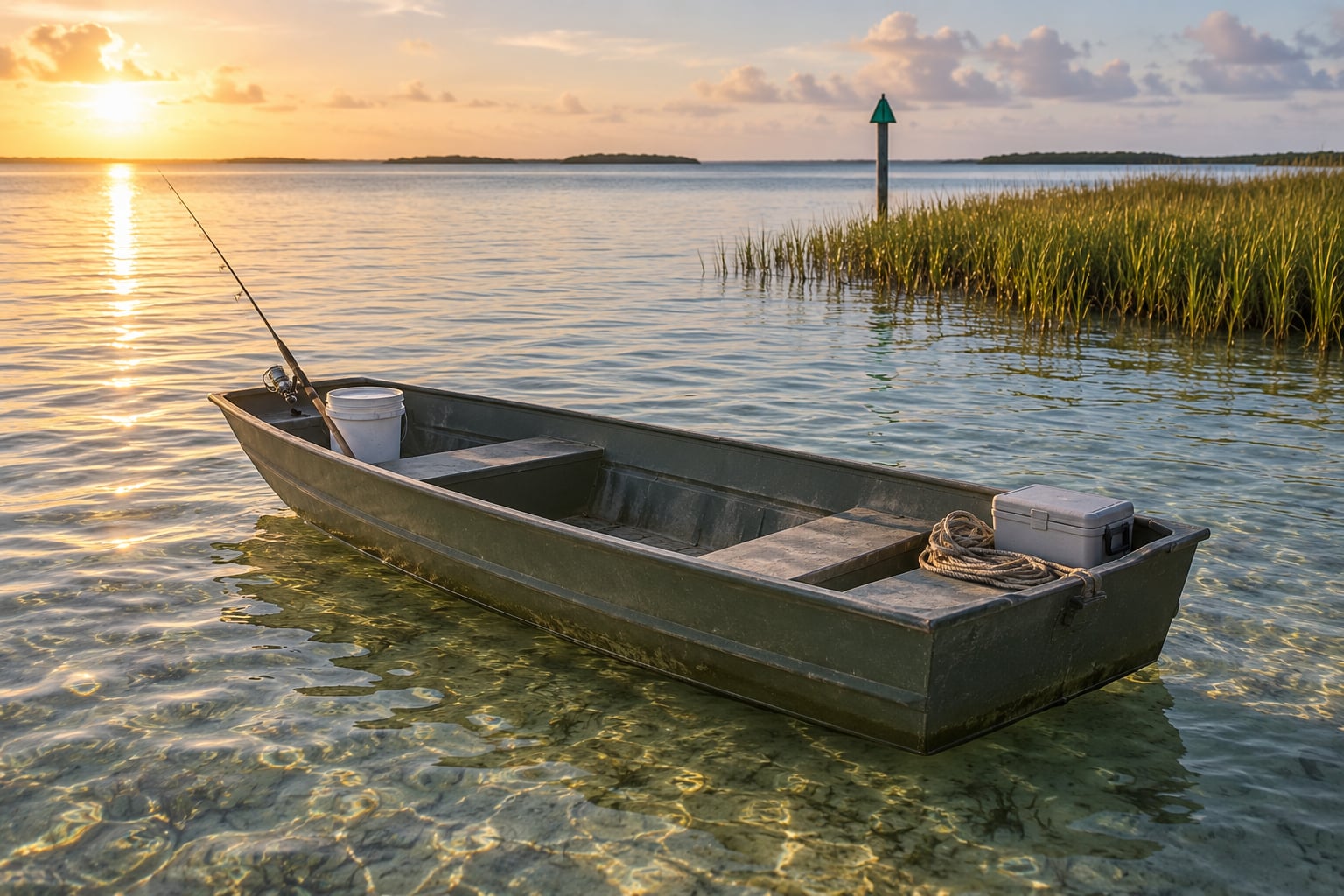
The boat matters less than most anglers think. A 16- to 18-foot jon boat, a poling skiff or a kayak will all work, provided it floats, carries a person who can stand without falling, and has enough deck to keep a bait bucket from rolling under the throttle.
A 9.9 hp outboard handles a flat, but it does not handle a tarpon charging into your hull. If your boat has one, learn to drift rather than to power through every situation.
Gear that decides most of it
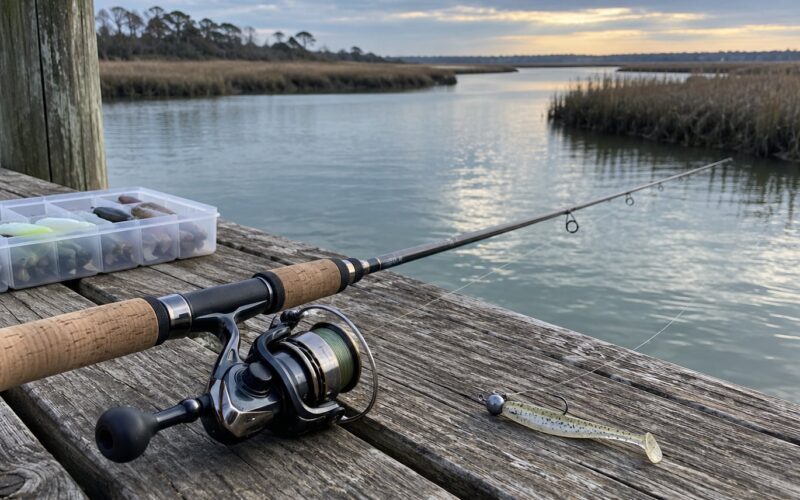
- Rod and reel: A 7- to 7.5-foot heavy rod with a 6000- to 8000-class spinning reel is the standard small-boat tarpon setup. Anglers fishing MicroSkiff threads ask whether 7 feet is too short for casting; for pitching and freelining, it is plenty, and the shorter rod keeps the tip in a position where you can bow to a jump without swinging the whole boat.
- Main line: 50 to 80 lb braid, tied to a 60 to 80 lb fluorocarbon leader four to six feet long. Braid has almost no stretch, so the drag does all of the work, and fluorocarbon is nearly invisible in clear water and cuts around structure.
- Hooks: A 7/0 or 8/0 circle hook, pre-sharpened. Circle hooks are also the legal requirement for bait fishing in many Florida waters.
- Terminal rig: A bead, a barrel swivel or shock leader, and a bait spring. Double-crimp sleeves and a double surgeon’s loop or FG knot for the braid-to-leader connection keep a jump from opening the knot.
Safety and boat items
- A well-fitting life jacket you will actually wear. Fish this strong do not care about your footwear.
- A reliable anchor with a short, heavy rode, plus a way to bring it aboard fast without tangling your line.
- A hand-held GPS or fish finder, even on a boat where you plan to stay in sight of shore.
- Headlamp, whistle, bailer, first-aid kit, and a kill switch on the outboard lanyard.
- A long-handled landing net for shallows, though a clean boatside release is often better.
- A towel, a dehooker or long-nose pliers, and a spare leader in a wallet so you can re-rig without tying on the bank.
- A cooler with ice for the catch. Most tarpon anglers will tell you the meat is worth keeping.
One more item is worth the space: a second rod and reel. Tarpon are not the only fish in the water, and a second rod lets you keep a working presentation drifting while you deal with something on the other line.
Step-by-Step: How to Catch Tarpon From a Small Boat
1. Plan the Tide, Weather, and Water
Tarpon feed harder on the outgoing tide, especially during the first two hours of flow, and the best windows often line up with a full or new moon. Water temperature matters too; they push into shallow flats and backcountry creeks as it warms and pull deeper as it cools.
From a small boat, wind is the deciding factor. A forecast that shows storms, a strong onshore blow, or a tide running faster than your drift rate should send you to a sheltered lee shore instead of open flats.
Your pre-launch checklist stays short: check the wind forecast for the afternoon, not just the morning. Look at the tide table and pick two spots, one that works on the outgoing flow and one backup. Confirm you have a full tank and a bailer. Tell one person your route and your end time. Check the closures and any special regulations for the water you picked.
When conditions turn during the trip, move or stop. Tarpon fishing gets dangerous quickly when a squall builds over a shallow flat with a low ceiling.
2. Choose a Productive Small-Boat Spot
Tarpon hold along passes, inlets, bridges, channel edges, seagrass borders and bait schools. A group working a drop-off in 4 to 8 feet of water will be visible as a rolling patch from a distance, and you do not need deep water to find them.
Read the water in this order: current lines and seams first, then surface disturbance, then birds. Terns and dolphins working a patch usually mean something is feeding below.
Keep your search shallow and your engine quiet. From a jon boat you can idle into a backcountry creek that would swallow a bay boat, and you can sit quietly on a flat where a bigger hull announces itself half a mile early.
Ask locally. Guides, dockhands and marina fuel attendants are the fastest source of current information on where fish are holding, and they rarely mind being asked.
3. Position the Boat Without Losing Control
Position up-current of the school and let the bait drift back toward the fish. Casting on top of rolling tarpon spooks the whole group, which is the single most common reason beginners see plenty of rolls and zero hookups.
Your three tools are drift, trolling motor, and pole, and from a small boat you will mostly use two of them:
| Method | Best For | Small-Boat Limitation |
|---|---|---|
| Drift | Sight fishing rolling schools on flats and in backcountry | Wind can push you out of position; no reverse gear |
| Trolling motor | Holding a spot against cross-current over structure | Battery drain and a limited thrust ceiling in heavy flow |
| Pole or paddle | Creeping quietly into tight cover at very low speed | Slow, and you are exposed with no engine noise masking you |
On the practical workflow: idle down, kill the engine, then kick or paddle at the speed of a slow drift. Anglers who fish tarpon from micro skiffs and kayaks report drifting two freelined lines off the stern while slowly paddling, and that same motion works from a jon boat.
An anchor only makes sense when you have found fish that will stay put. Anchoring up-current of a school that is working along a drop can put you in the wrong place all morning, because the fish move and you do not.
Know when to reposition. If you have drifted a full school length with no bites and no fish showing, you are behind them. Move the boat rather than the bait.
4. Select Bait and Present It Naturally
Match the bait to what is actually swimming in the water, because a tarpon that will ignore a threadfin will smash a crab.
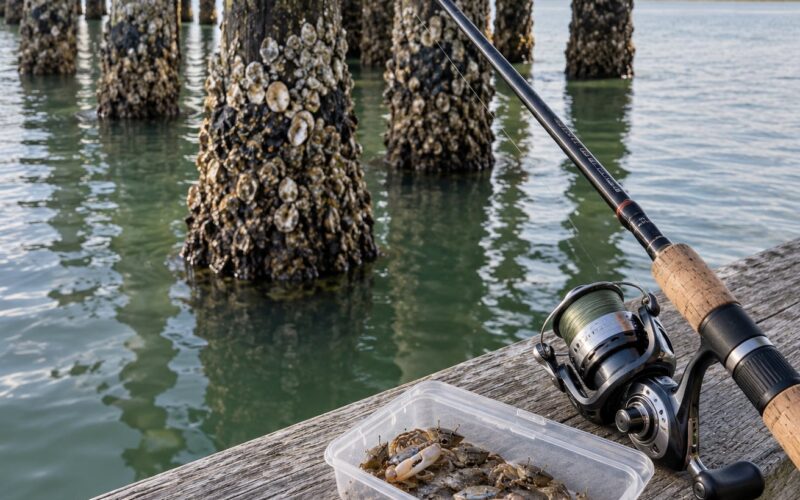
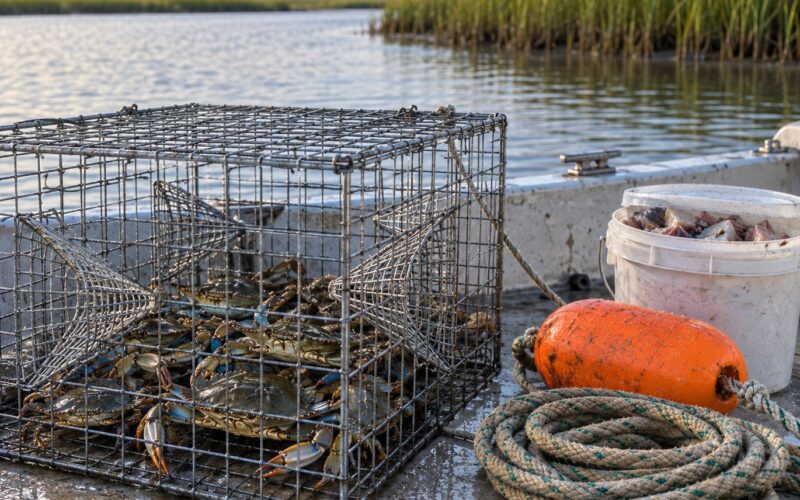
- Live crab: The default for Florida Keys, bridges and passes. Crab holds up in heat and gets less stolen than finfish, though tarpon do roll it to see if it is alive before committing.
- Threadfin herring: The Gulf and Florida Gulf Coast standard. Work the natural arc of the rig rather than pinning it to the bottom.
- Mullet: A reliable fall and cold-weather bait, commonly freelined behind a moving boat while working docks.
- Shrimp: Winter choice in South Florida, either freelined or under a cork float.
- Soft plastics and jigs: The reliable option for juvenile tarpon in ponds and creeks. Downsize to match the hatch, with smaller natural patterns in olive and pearl, rather than throwing a full-size flounder lure at a fish with a small mouth.
Most anglers rig a size 2 to size 4 circle hook with a bead and a short leader, and float the bait either under a cork float or with a bait spring so it stays upright. Check bait theft early. Barracudas and gulls shred soft baits, and if you keep losing fish without ever hooking up, that is usually the reason.
Adjust presentation to clarity and current. Pitch 10 to 15 feet ahead of the fish’s travel path in clear water where a shadow will spook them. In stained water you can get closer and stop the drift every thirty seconds, letting the suspended bait rise back into the strike zone.
A tell that the presentation is working is a change in the rolling pattern. Fish that were lazily circling start committing, or a big fish separates from the group and starts sounding off.
5. Set the Hook and Stay Connected
Set the drag before you leave the dock. On a small boat the angler may be standing, braced against a gunwale, with one hand on the rod, so the drag needs to do the adjustment work. About 15 to 20 percent of your braid rating, or roughly 8 to 10 pounds of drag on a 60-pound braid, is a sensible starting point. Open a few cranks and confirm it holds with a hard pull before you lean a bait over the side.
Tarpon take bait with a gulp and a head shake. You will feel more of a bump than a slam, which is exactly why anglers throw hooks with a small rod and a tight drag. Wait for the second drop of the bait or the line to stop moving with slack in it, then sweep the rod and pull the line tight in one continuous strip-strike.
Keep the line organized in a small boat. Everything loose, clipped to the console, or run under the seat becomes a hazard when a fish jumps. Before the season starts, I clear the deck and put every item that does not need to be there into the tackle box.
Once the hook is set, get the rod tip down and keep it low. A tip pointed at the sky gives a jumping fish nothing but tension, and tension on a jumping tarpon is how you lose it.
6. Fight the Tarpon Without Losing the Fish
A hooked tarpon will usually shake its head, jump, and run. Head-shaking in the air is called greyhounding, and it is the behavior that throws hooks. Your whole fight is about creating slack at the moment the fish is airborne.
This is called bowing to the fish. Bow the rod to the fish rather than bowing the fish to the rod: as it clears the water, drop the rod tip down toward the surface, give the line, and keep the reel pointed at the fish. Let the line go slack while it is airborne and firm pressure as it comes back down. If you hold a tight angle in the air, you are pulling against a fish that weighs nothing and beats itself on the surface.
Jump by jump
- Jump one: Bow, let it fall, regain line below it.
- Jump two: Same drill. Most lost tarpon come on the second and third jump when the angler gets nervous and pulls up.
- Jump three and beyond: Let it run. If the fish is jumping away from the boat and gaining distance, put the reel in free-spool and let it take line rather than chasing it. Chasing is how a fish ends up tangled in your prop or in another boat’s line.
- Long run: Bow to the fish the entire way. Aim the rod at the fish and keep the line angle shallow.
What works and what does not
| Move | Works For You | Works Against You |
|---|---|---|
| Rod tip during a jump | Bow down, slack line | Tip up, tight line |
| Drag | Set at 8-10 lb on 60 lb braid | Drag cranked to maximum |
| Rod length in a small boat | 7-7.5 ft heavy rod | Longer rod you cannot lower |
| Line | 50-80 lb braid, 60-80 lb leader | Light tackle on a fish over 100 lb |
| Position | Bow to the fish, stay seated | Standing at the gunwale mid-jump |
Pump and reel rather than crank constantly. Reel only when the rod tip comes back toward you, and stop the moment the line tightens. That is the entire technique, repeated.
When a fish is running close to the hull, ease your drag a touch and let it pass the transom. A tarpon that surfaces alongside a low gunwale can put an angler in the water or start a line wrap around the prop shaft, and no fish is worth that risk. If the fish is being pulled toward the motor, move the boat rather than fighting the angle.
Know your exit. If you are alone, exhausted, and still a long way from the boat, you do not have to land the fish to have done the job well. Bow every jump, let the line run, and consider cutting away. Fish that jump often come back.
7. Land, Handle, and Release the Tarpon
A net is easier than it sounds and far less risky than hand-landling a thrashing silver king. Have the net already rigged and hung where you can reach it without turning your back to the water.
Never lift a tarpon by the line. The body weight will tear the mouth or the jaw, and you lose the fish and your rig. Land the leader, get both hands on the fish, and support it horizontally from the belly and the tail. Tarpon have weak, damaged-susceptible shoulders, so keeping the body horizontal is the whole point.
Small-boat alternatives work well. From a low gunwale, a tarpon can be released without ever leaving the water: control the leader, keep the fish on its side, and let your partner or your own free hand slide the hook out against the direction it entered. If you are solo, wait for the fish to tire at boatside, grab the leader with one hand and the tail with the other, and remove the hook on the deck if you cannot do it in the water.
Revive the fish facing into the current so water flows over the gills, and let it hold on its own before you let go. A fish that swims away strongly is a fish that lived.
Then check your leader for cuts and abrasion, especially if the fish ran through shell or coral. That inspection takes ten seconds and saves the next fish.
Common Mistakes and the Fix for Each
Almost every failed small-boat tarpon trip traces back to one of a handful of decisions, and each has a straightforward fix.
- Casting at the school instead of leading it. Roll up the lure, get the leader free, and pitch ahead of where the fish are going.
- Fighting the current with the throttle. Powering to hold a position burns fuel and puts you into the fish. Cut the motor and drift; most tarpon anglers will tell you a slow drift beats a loud engine every time.
- Gearing too light. A 20-pound leader and a 5000-class reel is a nice way to lose a good fish and strand a tired one. Move up to 60- to 80-pound leader and a 6000- to 8000-class reel before the season starts.
- Line management failure. Bait clips, coiled leader, a loose net handle and a rod under the seat are all hazards on a small deck. Clip nothing and stow everything.
- Anchoring in the wrong spot. Anchored above a moving school is an afternoon wasted. Anchor for depth and shelter, then drift to find fish.
- Striking too early or too hard on the drop. Wait for the bait to stop with slack in the line, then sweep and pull in one motion. A hard lift on a slack rod is how hooks get ripped out of a hard palate.
- Pulling up during a jump. This is the mistake that costs the most fish. Bow the rod, give slack, and keep the tip pointed at the fish.
- Standing at the gunwale during a jump. Sit down, brace your back against the console, and keep the rod low. The jump is the most dangerous second of the fight in a boat with six inches of freeboard.
- Mishandling the fish. Lifting by the line, keeping the fish vertical out of the water, or reviving it with the current behind it. Horizontal support and current-facing revival only.
- Running baits too big for pond tarpon. Juvenile fish in creeks and ponds reject oversized hooks and plugs. Downsize both to match the hatch.
A few habits from experienced small-boat anglers are worth stealing. Clean the deck before the engine starts. Set the drag before the first cast, every time. Keep a spare leader rigged in a wallet so a cut is a five-minute fix instead of a trip home. And treat bait theft as information; if the fish keep breaking off without ever being hooked, change the bait.
Frequently Asked Questions
Can you catch tarpon from a small boat?
Yes. Most tarpon are landed from 16- to 18-foot jon boats, skiffs and kayaks every season. The fish does not care how big the hull is, but a small boat leaves less room for error, so plan your positioning before you cast, keep the deck clear, and bow the rod to every jump. A 7-foot heavy rod and a 6000-class reel are plenty.
What bait do you use to catch tarpon?
Live crab is the most dependable all-around bait, especially around Florida bridges, passes and channels. Threadfin herring works well on the Gulf coast, mullet is common in the fall and winter, and shrimp is the South Florida cold-weather choice. Match the bait to what is swimming in the water, and switch to crab if gulls and barracudas keep stealing your presentations.
What pound line should you use for tarpon?
Most small-boat anglers use 50- to 80-pound braid as main line tied to a 60- to 80-pound fluorocarbon leader four to six feet long. Braid has almost no stretch, so the drag controls the pressure. Set the drag at roughly 15 to 20 percent of line strength, about 8 to 10 pounds, and check it against a hard pull before leaving the dock.
Why do tarpon throw hooks?
Tarpon head-shake while airborne, a behavior called greyhounding, and that motion works hooks loose. The fix is to bow to the fish the moment it jumps: drop the rod tip toward the water, give slack while it is in the air, and firm up as it falls back. Setting the hook on a hard downward lunge also pulls hooks out of the hard palate, so wait for the bait to stop.
Do I need a trolling motor to fish tarpon?
No. Drifting and paddling work well, and many anglers land tarpon from kayaks and micro skiffs by slowly paddling while two freelined lines drift off the stern. A trolling motor is useful for holding a spot over structure in cross-current, but it is a convenience rather than a requirement, and it costs you battery life you may want later.
Can you eat tarpon?
Yes. Tarpon is good eating, though the flesh is firm and mild rather than delicate, and many anglers prefer smoked or grilled fish. Keep the catch on ice and handle it the way you would any saltwater fish, gutting and cooling it promptly. Note that most tarpon taken recreationally must be released, so check the rules for your water and any harvest tag that applies.
Conclusion
To catch tarpon from a small boat, start by checking the wind and the tide, then pick water shallow enough that you can drift across it quietly. Get up-current of a rolling school, pitch your bait 10 to 15 feet ahead of the fish, and let it drift back with the tide.
Before the first cast, set the drag at about 15 to 20 percent of your line strength, tie a 7/0 or 8/0 circle hook to a 60- to 80-pound leader, and clear every loose item off the deck. Bow to the fish on every jump and let a long run take line rather than chasing it.
When the fish is alongside, support it horizontally, revive it facing the current, and check your leader for cuts before you cast again. Follow the local rules on seasons, gear, harvest tags and circle hooks, and release what you do not intend to keep.