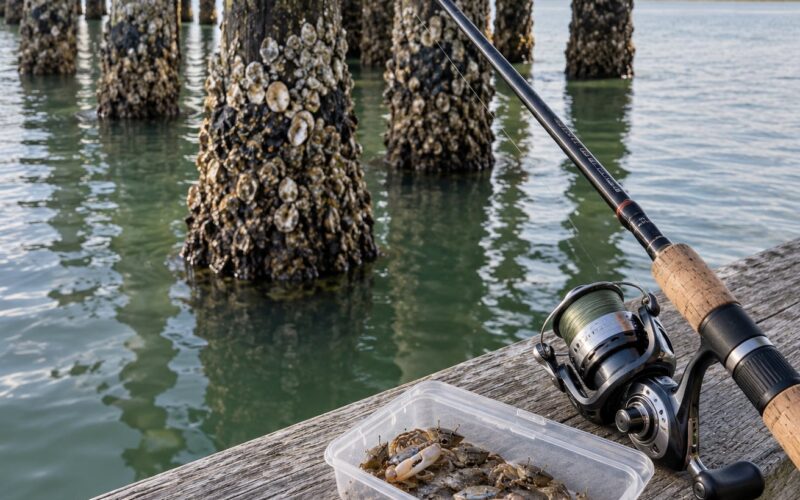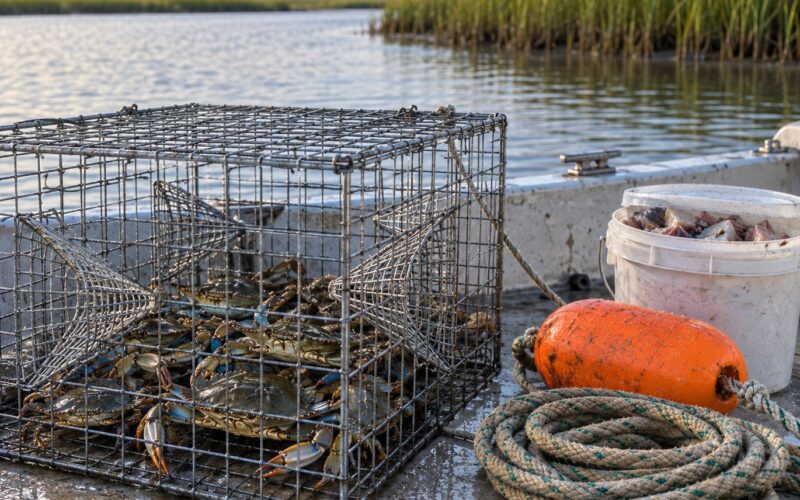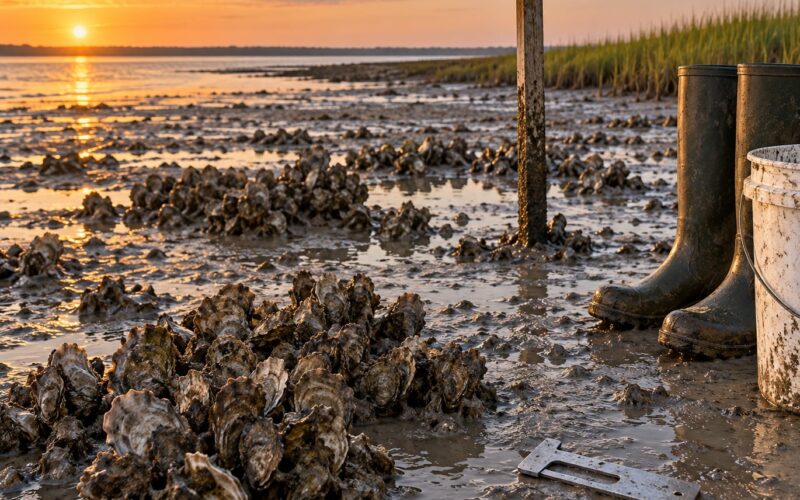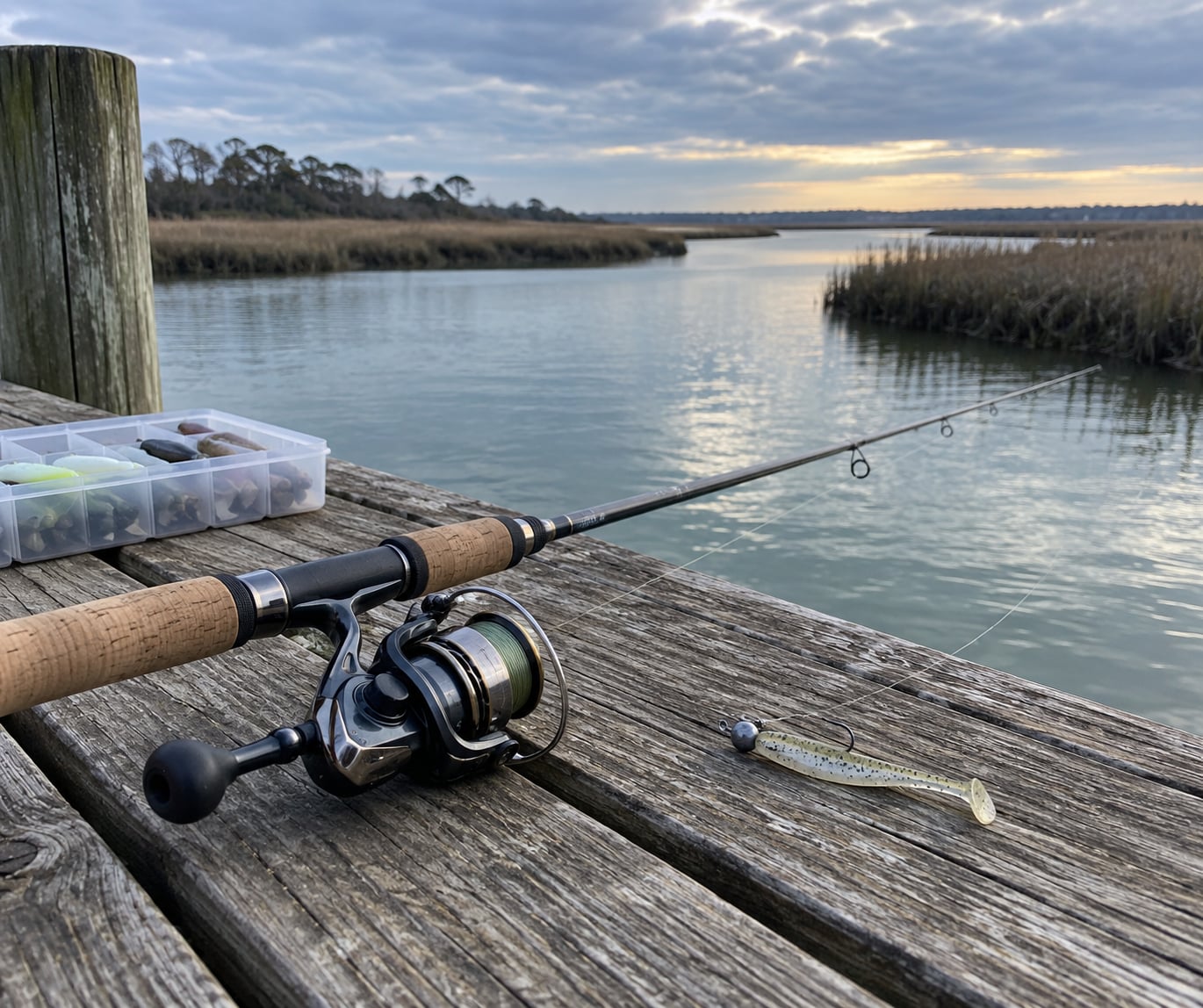
Winter trout stack in the deepest, slowest water you can find: the down-current face of a creek bend, a deep hole beside a seagrass flat, the trough between two flats, or the edge of an oyster bar. To catch spotted seatrout in winter, go where the cold pushes them, drop to the smallest jig or fly that still reaches the bottom, and work it slowly with twitch-and-pause retrieves. Match the tide, set the hook on the pause, and let the fish go.
Spotted seatrout, called speckled trout or specks, are cold-blooded. When surface water drops into the fifties their metabolism slows, and a fish that chased a plug in August will barely lift off a shrimp on the bottom in January. They are not gone, and they are not dormant. They are just in a different place, holding tighter to feed in colder water, and they still eat all winter long.
Most anglers who say the fish disappeared are casting to empty summer spots. Here is the short version of what actually works, before the detail:
- Fish deep, not shallow. Creek bends on the down-current side, deep holes, troughs beside grass flats, and oyster bar edges hold most winter trout.
- Downsize the terminal tackle. A 1/8 ounce jighead with a small soft plastic falls slowly enough for a sluggish fish to commit.
- Stay on the bottom. Drag, hop, and pause rather than crank. A winter bite is a load, not a slam.
- Fish the moving tide. The incoming and falling tides put bait in front of the fish. Slack high water is the worst of the four stages.
- Wait out the cold front. The bite usually switches on two to three days after the front passes, once the water has had time to warm a degree or two.
Table of Contents
- What You Need to Catch Spotted Seatrout in Winter
- Step-by-Step
- How to Find Winter Spotted Seatrout
- Choose the Right Winter Bait and Lure for Spotted Seatrout
- Present the Bait for a Bite
- Set the Hook and Land the Fish
- Common Mistakes
- Frequently Asked Questions
- Are spotted seatrout easier to catch in winter?
- What is the best bait for spotted seatrout in cold weather?
- What water temperature do spotted seatrout prefer in winter?
- Should I use a light or medium fishing rod for winter seatrout?
- Do spotted seatrout bite better on a falling or rising tide?
- How should I handle a winter-caught spotted seatrout?
- Conclusion
What You Need to Catch Spotted Seatrout in Winter
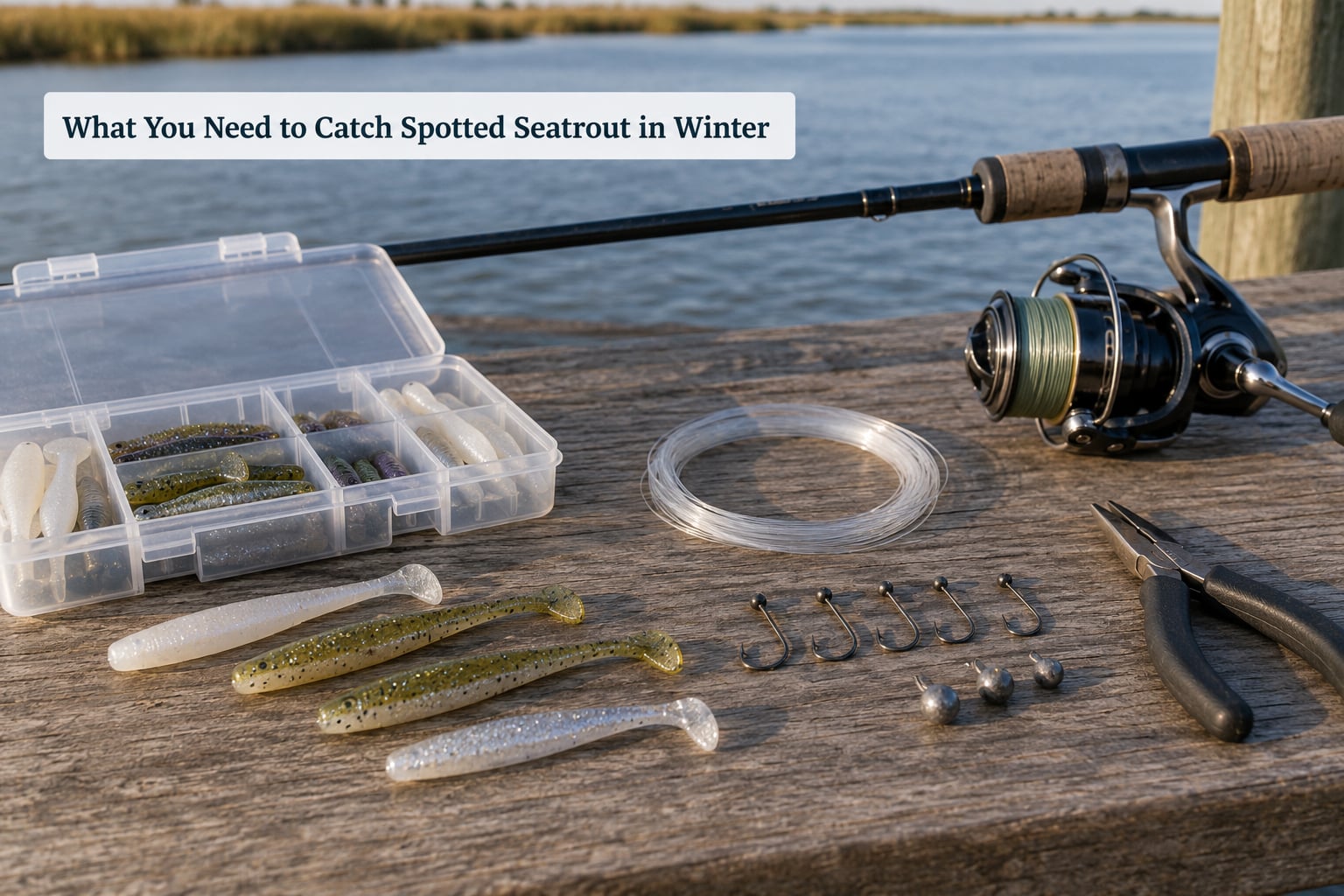
Winter fishing punishes heavy setups. A stiff rod and thick line give a lethargic fish every chance to feel the lure coming and to spit it. You want light gear that a cold fish will not notice.
- A medium-light or light spinning rod, 6½ to 7½ feet long. Medium action is a good all-day compromise: light enough to feel a winter pickup, stiff enough to land a gator trout without the tip snapping. Fly anglers want a 7 to 9 foot rod in a 5 to 8 weight, matched to the line you pick.
- A reel with a sealed drag and a smooth start. Winter trout run when they do run. A cheap drag that slips under load is fine; one that binds and strips line is not.
- 10 to 15 pound braid or mono for spinning. Braid gives you sensitivity in the dark, which matters, but it also shows line to clear water. Fluorocarbon leader material in the 12 to 20 pound range gives the best of both. Fly anglers carry 12 to 20 pound tippet with sinking leaders on a large arbor reel with interchangeable spools.
- Hooks sized down. Size 1 or 1/0 for soft plastics on a 1/8 ounce head, and small treble hooks on topwater and popping cork presentations. In clear winter water, big hooks spook more than they ever do in August.
- Soft plastics in natural colors. Small paddle-tail shrimps, straight-tail minnows, and a few bouncing shrimp-style baits in ghost shrimp gray, translucent green, or pale pink.
- A jighead for each depth band. 1/8 ounce for shallow flats and slow water, 1/4 ounce for the middle depths, 3/8 ounce for deep holes and any current worth mentioning.
- Live shrimp and a popping cork when you want to cover fish that will not commit to plastic, plus a pair of long pliers and a spare cork on the stringer.
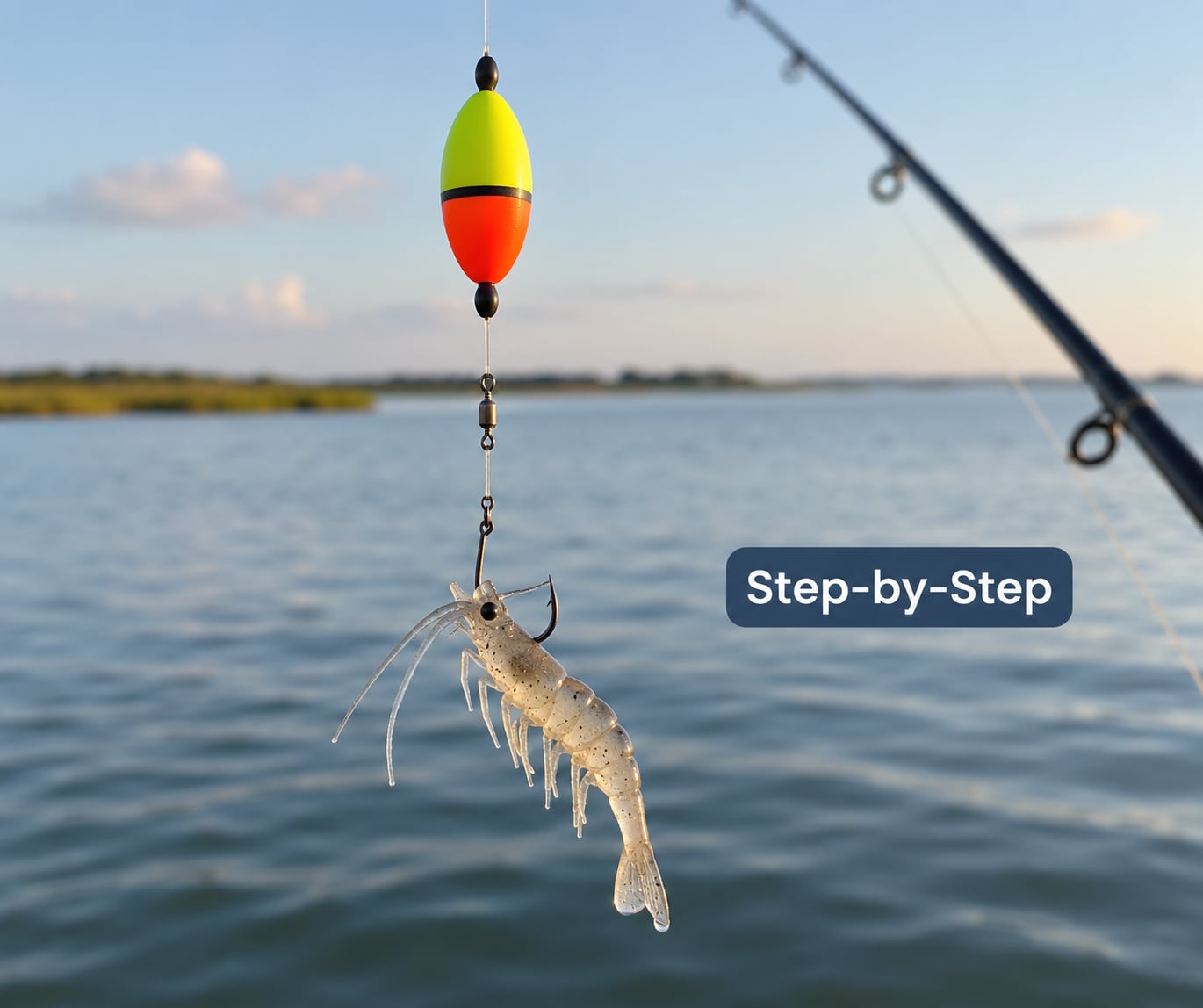
- A float rig for working a presentation just above the bottom on the fall, which is where a lot of winter feeding happens.
- Layers, neoprene gloves, and a windproof shell. Most of a winter trout trip is spent standing still. Cold hands ruin the retrieve and the hookset.
- A fish gripper, a dehooker, and a wet cloth. Handling gear matters more in winter than any other season, for reasons we get to below.
Step-by-Step
How to Find Winter Spotted Seatrout
The single biggest reason anglers fail at this in winter is that they keep fishing the spots that worked in the fall. Once the water drops, trout leave the shallow grass flats and drop into water that changes temperature slowly. Start your search there, then work outward.
Deep creek and river bends. Position yourself on the down-current side, as close to the bend as you can stand. Current there works as a conveyor belt, sweeping small baitfish and drifting shrimp past fish that are holding still and letting the river feed them. Coastal North Carolina anglers report that back-of-the-creek bends and the breaks in current along them are where they find trout when bait is hard to locate.
Troughs between seagrass flats. The deeper channel running alongside a shallow flat is the classic winter hole. Trout sit on the drop-off lip and feed on what drifts off the flat. Fish the edge, then step out a little further if it stays quiet.
Oyster bar edges. Bars concentrate shrimp and small fish, and the deeper water at the bar’s edge gives the trout depth and current in the same spot.
Estuary mouths and intracoastal drop-offs. Fish push toward brackish water and into tidal rivers as it cools. South Carolina’s Marine Resources Division notes that winter fishing is traditionally good in the upper reaches of tidal rivers, with good numbers and large trout also taken just inside the estuary.
Deeper water off jetties and inlets. The same depth that holds trout in August still holds them in January. It just takes longer to find them because you have to be patient with it.
Match your window to the water temperature. Colder means deeper and slower, and it means waiting out the front:
- Early winter, roughly 58 to 62 degrees surface water. Fish are still moving between the flats and the troughs. Bottom fishing and slow topswater both work, and the bite is more cooperative.
- Mid winter, about 54 to 58 degrees. Trout commit to deeper structure and stop chasing. Reduce lure size and speed, and put more effort into the first two hours after sunrise.
- Deep winter, 50 to 54 degrees. Fish are stacked and barely feeding. Every cast should go to a specific hole, and a slow bottom presentation is your only realistic option.
- Below roughly 50 degrees, activity drops sharply. Some anglers report the biggest fish of the season in the coldest water. Catch is inconsistent, so build in the possibility of a blank trip.
Two timing details pay off more than any lure change. The first is the cold front: fish are usually absent or very slow for a couple of days after one passes, and the bite tends to switch on as the water settles and warms slightly. The second is the tide. The incoming and falling stages put bait in front of the fish; slack high water is the stage to fish through rather than at.
Choose the Right Winter Bait and Lure for Spotted Seatrout
Cold trout are not chasing. They are eating what drifts into their face. That single idea should drive every choice you make on the water.
Soft plastics on a light jighead are the default for most winter days. Size the head to the depth and the strength of the current, and pair it with a small shrimp or minnow in a natural color. The slower fall rate of a light head gives the fish more time to decide, which is exactly what a cold fish needs.
- 1/8 ounce for water under about 4 feet, slow current, and very cold or very clear water.
- 1/4 ounce for 4 to 8 feet and moderate current. This is the workhorse weight of the winter.
- 3/8 ounce for 8 feet and deeper, or for wind and current that push lighter baits around too much.
Go heavier only when you need the bait to reach the bottom cleanly. Too light in moving water and you will be catching your own lure all morning.
Live shrimp under a popping cork is the other serious option, and it works best in moving water where shrimp get pushed off the bottom. Let the cork drift rather than dragging it. Anglers report slower fishing where mullet have thinned out, and a shrimp is the best stand-in when the baitfish are scarce.
Topwater lures still get bit on mild winter days and around lights after dark, but go small and go quiet. A long, slow walk-the-dog on a surface popper in cold water will pull strikes from fish that would never chase a plug in the summer.
Soft plastics crawled on the bottom deserve special mention. An angler in Tampa Bay reported catching the biggest trout of the season during bitter cold by slowly working a 5.25 inch pink Mirrolure along the bottom in residential canals. Big fish in cold water are often patrolling structure no one else is fishing, and slow plastics are how you reach them.
Flies cover the same water column. Use a weight-forward floating line on the flats and trough lips, a sink tip with the fly sitting 2 to 5 feet under the surface in channels, and a full sinking line for the deep holes. Patterns that work: Clouser Minnow, Deceiver, small popping shrimp, and glass minnows in brown, gray, or pink. Winter water goes gin clear, so natural colors beat bright ones.
Present the Bait for a Bite
How to catch spotted seatrout in winter comes down to this: put the bait where the fish are, get it to the bottom, and move it less than you want to. Every fast retrieve is a fish you did not get.
Bottom contact. Drop the jig to the bottom and hold it there with small lifts, or drag it at a snail’s pace along the edge. Watch the line, not the rod tip. Winter bites often show as nothing more than the line ticking or the tip dipping a fraction.
Twitch and pause. Lift or twitch the bait, then let it sit. The pause is where the strike happens. Do not strike on the twitch.
Strip and pause. For fly fishermen, two or three short strips followed by a long pause repeats the pattern until something stops. Anglers on the fly fishing forums describe most winter takes happening on the fall or the pause rather than during the strip.
Slow hopping under a float. A cork lets the bait work just above the bottom on a controlled fall. Good for shrimp over sand in deeper channels.
Trolling deep holes. Multiple anglers across these forums report that trolling beats casting in deep winter holes. A slow pull behind a planer board or a rod holder keeps the lure in the strike zone instead of lifting it out on every cast, and it covers water while you watch the electronics. On a 1/8 ounce jig with a soft plastic, drop it behind the boat and hold it just off the bottom with intermittent bursts of the throttle.
Fishing after dark. No guide covers this, but anglers working the deep holes around dock lights and dock pilings at night report success with small jigs and slow plastics. Light brings the small fish, the small fish bring the trout. Keep it quiet and keep the deck clean.
Two more adjustments pay off in hard water. If the front has just passed, fish 8 to 10 feet deep along the trough instead of the flat lip. And if the bite is slow, cast less and wait longer at the spot that produced one fish. Winter trout concentrate, and the second fish is usually a short walk or a short reposition from the first.
Set the Hook and Land the Fish
Setting the hook is where most winter fish get lost. When the lure is dragged along the bottom, a fish picking it up creates a load rather than a pull. The instinct is to strike on the pickup, and that gut-holes the fish.
Follow this sequence instead: feel the weight, raise the rod tip a few inches to take the slack out of the line, and wait for the pause. In the twitch-pause retrieve, the strike comes during the pause. Setting the hook a half beat late lands the fish in the mouth; setting it on the twitch pulls it deep.
Once it is hooked, keep the rod pointed at the fish and let the reel do the work. Winter trout tend to run a short distance and then settle, and pumping the rod in cold water is how you lose a fish you had already won. A gator trout, which is a seatrout over six pounds and often past twenty inches, will take line, so give the drag a chance to do its job before you reach for the net.
Handling is different in cold water. Fish brought up into the air lose heat quickly, and handling time hurts them far more than it does in warm months. Wet your hands first, keep the fish in the water as long as possible, and release it without a photo if you can. Many winter spots already see a lot of pressure, and the fish you put back will be there in the spring.
When a red tide has recently closed an area, do not be surprised by a slow trip. Anglers around Florida report trout being slower than usual with every fish exceeding slot size, which is what a stressed fishery often looks like. Fish the healthy spots, release everything, and let the habitat recover.
Common Mistakes
Almost every empty winter boat has made at least one of these calls. Each fix is small. Together they are the difference.
- Fishing the summer spot. The shallow grass flat that produced fish in September is empty in January. Fix: commit to one deep hole for the full trip instead of burning the day casting across flats.
- Retrieving too fast. A cold fish will not chase. Fix: shorten your retrieve, then pause for twice as long as you think you should.
- Using too large a lure. Big baits look like predators, not meals. Fix: drop one size on the jighead and go to a slender profile rather than a wide one.
- Fishing slack high water. Nothing is moving, so nothing is being delivered. Fix: fish the incoming and falling stages and use the slack for lunch.
- Striking on the pickup. You felt the load and reacted, and now you are gut-hooking. Fix: lift, wait for the pause, then set.
- Ignoring line damage in cold weather. Old mono gets brittle and stiff, and winter water hides abrasion damage. Fix: replace line every season and check your leader after every trip on structure.
- Choosing the wrong hook size. A large hook in clear cold water is a warning. Fix: go to size 1 or 1/0 and add a split ring if you want more insurance.
- Fishing immediately after a cold front. The fish have moved and have not settled. Fix: wait two or three days, then fish deeper than your normal winter spot.
A few extra tips that cover situations the list misses. When the pressure is heavy, walk. The large trout an angler reported in coastal North Carolina were consistently found away from other boats, and slick, calm surface water is a good sign that others have already worked the spot. Wind helps more than most anglers expect, because a light breeze mixes the flats and pushes bait up where trout can see it. Sleep in when you can; midday sun sometimes pulls trout off the deep channels toward the flats. And regional expectations matter, because December in North Carolina does not look like December on the Florida Gulf Coast.
Frequently Asked Questions
Are spotted seatrout easier to catch in winter?
No. Winter trout are harder to catch because their metabolism slows in cold water, so they eat less and refuse to chase. They are easier to locate, though, because they concentrate in a few deep spots instead of spreading across the flats. Find the concentration, downsize your lure, and slow everything down.
What is the best bait for spotted seatrout in cold weather?
A small soft plastic on a light jighead is the most consistent winter bait, and live shrimp under a popping cork is the best alternative in moving water. Match the jighead to the depth, keep the profile slender, and use natural colors because winter water is often very clear. Fly fishermen get the same effect with a sink tip and a small Clouser Minnow or shrimp pattern.
What water temperature do spotted seatrout prefer in winter?
Spotted seatrout tolerate cold water but stop feeding aggressively below roughly 55 degrees. From 58 to 62 degrees they still move between the flats and the troughs, and below 54 degrees they pile into the deepest holes they can find. Colder water does not mean less fishing, but it means fewer bites and a much slower presentation.
Should I use a light or medium fishing rod for winter seatrout?
Go lighter than you would in summer. A medium-light spinning rod around 6.5 to 7.5 feet feels a subtle pickup in cold water, which is most of what you get. Medium action is a safe compromise if you fish heavy cover or expect gator trout. Fly anglers want a 7 to 9 foot rod matched to their line weight.
Do spotted seatrout bite better on a falling or rising tide?
Both moving stages beat slack water, and the falling tide is often the better of the two because it flushes bait out of the marsh and the flats. The incoming tide pushes bait through the channels on its way in. Slack high tide is the worst stage, since nothing is moving and nothing is being delivered to the fish.
How should I handle a winter-caught spotted seatrout?
Minimize air exposure. Wet your hands before touching the fish, keep it in the water while you deal with the hook, and skip the photo if the water is cold. Winter trout lose heat quickly and recover slowly, so keep the whole handling as short as possible. Release the fish promptly, and consider keeping none when the winter spot is already under pressure.
Conclusion
On your next winter trip, do three things before you cast anything. Find the down-current face of a deep creek bend, a trough beside a grass flat, or an oyster bar edge, and give that spot your whole trip. Match a 1/8 or 1/4 ounce jighead to the depth and current. Then work the bottom with twitch-and-pause retrieves and set the hook on the pause.
Learn your local tides and water temperatures, and pay attention to the forecast rather than the calendar. How to catch spotted seatrout in winter is not a secret; it is a change of location, a change of size, and a change of pace. The fish are there all winter, holding deep, waiting for the river to bring them dinner.