Learning how to catch catfish in a tidal river comes down to one variable most anglers ignore: the tide. A tidal river floods and ebbs twice a day, and those swings move the fish, the depth and the current faster than any freshwater river does. Fish a moving tide rather than dead slack water, hold your bait in a current break with enough weight to keep it there, and match your rig to the strength of flow you are standing in.
The whole trip takes maybe four hours of good water, so this is a planning problem before it is a casting problem. Read the table, pick a stage, position yourself, and let the tide do the moving for you.
Table of Contents
- What You Need
- Step-by-Step
- 1. Choose a Catfish-Friendly Tidal-River Location
- 2. Fish at the Right Stage of the Tide
- 3. Match the Tackle to the Current
- 4. Prepare and Present the Right Bait
- 5. Cast or Set the Line for a Controlled Bite
- 6. Set the Hook and Fight the Fish
- 7. Land, Handle, and Release the Catfish
- Common Mistakes
- Fishing Dead Slack Water
- Underweighting the Sinker
- Presenting Bait in Open Water
- Pulling the Bait Away Too Early
- Setting on the Lift Instead of the Weight
- Letting Slack Line Build Up
- Wading Without a Plan for Rising Water
- Careless Handling and Hot Weather
- Frequently Asked Questions
- What is the best tide for catching catfish in a river?
- What bait works best for catfish in a tidal river?
- What fishing line and hook should I use for catfish in moving water?
- Where should I fish for catfish in a tidal river?
- Is it safe to wade while fishing for catfish in a tidal river?
- Do I need a special license to catch catfish in a tidal river?
- Conclusion
What You Need
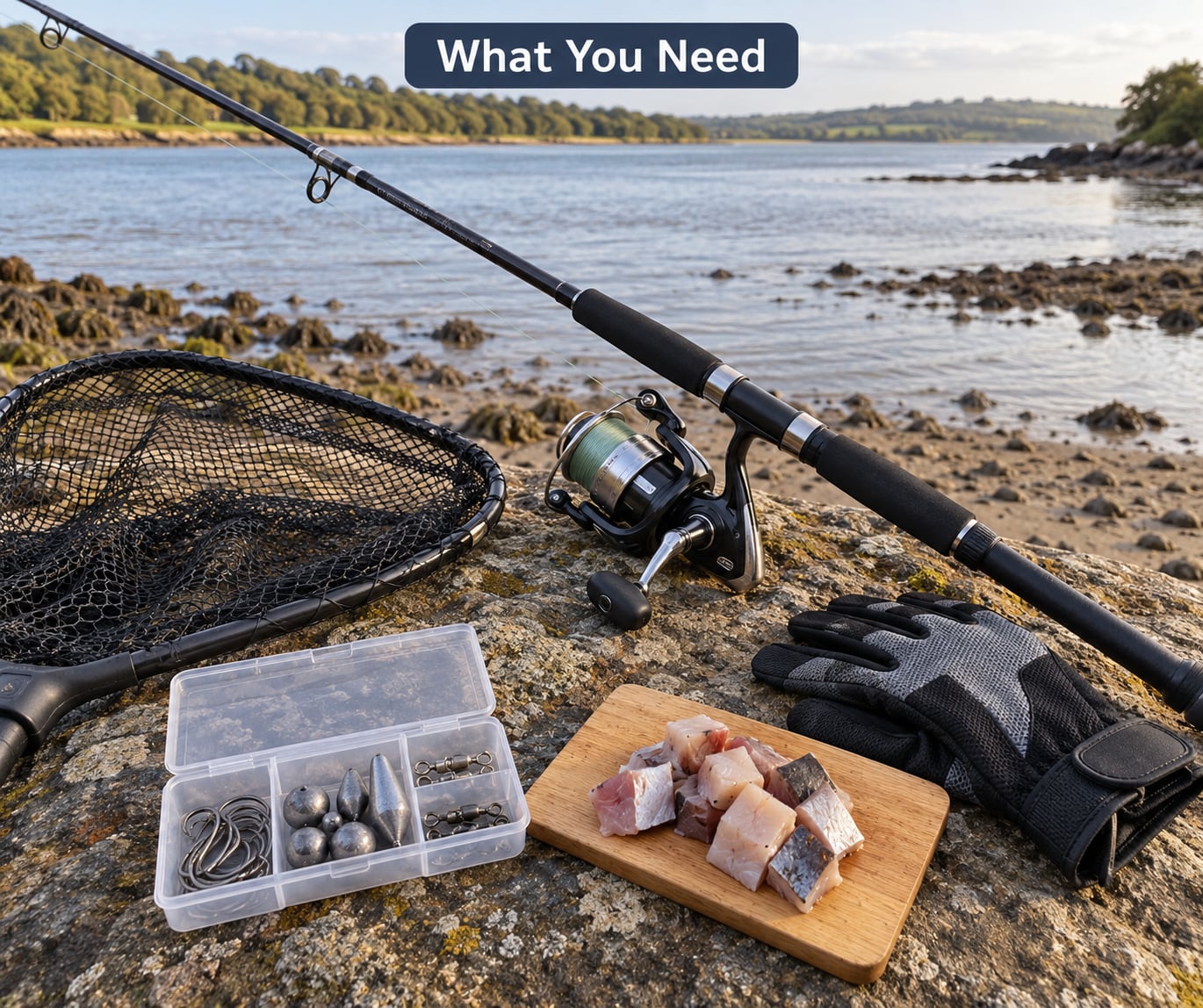
A catfish rod rated 7 to 9 feet long with a real backbone handles the load of a fish pinned in current. Pair it with a high-drag reel with a sealed or partially sealed spool, because a standard open spool fills with brackish grit and grit is what destroys bearings.
For line, size it to the current instead of the fish. 20 to 30 pound mono works for slack and moderate flow, and 40 to 50 pound mono or 50 pound braid with a mono leader is more honest when the ebb is ripping.
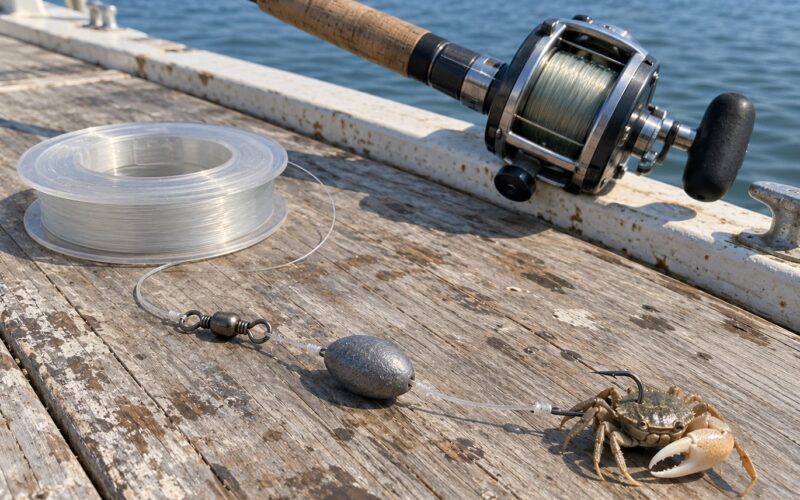
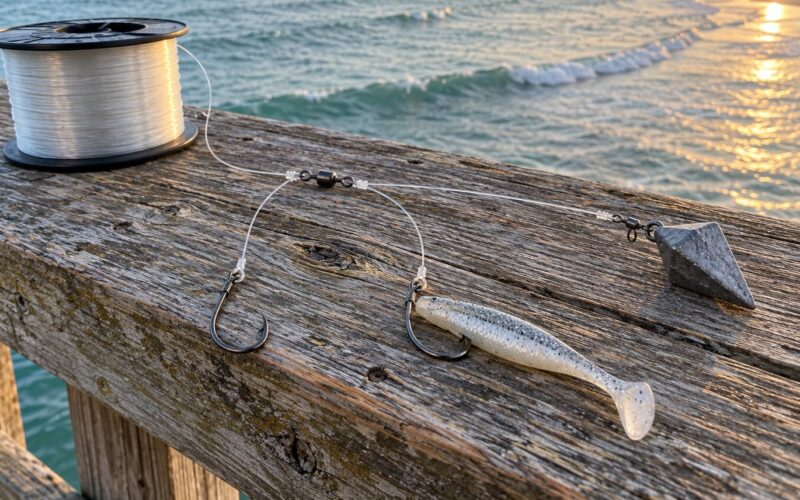
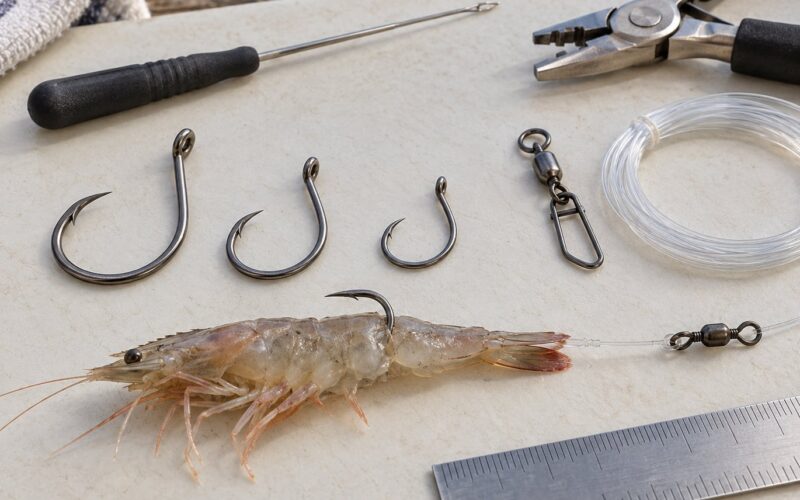
Terminal tackle is where tidal fishing is won or lost. Bring circle hooks in 2/0, 3/0 and 5/0, egg sinkers, a sinker assortment running from 1/4 ounce up to 2 ounces and heavier, a few slip floats, and short wire leaders for structure fishing.
For bait, pick fresh cut shad for blues, live bait such as small catfish, bluegill or shiners for channels and flatheads, plus chicken liver, shrimp and crab pieces from a bait shop. Bring a spare rig tied and ready, because snagging in timber is a fact of the job, not a mishap.
Tools and safety gear: a landing net with a coated mesh, a fish gripper, a dehooking tool, a pair of gloves, a headlamp for night trips, a wading staff and a properly worn life jacket. Saltwater corrosion ruins metal parts quietly, so rinse the reel in fresh water the moment you get home and before you start the truck.
Step-by-Step
The sequence below runs from picking a spot to putting the fish back. Work through it in order and the tide becomes a plan rather than an excuse.
1. Choose a Catfish-Friendly Tidal-River Location
Catfish in tidal rivers hold where the current slows and food collects, so fish creek mouths, channel bends, the downstream end of log jams, sand bars, blowdowns, docks and pilings. Anglers on crappie.com keep repeating the same rule: find the current break and fish behind it.
Back eddies behind a piling or a sunken log give a resting fish a place to sit without fighting the whole river. Creek mouths are worth working on the flood, when fresh water pushes bait out toward the fish.
Check access before you commit. Public access on most tidal rivers comes from boat ramps, state park piers, road ends and public shoreline, and anything you cannot reach on foot at high water you will be wading at low water. Before you wade, check the footing: soft mud, submerged stumps and undercut banks are where ankle injuries happen in water that looks shallow.
2. Fish at the Right Stage of the Tide
Catfish feed hardest on a moving tide because moving water carries dissolved oxygen and moves bait past a fish that would rather not swim. Slack water is when you can hold bottom easily, and it is also when the fish are least interested.
| Tide stage | Current | Catfish activity | Best tactic |
|---|---|---|---|
| Flood (incoming) | Building | Increasing | Work creek mouths and channel edges, drift or anchor up-current |
| High slack | Near zero | Waning | Light gear works, fish deep structure and eddies, expect fewer bites |
| Ebb (outgoing) | Often strongest | Feeding hard | Heavy sinker, tight line control, fish current breaks and the outside of bends |
| Low slack | Near zero | Low, then shifting | Flooded sloughs and backwaters that still hold water and moving bait |
A flood stage is a gradual build, an ebb is often the hardest water of the entire cycle, and slack water is the flat pause between them. Anglers fishing the lower James River reported the best results in creeks on the incoming tide, while others needed a 2 ounce sinker to keep a jig down on a hard outgoing tide.
Honest note: the same tide does not produce the same result two days running. Wind, rain, water temperature and barometric pressure all shift things, and the general rule of thumb is that you fish the first two hours of a moving tide rather than the last hour before it flattens.
3. Match the Tackle to the Current
Weight your bait to the push of the water, because a sinker that moves means your rig is drifting through open water instead of sitting where the fish are.
| Current | Sinker weight | Typical spots |
|---|---|---|
| Slack to light | 1/4 to 1/2 oz, egg sinker or slip float | Slacks, eddies behind pilings, low water inside sloughs |
| Moderate | 1/2 to 1 oz | Channel bends, dock pockets, normal flood and early ebb |
| Strong | 1 to 2 oz | Outside of bends, timber, main channel on a hard ebb |
| Very strong | 3 oz and up, or a bottom feeder | Creek mouths and main channel at peak ebb flow |
One angler on the lower James reported 1/2 ounce working fine while another needed 2 ounces on the same river on a stronger ebb, and that contradiction is normal. Current strength is local and changes hour by hour.
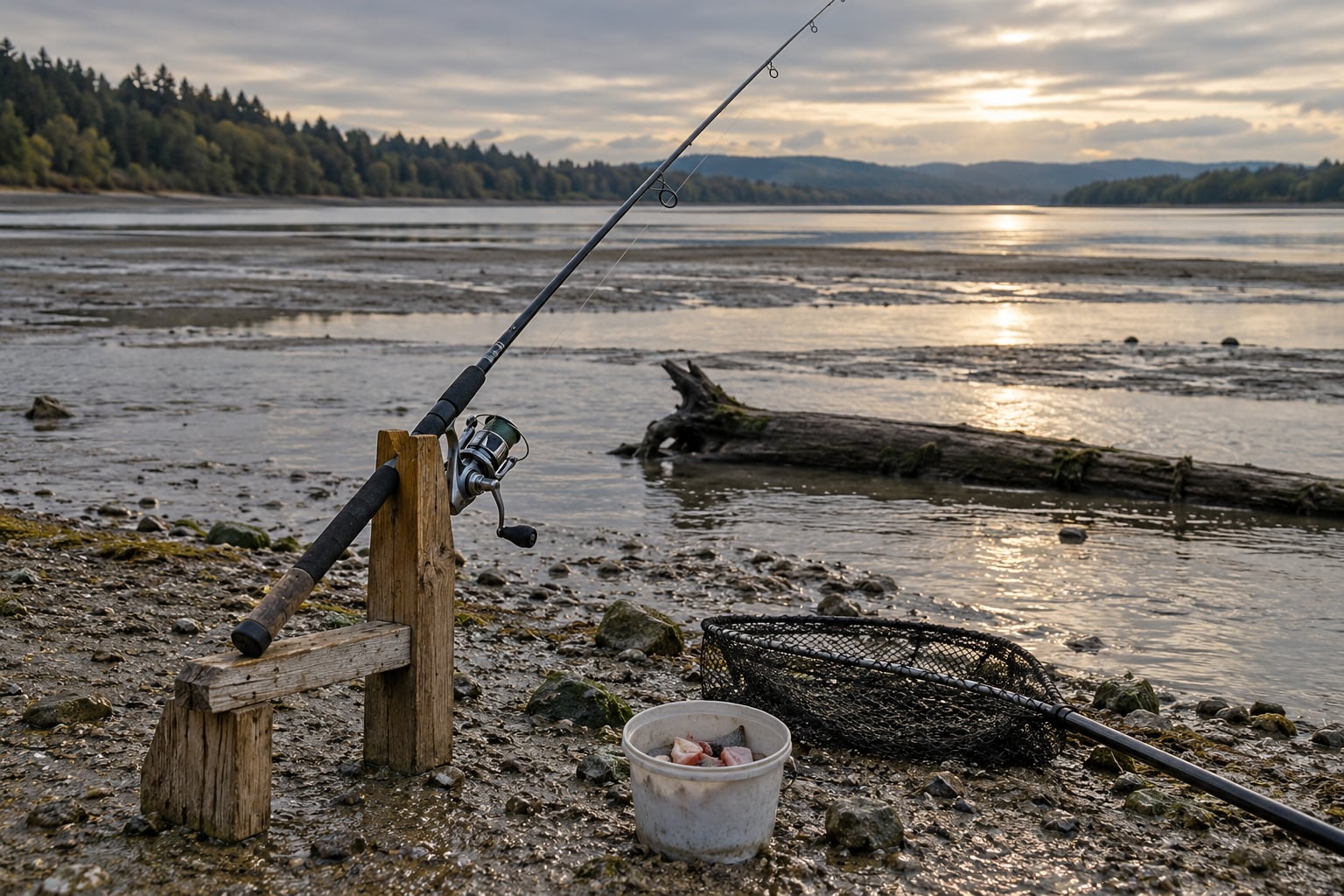
Use circle hooks so the hook point finds the corner of the mouth instead of burying deep in the gill, then run 12 to 18 inches of leader between the hook and the weight. Bottom feeders work best from a boat or a rod holder on a dock when the current is too strong to feel a bite through the line, and a bank line with a rod holder plus a bell is a good choice when you are set up in one spot and want to fish several hours without holding a rod.
4. Prepare and Present the Right Bait
Fresh beats frozen every time in brackish water, and a beginner thread on r/SurfFishing made the same call from a different coast: live bait or fresh dead bait, not frozen. Frozen bait loses scent and slime within a trip once it thaws.
Cut shad is the go-to for blue catfish, cut into thick slabs so they stay on the hook through current. Live bait works well for channels and flatheads, and on a NCangler thread the standard advice was to trim the fins and hook through the eyes or just ahead of the dorsal fin, which stops a bait from spinning and rolling.
When rigging a live catfish, thread a stringer or a cleat through the bait and cut near the gill and tail base so it stays lively on the hook. Chicken liver and shrimp work in the saltier reaches near the bay, and many anglers add a scent directly to the hook rather than the bait so the fish finds it where the hook is.
Take baits from the water fresh and keep them shaded in a bucket. In tidal summer heat a bait that sits in the sun for an hour is a dead bait by the time you need it.
5. Cast or Set the Line for a Controlled Bite
Place the bait just up-current of structure so the current walks it into the fish rather than pulling it past. From a boat, anchor up-current of the spot and let the tide carry you down to it on the flood.
Watch for slack line, because a sagging line in current means a missed bite you will never feel. Keep the rod tip loaded with a slip float, a bite alarm or a second rod holder, and check the drag is set light enough that a cat running downstream does not spool you in the first ten seconds.
A slow hand-tightening of the line every few minutes adds just enough movement to make the bait look alive without pulling it off the bottom.
6. Set the Hook and Fight the Fish
Tell a bite from a snag before you swing. A bite feels like the weight stops drifting and then pulls, and often you feel a thump rather than a run. A snag gives a dead, rubbery stop that does not move.
Set the hook with a firm sweep, not a twitch, and let the circle hook do the work. Then keep steady pressure and do not let the fish take slack, because a cat uses current the same way you do and slack line is how fish are lost in a river.
If the fish is running toward structure, give line and let the drag work rather than trying to horse it back. Keep the rod pointed at the fish and reel down when you gain line, which is standard advice but still the hardest thing to do in the first five seconds of a fight.
7. Land, Handle, and Release the Catfish
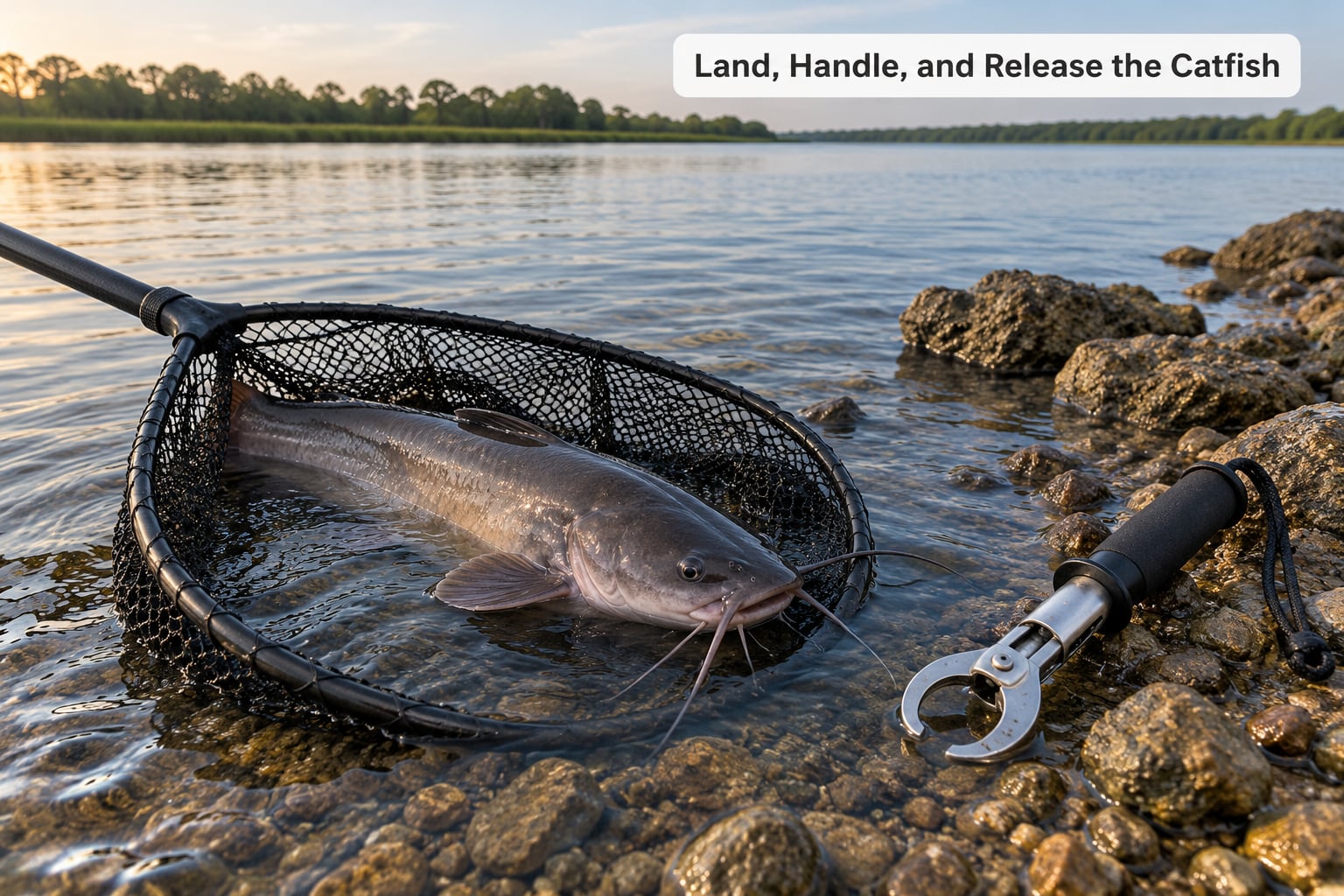
Land catfish with a net rather than a lift, and control the dorsal and pectoral spines first, because those spines are the reason a good fish gets lost in the last ten seconds.
Remove the hook quickly with a dehooking tool or pliers, which reduces handling time and the stress on the fish. For catch-and-release in brackish water, work in cool shade where possible, keep the fish in the water while you take the picture, and revive it in its own water rather than a bucket of river water.
Put the fish back only after it swims off under its own power. If it needs a couple of releases, leave it alone and come back to that hole later in the day.
Common Mistakes
Almost every lost catfish comes from one of these. Work down the list before you blame your bait.
Fishing Dead Slack Water
Slack water is easy to fish and mostly empty. Fix: fish the moving stages and use slack only when you cannot hold bottom, such as a flooded slough at low tide that still has current running through it.
Underweighting the Sinker
If your bait is lifting off the bottom in a rising current, you need more weight, not a tighter line. Fix: bump up one size at a time until the bait stays put, and move to a bottom feeder when you run out of single weights.
Presenting Bait in Open Water
A bait drifting through the middle of a channel gets nothing. Fix: work the seams where fast water meets slow water, the down-current side of structure and the ends of sand bars.
Pulling the Bait Away Too Early
The most common beginner move in every forum thread is a strike on anything that feels different. Fix: when something moves, stop and give it five seconds before you touch the reel.
Setting on the Lift Instead of the Weight
Catfish often pick the bait up and swim a few feet before turning it. Set when the line stops and the weight goes down, not when it comes up.
Letting Slack Line Build Up
Running current plus a soft drag equals slack line and no hookset. Fix: set the drag so the spool will not overrun, and keep the tip loaded or use a second rod as a strike indicator.
Wading Without a Plan for Rising Water
You entered at low slack and you are now mid-channel at mid-flood with the current building. Fix: work from one bank position, note the time high water arrives, and be out of the water well before it does.
Careless Handling and Hot Weather
Grilling a big blue cat costs you the fish and the fight. Fix: net it, control the spines, work fast, and keep it wet in the shade until it swims off.
Two more habits worth keeping: run a spare rod at a second spot, since a spare rig costs less than a lost fish, and rinse everything in fresh water after every tidal trip because salt kills line, reels and hooks faster than most anglers expect.
Frequently Asked Questions
What is the best tide for catching catfish in a river?
The first two hours of a moving tide, either flood or ebb, are the most productive, because current carries oxygen and bait to fish that are resting. Ebb water is often the strongest and holds the most feed, while slack water is when fish are least active but easiest to catch. Start fishing 45 minutes before the current starts to build and stay until it begins to flatten.
What bait works best for catfish in a tidal river?
Fresh cut shad is the most reliable bait for blue catfish in tidal rivers. Channels and flatheads take live bait such as small catfish, bluegill or shiners, and shrimp or crab pieces work well in saltier reaches. Fresh and live bait beat frozen every time, because scent and slime fade fast once frozen bait thaws.
What fishing line and hook should I use for catfish in moving water?
Size your line to the current rather than the fish. Use 20 to 30 pound mono for slack and moderate flow, and 40 to 50 pound mono, or 50 pound braid with a mono leader, when the ebb is running hard. Circle hooks in 2/0 through 5/0 hook in the corner of the mouth and reduce deep hooking, with 12 to 18 inches of leader between hook and weight.
Where should I fish for catfish in a tidal river?
Fish current breaks: creek mouths on the flood, the outside of channel bends on the ebb, back eddies behind pilings and docks, the downstream end of log jams, sand bar edges, blowdowns and flooded sloughs that still hold moving water at low tide. Structure beats open water in tidal rivers, and a submerged log on the bottom often produces most of a day’s catches.
Is it safe to wade while fishing for catfish in a tidal river?
Wading a tidal river carries real risk because the current changes twice a day and rises faster than it looks. Wear a life jacket, carry a wading staff and pole, fish from one bank position rather than walking the channel, and be out of the water well before the tide turns. Check that you can reach your spot on foot at the stage you plan to fish.
Do I need a special license to catch catfish in a tidal river?
Usually your state fishing license covers tidal rivers within that state, but some rivers cross state lines or sit in estuarine waters with different rules. Check size limits, daily bag limits and any slot limits for catfish, plus whether the water is freshwater, brackish or tidal, before you fish. Many states also restrict snagging, so check that rule too.
Conclusion
On your next trip, pull up the tide table before you pack the truck and pick the window two hours before a moving tide, not at slack. Bring fresh cut shad and a live bait, take enough weight to hold bottom in that stage’s current, and set up behind a current break you can reach safely at that stage.
Learn how to catch catfish in a tidal river and the rest gets simple: right tide, right weight, right bait, right spot. Everything else is detail you pick up on the water.