Most saltwater anglers end up on the same setup: braided line from the spool to a short fluorocarbon leader. That default handles salt, sun and abrasion better than anything else, but it is not right for everyone. Monofilament still wins for beginners and topwater, and a mono or shock leader wins when you are casting into surf.
Knowing how to pick a fishing line for saltwater comes down to five things: your target species, the water you fish, your reel and rod, how far you cast, and what the local rules allow. Work through those in order and the choice takes about five minutes. Here is the process I use.
Table of Contents
- What You Need
- Step-by-Step: How to Pick a Fishing Line for Saltwater
- Step 1: Start with the fish, not the spool
- Step 2: Match the line type to the water zone
- Step 3: Choose a pound test you can actually cast
- Step 4: Add a leader when visibility or abrasion calls for it
- Step 5: Check that your reel can handle the line
- Step 6: Pick a color and diameter for the conditions
- Step 7: Spool it right, inspect it, and rinse it
- Common Mistakes
- Choosing by color or by brand instead of by water
- Running too much strength
- Ignoring the knot and the drag
- Mixing incompatible line types
- Skipping the backing layer
- Not inspecting the gear after fishing
- Frequently Asked Questions
- What line should I use for ocean fishing?
- Is 20 lb braid stronger than 20 lb mono?
- What size braided line is best for inshore fishing?
- Should I troll with braid or mono in saltwater?
- Can I use fluorocarbon as the main line on a saltwater spinning reel?
- How much line should I put on my spool?
- Conclusion: Start With the Fish and Conditions
What You Need
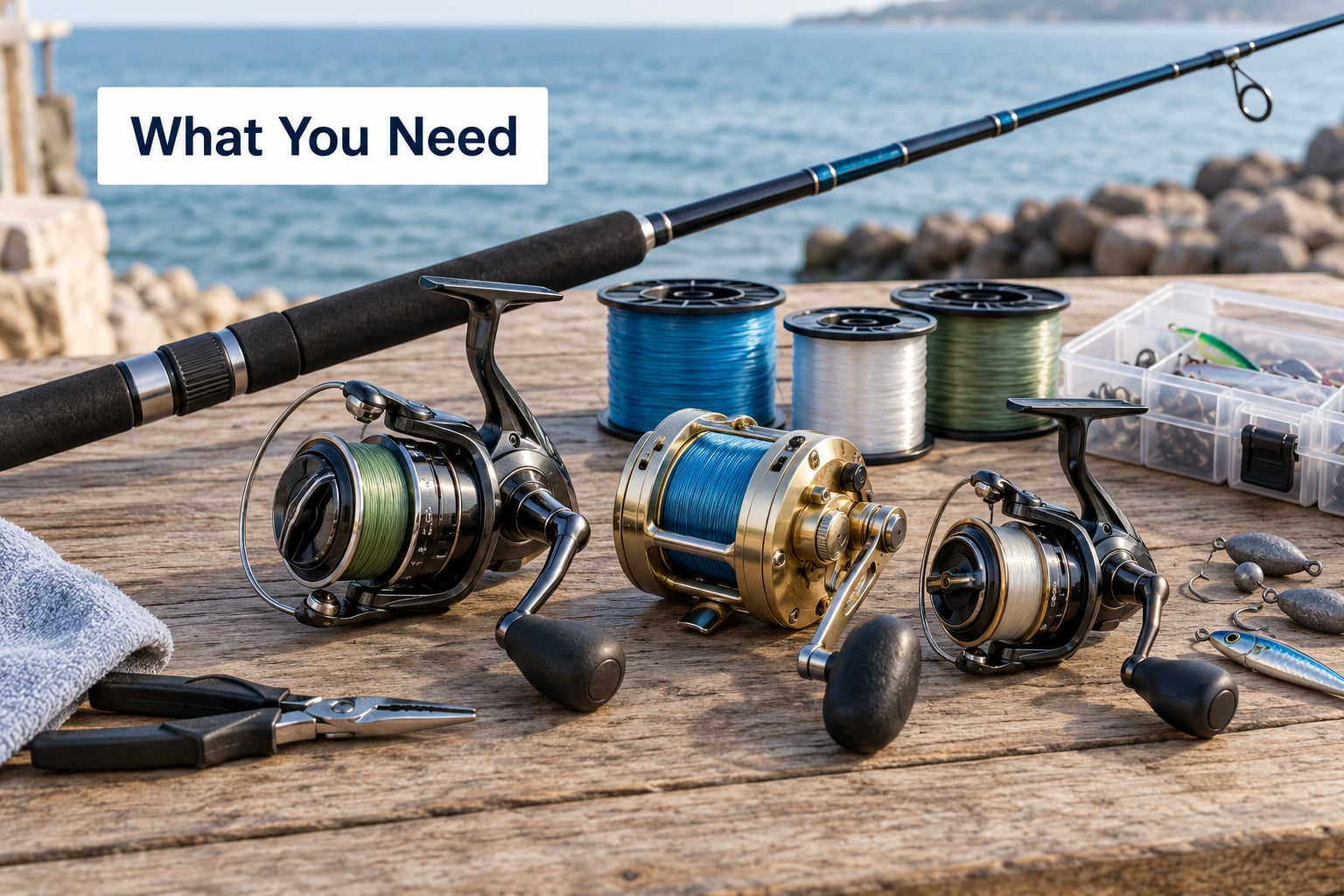
Before you buy a spool, write down answers to these five questions. That short list is what the rest of the guide uses to narrow things down.
- Your target species. Not just the fish you hope for, but the heaviest one you realistically hook. A red drum under 20 lb and a 60 lb cobia want very different line.
- The water type and depth. Flats and grass, rocky nearshore, blue water off the shelf, surf and jetty, or a dock in a river mouth. Depth tells you how much leader you may need.
- Your reel and rod. A spinning reel and a conventional reel have different line windows, different drag systems, and very different capacity. Write down the model.
- Your longest cast. Line diameter is what limits casting distance, more than pound test does. A wind or current that pushes you past your usual range changes the line you want.
- Local regulations. Some states and fisheries cap line test on certain waters, restrict line to a single hook for bait, require circle hooks, or close an area seasonally.
Give the regulations five minutes. It is a wasted trip to find out at the ramp that your line test is too heavy for the water you planned to fish.
Step-by-Step: How to Pick a Fishing Line for Saltwater
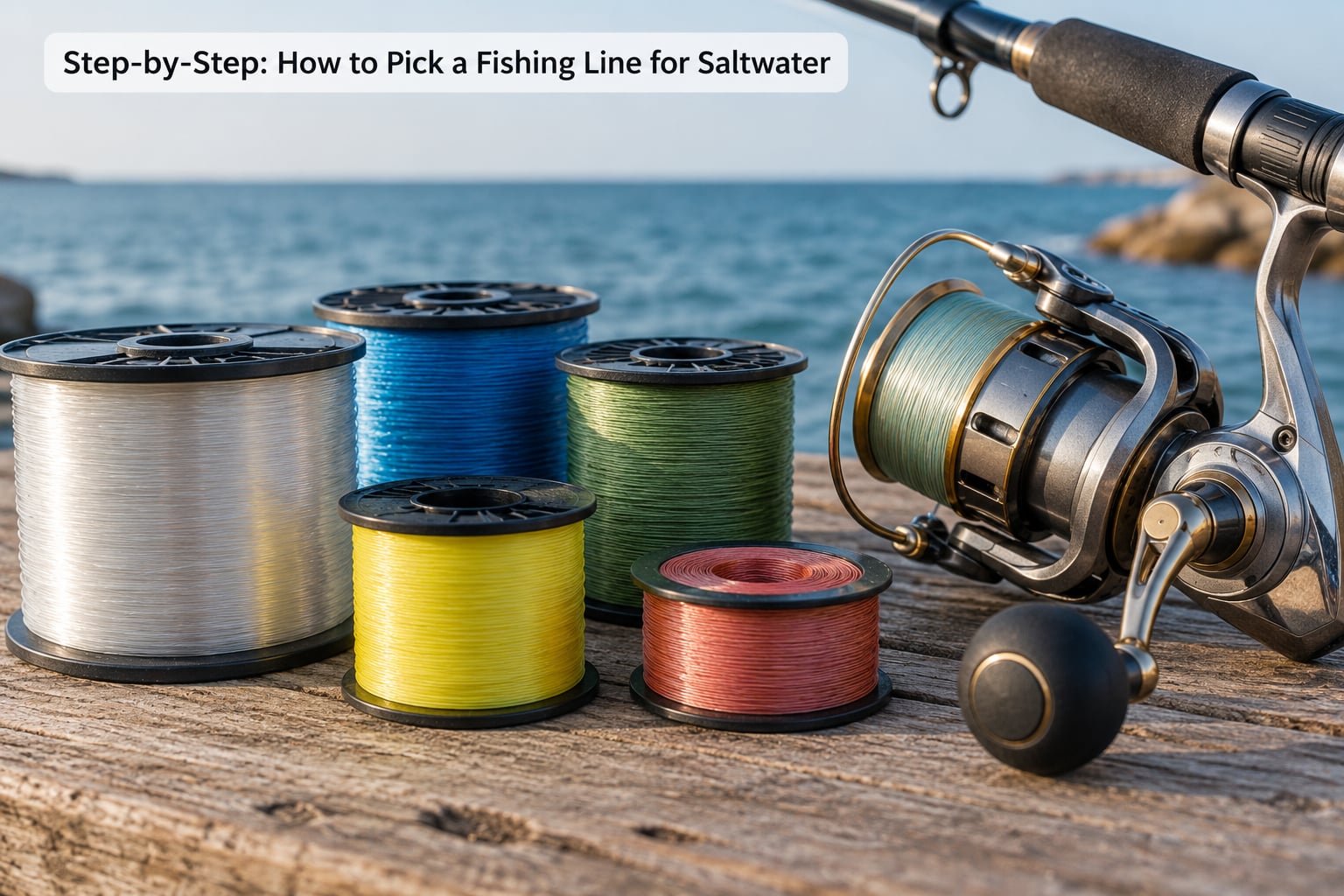
Seven steps, in this order. Each one narrows the field, and each one can send you back a step when the answer changes.
Step 1: Start with the fish, not the spool
Pound test is a decision about the fish and the cover, not about the water depth alone. Pick the heaviest fish you expect to land, then choose a test strong enough to drag it out of whatever it lives in.
This is the range most inshore and coastal anglers land on:
| Target species | Main line | Leader |
|---|---|---|
| Redfish, drum | 20 to 30 lb braid, or 15 to 20 lb mono | 15 to 20 lb fluorocarbon, 2 to 3 ft |
| Speckled trout, sea trout | 15 to 20 lb braid, or 12 to 15 lb mono | 12 to 15 lb fluorocarbon, 3 to 4 ft |
| Flounder | 15 to 20 lb braid | 15 to 20 lb fluorocarbon, 2 to 3 ft |
| Snook | 20 to 30 lb braid | 20 to 30 lb fluorocarbon, 3 ft |
| Striped bass, school fish | 30 to 40 lb braid, or 20 to 30 lb mono | 20 to 30 lb fluorocarbon, 3 to 5 ft |
| Tarpon, cobia | 40 to 50 lb braid, or 30 lb mono | 40 to 50 lb fluorocarbon, 4 to 6 ft |
| Red snapper, grouper | 40 to 65 lb braid | 40 to 50 lb fluorocarbon, 3 to 4 ft |
| Blackfin tuna, kingfish | 50 to 65 lb braid | 50 to 65 lb fluorocarbon or mono |
| Shark, big tooth | 80 to 100 lb braid | 80 lb fluorocarbon, 3 to 5 ft |
Two things to notice. The leader is usually a step below the main line, not above it, because the leader takes the abrasion while the main line takes the load. And the leader length grows with how far the fish runs from cover.
Step 2: Match the line type to the water zone
Same fish, different water, different answer. On the flats you need to see your line and your fish needs to not see it, which points to braid with a clear leader. Over rocks, oyster beds and pilings, abrasion decides everything and heavier braid or mono wins.
- Flats and grass: 15 to 30 lb braid with a clear fluorocarbon leader. Braid sinks fast, stays out of the way on the bottom, and shows you the bite.
- Nearshore rocks and structure: 30 to 50 lb braid with a heavy leader, or 30 lb mono. Braid cuts through barnacle-encrusted rock with less damage than fluoro, and it does not have to be replaced every trip.
- Offshore blue water: 50 to 65 lb braid on a conventional or offshore spinning reel, with a matching mono or fluoro leader. Braid holds its strength at depth and puts far more line on the spool.
- Surf and pier casting: A mono or shock leader setup. Long casts load the leader with every pass, so the connection between braid and leader is where rigs fail, not the rig itself.
- Dock and shore fishing in current: 20 to 30 lb mono is a perfectly good answer here. Stretch helps with sudden movement, and you will not be casting far enough for line diameter to hurt you.
Most of the sea is not what damages line. Salt, sun and abrasion are, and they act on different materials in different ways.
Step 3: Choose a pound test you can actually cast
Pound test describes the force it takes to break the line, not how tough the fish feels on the other end. The number that catches most newcomers is diameter, because thicker line is harder to cast and holds less on the spool.
Braid also lies about its weight compared to mono. 30 lb braid is roughly the same diameter as 8 to 10 lb mono, which is why an angler can land a fish with a braid that a mono angler would consider light. The practical rule: if you are switching from 20 lb mono to braid, start at 30 to 40 lb braid, not 20.
On the other side, oversizing costs you. Heavy line spills off the spool, misses casts, and sometimes strips the drag or pulls hooks out of fish that would have held light tackle. If your rod is rated for 8 to 12 lb, that is the whole conversation.
Step 4: Add a leader when visibility or abrasion calls for it
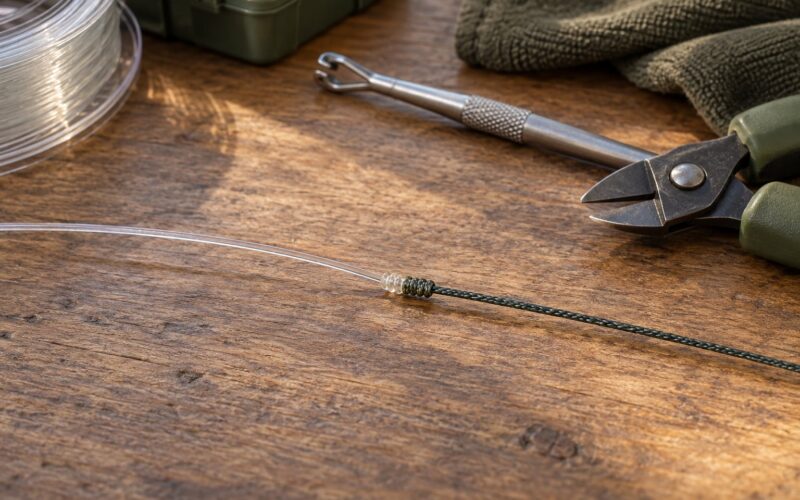
Braid is the most visible of the three materials in daylight water, and experienced saltwater anglers repeat the same warning constantly: do not put a naked length of braid on a hook in gin-clear water. Fish see it, especially in pressure. A 2 to 4 ft fluorocarbon leader fixes that and takes the abrasion at the same time.
Fluorocarbon is PVDF, and it sits closer to the refractive index of seawater than nylon does, which is why it is so much harder to see underwater. It is also stiffer, more expensive, and it sinks faster than mono, which matters on the flats and on bottom fishing.
Where you fish over sharp structure all day, the calculus flips: heavy braid handles abrasion better than a thin fluoro leader, and many guides will run 40 lb fluoro because it dies slowly instead of cutting instantly.
Step 5: Check that your reel can handle the line
Braid is roughly a third thinner than mono at the same pound test, so a reel that holds 200 yd of 20 lb mono will often hold close to 300 yd of 20 lb braid. That capacity is why offshore anglers run braid, and it is worth checking the chart on your reel before you fill it.
Two hardware notes matter in salt. A smooth graphite or polished alloy spool with no line clipper can cut into braid and leave a buried nick that fails on the first fish, so braid-rated spools exist for a reason. And a spinning reel that is not rated for high-test braid will have the bail wire dig a groove into the line pack every time you cast.
Keep heavy fluorocarbon off a small spinning reel. Above 20 lb it stiffens up, coils, and turns into bird’s nests on the cast. That is the single most common reason people abandon fluoro as a main line, and the fix is a leader, not a bigger spool.
Step 6: Pick a color and diameter for the conditions
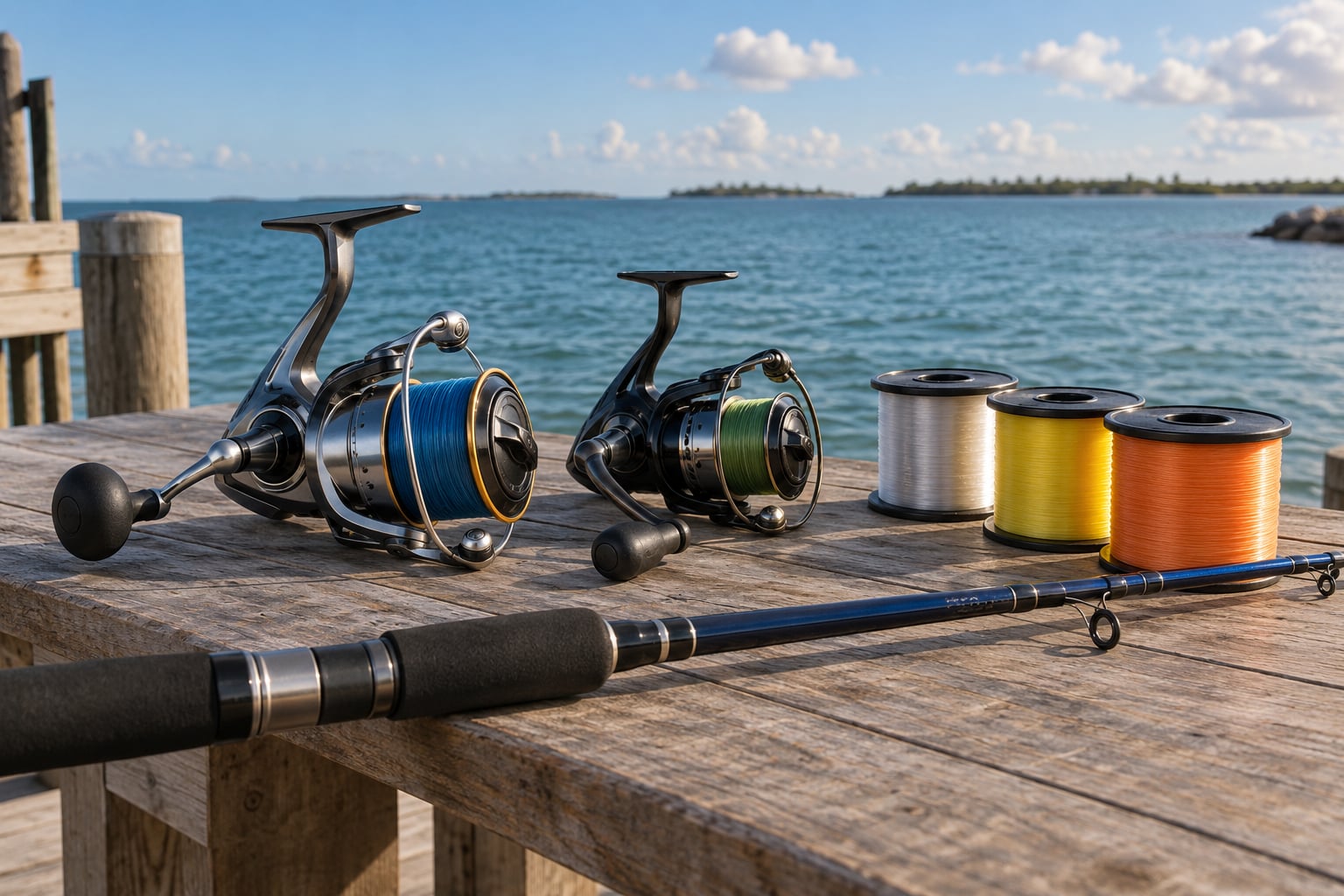
Color is a situational choice, not a preference. In stained or green-tinted water, use a darker line such as green, blue or gray so your line blends with the water column instead of cutting across it. In gin-clear water, clear fluorocarbon or a low-visibility braid in a neutral shade is the quiet answer.
When you are watching a surface plug, a bright color works in your favor for a different reason. A yellow or white line is much easier to track against the water when the fish is on, which lets you set the hook instead of guessing. Tournament topwater anglers pick line color for that reason almost as much as for stealth.
On the spool, thinner is better in nearly every case. It casts further, sits lower in the water, spools more of it, and ties a smaller knot. Only the diameter, not the pound test, has to be balanced against your rod’s tip strength.
Step 7: Spool it right, inspect it, and rinse it
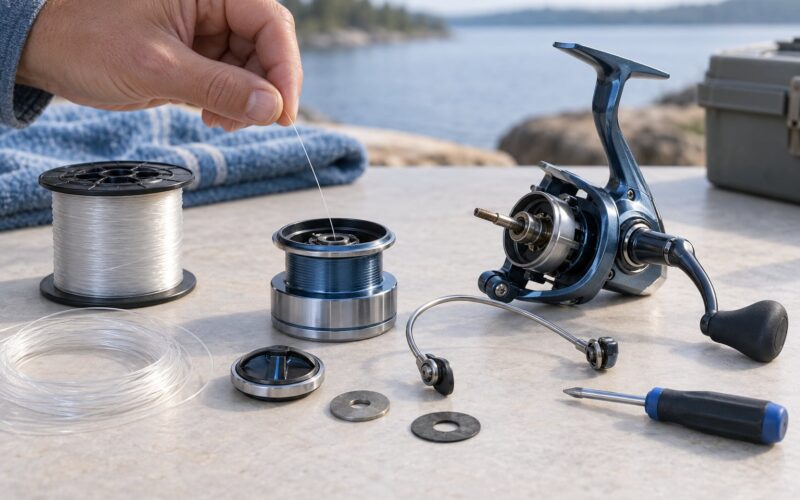
Fill a reel until it is about 90 percent full and leave the rest for a trimming strip, which stops the line running off the spool during the first cast. Pack the line with your palm as you wind, and if your reel has a level wind, let the guide do the work rather than steering it by hand.
Rinse the reel in fresh water after every saltwater trip, especially the drag washers, spool and handle. Salt crystallizes inside the drag and the bearings, and a drag that grabs unevenly on a zero-stretch braid snaps line for no visible reason.
Inspect line before every trip. Run braid through your fingers or over a rough edge, look at the leader where it has been rubbing, and check the first few feet below the rod tip where every cast flexes hardest. Replace mono every season or two if it spends time in the sun, replace fluoro leaders whenever they look fuzzy or abraded, and expect braid to last several seasons.
Common Mistakes
Most lost fish in salt come down to a handful of fixable choices. These are the ones I see most.
Choosing by color or by brand instead of by water
The pack tells you the fish, the water, and the structure. If those three are set, the color and the material follow. Choosing a bright yellow braid because it looks sharp in the package gets you nothing underwater in a stained bay.
Running too much strength
Heavy line is not safer. It casts worse, ties a bulkier knot that slips more, and strips hooks out of fish that were already there. Match the test to the heaviest fish you expect and then go one step lighter if the water is clear and the cover is thin.
Ignoring the knot and the drag
Tying a standard monofilament knot directly into braid is the most reported mistake on saltwater fishing forums, and it costs whole rigs. Use a knot rated for the material. On the drag side, zero-stretch line needs a drag set well below what you would use on mono, because there is no cushion in the line to absorb a surge.
Mixing incompatible line types
Co-polymer and multi-material constructions exist, and many of them work well in salt. What does not work is splicing them together casually with a knot that wasn’t designed for the combination. Pick one main line and one leader material, and tie them with a knot rated for both.
Skipping the backing layer
If your reel has a smooth spool and you intend to spool with braid, a few wraps of mono or a backing line under the braid prevents the braid from creeping and cutting into the spool. It is a five-minute job that saves a spool.
Not inspecting the gear after fishing
Sand in a guide, salt in the drag and a nicked leader all fail quietly and then fail loudly at the worst moment. Rinse, look, and replace before you leave the dock.
Frequently Asked Questions
What line should I use for ocean fishing?
Braid with a fluorocarbon leader is the standard offshore setup: 50 to 65 lb braid from the reel with a 50 to 65 lb leader of 3 to 5 ft. Braid puts more line on the spool, holds its strength at depth, and resists salt and UV. The leader handles visibility and abrasion near the fish. Offshore trolling is the exception, where many anglers prefer mono for its stretch and softer rod load.
Is 20 lb braid stronger than 20 lb mono?
Yes, and by a wide margin. At the same labeled pound test, braid is roughly three times stronger in practical terms, and it is about a third thinner, so it sits lower in the water and spools more line. That is also why a 30 lb braid is a reasonable swap for 20 lb mono. The catch is that braid has almost no stretch, so you need a softer rod and a drag set below what you would use with mono.
What size braided line is best for inshore fishing?
20 to 30 lb braid covers most inshore work: redfish, speckled trout, snook, flounder and school striped bass. Drop to 15 lb for clear shallow water where you are chasing sight-cast fish in grass. Go up to 40 or 50 lb when you are working rocks, oyster beds and pilings where abrasion is unavoidable. Pair it with a leader one step lighter, usually 15 to 20 lb fluorocarbon over 20 to 30 lb braid.
Should I troll with braid or mono in saltwater?
Mono is the traditional answer for offshore trolling because its stretch softens the load on the rod tip and reduces the number of line breaks during a fight or when a fish comes off the planer board. Braid works well for vertical jigging and bottom fishing from a stationary boat, where sensitivity and line capacity matter more. If you troll with braid, use a softer rod and set your drag conservatively.
Can I use fluorocarbon as the main line on a saltwater spinning reel?
You can, but it is rarely the better option. Fluorocarbon is stiff, has more memory than nylon, and above 20 lb it coils on the spool and bird’s nests on the cast, especially on a smaller spinning reel. Full-spool fluorocarbon also costs far more per yard. Running braid from the spool with a 3 to 4 ft fluorocarbon leader gives you the invisibility where it matters without the handling problems.
How much line should I put on my spool?
Fill the reel to the level the manufacturer lists for your line, which is usually just short of the spool rim, and leave a small gap so line does not jump off on the first cast. Reel capacity charts are published for both mono and braid. Because braid is thinner at the same pound test, a reel that holds 200 yd of 20 lb mono will often hold close to 300 yd of 20 lb braid.
Conclusion: Start With the Fish and Conditions
Start with the heaviest fish you expect to hook and the worst structure you will fish them in. That gives you a pound test and a leader length. Then decide whether you need braid for sensitivity and capacity, mono for stretch and forgiveness, or fluorocarbon at the business end for invisibility and abrasion resistance.
Fill in the rest the same way: match the line to the reel, pick a color that suits the water, and inspect everything before you leave the dock. That is how to pick a fishing line for saltwater without spending a season learning it the expensive way.