Fresh-killed venison is tough because the muscles are still locked up in rigor mortis. Holding the carcass at 34-38°F for 7-14 days lets natural enzymes work on the connective tissue, so steaks cut from it are tender and the gamey edge fades. If you know how to age venison before butchering, you also buy yourself time: a deer hung in a cooler or a bagged hindquarter in the fridge does not need to be processed the same night.
This guide covers the practical side. How to age venison before butchering comes down to three things: strip the body heat fast, hold a temperature you can actually verify, and inspect the meat on a schedule instead of trusting the calendar alone. Hunters on forums like LongrangeHunting and habitat-talk repeat the same numbers, which is a good sign: the method is settled even if the arguments about hide on versus hide off never are.
Read the whole thing before the season starts, then set up your cooler the night before you hunt.
Table of Contents
- What You Need
- How to Age Venison Before Butchering: Step-by-Step
- Choose Dry Aging or Wet Aging
- Prepare the Carcass for Aging
- Set Up a Safe Aging Environment
- Age the Venison for the Right Time
- Inspect the Meat Throughout Aging
- Finish Aging and Move Toward Butchering
- Common Mistakes
- Frequently Asked Questions
- How long should venison age before butchering?
- What temperature should venison be stored at while aging?
- Is it better to wet age or dry age venison?
- Can venison be vacuum sealed before aging?
- How can I tell if venison has gone bad while aging?
- Does aging venison make it safer to eat?
What You Need
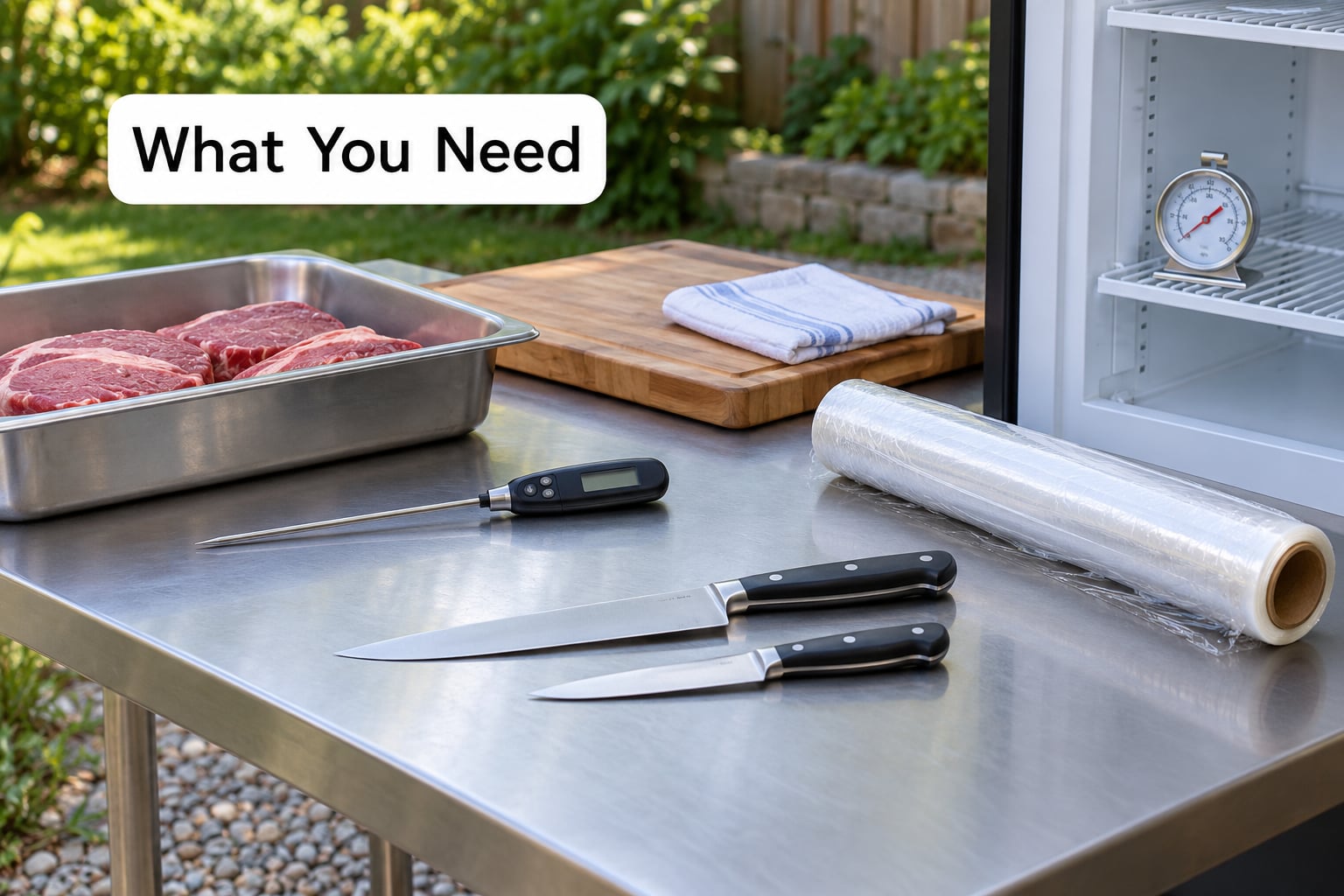
Temperature control is the only item you cannot fake. Everything else on this list is cheap and replaceable.
- A calibrated thermometer. A dial fridge thermometer in the cooler and an instant-read probe for the thickest parts of the meat. If the two disagree by more than a couple of degrees, trust the probe.
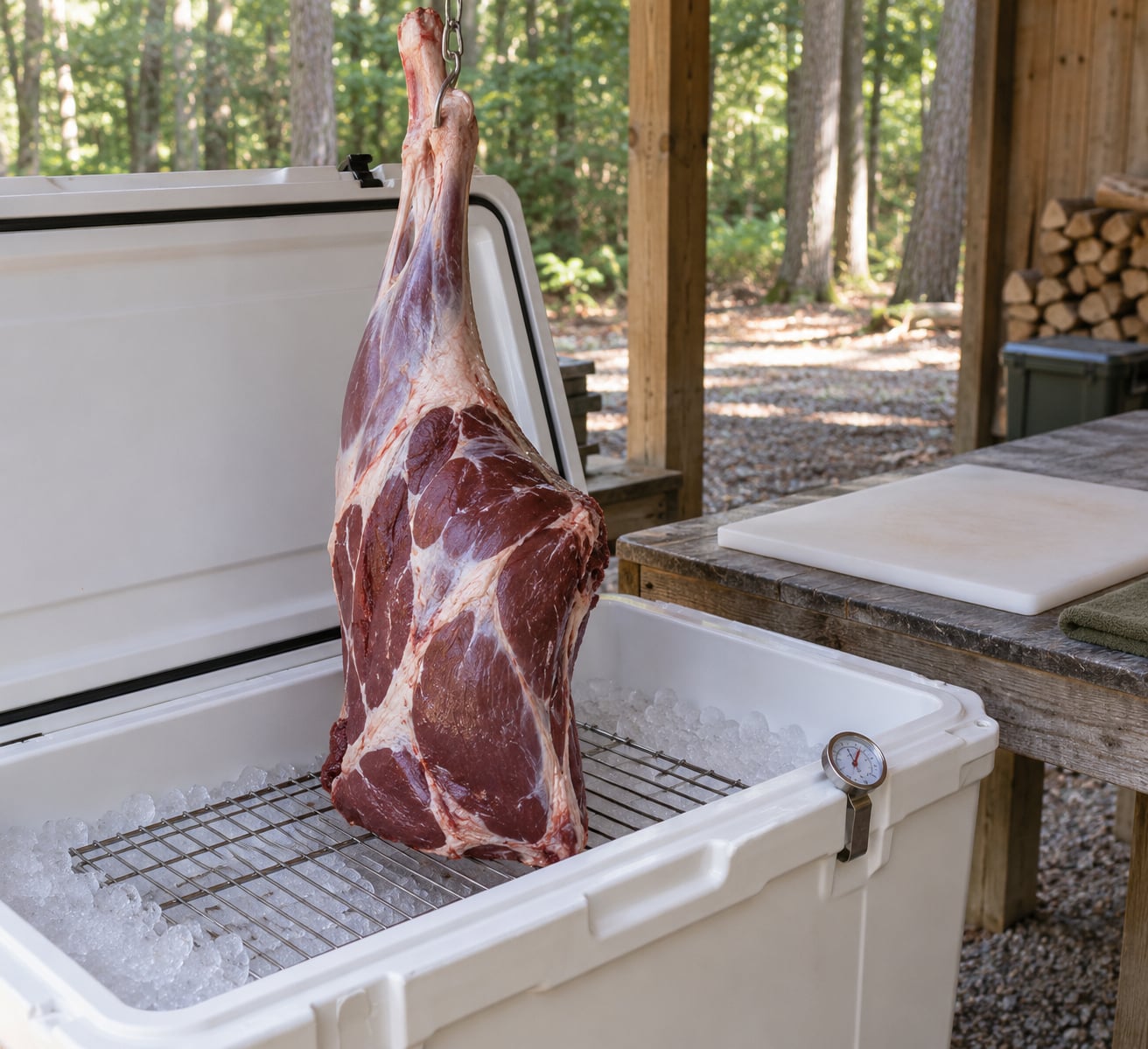
- A cooler or walk-in with steady cold. A rotomolded hunting cooler with a drain plug works for most people. Leave the drain plug off in the morning so meltwater runs out instead of pooling under the quarters.
- Racks or clean lumber. Anything that holds meat off the bottom of the cooler so air moves underneath and drippings don’t sit in a puddle.
- Space for wet aging. If you have no cooler or garage, a home refrigerator works for small cuts. Backstraps and tenderloins fit in a grocery bag and a crisper drawer.
- Food-safe bags or butcher wrap. Heavy freezer bags, vacuum bags, or waxed butcher paper for dry aging. Ordinary produce bags tear.
- Sanitation supplies. Trailer soap or hose and water, a scrub brush, paper towels, and a bottle of sanitizer for your hands and knife handles.
- A log. Date, time, temperature reading and where the meat has been. Write it on the cooler lid with a grease pencil if nothing else.
That is the whole kit. If you can measure the temperature and keep the meat cold, you can age deer.
How to Age Venison Before Butchering: Step-by-Step
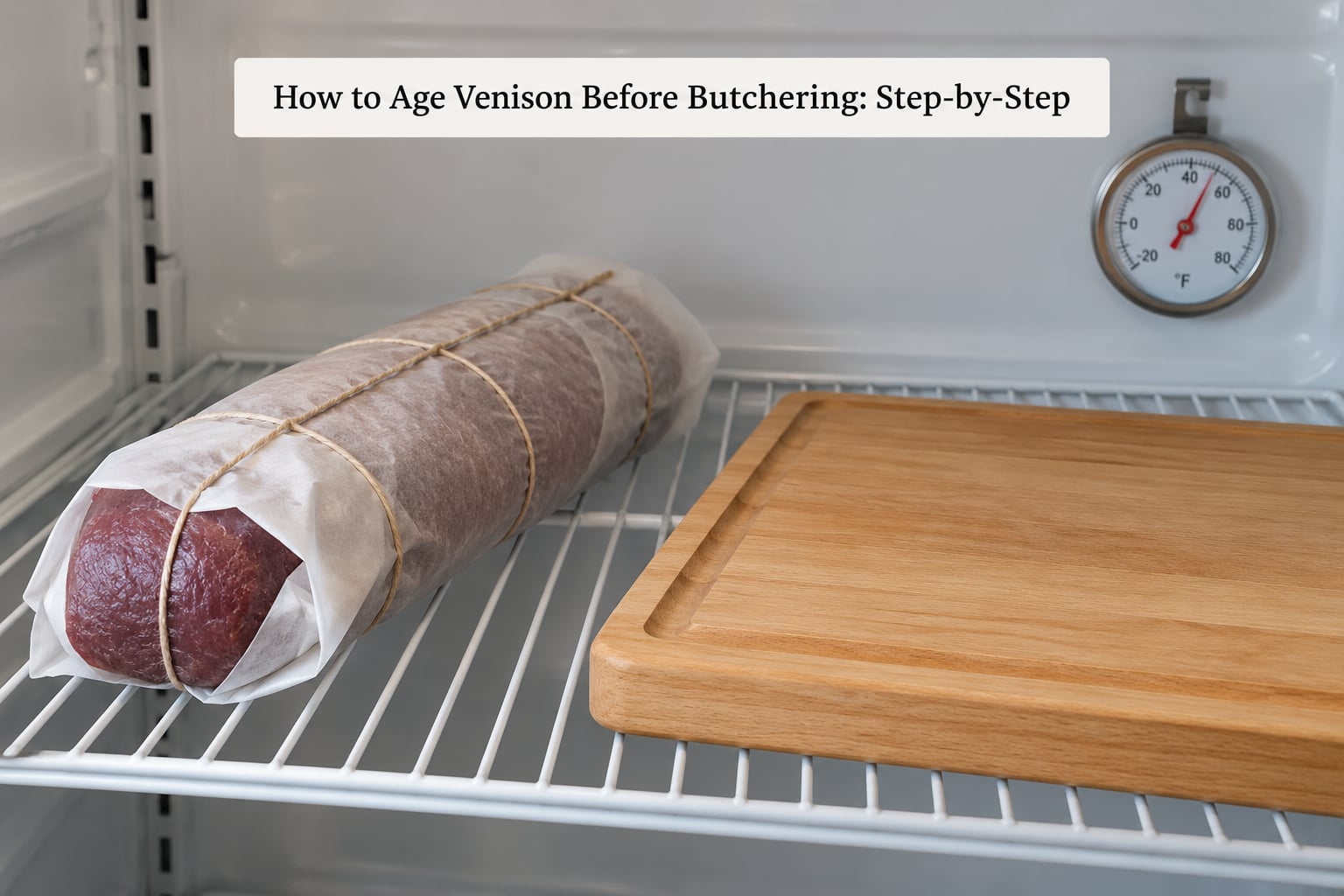
Choose Dry Aging or Wet Aging
Dry aging means the carcass hangs exposed to moving, cold air. The surface loses moisture and forms a protective pellicle, which concentrates flavor and shrinks trim loss, but it needs constant cold and airflow.
Wet aging means the meat sits sealed in a bag or vacuum pouch in a refrigerator. The moisture stays with the meat, so you lose a little flavor concentration and gain a lot of forgiveness: no mold to judge, no surface to dry out, and it works in a kitchen fridge.
Hunters who process thousands of deer tend to prefer hide-on dry aging because the hide protects the surface and cuts the trim waste. If you are working from a cooler with a handful of ice blocks, wet aging is the more honest choice. You can also mix them: dry age the hindquarters in the cooler and wet age a tenderloin in the fridge at the same time.
Prepare the Carcass for Aging
Field dress immediately. Body heat is the enemy, and the clock starts in the field, not in the cooler.
Get the organs out, split the chest cavity if needed so the body cavity can chill, and rinse only with clean cold water if you choose to rinse at all. Many experienced hunters skip washing entirely and wipe the cavity down instead, because water carries surface bacteria inward.
Remove anything damaged: torn muscle from the shot, bruised tissue, anything with hair or dirt ground into it. Trim loss you take now is trim loss you do not lose later to spoilage. Follow your state hunting regulations on bleeding and field dressing, since the rules differ and they are not optional.
Get the carcass below 40°F as fast as you can. Once it is cold and intact, aging begins.
Set Up a Safe Aging Environment
Target 34-38°F for both methods. Below 30°F you are into freezing territory, and above 40°F you are in the temperature danger zone where bacteria multiply quickly.
For dry aging in a cooler, add oven racks or clean 2x4s so the quarters sit off the bottom, put the cooler in the coldest shade you have, and block the drain plug overnight so meltwater runs out in the morning. Air circulation matters more than any trick. If you have a walk-in or a garage, hang the carcass by the hind tendons with the shoulders cut open so air reaches both sides.
For wet aging in a refrigerator, trim the meat into roasts or steaks you will actually eat, double-seal heavy freezer bags or vacuum seal, and set them on a tray in the bottom of the fridge where spills cannot reach the rest of your food. Leave room around each piece.
Keep the door shut as much as possible and check the reading twice a day. A full refrigerator with an open door in July will climb out of range in a single afternoon.
Age the Venison for the Right Time
Most deer want 7-14 days. Seven days is enough to move past rigor mortis and take the edge off the gamey flavor. Fourteen days is where steaks start to taste noticeably better and get easier to cut. Twenty-one days is achievable with tight temperature control, and the meat can be very tender, but trim loss climbs with every extra day of exposed surface.
Thicker cuts take longer than thin ones. A whole hindquarter wants the long end of that range, while tenderloins and backstraps are good at 5-7 days. Ground venison and stew meat benefit the least from long aging, so process those early and move them to the freezer.
Weather changes the calendar. In hot weather you may get usable aging in four or five days before the cooler cannot hold the range, and in cold weather the meat keeps for much longer. This is the number one reason to trust your thermometer over a fixed schedule.
Inspect the Meat Throughout Aging
Check on day one, then every day after. Look and smell more than you touch.
- Temperature. If it reads above 40°F, correct the setup immediately: more ice, a new shade, or move the meat to a working refrigerator.
- Odor. Venison should smell clean and slightly earthy. Sour, ammonia-like or rotten odors mean something has gone wrong.
- Surface. A dry aged carcass develops a dark, dry, slightly tacky pellicle. Wet sliminess, pooling liquid or discoloration spreading under the skin is not normal.
- Mold. White or blue-green dry mold on the outside of dry aged meat is the normal result and can be trimmed away. Black, green or fuzzy mold with slime underneath means discard it.
- Pests. Flies and beetles find a carcass fast. Mesh, a tight lid and a drain plug that does not sit open all night solve most of it.
Never judge safety by smell alone. Temperature history is the real check.
Finish Aging and Move Toward Butchering
Take the meat out, trim the dried surface and any mold, and process it the same day if you can. Aging stops the moment the muscle work stops.
Process for the freezer when you have finished. Trim steaks to about a quarter inch of fat, leave a decent edge of fat on roasts so they do not dry out during long storage, and grind venison separately from pork so it cooks all the way through. USDA guidance puts whole cuts at 145°F internal temperature, and ground venison at 160°F.
Vacuum seal or double-wrap in heavy freezer bags, get the air out, and label the package with the date. Meat that was aged properly and sealed well will keep for years rather than months. If you decide not to age at all, chilling the carcass quickly and freezing it that night is a perfectly good plan. Not everyone needs to age deer.
Common Mistakes
Letting the carcass sit warm. Hours of residual heat do more damage than any bad aging decision. Cool it first, decide about aging second.
Holding the wrong temperature. Above 40°F bacteria grow; below 30°F the outside freezes while the inside thaws badly. Use a thermometer rather than the cooler label or the season.
Trusting smell as the only warning. Odor is a late signal. A carcass can be well below danger-zone temps and still be spoiled by time or handling.
Using thin produce bags for wet aging. They leak, they are not rated for food storage, and they break under the weight of a hindquarter. Use heavy freezer bags or vacuum bags.
Leaving the drain plug open overnight. Meltwater collects under the meat, the temperature rises, and you get exactly the spoilage you were trying to avoid. Plug it at night, open it in the morning.
Aging for the calendar instead of the thermometer. A fixed 14 days is a good plan in October and a bad one in a garage in July.
Skipping the inspection. Ten seconds with the cooler lid open each day catches a rising temperature or a slime problem long before it ruins the whole quarter.
Butchering during rigor mortis. If the carcass is still hard and the joints do not move freely, the meat will be tough no matter how you cook it. Wait it out.
Frequently Asked Questions
How long should venison age before butchering?
Most deer want 7-14 days at 34-38°F. Seven days carries the meat past rigor mortis and softens the gamey flavor. Fourteen days gives noticeably tender steaks and better flavor, while thin cuts like tenderloin and backstrap are usually good at 5-7 days. Whole hindquarters benefit from the longer end of that range. Hold the temperature steady and check daily rather than trusting the calendar alone.
What temperature should venison be stored at while aging?
Keep aging venison between 34°F and 38°F. That range firms the muscle but stops bacterial growth, which is why commercial facilities run the same numbers. Above 40°F you are in the temperature danger zone, and below 30°F the surface starts freezing. A dial thermometer in the cooler plus an instant-read probe in the thickest part of a quarter gives you the real picture.
Is it better to wet age or dry age venison?
Dry aging gives more concentrated flavor and less trim waste, but it needs steady cold, airflow and pest protection. Wet aging in sealed bags inside a refrigerator is easier, needs no special equipment, and has no mold to judge. Hunters processing large numbers of deer usually prefer hide-on dry aging. If you are using a cooler and ice blocks, wet aging is the safer of the two.
Can venison be vacuum sealed before aging?
Vacuum sealing works well for wet aging, since the sealed pouch holds moisture against the meat and limits oxygen and pests. Keep it in a refrigerator at 34-38°F for 5-10 days and inspect the package daily for seal leaks or cloudiness. Vacuum bags are not a substitute for dry aging, because the surface needs moving air to form its protective pellicle.
How can I tell if venison has gone bad while aging?
Watch for sour or ammonia-like odor, wet slimy surfaces, discolored liquid pooling under the meat, and black or fuzzy mold with slime beneath it. White or blue-green dry mold on a dry aged surface is normal and can be trimmed. Smell alone is not reliable, so pair every inspection with a temperature check. If the meat spent time above 40°F, treat it as suspect.
Does aging venison make it safer to eat?
Aging improves texture and flavor, not safety. Safe venison comes from prompt cooling, holding a verified temperature below 40°F, clean handling and avoiding contamination from soil or gut contents. Aging actually raises the risk when it is done warm, so the colder and more controlled the environment, the less risk you take. When in doubt about temperature history, do not eat it.
Start with the cooler: put a thermometer in it tonight, confirm it holds 34-38°F, and get the drain plug ready. On hunt day, cool the deer fast, choose dry or wet aging based on the equipment you actually have, and check it every day for the next week or two. If you never age a deer, that is fine. If you do, do it cold and do it honestly.