On a hot day, plan on about 1 liter (34 oz) of water for every hour of hiking, up from a 0.5 liter (17 oz) per hour baseline in mild weather. That works out to 3 to 4 liters (about a gallon) for a full day hike when you know where to refill. Here is how to turn that number into a plan you can actually carry.
The reason the hot-weather number is roughly double is simple: heat, humidity and direct sun all raise your sweat rate, and you lose water as sweat whether you feel thirsty or not. Thirst is a lagging signal. By the time you notice it, you are already behind.
Working out how much water to carry for a hot day hike comes down to three numbers: how many hours you will realistically be out, how hard you will be working, and how far you can walk if a refill falls through. Everything else is detail.
Table of Contents
- What You Need Before You Can Calculate Anything
- Step-by-Step: Building the Number
- 1. Start with hours, not miles
- 2. Adjust for the specific day
- 3. Find your personal sweat rate
- 4. Pack it so you actually drink it
- 5. Know when to turn around
- Common Mistakes and Their Fixes
- Frequently Asked Questions
- How much water should I carry for a hot day hike?
- Is one gallon enough water for a hot day hike?
- Should I drink electrolyte drinks instead of water while hiking?
- Does an insulated water bottle help on a hot hike?
- How do I handle hiking with a dog on a hot day?
- What are the warning signs of heat illness while hiking?
- Conclusion: Start With the Route, Not the Bottle
What You Need Before You Can Calculate Anything
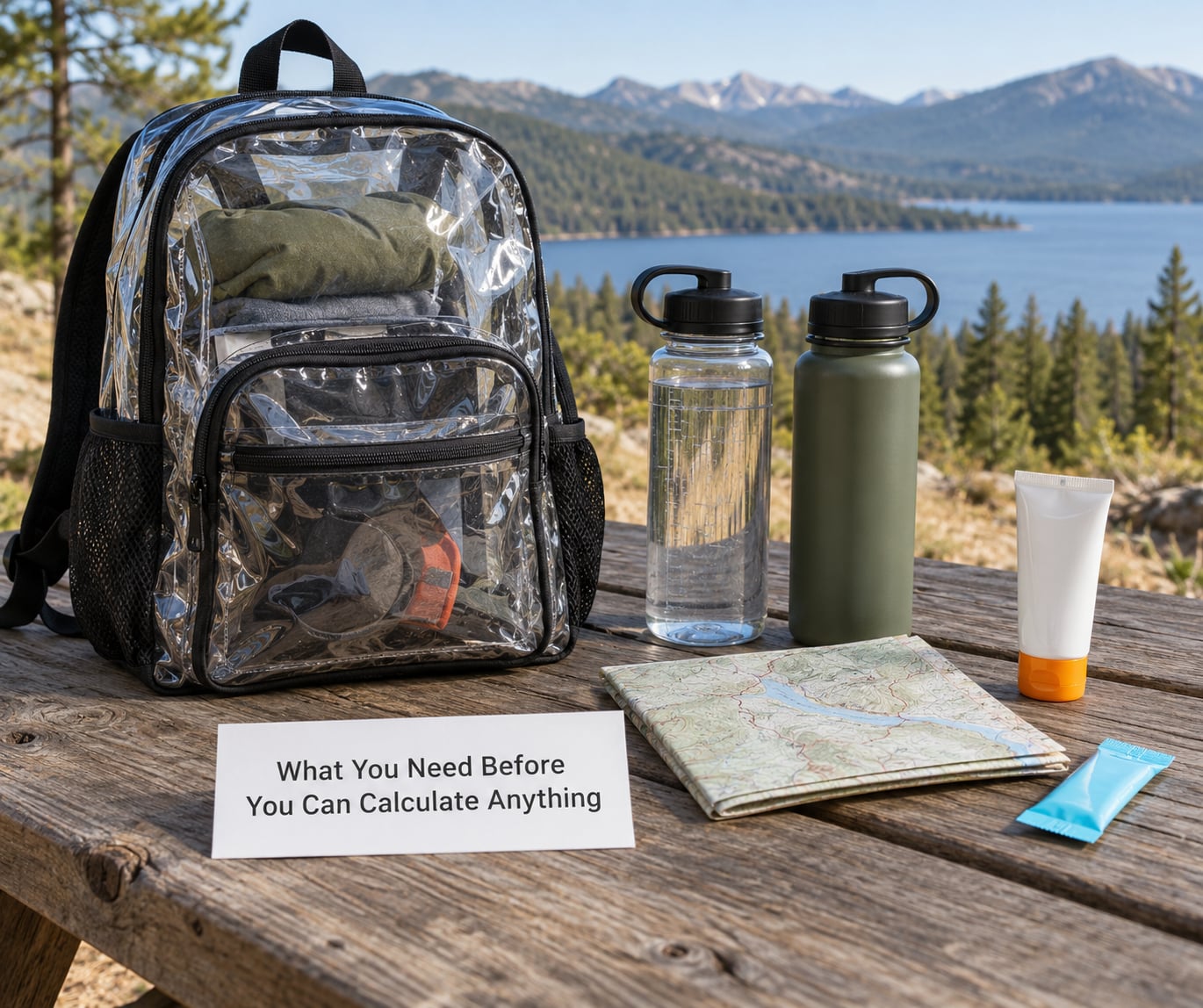
You cannot pick a volume without five pieces of information first. Get these sorted at home, not at the trailhead.
- Realistic total duration. Not the distance on the map, the number of hours including your breakfast break, the slow section at the top, and the 30 percent of the hike that happens after you start thinking about turning back.
- Forecast and heat index. Air temperature alone is misleading. A 95 F day at 20 percent humidity and a 90 F day at 70 percent humidity are two very different hikes, and the second one loses noticeably more water.
- Refill points. Every source, its distance along the route, and whether it is a pipe, a creek, a lake edge or a treated spigot. Treat anything downstream of livestock or human activity as questionable.
- Your effort level. Loaded pack, elevation gain, and whether you are moving fast or sightseeing.
- Container capacity. What your pack or belt actually holds, in liters. Most people overestimate this badly.
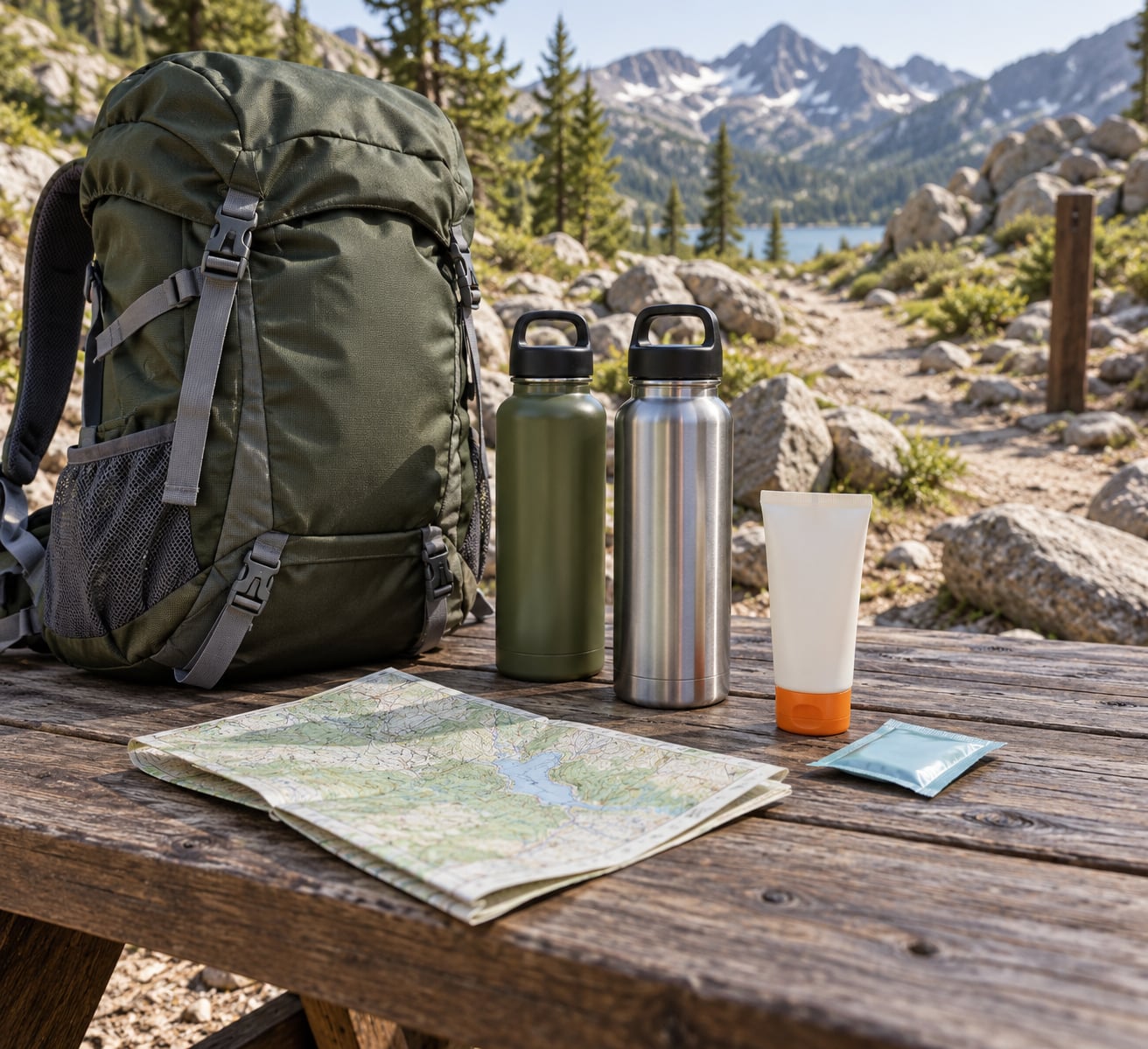
Gear-wise you want insulated bottles if the forecast is above 80 F, because warm water tastes worse and people drink less of it. Add an electrolyte source for anything longer than three hours, and carry a filter or purification tablets if your refill plan depends on untreated water.
Step-by-Step: Building the Number
1. Start with hours, not miles
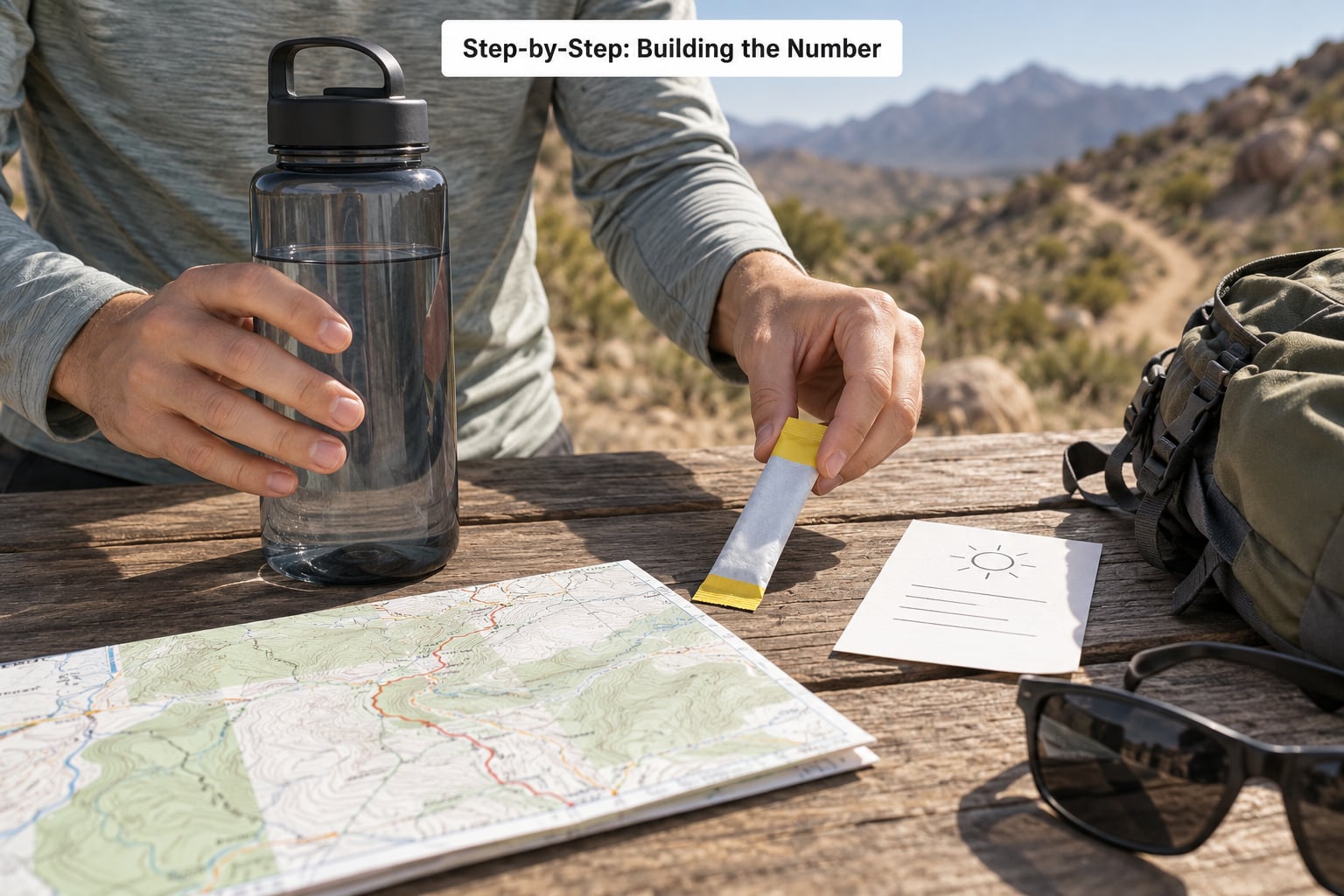
Multiply your realistic hours by the rate for the conditions: 0.5 L per hour in mild weather, 0.75 L per hour in warm weather, 1 L per hour in hot weather, and 1.25 L per hour if you are in full sun above 95 F with a heavy pack.
Distance-based rules get used a lot, such as the 1 liter per 5 miles suggestion from Hike Oregon. Distance is a proxy for time and a bad one. Five flat miles in the shade is an easy two hours. The same five miles with 1,500 feet of gain in July is four hours of climbing, and climbing is where the water goes.
Add your reserve on top. For a hot day, add 0.5 to 1 liter beyond the calculated total unless you have confirmed, flowing sources on the route.
2. Adjust for the specific day
The per-hour rate is a starting point, not a verdict. Multiply up for humidity, direct sun, elevation and load; multiply down only for genuinely cool, shaded, easy terrain.
This is also the tension most people run into. In the r/hiking thread on daily carry, a hiker reported drinking 2 to 3 gallons on a hard mid-summer day, then several replies said the same thing: correct number, refuse to carry it. Four kilograms of water on your shoulders makes every step harder, and harder steps mean more sweat, which means more water. It circles.
The fix is not to drink less. Shorten the route, start at dawn so you finish before peak heat, plan a route with a reliable source at the halfway mark, and cache water if the trail allows it. Australian hikers logging roughly 1 L per hour above 30 C lean on early starts and resting through the worst of the middle of the day for exactly this reason.
Camino de Santiago hikers describe a useful middle ground: drinking 4 L or more a day while carrying only a 1 to 1.5 L bladder, topping up at villages and fountains. That works when sources are frequent and reliable. It does not work in a desert canyon with two dry stretches between.
3. Find your personal sweat rate
The 1 L per hour figure came from somewhere, but it is an average. You can measure yours in one hike and stop guessing.
Weigh yourself naked right before you leave and again immediately when you get back, before eating or drinking anything. The difference in pounds equals roughly the same number of fluid ounces you lost. A hiker who drops 3 lb over 5 hours lost about 1.4 L, or about 0.7 L per hour. That person should plan closer to 0.75 L per hour in those conditions, not 1 L. Do it again on a hotter day to get your hot-weather figure.
Do this once or twice, not every hike. Weigh-in scales are accurate enough for this if you use the same one and weigh the same way.
4. Pack it so you actually drink it
Put the water where your hands are. A hydration bladder with a drinking tube is the easiest to drink from without stopping, which matters most on a hot climb. Rigid bottles are easier to fill, easier to clean and easy to check at a glance, but they need a shoulder-strap holder or they end up in your hand.
Drink on a schedule rather than on thirst. Sips every 15 to 20 minutes is the standard advice, and it works. Start drinking in the first hour while you are still comfortable, because on a hot day you will be behind long before you feel thirsty.
For anything past three hours, use electrolytes. You are losing sodium in sweat, and plain water does not replace it. A cheap DIY version that shows up constantly on hiking forums: about three tablespoons of lemon juice and a pinch of salt per liter. For a shorter day, plain water is fine.
Then watch your urine. Pale straw color is the target. Dark amber means you are behind. Clear and frequent with a headache and nausea means you may be over-drinking.
5. Know when to turn around
Water problems escalate. Dehydration makes you tired and clumsy. Heat exhaustion adds heavy sweating, headache, nausea, dizziness and cool clammy skin. Heat stroke is different: the skin is hot, often dry, body temperature is high, confusion sets in, and the person may stop sweating entirely. Heat stroke is a medical emergency. Call for help immediately, get the person into shade, cool them with water and fan them, and do not give anything by mouth if they are confused.
The trap is treating early confusion as tiredness. If a hiking partner starts stumbling, slurring or behaving oddly in the heat, stop the group, get them into shade and cool them right away. Do not push on for another mile to reach the car.
Get a rescue beacon or at least a satellite messenger for solo hikes in hot, remote terrain. Cell service is a coin flip and heat emergencies do not wait for bars.
Common Mistakes and Their Fixes
Using the map distance instead of the time. Add 30 percent to your map estimate before you calculate. Then add it again if there is meaningful elevation gain.
Counting on a refill that might not be there. Springs run dry after dry winters, spigots get turned off, and a “reliable” creek can be a trickle in September. Treat every planned refill as a bonus, and carry the full requirement until you have stood in front of the source and filled a bottle.
Ignoring the weight. A liter of water is a kilogram, 2.2 lb. If you are carrying 4 L, 9 lb of your pack is water. Shorten the route rather than under-drinking.
Waiting for thirst. In the heat, thirst arrives after you are already behind. Set a timer or drink at every rest stop and every switchback.
Drinking more than you sweat. This one surprises people. If you drink large volumes of plain water without salt, your blood sodium can drop low enough to cause hyponatremia, which looks a lot like heat exhaustion and can be just as dangerous. Match your intake to your sweat loss and bring electrolytes on long days.
Pushing through warning signs. Dizziness, stumbling, headache that will not shift, and nausea are all stop signals. Turning back early costs you nothing except the summit photo.
Frequently Asked Questions
How much water should I carry for a hot day hike?
Plan about 1 liter (34 oz) per hour of hiking in hot weather, compared with a 0.5 liter (17 oz) per hour baseline in mild conditions. That means 3 to 4 liters for a six-hour day with reliable refills, and more if the route has no dependable water. Add a reserve of 0.5 to 1 liter and take electrolytes for anything past three hours.
Is one gallon enough water for a hot day hike?
One gallon is roughly 3.8 liters, which covers about four hours of hot-weather hiking. That is comfortable for a summer day hike with a known refill at the midpoint. For a full eight-hour day above 90 F with no sources, plan closer to 6 to 8 liters. Remember the weight: every liter you carry is 2.2 lb on your back.
Should I drink electrolyte drinks instead of water while hiking?
On a hot hike lasting more than three hours, yes, because sweat carries sodium out of your body and plain water does not put it back. A practical DIY mix is about three tablespoons of lemon juice and a pinch of salt per liter. For shorter or cooler walks, plain water is enough. Check labels on sports drinks for sodium content if you buy them.
Does an insulated water bottle help on a hot hike?
It does, more than most people expect. Water sitting in direct sun reaches drinkable-unpleasant temperatures quickly, and hikers drink less when water tastes warm or has picked up plastic flavor. An insulated stainless bottle keeps water cold for hours. The trade-off is weight and the fact that you cannot squeeze the bottle to check how much is left.
How do I handle hiking with a dog on a hot day?
Carry more water than you think. A medium dog can need a liter or more over a hot day, and dogs pant instead of sweating, so they lose water fast. Bring a collapsible bowl, offer water at every break, and plan on shade and rest during the hottest hours. Watch for heavy panting, drooling, stumbling and bright red gums, which mean overheating.
What are the warning signs of heat illness while hiking?
Heat exhaustion shows up as heavy sweating, headache, nausea, dizziness, weakness and cool clammy skin. Heat stroke follows: hot skin, high body temperature, confusion, slurred speech and sometimes no sweating at all. Treat exhaustion with shade, rest, cool water and slow drinking. Heat stroke is an emergency, so call for rescue and cool the person immediately.
Conclusion: Start With the Route, Not the Bottle
The first thing to do before packing anything is look at the route, the forecast and where the water actually is. Then write down your realistic return time, not your optimistic one, and calculate against that.
Multiply your hours by 1 liter for a hot day, add the factors that push it higher, and add a reserve. If the number feels too heavy, change the hike rather than the hydration. Staying ahead of the heat is what gets you back to the car.