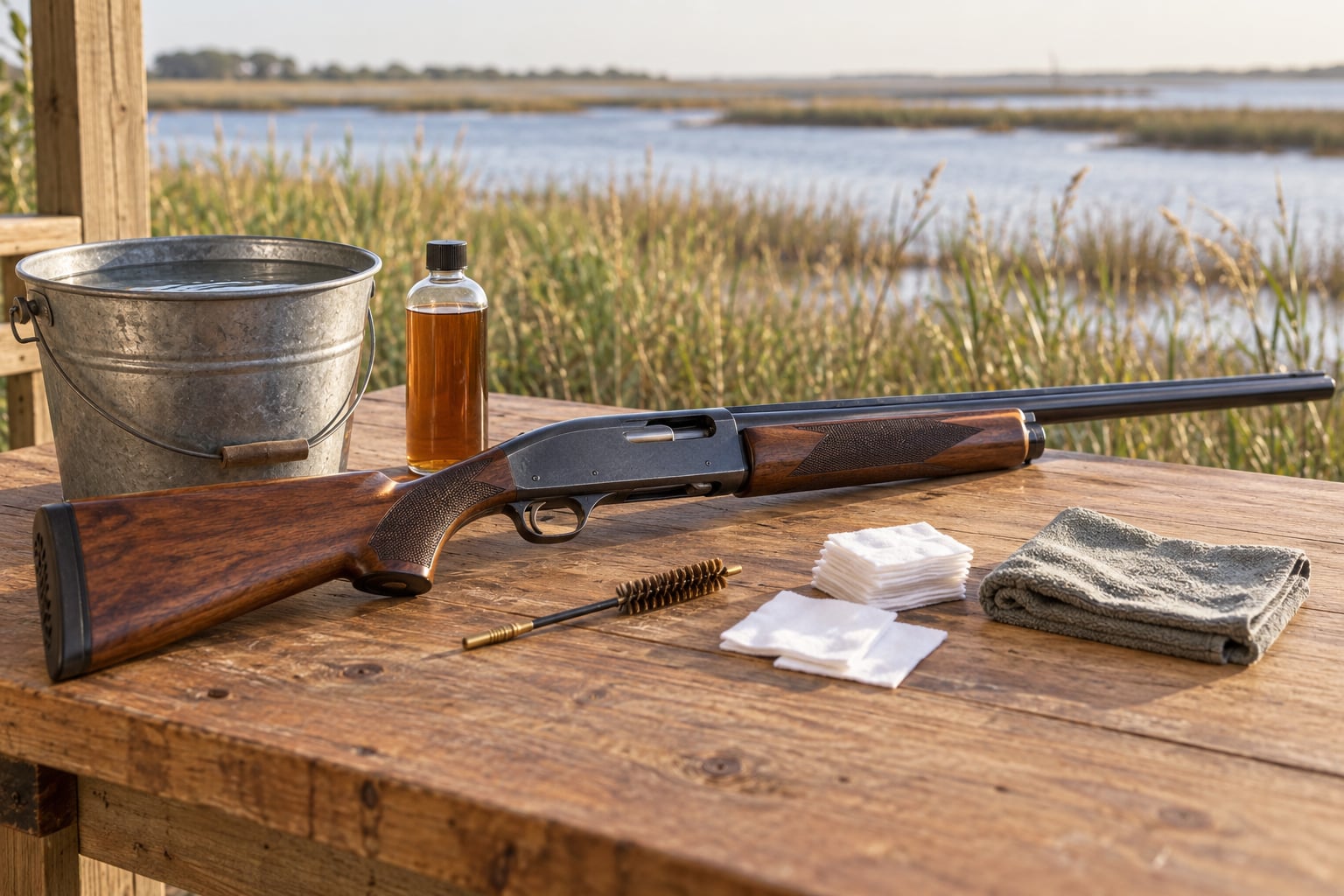
Salt water is worse than rain because it carries dissolved salt that turns any moisture into a conductive brine, and that brine creeps into seams, the magazine well, and the bore where a rag never reaches. The fix takes 20 minutes at the tailgate and a longer bench job at home. Do it the same night, not the next weekend.
A salt marsh hunt soaks a shotgun in the one liquid that attacks steel, bluing, and polymer at the same time. Salt pulls moisture out of the air on a dry day, holds it against metal in microscopic crevices, and turns every damp fingerprint into a corrosion site. Hunters who wipe the gun down in the parking lot with a damp rag and pile it into the truck bed usually find small rust pits in the bore weeks later, right where the magazine tube meets the barrel.
Cleaning after a salt marsh hunt is straightforward once you separate the work into two stages. A field clean at the truck removes the bulk of the salt. A bench clean at home gets into the action, the trigger group, and the barrel. Here is exactly how to run both without turning a ten-minute job into an afternoon of disassembly headaches.
Table of Contents
- What You Need
- How to Clean a Shotgun After a Salt Marsh Hunt: Step-by-Step
- 1. Make the Shotgun Safe Before Cleaning
- 2. Remove Loose Salt, Sand, and Mud
- 3. Clean the Barrel and Choke Properly
- 4. Clean the Action, Ejection Port, and Magazine Well
- 5. Dry, Protect, and Reassemble the Shotgun
- 6. Perform a Final Function and Safety Check
- Common Mistakes
- Field Tips for Salt and Sand
- Frequently Asked Questions
- Can salt damage a shotgun after a salt marsh hunt?
- Is it safe to use a hose to clean a shotgun after hunting in salt marsh?
- How long should a shotgun air-dry after getting wet?
- Should I clean the inside of a shotgun after every hunt?
- Can cleaning solvent damage a shotgun’s finish or internal coating?
- When should I take a shotgun to a gunsmith after a salt marsh hunt?
- Conclusion
What You Need
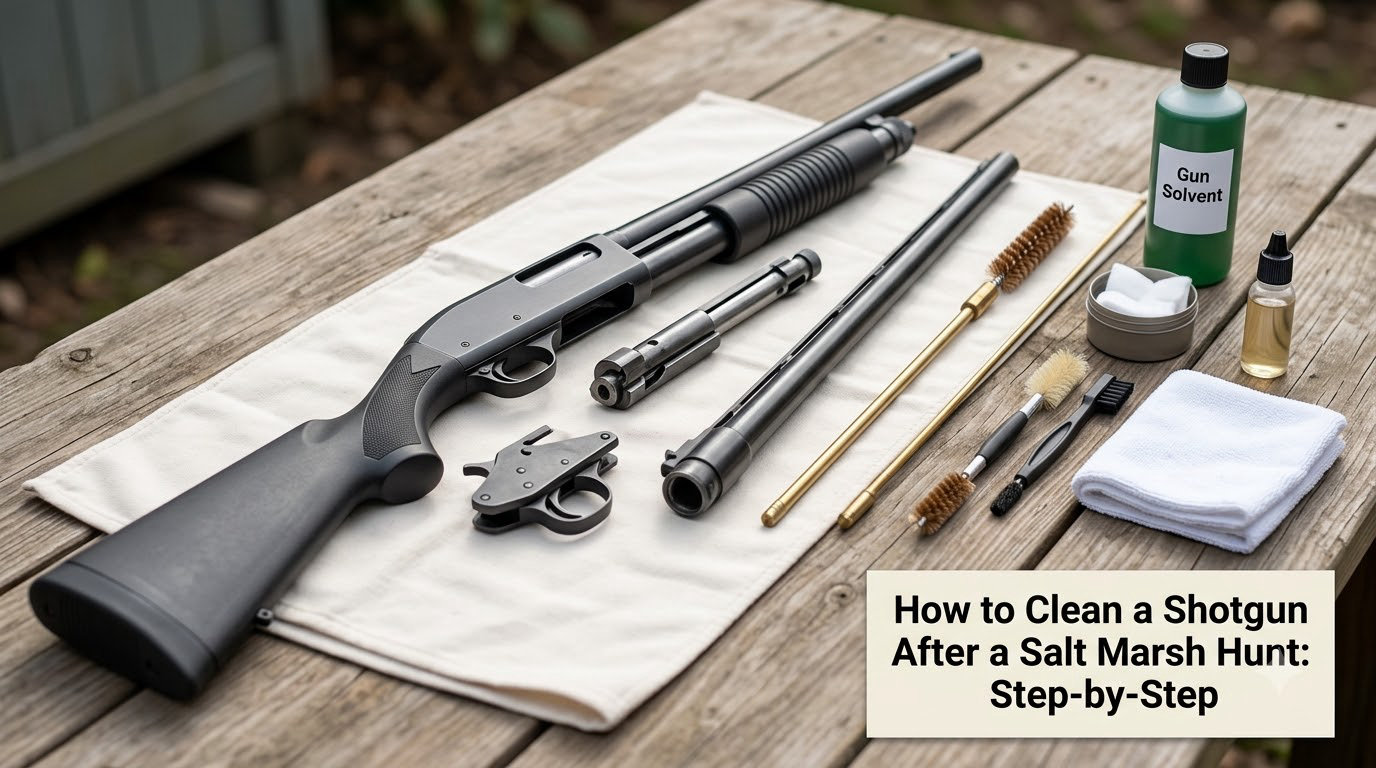
A salt marsh gun gets wet, gritty, and salty in the same trip, so your kit needs to handle all three. Split the list by where you will actually use it.
Field kit (fits in a jacket pocket or a small boat bag):
- Fresh water in a jug or a collapsible bottle for rinsing
- Non-oiled paper towels or clean cotton patches
- A microfiber cloth
- A microfiber bore snake or a small brass bore brush with a short rod
- Nitrile gloves
- A gun sock or padded case that is not airtight with the gun wet
Bench kit (the garage or kitchen table):
- Fast-evaporating gun solvent in a shallow pan
- Bore brush matched to your gauge, plus a patch holder and cotton patches
- A toothbrush, a bore snake, and a clean shell casing for scraping tight corners
- Bore oil and a CLP or similar corrosion inhibitor for the action
- A clean lint-free cloth or old cotton T-shirt for the final wipe
- Compressed air or a rubber bulb blower
- A parts tray or a folded towel so screws and springs do not disappear
Workspace and safety items: eye protection, a ventilated area away from any flame or spark source, and a clear bench with the muzzle pointed somewhere safe. Most soap and solvent work happens far better outdoors on a folding table than over a kitchen sink.
How to Clean a Shotgun After a Salt Marsh Hunt: Step-by-Step
1. Make the Shotgun Safe Before Cleaning
Point the muzzle in a safe direction, keep your fingers outside the trigger guard, and unload every chamber. For a pump or over-under, open the action and pull each shell by hand, then look through the open breech to confirm nothing remains. For a semi-auto, press the magazine release and drop the shells, then tilt the gun so you can see that the chamber is clear.
Check the magazine tube and the flex feed as well. Salt mud packs shells into the folds of a flex feed where they stay wet, and a loaded tube can surprise you when you tip the gun for a rinse.
2. Remove Loose Salt, Sand, and Mud
Let mud dry first. Knock off dried clumps with the edge of a plastic card or your palm, because brushing wet mud only drives grit deeper into the action. Then rinse the whole gun with fresh water, working the action open and closed under the stream so brine flushes out of the ejection port and the magazine well.
Turn the barrel so the muzzle points down while you rinse, letting water run out of the breech end instead of deeper in. Wipe with non-oiled towels, not an oily rag, for this first pass. An oily rag spreads moisture across the metal instead of lifting it.
3. Clean the Barrel and Choke Properly
Run the bore brush the full length of the barrel with solvent on the bristles, always in the same direction, then follow it with two or three patches until they come out clean. If a patch binds, stop and back it out. Forcing a soaked patch through a tight choke can wedge it and scratch the rifling.
Unscrew the choke tube over a towel so grit never falls into the receiver, clean its threads, and put a light coat of CLP or bore oil on them before reinstalling. Threads that dry out after a salty hunt are the reason a choke will not budge next season.
A bore snake is faster than patches in soft mud, but it is not as good at loosening hardened salt crust. Use both when the gun has been sitting wet for more than a day.
4. Clean the Action, Ejection Port, and Magazine Well
Open the action fully and look into the ejection port with a light. Salt crystallizes here because the port holds a film of moisture every time you cycle. Soften it with a few drops of solvent, then work a toothbrush through the port and the extractor area until no white crust comes off the bristles.
Pull the forearm or forend if your model allows it and check the mag well underneath, which is where most neglected salt hides. On a semi-auto, push the bolt group fully back and wipe the piston housing and the gas block area, then add a few drops of CLP on the piston and the gas port. A dry piston after salt exposure is how a cycling problem shows up in the marsh with birds in the air.
Dab excess oil off. Heavy oil traps grit, and the grit is what makes a sear feel gritty. If the trigger feels heavy or scratchy after cleaning, stop and let a gunsmith look at it rather than scrubbing the sear with solvent.
5. Dry, Protect, and Reassemble the Shotgun
Let the gun air dry fully with the action open before you close it up and put oil on anything. Trapping moisture inside the receiver is how you get a light film of rust that no bore brush will ever reach. Compressed air helps, but time does the real work.
Once everything is dry, put a thin film of bore oil on the bore and chamber, a drop of CLP on the action rails and locking surfaces, and a light coat of oil on the mag tube spring. Reinstall the choke, forend, and barrel, and tighten hand to firm. Never force a part into place. If the barrel will not seat, something is in the way or the alignment is wrong, and forcing it can bend a locking lug.
6. Perform a Final Function and Safety Check
Cycle the action several times with the gun pointed in a safe direction, then confirm the bolt or lever locks up positively, the trigger breaks cleanly, and the safety does what you expect. On an over-under, open the breech and check that both barrels are seated and the locking surfaces are aligned.
Wipe the outside one last time with a lightly oiled cloth, but keep oil off the camo and synthetic furniture. Store the gun unloaded and dry in a ventilated case away from a heater or a damp truck bed.
Common Mistakes
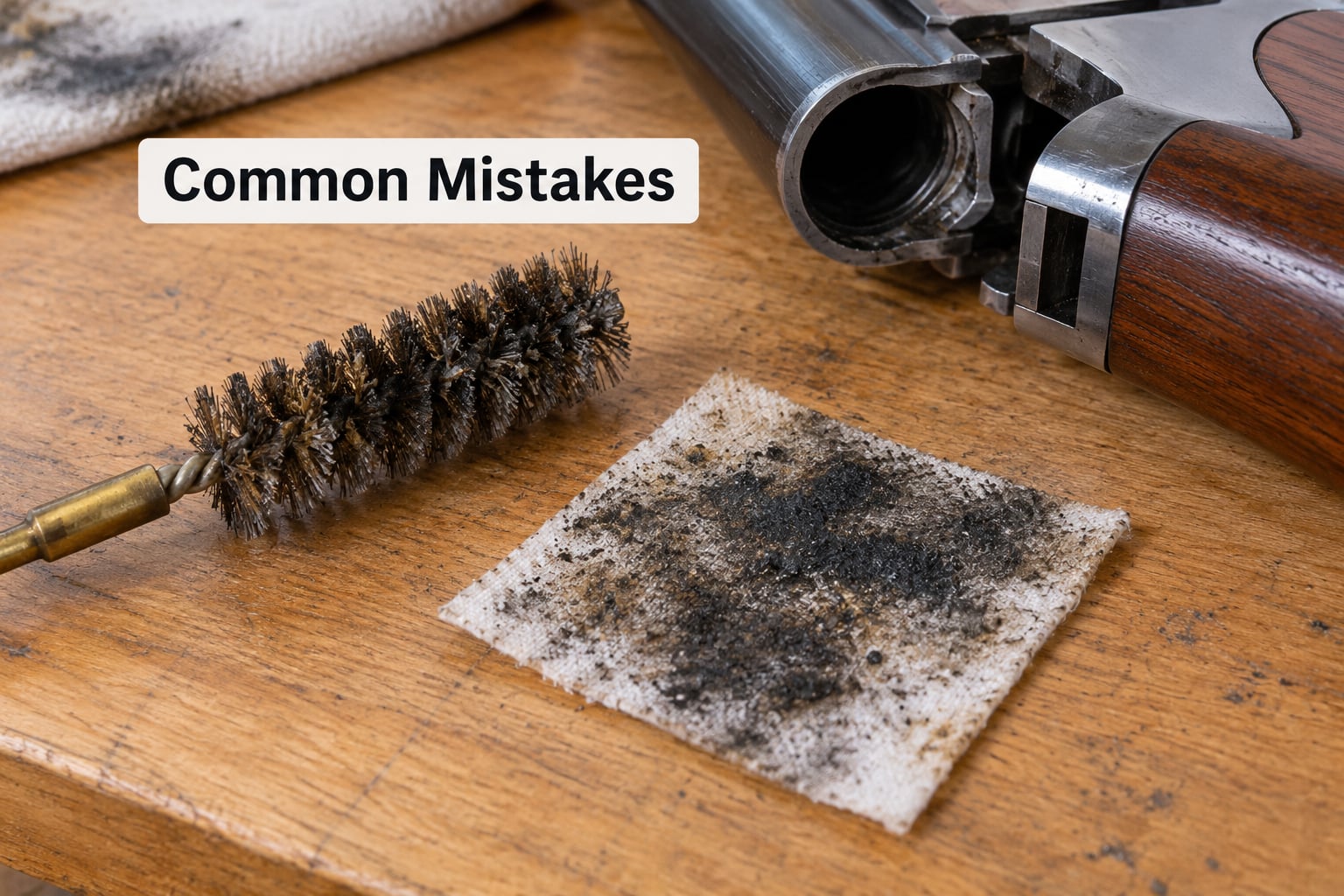
Most ruined marsh guns were not ruined by salt. They were ruined by one of these.
- Cleaning with ammunition nearby. Work on a cleared surface with no shells in the room. A dropped sleeve of ammo near a wet rag and solvent is the most dangerous setup in this whole process.
- Flooding the action with solvent. A little under the ejection port and on a brush is enough. Pouring solvent into the receiver pushes residue into the trigger group and can attack aluminum frame parts on some guns.
- Forcing a bound patch. If the patch stops, back it out and start over with a smaller one or a bore snake. A stuck patch scratches the bore and can leave copper or brass jacket residue behind it.
- Ignoring the magazine well and the mag tube spring. This is the number one place salt sits unnoticed, and the corrosion that starts there often surfaces as a jam months later.
- Drying with heat. Hairdryers, space heaters, and hot air guns can warp polymer furniture, lift a camo finish, and haze a blued surface. Air drying overnight is the standard and it works.
- Using WD-40 as a protectant. It is a water displacer with a light oil film, and it does not stop salt. Owners who sprayed their boat guns with WD-40 still found pitted bores. Use a real corrosion inhibitor for storage.
- Household dish soap on the whole gun. Warm soapy water is fine for pump and over-under metal parts, and it will cut salt well. It is not fine for camo finishes, bluing, or polymer furniture, and it does not belong anywhere near the trigger group where it leaves a film.
- Steel wool in the bore. Steel wool is useful on light surface rust on a magazine or an exterior part. Run through the bore it scratches the rifling and can leave a patch that holds moisture. A good bore brush with solvent handles surface rust. Pitting is permanent, and no product will fix it.
- Hot water on a warm gun. Thermal shock can craze a finish and open microscopic cracks. Use room-temperature or cool fresh water.
Field Tips for Salt and Sand
Most of the damage happens in the parking lot, not the blind. A few habits keep salt off the gun in the first place.
Carry fresh water. Rinse the gun before it goes in the truck or the boat console, and cycle the action open and closed under the stream. This costs a minute and it removes most of the salt before it ever dries.
Do not wade with the shotgun in your hand. Break the salt out of the marsh entirely and come back for the bird, or wear a chest rig and a waterproof sling. An hour of immersion in brackish water is far worse than an hour of salt spray.
Clean sooner, not later. Salt crystallizes as water evaporates, and the first pitting often shows up within a day or two of drying. If the bench job has to wait, at least do the full field clean and leave the gun open in a ventilated place, not sealed in a case while it is still damp.
Watch the underside. Under the forearm, inside the trigger guard, and around the butt pad collect moisture that never gets wiped. A quick pass with a non-oiled towel under the gun catches more salt than most people expect.
For storage between trips or over the off-season, wipe a light oil film on the bore and action, use a gun sock or padded case that breathes, and add a desiccant pack to the case or a nearby cabinet. Keep it away from damp exterior walls and concrete floors.
Frequently Asked Questions
Can salt damage a shotgun after a salt marsh hunt?
Yes, and it damages a shotgun faster than plain rain or mud. Dissolved salt turns moisture into a conductive brine that attacks bluing, parkerizing, and polymer finishes, and the pits it leaves in the bore and chamber can be permanent. Salt also crystallizes in the magazine well, the trigger group, and under the forearm where a rag never reaches. Clean the same night and the damage is easy to prevent.
Is it safe to use a hose to clean a shotgun after hunting in salt marsh?
Rinsing with fresh water is one of the best things you can do, but do it at the truck rather than at home after the salt has already dried. Hold the muzzle downward, work the action open and closed under the stream so brine flushes out of the ejection port, and rinse the magazine well. Never use a pressure washer or soak the gun, and do not rinse over ammunition or near an open flame.
How long should a shotgun air-dry after getting wet?
Give it overnight with the action open. Most hunters I know leave the gun on a towel or a rack indoors, action cracked, and come back to it in the morning. Aiming a fan at it speeds drying without adding heat. Do not close a wet gun into a case and do not reach for a hair dryer, since hot air can warp polymer furniture and haze a finish. Oil goes on only after everything is fully dry.
Should I clean the inside of a shotgun after every hunt?
After a marsh hunt, yes. A full internal clean with solvent, a bore brush, and patches takes 20 to 30 minutes once the gun is open, and skipping it is how pinhole rust pits appear in the bore weeks later. For ordinary upland hunts in dry weather, a wipe-down and a light oil film are usually enough between trips. The rule that works is simple: every time the gun gets wet, it gets cleaned inside.
Can cleaning solvent damage a shotgun’s finish or internal coating?
Fast-evaporating gun solvent is safe on bare steel, bluing, and parkerizing when you use it in moderation. Problems come from soaking metal parts and from letting solvent sit on aluminum frames or polymer furniture, which it can haze or stain. Keep solvent on a brush or patch rather than pouring it into the receiver, work on a ventilated surface away from sparks, and test any cleaner on an inconspicuous spot first.
When should I take a shotgun to a gunsmith after a salt marsh hunt?
Take it in when the bore shows pitting rather than a surface stain, when a choke tube will not unscrew, when the trigger feels gritty or the sear sticks after a proper cleaning, or when a semi-auto will not cycle after you have lubricated the piston and gas port. A gunsmith can chamber-check for pressure signs and replace worn parts like the mag tube spring. A deep ultrasonic clean is also worth it once a season if you hunt the coast weekly.
Conclusion
Start with the rule that saves the most guns: clean a salt marsh shotgun the same night, and never put a wet one into a closed case.
Make it safe and verify it is empty. Knock off the dried mud, rinse with fresh water, and wipe down with non-oiled towels. Run a brush and patches through the bore, clean the barrel threads and choke, scrub the ejection port and mag well, and lubricate the gas system on a semi-auto. Let it air dry overnight with the action open, then finish with a thin oil film on the bore, a drop of CLP in the action, and dry storage in a ventilated case.
Twenty minutes at the tailgate and half an hour at the bench will keep a bore smooth and an action cycling for years. Skip it and the salt decides for you.