Knowing how to prevent hypothermia on a paddling trip comes down to four things: dress for the water temperature rather than the air temperature, keep dry clothing within reach instead of in a car at the put-in, stay with a partner who watches you, and turn back before anyone gets genuinely cold. Water pulls heat out of you far faster than air does — usually quoted at roughly 25 to 30 times — which is why a flat, calm lake in autumn is more dangerous than it looks.
Most of that work happens in the two hours before you launch, not on the water. This guide walks through the same order I use with paddling partners: check conditions, dress for immersion, carry the right safety gear, stay warm on the water, keep an eye on each other, and plan the return.
This is general safety information, not medical advice. Anyone with heart or circulation problems, a hormone condition, or a history of cold illness should talk to a clinician before paddling in cold water, and any suspected hypothermia is a medical emergency that needs professional help.
Table of Contents
- What You Need
- How to Prevent Hypothermia on a Paddling Trip, Step by Step
- 1. Check the Water Temperature and Weather Before You Launch
- 2. Dress for Immersion and a Wet Return
- 3. Choose the Right Boat and Emergency Equipment
- 4. Keep Your Core Warm During the Paddle
- 5. Paddle With a Buddy and Check In Often to Prevent Hypothermia
- 6. Plan for a Wet, Cold Return
- Common Mistakes
- Frequently Asked Questions
- Can a personal flotation device prevent hypothermia?
- What water temperature is dangerous for paddling?
- How long can you stay safe after falling into cold water?
- Does caffeine or alcohol increase the risk of hypothermia?
- What should a paddling group do after an unexpected capsize?
- Conclusion: Dress for the Worst and Turn Back Early
What You Need
A normal adult cold rarely gives you a long, gentle warning. It shows up as shivering that will not stop, hands that will not do a buckle, slurred speech, and a judgement problem you probably cannot see in yourself because you are the one having it.
Run through this checklist before you load the boat. It takes ten minutes and it is the whole difference between a bad morning and an ambulance.
- A forecast checked twice: air temperature, wind speed, wind direction, precipitation, and the time you expect to be off the water.
- The water temperature for the launch and takeout, not just the air reading in the parking lot.
- Your personal risk factors on your mind: body size, fitness level, age, medications, and how long since you last ate.
- A moisture-managing base layer, an insulating mid layer, and a windproof water-resistant shell.
- Immersion protection matched to the water: a drysuit, a wetsuit, or a drytop with dry trousers for cold or moving water.
- Head and hand protection: a skull cap or hat, neoprene mitts or pogies, and gloves you can change into on shore.
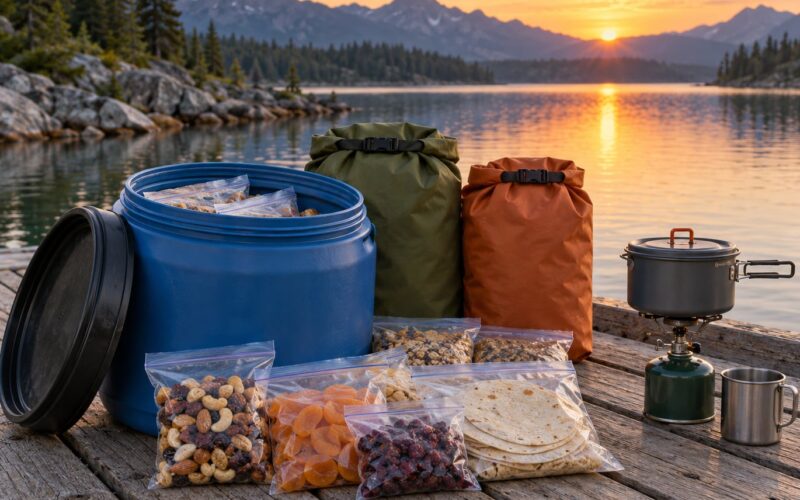
- Dry replacement clothing, footwear, and insulation sealed in a waterproof bag or dry barrel — one set per paddler.
- Food and a drink: high-calorie emergency food, simple sugars, and a thermos of something warm.
- Waterproof communication: a phone in a dry case, a radio, or a satellite messenger.
- First aid supplies, including an emergency blanket, a whistle, a throw line, and a bailer or sponge.
- A written group plan with a route, a turnaround time, and a check-in contact on shore.
If you cannot honestly tick the clothing, the dry kit, and the group plan, the trip is not ready. Gear you own but have never used in cold water is not the same as gear that works.
How to Prevent Hypothermia on a Paddling Trip, Step by Step
Prevention is chronological. Each step below gives you the action, why it lowers your risk, and how you can tell it is actually working.
1. Check the Water Temperature and Weather Before You Launch
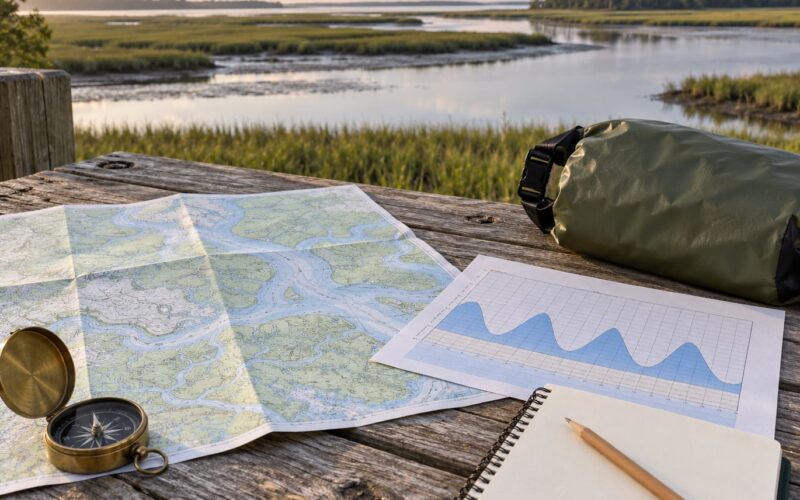
Start with four numbers: air temperature, wind speed, water temperature, and the length of time you expect to be exposed. Warm air tells you very little, because the risk lives in the water and in the wind stripping heat out of wet clothing.
A useful shortcut from cold water safety researchers is the 120 rule. Add the air temperature in Fahrenheit to the water temperature in Fahrenheit. If the total reaches 120 or higher — 70°F air plus 50°F water, for example — immersion protection is strongly recommended. Below 60°F water, immersion protection is the sensible call every time.
Then walk the route on paper. Mark the exposed stretches where wind funnels across open water, the cold tributary mouths, the places you would have to swim, and the spot where a wind shift would pin you against a shore. Check daylight and set your turnaround time before you leave the parking lot.
You know this step worked when you can say, out loud, the time you will be off the water and what would make you turn earlier. Paddlers repeatedly report that spring catches people off guard with strainers, ice debris, and higher flows that were not in the forecast a week earlier, so build in a margin rather than betting on the forecast holding.
2. Dress for Immersion and a Wet Return
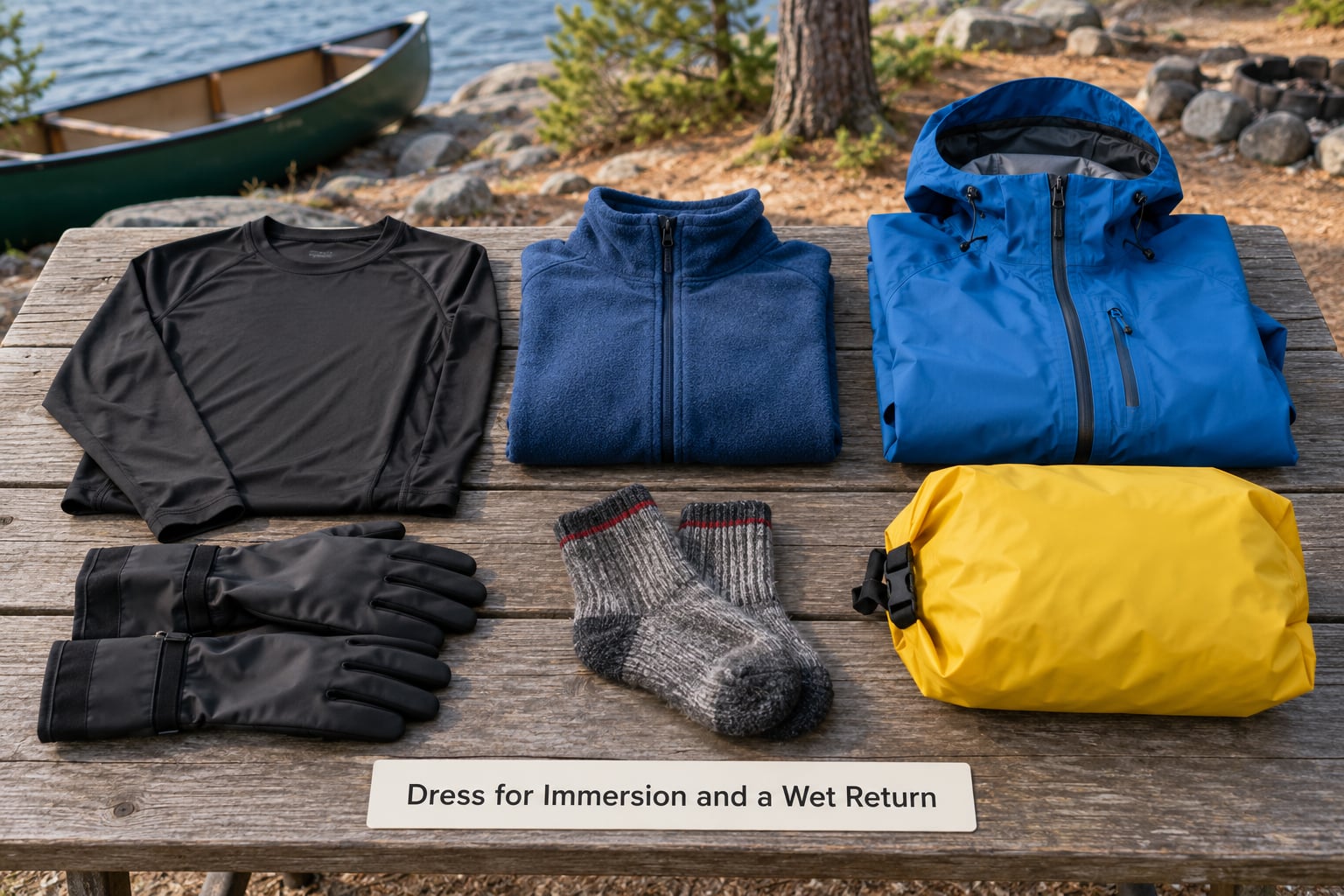
The base rule among experienced paddlers is simple: dress for the swim, not the paddle. Assume you will be wet for the last part of the trip and dress for that, because everyone who paddles regularly gets wet eventually.
Build the system in three layers. The base layer moves moisture off your skin and should be synthetic or wool, snug, with no cotton anywhere in the stack since wet cotton loses insulation fast. The mid layer does the insulating, usually fleece or a synthetic puffy that you can open up when you start working hard. The outer shell blocks wind and spray, and a breathable waterproof fabric is more comfortable than a heavy non-breathable one over insulation.
Add a drysuit, wetsuit, or drytop with dry trousers when the water is cold or the route is exposed. Note that a farmer john wetsuit leaves your upper body open to the wind, which is where a lot of heat escapes on a paddle. Drysuits keep paddlers comfortable for hours in 40°F water, but they only work if the neck and wrist gaskets are the right size and closed properly.
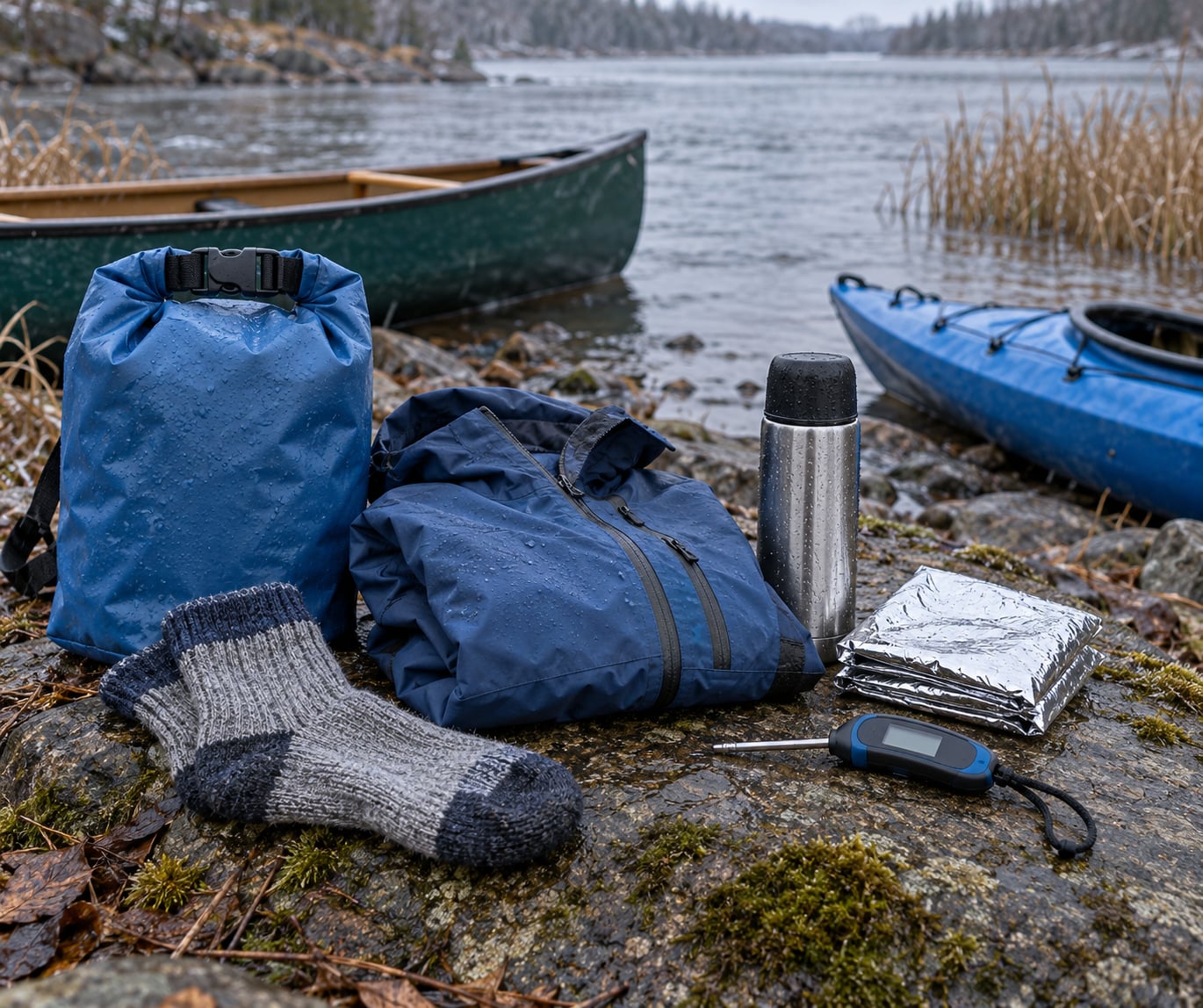
Protect the extremities. Hands and feet are where paddlers complain first, because cold fingers make paddle control genuinely painful. Mitts and pogies keep your hands on the paddle shaft instead of on bare grips, which is why long-distance cold paddlers favour pogies. Seal wool socks and a spare pair inside a dry bag, and pack a full dry layer for each person.
You know this step worked when you have tested the fit before launch, and when your dry clothing is inside a sealed bag that you, not your tent mate, control.
3. Choose the Right Boat and Emergency Equipment
Match the craft to the water. A stable boat with bulkheads or flotation rings is more forgiving for a cold-water beginner than a narrow touring kayak. Spray skirts, closed cockpits, and grab lines reduce the amount of water that gets into the boat, which is the difference between a splash and an immersion.
- A properly fitted PFD you will wear the entire trip, not stowed in the hull.
- A paddle, plus a spare, and a whistle on a lanyard.
- A waterproof phone or radio, or a satellite messenger for remote routes.
- A throw line and a bailer or sponge for a flooded cockpit.
- A basic repair kit: duct tape, patches, spare buckles, and cord.
- An emergency blanket, plus a warm drink in a sealed flask and food with simple sugars.
- Your dry clothing in a dry bag or barrel that stays above the water line.
None of this replaces clothing, judgement, or a buddy system. The common thread in cold water accident discussions is that gear fails and skills save you, so practice your re-entry and your wet exit before the trip, not during it. Winter pool sessions are widely recommended by paddlers as the single best confidence builder.
4. Keep Your Core Warm During the Paddle
You lose heat from your neck, head, torso, and armpits, so keep those covered and keep them dry. Start warm, warm up before launch, and pick a pace you can hold without breathing hard.
Sweating is a hidden risk on a sunny paddle. Overdress, get damp, then sit still on a rest and chill fast. Open a layer, move your arms, and drink before you feel thirsty, because dehydration and cold stress feed each other.
Eat before fatigue sets in. Your body burns extra calories staying warm, so bring food with simple sugars and eat a portion on the water rather than waiting until you reach shore.
Watch for the escalation, not just the cold. Uncontrollable shivering is the signal to act immediately. Follow it come clumsiness, slurred speech, confusion, unusual fatigue, slowing down without noticing, and someone else noticing for you.
If any of those signs appear, get out of the water, get out of the wind, remove wet clothing, insulate from the ground, and call emergency services. Suspected hypothermia needs urgent professional help, and a paddler with worsening confusion should never be left alone.
5. Paddle With a Buddy and Check In Often to Prevent Hypothermia
Paddle with someone when water is cold, and never in cold water alone. Agree on a check-in rhythm, what counts as a problem worth calling in, and who makes the turn-back call. The slowest paddler sets the pace, so nobody is quietly pushing.
Agree on the capsize response before you launch. Everyone gets back in, everyone accounts for everyone, and the group treats the incident as a trigger to re-check warmth rather than a reason to hurry onward.
Then watch each other with the same attention you give your own bow lines. Slurred speech, a clumsy paddle grip, an uncharacteristic decision, or a person who stops responding to a joke are all reasons to stop, get to shore, and get dry.
If hypothermia is possible, call emergency services instead of trying to keep paddling to the planned takeout. Cold water affects judgement before it affects strength, which is exactly why the decision has to be made early and by someone who is still thinking clearly.
6. Plan for a Wet, Cold Return
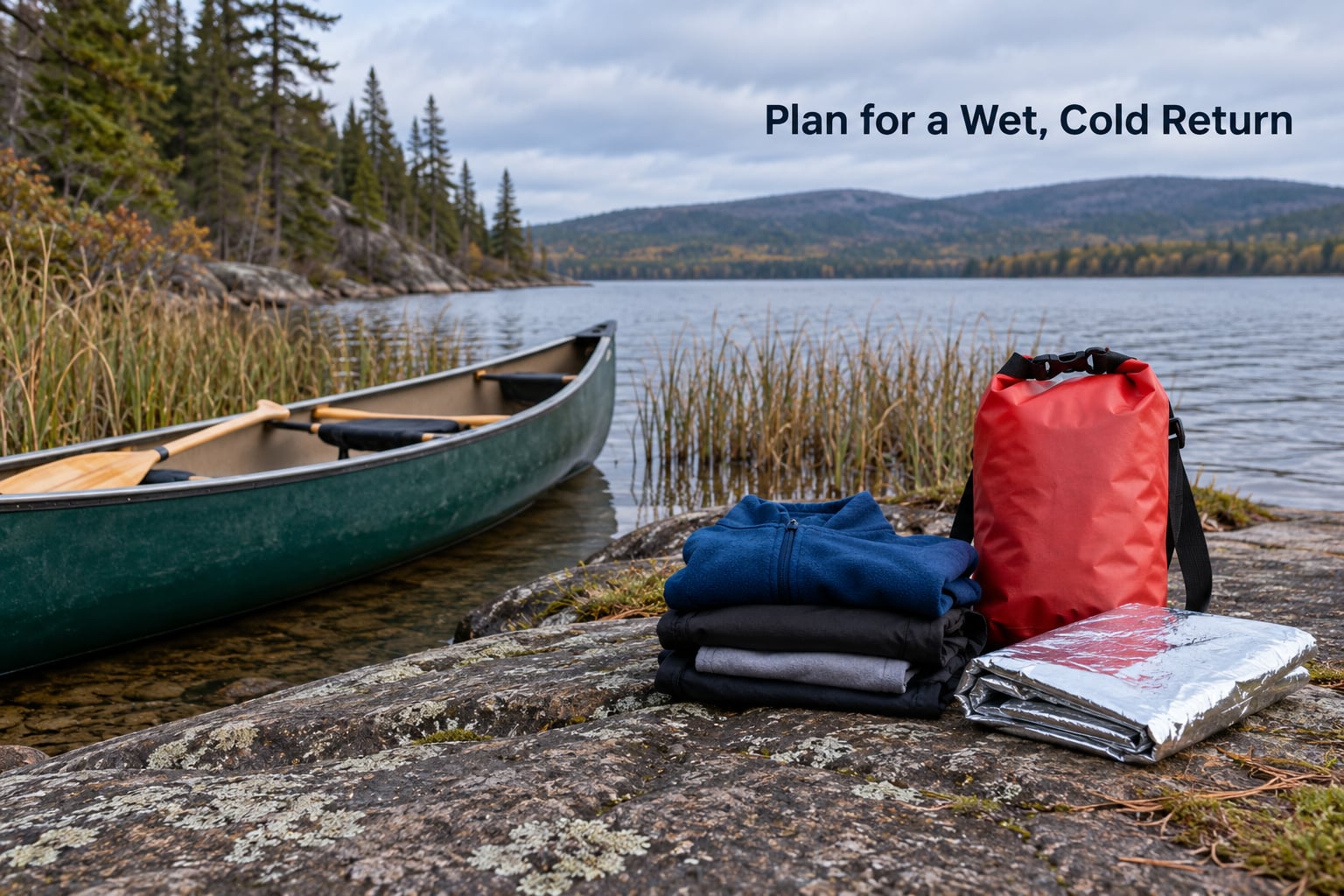
The last layer of prevention happens on the way back. Set a hard turnaround time before you launch, identify sheltered landing points, and know where the nearest vehicle or shelter is if someone needs help fast.
Keep dry clothing accessible rather than packed deep in a hull. Paddlers who have stowed a spare layer where they can reach it within a minute describe that as the single biggest comfort improvement on a cold return.
After any unexpected cold exposure, do a head count and a quick check on everyone. Look for shivering that will not stop, clumsiness, and confusion. Change wet layers into dry ones before anyone resumes the trip, and give people time to warm up properly rather than shoving cold hands back into cold gloves.
Completing the planned route is never more important than responding to deteriorating conditions. Several paddling groups describe a turn-back decision as the best piece of judgement they made all season.
Common Mistakes
- Wearing cotton. Fix: base and mid layers in synthetic or wool only, and nothing cotton against the skin.
- Relying on one thick jacket. Fix: layer properly so you can open the system as you warm up.
- Overdressing and overheating. Fix: dress for the water, keep the pace moderate, and open a layer before you start sweating hard.
- Ignoring the water temperature. Fix: check it at the launch, and use the 120 rule as a floor for your decision.
- Leaving dry layers packed where you cannot get at them. Fix: dry kit in a sealed bag you control, within reach, with the footwear inside it.
- Paddling alone in cold water. Fix: a buddy system with a check-in contact and a set turnaround time.
- Skipping food and water. Fix: eat before fatigue and drink before thirst, both on the water.
- Waiting too long to turn back. Fix: a hard turnaround time and an early, boring decision made by the clearest head in the group.
- Misreading early warning signs. Fix: treat uncontrollable shivering as the emergency it is, not as something to push through.
- Trying to treat suspected hypothermia while continuing the trip. Fix: stop, get to shelter, and call emergency services.
Frequently Asked Questions
Can a personal flotation device prevent hypothermia?
A PFD is a flotation device first and a warm layer second. Worn over a base layer and a mid layer, the foam adds meaningful insulation, and keeping it on during breaks and on shore stops you losing heat between paddles. It will not warm you once you are soaked, and it does not replace immersion protection in cold water. Wear a correct fit, wear it for the whole trip, and remember that its real job is keeping you afloat if you become too cold to swim.
What water temperature is dangerous for paddling?
There is no single dangerous number, because risk depends on immersion time, your gear, your effort, and your health. As a working guideline, water below 60F calls for immersion protection every time. The 50/50/50 rule says that in 50F water you have roughly 50 minutes before your core temperature becomes dangerous, which is a survival margin and not a target to plan around.
How long can you stay safe after falling into cold water?
Plan around the 1-10-1 rule: about 1 minute of cold shock while you control your breathing, roughly 10 minutes of useful movement while your muscles still work well, and about 1 minute to reach safety or exit the water. That clock assumes you are wearing something that keeps water out and keeps heat in. It does not assume you are wearing cotton, or that you paddled in alone.
Does caffeine or alcohol increase the risk of hypothermia?
Alcohol reliably increases risk, because it dilates blood vessels and speeds heat loss while dulling your sense of how cold you are getting. Heavy caffeine use can increase fluid loss and adds to the stress on your body. Neither habit is worth testing in cold water. If you are managing a medical condition or taking regular medication, ask your doctor what is safe before a cold water trip.
What should a paddling group do after an unexpected capsize?
Count the group, get every paddler out of the water, and start rewarming immediately rather than continuing. Remove wet clothing, insulate people from the ground and the wind, wrap anyone who is shivering in an emergency blanket, and give warm sweet drinks if people are alert enough to drink safely. Monitor for worsening confusion or clumsiness, and call emergency services if those signs appear or do not improve.
Conclusion: Dress for the Worst and Turn Back Early
The short version: check the water temperature and the wind, pack insulating layers and a dry replacement set for everyone, wear a fitted PFD the whole trip, paddle with other people, watch each other for the early signs of cold stress, and change the plan before anyone is genuinely cold. Get those five steps right and how to prevent hypothermia on a paddling trip stops being theoretical.
Start with the first three preparation steps above, because they are the ones that have to be done before the weather tells you what you actually needed.