You cannot stay dry all day on a muddy trail, and any hiker who promises otherwise will let you down somewhere around the second bog. What you can do is control how much water gets in, choose gear that dries fast instead of gear that just blocks, and stop often enough to keep your feet in decent shape. That is the whole game, and it is winnable.
The method below covers gear selection, foot placement on the trail, water crossings, in-hike checks, and what to do at camp that evening. Budget about 20 minutes of prep the night before and 10 minutes at every break, and most hikers go a full day without a blister or a soaked foot.
One framing shift helps more than any single piece of gear. Stop asking how to keep your feet dry and start asking how quickly your feet recover once they get wet. Hikers who expect dryness report a miserable day. Hikers who plan for wet feet and optimize for a dry night report a normal day. That difference is the whole article.
Table of Contents
- What You Need to Keep Feet Dry on a Muddy Trail
- Footwear for deep mud versus shallow mud
- Socks you can trust in wet conditions
- Gaiters and the extras that matter
- How to Keep Feet Dry on a Muddy Trail: Step by Step
- 1. Prepare Your Feet and Boots Before the Trail
- 2. Wear the Right Socks and Gaiters on a Muddy Trail
- 3. Change Your Foot Placement on a Muddy Trail
- 4. Keep Water Out at Puddles and Creek Crossings
- 5. Check and Dry Your Feet During the Hike
- 6. How to Keep Feet Dry on a Muddy Trail at Camp
- 7. Build a Reliable Wet-Foot Backup Plan
- Common Mistakes That Ruin a Muddy Hike
- Frequently Asked Questions
- Are waterproof hiking boots better for muddy trails?
- Do gaiters actually keep your feet dry?
- What socks should I wear on a muddy hike?
- How do I dry my socks and shoes at camp?
- When should wet feet end a hike?
- Can I wash muddy hiking boots before they dry?
- Conclusion
What You Need to Keep Feet Dry on a Muddy Trail
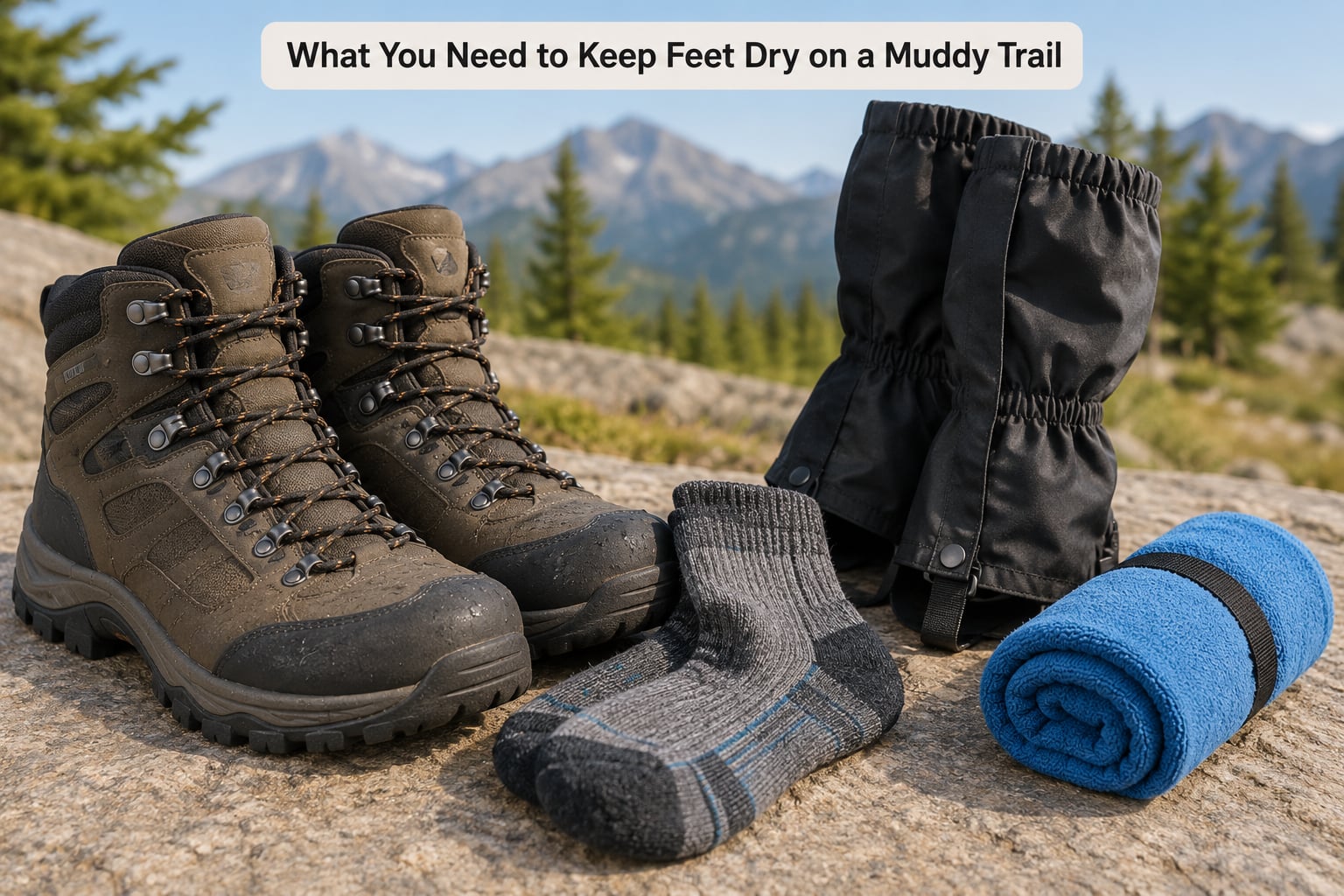
Match your gear to the mud, not to the forecast. Shallow mud on a logging road needs nothing more than trail runners and wool socks. Deep bog, snowmelt crossings, and a heavy pack all raise the bar, because the harder ground is also the ground where you cannot step around water.
Footwear for deep mud versus shallow mud
Waterproof boots hold off mud sprayed over the collar and keep creek water out longer than any other option. They also stop breathing once their membrane gets wet, which is why experienced hikers on muddy trails often pick quick-draining trail runners instead and plan around the soak.
A pair of trail runners with mesh vent panels drains in under an hour on an active day. A waterproof boot that takes on water holds it all day. If you are carrying 20 pounds or more over boggy ground, pick the boot. If you are walking a day pack on a well-used trail, most hikers are better served by the shoe.
Socks you can trust in wet conditions
Bring midweight merino or a synthetic quick-dry sock, never cotton. Merino keeps warmth when wet and holds odor well, but it dries slowly and can feel heavy after hours of soak. Synthetics wick and dry faster and lose insulation when wet, which is why most thru-hikers rotate between the two rather than committing to one.
A thin liner sock under a thicker outer sock is the system most experienced mud hikers run. The liner wicks the moisture off your skin into the outer sock, and you can peel the outer layer off at a break without touching your bare foot.
Gaiters and the extras that matter
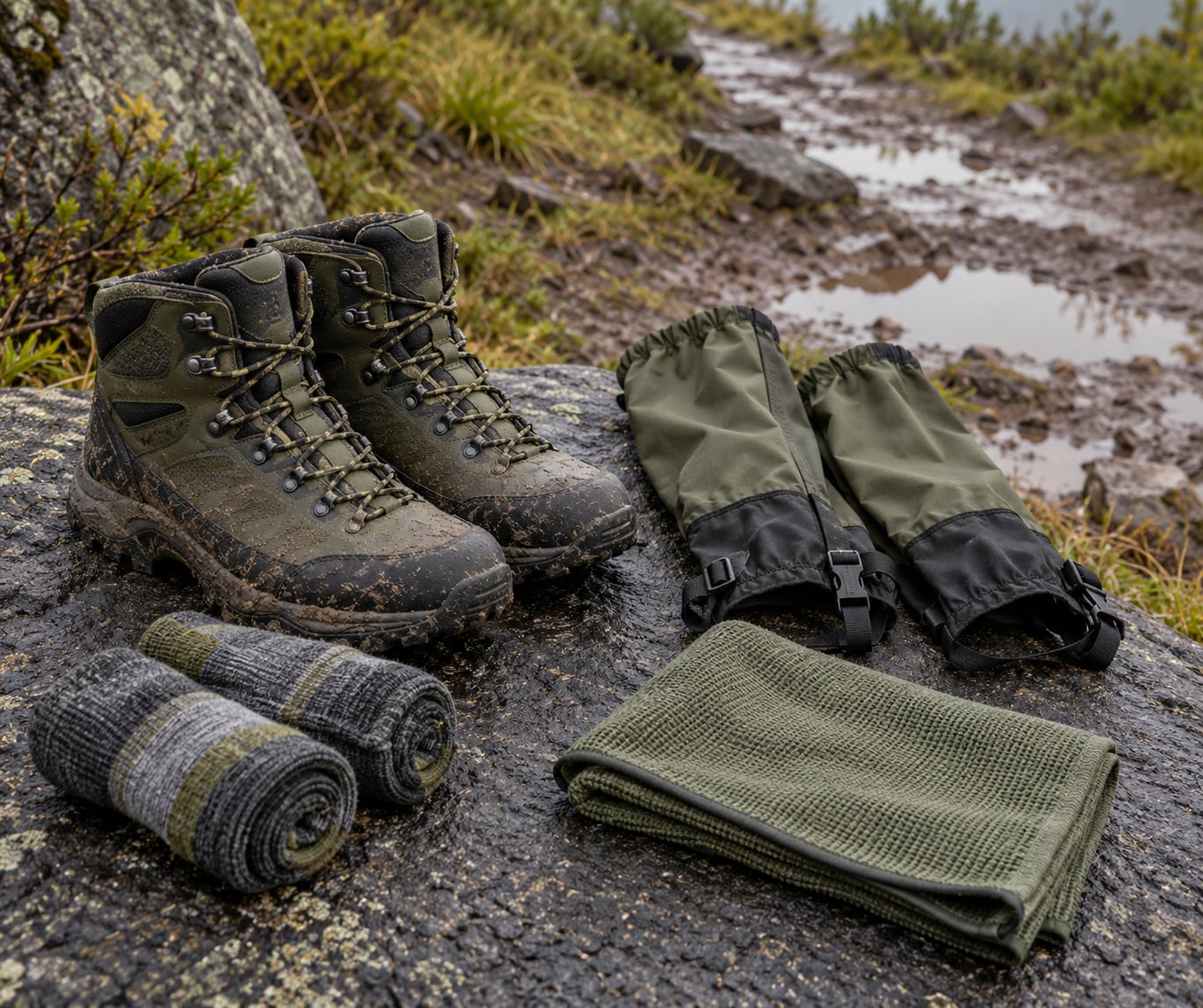
Look for gaiters with an adjustable stirrup strap and a storm flap over the top of the lace hooks. The stirrup cinches down to your calf so mud cannot travel up the leg, and the flap stops water running down the inside. Wear them under your rain pants, never over, or you will funnel water straight into your boots.
The rest of the kit is small. A dry spare pair of socks, a small pack towel, a waterproof stuff sack for keeping the dry socks sealed, and a barrier balm such as a foot balm, lanolin cream, or plain petroleum jelly.
A preparation checklist, kept short: toenails trimmed straight across, hot spots found and dealt with, feet dried properly before socks go on, boots laced for the terrain ahead, and one dry sock pair sealed where it cannot get wet.
How to Keep Feet Dry on a Muddy Trail: Step by Step
1. Prepare Your Feet and Boots Before the Trail
Trim your toenails the night before. A long nail digs into the toe box when your foot swells on a long day, and the small cut it leaves is exactly how trench foot and infections start.
Dry your feet properly, including between the toes, before you put socks on. Damp skin under a sock is how maceration begins, and macerated skin tears with almost no friction.
Apply a thin layer of barrier balm before you lace up. It does not waterproof your feet; it reduces the softening of skin that sits in a wet sock for hours, which is the number one cause of foot trouble on a long muddy day.
2. Wear the Right Socks and Gaiters on a Muddy Trail
Two thin socks beat one thick sock. The liner moves moisture off your skin, the outer sock takes the abrasion, and you gain the option of shedding the outer layer at a break without stripping to bare feet.
Three pairs inside a boot is too many. Volume plus movement is what causes blisters, and a cramped toe box turns a hot spot into a blister in about two hours.
Gaiters earn their place when mud comes over the collar, when you are walking through wet grass and ferns, or when spring snowmelt leaves you post-holing. They do nothing for sweat, and they add nothing on a dry gravel path.
3. Change Your Foot Placement on a Muddy Trail
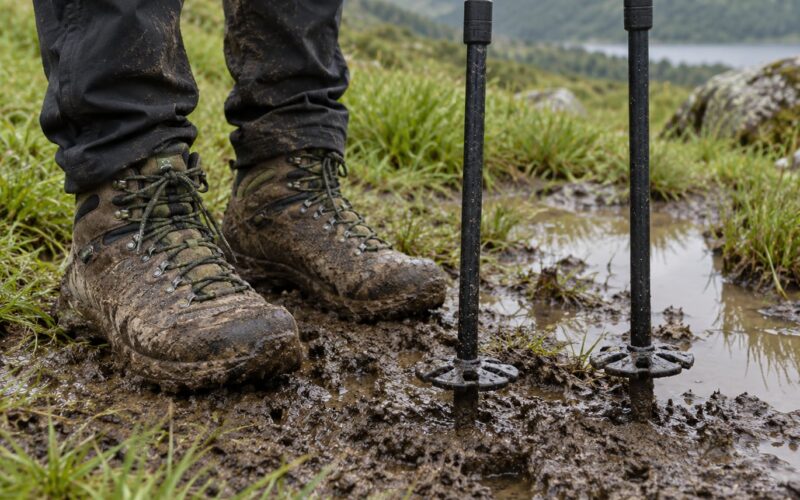
Step on the firm edge, not the middle. Mud is usually deepest in the center of a trail and shallowest where the ground has been walked or where rock and roots break through.
Take the high line. A few extra steps onto the drier shoulder of a muddy trail costs a couple of minutes and saves you a wet boot. Nobody has ever regretted five minutes of dry trail at the end of the day.
Shorten your stride. Long strides drag your foot through the top layer and pull the boot out with a sucking noise, which is how water gets over the collar. Short, flat-footed steps on top of firm ground stay dry and quiet.
Slow down when the mud gets deep. Walking fast sucks the mud onto the uppers and pulls the shoe loose. Walking slowly, you push the mud down instead, and you keep the foot seated in the boot where it belongs.
Cross soft mud with a log roll. On a wide, flat log over deep mud, lie down sideways, roll your body across, then stand. It looks undignified. It also keeps both boots above the surface and takes ten seconds.
4. Keep Water Out at Puddles and Creek Crossings
Any water you can walk around, walk around. A muddy trail with a few boardwalk sections and a dry bank is a far better option than a straight line through the creek, and there is almost always a better option.
Test the depth and the bottom with a stick before you commit. If the current is moving fast enough to move your leg sideways, cross upstream at a wider, shallower point or turn back.
If you must go through, cross at the widest shallow point rather than the shortest deep one, and step deliberately rather than sliding. Several hikers on backpacking forums deliberately stomp through a puddle to rinse mud off the shoe rather than letting it cake onto the uppers, because dried cake cracks the leather and holds grit against the sock.
For trail runners, expect water to fill the shoe anyway. Pull the tongue out and let it hang as you walk, and squeeze the shoe dry at every stop. Walking with a full shoe is what makes a wet foot cold.
5. Check and Dry Your Feet During the Hike
Stop every 60 to 90 minutes and take both socks off. Ten minutes of air is cheap insurance against a blister that ends your trip.
The routine: sit somewhere dry and out of the wind, pull socks and boots off, blot feet with the pack towel rather than rubbing them, check the heel, ball of the foot, and between the toes for hot spots or red patches, and air everything for a few minutes before putting socks back on. Socks go back on dry. Putting damp socks back on undoes the whole break.
Make the call at this point rather than at the bottom of the hill. A foot with a forming hot spot gets taped now. Two blistered heels and no dry socks left means the day is over, and that is a fine outcome.
6. How to Keep Feet Dry on a Muddy Trail at Camp
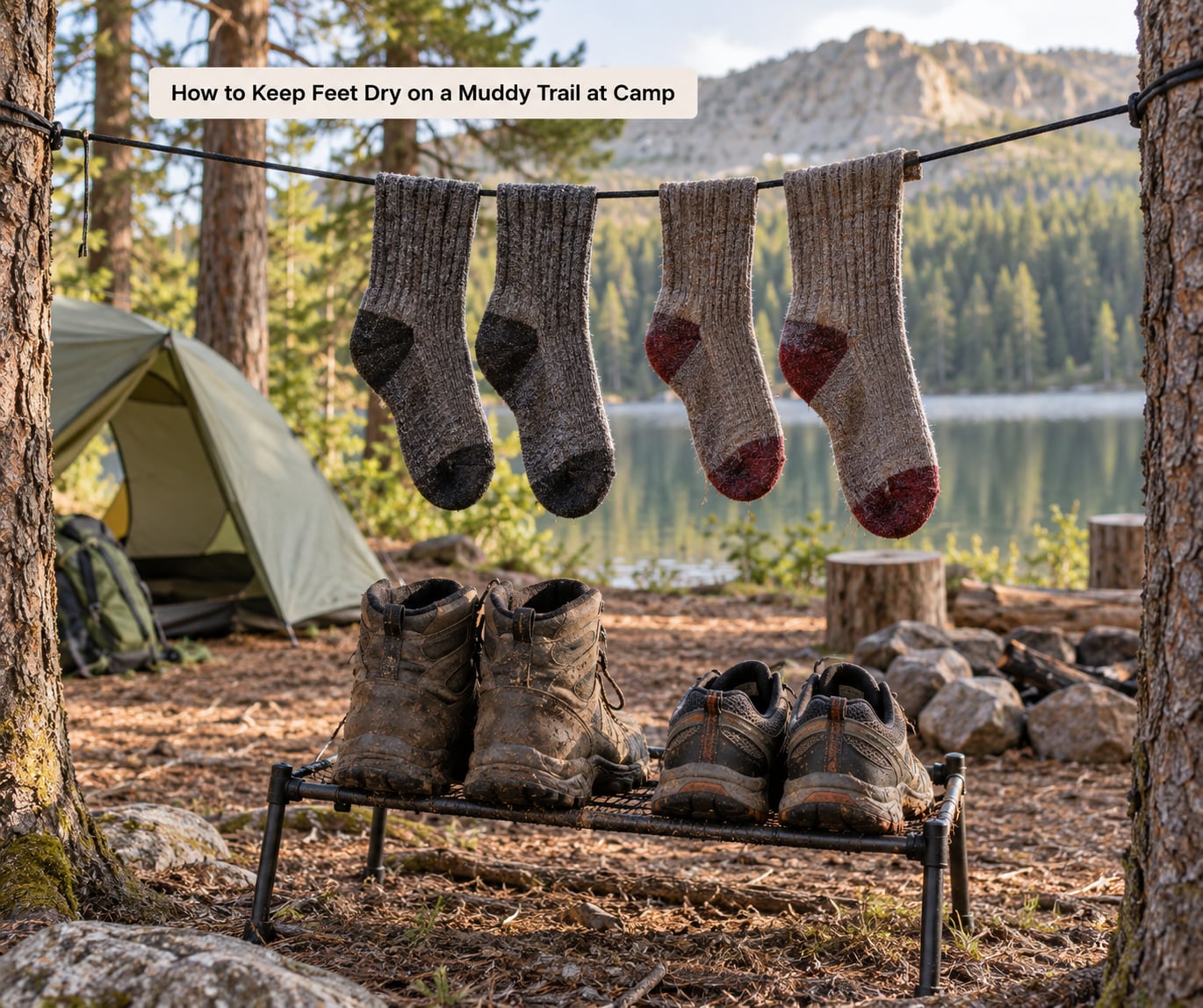
Change socks the moment you stop. Damp socks in a closed boot at temperature turn into skin problems, and a dry pair over camp footwear gets you through the evening without heat loss while you sleep.
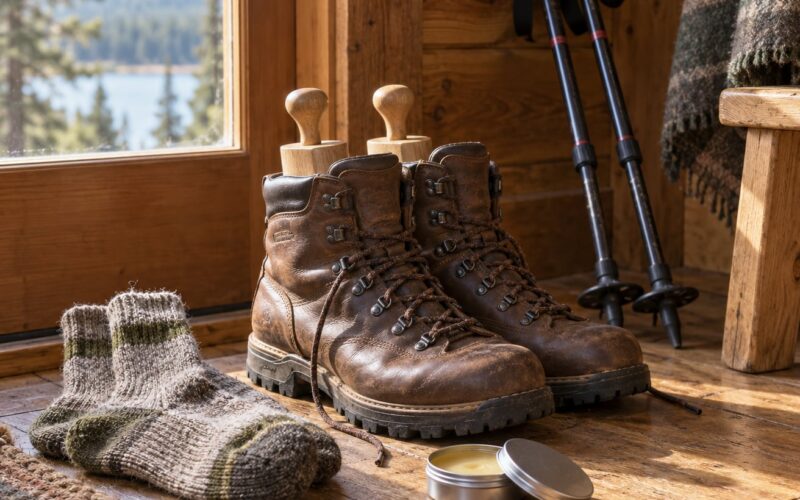
Give your boots three things: insoles out, laces loose, and the whole boot as far from the ground and damp vegetation as you can manage. Open the tongue wide and drop the sides so air moves through the shell.
Newspaper or crumpled paper inside the boot pulls moisture out of the lining and keeps the shape. Change it once. A low fan or a boot dryer pointed at the toes speeds up a pair that will otherwise still be damp at breakfast.
Never dry boots or socks over a campfire. Direct heat cracks leather, glues sole to upper, and shrinks synthetic knit. If you need warmth near a fire, put dry socks on and let your body heat do the work.
7. Build a Reliable Wet-Foot Backup Plan
Carry a dry sock pair sealed in a waterproof bag from the start, and treat that bag as the most valuable thing in your pack. Once your socks are wet and you have no dry pair, the rest of the day is already decided for you.
On a multi-day trip, rotate. One pair dries while you hike in the other, and a third lightweight pair is for camp and sleeping. This is the standard setup long-distance hikers use, and it removes most of the misery from a wet week.
Decide your turnaround point before you leave camp and hold to it. Wet feet plus falling temperature, no dry layers, and a hard creek ahead is a reason to stop early, not a reason to push through.
Common Mistakes That Ruin a Muddy Hike
Wearing cotton socks. Cotton absorbs water, holds it, dries slowly, and rubs. Fix: merino or synthetic only, and never cotton against skin on a mud day.
Over-layering inside boots. Three socks in a boot sounds warm and ends in blisters. Fix: a thin liner plus one outer sock, and stop there.
Choosing low shoes for loaded, unstable ground. Trail runners are fast and dry well, but they give you little on a slick descent with a heavy pack. Fix: match support and traction to the load and the descent, not to the brand.
Walking in short choppy steps through mud. Quick little steps dig the foot in and pull it out. Fix: slower, longer, flat-footed placements on firm ground.
Continuing through severe flooding. Water over the boot collar floods anything you own, and moving water above knee deep on a bad day ends hikes. Fix: wait, go upstream, or turn back.
Drying wet gear directly over a fire. It damages the boot and does nothing for socks. Fix: airflow, newspaper, and a boot dryer instead.
One more worth naming: expecting to stay dry. Hikers who treat wet feet as a personal failure enjoy the hike far less than hikers who packed for it and expect a wet day. That expectation is the cheapest part of the whole kit and it does real work.
Frequently Asked Questions
Are waterproof hiking boots better for muddy trails?
Only on deep mud, heavy loads, or above-collar cold creek crossings. A waterproof membrane keeps mud from spraying over the collar, but once water gets in, the boot stops venting sweat and holds it all day. On short day hikes over shallow mud, quick-drying trail runners usually beat waterproof boots because they recover in under an hour instead of staying damp all day. Bring a dry sock pair either way.
Do gaiters actually keep your feet dry?
They keep mud and wet vegetation out, which is a different job from keeping feet dry. A gaiter with a stirrup strap stops mud sliding up your calf and over the collar of your boot. Wear them under your rain pants, not over, or water runs straight down into your boots. They do nothing about sweat, so pair them with socks that wick rather than a heavier pair.
What socks should I wear on a muddy hike?
Midweight merino or a synthetic quick-dry sock, worn as a thin liner plus a slightly thicker outer sock. Merino keeps warmth and odor control when wet but dries slowly. Synthetics wick and dry faster but lose insulation once soaked. Never wear cotton. Carry one dry spare pair sealed in a waterproof bag, and change into it at the first long break rather than at the end of the day.
How do I dry my socks and shoes at camp?
Change out of wet socks immediately and swap to a dry pair with camp footwear. For socks, shake out the grit, stretch them over a taut line away from the ground, and separate damp items so air moves between them. For boots, remove the insoles, loosen the laces, drop the tongue wide, and add newspaper or paper for the first hour. Use a fan or boot dryer, and keep everything off damp ground.
When should wet feet end a hike?
End it when wet feet stop being a comfort problem and start being a safety problem. Signs to watch for: blisters that have opened, white cracked or wrinkled skin between the toes, numbness or an inability to feel the ground, and shaking or confusion from cold. Two blistered heels with no dry socks left is enough reason to shorten the day.
Can I wash muddy hiking boots before they dry?
Rinse off caked mud at a stream rather than letting it dry and set into the leather, but do not soak the boots. Dry leather and waterproof membranes do not like prolonged submersion, and soaking softens glue and stiff midsoles. Use cool to lukewarm water, a stiff brush, minimal soap, and pat them roughly dry before filling with newspaper and letting air do the rest.
Conclusion
Start here: pick footwear for the mud you will actually meet rather than the mud you hope for, pack one dry sock pair sealed against rain, and shorten your stride over the softest ground. Then check your feet every hour or so, take socks off, let them dry fully, and put dry socks back on.
That sequence is what separates a muddy day you shrug off from one you spend thinking about all night. You will still get wet. Your feet will just be dry when it counts.