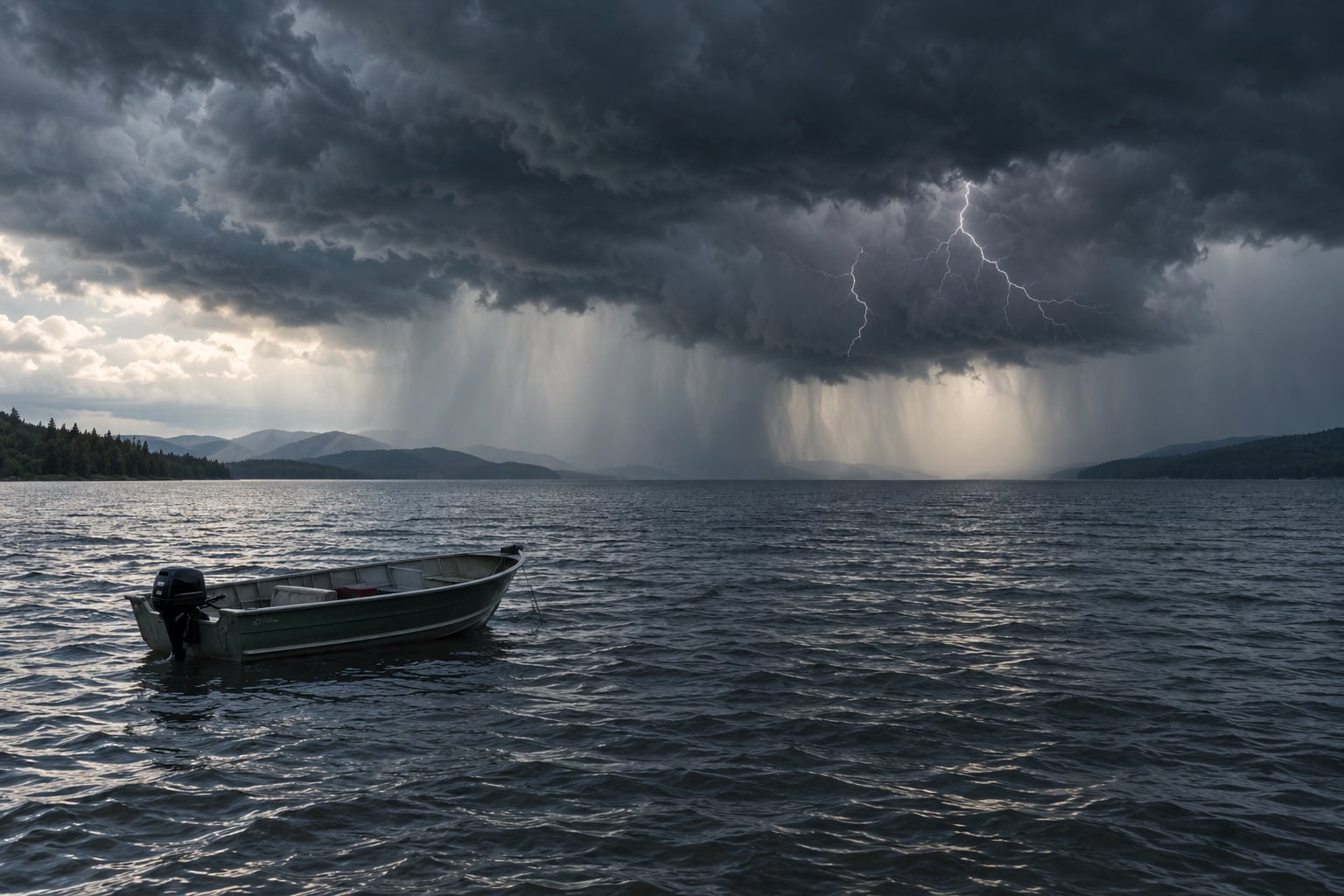
If lightning hits while you are on the water, there is no safe spot to sit out the storm. Get toward the nearest shore right now, put on a life jacket, stay off metal, and call 911 for any strike or suspected electrocution, even when the person looks fine.
That answer sounds obvious until a cell builds over a lake in the fifteen minutes between your forecast check and the first flash. Open water removes every escape route that normally protects you: the hardtop, the house, the trees that are already inside the danger zone. What follows is the order of operations, from the first flash to the last thirty minutes of waiting.
It is not safe to boat during a lightning storm. Not in a cabin, not in a wetsuit, not underwater. People who survive a close call usually say the same thing: they left early, or they had already decided what they would do before the sky changed.
Table of Contents
- What You Need
- Step-by-Step
- What to Do If Lightning Hits While You Are on the Water Immediately
- Start Moving Toward the Nearest Safe Shore
- If You Cannot Reach Shore in Time
- What to Do After Lightning Reaches the Boat or a Person
- Give First Aid and Call 911
- When Is It Safe to Return to the Water?
- Common Mistakes
- Frequently Asked Questions
- Is it safe to be on the water in a thunderstorm?
- Can you touch someone who has been struck by lightning?
- Should I swim to shore or stay in the boat?
- How long do you wait after hearing thunder?
- Can you swim when there is thunder but no visible lightning?
- Conclusion
What You Need
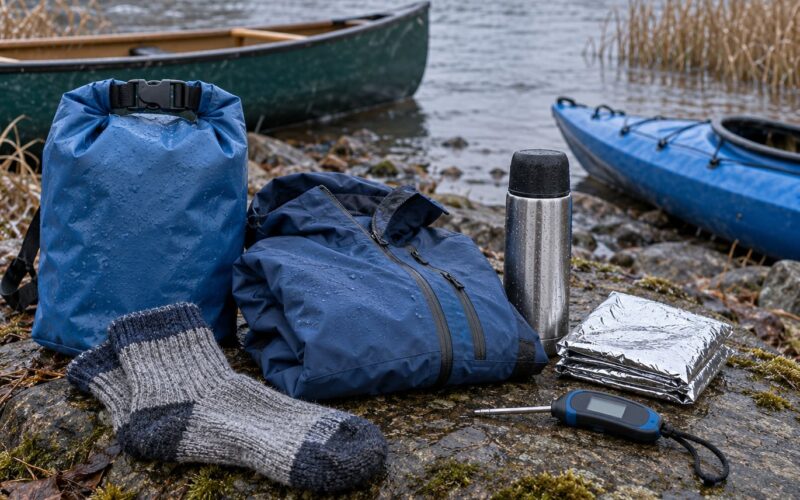
None of this is glamorous, and all of it has to already be on board. You cannot fix a gear gap once the cell is overhead.
- A waterproof phone case and a charged battery. Put it where you can reach it without standing up.
- A VHF radio working and tuned, plus a handheld with charged batteries. Cell service drops offshore exactly when you need it.
- A properly fitted PFD for every person aboard. During a lightning evacuation everyone is moving at once, and most of those moves happen in the dark.
- A first-aid kit with trauma dressings, and an AED if you have one. If not, know where the nearest one is between your launch point and your home dock.
- An anchor with enough rode to hold in a squall, deployed and ready to drop.
- A weather radio or a lightning tracker app that works off cellular data.
- A whistle, a dry bag, and a headlamp. The headlamp matters more than people expect after dark.
Stow carbon fiber or graphite rods, gaffs, and any long gear before you leave. Anglers are the highest-risk group on the water precisely because they sit stationary in open water for hours holding conductors.
Step-by-Step
Read this once before you launch, because during a strike you will not be thinking clearly.
What to Do If Lightning Hits While You Are on the Water Immediately
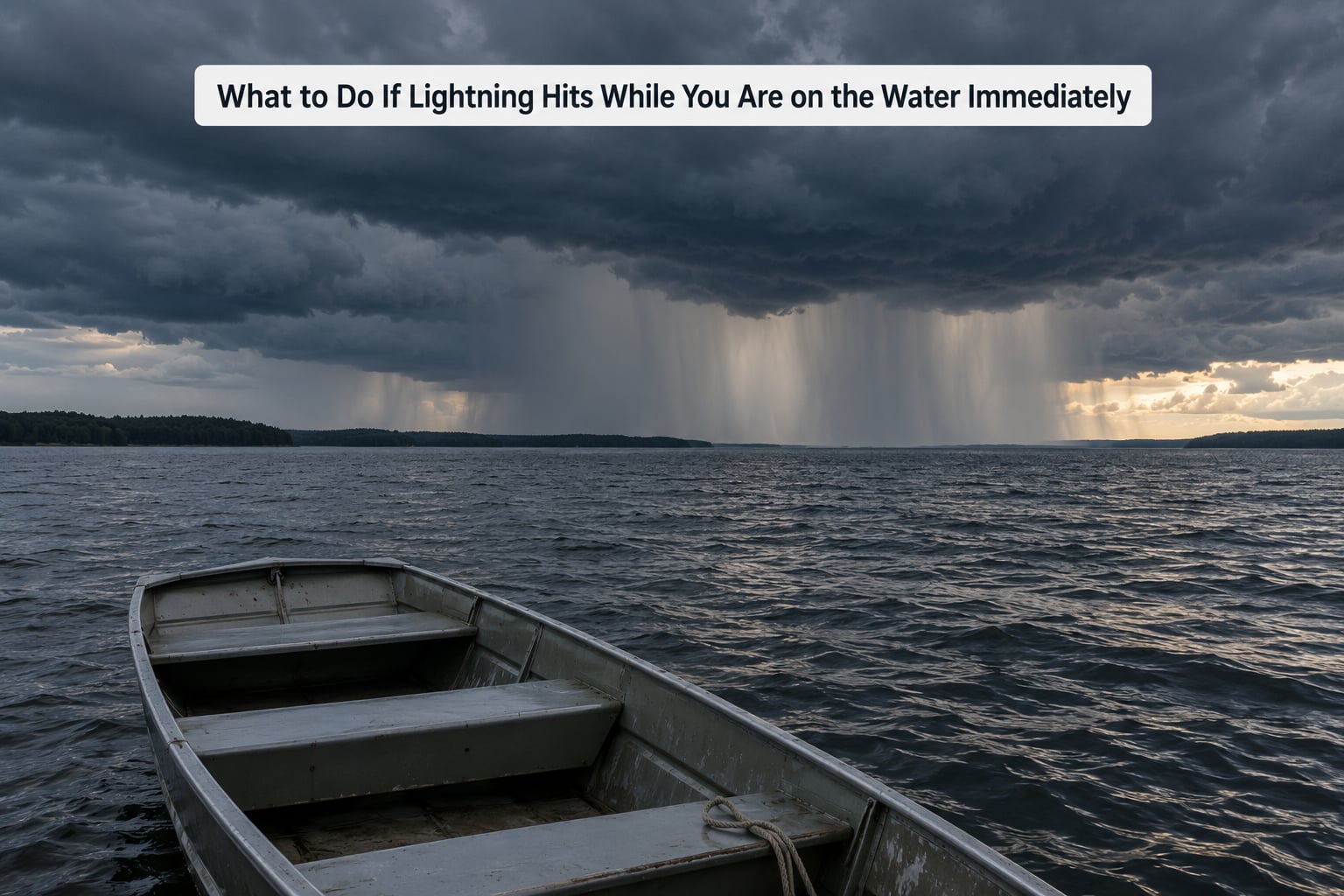
A direct strike, or a side flash from a channel that did not touch the boat at all, is a medical emergency. Call 911 on a phone or make a Mayday on VHF Channel 16 if you have signal or time, and say who you are, where you are, and how many people are aboard.
Get everyone’s attention. Out of the water and off any exposed surface if you are swimming or wading, then into the boat if you are not already in it. Do not touch metal: rails, cleats, outriggers, the frame of an awning, a trolling motor, or a fuel filler.
Then pick one route to shore and go. Not a scramble. A controlled, deliberate run at a steady pace. Staying in one place hoping the cell passes over is how a bad afternoon becomes a Coast Guard rescue at dark.
Start Moving Toward the Nearest Safe Shore
Head for a boat ramp, a dock, a marina fuel dock during safe conditions, or open low ground away from the tree line. Avoid bridges, isolated trees, open beaches, and tall marina or lift structures: they are the same objects that draw strikes ashore.
Follow the access route you would use normally and keep listening to weather bulletins on the radio. If the shoreline is ringed with woods, that is a reason to pick a different landing, not a reason to hug the trees once you arrive. Get clear of the tree line by at least a good distance before the storm is overhead.
One bass fisherman described the community version of this answer: he ran his 21-foot boat into the reeds, dropped into the bilge floor, and let the storm pass over him with strikes landing very close. That is what staying low looks like in practice.
If You Cannot Reach Shore in Time
Most of the time you do not have a choice, and the decision has to be made in seconds. Stay with the boat. A sound hull is a far better insulator than open water and an exposed shoreline, and abandoning a boat means running across open ground with no cover.
Get as low as you can. In a cabin, stay inside it and keep your hands off metal walls and electrical devices. In an open boat, sit low in the hull with your legs together and your weight centered. If it is safe to do it without standing in the rain or reaching over a rail, cut non-essential electrical gear: electronics, the trolling motor, the battery switch. Leave the bilge pump on if the boat is filling with water.
If more than one person is aboard, spread out. Do not crowd into a canvas top or under an awning. Anchor if you have never established a good speed yet, but do not anchor in an exposed position in open water just to feel like you have done something.
The thing most people underestimate during the wait is temperature. Cold-water shock hits within the first minute of immersion and can stop you swimming, and hypothermia finishes the job later. That is an argument for the dry suit, the spare layer, and getting everybody out of the water fast, not a reason to stay put.
What to Do After Lightning Reaches the Boat or a Person
When a strike actually reaches the craft, expect the electronics to be gone first: the VHF, the chartplotter, the trolling motor, the electronics ignition. Steering can go if the autopilot or electronics feed it. A small fire in the helm is common, usually from wiring that cooked itself.
Lightning can travel through water, along metal, down rigging and mast lines, through wet wiring, and through soaked ropes and fenders. Fuel vapor in an enclosed bilge or a leaking fuel line is the serious fire risk, so shut the engine off if you can do it without crouching in the rain and reaching for metal.
Call for help on Channel 16 with the Mayday format: your vessel name and position, the nature of the emergency, the number of people aboard, and what you need. Anchor where you are if drifting toward rocks or a lee shore. The US Coast Guard has pulled crews off struck vessels with no injuries at all, but every one of them had lost electronics and visibility, and drifting toward rocks in that condition is how it turns fatal.
If a person was hit, treat it as a strike injury until proven otherwise. Stop, assess, call. Do not move to the cabin or try to sail for help with a casualty and a dead radio.
Give First Aid and Call 911
It is safe to touch someone who has been struck. A strike does not leave a stored charge in the body. Stepping in and starting help is always the right move.
- Call 911 or get someone else to call, and put the phone on speaker.
- Check responsiveness and breathing. If the person is unresponsive and not breathing normally, start CPR right there in the boat.
- If you have an AED, get it on the chest and follow the voice prompts. Dry the chest first if it is wet.
- Follow the dispatcher. They will walk you through CPR while you wait.
- Keep checking breathing until help arrives. Watch for a second injury: a strike throws people, burns and seizes muscles, and someone thrown into the helm may have a head or neck injury.
Around nine in ten people struck by lightning survive. A large share of the deaths come from the heart stopping rather than from burns, which is exactly why CPR minutes matter more than treating what you can see.
When Is It Safe to Return to the Water?
Wait at least thirty minutes after the last thunder you hear, or after the last nearby strike your tracker registers. Not thirty minutes after the rain slows down. Thirty minutes after the last thunder.
Count the seconds between the flash and the thunder to gauge distance. Each second of delay is roughly 1,100 feet, so five seconds puts the strike about a mile and a half away, and thirty seconds means about ten miles. Keep counting as the storm moves. Cells drift, and a strike that was ten miles out on the first flash can be over your boat on the fifth.
After thirty minutes, launch anyway. A squall line or a fast-moving cold front can send new cells through with fresh strikes, and the rain easing is not the same thing as the danger ending.
Common Mistakes
Almost every drowning-adjacent tragedy on the water comes down to one of these.
- Swimming to shore. Water is a conductor, and you have no gear, no freeboard, and no way out if something goes wrong. A boat beats open water.
- Diving deep. The advice circulating online that you should duck fifteen feet down is wrong. The current spreads across a wide area of water, and the correct response is speed of exit, not depth.
- Assuming rain means it is over. Lightning can still reach you from a cell whose rain has already moved past.
- Sheltering under a tree or a dock structure. Trees are the tallest things around and the reason so many shoreline strikes happen. Standing water under a tree is worse.
- Touching metal during a strike. Rails, cleats, masts and fuel fittings carry current.
- Counting on rubber. Rubber-soled shoes, rubber tires and boat hulls do not protect you. Dry suits do not either, once they are wet.
- Delaying the call. Call 911 first, then treat. You cannot fix what you cannot reach.
- Going back for loose gear. Rods, tackle, an anchored cooler. None of it is worth a second strike.
Prevention is boring and it works: check the forecast the morning of, not the morning before, and pull the plug on a forecast that shows any chance of a thunderstorm over your lake. Put a hard cutoff time in your plan that means leaving no matter how good the fishing is. Tell someone your route and your expected return. Keep the kill switch lanyard on your hip.
If thunder is within thirty seconds of lightning, the storm is close enough to hurt you. That rule comes from paddlers and it is the single most useful habit in this whole guide.
Frequently Asked Questions
Is it safe to be on the water in a thunderstorm?
No. Water conducts electricity, and a person standing in an open boat protrudes above the surface, which makes you the easiest available path for a side flash. A fiberglass hull with a metal roof is safer than open ground but far less safe than being ashore. The National Weather Service guidance is to get off the water, and that holds for every craft from a rowboat to a sailboat.
Can you touch someone who has been struck by lightning?
Yes, it is safe. Lightning does not leave a residual charge in the body, so there is nothing to shock you when you touch them. Move in, call 911, and start CPR if the person is unresponsive and not breathing normally. Most deaths come from the heart stopping rather than from burns, so those first minutes matter more than treating what you can see.
Should I swim to shore or stay in the boat?
Stay in the boat. A sound hull with you inside it is far safer than open water, and swimming leaves you with no flotation, no gear, and no way out if the current, cold, or a cramp takes you. Swim only to get out of the water and into the boat, or if the boat is going down and the water is the lesser risk.
How long do you wait after hearing thunder?
At least thirty minutes after the last thunderclap, counted from the last strike rather than from when the rain slows. Then keep watching, because a fast-moving front can bring new cells with fresh strikes after the sky has partly cleared. Count seconds between flash and thunder as you go: five seconds is about a mile and a half, thirty seconds is about ten miles.
Can you swim when there is thunder but no visible lightning?
No. You cannot see every strike, and thunder means lightning has already reached close enough to be heard. Count the seconds between the flash and the boom to estimate distance, and treat anything under thirty seconds as too close. Get out of the water and wait the full thirty minutes after the last thunder.
Conclusion
What to do if lightning hits while you are on the water comes down to five things. Check the forecast and set a hard time to be off the water. Head for safe shore the moment a cell threatens, and pick a landing spot that is not a tree line or a bridge. Stay aboard and get low if shore is out of reach. Keep off metal and out of the water. Call 911 and start CPR for any strike or suspected electrocution.
Then wait thirty minutes past the last thunder before you go back out. That last habit costs you an afternoon. Skipping it has cost other people everything.