The short version: never put fish waste back into the water. Gutted fish, entrails, heads, bones, skin and dead catch all go ashore, into a sealed container or bag, and then into the designated receptacle at your boat ramp, fish cleaning station or garbage set-out. Rules differ by state, water body and site, so check the posted signage before you fish.
Fish waste means more than guts. Anything that came out of a fish or off a fish counts — bait fish you did not use, the packaging the bait came in, tangled line, a rusted hook, a knife rinse full of scales. Each piece needs a different route, and sorting them takes about two minutes at the tailgate.
Most of the advice floating around angler forums is good: freeze it, double bag it, keep a dedicated bag in the boat. What you rarely get is the reason underneath, and that reason is what keeps you out of trouble. Nutrient loading, scavenger concentration and invasive species spread all follow the same trail that starts with a bag of guts hitting the water.
Table of Contents
- What You Need
- Step-by-Step
- 1. Separate Fish Waste From Other Litter
- 2. Check Local Rules Before Disposal
- 3. How to Dispose of Fish Waste Responsibly on the Water
- 4. Prevent Wildlife From Reaching the Waste
- 5. Clean the Work Area and Equipment
- 6. Use the Lawful Final Disposal Method
- Common Mistakes When Disposing of Fish Waste Responsibly
- Frequently Asked Questions
- Can I throw fish scraps back into the water?
- Is it legal to leave unused bait for fish?
- Can fish waste go in a regular household trash can?
- Should I bury fish waste at a campsite?
- Can I put fish scraps in a compost bin?
- What should I do with used fishing line and hooks?
- Conclusion
What You Need
You can handle an entire trip’s waste with a handful of ordinary items, most of which you already own.
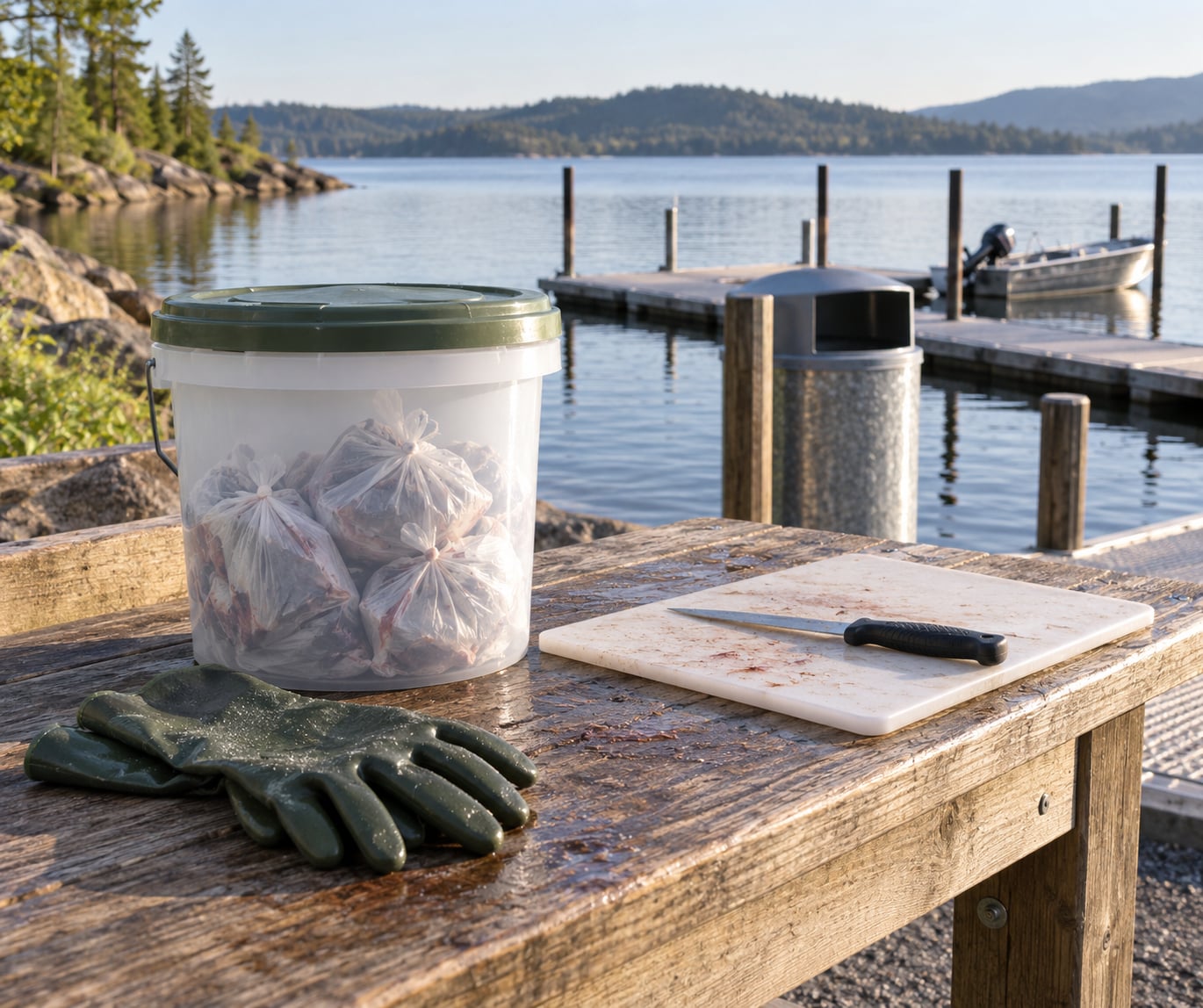
- Heavy-duty waste bags, the 3 mil contractor-grade kind, which do not split when wet. Two per trip so you can double bag.
- A rigid lidded container for the boat. A five-gallon bucket with a screw lid works and doubles as a live well in reverse.
- Waterproof gloves — nitrile or neoprene. You will be gutting fish, not filleting them, and clean gloves still end up with blood on them.
- A short-handled shovel or trowel for burial where burial is lawful on the land you are standing on.
- A dedicated wash-up spot — a sink at a cleaning station, or a bucket and a splash of water at the tailgate, kept well away from storm drains and the water.
- A freezer space if trash day is more than a day away. Fish waste frozen solid loses almost all of its smell.
- Access to the right receptacle: a fish cleaning station bin, a commercial dump site, or your household refuse.
A bottle of vinegar or a spray of diluted bleach on your knife, board and hands handles the smell on surfaces. Cat litter or spent coffee grounds in the bottom of a lidded bucket absorb liquid and cut odor between trips.
Step-by-Step
1. Separate Fish Waste From Other Litter
Sort at the point of cleaning, not at the ramp three hours later. Keep five piles apart: usable meat or fish frames you intend to eat or to give away; remains nobody will eat; bait fish and unused bait; bait packaging, plastic and film; and fishing gear — line, hooks, weights, soft plastic.
The result you want is five obvious groups with nothing mixed. Once guts are wrapped in bait packaging, neither can be recycled or handled cleanly, and you are back to throwing it all in one bag.
2. Check Local Rules Before Disposal
Look at the signage at the ramp, the marina or the state park before you fish, not after you have gutted ten fish. Three things change from one water body to the next: whether you may clean fish on board, where the waste must go, and whether a specific species is subject to a separate carcass rule.
Your state Department of Natural Resources, the regional office of the province’s natural resources ministry, or the U.S. Fish and Wildlife Service for national wildlife refuges is the place to confirm it. Rules vary by state and water body, so a phone call to the local office beats guessing. The observable result: you know before the trip where the waste goes, not after.
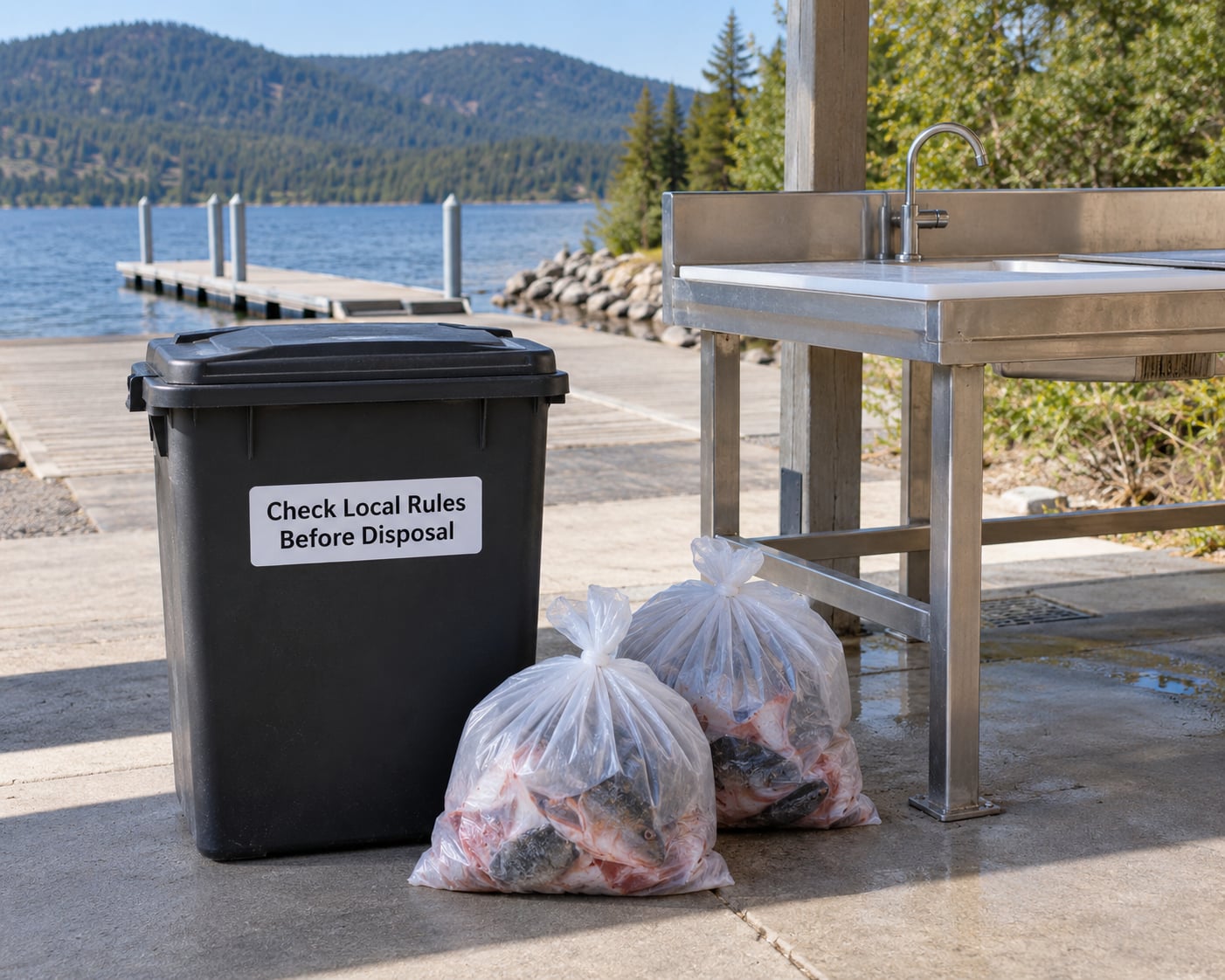
A fish cleaning station is a covered structure at a ramp with a cutting surface, a water hose and usually a bin. Read the sign. Some stations accept fish waste into a dumpster, some accept only packaging and gloves, and some accept nothing at all. Anglers complain repeatedly that they did not know a station existed until another boater mentioned it — search the state park or county parks site for your area before you leave home.
3. How to Dispose of Fish Waste Responsibly on the Water
Keep every scrap in a sealed container or a tied bag from the moment you cut it open. Do not go overboard — not entrails, not heads, not a handful of bait, not “just the bones.” Regulations in most jurisdictions prohibit discharge of fish waste into navigable waters, and state aquatic nuisance species rules cover the same conduct separately.
Carry it back to land and dispose of it there. Where you keep it while you fish matters: a rigid lidded container in the boat’s floor is better than a soft bag in a cooler, because a bag can split under a heavy fillet. The observable result is a boat deck with no residue and a container that opens without releasing a cloud of smell.
4. Prevent Wildlife From Reaching the Waste
Bait and fish parts left uncovered draw gulls, rats, raccoons, bears and stray dogs within minutes. Concentrated animals near a boat ramp also damage eggs and shoreline habitat and become a nuisance that neighbors then have to deal with.
Use a lidded container, double bag before the waste goes near your cooler or your car, and get it into a proper receptacle the same day. Do not leave a bag in a truck bed overnight, and do not dump the gill contents of a bait bucket into the parking lot. The result: no scavenger activity around your vehicle or campsite, and no habituated animals in the area.
5. Clean the Work Area and Equipment
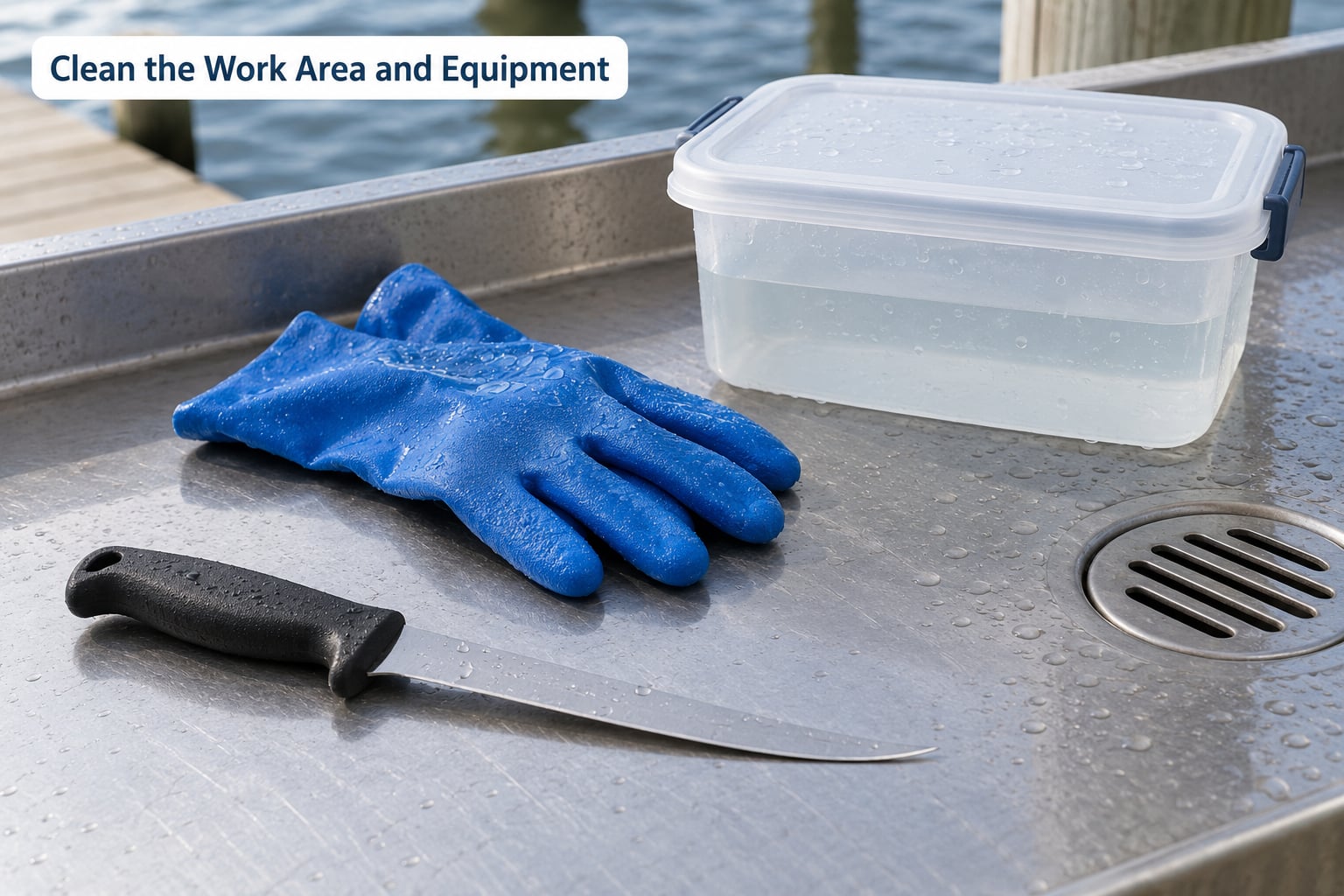
Wash hands, knives, boards, measuring surfaces and any boat-contact gear before packing up. Use the station’s water or a bucket of water you carry, not the lake, and keep the wash water away from storm drains, culverts and the shoreline.
Blood, oil and cleaning residue carried into the water add to the same nutrient and bacteria load you avoided with the guts. Two extra minutes here saves you a call from a neighbor. Decontamination matters too: drain the live well, pull the drain plug, rinse and dry the hull and gear, and never move from one water body to another with water still in the hull. Zebra mussels and viral hemorrhagic septicemia travel in exactly that water.
Fish scales do not belong down a household garbage disposal either. They dull the blades, and they carry whatever was in the fish. Wrap them in the fish waste bag.
6. Use the Lawful Final Disposal Method
Once ashore, pick one lawful route and follow it through. A fish cleaning station bin is the easiest when it accepts your material. Household refuse in a sealed, double-bagged container is fine where the local waste hauler accepts fish. Freezing until collection day keeps odor out of the truck.
Burying is lawful on some private land, far from shorelines, wells and septic systems, and only with the landowner’s permission. A municipal organics program may accept fish waste — many do — while a home compost bin generally should not. An authorized disposal program is the required route for invasive species culls such as Asian carp, snakehead or European carp in many states, because those carcasses may not be kept, buried or discarded.
| Method | Where it works | Watch out for |
|---|---|---|
| Fish cleaning station bin | Public ramps with signage accepting waste | Not every station takes fish parts |
| Household refuse, double bagged | Most areas, if the hauler accepts it | Odor and flies if the bag leaks |
| Freeze until collection day | Any home with freezer space | Chest freezers fill up fast |
| Municipal organics program | Participating municipalities only | Rules on fish vary; ask first |
| Land burial | Private land with permission, well back from water | Often illegal on public or tribal land |
| Authorized carcass program | Invasive species culls and mass die-offs | Required before anything else; check your agency |
The result of step six is simple: the material is in a receptacle designed to receive it, and nothing from the fish is left at the site.
Common Mistakes When Disposing of Fish Waste Responsibly
Throwing scraps overboard. The most common mistake and the most commonly cited violation. Overboard dumping adds nitrogen and phosphorus that feed algae growth, and as the material breaks down it removes oxygen from the water, which is how fish kills start. Put it in the container.
Leaving bait for fish to eat. It feels generous, and it attracts everything with a mouth, not just the fish you are hoping for. Regulations in many places also treat unused bait as a discharge issue for the same reason. Put unused bait in the container or return it to the packaging.
Burying waste near water. Inland guides mention digging pits far back in the woods, but that is not universally legal and it is contested even among guides. Ask the landowner and check the rules for that specific site before you dig.
Pouring wash water into a storm drain or the lake. Scales, blood and detergent on a knife carry the same nutrients straight back to the water. Rinse into a bucket and empty it at a legal point.
Dropping line and hooks at the ramp. Fishing line is not biodegradable and it wraps around wildlife and props. Cut it into short pieces, keep a container for it in the boat, and take it to a recycling program that takes monofilament if one exists nearby.
Keeping a legal catch you will not eat. An oversized or unwanted fish is still a catch under the rules. If you cannot keep it, dispose of it lawfully the same way as any other fish waste, and check whether the species has a special program before you leave the water.
A few habits prevent most of the trouble: keep one dedicated bag in the boat for fish waste only, tie the knot twice, freeze the bag before it goes in the truck, and pick up other people’s litter while you are at the ramp. Anglers who follow that norm say it matters as much as the rules.
Frequently Asked Questions
Can I throw fish scraps back into the water?
Usually not, and you should not. Most states and provinces prohibit discharging fish waste into navigable waters under anti-littering and aquatic nuisance species rules, and the penalty is often a fine. Beyond the rule, gutted fish add nitrogen and phosphorus that feed algae, and the decaying material pulls oxygen out of the water. Keep scraps in a sealed container and dispose of them on land at a cleaning station or through your refuse service.
Is it legal to leave unused bait for fish?
It is a bad idea and it can be a violation. Leftover bait draws gulls, rats, raccoons and dogs, which then nest and forage near the ramp. Many agencies also treat unused bait as fish waste discharge, particularly where an invasive species is present in the water. Keep unused bait in its container or package, or put it in your sealed waste container. If you are near a lake with invasive carp, ask your local agency first.
Can fish waste go in a regular household trash can?
In most places, yes, as long as it is sealed. Double bag it, tie it tight, and put it out on your normal collection day so it does not sit overnight. Freeze it first if you are more than a day from collection, because frozen waste barely smells. Your waste hauler can tell you whether fish is accepted in your area, and a few municipalities run separate organics programs that take fish when regular refuse does not.
Should I bury fish waste at a campsite?
Rarely, and only with permission. Burial is generally lawful on private land you have permission to use, well back from shorelines, wells, trails and campsites, but campgrounds, state parks and tribal land usually forbid it outright. Digging a shallow hole near water can attract scavengers and leave a mess that never washes away. The safer default is a sealed container or bag, carried out to the proper receptacle when you leave.
Can I put fish scraps in a compost bin?
Most home compost bins should not take raw fish. Fish is very high in nitrogen and very wet, so it can turn a pile slimy and smelly rather than hot. The better split is that municipal organics programs frequently accept fish waste, while residential backyard systems usually do not. Ask your hauler before putting fish in the curbside organics bin, and check your local composting rules. If in doubt, freeze the scraps and send them with the regular refuse.
What should I do with used fishing line and hooks?
Keep them in a separate small container in the boat and take them home. Monofilament and braided line are not biodegradable, and discarded strands wrap around birds, turtles and fish and foul boat propellers. Cut line into short pieces before binning so it cannot tangle later, and keep hooks pointed down or in a small tube. Programs that recycle monofilament exist in many regions; your state wildlife agency can point you to one.
Conclusion
If you take one action away from this, make it this: nothing from a fish goes back into the water. Keep it in a sealed container or double bag from the moment you cut the fish open, keep wildlife out of it, confirm the rule for that water body before you fish, and drop it in the receptacle that is actually meant for it on your way out. Everything else here is detail. That habit covers it, whether you are on a boat, at a ramp or in your own driveway. Updated for 2026.