Sandbar camping means camping overnight on a gravel, sand or cobble bar in a river or an estuary, usually reached by boat, on a surface with almost no infrastructure and a lot of shifting. Learning how to camp on a sandbar responsibly comes down to three things: pick a site above the high-water line, disturb as little as possible, and carry every scrap back out with you. A one-night bar camp is easy to do well if you plan it, and hard to undo if you don’t.
Budget about an hour of prep the day before and thirty minutes on the water picking a site. The whole job is not difficult, but it does ask for judgment about water level, which is the one variable that can ruin your night.
Table of Contents
- What You Need
- How to Camp on a Sandbar Responsibly: Step-by-Step
- How to camp on a sandbar responsibly: choose a stable, legal campsite
- How to protect dunes, vegetation, and wildlife
- How to set up a safe overnight camp
- How to manage trash, food, and wastewater
- How to leave the sandbar better than you found it
- Common Mistakes
- Frequently Asked Questions
- Can you camp overnight on a sandbar?
- How far above the high-tide line should a sandbar campsite be?
- Is it safe to camp on a sandbar during a rising tide?
- What should I do if wind or surf increases while camping on a sandbar?
- Are campfires allowed on coastal sandbars?
- How do I leave a sandbar campsite free of trash and food waste?
- Conclusion
What You Need

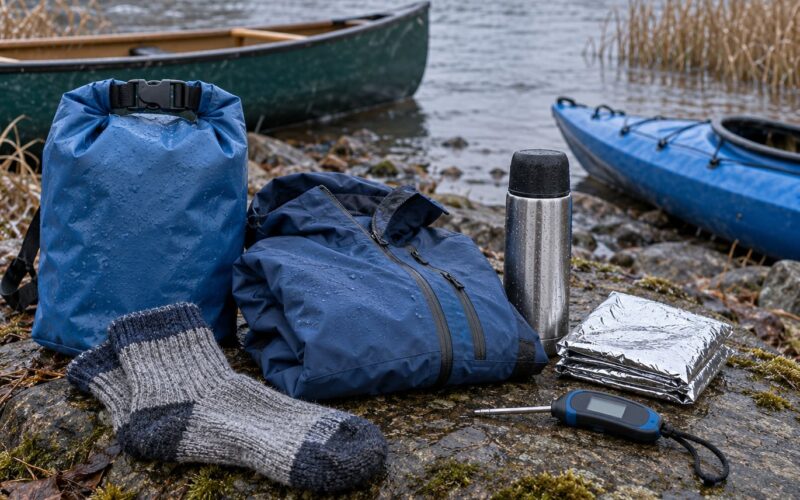
Most of what you need is ordinary camping kit. A few items earn their weight on sand specifically, because a bar is exposed, sunlit and shifting under everything you set down.
- Planning and legal checks: the agency that manages your stretch of water, its camping rules for that reach, and the current tide table or river gauge reading. Save both offline, since you will not always have signal.
- Water: more than you think. Bars are open, shadeless and reflective, and paddlers report that thirst on exposed sand is the first thing to bite you. Forum trip reports on the lower Wisconsin River treat drinking water as the single most important item to bring.
- Shelter and sleep: a compact tent, a sleeping pad with a closed-cell foam backup, and a dry bag for anything that must stay dry. A tent is effectively required here — a hammock needs two anchors and sand rarely cooperates with either.
- Cooking: a small canister or liquid-fuel stove, a lighter, and fuel sized for the trip. Cook on the stove rather than a fire; fires are restricted on most coastal bars and impractical on most river bars.
- Safety: a properly fitted PFD you actually wear when on the water, a first-aid kit, a whistle, a headlamp and a charged phone in a waterproof case.
- Cleanup kit: heavy-duty trash bags, a trowel if you will be away from a toilet, a small bottle of hand soap kept away from the channel, and zip ties or duct tape for repairs.
- Anchoring gear: a sandbag-style setup for the bow line, a spare line, and a way to mark your position. Sand anchors dig, but they also need a great deal of sandbag weight to hold in soft material.
Leave the driftwood pile at home. Relying on found wood for firewood is a trap on a bar: there is rarely enough dry wood, and what is there usually belongs to the birds.
How to Camp on a Sandbar Responsibly: Step-by-Step

How to camp on a sandbar responsibly: choose a stable, legal campsite
Legal question first, because it is the one that ends trips. The riverbed and the bar itself are usually part of public navigable waters, but the land on either bank is not, and riparian landowners own the shore up to the ordinary high-water mark. Camping on the bar and walking onto someone’s bank are two different acts, and only one of them is usually fine.
So check with the agency that manages the water. On the lower Wisconsin River, paddlers routinely report camping on the bars with no reservations and no permit. That is a local fact about that reach, not a general rule, and rules change with stage, season and ownership.
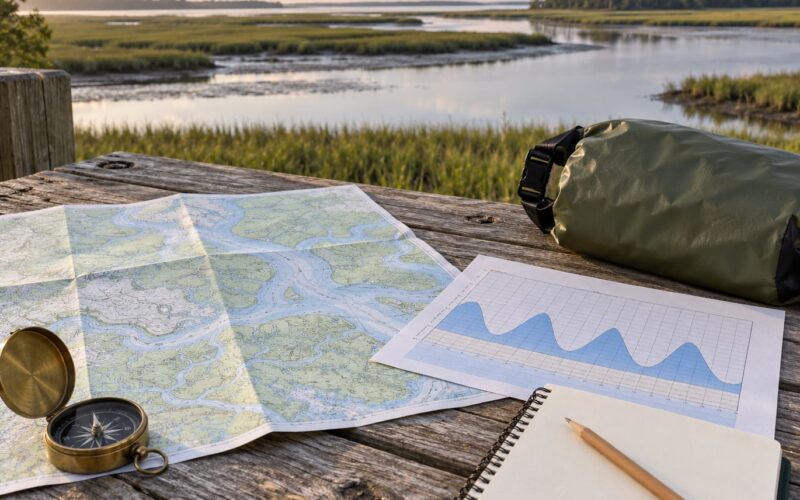
Then read the water rather than the map. On a coastal bar you want the tide table for the whole window you are there, including the night, and enough vertical height above the current high-water line to cover a surge. On a river, read the gauge the day before and again that morning; upstream rain is the thing that ruins plans, and it can show up in the gauge a full day before the water arrives at your bar.
Watch for closures before you watch for convenience. Bird nesting closures on islands, shoals and bars are common in spring and early summer, and a closed bar is closed no matter how good it looks.
Finally, assess the surface and the approach. A bar that drains toward the channel can undercut itself and drop a boat in deep water while you sleep. Look for a gentle slope, firm damp sand near the water line and a clear approach with no breaking surf on your side.
How to protect dunes, vegetation, and wildlife
Open sand with no vegetation is the right place to camp. Bare, shelled sand heals. Vegetated dunes and hummocks do not, and they take years to rebuild because the plants holding them are exactly what you would be crushing.
Pitch above the high-water line and keep the whole camp, including the stove and the foot traffic, on the bare upper portion of the bar. Walk one path in and out rather than spreading out across the surface. Anchor lines are the quiet problem: a guy line stretched across a vegetated patch cuts seedlings as it chafes, so move the tent a few feet before you stake it rather than reaching for the nearest anchor point.
Birds are the bigger risk. Sandbars are nesting and staging habitat for shorebirds, gulls and terns, and the birds are hard to see against wet sand because they sit still and stay low. Walk a bar once before you commit to it, and if birds flush from a section, that section is out. Do not approach a nesting colony, do not feed wildlife, and keep the group size small — six or more people on a short bar changes the site for everyone who comes after.
One habit matters more than people expect: do not rearrange anything. Not the driftwood, not the shells, not the beached bird. Moving material on a bar that only floods a few times a year is a permanent change to a temporary-looking place.
How to set up a safe overnight camp
Set up before dark and in daylight you can actually see by. On sand, driven stakes pull straight out, so either carry sandbags and lay your guy lines into them, or weight the tent corners with gear you would hate to lose in the channel. Test every line with real weight before you rely on it.
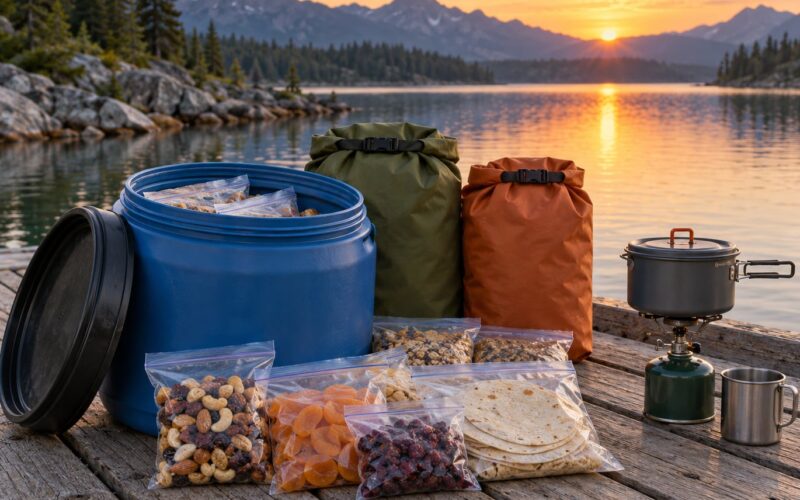
Keep food, trash and anything scented sealed and elevated well above the ground. A bear canister or a hang on a dedicated line is better than a bag under the tent floor, and a hard-sided container is the difference between a curious raccoon and a lost night of food.
Skip the fire unless the rules where you are explicitly allow one and you have an existing ring or a safe pan. Coastal bars and most river bars have fire restrictions, and on a shifting sand surface a fire ring becomes a deep hole with scorched walls that will not refill until a flood reshapes the whole bar.
Before you turn in, set your own departure trigger. Decide in advance what makes you leave: a tide table entry, a gauge number, a wind speed, or a time. Then say it out loud to whoever is with you, so nobody has to be the one to make the call at two in the morning.
How to manage trash, food, and wastewater
Pack it in, pack it out. On a bar there is no bin, no ranger pickup and no storm drain but the river itself, so every scrap rides back out with you, including food scraps and the stuff you forget until you’re packing down.
Handle human waste carefully because sand defeats the usual advice. A cathole six to eight inches deep in dry sand can fill with windblown sand or collapse sideways and become a mess nobody wants to clean up later. Where toilets exist, use them. Where they do not, a portable toilet bag carried out with the rest of your trash is the responsible choice. Burying waste on a bar that will flood is the worst of the options.
Wash away from the water. Keep soap, toothpaste and food particles out of the channel entirely, and keep the 200-foot distance from the river wherever the bar is wide enough to allow it. On a narrow bar that distance may be impossible, so pick the far end of the bar, use a small amount of water, and wash with plain water away from the flow.
One more rule that feels official because people repeat it: pack out other people’s litter too. A popular bar accumulates cans and rope fragments from a dozen trips before yours. Sweeping the site as you leave costs five minutes and is the most visible thing you will do all weekend.
How to leave the sandbar better than you found it
Give the site a five-minute departure sweep before you get in the boat. Walk the perimeter you walked on arrival and pick up anything that is not naturally part of the bar: cigarette filters, fishing line, bottle caps, food wrappers, balloon fragments, the small plastic pieces that end up in gravel and stay there.
Then check what you moved and put it back. Straighten the driftwood you shifted, close the bag you opened, pull your anchors and stakes, and take your trash. Do not rearrange driftwood or collect shells and beach glass on the way out — on some rivers that is regulated, and nearly everywhere it takes material the water put there on purpose.
If you find real damage — an exposed trash pile, a wrecked boat, an injured bird — report it to the managing agency rather than trying to fix it yourself. Note the location and what you saw, and take a photo. Do not handle artifacts you come across at all.
Common Mistakes
Almost every bad sandbar trip traces back to one of these, and each has a simple fix.
- Camping below the high-water line. If you have to move because the water came up, fix it before you pitch: read the tide or gauge for your whole window and set your gear on ground that stays dry through it.
- Picking a bar that is unstable or hard to reach. A bar with a cliff on the channel side can undercut and drop your boat. Choose a gentle slope with a workable approach.
- Driving stakes into vegetation. Anchor into bare sand with sandbags, or pack nothing at all and set the tent on a flat hard patch.
- Leaving food or waste behind. Use sealed containers, count your trash bags at setup and again at breakdown, and check the site before you pull out.
- Assuming calm weather holds. Open sand has no shelter from wind, spray or sudden heat. Watch the forecast the whole time, and leave early rather than at the last minute.
- Rushing the departure. The last ten minutes are when gear gets left and trash gets swept aside. Do a deliberate sweep, not a glance from the boat.
- Assuming the rules are the same as the last reach. Ask the managing agency. Bar camping is free and open on some rivers and closed or permit-only on others a county away.
A few quieter mistakes cause real harm: moving driftwood, cutting live vegetation for shade, feeding birds, and playing music after dark on a bar that was quiet when you arrived. Bar camps work because they stay unfenced and unclaimed, which only holds if a dozen groups in a season leave nothing behind.
Frequently Asked Questions
Can you camp overnight on a sandbar?
Usually yes, since most sandbars are open, public, and free to camp on for one night. Paddlers report camping the lower Wisconsin River bars with no permit and no reservation. The catch is that bars sit in navigable waters while the banks belong to riparian landowners, so stay off private ground, and check the managing agency for seasonal closures such as bird nesting areas, which often cover bars in spring and early summer.
How far above the high-tide line should a sandbar campsite be?
Set your camp high enough that the gear stays dry through the entire window you are there, including the night, not just the current high tide. Read the tide table or river gauge for the full period and account for surge. On a river bar, use recent high water as the line rather than the current level. If you cannot find bare ground well above that mark, the bar is too small and you should look further downstream.
Is it safe to camp on a sandbar during a rising tide?
It can be, but only with margin. A rising tide shrinks your usable ground and moves the water toward the channel side of the bar, which is also where the bank is steepest. Rising water on a river bar has the same effect and can arrive with little warning after rain upstream. Check the gauge the day before and that morning, set a departure trigger before you camp, and leave early rather than testing the forecast overnight.
What should I do if wind or surf increases while camping on a sandbar?
Pack and get off the bar early rather than waiting for a lull. Wind drives spray and sand onto anything not anchored, and rising surf can undercut the channel-side bank and move your boat. Secure or abandon gear in the order that matters, load the boat before moving camp, and keep your PFD on. If surf is breaking where you launched, paddle or motor into calmer water along the shoreline rather than crossing the bar.
Are campfires allowed on coastal sandbars?
In many places no. Coastal bars commonly sit inside fire restrictions or special marine sanctuary rules, and on a shifting sand surface a fire ring becomes a hole that will not refill until a storm reshapes the entire bar. Check the managing agency’s current restrictions before you rely on fire. A small stove is the safer default: it needs no ring, no dead wood and no cleared ground, and it will not destroy the spot you are standing on.
How do I leave a sandbar campsite free of trash and food waste?
Count your bags at setup and count them again at breakdown, then walk the perimeter you walked on arrival and pick up what does not belong, including cigarette filters, fishing line and small plastic fragments that lodge in gravel. Seal food scraps in a hard container and carry them out with everything else. Do not leave anything buried on a bar that will flood, and take other groups’ litter with you if you find it.
Conclusion
Confirm permission and conditions first, because a closed bar or a closed bank ends the trip before it starts. Then pick a durable spot on bare sand above the high-water line, camp small, cook on a stove, disturb no vegetation and no wildlife, pack out everything including other people’s litter, and leave before the water or the wind changes its mind.
If you learn how to camp on a sandbar responsibly on your first trip, the whole rest of the season gets easier. Bars look expendable right up until a flood reshapes them.