Reading water color for fishing spots comes down to one habit: notice where the shade changes, then check whether something physical is causing that change. A hard line between pale water and dark water usually means a depth change or a ledge. A sudden shift from clear water to stained water usually means a creek mouth or a current seam where fish wait and feed.
Color on its own is a hint, not a verdict. Sun angle, glare, chop, bottom material and recent rain all shift what you see, which is why the same bay can look steel grey at noon and almost black at seven in the morning. Learn the cues, then confirm each one with wind, current and surface activity before you commit to a spot.
Most anglers pick this up in about an afternoon of slow looking. The tools are cheap, the stakes are low, and the payoff shows up the first time you cast to the edge of a color change instead of the middle of open water.
Table of Contents
- What You Need to Read Water Color for Fishing Spots
- Step-by-Step: Reading Water Color the Repeatable Way
- Step 1: Observe the Light and Viewing Conditions
- Step 2: Match Water Color to Depth, Clarity, and Bottom Type
- Step 3: Look for Color Changes and Edges
- Step 4: Add Wind, Current, Weather, and Biology
- Step 5: Test the Spot Without Overfishing It
- Common Mistakes When Reading Water Color for Fishing Spots
- Frequently Asked Questions
- Does darker water always mean deeper water when I am looking for fishing spots?
- What does water color tell an angler about a fishing spot?
- Why does the same fishing spot look different in the morning and afternoon?
- How can I read water color in a river or marsh?
- Is clear water better than dark or green water for fishing?
- Can I use satellite imagery or phone photos to read water color?
- Conclusion
What You Need to Read Water Color for Fishing Spots
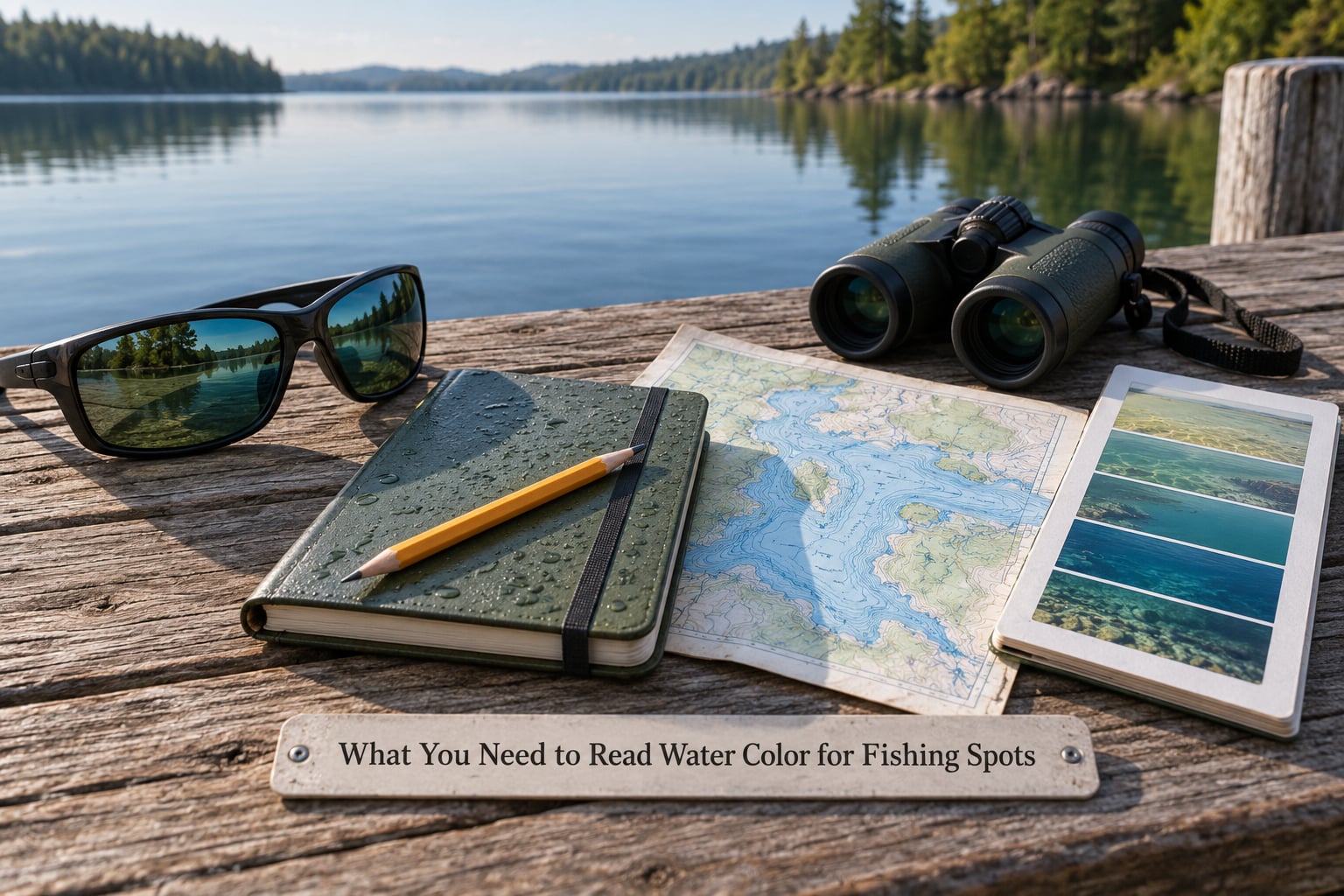
Polarized sunglasses are the single most useful item on this list. Vertical glare is the surface reflection that hides a color change; a polarized lens cuts most of it, so the line between light and dark water becomes obvious from the bank. Mine cost less than a lunch and the difference in what I can see from a boat ramp is not subtle.
Binoculars help you read the far side of a lake, a creek mouth, or the surface of a marsh from shore. Look for birds first, then for the water beneath them.
A waterproof notebook or a phone note is enough for logging. Write three things each trip: the water color in your own words, the weather and wind, and where you caught fish. Three visits to the same lake will start to show you a pattern, and pattern recognition is the real skill here.
A map or chart of the water helps you match what you see to bottom contour, and a small field guide to local water types pays for itself on rivers and reservoirs where clarity changes fast.
Finally, bring a wind meter, a temperature reading from a thermometer clipped to the hull, and a polarized lens clip for your phone. Being able to re-read the same spot under different conditions is how you separate a real color change from a lighting trick.
Step-by-Step: Reading Water Color the Repeatable Way
Step 1: Observe the Light and Viewing Conditions
Start by controlling for light, because bad light will send you looking for a structure that does not exist. Low sun makes open water look dark and hides subtle color boundaries, while a high sun with heavy glare washes the surface toward sky color.
Cloud cover flattens glare and usually makes color boundaries easier to see. Wind-driven ripple changes the shade of a large area at once, and a glassy surface reflects the sky so strongly that a shallow clear flat can look like deep water.
From a boat or kayak, your eye is 2 to 3 feet above the surface and you see a different picture than from a bank 6 feet up. Phone photos add their own problem: auto white balance shifts the apparent color, so a bay that looks olive to you can come back blue-grey on screen. If a color cue only shows up on the photo, you have learned nothing.
Step 2: Match Water Color to Depth, Clarity, and Bottom Type
Water looks darker as it deepens because light is absorbed on the way down. The red and warm tones disappear first, so a deep pool reads darker and cooler than the shallow flat next to it. That is the one place where the rule holds up: in clear water, dark usually means deep.
The rule breaks when material is suspended in the water. Silt and algae scatter light back up, so a shallow muddy area can read lighter and browner than the deep clear water beside it. Tannins from leaves and peat do the same thing and turn the whole surface tea-colored.
Sort what you see into three clarity tiers first, because clarity tells you more than shade about how far fish can see:
- Clear water. You can see bottom structure or the shadow of your boat several feet down, often 8 to 10 feet in open daylight. Fish hunt by sight. Fish can often see your lure before you see theirs.
- Stained water. Visibility of roughly 1 to 3 feet, green, bronze or tea-colored from algae and dissolved organics. Scent and vibration do most of the work here.
- Muddy or turbid water. Under a foot of visibility, brown or milky after rain or wind. Fish use scent and the lateral line, and they feed harder because they cannot see danger.
Here is the quick reference I keep in my head, shade to action:
- Light olive over sand or rock in clear water: shallow structure, good for sight fishing with natural or translucent lures.
- Dark olive next to light olive in clear water: a depth change or ledge. Work the line, not the middle.
- Green tint with 1 to 3 feet of visibility: stained water, algae or vegetation. Fish by smell and vibration.
- Tea brown near creek mouths after rain: tannin runoff, heavy bait concentration, fish on guard but feeding.
- Milky brown after wind or rain: sediment. Wait for it to settle or fish the clean edge where it meets murky water.
- Bright green shallow patches in a lake with visible weed beds: vegetation, ambush cover, fish holding in the seams.
Bottom type matters as much as depth. Sand reflects light and keeps shallow water pale. Rock and deep clay absorb and darken. A dark patch in 3 feet of water over light sand is not a hole, it is a weed bed or a shadow, and mistaking one for the other sends you to the wrong spot.
Step 3: Look for Color Changes and Edges
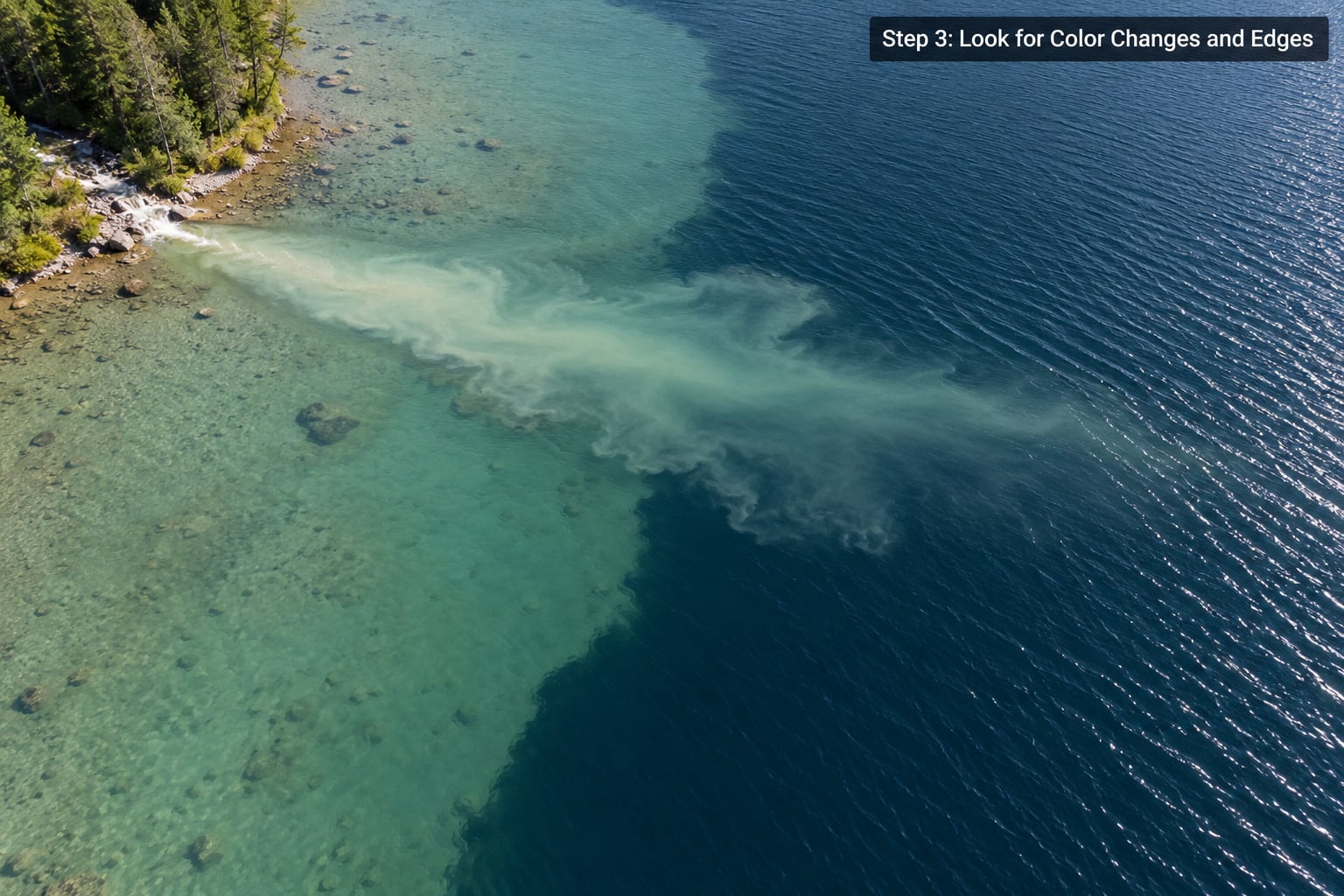
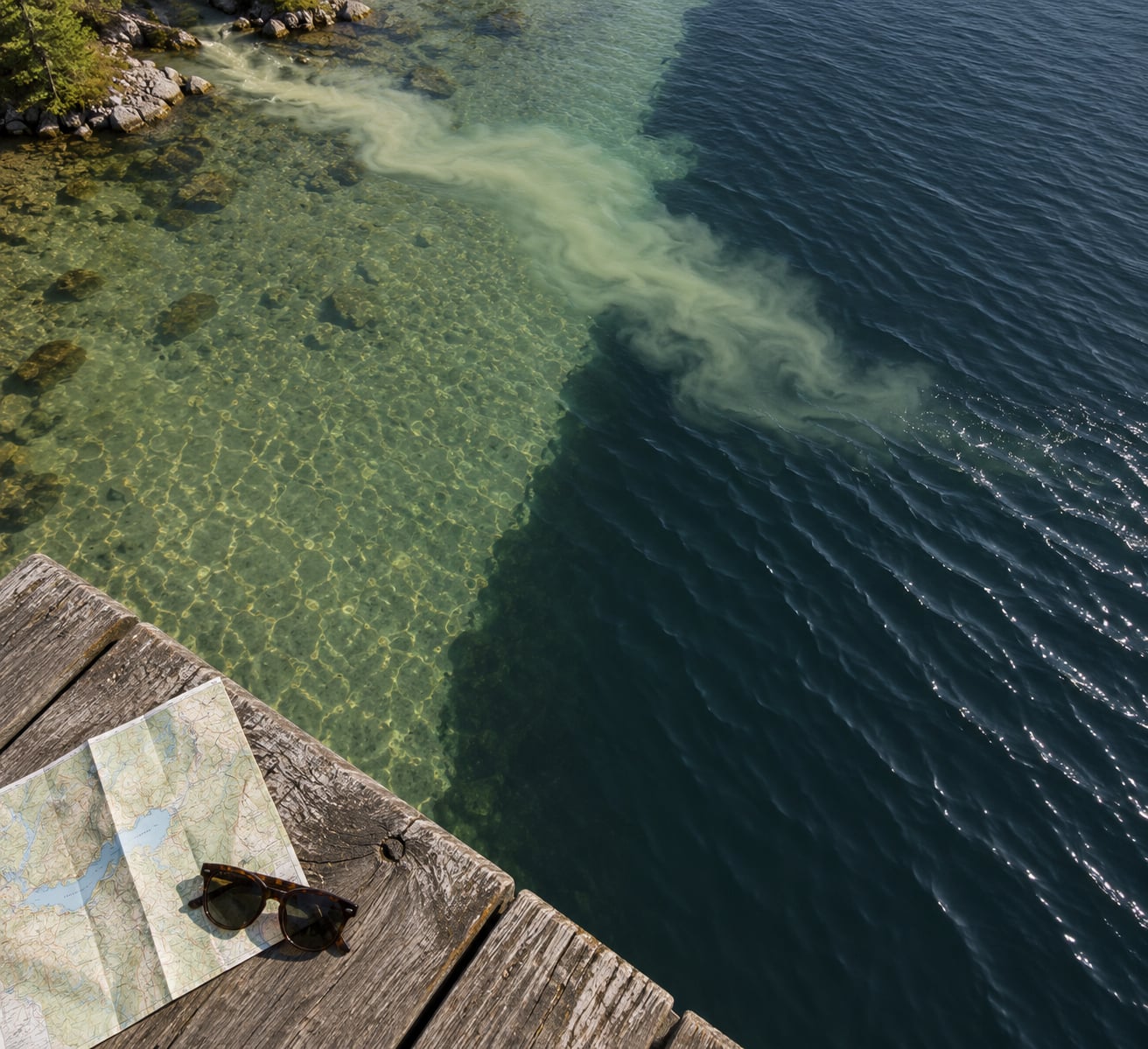
The most useful signal is a color boundary, and its sharpness tells you what kind of feature you are looking at. A hard line, where one shade stops almost instantly, usually means an abrupt drop-off, a ledge, a creek channel or a temperature break. Fish hold along hard edges because food drifts to them and ambush predators get depth in one step.
A gradual fade, where the shade eases from light to dark across several yards, points to a slope rather than a wall. Slopes are good but less concentrated. Fish spread along them instead of stacking up.
Isolated patches matter too. A dark oval in clear shallows is often a hole, a weed bed or a submerged object. A light plume pushing into dark water marks a creek mouth or a sand bar downstream of one, and it is usually the most productive water within sight on any lake or river I fish.
Two more boundaries worth naming: the wind seam, where windblown ripple water meets glassy water and the surface texture changes sharply, and the mud bloom, a cloud of sediment hanging in the water column. Mud blooms are not structure, but fish often feed along the edge of one because the insects and organic material it lifts are concentrated there.
Step 4: Add Wind, Current, Weather, and Biology
Color tells you where something is. Wind, current, weather and living things tell you whether fish are there. I use color to pick two or three candidates, then let these clues eliminate or confirm them.
Wind pushes surface bait and plankton into wind seams, so a color boundary that coincides with a ripple-to-glass edge gets priority over one that does not. A steady wind also calms the surface on the upwind bank, which makes both the water and the bank easier to fish.
Current concentrates fish at seams. On a river, a color change from fast green-brown water to slow dark water often marks the seam where a fish holds. On tidal flats, the same idea applies to the edge of a channel where clean and silty water mix.
Recent rain changes everything within a day or two. Runoff carries silt and leaf tannin, turbidity rises, light penetration drops, and fish stop seeing lures and start smelling them. Several anglers I have talked to say their biggest fish of the year came in that window, which fits what the biology says: an injured fish in dirty water has poor vision and a low guard.
Birds and baitfish are the cheapest confirmation you will ever get. Gulls, terns and cormorants working a specific patch mean fish are feeding below it. Frogs, rising rings and a nervous surface tell you the same thing at a scale of a few feet. Aquatic vegetation along a color boundary doubles as cover and as a nutrient source.
Step 5: Test the Spot Without Overfishing It
Now verify the spot. From shore, cast parallel to the color line rather than perpendicular into the deep water. A long cast along the edge reaches the fish holding on it without dropping your weight into the drop-off, which is where anglers get hurt.
Give it a fair test with a presentation that fits the clarity tier you identified. In clear water that means something visible and quiet. In stained or muddy water it means a bigger silhouette, more vibration and scent, because the fish will not see it coming.
If nothing happens after a few passes, move before you start mashing. A color cue with no fish response is either wrong or second-best, and there is no prize for proving it. Walk or paddle along the line, work other edges, and keep what you learn in your log for the next trip.
Whatever you do, keep the bank habitat intact. Stay off the vegetation at the waterline, avoid churning soft mud with the propeller in shallow water, and do not work one small pocket until it stops producing. Fish that never feel pressure come back.
Common Mistakes When Reading Water Color for Fishing Spots
Assuming darker always means deeper. True in clear water, false where silt or algae are suspended. Shade is evidence, and turbidity is a reason to doubt it.
Reading color under bad light. Glare, low sun and a glassy surface hide the boundaries you need. Move your position, wait for the sun to shift, or use polarized lenses before you trust what you see.
Ignoring wind and current. A color change with no seam and no current behind it is often a lighting artifact or a weed bed. Confirm with surface texture and flow direction before you commit.
Treating sediment as structure. A light muddy patch is a plume of suspended silt. Look for a hard edge where it meets clean water instead, and fish along that edge rather than in the middle of the cloud.
Fishing a color boundary you cannot reach safely. The best color change on the lake is often right next to a snag, a steep bank or a current seam. Pick a casting angle that keeps you on your feet, and skip the spot if none exists.
Reading color from a photo. Phone cameras white-balance the scene and compress the depth contrast you can see with your eyes. Use the photo to mark coordinates, not to judge the water.
Chasing a single reading. One trip tells you little. Log the color in your own words along with wind, cloud cover and your catch, and compare after three visits to the same water. That log is how you learn your lake instead of guessing on it.
Frequently Asked Questions
Does darker water always mean deeper water when I am looking for fishing spots?
In clear water, usually yes. Light is absorbed on the way down, so a deeper column looks darker and cooler and a hard line between light and dark water often marks a drop-off or ledge. In stained or muddy water the rule inverts, because suspended silt and algae scatter light upward and make shallow water look lighter than the deep clear water beside it. Always check clarity before you trust the shade.
What does water color tell an angler about a fishing spot?
Color mainly tells you how far light travels into the water, which sets how far fish can see. Clear water with several feet of visibility means sight-feeding fish and a quiet, visible presentation. Stained water at 1 to 3 feet of visibility shifts the hunt to scent and vibration. Muddy water under a foot of visibility pushes fish onto their lateral line and often makes them feed harder because their vision is poor.
Why does the same fishing spot look different in the morning and afternoon?
Sun angle does most of the work. Low morning sun and evening sun darken open water and hide subtle color boundaries, while high midday sun with glare washes the surface toward sky color. Wind and chop change it too, and a glassy surface reflects the sky strongly enough to make a shallow clear flat look deep. Re-read the same spot at a different hour before you rule a spot out.
How can I read water color in a river or marsh?
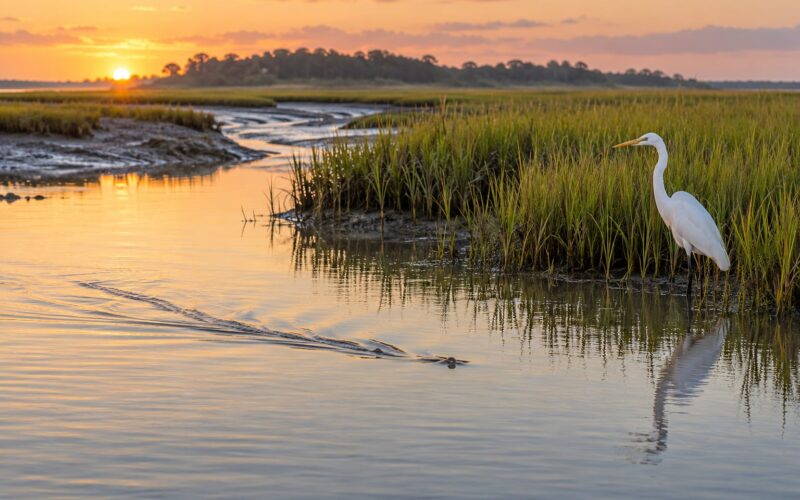
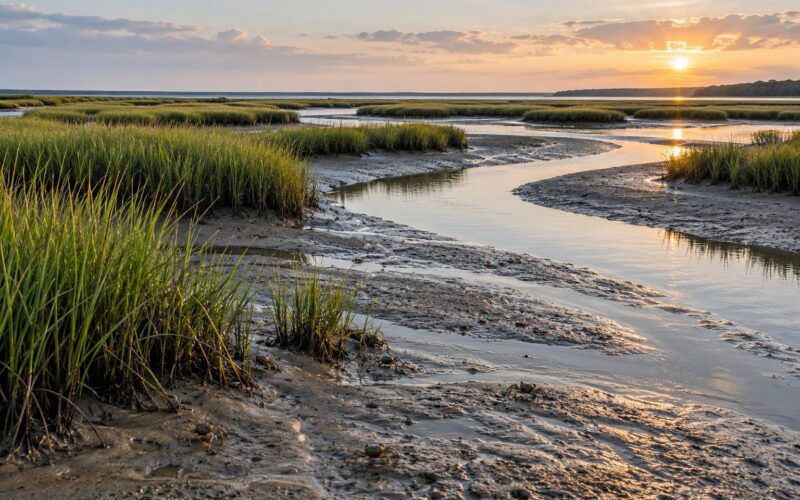
In a river, the useful boundaries are current seams. A shift from fast, broken, green-brown water to slow, dark, smooth water usually marks the seam where a fish holds, and a lighter plume pushing into darker water marks a creek mouth or a sand bar. In a marsh, look for open channels between dark vegetation and stained water, and for a gradual fade, which means a soft bottom rather than a drop-off.
Is clear water better than dark or green water for fishing?
There is no better water, only different fish behavior and different tactics. Clear water favors sight feeders and demands a quiet, visible presentation, because a fish may see you before you see it. Dark or green stained water usually means scent and vibration are doing the work, so bigger silhouettes and added scent make more difference than finesse. Many anglers report that stained water right after rain produces the biggest fish of the season.
Can I use satellite imagery or phone photos to read water color?
Use them for scouting, not for judging. Satellite imagery can show sediment plumes, creek mouths and the outline of a wind seam days ahead of your trip, and a photo with a coordinate lets you return to the exact boundary. Neither tells you what your eye will see in person, because imagery misses surface glare and wave texture, and phone white balance shifts the apparent color away from reality. Confirm on site before you fish it.
Conclusion
Start with one habit this trip: watch the same stretch of water in changing light and write down what changes. Note where the shade breaks, check whether a wind ripple or a current line runs along that break, and treat every color cue as something to confirm before you commit to it.
The anglers who pick spots well are not seeing something the rest of us cannot. They are looking longer, in better light, and they treat a color change as the start of an investigation rather than the end of one. Do that for a few trips and your home water will start giving up its structure before you ever lower a lure into it.