Salt marshes matter for fish nurseries because they give juvenile fish and shellfish the two things open water cannot: a place to hide from larger predators and a dense, constant supply of food. Tidal creeks, cordgrass root mass and marsh edges concentrate small prey, hold warm shallow water through the seasons, and then move both the food and the growing fish out into the wider coastal food web.
Most of the striped bass, croaker, shrimp and crabs you ever catch were raised somewhere like this, not in open bay. I fish marshes enough to notice when a creek network has been filled or when the marsh edge has turned to bare mud, and the difference shows up in what I catch within a couple of seasons.
Table of Contents
- Why Salt Marshes Matter for Fish Nurseries
- What Makes a Salt Marsh a Nursery?
- Why salt marshes matter for fish nurseries more than open water
- How Tides Create Protected Feeding Areas
- How salt marshes support young fish
- Tides move a marsh’s productivity out to sea
- Which Fish Depend on Salt Marshes?
- Why Salt Marsh Loss Hurts Coastal Fisheries
- How People Can Protect Fish Nursery Habitat
- Frequently Asked Questions
- Are salt marshes only habitat for juvenile fish?
- Do salt marshes matter for how fish move along the coast?
- What happens to fish when a salt marsh is damaged or lost?
- How do tides affect how young fish use a salt marsh?
- How do marsh plants survive saltwater?
- What can I do to protect salt marsh nursery habitat?
- Conclusion: Start by Protecting the Marsh Edge
Why Salt Marshes Matter for Fish Nurseries
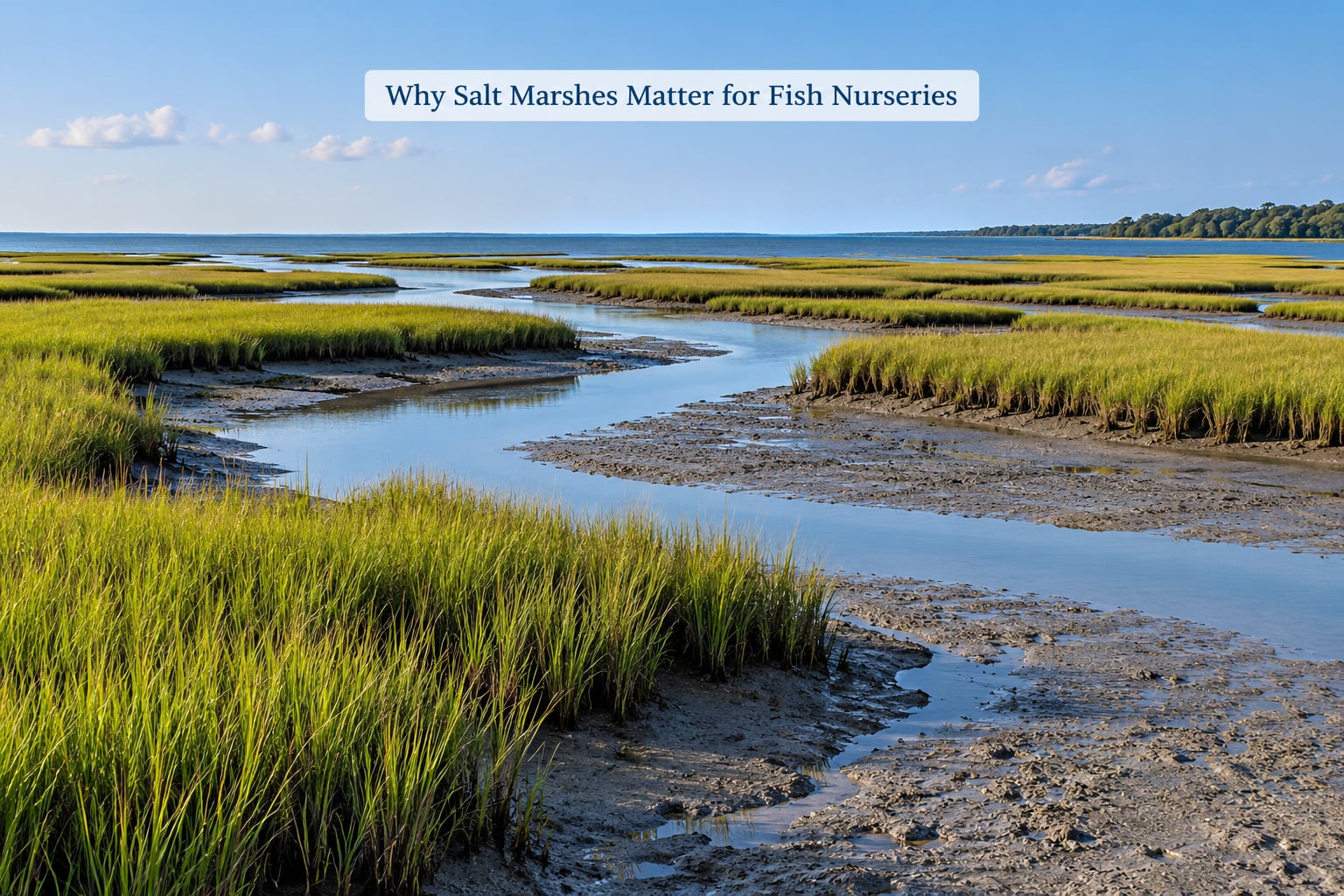
Salt marshes are nursery habitat because their tidal creeks and dense vegetation give young fish shelter from predators, abundant prey such as amphipods and insect larvae, and shallow warm water that speeds growth. The tides then carry marsh-produced food and juvenile fish biomass out to nearshore waters, feeding the coastal food web.
Five things are doing the work:
- Refuge. A wall of stems and root mass breaks the line of sight that large predators use to hunt.
- Prey density. Amphipods, copepods, insect larvae and small crustaceans concentrate at the marsh edge in numbers open water rarely matches.
- Fast growth. Shallow, sun-warmed water and a steady food supply let juveniles put on length over weeks instead of months.
- Energy export. Falling tides carry detritus and grown fish out of the marsh, subsidizing everything downstream of it.
- Connectivity. Marsh creeks link rivers, bays and the open coast, giving fish a corridor to move through on the tide.
None of those five works on its own. Strip out the vegetation and you lose cover but keep the food; strip out the creek network and you lose both the cover and the delivery system.
What Makes a Salt Marsh a Nursery?
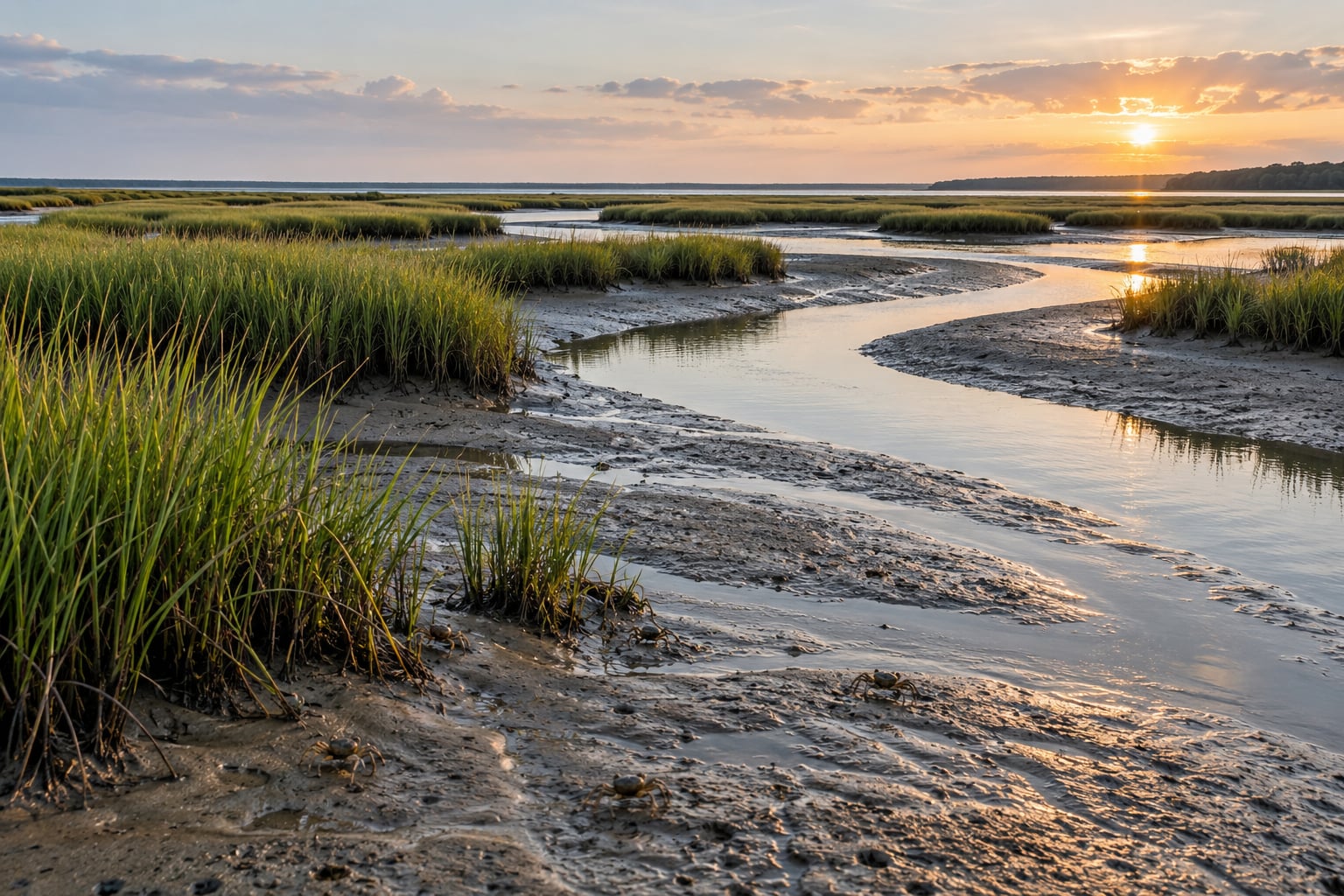
A salt marsh is intertidal, brackish ground flooded by tides roughly twice a day and vegetated by grasses and rushes such as smooth cordgrass (Spartina alterniflora) and black needlerush (Juncus roemerianus). Tides slow as they cross the flat, drop their sediment, and raise salinity in the process.
A nursery habitat is any place where young animals get the shelter, food and growing conditions they need before they can survive in open water. Salt marsh nursery habitat does that work over months or years, and the young fish usually leave once they reach adult size.
Nursery habitat is not the same as permanent adult habitat. Deep channels, seagrass beds and oyster reefs hold adults and spawning fish. The marsh is where the small stuff survives the period when it is most edible and least mobile.
Why salt marshes matter for fish nurseries more than open water
Open water offers depth and space. It does not offer cover, and it does not hold a food supply that renews itself twice daily.
Within a marsh, fish concentrate in three distinct places, and each one does a different job:
- The marsh edge, where the grass meets the water. Juveniles stack along this boundary because prey drift there and cover is within a body-length.
- Marsh creeks, the branching channels that cut into the platform. These act as highways, carrying fish in on the flood and out on the ebb.
- The marsh interior, the tall grass. Best cover, but accessible only on a high tide, so it functions as a refuge rather than a feeding station.
Timing follows salinity. Many young coastal fish move in as the water warms and the marsh production peaks, then move out or offshore as they grow. Because the same fish that use marshes are the ones anglers target, the link is not theoretical. A creek mouth at the turn of the tide is a good place to watch it happen.
How Tides Create Protected Feeding Areas
Every tide runs a delivery cycle. Flood tide pushes brackish estuary water and its load of nutrients, plankton, larvae and suspended sediment up onto the marsh; ebb tide drains it back out, carrying marsh-grown detritus and anything that grew there with it.
That exchange does two useful things at once. Flooding delivers food to the marsh edge and delivers fish into it, and falling water returns the marsh’s production to the estuary. The marsh is a processor sitting in the middle of the circulation, not a dead end.
How salt marshes support young fish
Shelter from predators. Cordgrass stands and root mats reduce the distance at which a juvenile can be seen and hit. A fish that cannot be spotted does not get eaten, and it spends energy growing instead of hiding.
Abundant prey. The root mass holds a community of amphipods, copepods, insect larvae, small shrimp and grazing snails. This is the forage base that lets juvenile fish and shrimp put on weight quickly.
Improved growth and survival. Warm, shallow, productive water shortens the time a fish spends in the stage where it is most vulnerable. Faster growth means a higher chance of reaching size before winter or a predator finds it.
Connectivity. Creeks link the marsh to rivers, sounds and open water, so a fish raised in the marsh has a route out instead of being sealed in.
Tides move a marsh’s productivity out to sea
The energy leaves a marsh along two paths, and the distinction is useful when you want to know what a marsh is really contributing.
The abiotic path is physical. Plant material breaks down into fine detritus that ebbs out with the tide and feeds filter feeders, zooplankton and forage fish in the estuary and nearshore zone.
The biotic path is biological. The fish themselves eat, grow and leave. A marsh that produces a strong year of young striped bass and croaker is exporting those fish as biomass when they move offshore, and the energy in them goes straight into the coastal food web that anglers and commercial fleets harvest.
One honest caveat, taken straight from the research literature: the strength of the marsh-to-fishery link is still harder to quantify than the basic refuge and feeding functions. The refuge effect is well documented. The size of the export in any given year is not, because it moves with tides, storms, rainfall and the number of fish that survive to leave.
Which Fish Depend on Salt Marshes?
The regular users are the ones that spend their first months in the marsh or its edge. The occasional visitors are larger fish that drop in to feed or shelter during parts of the year.
| Species | Life stage using the marsh | What the marsh provides |
|---|---|---|
| Striped bass (Morone saxatilis) | Juvenile, roughly the first years of life | Cover, forage fish, creek connectivity to spawning rivers |
| Atlantic croaker | Larvae and juveniles | Shallow vegetated habitat with a high-volume invertebrate prey base |
| Atlantic silverside | All life stages, including spawning | Shallow water and dense vegetation for eggs, larvae and adults alike |
| Menhaden | Juveniles | Plankton-rich marsh water feeding a species that coastal predators depend on |
| White, brown and pink shrimp (Penaeid spp.) | Postlarvae and juveniles | Shallow brackish water, detrital food, soft substrate |
| Blue crab | Juveniles and adults near the edge | Burrow habitat, structured cover and scavenged detritus |
Striped bass are the clearest case for readers who fish. Juveniles rear in estuarine and marsh-influenced water for their first two to four years before moving to open coastal water, which means the adult population an angler targets is a standing record of what the nursery did several years earlier. Angling forums like StripersOnline show sustained concern over striped bass population status, and the habitat argument sits underneath most of that concern.
Blue crab and shrimp are the reverse case. They do not draw much angler attention, but they are a food source for the fish that do, so their marsh value carries through the food web even when nobody fishes them directly.
Why Salt Marsh Loss Hurts Coastal Fisheries
When the nursery goes, the fishery loses capacity it cannot rebuild quickly. Four pressures do most of the damage.
Shoreline development and dredging. Filling marsh for housing, roads or bulkheads removes the platform, the creeks and the cover in one action. Dredging cuts through creeks, turbidises the water, and removes the edge where juveniles feed.
Altered freshwater flow. Dams, upstream withdrawals and drainage change the brackish balance. Too much fresh water pushes marsh-edge species out; too little changes the plant community and the productivity that supports them.
Pollution and nutrient runoff. Excess nitrogen, sediment and contaminants degrade the marsh and the estuary, smothering the very root mats that create structure.
Subsidence and sediment deficit. This one is slow and less visible. Where land is sinking faster than sediment accumulates, the marsh cannot build upward. A rising tide plus a sinking coast squeezes the marsh against a fixed wall of development, which is the coastal squeeze problem, and the platform drowns instead of migrating.
Losing one nursery habitat does not mean another picks up the slack, because each one does something the others cannot:
| Habitat | Distinct nursery function |
|---|---|
| Salt marsh | High-volume detritus and forage production, plus the tidal export that carries energy to nearshore waters |
| Seagrass meadow (eelgrass, widgeon grass) | Submerged structure in clearer, deeper water with light reaching the bottom, holding larger and older fish |
| Oyster reef | Hard, three-dimensional structure and heavy filtration, concentrating fish in deeper water than a marsh can offer |
The evidence on restoration is genuinely encouraging, and it also sets expectations. Restored marshes do get used by multiple fish species, and they recover the refuge and feeding functions within a few growing seasons. They take much longer to build the export that mature platforms deliver, so restoration and protection are not substitutes for each other.
How People Can Protect Fish Nursery Habitat
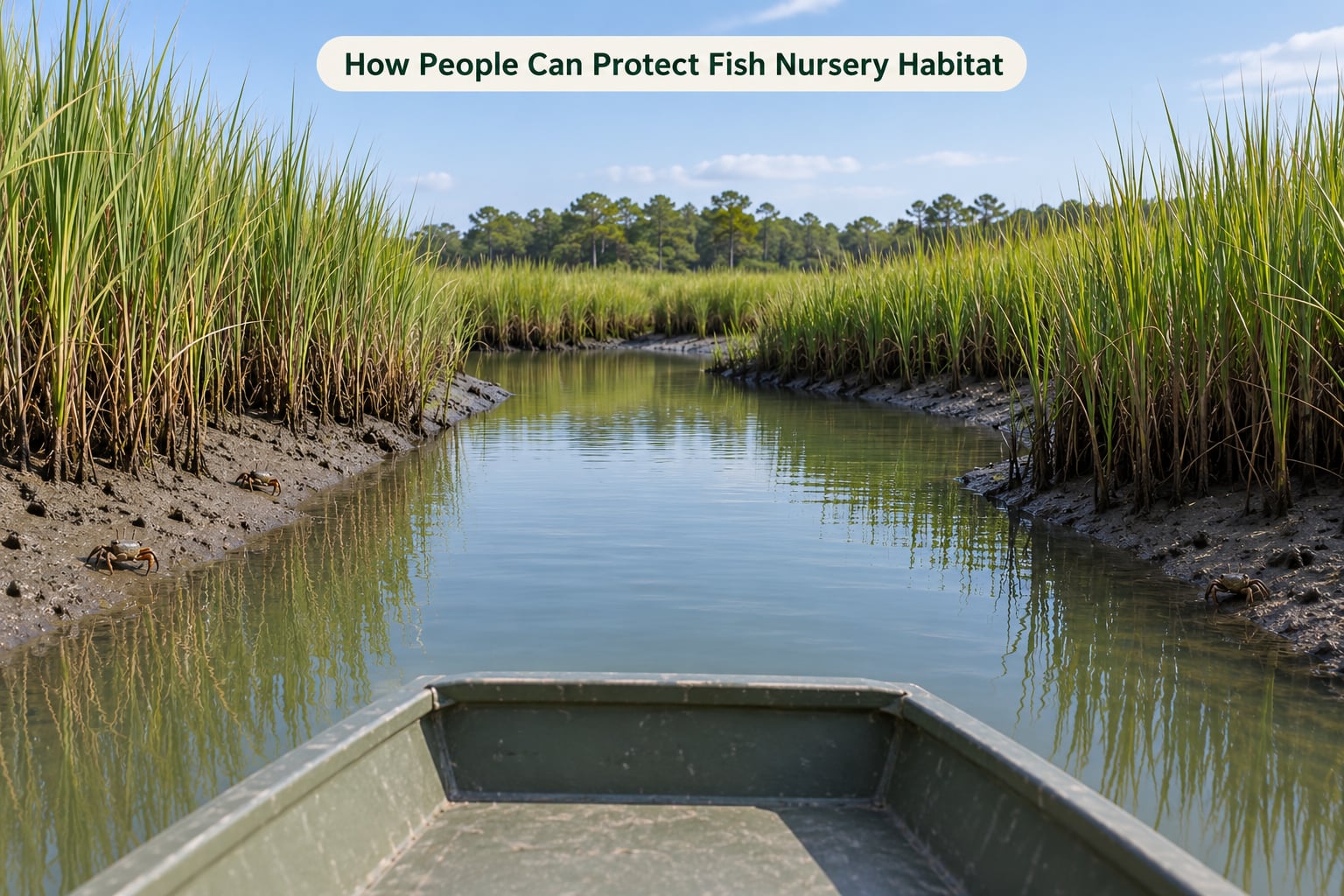
Most of the useful work is small and local, and some of it happens on a single trip.
- Stay off the vegetation. Walk on boardwalks, trails and the wrack line at the high-tide mark. Every boot that crosses the interior cuts a gap in the root mass that juveniles use as cover.
- Follow designated routes. Marsh interiors are fragile partly because the sediment is saturated and organic; repeated traffic turns them into mud channels that let the tide scour them.
- Do not add noise or light. Gas motor noise and bright lights disturb the nesting and feeding behavior that makes a marsh a refuge in the first place.
- Carry out what you carry in. Litter and fishing line are the most visible problems at a launch, and line in particular is a hazard to everything in the water.
- Cut runoff at the source. Fertilizer, pet waste and sediment leaving your property end up in the marsh. A buffer of unmowed ground between hardscape and water does more than most people expect.
- Respect closures. If a creel limit, closed area or seasonal restriction exists, the marsh has been telling you what it needs.
- Support restoration funding. Local restoration associations put volunteers on marsh sites, and those crews welcome hands at planting days. Anglers show up in numbers when there is a specific date and place.
You can also read marsh condition from the water, which is a useful skill whether you paddle, fish or bird-watch:
Dense, branching creeks mean a healthy, well-drained platform. Long unbroken stem stands of roughly knee-to-waist height indicate a productive marsh rather than a stressed one. A visible wrack line of dried plant debris along the high-tide mark shows a working marsh exporting material. Clear water that shifts with the tide usually points to intact root mass and limited sediment disturbance.
Bare mudflats with scattered stumps and stems, brown water, stunted vegetation and creek banks that keep slumping into the water all point the other way. None of this is a formal assessment, but it tells you what the fish are working with that season.
Frequently Asked Questions
Are salt marshes only habitat for juvenile fish?
No. Salt marshes hold species across their life history, though they are most important early. Atlantic silverside, for example, use marsh vegetation to spawn, attach eggs and shelter adults through summer. Striped bass and Atlantic croaker rear there as juveniles and largely leave as they grow. The marsh also supports blue crabs, penaeid shrimp and the forage fish that larger offshore species eat.
Do salt marshes matter for how fish move along the coast?
They do, and the mechanism is tidal rather than swimming. Marsh creeks connect rivers, sounds and open coastal water, and the flood and ebb tide move fish along those channels without them having to cross open water exposed to predators. Juvenile striped bass in particular use this connectivity to move between rearing areas and offshore habitat. So a marsh affects not just survival but the routes fish can take.
What happens to fish when a salt marsh is damaged or lost?
They lose cover, food and access in the same stroke. Juveniles that would have used a vegetated edge now face open water with more predators and less prey, so fewer survive to recruitment age. Dredging adds turbidity, fills remove the platform outright, and nutrient runoff degrades the root mats. The effect is a smaller, less productive nursery, which shows up in catches several years later.
How do tides affect how young fish use a salt marsh?
Tides set the schedule. On the flood, juveniles move in over the marsh edge to feed on prey concentrated in the vegetation; on the ebb they leave, either deeper into the marsh interior for cover or out through the creeks to nearshore water. The falling tide also exports detritus that feeds the estuary outside the marsh. Strong tidal flushing and a healthy creek network both raise how much nursery value a marsh delivers.
How do marsh plants survive saltwater?
Smooth cordgrass and black needlerush are adapted to an environment most plants cannot handle. Their roots exclude much of the salt while taking up water, and their stems and leaves limit how much salt is absorbed. Both build air channels into their root systems, called aerenchyma, so oxygen can reach submerged roots in anaerobic mud. Many also spread by underground rhizomes, which lets a stand recover quickly after grazing or storm damage.
What can I do to protect salt marsh nursery habitat?
Stay on boardwalks and the high-tide wrack line instead of walking the interior, carry out everything you carry in, and reduce runoff leaving your property. Support local restoration work by showing up at planting days, where volunteer crews are almost always welcome. When you are on the water, watch creek density, stem height and water clarity; those signals tell you whether the nursery in front of you is working.
Conclusion: Start by Protecting the Marsh Edge
Salt marshes matter for fish nurseries because they deliver refuge, a heavy prey load, fast-growing warm water and a tidal export system, all in one place, and because the fish that grow up there become the adults every coastal fishery depends on.
Start with the marsh edge on your next trip. Notice whether the creek network is intact, whether the cordgrass is tall and continuous or thin and patchy, and whether the water is clear or churned with sediment. That is the same structure the juveniles are relying on, and it is where an angler’s attention is worth more than a well-known but degraded spot.
The science this rests on is well established in outline and still being quantified in detail, including the foundational work of Boesch on fishery dependence on salt marshes, later treatments of marsh energy linkages to nearshore fisheries, and process-based reviews of marsh biogeochemistry. The refuge and feeding functions are not in doubt. How much a particular marsh contributes in a particular year is a question researchers are still working through.