How to catch redfish in shallow water comes down to reading the tide and the fish, not finding one magic lure. Pick a structure that matches where the water is moving, approach without noise, watch for tailing fish or mud clouds, present live bait, cut bait, or a lightly weighted soft plastic just off the bottom, and move to the next spot within a few minutes if nothing bites.
That is the whole method, and it is less obvious than it sounds. Redfish, also called red drum, are structure-and-movement fish rather than depth fish. They hold wherever forage collects, and they relocate as the tide pushes water over and off that forage. The lure in your hand matters far less than whether you are standing over fish that are actively eating.
One warning before we start: shallow water punishes noise and it punishes bad timing with tides. A bank of reds that was feeding at 6:30 can be gone before you get there at nine, and a cast that would not bother a trout in four feet of water will clear a flat in eighteen inches. Everything below assumes you respect both.
Table of Contents
- What You Need
- Step-by-Step: How to Catch Redfish in Shallow Water
- Step 1: Find Redfish in Shallow Water
- Step 2: Match the Tackle to the Conditions
- Step 3: Present the Bait or Lure
- Step 4: Work the Retrieve and Set the Hook
- Step 5: Land and Release the Fish
- Common Mistakes
- Frequently Asked Questions
- What is the best bait for redfish?
- What time of day is best for redfish?
- What color attracts redfish?
- Do redfish bite at low tide?
- What is the best water temperature to catch redfish?
- How do you catch redfish from shore?
What You Need
You can catch redfish in skinny water with very little gear. A medium spin rod and reel covers nearly every situation, and the terminal tackle list is short enough to fit in one tackle box lid.
- Rod and reel: A 7-foot medium-action spinning combo handles lures from 1/16 ounce up to a light spoon. If you will be casting to tailing fish or working the trolling motor all day, a 7-foot medium-heavy gives you more leverage on a bull red.
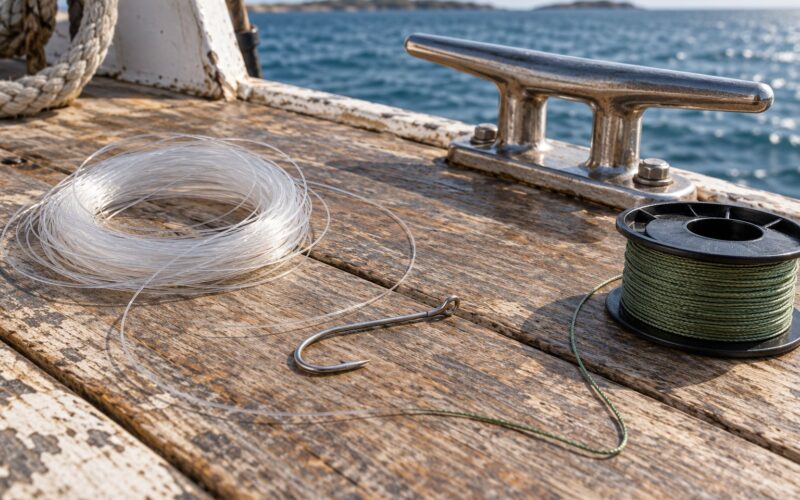
- Line and leader: Braid running to a 2 to 3 foot fluorocarbon or mono leader. That length is short on purpose, because it keeps your lure out of the overhanging brush and lets you feel a bite in skinny water. Tie the braid to the leader with a Palomar or a double uni knot.
- Terminal tackle: Size 5/0 circle hooks for live bait and cut bait, a 3/0 Kahle or similar hook for popping corks, and jig heads from 1/8 ounce up. A barrel swivel and a sinker for Carolina-rig presentations complete the box.
- Baits and lures: Live shrimp if you can buy them fresh, cut mullet or ladyfish, and a small assortment of soft plastic paddle tails, a gold spoon, and one or two topwater plugs.
- Polarized sunglasses: Not optional. Polarization cuts glare off the surface and pulls the bottom into view, which is the difference between sighting a school and casting at a random spot.
- Waders or water shoes: Chest waders let you get close enough to sight fish in a foot of water. Water shoes work in places where the bottom is firm, and they are safer on oyster bars and rock.
- Optional: A pushpole or a trolling motor on low for quiet approach, a shallow draft depthfinder for creek mouths, and a soft measuring tape so you can check a fish against the slot limit and put it back quickly.
Beginner-friendly means a used medium spinning combo, a pack of circle hooks, a half dozen jig heads, and shrimp from the nearest marina dock. Buy the waders and the polarized glasses first, because those two do more for you than any lure upgrade.
Step-by-Step: How to Catch Redfish in Shallow Water
Step 1: Find Redfish in Shallow Water
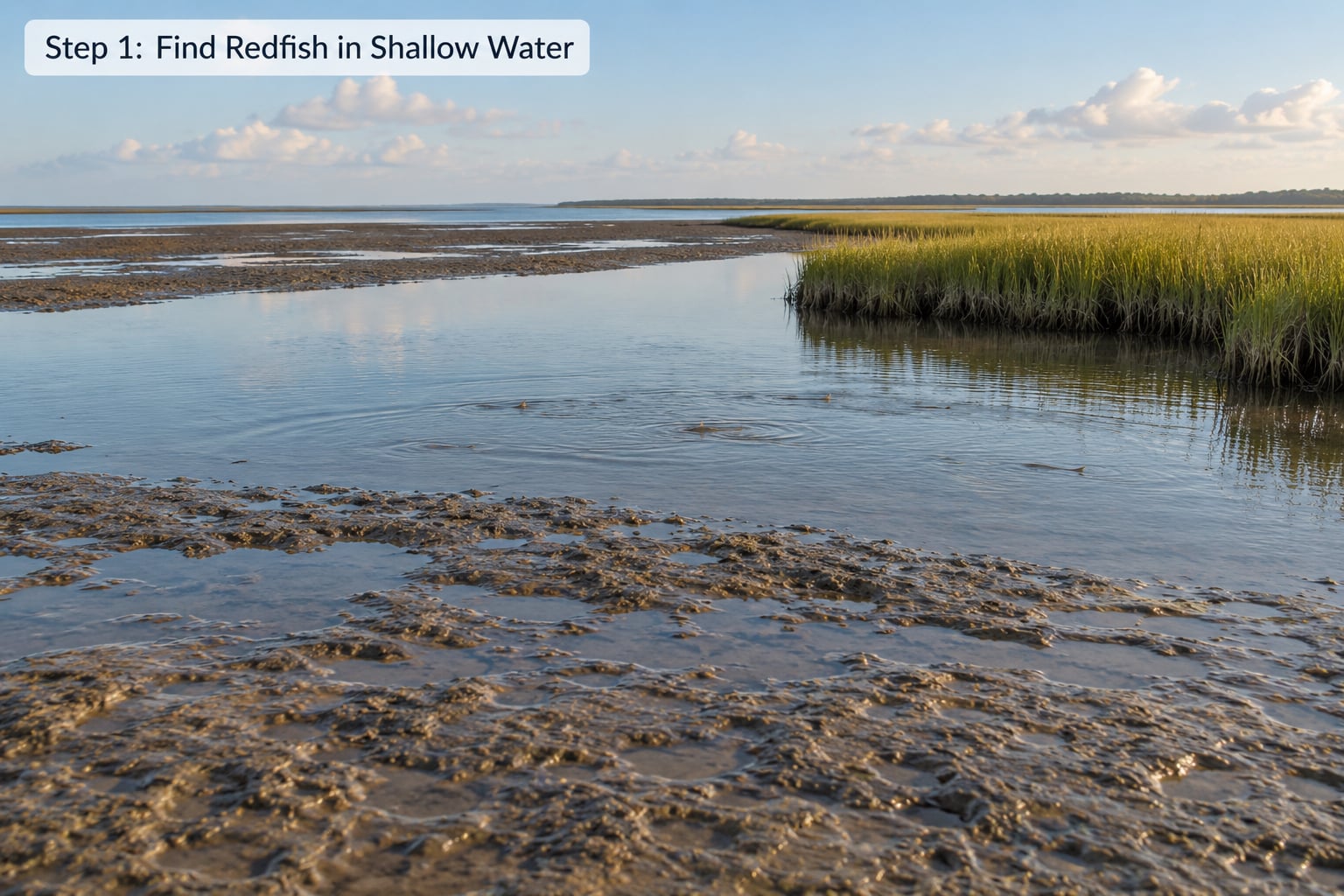
Redfish hold on structure where forage concentrates, and they move with the tide. That gives you a simple map: match the structure you fish to the tide phase you are fishing, and the fish come to you instead of the other way around.
| Tide phase | Where reds concentrate | What to do |
|---|---|---|
| Rising (incoming) | Grass points, grass edges on the flat, the back edges of marsh islands | Fish the edges where the rising water first covers clean bottom. Work the point closest to deeper water. |
| High and slack | Creek backwaters, inside corners of channels, dock pilings and bridge supports | Work tight to cover with a slow retrieve. Reds settle and stop moving in slack water. |
| Falling (outgoing) | Creek mouths, channel edges, mud flats that drain out | Fish the front of the drain, where baitfish and reds leave the marsh. |
| All phases | Oyster bars, rock piles, rocky points, hard-bottomed drop-offs | Work structure that never goes dry. This is the safest water in a falling tide. |
The rule anglers on the GON Forum and r/saltwaterfishing repeat most often is that reds bite hardest during major water movement, and that pinch points, where flow is channeled between two bars or between a bar and a grass bank, concentrate them. Fish during the run of the tide rather than at dead slack.
Before you commit to a spot, look for signs that reds are actually there and eating. There are four tells worth learning:
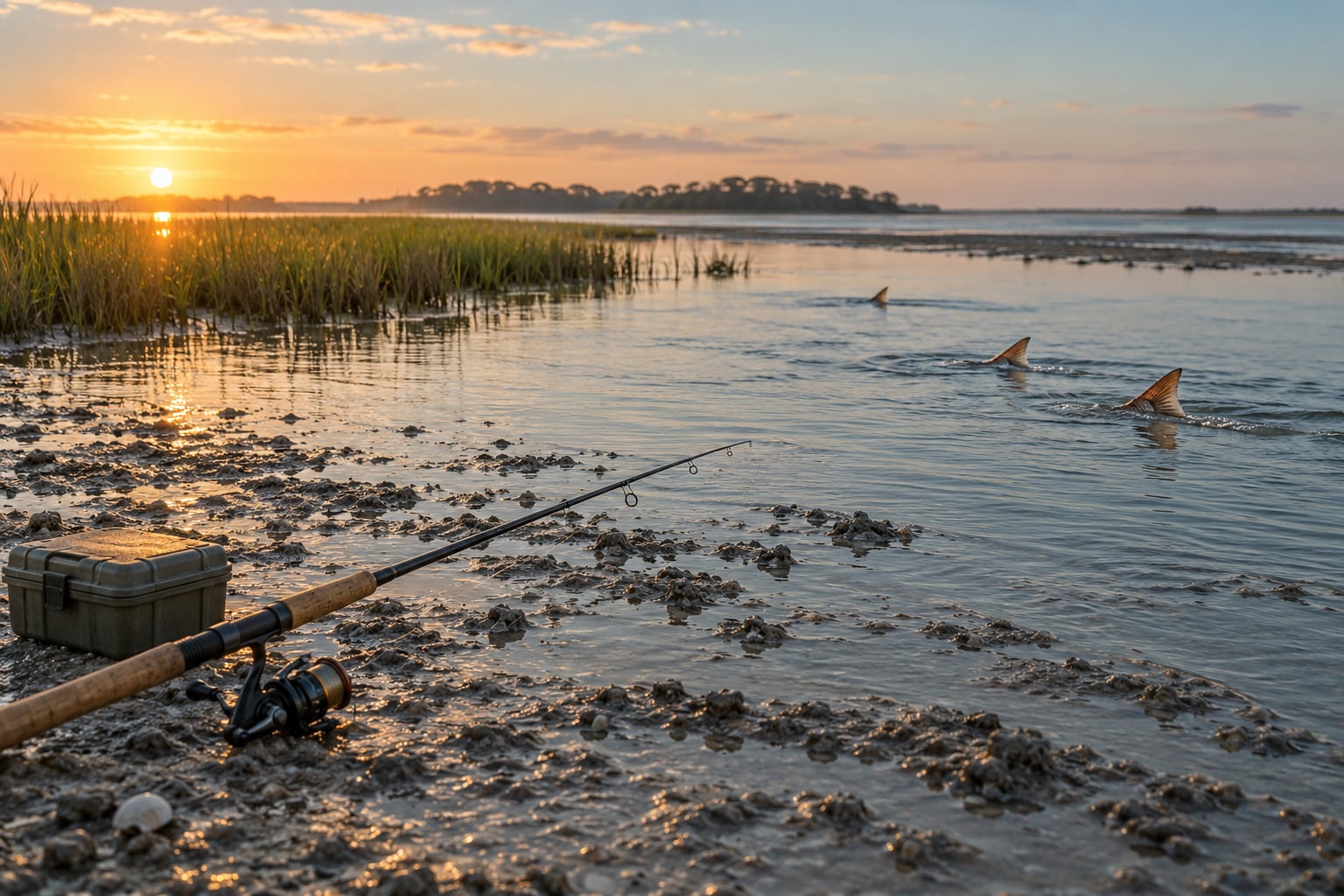
- Tailing fish: A tail fin breaking the surface and a slow-moving wake, repeated in the same patch. The fish is rooting for crabs and shrimp.
- Mud clouds and popping shells: A brown bloom hanging over clean bottom, or the sound of crabs being cracked. A cloud drifting away from structure usually means a fish just left.
- Nervous water: Nothing visible, but small wakes circling and stopping, or a school that keeps moving instead of settling.
- Cruising shapes: Dark silhouettes in two to three feet of water, visible as a shadow or a bronze back in good light.
One safety item belongs in this step. Low tide in skinny water grounds boats, and mud flats trap a hull fast. Check the tide table before you enter, keep water and sunscreen in the boat, carry a paddle, and give yourself more than one tide of daylight in reserve. In a falling tide, oyster bars and rock piles are also the water that stays deep enough to get out through.
Step 2: Match the Tackle to the Conditions
Use light tackle. In shallow water you are fighting a fish in a foot of water, not a fish in a channel, and heavy gear only helps you lose the line in the grass.
Braid to a 2 to 3 foot leader in 20 to 30 pound fluorocarbon is the most useful combination. The braid keeps you connected through the wind and the vegetation, and the leader length keeps the line from tangling in the overhead brush. Some regulars fish 3 feet of 30 pound mono, which holds knots better in salt but is easier to see in daylight.
Match the jig head weight to the depth you are working. Too heavy and the lure slaps the bottom and pushes fish away; too light and you cannot feel the bottom or the bite.
| Water depth | Jig head weight | Notes |
|---|---|---|
| Under 2 feet | 1/16 to 1/8 ounce | Clear sight-fishing water and glass-calm mornings. Cast ahead of moving fish. |
| 2 to 4 feet | 1/4 ounce | The workhorse range for most grass edges and creek drains. |
| Deeper, or strong current | 3/8 ounce or heavier | Adds sink rate in moving water so the lure stays in the strike zone. |
For live or cut bait, a 5/0 circle hook is the right call, and many anglers put no weight on it at all so the bait drifts and swings on its own. A sliding sinker on a Carolina rig makes sense on channel edges, but it is overkill in two feet of water.
Step 3: Present the Bait or Lure
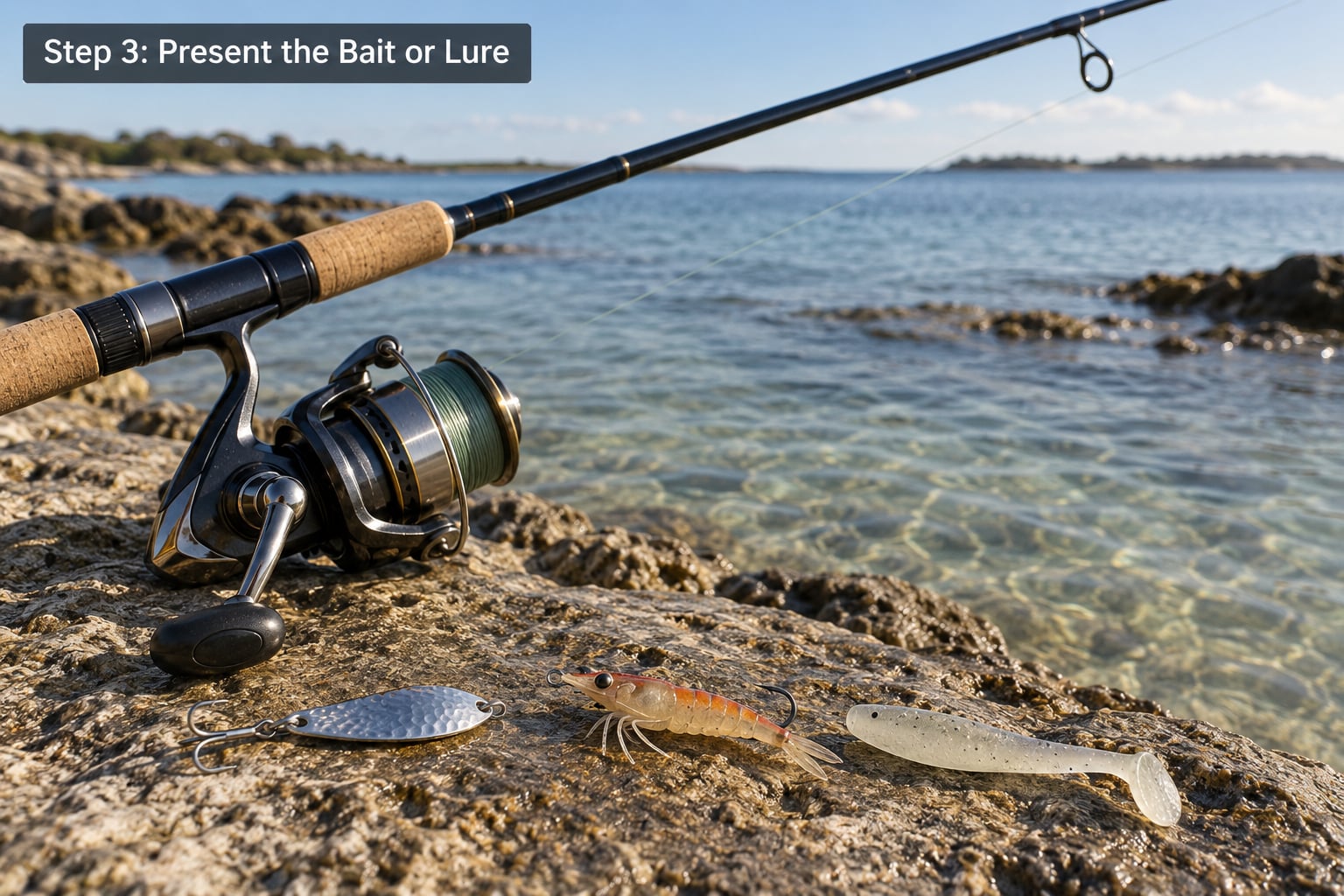
Put the bait where the fish are rather than where the water is deepest. Position the cast for the wind and the current: cast uptide and let the drift work the lure back through the strike zone, and if the wind is behind you, cast a little crosswind so the lure slides instead of blowing out of the area.
Which bait to use comes down to how much light is coming back off the bottom.
| Water clarity | Best choices | Why |
|---|---|---|
| Clear (you can see the bottom in 2 ft) | Small soft plastic on a 1/16 to 1/8 oz head, a gold spoon, cut bait free-lined | Fish are feeding on small things and they see you too. Go light, go slow, and go quiet. |
| Lightly stained | 1/4 oz paddle tail, live shrimp under a popping cork, cut mullet | There is still light for color to work, and the fish are less wary. |
| Stained or murky | Live shrimp, punch bait, a 1/4 to 3/8 oz head with a dark or red body | Scent and vibration carry the offer. Flash matters more than color once visibility drops. |
Angling forums genuinely disagree here, and it is worth saying so. Live shrimp is the most consistent bait most regulars have ever used, and it works year-round. Plenty of others fish dead bait only, because in cold water reds are not picky and a dead shrimp is cheaper. Nobody has found a single answer, and readers who insist on one are selling something.
When you can see individual fish, how you cast matters more than what you cast. Use a sidearm cast so the line and lure leave the rod low and land without a splash, and feather the spool on the way down so the spool does not slap the water. Lead the fish: cast ahead of a moving school, let the lure settle, and let the fish run into it. Fish that are hunkered and rooting in one spot want a placement just in front of their nose, not a lure dragged over their back.
Step 4: Work the Retrieve and Set the Hook
Match the retrieve to what the fish are doing. Moving fast means a brisk stop-and-go retrieve; fish that are milling slowly want a slow drag with stops; fish rooting in place want the lure sitting still until they commit.
Let the lure fall all the way to the bottom before the first twitch, and give the fish a few seconds to turn on it. In skinny water the bite is often a pickup rather than a hit, so the tell is weight, not a jolt. Set the hook by sweeping the rod to the side and setting your hard against the line tension, and keep a bend in the rod so a fish that picks up the bait and runs can throw the hook itself.
On dead bait free-lined without a weight, many anglers simply reel down and do not set the hook at all. The circle hook does the work if you keep steady light tension. On live bait under a popping cork, a firm hookset at the feel of the tap is fine. Whichever you choose, the leader needs enough slack that a fish turning away does not pull the hook out of its mouth.
Step 5: Land and Release the Fish
Keep the rod pointed at the fish and the line tight. A redfish in a foot of water will sound like it is a hundred yards away, because it is running through your leader and your drag at once.
When you bring it alongside, wet your hands first and slide the hook out with a dehooking tool or pliers. Do not lift a bull redfish by the jaw out of the water; support the body instead, and remember that anything over roughly 27 inches is a bull on most Gulf Coast regulations and is worth checking against your local slot limit before you decide.
Revive the fish in the water beside the boat for a few seconds until it kicks away on its own, then let it go. Reds carry a heavy slime coat, and handling them with dry hands strips it, which is the one thing you can do that reliably kills a released fish. A quick release also clears the spot for the next school.
Common Mistakes
Casting too far. Most beginners fish open water from a distance. Move the boat or wade closer until the fish are visible, then stop. Quiet proximity beats a longer cast every time in shallow water.
Wrong lure for the water. A bright 3/8 ounce jig in glass-clear water spooks the fish you can see. Step down the weight and the color until the presentation is nearly invisible, then change only one variable at a time.
Retrieving too fast. A straight retrieve at speed belongs to deeper water. Slow down, let the lure fall, and add stops and small twitches in clear water. Drop the rod and let a bite build before you react.
Fishing the wrong tide phase. Do not sit on a grass flat at low tide waiting for fish that have moved to the creek. If you must fish the falling tide, fish the front of the drain, the channel edge, and the oyster bars.
Not watching the water. Casting blind at a spot you picked off a chart is the most common way a good tide gets wasted. Spend ten minutes reading the flat before the first cast, and cast at what you saw rather than at the coordinates.
Hooking too early or too late. Setting on a nudge loses the fish; waiting through a head shake loses it too. Sweep to the side, set hard, and keep the rod bent until you have the fish or you have decided it is gone.
Failing to move. This one is worth its own protocol, because it is the biggest time waster in the sport. Make four or five good presentations with no interest, no follow-up bumps, and no second bite. That is your cue to move. A quiet spot with no feeding sign is a dead spot, and no lure will fix it. Cover water instead, and re-cover the first spot on the outgoing tide.
Two more that come up constantly: chumming cut bait in a shallow creek hooks rays, which spool your drag and eat the trip, so cut sparingly and lift before you feel a heavy pull. And keep the deck quiet. A dropped cooler lid will clear a flat of redfish in eighteen inches of water, which is why anglers drift on the troll, pole it, or wade.
Frequently Asked Questions
What is the best bait for redfish?
Live shrimp is the most consistent bait for redfish year-round, because it works in clear and stained water and across temperatures. Match it to conditions rather than picking one: cut mullet or dead shrimp on clear grass edges, shrimp under a popping cork in mid tide, and soft plastics on a light jig head when fish are refusing natural baits. Location and tide phase still decide the trip, not the bait in the tray.
What time of day is best for redfish?
Tide phase matters more than the clock, and the rising tide is usually the best window. Fish the first two hours of the incoming tide when reds push onto the grass edges, then work the creek mouths on the falling tide. In summer heat, keep to the cool ends of the day, early morning and last light. In winter, reds concentrate and feed steadily through the middle of the day.
What color attracts redfish?
Match the color to how much light comes back off the bottom. In clear shallow water, white, pearl, chartreuse, and natural shrimp colors work best. In stained or murky water, drop darker bodies like red, plum, or brown, and lean on flash and vibration from a gold spoon. In the murkiest conditions the lure’s silhouette and noise carry the offer, and color stops mattering much.
Do redfish bite at low tide?
Yes, but the fish and the fishing both concentrate. Low tide pushes reds off the open grass flats and into creek backwaters, deep channels, and the edges around oyster bars and rock piles. The same moving water that floods the marsh on the way in drains the bait out on the way out. Watch the tide table carefully, because the same low water that concentrates the fish can ground your boat in the mud.
What is the best water temperature to catch redfish?
Redfish feed hardest between about 65 and 75 degrees, when they spread out and work grass edges, creeks, and docks. Below that they bunch into warmer pockets such as deep creek backwaters and mud bottoms that hold heat, and they get less picky, which is why winter sight fishing works at all. Above 75 degrees they go shallow early and late and rest through the middle of the day.
How do you catch redfish from shore?
Fish structure that stays covered at low tide: creek mouths, channel edges, oyster bars, rock piles, and pilings. Arrive before the tide turns and work the drop with a medium spinning rod, then move along the shoreline as the water shifts. From shore you cannot get close, so keep the first cast tight to the edge, keep noise to a minimum, and expect speckled trout and rays to come along with the reds.
On your next trip, pick one spot that matches the tide you have, get close quietly, and spend the first ten minutes just reading the bottom for tails and mud clouds. Cast to what you actually see, give it a handful of good presentations, and if the fish are not there, move. That sequence, more than any lure in the box, is how to catch redfish in shallow water consistently enough to trust it on a bad tide.