For what to wear kayaking in cold water, the answer is short: dress for the water temperature, not the air temperature. If your water sits at 70F or below, you need a clothing system built for immersion: a moisture-wicking base layer, an insulating mid layer, and a waterproof shell or dry suit, plus neoprene for your hands, head and feet.
A 55F sunny afternoon with a light breeze can feel mild on shore. It will feel nothing like that after twenty minutes in the cockpit with spray coming off the bow. That gap between what the air feels like and what the water does to you is where most cold water mistakes happen.
Water conducts heat away from your body roughly 25 times faster than air does, which is why the same jacket that works for a walk works badly as paddling clothing. The U.S. Coast Guard treats water at 59F and below as dangerous, and most of the northern lakes, rivers and cold coastal water you would want to paddle in fall and spring sit right there.
Table of Contents
- What to Wear Kayaking in Cold Water
- What to Wear Kayaking in Cold Water by Water Temperature
- How to Dress for Kayaking in Cold Water
- Choosing Between a Wetsuit and a Dry Suit
- What to Wear on Your Hands, Head, and Feet
- Clothing Features That Matter in a Kayak
- How to Stay Warm Before, During, and After a Paddle
- Common Clothing Mistakes in Cold Water
- Safety Gear and Paddle Clothing Decisions
- Frequently Asked Questions
- Is cotton okay for kayaking in cold water?
- Do I need a wetsuit or a dry suit for winter kayaking?
- Should I wear boots or water shoes when kayaking in cold water?
- What should I wear underneath a kayak dry suit?
- How do I stay warm if I capsize in cold water?
- Can I wear ordinary hiking boots for winter kayaking?
- Conclusion
What to Wear Kayaking in Cold Water
The short version: plan for being wet, not just for being cold. Everything you wear should work after a wet exit, and it should keep working ten minutes after that, because ten minutes is roughly how long useful muscle function lasts in genuinely cold water.
Three rules cover most of it. Dress for immersion, not for sun and breeze. Keep every layer dry once you are on the water. And wear zero cotton, no matter how good it looks leaving the car.
What to Wear Kayaking in Cold Water by Water Temperature
Water temperature decides the outfit, and it varies far more than air temperature does from one launch to the next. A reservoir can drop ten degrees between June and October while the daytime air barely changes.
| Water temperature | What to wear | Risk level |
|---|---|---|
| Above 70F | Synthetic or merino base layer, fleece mid layer, light windproof shell | Low from heat loss, still high from wind and sun |
| 60-70F | Base layer plus 100-weight fleece and a waterproof shell, neoprene booties | Moderate; a swim would be uncomfortable but survivable |
| 50-60F | Full three-layer system or a wetsuit; dry top plus long underwear underneath | High; cold shock is likely in the first minute |
| Below 50F | Drysuit with 200 to 400g insulation, neoprene hood and gloves, spare dry layers on shore | Severe; treat every paddle as an immersion event |
Below 50F is where clothing stops being comfort and starts being equipment. That range covers a lot of Great Lakes and inland northern water from November through April, plus most of the Atlantic and Pacific coasts in winter.
How to Dress for Kayaking in Cold Water
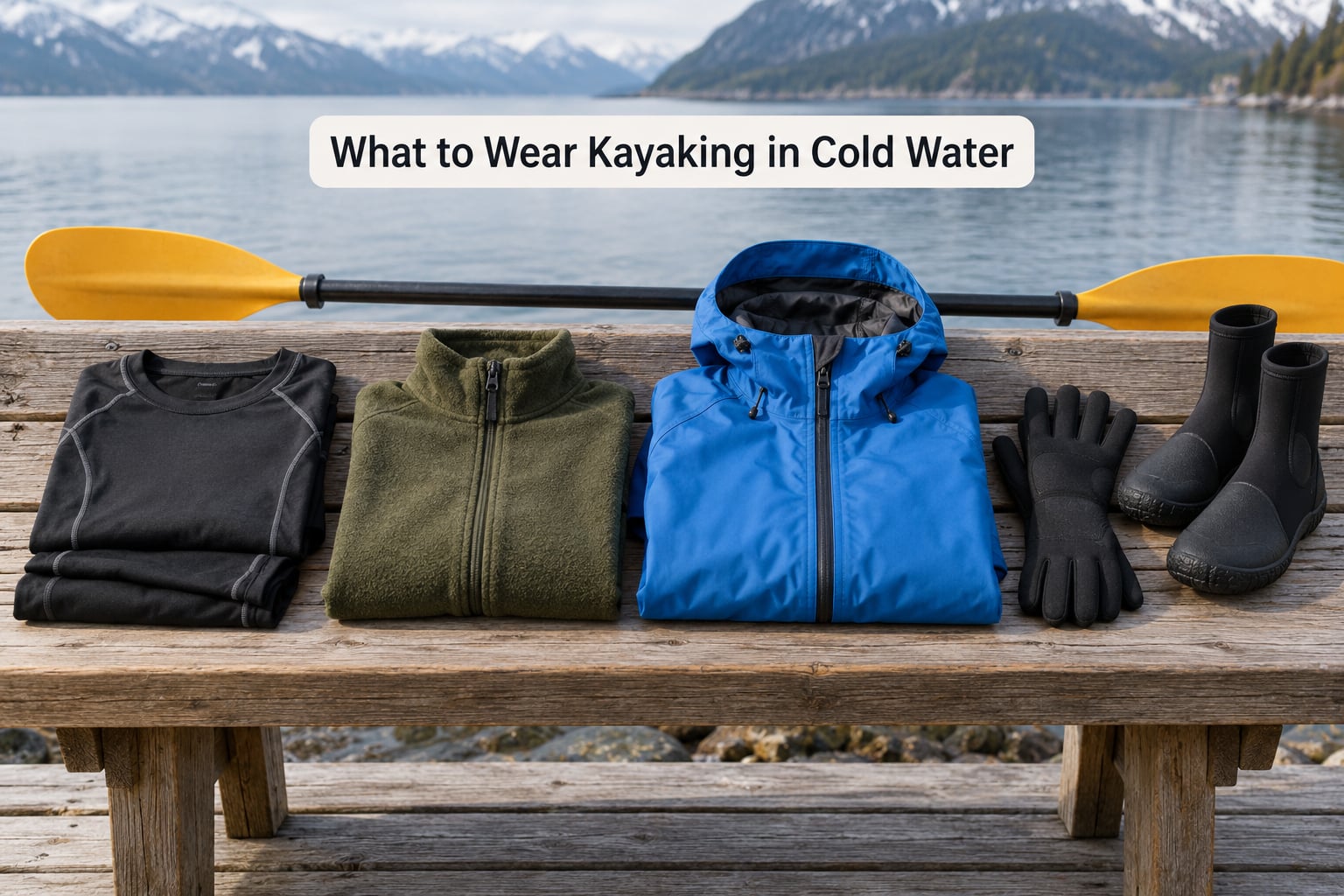
The torso is where the work happens, and it takes a three-layer system. Base layer: synthetic or merino, thin, snug, and never cotton, because its only job is moving sweat off your skin. Mid layer: fleece, grid fleece or synthetic insulation, loose enough to flatten down without compressing.
Outer layer: a waterproof-breathable shell for splashes and wind, or a dry suit if you expect immersion. Every layer should be roomy enough that it traps air when dry. The trap is thinking more layers means warmer; damp insulation between your skin and the water is a handful of times less warm than dry.
Your legs need less insulation than your chest. Paddle work generates plenty of heat through your core and arms, so the classic setup is thin long underwear under water-resistant paddle pants, with neoprene booties over dry socks.
For hands, neoprene pogies sit over bare hands and keep grip and paddle feel. For your head, a neoprene hood is worth it once air temperature drops near freezing, and it protects ears more than the torso even. Keep each layer loose enough to stay effective when wet, which is the single most common reason an expensive kit underperforms.
Choosing Between a Wetsuit and a Dry Suit
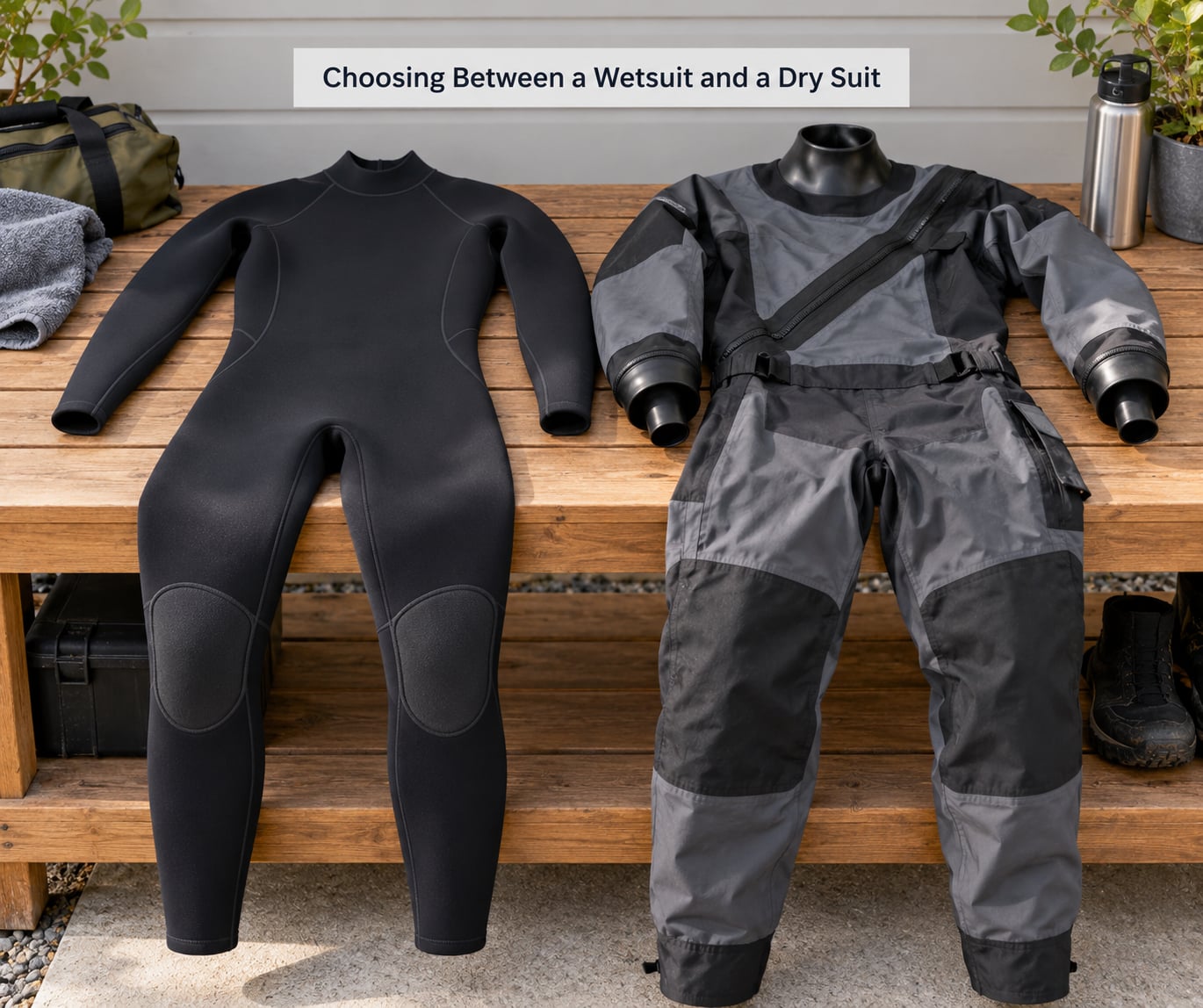
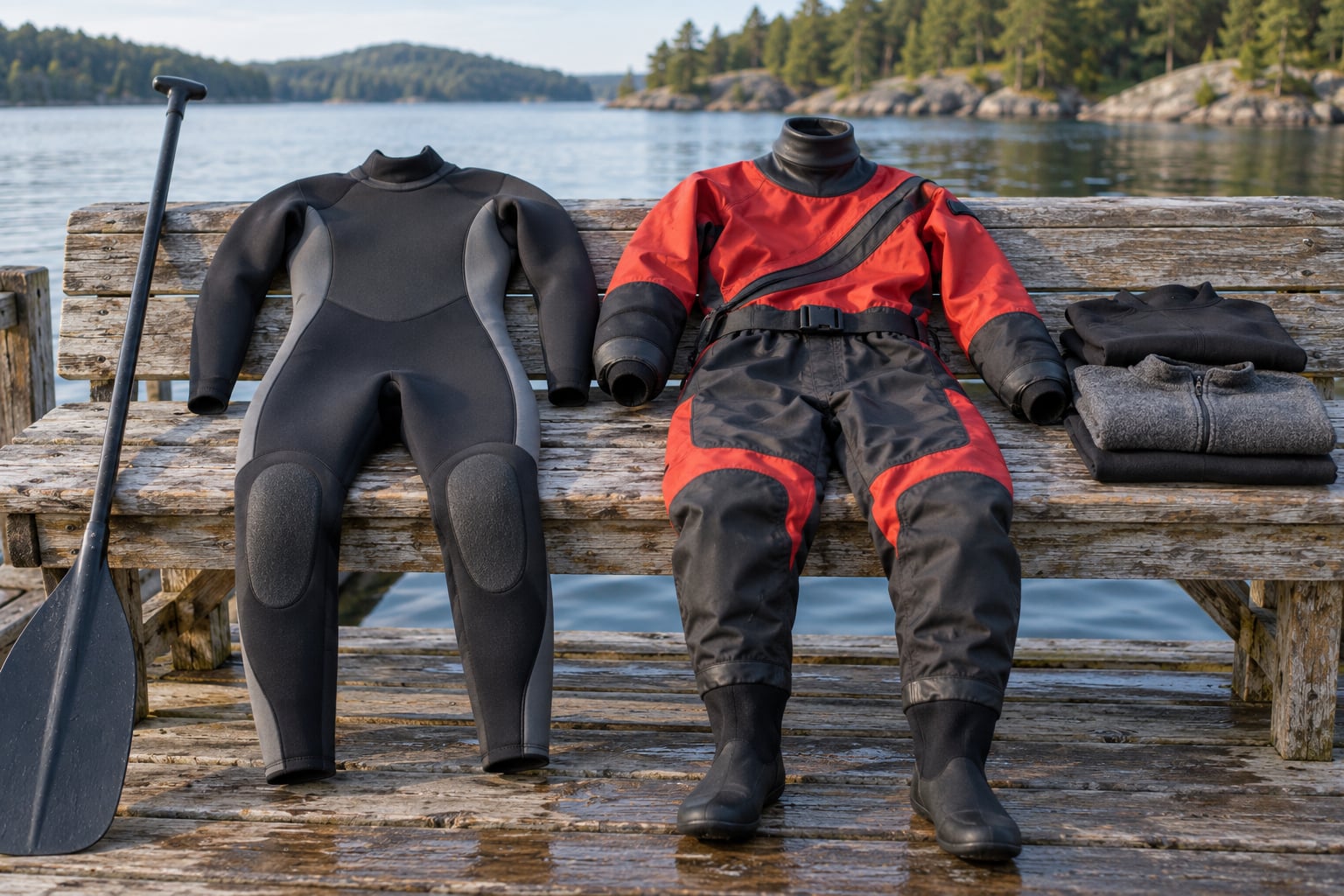
A wetsuit keeps a thin layer of water against your skin that your body warms; that warmed film is the insulation. A dry suit keeps everything under the seals dry, so your own fleece and long underwear do the insulating. One relies on neoprene thickness, the other on what you wear underneath.
| Wetsuit | Dry suit | |
|---|---|---|
| Warmth | Depends on millimetres of neoprene; weak at both temperature extremes | Depends on your underlayers; easily adjustable |
| Mobility | Close fit, low drag, but stiff when thick | Looser and bulkier, restricts reach more |
| Wind and rain | Blocks wind poorly once the surface film is disturbed | Blocks both if sealed properly |
| Getting into it | Hard in the wind on a dock or shore | Heavy, especially on a wet launch |
| Best for | Recreational paddling in 50F and warmer water | Winter, near-freezing water, and anyone cold-sensitive |
Wetsuits have a comfort ceiling as well as a cold limit. Above roughly 65F most paddlers are overheating in anything thicker than a shorty or a spring suit.
Dry suits come as full suits and as dry tops with separate lower legs. A dry top over dry pants gives you the same core protection with far less bulk, and it is easier to climb into from a wet dock.
A word on the outdated rule. You may hear the 120-degree rule, which says a paddler in a 50F wetsuit is fine in 120F air. Cold water specialists at the National Center for Cold Water Safety push back on it, because it assumes your body can dump heat into the air while your torso is surrounded by water. Water temperature and exposure time are the only numbers that matter.
What to Wear on Your Hands, Head, and Feet
Pogies beat gloves for most paddlers. A neoprene mitt with a palm opening keeps your hands warm while leaving fingers on the paddle, which matters for control and for any self-rescue you might need. Full neoprene gloves are worth adding once air temperature drops below freezing, mainly because dexterity loss is a real hazard.
Frozen fingers make a wet exit or roll far harder. If your hands go numb in the first ten minutes, you are underdressed for the paddle you are actually doing.
For feet, neoprene booties with a non-slip sole are the standard answer. Water shoes with open mesh get cold fast and soak through. Whatever you wear needs a loose toe box, because toes compress when they are cold and tight toe boxes restrict circulation and invite blisters.
Thick neoprene socks inside the booties add warmth for near-freezing water. Pair them with dry socks above the booties rather than inside, so a wet foot still has a dry layer next to your skin.
For your head, neoprene hoods protect ears and the skull, which lose a surprising share of your heat with everything else submerged. A fleece-lined beanie works for cold air on an empty boat but does nothing once you are in the water.
Clothing Features That Matter in a Kayak
Fit beats nearly every other feature. A suit one size down with sleeves rolled and cuffs strained will leak; a suit with slightly roomy arms lets you reach your paddle properly and move your hands through a wet exit. Buy a dry suit by trying it on with the layers you will actually paddle in.
Cuffs and neck seals decide whether a dry suit is a dry suit. Latex seals are durable and cheap to replace; neoprene seals are softer and easier on the skin but fail sooner. Neoprene wrist and neck gaskets paired with an adjustable spray skirt give the cheapest paddlers the most protection per dollar.
Look for waterproof breathable fabric in the shell, taped seams, and a hood sized to go over a hat without blocking peripheral vision. Socks inside the suit should be thin, because thick socks inside the booties create the cramped toe box that wrecks your feet.
Ventilation matters more than people expect. Underarm zips and a chest zip let you dump heat on a hard paddle and stop you sweating into your insulation.
Pockets should be sealed and reachable without tipping the boat. A fleece-lined pocket to warm your hands between paddle sessions is a small luxury worth paying for. Any hardware, cord or clip near your cockpit rim can snag on gear, so nothing loose goes around your waist.
How to Stay Warm Before, During, and After a Paddle
Before you launch, check the water temperature forecast rather than the air temperature, and tell someone your launch point and expected return. Walk before you paddle. A short brisk walk gets blood moving without working up a layer of sweat that then chills you on the water.
Keep dry clothes in your car, not in the boat. A dry base layer, a mid layer and a pair of socks in a sealed dry bag is the whole shore-side plan, and changing into them within minutes of getting out matters more than almost anything else you do that day.
During the paddle, add or shed layers before you need to, not after. Loosen a chest zip and open underarm vents whenever you feel the first bead of sweat, because damp insulation is the failure mode that catches people out.
If you are cold enough to be shivering steadily twenty minutes in, the honest answer is that the trip is over. Turn back while you can still pull strongly and still think clearly, because cold hands and poor judgement arrive before hypothermia does.
Common Clothing Mistakes in Cold Water
Cotton is the first one, and it appears in every forum thread. Denim and cotton hoodies soak in seconds, drain heat far faster than synthetics, and then dry over hours. Wear polyester or merino instead.
Over-dressing out of fear is the second. Paddlers describe adding layer after layer, sweating during the paddle-in, and ending up colder than they would have been in less clothing. Several people on r/Kayaking now plan less insulation for a relaxed day paddle and add fleece only for rolls, rescue practice or wind.
Hiking boots are the third. A thick waterproof boot holds a puddle of river water in it all day, and the warmth it offers is worth less than the dry layer and neoprene bootie you gave up.
Flip-flops and open water shoes do nothing for foot warmth and nothing for a slippery launch. Whatever footwear you pick needs to be neoprene with a grippy sole and room for your toes.
Buying the dry suit without testing it is the fourth mistake. Rented suits fit badly at the neck and wrists, which defeats the whole point. Trial fit it in the shop with your underlayers on, seated in a kayak if you can manage it.
Skipping the dress rehearsal is the fifth. Wade to chest depth in the full outfit before the season starts and stay in for several minutes. Paddlers on the Paddling.com forums credit this habit with catching fit problems and overheating before they found out the hard way on the water.
Finally, cutting off layers at the waist while you are still in the boat is not a strategy. Loose tops and hoods trap air and shed spray; the cockpit is where you keep your insulation.
Safety Gear and Paddle Clothing Decisions
Clothing is not safety equipment. It buys you time; it does not keep you afloat. Everyone on the water needs a properly fitted personal flotation device that they can actually put on, and cold water paddling is exactly the situation where a low-profile recreational vest fits awkwardly over a dry suit.
Beyond that, cold water kits usually mean a whistle, a dry bag with a change of clothes, a thermos, a spare hat, a bailer or sponge for a flooded cockpit, and a headlamp if you might be back after dark.
Know your limits before you launch. If the water is at or below 50F, if you cannot swim confidently in clothes, if you are paddling alone, or if you have no way to get out of the water quickly, the right call is usually to wait for better conditions or take a lesson.
The American Canoe Association and local paddling clubs run cold water and rescue courses, and a single session covers wet exits, rolls and the recovery techniques that turn a bad swim into an inconvenience. Get local, current instruction for the water you actually paddle.
Frequently Asked Questions
Is cotton okay for kayaking in cold water?
No. Cotton is the single most repeated mistake in cold water paddling threads. Once wet it pulls heat from your body far faster than synthetic or wool and takes hours to dry, so it works against you exactly when you need warmth. Choose polyester, merino wool or other synthetics for base layers, mid layers and dry tops instead, and keep cotton for the dry clothes waiting in your car.
Do I need a wetsuit or a dry suit for winter kayaking?
Below about 50F water, a dry suit is the better tool, because it keeps your own insulation dry and you can adjust the layers underneath as conditions change. A wetsuit depends on neoprene thickness and struggles at temperature extremes, though it is hard to beat for recreational paddling in 50F and warmer water. Many paddlers use a dry top with separate legs for the same protection and far less bulk.
Should I wear boots or water shoes when kayaking in cold water?
Neoprene booties with a non-slip sole are the right answer. Water shoes with open mesh soak through and lose warmth within minutes, and hiking boots hold water that drains heat all day. Look for a loose toe box, since cold toes compress and tight boots restrict circulation and cause blisters. Add thin neoprene socks inside the booties for near-freezing water, and a layer of wool socks above them for warmth after you get out.
What should I wear underneath a kayak dry suit?
Wear synthetic or merino long underwear as a base layer, then 200g fleece in 50-60F water or 400g fleece or Thinsulate in colder water. A common setup described by experienced paddlers is polypropylene long johns, then 200 to 400g Thinsulate, then a polar fleece top for immersion work. Keep total thickness loose rather than snug, and try the whole stack in chest-deep water first so you know whether you overheat in it.
How do I stay warm if I capsize in cold water?
Your clothing plan decides most of it, because your dry layers are what keep working after you go in. Expect cold shock in the first minute, a gasp reflex and loss of muscle control, then about ten minutes of useful muscle function. Get out of the water and away from the boat, then change into dry clothes within minutes rather than trying to warm up in wet gear. A partner or shore contact should know where you launched and when you expect to return.
Can I wear ordinary hiking boots for winter kayaking?
I would not choose them. Waterproof hiking boots are built to keep water out of deep wet mud, and they do the opposite in a kayak, holding a puddle of cold water against your foot all day. Worse, they rarely have the neoprene thickness needed for near-freezing water. Neoprene booties with a grippy sole and a roomy toe box cost less, keep your feet warmer, and get you in and out of the water far faster.
Conclusion
If you are still deciding what to wear kayaking in cold water, start by checking the water temperature forecast, not the air temperature. From there, build a loose three-layer system with no cotton, keep dry clothes in the car, and step up to a wetsuit or dry suit once the water drops past the range your clothing can handle. Test the whole outfit in chest-deep water before you rely on it.
Last reviewed for 2026. Cold water guidance changes as research and rescue standards develop, so check current guidance from the National Center for Cold Water Safety and your local paddling club before committing to a season of cold water trips.