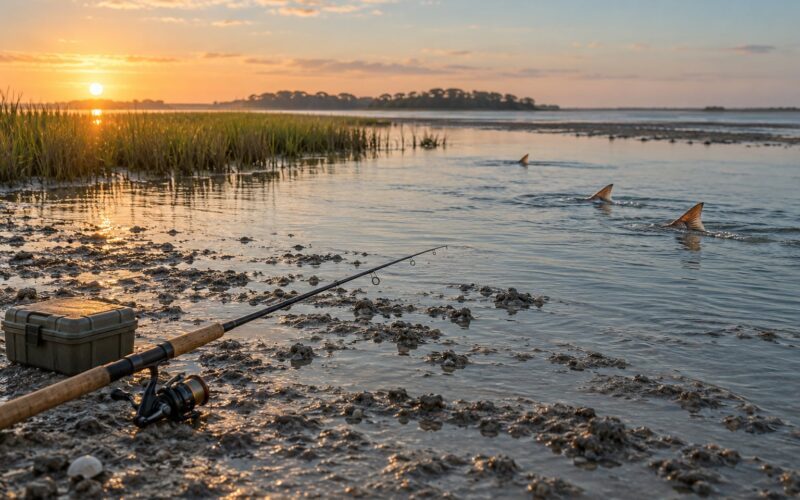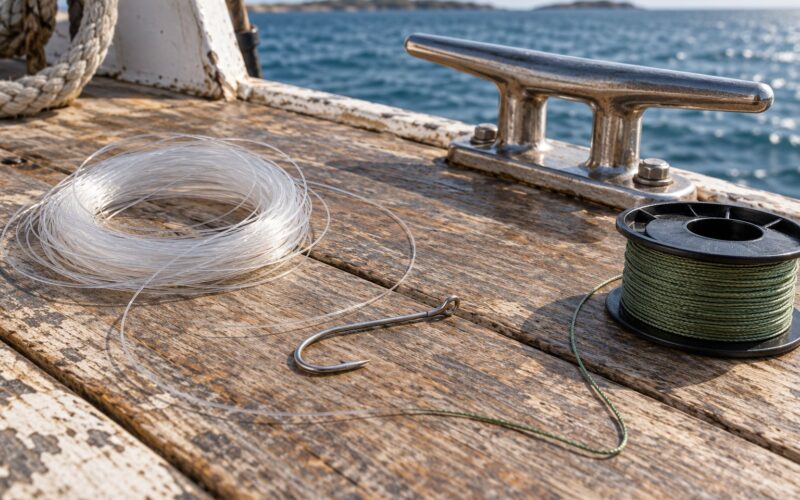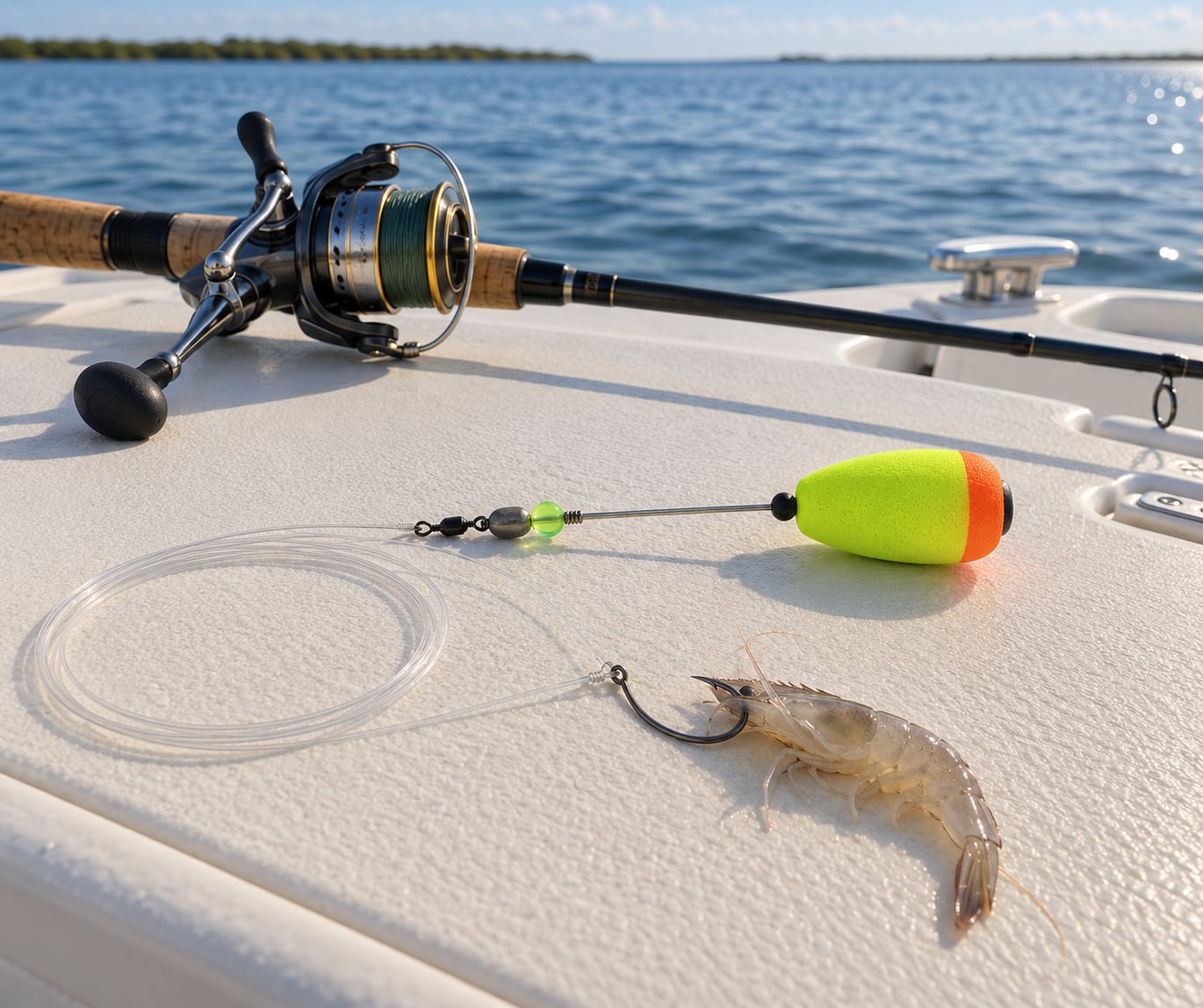
A popping cork rig is a weighted surface float slid onto your main line with a leader hanging beneath it that carries a live shrimp or soft plastic just above the bottom. Snapping the rod tip makes the cork clack and imitate a fleeing shrimp or minnow, which is what pulls speckled trout in from across a flat. It is the setup I would hand a beginner in 2026, and it takes about five minutes on the dock.
Speckled trout are shrimp eaters first and foremost, and the popping cork works because it borrows the one thing live bait cannot give you: noise and movement that carries further than the cast. You also get a visual read on the water every time the cork clacks, so you learn where fish are holding instead of guessing.
This guide stays in order of operations, top to bottom, so you can tie one without stopping halfway. It covers the parts, the tie-on, the terminal tackle, sinker depth, and the mistakes that make the rig stop working.
Table of Contents
- What You Need
- Step-by-Step: How to Rig a Popping Cork for Speckled Trout
- How to Tie the Leader and Cork
- How to Add the Hook and Bait for Speckled Trout
- How to Set the Sinker and Check the Depth
- Common Mistakes
- Frequently Asked Questions
- What hook should I use with a popping cork for speckled trout?
- How often should you pop a popping cork?
- What is the best bait to use when fishing with a popping cork?
- How long should the leader be on a popping cork rig?
- When is the best time to fish a popping cork for speckled trout?
- What colors do speckled trout see best?
- Conclusion
What You Need
The whole list is short, and most of it is stuff you already own from freshwater fishing. Buy nothing exotic to start.
- Rod and reel: A 7-foot medium or medium-light spinning outfit handles anything from a marsh bank to a channel edge. Baitcasters work too, but the softer tip of a spinning rod makes the pop easier to feel and the circle hook hookset harder to botch.
- Main line: 10-15 lb braid in a bright color. Braid has almost no stretch, which means the pop transmits straight to the cork instead of soaking up in the line.
- Popping cork: One weighted foam cork on a wire stem. Cupped corks slosh more water and carry a little deeper; oval corks push a bigger wake and ride on top. Most flats work sits in two to four feet, so a mid-weight cork is the safe default.
- Bead and swivel: A glass bead plus a small barrel swivel acts as a stopper so the cork cannot slide down the leader. A double-barrel swivel with one side open works as well.
- Leader: 18-24 inches of 15-20 lb fluorocarbon. Fluorocarbon sits low in the water and hides better than mono, and the thinner diameter keeps a slack line from cutting through the surface.
- Terminal tackle: A 1/0 or 2/0 circle hook for live shrimp, or a 1/16 oz jig head for a 3-inch soft plastic. A small split ring lets you swap bait without retying.
- Bait: Live shrimp, a small menhaden or mullet minnow, or a 3-inch paddle tail, shrimp, or sparkle beetle soft plastic.
- Optional: A sliding sinker or sinkerless bead for deeper water, a pair of split ring pliers, and a spare cork in case one cracks.
Tie two or three before you leave the house. Swapping a finished rig beats rebuilding one with cold hands and a wind coming off the water.
Step-by-Step: How to Rig a Popping Cork for Speckled Trout
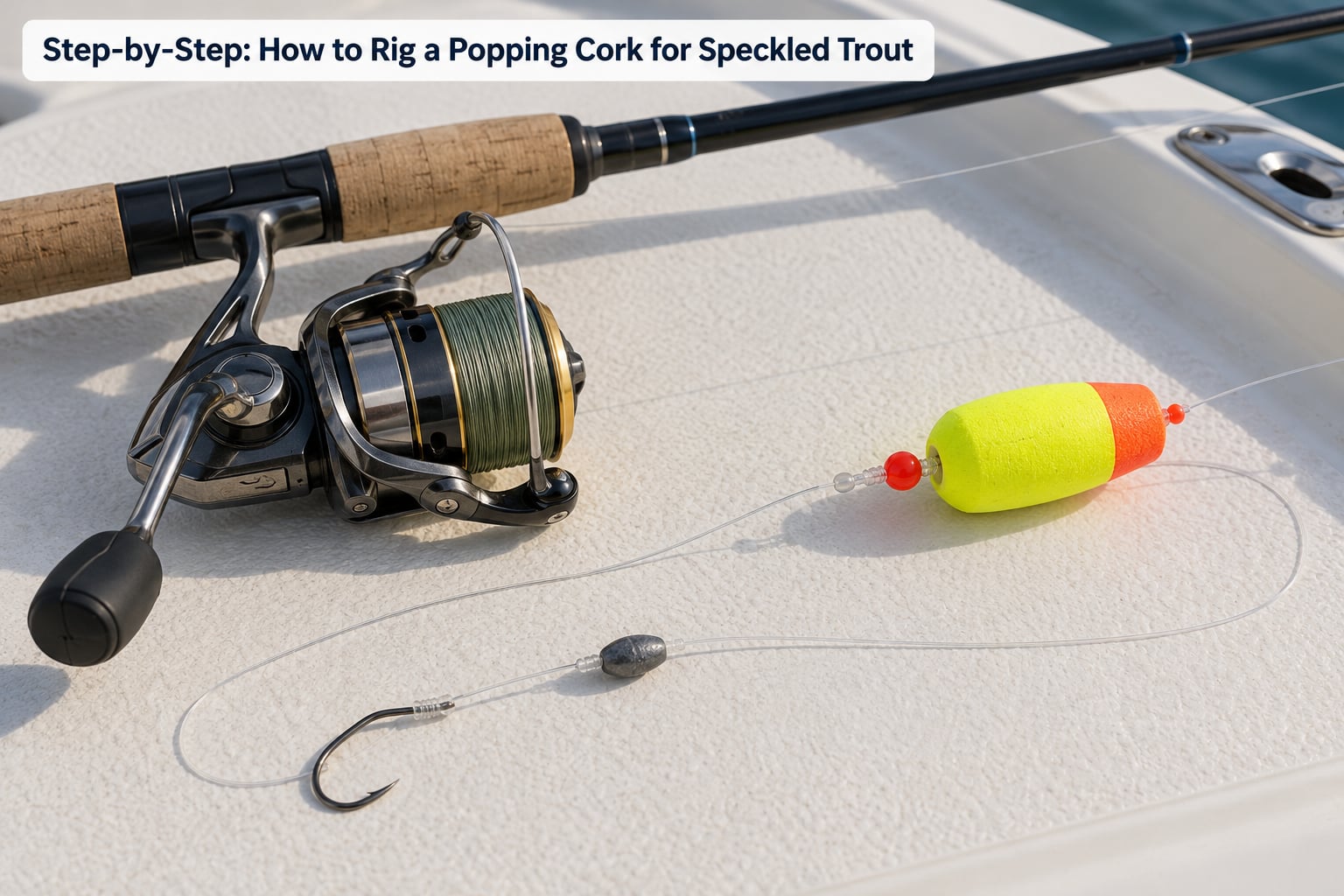
The order matters less than people think, as long as the stopper goes on before the leader. Here is the sequence that works without tangling.
How to Tie the Leader and Cork
Cut 18-24 inches of fluorocarbon and tie it to the end of your braid with a Palomar knot. If you have never tied one, use an improved clinch; it is easier and the thinner leader makes the wrap count high.
Now take the free end of the braid and thread it through the wire stem of the cork from the top down, so the cork stops against the knot and cannot slide off. Next, slide a glass bead onto the leader, followed by a small barrel swivel, and tie a snug overhead knot in the leader just below them. That bead-and-swivel sandwich is your stopper.
Run the leader through the swivel and tie your terminal tackle to the other end. Ninety seconds of checking that the cork slides freely and the stopper holds it in place is worth doing at the dock, not at the boat ramp.
How to Add the Hook and Bait for Speckled Trout
For live shrimp, tie a 1/0 or 2/0 circle hook to the leader with the same knot. Most anglers thread the shrimp tail through the hook and slide the hook point back through the body, just ahead of the tail. That tail-in placement lets a spotted seatrout swallow the bait whole instead of feeling the point early.
For artificials, tie a 1/16 oz jig head and rig a 3-inch soft plastic weedless by threading the head point through the nose, up the belly, and back out the back. The jig head flips the plastic upright so it sits nose-up and wobbling above the bottom.
On color, specks pick up reds, pinks, chartreuse, and anything that looks like a shrimp. Natural or translucent bodies work in clear water; glow or bright sparkle bodies earn their keep on dark bottoms and overcast afternoons.
How to Set the Sinker and Check the Depth
For two to four feet of water, run sinkerless. The cork itself carries the weight and the bait rides 12 to 24 inches under it, which is exactly where trout hold over a flat or along a marsh edge.
In deeper water or current, add a sliding sinker on the leader above the swivel. Pinch it with two soft rubber stops placed 3 to 6 inches apart, so you can slide it up or down the leader for different depths. Too tight and the bait cannot swim; too loose and it slides all the way down.
Before each cast, lay the rig in the water beside the boat and reel slowly. The cork should track straight without spinning on the surface and the bait should ride above the bottom, dragging lightly at most. If the cork plows under, the weight is too much or the leader is too short for that depth.
Common Mistakes
Most failed rigs come down to one of six things, and each has an easy fix.
Line twist from a sloppy knot. A knot that leaves a tag end sticking up will spin all day and send the leader into a bird’s nest. Trim every tag end flush and pull the knot down tight before you slide anything on.
A misplaced bead. If the stopper goes on below the cork rather than between the cork and the swivel, the cork slides down and the rig stops working. Put the cork on first, then the bead, then the swivel.
Cork that is too heavy or too light. A heavy cork in shallow calm water pulls the bait to the bottom where you cannot see anything. A cork that is too light on a windy flat pops weakly. Match cork weight to depth and current, and keep a second weight in the box.
Bait riding too low or too high. Too much leader length and the bait sits in the mud. Too little and trout cannot get a full look at it. The pause is when trout commit, so let the bait hang and hover during that window instead of dragging.
Jerking a circle hook. A hard snap pulls the point straight through a shrimping trout’s mouth. Point the rod at the fish, reel hard enough to take up slack, and let the hook turn itself in over one to two seconds.
Popping without a plan. Two quick pops, then a pause of three to five seconds. In a stiff breeze, pop harder and pause longer. On glass-calm water, go soft and short. The pause is where the strike happens, not the noise.
Frequently Asked Questions
What hook should I use with a popping cork for speckled trout?
A 1/0 or 2/0 circle hook is the standard choice for live shrimp, because its wide gap and low point let a spotted seatrout swallow the bait before the point touches its mouth. Tie it on the leader with a Palomar or improved clinch knot. For a soft plastic, skip the hook entirely and use a 1/16 oz jig head instead. Set the hook by reeling, never by jerking the rod.
How often should you pop a popping cork?
Pop twice, then pause three to five seconds. That cadence mimics a shrimp kicking away from a predator and gives trout time to commit during the quiet window. In a stiff wind your cork already has surface noise, so pop harder and extend the pause to six or seven seconds. On calm water, go softer and shorter, because every clack travels a long way.
What is the best bait to use when fishing with a popping cork?
Live shrimp is the most reliable choice for speckled trout, rigged tail-in on a 1/0 or 2/0 circle hook. Menhaden and mullet minnows work in colder months when shrimp are thin. For artificials, a 3-inch paddle tail, shrimp, or sparkle beetle on a 1/16 oz jig head covers most days. Pick a size the trout can swallow, since large hooks and thick plastics cut the hookset short.
How long should the leader be on a popping cork rig?
Start with 18-24 inches of 15-20 lb fluorocarbon, which is the range most inshore anglers land on and what the rig was designed around. Shorten toward 12 inches in very shallow water or heavy current so the bait rides closer to the cork. Lengthen toward three feet in deeper water or slack tide to keep the bait clear of the bottom.
When is the best time to fish a popping cork for speckled trout?
Moving tide around marsh banks, docks, and drop-offs, especially an hour or two either side of the change, is the best window. Overcast mornings and late afternoons also work well because trout stay shallower and hunt harder. Skip the rig in heavy wind, deep water, or strong current, where the cork loses contrast and a bottom rig suits the conditions better.
What colors do speckled trout see best?
Speckled trout pick up reds, pinks, and greens, which match the colors of the shrimp and baitfish they feed on all summer. Chartreuse and white work as contrast colors over dark grass and mud bottoms. In clear water, go natural or translucent so the bait blends in. On overcast days and stained water, pick the loudest option in the box.
Conclusion
Start simple and let the water tell you what to change next. A weighted cork on 10-15 lb braid, stopped with a bead and swivel, an 18-24 inch fluorocarbon leader, and a 1/0 circle hook holding a live shrimp will catch trout in most marsh water.
Tie a couple of spares before you launch, cast to a rising fish or a dark drop-off, and work the pop-pause rhythm. Once you find the depth where they are holding, shorten or lengthen the leader and slide the sinker until the bait rides where you see the strikes.