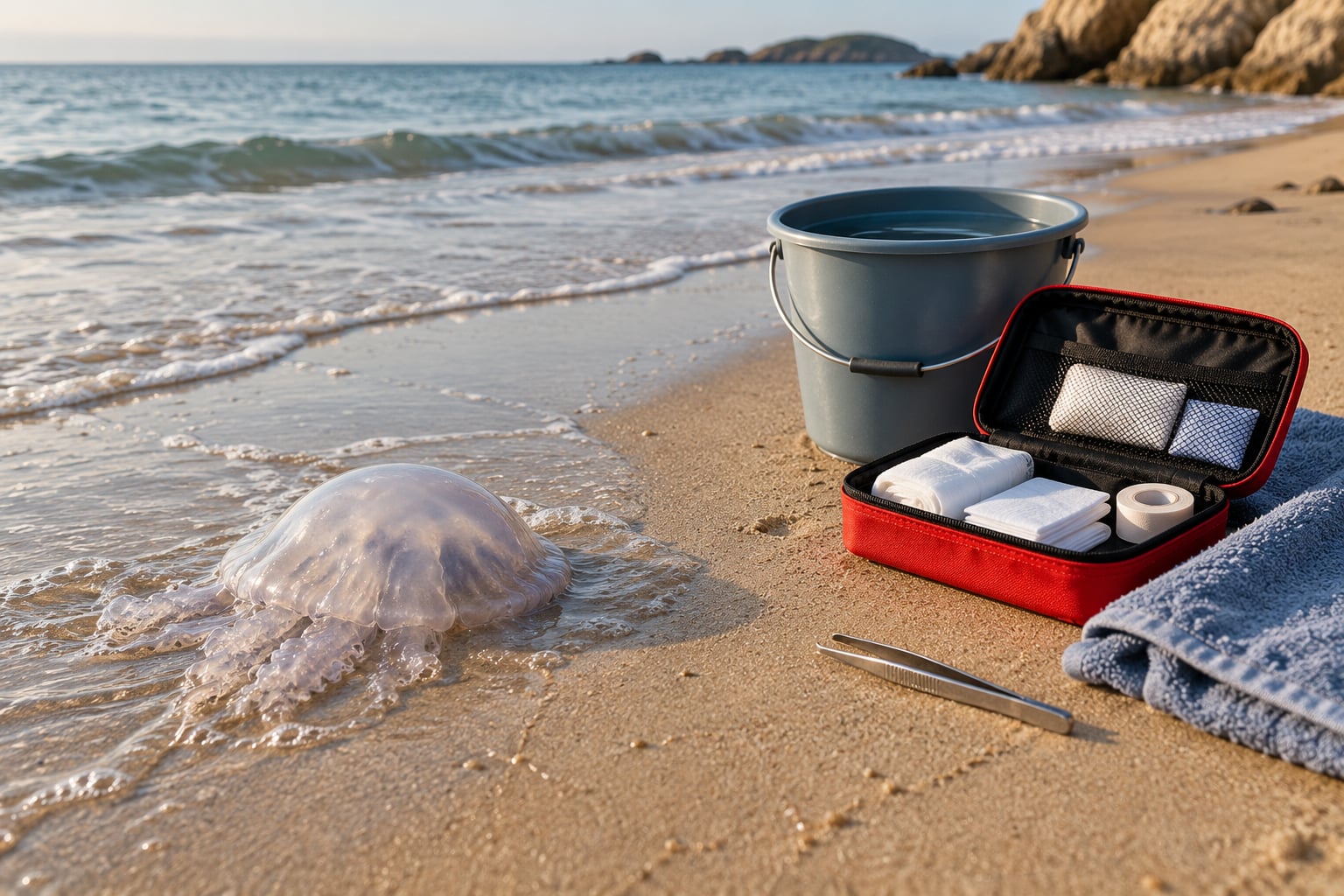
Get out of the water, do not rub the sting, lift off any tentacles still attached with tweezers or a firm plastic card, rinse the area with seawater rather than fresh water, then soak it in hot water at 107 to 113 degrees Fahrenheit (42 to 45 degrees Celsius) for 20 to 45 minutes. Call emergency services straight away if there is trouble breathing, faintness, or swelling of the face or throat.
Most stings at a coastal beach are uncomfortable rather than dangerous, and the pain relief is mostly mechanical: heat breaks down the venom protein, and removing tentacles stops more venom entering the skin. The whole beach-side response takes about 30 minutes of your attention, and no special training is needed.
A sting happens when microscopic stinging cells called nematocysts on the animal’s tentacles fire into your skin and inject venom. Those cells can keep pumping for a while after the jellyfish detaches, which is why speed beats every home remedy people carry in a dive bag.
This guide is general first-aid information, not medical advice. If you have a known allergy, a heart condition, or are pregnant, or if the sting covers a large area or involves a child, get advice from a clinician or emergency line rather than working through it alone.
Table of Contents
- What You Need
- Step-by-Step: How to Treat a Jellyfish Sting at the Beach
- 1. Get out of the water and assess the sting
- 2. Remove tentacles without spreading venom
- 3. Rinse the area with seawater
- 4. Use hot-water immersion for pain relief
- 5. Clean, cover, and monitor the sting
- Common Mistakes
- Rubbing or scratching the sting
- Using bare hands to pull tentacles off
- Applying urine, alcohol, butter, ammonia, or meat tenderizer
- Using fresh water, ice, or a cold beach shower
- Using an open flame or boiling water
- Ignoring severe symptoms
- Prevention and beach safety
- Frequently Asked Questions
- Should I put vinegar on a jellyfish sting?
- How long should I soak a jellyfish sting in hot water?
- How long does a jellyfish sting usually hurt?
- When should I seek medical care for a jellyfish sting?
- Can I go back in the water after being stung?
- Conclusion
What You Need
Almost everything below is free or already in a beach bag. The two items worth buying before you go are a pair of sturdy tweezers and a way to heat water.
- A source of comfortably hot water. A kettle, a thermos, or a bucket of water heated on a camping stove gets you to 42 to 45 degrees Celsius without relying on a cold beach shower.
- Tweezers, or a firm plastic card such as a credit card, for lifting tentacles and tentacle fragments off the skin.
- Gloves, if you have them, so you never work with bare hands on the sting.
- A clean towel to pat the area dry and to catch loose tentacles as you remove them.
- A first-aid kit with an antihistamine, a hydrocortisone cream, calamine lotion, and a pain reliever you have used safely before.
- A bottle of clean seawater. Do not rely on fresh water for the first rinse.
- Access to a lifeguard, or your local beach authority’s jellyfish warnings and species guidance for that stretch of coast.
- Vinegar, and only if the local guidance for your beach calls for it. Vinegar is right for some tropical species and actively harmful for others.
A lifeguard station is the fastest source of local species advice, and the flags at the beach entrance usually tell you whether stingers are active that day.
Step-by-Step: How to Treat a Jellyfish Sting at the Beach
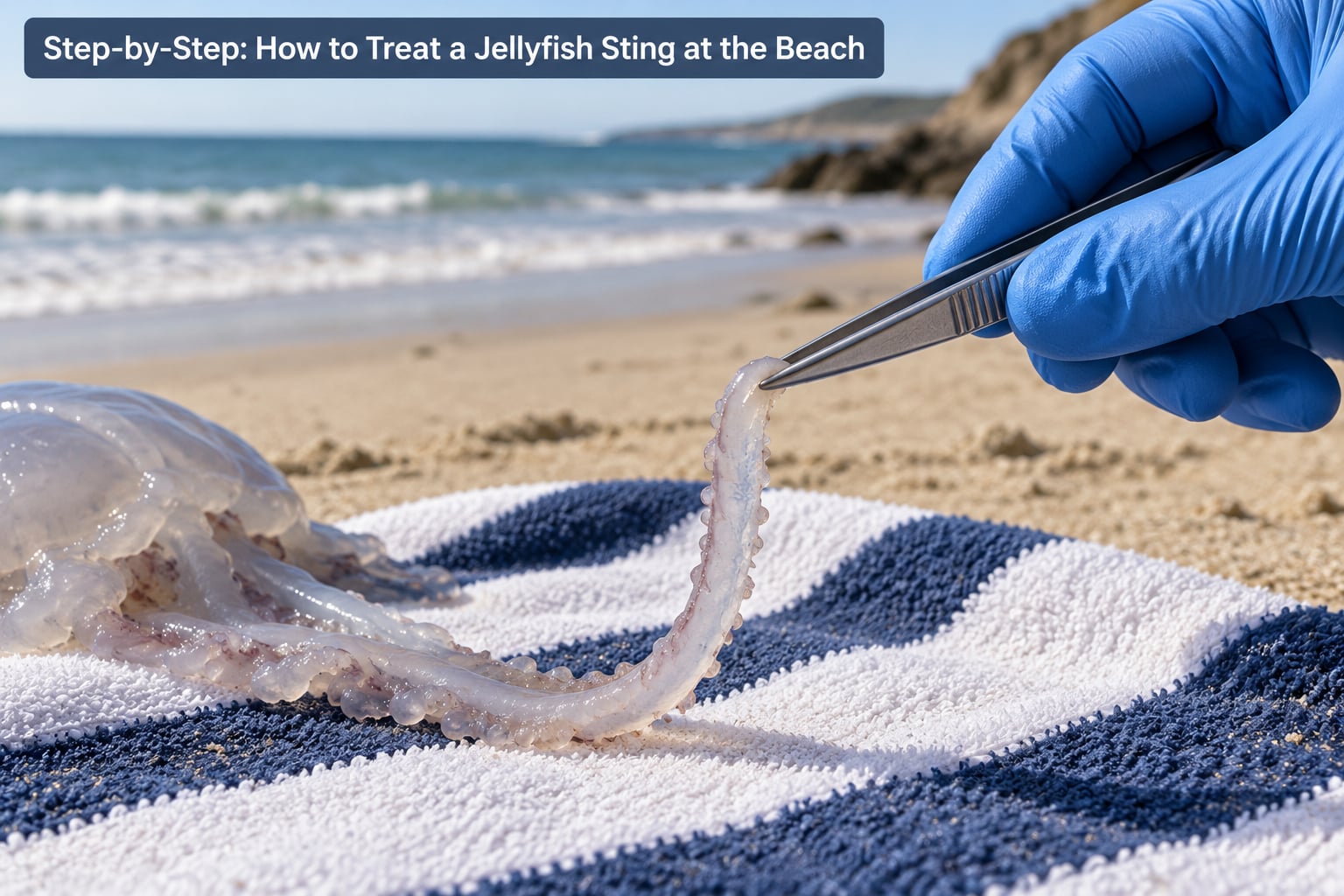
The order matters. Leaving the water, then removing tentacles, then rinsing, then heat, in that sequence, is what the American Red Cross, Mayo Clinic, and Cleveland Clinic guidance all agree on.
1. Get out of the water and assess the sting
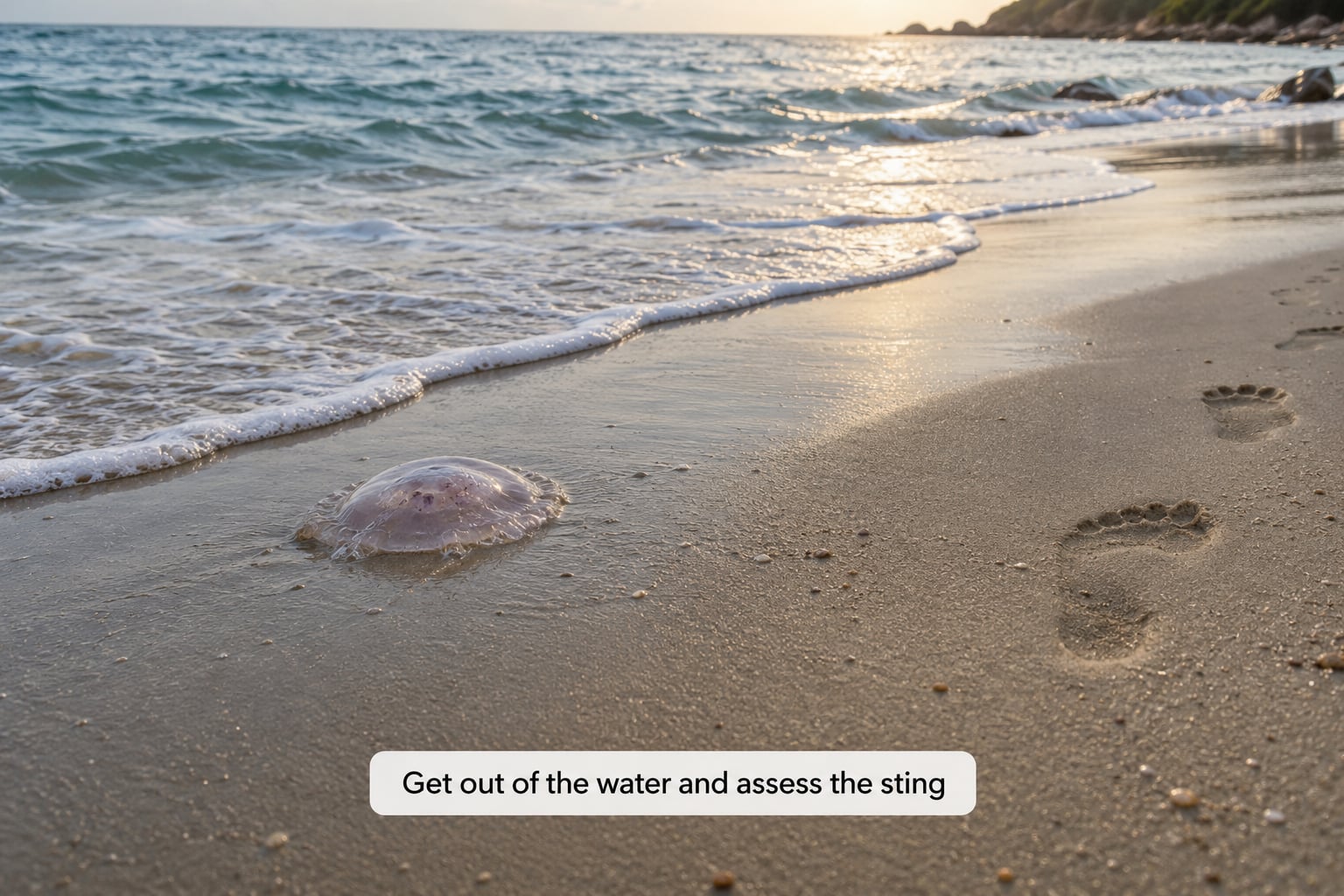
Walk out of the surf calmly rather than running or splashing, and keep your arms clear of anything floating in the water. Do not try to identify the species yourself in a panicked moment, and do not touch a jellyfish that washed up on the sand, because a stranded animal can still fire its stinging cells.
Find a lifeguard if there is one, and ask what is in the water that day. Note where the sting is, how large the affected area is, and whether you can see any tentacles still attached. Those three details are what a lifeguard or a paramedic will ask for, and you will save time by answering them before you are asked.
2. Remove tentacles without spreading venom
Put on gloves, then use the tweezers or the edge of the firm plastic card to lift each tentacle off the skin and away from you. Scrape gently in one direction, lifting as you go, and drop every piece onto the towel rather than letting it fall back into the water.
Never use bare hands, and never rub the area to get a tentacle off. Rubbing is the single most common way people push venom deeper into the skin, and any unseen fragment left in place keeps injecting venom after you think you are done. You are finished when the skin looks clear under good light, not when the pain drops.
3. Rinse the area with seawater
Rinse the sting with clean seawater and let it run off the skin. Do not rinse with fresh tap water or shower water, because the osmotic shock makes remaining nematocysts discharge and can fire a fresh round of venom.
Do not automatically reach for vinegar either. Australian and some other regional guidelines call for vinegar on box jellyfish and Portuguese man-of-war stings, applied for at least 30 seconds, because it stops the stinging cells from firing, while for bluebottle and lion’s mane stings vinegar can increase the discharge. If you are not sure which species you are dealing with, ask the lifeguard and stick with seawater until you know.
4. Use hot-water immersion for pain relief
Immerse the affected area in hot water at 107 to 113 degrees Fahrenheit, which is 42 to 45 degrees Celsius, for 20 to 45 minutes. Heat denatures the protein-based venom, which is why this works far better than any cream you could put on afterwards.
Test the temperature on an unbroken patch of skin on your wrist or forearm first. The water should feel uncomfortably hot, not scalding, and if it stings a normal patch of skin it will injure the sting. Immerse the limb if you can, or hold the soaked towel against the affected area, rewetting it as it cools. Stop sooner than you think you need to if the skin turns very red.
5. Clean, cover, and monitor the sting
Pat the area dry, keep it clear of friction and sun, and resist scratching even when the itch builds, because scratching breaks the skin and opens the door to infection. A cool pack held gently against the area afterwards feels good, and calamine lotion or a hydrocortisone cream can take the edge off itching once the hot-water soak is done.
Watch the sting over the next 24 to 48 hours. Get medical help without waiting if pain gets worse instead of easing, if the area swells, reddens, or starts weeping, if you develop fever, or if you notice any of the emergency signs listed below. You are looking for steady improvement within a couple of hours of the soak. Pain that is still building at 24 hours, or a rash that flares up again a week later, is worth a call to a clinician.
Common Mistakes
Almost every mistake below makes the sting worse rather than better, and most of them come from doing something instinctively.
Rubbing or scratching the sting
It is the most natural thing to do and the worst one. Rubbing pushes unattached nematocysts deeper into the skin and squeezes more venom in. Use hot water instead, and let the pain come down on its own.
Using bare hands to pull tentacles off
You will spread the stinging cells to your fingers and then to your face. Gloves, tweezers, or the edge of a firm plastic card are the tools for this job.
Applying urine, alcohol, butter, ammonia, or meat tenderizer
None of these are supported by any clinical guidance, and several make it worse. Household ammonia and alcohol irritate the skin, and the home recipes people describe in dive forums, from lime juice to baking soda paste to WD-40, are anecdotal at best.
Using fresh water, ice, or a cold beach shower
Cold and fresh water both make a jellyfish sting worse, and a cold shower is the instinctive response in warm weather. Use seawater and hot water.
Using an open flame or boiling water
Never heat water over a campfire flame on your skin, and never use a flame to dry a hot pack. Keep the water within the 42 to 45 degrees Celsius range and test it first.
Ignoring severe symptoms
Breathing difficulty, chest pain, fainting, confusion, a racing heartbeat, severe muscle cramps, vomiting, seizures, or swelling of the face, lips, or throat are all reasons to call emergency services immediately. So is a sting covering a large area of the body, and any sting on a small child.
Prevention and beach safety
Check the beach warning flags and local stinger advice before you swim, and swim inside stinger nets where they exist. A stinger suit covers the areas most swimmers get stung on. Never pick up a beached jellyfish, even one that looks dead or washed apart. Rinse diving gear and swimsuits in fresh water away from the beach before you handle them, because nematocysts can sit on fabric and fire against the body hours later. If you are diving in an area with Irukandji, keep in mind that the syndrome can take 5 to 45 minutes to show up, so do not dismiss early symptoms as nothing.
Frequently Asked Questions
Should I put vinegar on a jellyfish sting?
Only if local guidance or a lifeguard tells you to. Vinegar is recommended for box jellyfish and Portuguese man-of-war stings in Australian and some regional protocols, where it is applied for at least 30 seconds to stop stinging cells from firing. For bluebottle and lion’s mane stings it can trigger more discharge and make the pain worse. When you cannot identify the species, rinse with seawater instead and ask a lifeguard.
How long should I soak a jellyfish sting in hot water?
Soak the affected area in water at 107 to 113 degrees Fahrenheit, which is 42 to 45 degrees Celsius, for 20 to 45 minutes. Heat denatures the protein-based venom and is the most reliable pain relief available at the beach. Test the water on unbroken skin first, and immerse a limb where you can rather than applying a soaked cloth. Most people feel clear improvement well before the full 45 minutes.
How long does a jellyfish sting usually hurt?
The sharp initial pain usually starts easing within a couple of hours of leaving the water and of a hot-water soak. Itching and a rash can linger for several days, sometimes a week or more. A minority of people notice the area flaring again about a week later, which is usually a delayed skin reaction rather than a new sting. Get a clinician’s view if pain is still building at 24 hours.
When should I seek medical care for a jellyfish sting?
Call emergency services immediately for trouble breathing or swallowing, chest pain, faintness, confusion, a racing heartbeat, severe muscle cramps, vomiting, seizures, loss of consciousness, or swelling of the face, lips, or throat. Also seek urgent care for any sting covering a large area, any sting on a small child, and any sting in tropical waters. See a clinician if the wound spreads, reddens, weeps, or worsens over the next day.
Can I go back in the water after being stung?
Not right away. Stay out until the tentacles are fully removed, the area is rinsed, and the pain has clearly eased, because contact with drifting fragments or with the water that caused the sting can set it off again. Rinse stinger suits, wetsuits, and swimsuits in fresh water before you handle them again. If the beach is under a jellyfish warning, wait until the local authority lifts it.
Conclusion
Leave the water, lift off tentacles with tweezers or a firm plastic card, rinse with seawater, and soak the sting in 42 to 45 degrees Celsius water for 20 to 45 minutes. Follow the local jellyfish guidance for your beach, and use vinegar only when a lifeguard says the species calls for it.
Call emergency services for breathing trouble, faintness, chest pain, or swelling of the face or throat, and get a clinician’s advice for a sting on a child, a large sting area, or symptoms that are still worsening a day later.