Learning how to fish a blackwater river for bass comes down to two habits: cast upstream of the fish and work the lure back to you with the current, and put that cast where moving water meets slack water. The dark water is not the obstacle most anglers think it is. It is stained but clean, and it gives away almost nothing, so you find fish by reading structure and current rather than by seeing them.
There is a version of this trip that goes badly. An angler on r/bassfishing once worked an eleven-lure rotation through a blackwater creek, including chatterbaits, a spinnerbait, a Choppo, a Sunny B and a Texas-rigged Senko, and caught nothing while bass fed on the surface every few seconds. That thread is the most honest description of blackwater fishing I have read: fish are almost never absent, they are just rarely interested in what you are throwing. Understanding how to fish a blackwater river for bass is mostly a presentation problem.
This guide covers gear, reading tannin-dark water, picking cover, presenting lures in current, and the safety rules that matter when you cannot see what is under your feet. A full day is six to eight hours, and the difficulty is moderate once you stop treating it like a lake.
Table of Contents
- What You Need
- Step-by-Step: How to Fish a Blackwater River for Bass
- Read the Blackwater and Current
- Select Likely Bass Cover
- Choose and Present the Right Lure
- Set the Hook and Land the Bass
- How to Fish a Blackwater River for Bass in Changing Conditions
- Common Mistakes
- Tips for a More Successful Day
- Frequently Asked Questions
- What color lure is best for fishing a blackwater river?
- Can you catch bass in very dark or tannin-stained river water?
- Is it better to fish blackwater bass from a boat or the bank?
- What is the best time of day to fish a blackwater river for bass?
- How should I fish around submerged trees and fallen timber?
- Do I need special permission to fish a blackwater river?
- Conclusion: Start With the Right Water
What You Need
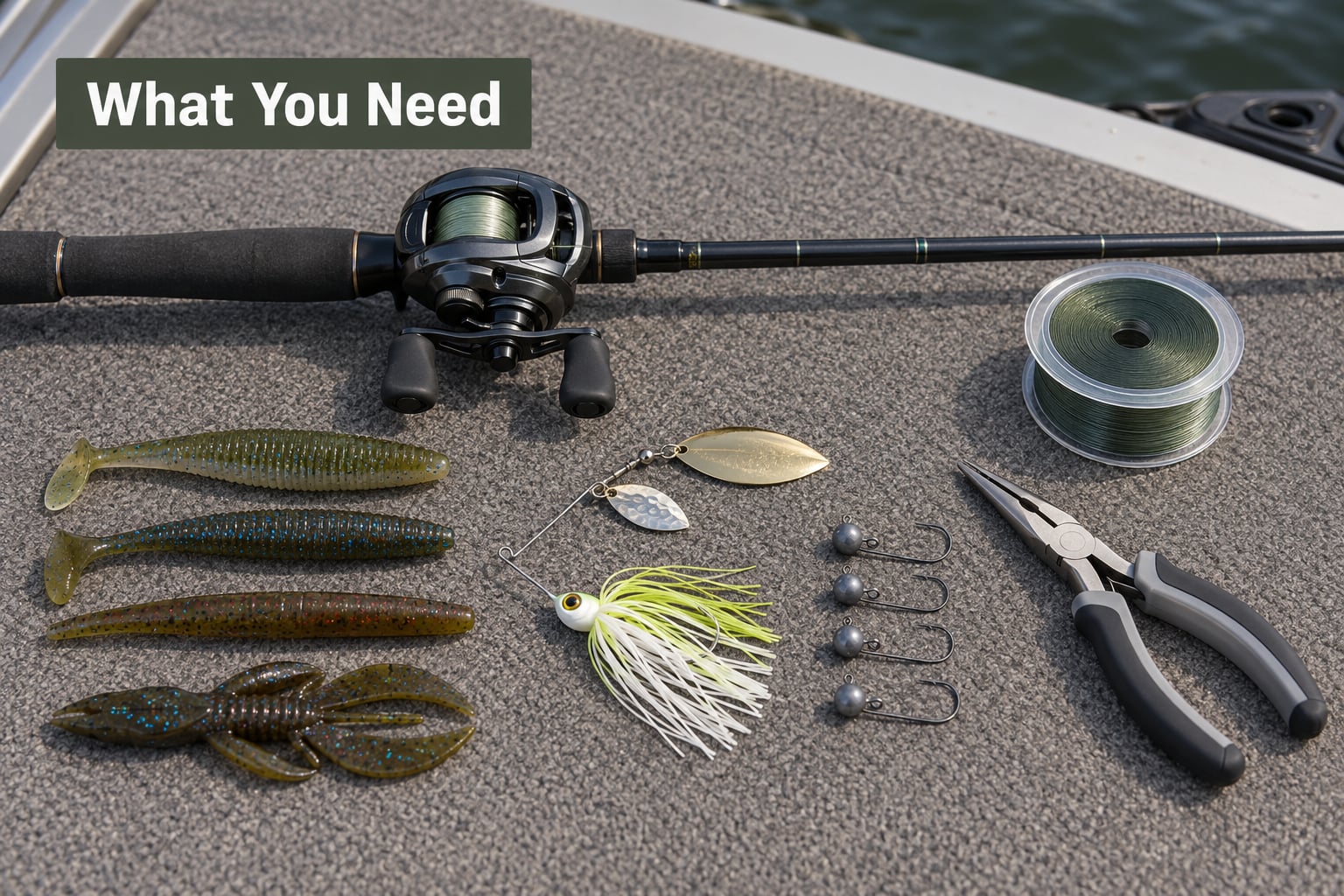
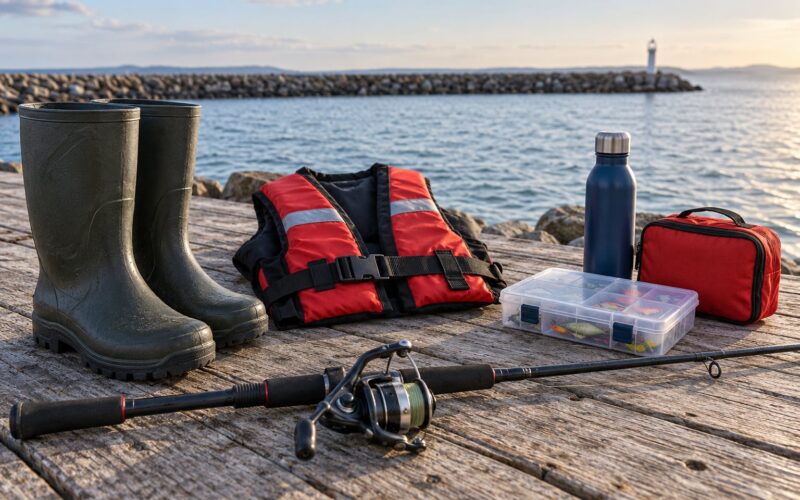
River gear differs from lake gear in one respect: the water moves. Everything else is detail.
- Rod and reel: A 7-foot medium-heavy fast-action rod paired with a size 200 or 300 reel with a smooth, adjustable drag. Medium-heavy because you need to pull fish out of timber and control a lure in current; fast because you cast far enough to reach fish you never see. Braid or 20- to 30-pound fluorocarbon. Skip the ultra-light.
- Terminal tackle: Split rings, a wire leader or heavy fluorocarbon leader for toothy residents, and soft weights sized 1-2 ounces for keeping a natural bait in the strike zone in current.
- Lures: A compact spinnerbait or chatterbait around 1/4 to 3/8 ounce, a small diving crankbait, a chartreuse or white popper, and 3- to 5-inch soft plastics with matching 1/8- to 1/4-ounce jig heads. Keep colors loud. Contrast matters more than matching the bottom.
- Pliers and a line cutter on a lanyard, because you will lose rigs to timber all trip long.
- Safety kit: A properly fitted personal flotation device, a small first-aid kit, a whistle, a charged phone in a waterproof pouch, water, and a headlamp if you will be out past dusk.
- A fishing license for the state and water you are on, plus awareness that some blackwater reaches run through private land and conservation areas with their own rules.
Check the gauge before you load the truck. USGS mobile water data and apps that track river flow and stage will tell you whether you are walking into shin-deep wading water or a river that is running over your boots.
Step-by-Step: How to Fish a Blackwater River for Bass
Read the Blackwater and Current
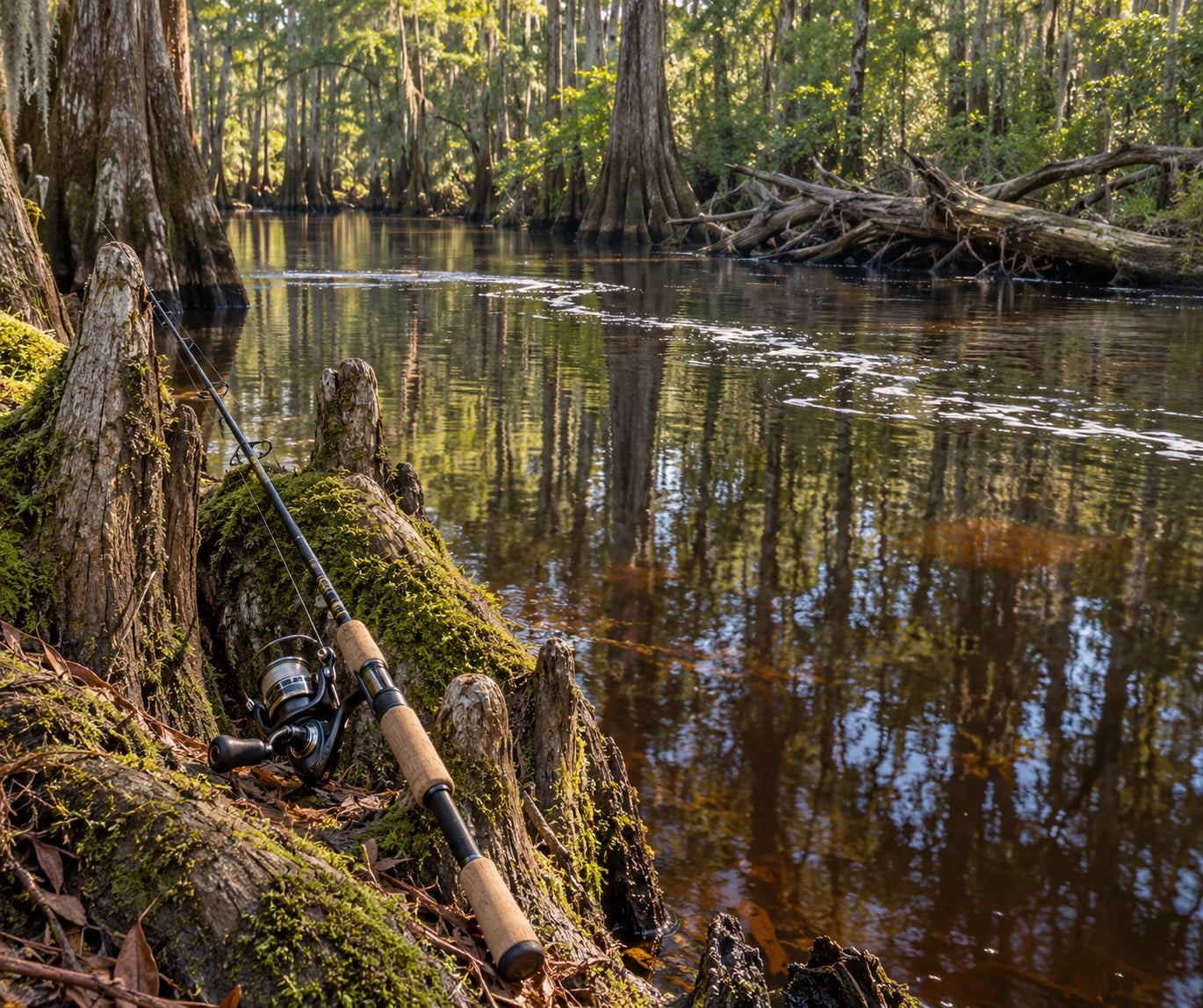
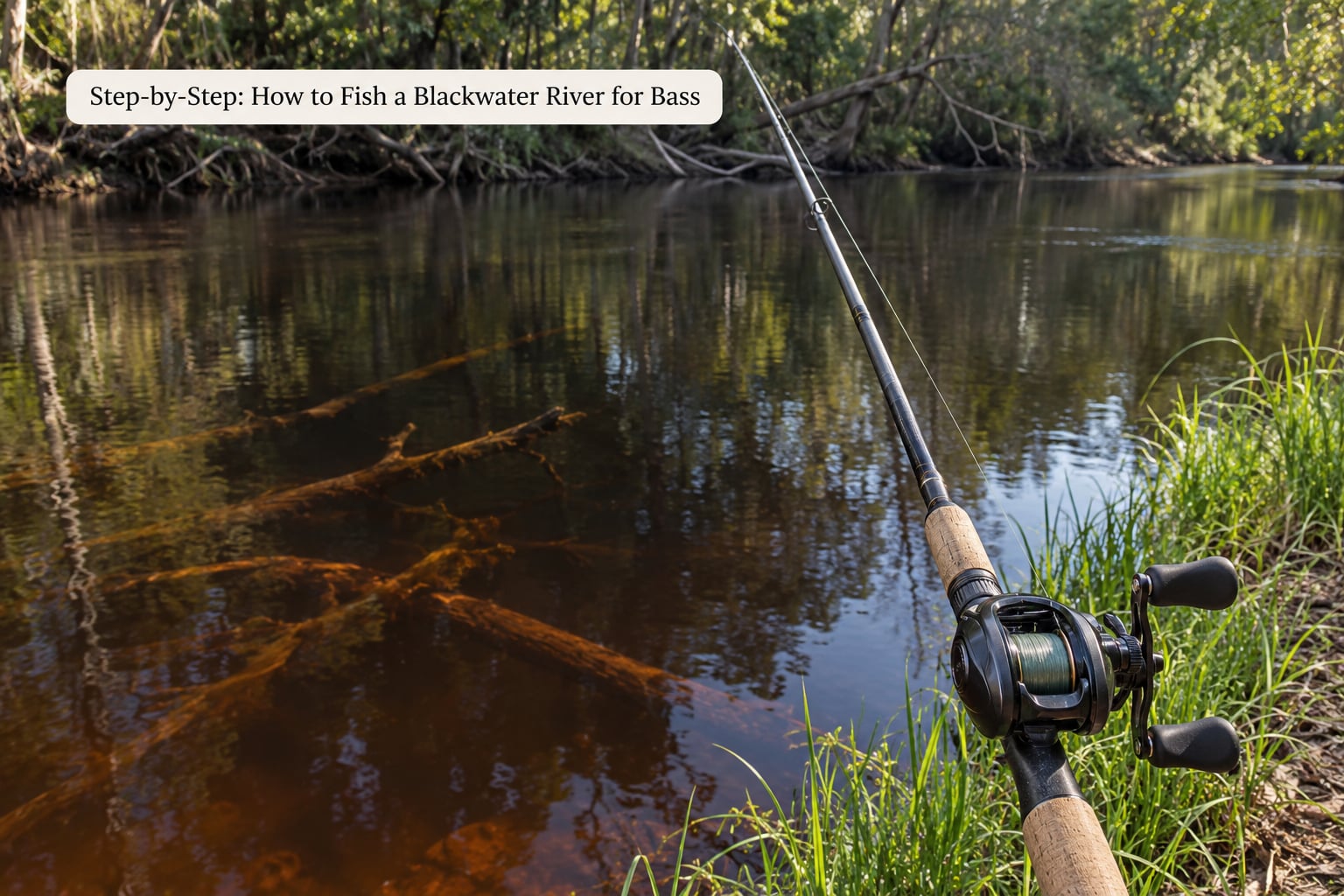
Blackwater is stained by dissolved tannins from decaying leaves and bark, which means light does not travel far into the column. Bass respond by hugging shade, timber and bottom edges instead of chasing into open water. That single fact explains most of what makes these rivers hard to fish, and it is why sight fishing is nearly useless here.
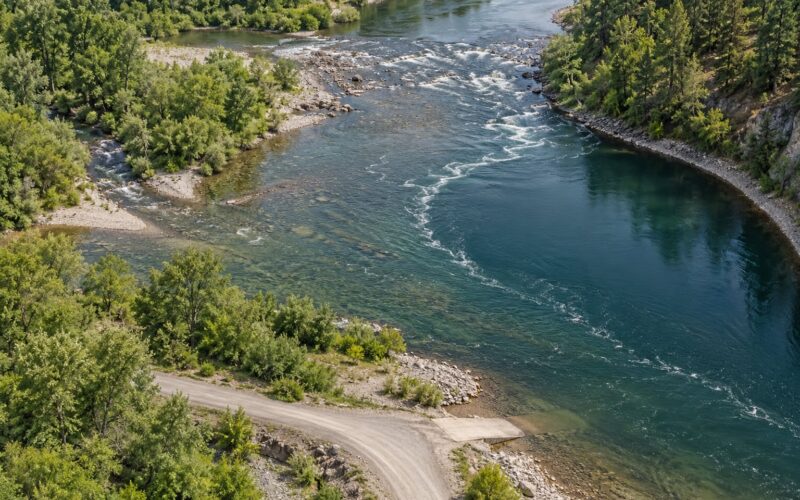
Use the surface instead of your eyes. Foam lines, floating leaves and debris drifting past a snag line up current seams where fast water meets slow. Those seams are where bass sit, feeding on the bait and slowed organisms the current is delivering.
Prioritize depth changes, inside corners of bends, the seams where a tributary joins the main channel, and any drop-off that forms on the outside of a curve. Slacks behind points, backwaters and oxbows hold fish too, especially as water drops.
Select Likely Bass Cover
Target cover that holds fish and can be worked without a lost rig. Fallen timber, root balls, rock ledges, cypress knees, weed edges and abrupt banks all produce. So do eddies behind downed wood, where current slows and food settles.
Bank anglers need to stand five to eight feet back from the edge. Fishing with your toes in the mud along the shoreline is the single most common river mistake, and it is worth saying why: bass feed off the bank, not on it, and pressure in the shallows pushes them into the dark timber you can no longer see.
Then decide what is fishable and what is a waste of a cast. Big tree hangers, logjams and undercut banks hold fish but swallow lures. Work the downstream face and downstream edge of cover, let the current take a drifting lure into the shadows, and save your expensive plastics for clean routes.
Choose and Present the Right Lure
Size down and turn up the volume. Blackwater hides the lure, so vibration and a clear silhouette do the work that color does in clear water. A chartreuse-and-white chatterbait or a compact spinnerbait is the safest starting point, and it works across most conditions.
| Water condition | Best presentation | Retrieve | Why it works |
|---|---|---|---|
| Clear and tannin-stained, low flow | Weightless swimbait or weightless soft plastic | Slow drift, pause, natural motion | Nothing to cast at, so the lure must move itself |
| Heavy tannin stain, falling water | Compact spinnerbait or chatterbait | Steady retrieve with a stop-and-go hitch | Fish are holding tight to cover and reacting to vibration |
| High or rising flow | 1/4 to 3/8 ounce jig with straight-tail plastic, or a small crankbait | Bottom bounce, slow lift, stay in contact | Current carries the lure to the fish and holds it in the strike zone |
| Low flow, hot water, fish on the surface | Popper or walking plug in chartreuse or white | Walk the surface, pause, blast it | Surface feeding fish ignore subsurface lures entirely |
| Cool water, fish deep and sluggish | Jig head with a craw or creature bait | Crawl, occasional lift, let it sit | Bottom-hugging presentation reaches fish holding off the bottom |
Cast upstream of where you think the fish are, then let the current do the work. A crankbait drifted downstream through a seam will reach fish that a fast hand-cast retrieve never gets close to. Anglers fishing tidal reaches of the Blackwater report the same principle: work a bait with a hard tug roughly every ten seconds so it swings away from the bottom and then settles back.
If nothing bites after a few passes, drag the lure back through the same water and let it fall on the pauses. In stained water a paused lure is often the only realistic way to look like something alive.
Set the Hook and Land the Bass
The strike window in low-visibility water is short, and a threadbow usually means you waited too long. Watch your line, not the water. Weight tells you almost nothing at a distance when the fish are three feet down in tea-brown water.
Set forward when the line stops, sags or moves against you, and keep the rod tip loaded so you feel the load instead of watching it. Reel control matters more than strength. Bow to the fish, gain line, and never try to drag a bass through a root ball at full drag.
Wet your hands before you touch the fish, keep it out of the air as briefly as possible, and release it where you caught it if the current is pushing it into cover. Blackwater bass are frequently released; a fish photographed quickly and released properly does more for the fishery than a fish kept to the limit.
How to Fish a Blackwater River for Bass in Changing Conditions
After rain. Falling, stained water pushes bass off the banks and into deeper seams and backwater edges. Switch to a compact spinnerbait or a weightless swimbait and work the edges of the drop-offs. Rising water can make wading dangerous, and it can push fish out of the cover you planned to fish. When in doubt, check the gauge before you commit.
High flow. Fish hold in the softer water behind points and inside bends, and they are less likely to be spooked by noise. Use heavier lures you can feel, keep the lure in contact, and fish seams that would be too strong to work at normal stage.
Low and hot water. Bass move to shade and to the tops of deep bends and eddies, and they feed hardest at first and last light. Work poppers across eddies and overhanging cover where you can see the surface activity yourself.
Cold fronts. Movement drops and fish ball up around the deepest hard bottom and the best cover. Slow down the retrieve, use a smaller profile, and fish fewer places for longer.
Season. Spring sends fish to the shallows at the mouths of tributaries and to spawning cover, and many systems close to spawning fish. Summer concentrates fish in shaded, cooler seams. Fall is often the most productive stretch, as fish feed hard before the temperature drops. Winter pushes fish into the deepest holes, and success depends heavily on finding those holes rather than on the lure.
Common Mistakes
Fishing the shoreline. Standing in the water at the bank edge and casting along it puts you where the fish were. Move five to eight feet back, or get in the water.
Ignoring seams. Casting at random water wastes the trip. Pick one seam and work it until the lure comes back clean two or three times before you move.
Using lake tackle. Ultra-light gear and light line have no place in current and timber. You need drag you can crank and a rod that will pull a fish through cover.
Retrieving too fast through timber. A fast retrieve in stained water is a fishless retrieve. Slow down, pause, and let the lure fall the last foot.
Striking before the lure turns. Setting the hook on the drop puts the lure into the bottom instead of the fish. Wait for the turn, then set forward.
Trying to see the strike. Watch the line. Watching for a bow to ripple in dark water wastes the strike.
Standing on unstable banks. Blackwater banks undercut, flood plain banks collapse, and nobody can see the current underneath a smooth bank. Wear footwear with grip and step back from the edge.
Ignoring access rules. Private land, conservation areas and state park land all have their own rules, and some stretches close during the spawning season. Read the signs at the access point.
Tips for a More Successful Day
- Work around obstructions rather than at them. Approach from downstream when you can, so the current pushes you past the snag instead of into it.
- Use landmarks. Pick a distinctive tree, a fence line or a bend and note where you saw the last fish, then start there on the next drift or wade pass.
- Cover the river methodically. Wading a bend from one end to the other beats jumping between spots and re-fishing the same water.
- Keep an eye on temperature and flow while you fish, not just before you leave. A two-hour rise will move every fish off the pattern you started on.
- Give spawning fish room. Avoid the beds, avoid the nesting areas, and move through quickly.
- Limit your impact while wading. Walk the gravel and sand bars rather than the soft marsh edges, and stay in one channel instead of cutting across vegetation.
- Pack out everything, including line and hooks, and leave the bank and the access ramp cleaner than you found them.
Frequently Asked Questions
What color lure is best for fishing a blackwater river?
Go loud and light rather than realistic. Chartreuse, white and any combination of the two are the most common choices because they hold up in stained water where natural baitfish colors disappear. Flies and soft plastics in black or dark pumpkin also work well, since dark shapes read well against lighter tannin-stained water. Match the bottom if the water clears after a rain, and stay bright when it darkens.
Can you catch bass in very dark or tannin-stained river water?
Yes, and the tannin is not what stops them. Blackwater is filtered but clean, and fish feed in it regularly. The darkness changes your method rather than your odds: you cannot sight fish, so you locate them by current seams, cover and depth changes, and you rely on vibration, line movement and a short strike window instead of visual cues.
Is it better to fish blackwater bass from a boat or the bank?
From a boat or kayak you can reach fish you never saw, which is the whole advantage on stained water. From the bank, get at least five to eight feet off the water and concentrate on structure within casting range. Neither is wrong, but bank anglers who cast from the waterline are almost always working water the fish have already abandoned.
What is the best time of day to fish a blackwater river for bass?
First light and the last hour before dark are the most dependable windows, particularly in summer when the fish hold in shade during the heat of the day. Overcast afternoons also fish well in stained water, since the reduced light suits fish that already favor darker cover. Midday summer light is the hardest, because bass sit tight and stop moving.
How should I fish around submerged trees and fallen timber?
Fish the downstream face and the downstream edge, where the current delivers prey and a lure can be retrieved without fouling the wood. Cast slightly beyond the snag line and let the lure drift back along the shadow, or work the surface with a popper where you can see the tip rise and fall. Save finesse plastics for clean approaches, and expect to lose some gear doing it.
Do I need special permission to fish a blackwater river?
You need a valid state fishing license, and some waters carry species-specific rules on size and bag limits that vary by reach and by water body. State park land follows park rules, including access hours and seasonal closures, and stretches running through conservation areas or private land can require permission. Check the regulations for the exact segment before you fish it, not the river in general.
Conclusion: Start With the Right Water
Start with the current, not the tackle. Check the gauge and the tide, find one seam that runs into cover you can work, stand at least five feet off the bank, and cast upstream of the fish with a compact spinnerbait or chatterbait in chartreuse and white. Fish that one seam until the lure comes back clean twice, then move to the next. A methodical day on one bend beats a fast day of random casts.