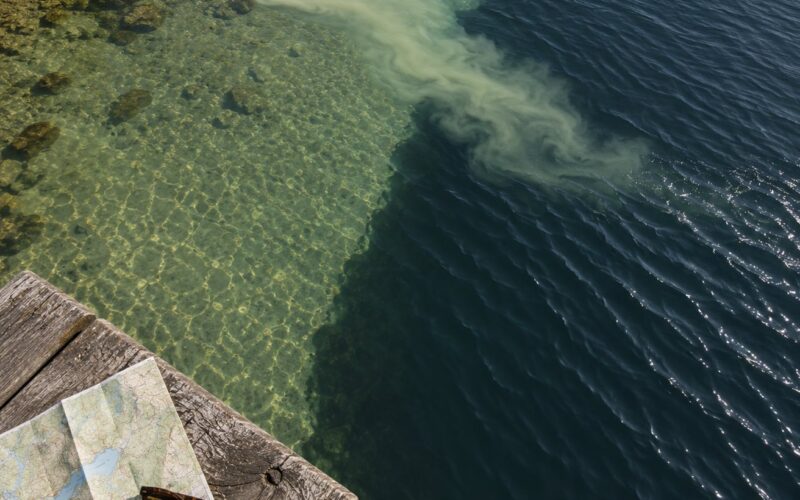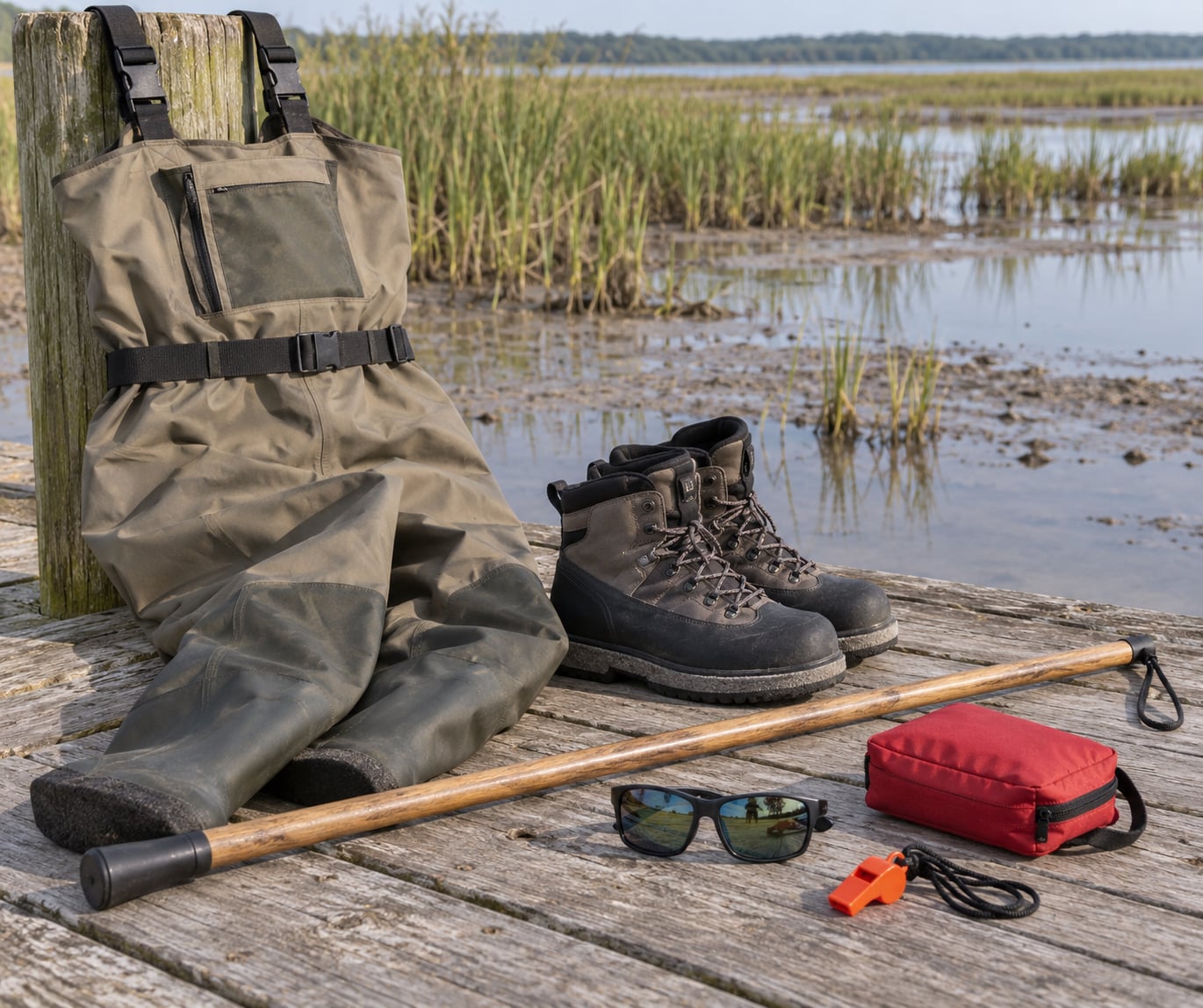
Wading is risky on soft mud because the bottom gives way without warning, pulls your boot down with suction, and clouds the water so you cannot see the drop-off ahead. To wade fish safely in soft mud, probe every spot before you step, slide your feet instead of lifting them, and turn back the moment your footing changes.
That whole sequence takes maybe ten minutes of preparation and adds nothing to your catch. Beginners tend to assume deep water is the dangerous part, but anglers on the forums keep saying the opposite: most wading falls happen in water that looks shin deep, right where the bottom turns slick or drops out. A commenter on r/flyfishing put it plainly, saying falls while wading happen in shallow water where the substrate is slick.
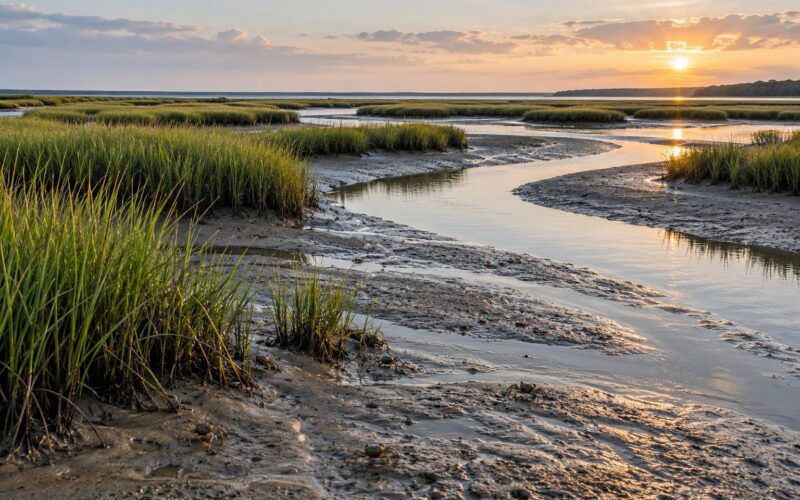
Soft mud is common in silt and clay rivers, pond edges, reservoir deltas and Southeastern marshes, and it behaves differently on a tidal flat where the water moves twice a day. This guide covers freshwater and saltwater mud, the gear that matters, the numbers that decide whether you go in, and what to do when your leg does not come back up.
Table of Contents
- What You Need
- Carried on every soft-bottom trip
- Add these when conditions call for them
- Step-by-Step: How to Wade Fish Safely in Soft Mud
- 1. Check the water and bottom before entering
- 2. Choose footwear with reliable mud traction
- 3. Keep a wide, stable stance
- 4. Move slowly and test each step
- 5. Fish without creating unstable stances
- 6. Know the signs that you should turn back
- 7. Exit the mud the same way you entered
- Common Mistakes
- Frequently Asked Questions
- How deep is too deep for wading?
- Are felt soles good for mud bottoms?
- When should I use studded or spiked wading boots?
- How do I get a stuck boot out of mud?
- Do waders help or hurt when you are stuck in mud?
- What should I do after a fall in while wading?
- A Safer First Step on Soft Mud
What You Need
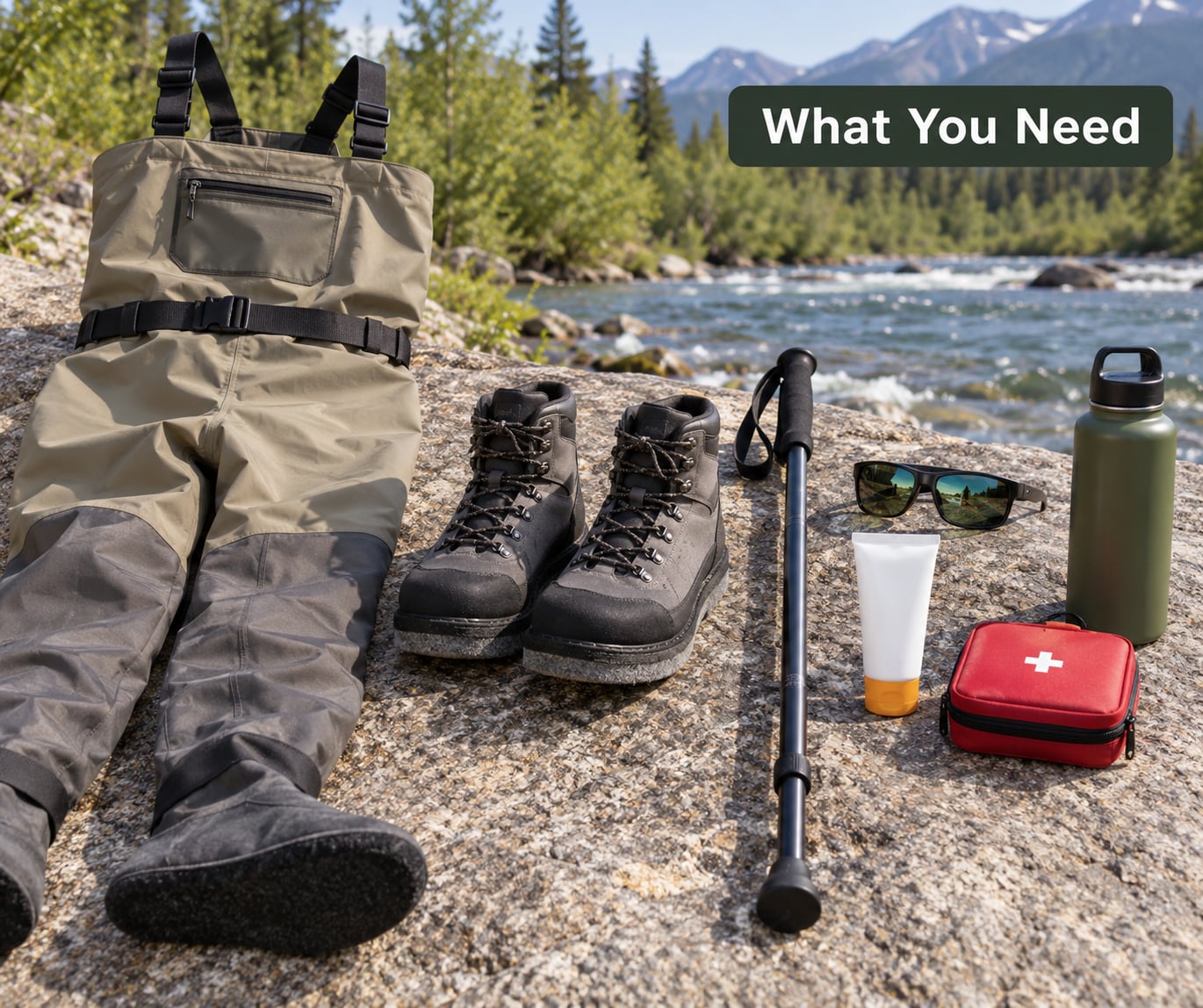
Three items are not optional if you are putting a boot into mud: a snug wading belt, a staff you can plant, and footwear with an aggressive sole. Everything else depends on the water you are facing.
Carried on every soft-bottom trip
- Wading belt, snug. A belt cinched tight around your waist or chest keeps water from filling your waders and keeps them from acting like a sea anchor. A loose belt worn as a badge of toughness is the single most common gear mistake.
- Wading staff. It gives you a third point of contact and doubles as the probe that tells you what the bottom is doing before your leg finds out.
- Waders with a belt loop. Chest waders on cold or deep water, hip waders on a warm shallow flat. Either way, pair them with felt or rubber wading boots that lace above the ankle.
- Whistle on a lanyard. A whistle carries much further than a shout and does not need breath you may not have.
- A charged phone in a waterproof case. Plus your route, your planned exit, and your float time sent to someone who is not standing next to you.
- One more person. Tell a buddy where you are going and when you expect to be back.
Add these when conditions call for them
- Personal flotation device. Non-negotiable on cold water, above knee depth, or anywhere the bottom is unknown.
- Landing net and a rod holder or wading belt sling. These keep you from reaching and lunging while a fish is on.
- First-aid kit, water, sunscreen, and polarized glasses. Glare off a wet flat blinds you into bad footing, and you are usually facing open sun for hours.
- A second wading belt. Cheap insurance if you are wading deep or fast water.
If you are starting from nothing, ask about beginner gear and where to begin on r/FishingForBeginners rather than buying everything at once. The step that matters most is the staff.
Step-by-Step: How to Wade Fish Safely in Soft Mud
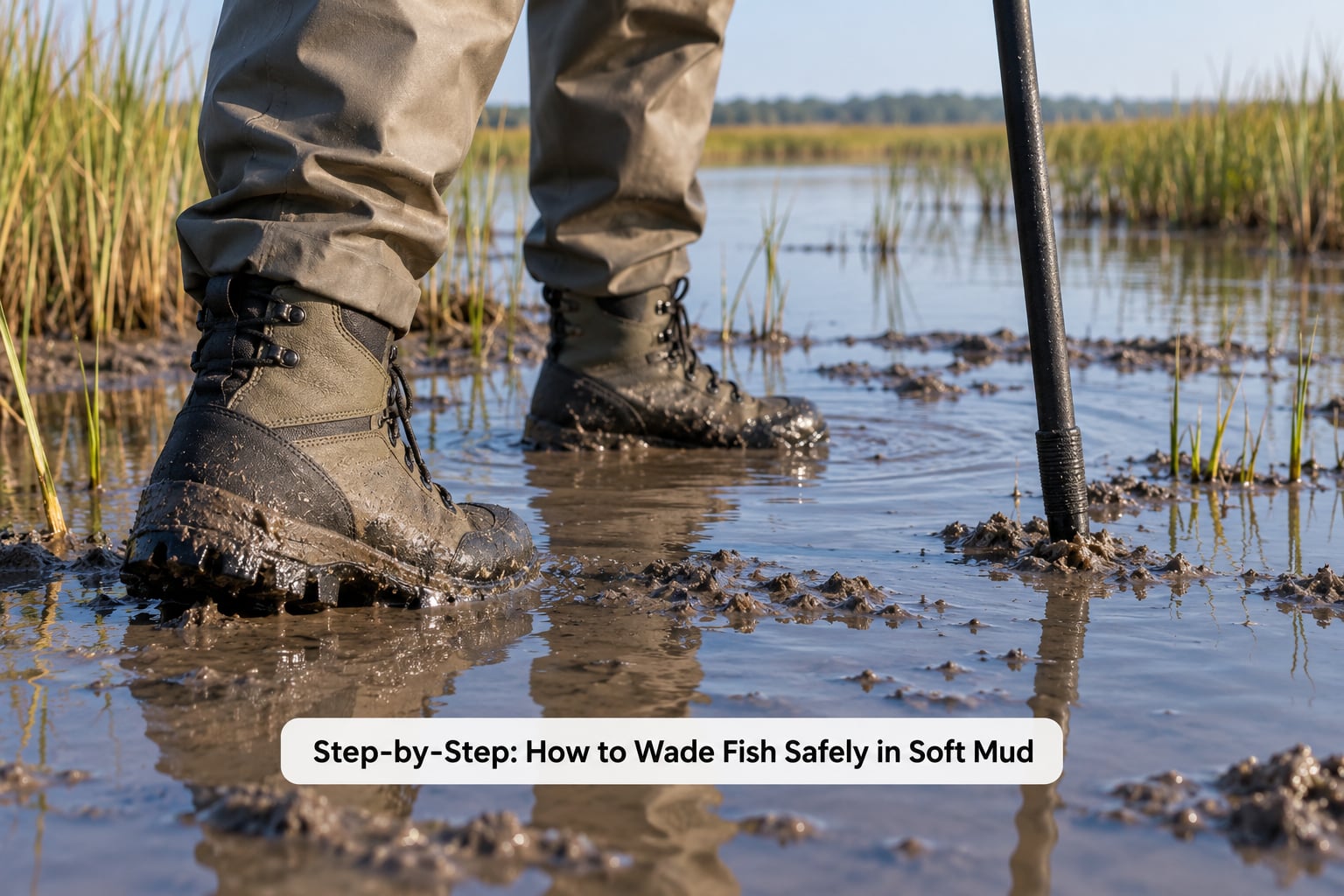
1. Check the water and bottom before entering
Stand on the bank and read the water before you commit a boot to it. What you are looking for is the seam where fast meets slow, the bank that suddenly drops into a channel, the backwater edge that hides a soft pocket, and the submerged stick angled downstream that will sweep a leg without warning.
Then probe. Plant the staff ahead of you, push it down hard, and feel what pushes back. Firm mud gives a clear answer through the tip. Soft mud swallows the point and the staff starts to sink of its own accord. Do this along your intended route, not just at the entry point.
| Water depth over mud | What it means | Do this |
|---|---|---|
| Ankle deep | Boots sink a little and find the bottom | Wade, but probe ahead anyway |
| Knee to mid-thigh | Suction is strong and a boot may not lift cleanly | Probe every step, keep an exit route, stay on the firmest line |
| Waist deep | A leg can be trapped and standing up is the danger | Turn back unless you have a route and a partner |
| Above waist | Waders fill, bottom is unknown, current is working you | Do not enter, fish from the bank or a boat |
Add a current check while you are standing there. Float a stick and time how far it drifts in one second, then multiply that distance in feet by the depth in feet. If the number runs past eight, the water is moving faster than you can recover from, and the answer is to find another crossing.
2. Choose footwear with reliable mud traction
Match the sole to the substrate, because each one fails differently. Felt grips smooth rock and firm clay but clogs and slicks in deep silt. Studded or spiked soles cut through soft mud and hold on gravel, at the cost of felt studs tearing on rock. Deep-lug rubber is the general-purpose answer for mud flats and marsh edges.
Whatever you wear, ordinary sneakers, smooth rubber rain boots, and lightweight sandals will let a boot shear out from under you on a slope that is not even steep. That is how a routine step becomes a fall.
| Bottom | Hazard | Typical failure | Mitigation |
|---|---|---|---|
| Firm sand or gravel | Low | Slips on the face of a slope | Good traction, staff down |
| Packed clay | Medium | Turns glassy when wet | Felt or studded soles, short steps |
| Soft silt mud | High | Suction, sinkholes, silt clouds | Probe each step, shuffle, never dig in |
| Cobble | High | Boot rolls between loose stones | Wide stance, weight on the arch |
| Boulder or bedrock | Highest | Leg trapped between rocks, polished surface | Avoid, cross at a shallow riffle instead |
For saltwater flats, keep the tide chart in your pocket and remember that a spot that is firm at low water can be a soft hole at high water. For river waders, check the sizing note that came with your waders and wear the right socks underneath so a stuck boot can still slide off.
3. Keep a wide, stable stance
Stand with your feet a little wider than hip width, knees soft, and your weight sitting on the arch of the foot rather than the heel. That position lowers your center of gravity and lets your legs absorb a wobble instead of locking you upright over it.
Place each foot deliberately. Slide it forward along the bottom and press down before you shift your weight onto it, then slide the other one to match. Never cross your feet, and never twist a planted foot to change direction.
Keep the staff planted at your side or slightly upstream so it is a real third point of contact. Anglers who treat a staff as a walking stick instead of a support lose the only thing keeping them upright when a foot breaks loose.
4. Move slowly and test each step
The sequence is pause, probe, shift, test. Pause with your weight centered, probe the next patch with the staff tip or the toe of your boot, shift only a little weight onto it, and check that it is holding before you commit. Four seconds per step feels slow and covers ground in perfectly good time.
Shuffle rather than stride. Long steps mean your weight lands on an untested foot, and a shuffle keeps your feet on the bottom instead of hanging over it. Anglers wading grass flats on the 2CoolFishing forum put it simply: shuffle your feet.
Cross at an angle to the current rather than straight across or straight upstream. Angling downstream lets the current push you toward the far bank instead of past it, and it gives you a natural line back to your entry point. Plenty of anglers fish upstream for a good reason, since fish face upstream and stirred mud washes away downstream, but that is a fishing argument, and the crossing angle is a safety one. Where you can afford to, fish facing upstream at an angle, not straight into it.
Watch your route back. Pick your exit bank before you cross and re-probe it, because the channel you crossed at low water can be a soft pocket an hour later.
5. Fish without creating unstable stances
Fishing is where good technique turns into bad footing. Casting a long line while your front foot is buried changes your center of gravity, so keep your casting position narrow, turn your whole body instead of pivoting on a planted foot, and use a rod holder or wading belt sling to free both hands.
Land fish with a net instead of reaching. A net that hangs off your belt or a short strap keeps your arm out of the water, and it means you do not have to lunge and put a knee down in the softest place on the flat.
The same mud that endangers you is where the fish are. Reds hold over firm edges and drop-offs beside mud rather than on it, so work the structure and present slowly with a sinker or a weighted fly. When you do stir up silt, give it thirty seconds to settle before the next cast, because you cannot fish what you cannot see.
6. Know the signs that you should turn back
Mud rising above your ankles is the clearest signal, and it means the spot is deeper and softer than it looked. Other signs include a boot that will not lift, a knee going in farther than you planned, cramps, cold hands, fatigue you are trying to talk past, rising water, current that has picked up since you started, and thunder you can hear.
Turn back immediately if you lose footing twice in the same area. Changing conditions beat a long cast or one more spot. If the storm arrives while you are out there, leave the water first and worry about fish later.
7. Exit the mud the same way you entered
Reverse the route while you can still see it. Turn facing the direction you came from so your staff leads, and slide your feet out along the same line you slid them in on. Standing up straight in a soft hole is what traps people.
If a boot sticks, do not yank it. Rock the boot gently, slide the heel forward to break the suction seal, and work it out sideways. If the suction has already closed around your calf, get low, lie on your side, and pull the boot away from the hole rather than up out of it. With both legs trapped, stay on your stomach, push the staff ahead of you for reach, and work one leg at a time, which is far easier than trying to lift both at once.
Before you continue, check for cuts and blisters, and feel your hands and feet for numbness. Cold mud drains heat faster than you expect, so change out of wet gear at the truck rather than finishing the drive home in it.
Common Mistakes
Wading alone. Fix: pick a buddy, send them your route and your return time, and set a check-in hour. Falling in alone with a stuck leg is a rescue call you cannot make.
Entering water you have not read. Fix: walk the bank first and probe the route. Ten minutes of scouting removes most of the risk in the whole trip.
Wearing smooth soles. Fix: felt, studded, or deep-lug rubber, matched to the substrate. Sneakers and slick rain boots have no place on mud.
Taking long strides. Fix: shuffle, slide, and test. Every long step lands your weight on ground nobody has checked.
Standing with locked legs. Fix: knees soft, weight on the arch, feet wider than your hips. Locked legs have no give when the bottom moves.
Leaning downhill. Fix: keep your center of gravity over your feet and angle across the slope so the current or the bank sits behind you, not under you.
Casting while unstable. Fix: plant both feet, set the rod down or in the holder, and turn your hips rather than twisting a foot. Guides who fish mud flats say the hazard in plain terms: soft mud bottom areas make wade fishing hazardous.
Ignoring fatigue. Fix: fatigue shows up in the ankles and knees first, and the mistakes come after the tiredness. Break off before you need to.
Yanking a stuck leg free. Fix: rock, break the seal, and pull the boot out of the hole rather than up out of it. Yanking drives the foot deeper and can leave you on one leg.
One more worth naming: waders full of water do not drag you down the way the old stories claim. They turn you into a sea anchor, which is a different problem, and a snug wading belt prevents most of it. The myth is dangerous because it makes people think a belt is optional.
A few habits that pay off: keep the staff in the water rather than over your shoulder, fish a section from one position instead of walking the whole flat, and take the first ten minutes of the trip to move slowly. Slow is the technique here, not a precaution.
Frequently Asked Questions
How deep is too deep for wading?
On soft mud, knee depth is where caution begins and waist depth is where most people should turn around. Waist-deep mud can trap a leg, and pulling upward on a stuck boot drives it deeper. Above waist depth in any current, stay out entirely and fish from the bank or a boat. Your limit should drop further if the current is moving, if you are alone, or if the water is cold enough to make your hands useless.
Are felt soles good for mud bottoms?
Only on firm or semi-firm mud. Felt is excellent on gravel and clay, but silt works into the fibers, turns the sole into a smooth surface, and gives you almost no grip in deep mud. For soft mud and marsh edges, use studded or spiked soles or a deep-lug rubber boot. Keep a dedicated felt boot for rock and hard bottom so you are not compromising the sole you use most.
When should I use studded or spiked wading boots?
Reach for studs or spikes whenever the bottom is soft mud, deep silt, gravel with loose stones, or any mixed mud and rock shoreline. They cut through the soft layer instead of sliding across it, which is exactly what a mud flat needs. The trade-off is felt studs wearing down on hard rock, so most serious waders carry two pairs of boot soles and swap them by bottom type.
How do I get a stuck boot out of mud?
Do not pull straight up. Get your weight low, rock the boot gently to break the suction seal, slide the heel forward, then work the boot out sideways, out of the hole rather than up out of it. If the mud has closed around your calf, lie on your side and free one leg at a time. If both legs are trapped, stay on your stomach and use your staff for reach. Cutting a boot off beats drowning.
Do waders help or hurt when you are stuck in mud?
They help more than most people expect. Waders keep your legs warm and dry, and a snug wading belt stops them filling when you do go in. The real hazard is a loose belt, which lets water in and turns the waders into a sea anchor. That is a gear-fit problem, not a wader problem, and it is why experienced anglers cinch the belt properly and some carry a second one.
What should I do after a fall in while wading?
Stay horizontal and swim on your stomach rather than standing up in the current, which is what creates foot entrapment. Use a staff, a paddle, or an oar as a brace, kick loose of any snag, and swim to the nearest bank. Crawl out on hands and knees if you can. Once you are clear, lie down, raise one leg at a time to drain the waders, then change into dry layers immediately, especially if the water was cold.
A Safer First Step on Soft Mud
If you only do one thing before wade fishing in soft mud again, probe the route with your staff and pick your footwear for that bottom. Then wear a snug wading belt, take a buddy, and shuffle your feet instead of striding.
Mud is not a place to hurry. Probe ahead, keep your feet sliding, fish the firm edges rather than the soft spots, and head back the same way you came in at the first sign that your footing has changed. Slow and deliberate is how you wade fish safely in soft mud and still be standing at the end of the trip.