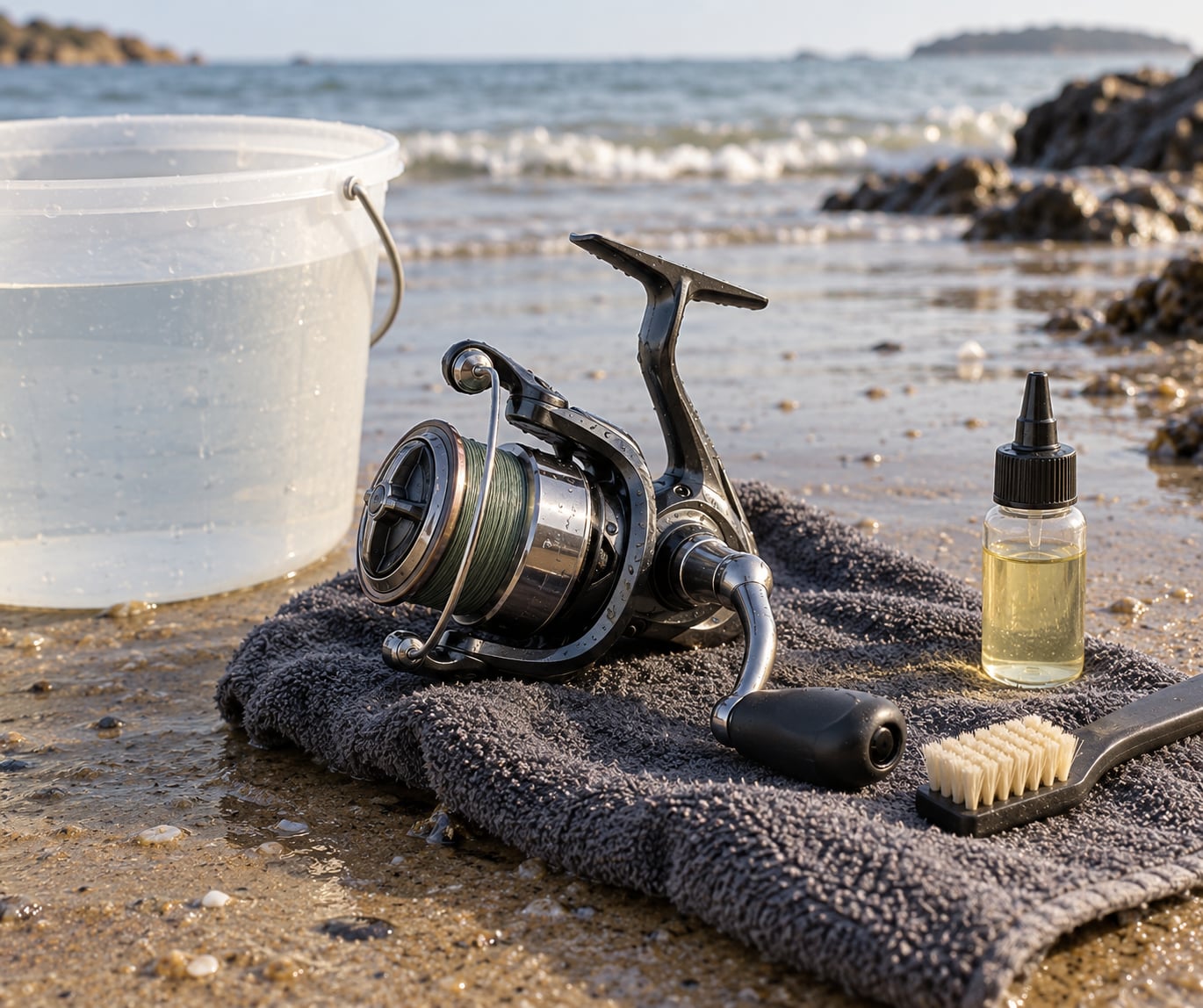
Rinse it, dry it, oil the moving parts, store it with the drag backed off — that is the whole routine for how to maintain a saltwater reel after use. Ten minutes at the rinse station is enough to prevent the three failures coastal anglers actually hit: a drag that seizes, bearings that start grinding, and a spool that pits and goes green.
Salt is the problem, not the water. Salt water is conductive, so any salt left on a metal surface forms a tiny electrolytic cell that eats through steel, aluminium and bronze far faster than plain moisture ever will. Towel-drying a reel removes water but leaves the salt crystals behind, and those crystals keep pulling humidity out of the air.
Skip the rinse and the damage shows up weeks later, not the same afternoon. You feel it as a drag that will not hold, a line that cuts off under load, or a spool that drags when it should release. Every one of those repairs costs more than the rinse.
Table of Contents
- What You Need
- How to Maintain a Saltwater Reel After Use: Step-by-Step
- 1. Stop Using the Reel and Secure It
- 2. Brush Away Loose Sand and Salt
- 3. Rinse With Clean Freshwater
- 4. Pay Attention to the Drag and Exposed Parts
- 5. Dry the Reel Thoroughly
- 6. Oil the Moving Parts Correctly
- 7. Inspect for Corrosion and Wear
- 8. Store the Reel for Its Next Trip
- Common Mistakes and How to Fix Them
- Quick Tips for Coastal Anglers
- Frequently Asked Questions
- Should I rinse a saltwater reel immediately after fishing?
- How long should I let a saltwater reel dry?
- Can I use a freshwater reel in the salt?
- What type of oil should I use on a saltwater reel?
- How do I remove green salt corrosion from a reel?
- Do saltwater reels need maintenance during long-term storage?
- Conclusion
What You Need
You need very little, and most of it is already in your boat box. Gather it before you start so you are not digging through gear with wet hands.
- A soft-bristled toothbrush or paintbrush. The nylon kind. Nothing with metal in it, and nothing stiff enough to scratch the spool or the side plate finish.
- A soft, lint-free cloth or chamois. Microfiber works. Avoid anything rough, because you are about to drag salt crystals across anodised aluminium.
- A fresh water source — a hose, a bucket, or a spray bottle filled with plain tap water. Warm water loosens salt a little better than cold.
- Reel oil. Any good quality spinning reel oil or marine reel oil. This is the one item worth buying fresh rather than improvising.
- Reel grease, optional. Heavy grease for the handle crank and the exposed spool seat. Check your manual first, because some manufacturers warn against grease on certain parts.
- A corrosion inhibitor or protectant. A spray or a pump product rated for marine and fishing gear. Some manuals permit a light application on the frame and bail arm; many warn against spraying anything directly onto a sealed body, so wipe it on a rag instead of spraying the reel.
- Cotton swabs and a small screwdriver. For the line roller, spool seat and bail wire screw. You are not disassembling the reel — just cleaning what comes apart easily.
On soap, be selective. Mild castile-style soap can be used on the exterior frame to cut grease and grime, and never on the drag, the spool seat, the line roller or anywhere near the gear box. Dish soap and boat soap strip the factory grease out of bearings and shafts, which is exactly the protection you do not want to remove.
On freshwater-only gear: a reel rated for freshwater only may not have sealed bearings, may use plain steel screws, and may have a drag built for thin line and light drag. You can maintain it in salt, but expect a shorter life than a reel built for the water you actually fish.
How to Maintain a Saltwater Reel After Use: Step-by-Step
Work in this order and the job takes about ten minutes. Each step below assumes a spinning reel unless noted; baitcasting and conventional reels differ only where noted.
1. Stop Using the Reel and Secure It
Back the drag all the way up and tighten the spool tension knob before anything else. A loose drag leaves gaps between the drag washers, and those gaps are where water and salt get in.
Do not open the bail while line is under tension. Let the line run back on the spool, clip it, and only then swing the bail open if you need access. Carry the rod and reel as a unit, and set them down on a clean towel rather than bare deck or sand.
2. Brush Away Loose Sand and Salt
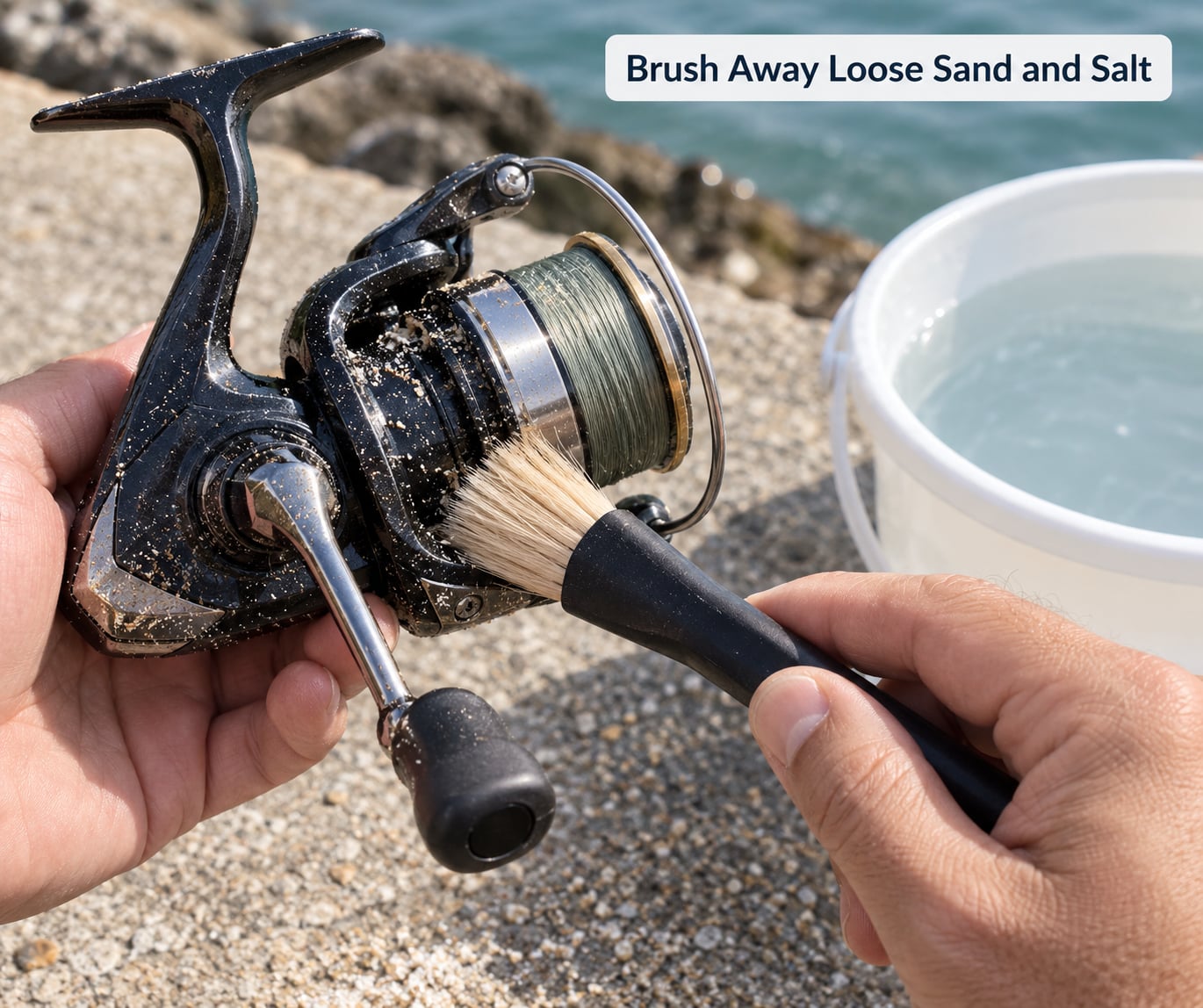
Dry-brush the reel before any water touches it. Sand is abrasive, and grinding it across a spool or into the bail wire is how you scratch a finish that will never come back.
Sweep the spool, the bail wire, the handle, the frame and the underside of the side plate. A lot of coastal damage happens right here and gets blamed on the water afterwards.
3. Rinse With Clean Freshwater
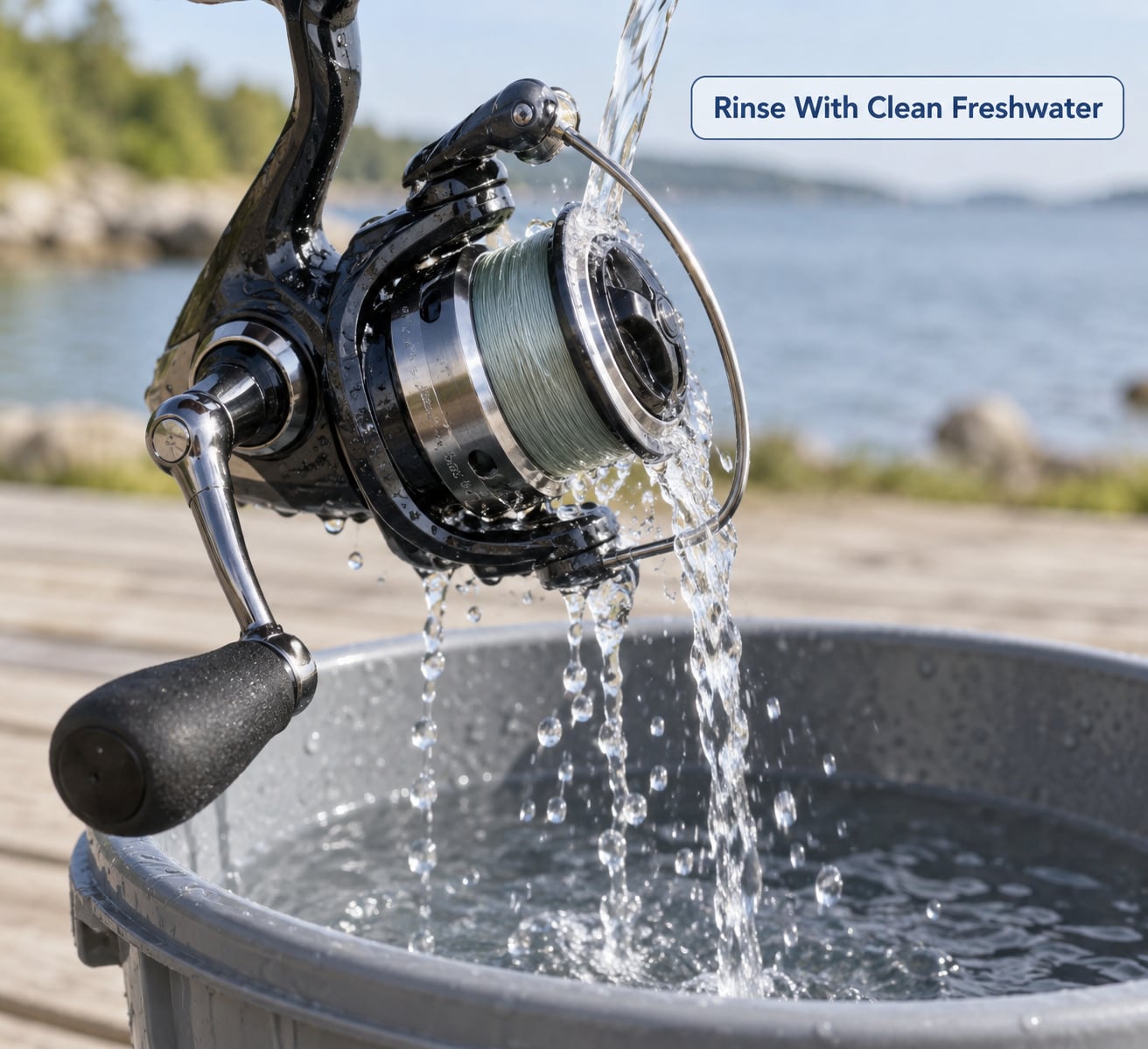
Use a gentle stream and hold the reel by the reel seat, tilted at an angle so the water runs out rather than straight into the body. Work the handle and the rotor as you rinse, so water passes over the spool, drag, bail and roller.
A spray bottle of plain warm water is better than a hose for a day trip. If you have no soft nozzle, keep the flow light and hold the reel sideways so water drains away from the bearings. Shake out a little trapped brine afterward.
Never soak a reel for a quick clean, and never submerge it. A ten-minute bucket soak is fine on a multi-day trip, but it is not a substitute for the rinse — it only dilutes salt, it does not remove it.
4. Pay Attention to the Drag and Exposed Parts
The drag is the single most salt-prone part of any reel, and the reason you tightened it in step one. Flush along the drag knob, the spool seat, the bail wire, the line roller, the bail arm screw and every exposed screw head.
Run the spool through a slow stream of water with the rotor turning so the spool seat gets rinsed all the way around. On a baitcaster, the exposed side of the spool sits right next to the internals, so pay it extra attention. On a conventional reel, the drag washer stack and the levelwind guide are the two areas to concentrate on.
If your manual says to remove and rinse the spool, do that now while you are already rinsing. On a spinning reel, loosening the spool retention screw and popping the spool off takes ten seconds and flushes the spindle, which is otherwise the dirtiest part of the whole assembly.
5. Dry the Reel Thoroughly
Shake out the water, wipe the exterior with a damp soft cloth, and let the reel air-dry completely in a shaded, ventilated place. Shade matters because direct sun heats the body and drives moisture into the seals, and heat also fades anodised finishes.
Do not use compressed air to speed things up, and do not rub the spool or frame with a dry cloth while salt crystals are still on them. You are grinding abrasive powder into the metal. A cloth dampened with fresh water, used gently, clears salt instead of spreading it.
Give it real time. A full afternoon in the shade or overnight indoors is better than ten minutes in the sun. Anything sealed traps humidity, so slightly separated from other reels is better than piled in a closed tackle box.
6. Oil the Moving Parts Correctly
No, you should not use WD-40 on a reel, and that goes for a light mist as well as a proper spray. It strips the grease from bearings and shafts, leaves a sticky film that collects grit, and it is not a lubricant designed for rolling contact. Use reel oil on moving parts and a marine protectant on the frame.
Put a small drop of reel oil on the handle crank or bail arm pivot so the rotation stays smooth, and a drop at each end of the spool shaft if your manual allows it. A line roller with a felt sleeve should have its own drop, applied with a cotton swab so you do not soak the felt. Keep oil away from the drag washers and away from any enclosed or sealed drag system — some of them use oil-impregnated washers, and extra oil makes the drag mushy and inconsistent.
On a baitcaster or conventional reel, add grease rather than oil to the handle cranks and the levelwind, and check the spool bearing if your manual lists it. Less is more: a few drops beat a puddle, and excess oil migrates onto the spool and onto your line.
7. Inspect for Corrosion and Wear
Before the reel goes back in the case, look at it properly. Check the bail wire and bail arm for green or white salt deposits, the spool and spool seat for pitting, and the handle screws and foot screws for rust bloom.
Turn the handle slowly while you watch the rotor. A slight hesitation that comes and goes is usually surface salt. A grinding sound, a stiff spot that repeats every revolution, or a drag that will not start smoothly points to contamination inside the drag or gear box, and that is a service job rather than a wipe-down.
Feel for play in the bail arm and the handle knob. A bail arm that rocks or twists, or a drag that slips far past its marked number, means a part is worn and needs replacing rather than cleaning.
8. Store the Reel for Its Next Trip
Reel the line back on fully rather than leaving a loose layer flopped on the spool, and back the drag all the way off. Tight drag and slack line on a spool are the two storage conditions that pit metal fastest.
Put the reel in a breathable reel sock or a dedicated case, not an airtight plastic bag, and keep it away from a damp bilge, a hot truck bed or a garage floor. In humid coastal storage, a desiccant pack in the case helps and costs almost nothing. For long storage, look at the reel every few weeks so you catch a problem early rather than in spring.
| Rinse method | Pressure | Best for | Watch out for |
|---|---|---|---|
| Spray bottle, warm fresh water | None | Day trips, most situations | Low coverage on a heavily salted reel |
| Low-pressure hose | Low | Baitcasters, conventional reels, long trips | Never a jet; force drives salt into bearings |
| Bucket soak and swap | None | Multi-day trips, livewell brine, surf spray | Soak 5 to 10 minutes, swap the water, repeat |
| Submerged or left in a sink | — | Nothing | Traps moisture in sealed bodies |
Common Mistakes and How to Fix Them
Most reel damage after a saltwater trip is self-inflicted, and it usually comes from one of these habits.
Blasting the reel with a hose. Force drives salt water past the seals and into bearings, which is worse than not rinsing at all. Use a low flow and a brush for stubborn salt instead.
Using dish soap or boat soap on the whole reel. It cuts grease out of bearings and shafts. Reserve mild soap for the exterior frame only.
Submerging the reel or dropping it in a sink of fresh water. Water trapped inside a sealed body has nowhere to go and dries from the inside out. A controlled soak with the spool removed, or a slow rinse, is the fix.
Spraying WD-40 or a general sealant straight onto the reel. It is the most-repeated piece of bad advice on this topic. The fix is reel oil for moving parts and a wipe-on marine protectant for the frame — never sprayed directly, always applied to a rag first if the manufacturer is cautious about it.
Drying with heat, a hair dryer or a closed tackle box. Heat damages seals and finishes, and a closed box traps the humidity that rinsing just removed. Air-dry in shade, separated from other gear.
Forgetting the drag. Rinse with the drag backed off, and store with the drag backed off. These are two different moments and both are correct — the tight drag only belongs to the rinse.
| Part | What to use | What never goes there |
|---|---|---|
| Handle crank, bail arm pivot | Reel oil, a drop or two | WD-40, dry lubricant |
| Line roller felt | One drop on a cotton swab | Flooding, WD-40 |
| Spool seat and shaft | Marine grease, sparingly, if the manual allows | Soap, acetone on plastic parts |
| Drag washers, enclosed drag | Nothing — clean and flush only | Oil, grease, penetrating spray |
| Frame, bail wire, exposed screws | Marine protectant wiped on with a rag | Sprayed sealant, direct spray |
Quick Tips for Coastal Anglers
Rinse at the ramp, not when you get home. Salt crystallises as it dries, and a reel that sits in a warm truck bed for an hour has already started the job you were trying to prevent.
On sandy beaches, brush before you rinse, every time. Sand is the real enemy on a sandbar trip, not the salt.
On boat trips with a livewell, give the reel a bucket soak and a water swap in the middle of the day if you can. Anglers on r/flyfishing make the same point: a single soak only dilutes the salt, so swap the water and soak again to actually clear it.
Rinse your terminal tackle at the same time. A rusted swivelling and leader ruins line faster than anything the reel does, and it takes ten extra seconds.
If a reel has been in salt and left alone, a full teardown and ultrasonic cleaning by a shop is the right call rather than a home repair. Anglers on r/saltwaterfishing describe using acetone on bare metal and a degreaser on plastic parts for a deep strip, but that is a bench job with the reel apart, and neither chemical belongs anywhere near a seal or a plastic side plate on an assembled reel.
Service a hard-used saltwater reel once a year, and more often if you fish salt weekly. New drag washers and fresh grease cost very little next to a seized gear box.
Frequently Asked Questions
Should I rinse a saltwater reel immediately after fishing?
Yes, rinse while the salt is still dissolved. Tap water works, and a spray bottle of plain warm water is enough for a day trip. Hold the reel by the seat, tilt it so water runs out, work the handle and rotor, and tighten the drag before you start so water stays out of the drag washers. On multi-day or brine-heavy trips, soak it in a bucket for five to ten minutes, swap the water, and soak again.
How long should I let a saltwater reel dry?
Until it is completely dry, which usually means a full afternoon in shade or overnight indoors. Shade and airflow matter more than speed. Direct sun, a hair dryer and a closed tackle box all trap heat or humidity, which drives moisture into seals and can fade the finish. A cloth dampened with fresh water clears salt crystals gently; a dry cloth on a salty spool just grinds abrasive powder into the metal.
Can I use a freshwater reel in the salt?
You can, but it will not last as long. A saltwater-rated reel uses sealed or shielded bearings, sealed drag components, stainless hardware and a heavier protective coating, and that is what survives repeated salt exposure. If you only make a few trips a year, freshwater gear is workable with a careful rinse. If you fish salt weekly, the difference in service life is significant and shows up in repairs within a season or two.
What type of oil should I use on a saltwater reel?
Use a quality spinning reel oil or marine reel oil, and use very little of it. Put a drop on the handle crank, the bail arm pivot and the spool shaft if your manual allows it, and one drop on the line roller applied with a cotton swab. Keep oil off the drag washers and off any enclosed or sealed drag. WD-40 is not a reel lubricant: it strips grease and leaves a sticky film that collects grit.
How do I remove green salt corrosion from a reel?
Light green surface deposits wipe off with a soft cloth dampened with white vinegar or a mild citrus solution, followed by fresh water and a dry. Follow up with reel oil on moving parts and a marine protectant on the frame. Once corrosion reaches pitting, the craters are permanent and no home treatment will fill them. Blunted bail wire, a stiff drag or a grinding handle means the reel needs a professional service, not a clean.
Do saltwater reels need maintenance during long-term storage?
A little, yes. Store the reel clean, completely dry, with the line wound on fully and the drag backed off, in a breathable case with a desiccant pack. Keep it away from damp basements, hot lofts and closed plastic bins. Check it every few weeks during long storage, especially in coastal conditions, so a problem shows up in an afternoon rather than the week you planned to fish.
Conclusion
Start at the rinse station, every single time, whatever 2026 throws at you. Brush the grit off, rinse gently with fresh water while the drag is backed off, let it dry fully in shade, drop oil on the moving parts, check for green corrosion, and store it loose in a breathable case.
Ten minutes of that beats a season of sticky drags and pitted spools, and most of it costs nothing more than tap water and a small bottle of reel oil.