To find oysters legally on public flats, get two things right before your boots hit the mud: the ground has to be open to public shellfish harvest, and you have to hold a valid recreational shellfish license for that water. Public ground means the flat sits below the mean low water line, is not privately leased, and is not closed for health reasons.
Past those two checks, the actual work is ordinary. You read the tide table, walk out at low water, spot reef knuckles on sand-and-mud bottoms near a tidal creek, measure every shell with a gauge, and stop at the state’s daily limit. Most beginners lose time on the legal questions rather than the oysters, so this guide puts the paperwork and access checks first.
Rules change. Every state agency publishes its own season, size limits, gear rules and closures, and they shift year to year as water quality changes. Treat what follows as a working method and verify the numbers with your state marine fisheries agency before 2026.
Table of Contents
- What You Need
- Step-by-Step: How to Find Oysters Legally on Public Flats
- 1. Confirm That the Flat Is Publicly Accessible
- 2. Check State Harvest Rules and Required Permits
- 3. Use Maps and Local Knowledge to Find Oysters Legally
- 4. Read the Flat for Oyster Beds and Legal Shorelines
- 5. Check Closures, Water Quality, and Temporary Restrictions
- 6. Harvest Only Within the Legal Limit
- Common Mistakes
- Frequently Asked Questions
- Are oysters in public waters always legal to harvest?
- Do I need a permit to take oysters from a public flat?
- Can I harvest oysters from a beach that looks public?
- What should I do if I find a closed or posted area?
- How do I know the minimum oyster size and daily limit?
- Can I collect oysters from a private dock or leased bed?
- Conclusion
What You Need
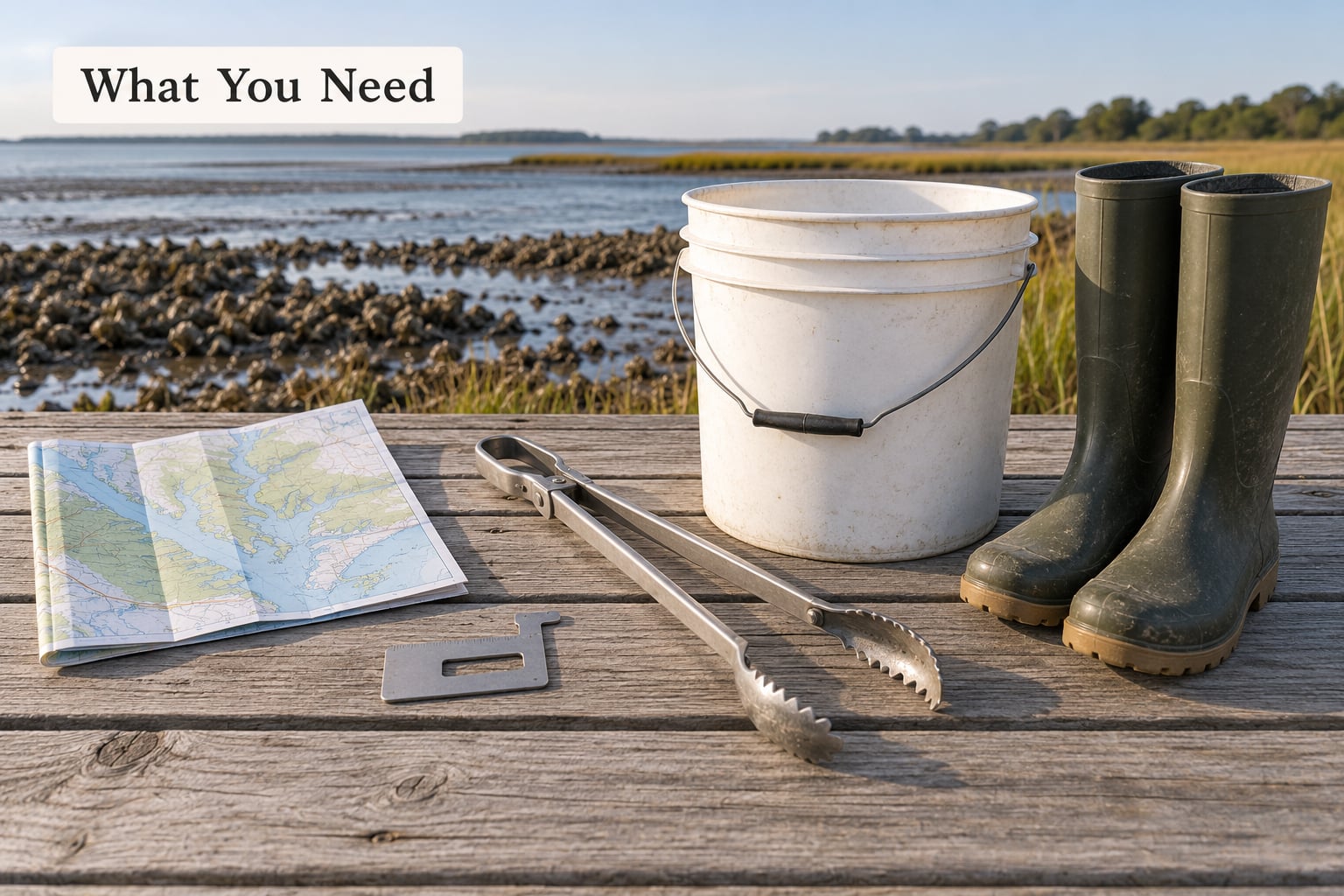
A paper chart or phone screenshot of your state’s recreational shellfish ground map, saved for offline use. Signal drops to nothing on a mud flat at low tide, and a map you cannot load is the same as no map.
Your state’s recreational shellfish license or permit, plus a photo ID. Ages differ by state. Washington requires a shellfish and seaweed license at 15 and older, and most Mid-Atlantic states start at 16 or 15. Check your own agency’s page rather than assuming a neighbor’s age threshold applies to you.
A measuring gauge. Oysters are regulated on shell length, not on how they feel in the hand, and most states sell an inexpensive gauge sized to the exact minimum. Measuring with a ruler taped to a board invites small errors that add up to a citation.
Gear that stays legal. Hand picking and oyster tongs are the widely permitted tools; powered dredging and raking are almost always commercial-only. A short pry bar or hammer helps break clusters apart in place rather than hauling up whole reef sections.
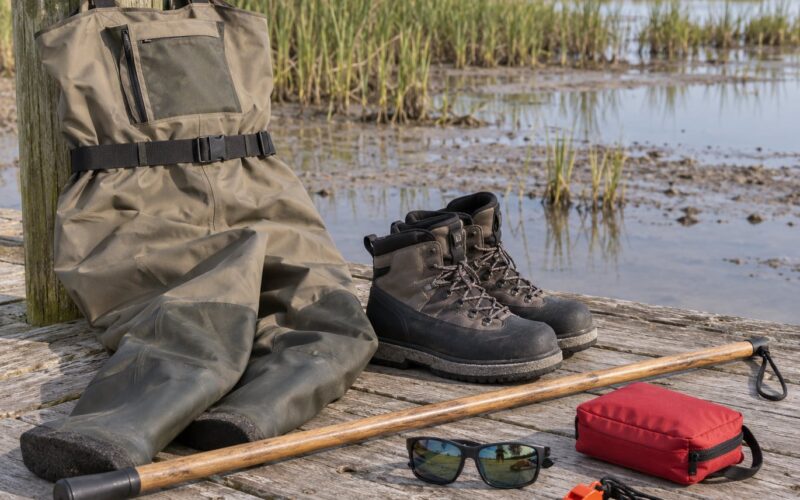
Tall rubber boots or chest waders, lined gloves, a bucket or milk crate, and a tide table for the nearest NOAA station. Pluff mud grips boots and pulls at ankles, so a wide flat-bottomed crate beats a narrow pail when you are working in soft mud.
Finally, a plan for getting shells off the reef. Many states ask or require recreational harvesters to return empty shell to a recycling drop point, and it keeps the reef’s calcium carbonate cycle intact.
Step-by-Step: How to Find Oysters Legally on Public Flats
1. Confirm That the Flat Is Publicly Accessible
Public water and public shore are not the same thing, and that distinction causes most of the trouble. The legal line in most states is the mean low water line: water seaward of it is generally open to the public, but the shore landward of it can be private.
Before you walk out, you need to sort the ground into one of four categories: public or unassigned grounds open to recreational harvest, state-managed grounds with their own rules, a recreational-only designation where the public may take oysters but commercial harvest is barred, or a private subtidal lease that belongs to someone else entirely. Oysters on a leased bed belong to the leaseholder, not to whoever finds them.
You are on the right kind of flat when the ground is not inside a marked private lease boundary and your state’s map shows it as open for public shellfish harvest. When in doubt, call the number on the agency page before you load the boat rather than after.
2. Check State Harvest Rules and Required Permits
Rules are set by state agency, and the differences are large enough that a habit formed in one state will get a person cited in another. Virginia Marine Resources Commission, Maryland’s Department of the Environment, NC DEQ Marine Fisheries, South Carolina DNR, Florida’s Division of Aquaculture, Washington Department of Fish and Wildlife, Louisiana Wildlife and Fisheries, Maine DMR, Massachusetts DPH and New York DEC all write their own rules.
Ask each agency four things: the license requirement and age, the season dates, the minimum shell length, and the daily limit. Also ask about gear restrictions and any weekday rules, because some states harvest specific grounds on specific days. Virginia is the well-known example, where restrictions under 4VAC20-720 make it unlawful to take or possess oysters on Saturday and Sunday from public or unassigned grounds. That single rule changes the whole plan for a weekend harvest.
You are compliant when you can name your issuing agency, hold the license it issued, and know the exact regulation number covering your water. Forage forums are useful for finding a good flat, but they are not a legal source. One Virginia Beach thread opens with the honest admission, “I’m not up to speed on the regs,” which is exactly why beginners rely on the agency instead.
3. Use Maps and Local Knowledge to Find Oysters Legally
Official state maps are the starting point. Virginia publishes a recreational shellfish map, North Carolina publishes an oyster fishery management plan update with its current limits, Washington publishes its approved shellfish beaches, and South Carolina posts health advisories through its environmental agency. Each map layer answers a different question: which ground is open, which water is closed, and where harvest is allowed at all.
How to read a closure map: colors and symbols mean different things in different states, so read the legend rather than guessing. A red or closed designation means no harvest of any kind. An open classification still requires a current license and a legal count. Bordering lines between lease areas are the part most people miss on a phone screen, so zoom in past the shoreline before you trust what you see.
Tide charts from NOAA do more than tell you when to walk. A flat that is workable at a 0.4 foot low water is not the same flat at a 0.9 foot low water, and an outgoing tide through a narrow creek can cut your return route. Pick a day with a good low water in the morning and enough slack afterward to get back across the mud.
For local knowledge, ask a harbor master, a tackle shop clerk who sells licenses, or a shellfish aquaculture association in the county. They know which creeks hold oysters and which ones hold nothing but mud. Treat coordinates handed over by strangers as a rumor until you confirm the ground yourself.
You have narrowed it correctly when the map shows open harvest ground, the tide table gives you a real window, and one local source confirms the area is worth walking.
4. Read the Flat for Oyster Beds and Legal Shorelines
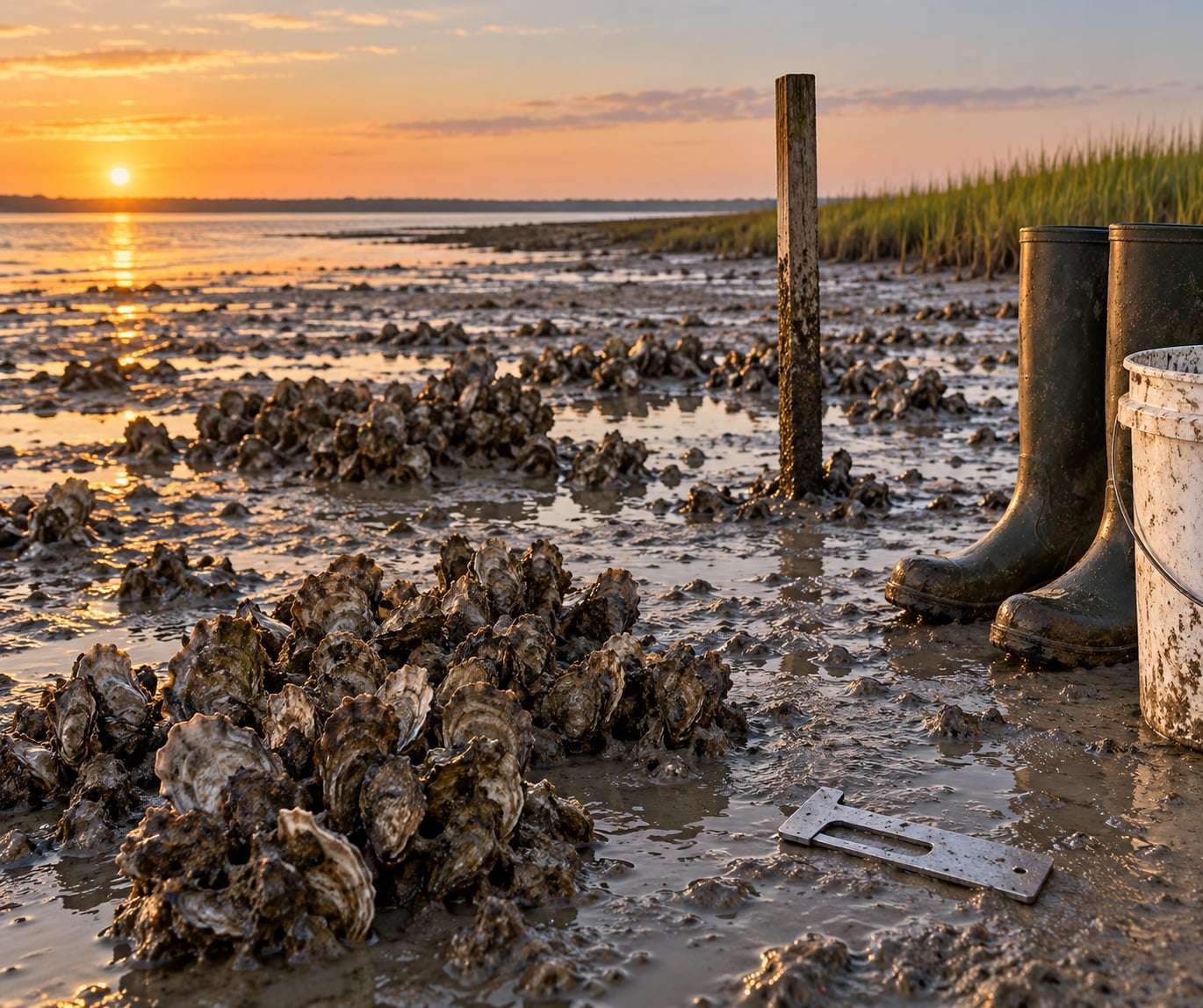
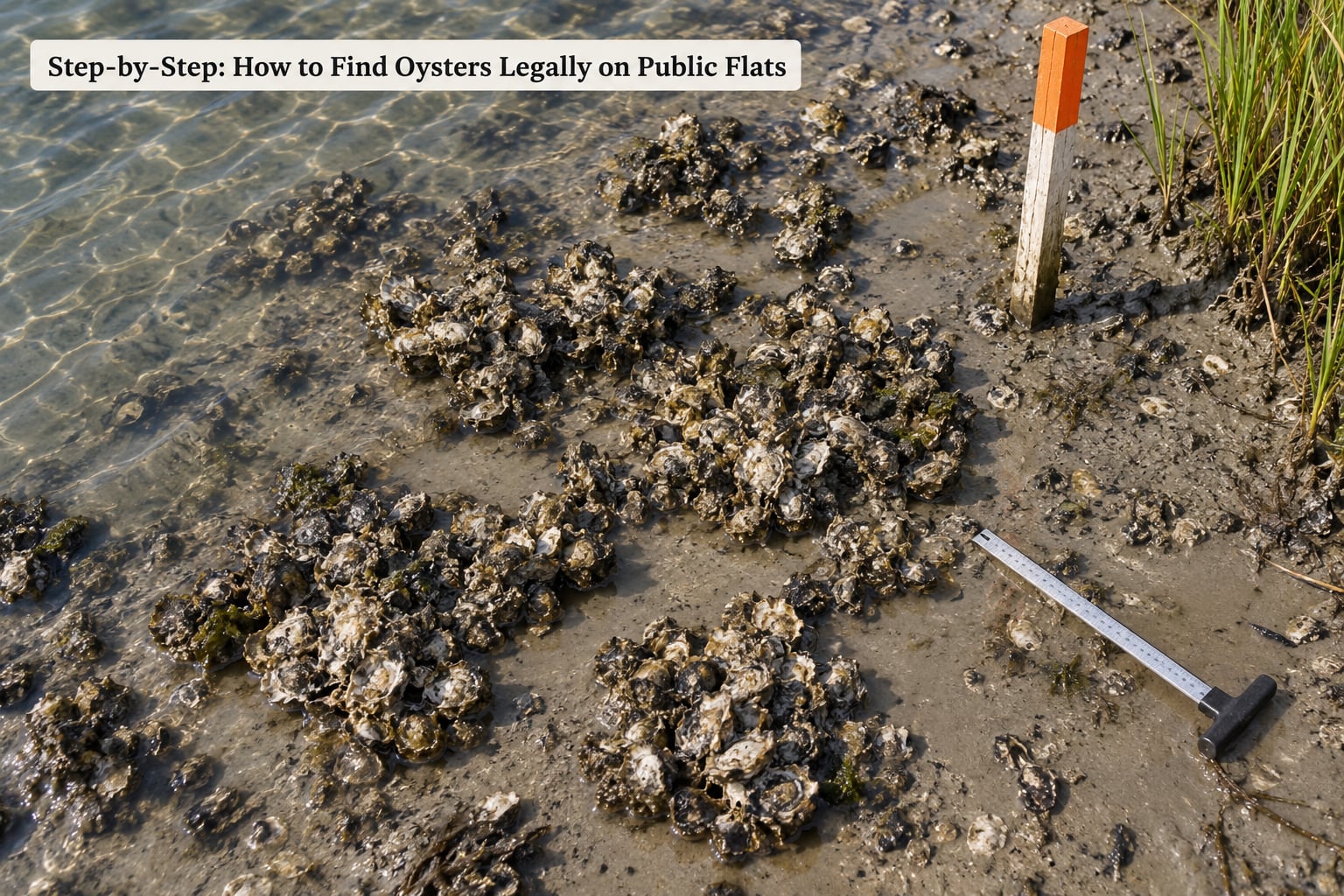
Oysters cluster where a sandy flat meets mud, usually near the mouth of a tidal creek or the edge of a salt marsh. Look for dark, knuckled reef shapes breaking the flat, lines of shell and rock that collect at creek edges, and a bottom that changes from firm sand to softer mud as you walk.
That sand-to-mud transition matters because oysters need both: firm shell substrate to attach to and calmer, food-rich water in the creek channel. Beginners on the Virginia Beach forums say the same thing in a sentence. Find a marsh with an oyster bar and you will find a good amount, rather than searching a bare flat for an hour.
Be careful with what you find. A visible shell bed tells you oysters are present, nothing more. It does not tell you the bed is public, that it is open, or that it has not been reseeded with protected seed stock. Some states restrict seed-oyster harvest specifically for restoration work, and a marker or tag in the cluster is a clear signal to leave it alone.
Stay on the seaward side of the mean low water line while you work. If your line of travel takes you up onto a bank, past a bulkhead, or behind a private dock, you have left public ground.
5. Check Closures, Water Quality, and Temporary Restrictions
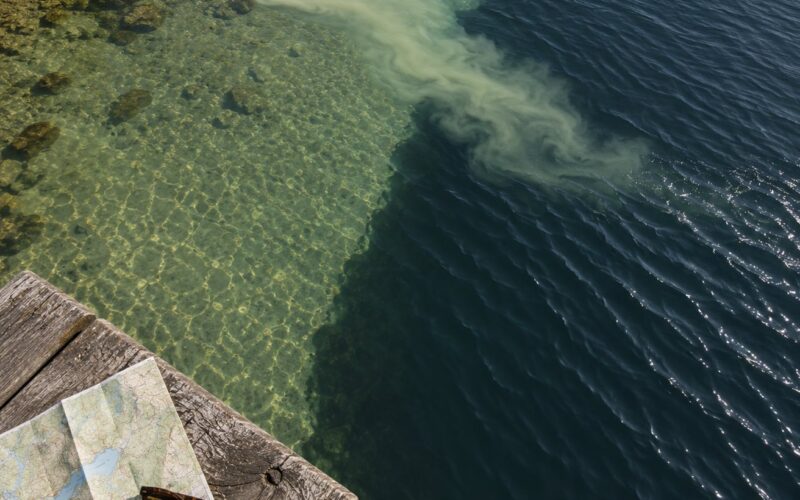
Check the health advisory the morning you go, not the night before. Red tide and algal bloom closures open and close within days, and a bed that was open Tuesday can be closed Thursday when a bloom moves. Your state’s health department or shellfish sanitation program publishes current closures, and that page overrides everything else you planned.
Beyond blooms, look for seasonal closures, wildlife refuge buffers, conservation areas, and temporary restrictions posted after storms or dredging. Emergency closures are the easiest rule to break by accident because the signs go up after you have already picked a spot.
Weather counts too. Wind, visibility and a fast-rising tide can turn a legal, open flat into a bad decision. My own go rule is simple: if I cannot see my entry point from where I am standing, I am not going any farther out.
You are clear to harvest when today’s advisory shows your water open, no closure covers your ground, and your planned walk fits inside the tide window with time to spare.
6. Harvest Only Within the Legal Limit
Pick the cluster apart in place, break off shells that meet the gauge, and put undersized ones straight back on the reef. Taking only the legal oysters off a cluster is the cull-in-place habit experienced harvesters teach, and it is what keeps a bed producing for the next person.
Count as you go rather than at the end. North Carolina sets a recreational limit of one bushel per person per day, not to exceed two bushels per vessel per day. Other states use different units, and regional shorthand like roughly a peck or half a five-gallon bucket per person is a useful mental gauge but never a substitute for the printed rule. Harvesters on the Charleston forums share the same idea: get the count right, and keep the container wide so your weight is spread on soft mud.
Stop at the limit even when the flat is producing well. Going over is the most common citation a recreational harvester picks up, and it is the easiest one to avoid.
Once you are home, get oysters cold fast. Keeping them near 40 degrees from the mud to the cooler slows bacterial growth, and raw shellfish from warm water carries real Vibrio risk. Do not eat oysters you found but did not harvest from a currently open area, and if you are pregnant, over 65, or immunocompromised, ask a doctor before eating raw shellfish.
Keep your permit with your catch. When the numbers get argued, the person with the current license and the gauge in hand is the one who leaves with oysters.
Common Mistakes
Assuming public water means public shore. The mean low water line divides harvest access from land ownership. Walk past it onto a bank or a private yard and you are trespassing no matter how many oysters are underfoot.
Harvesting inside a marked closure. Red and closed classifications on an agency map are legal prohibitions, not advisories. They also change often, so a screenshot from a forum post a year old is worthless.
Taking undersized oysters “just for the pot.” Minimum shell length exists so reefs can reproduce. Measure every shell, and if your gauge and your hand disagree, the gauge wins.
Using gear the license does not cover. Hand picking and tongs are the common legal tools. Dredging, raking and power-assisted methods are restricted to licensed commercial harvesters in most states.
Overfilling the daily limit. Limits are per person per day and are counted across the whole trip. Count as you pick, not as you load the cooler.
Ignoring posted signs and markers. Signs at a boat ramp may carry a species-specific closure that the general map does not show. If a sign and an app disagree, assume the sign is current.
Forgetting seed oysters and lease boundaries. Tagged or planted seed stock belongs to a restoration or aquaculture program. Leave tagged clusters, and stay out of anything enclosed by lease stakes or posted lease markers.
Frequently Asked Questions
Are oysters in public waters always legal to harvest?
No. Public water can still sit above a closed health designation, inside a private lease, on state-managed grounds with their own rules, or in a recreational-only area where commercial harvest is barred. Harvest is legal only where the ground is below the mean low water line, not privately leased, open on your state’s current shellfish sanitation map, and covered by a valid recreational license.
Do I need a permit to take oysters from a public flat?
Almost always yes. Recreational shellfish harvest requires a state license or permit in Virginia, Maryland, North Carolina, South Carolina, Louisiana, Washington, Massachusetts, New York and Florida, and the minimum age varies. Some states also restrict harvest by day of the week or by specific ground, so confirm the license and any weekday rules before you leave the ramp.
Can I harvest oysters from a beach that looks public?
Looking public is not the test. The line that matters is the mean low water line, and everything landward of it can be private even when the beach has no fence and no sign. Stay seaward of that line, confirm on your state’s map that the ground is open for recreational harvest, and stop if you reach a bulkhead, private dock, or leased bed marker.
What should I do if I find a closed or posted area?
Leave it and note the location. Closed areas on a shellfish sanitation map prohibit all harvest, and posted markers often mark private leases, seed-oyster restoration plots, or wildlife buffers. Do not move the marker, do not take a single shell, and do not rely on coordinates from someone else to reach that spot another day. If you are unsure whether a boundary is a closure or a lease line, contact your state marine fisheries agency.
How do I know the minimum oyster size and daily limit?
Both numbers come from your state agency, and they change. North Carolina, for example, lists a recreational limit of one bushel per person per day and no more than two bushels per vessel per day. Get the current minimum shell length and daily limit from your state marine fisheries page, measure every shell with a matching gauge, and count your take as you harvest.
Can I collect oysters from a private dock or leased bed?
Not without the owner’s permission. Subtidal leases are held by individuals and aquaculture companies, and oysters on a leased bed belong to the leaseholder regardless of who found them. Private docks and bulkheads also put you on private land, which is trespassing. Recreational harvest happens on public or unassigned grounds your state has opened, with your own license, and nothing else.
Conclusion
Three things happen before you pick up an oyster. Confirm the ground is public and unleased, pull the current license, size and limit rules from your state marine fisheries agency, and check the day’s shellfish sanitation closures right before you walk out.
Then work the flat the way experienced harvesters do. Wade at low water, look for reef knuckles where sand meets mud near a creek, gauge every shell, cull the rest back onto the reef, count as you go, and stop at the limit. Get the shells cold fast, return the empty shell, and go out again next season. That is how to find oysters legally on public flats in 2026, and it keeps the reef worth returning to.