To hunt teal in early season, you need warm shallow water, a small compact decoy spread, cover, and the discipline to be in the blind before you are legal to shoot. The birds you are after are almost always blue-winged teal, the smallest duck in North America, and they are moving through on their own schedule all month.
Most beginners lose the opener by arriving at the right water at the wrong time, or by putting out twenty decoys where four would have worked. This guide walks through the whole sequence: checking your regulations, scouting without disturbing the birds, building a spread sized for teal instead of mallards, calling with restraint, confirming the species before you pull the trigger, and picking shots that are legal and fair.
The season itself is short, often a single weekend of good weather, so the scouting you do in the two weeks before opening pays for itself almost immediately. Everything below assumes you will verify dates, hours, and bag limits with your state wildlife agency before you leave the house, because those numbers change from year to year.
Table of Contents
- What You Need
- Paperwork and licenses
- Clothing that suits warm water and tall grass
- Optics and the glass you actually need
- Gun and shells for small ducks
- Decoys, calls, and the rest of the kit
- Practicing before opening day
- Public land basics
- Navigation and safety on small water
- Step-by-Step
- 1. Check the Season and Local Bird Movement
- 2. Scout Safe Water Access and Cover
- What to do when the water is not what you scouted
- 3. Build a Teal-Specific Decoy Spread
- Matching the spread to the water
- 4. Use Calls and Movement Patterns Carefully
- 5. Identify Teal Before You Shoot
- Blue-winged, green-winged, and cinnamon teal
- 6. Make a Clean, Legal Shot
- After the shot
- Make It Easier for the Next Hunter
- Common Mistakes
- Frequently Asked Questions
- What is the best time to hunt teal in early season?
- How many decoys should I use when hunting early-season teal?
- Should I use duck calls when teal are already feeding nearby?
- How can beginners tell teal apart from other ducks?
- Is it better to hunt teal from a blind, shoreline, or boat?
- What should a new teal hunter carry for safety and navigation?
What You Need
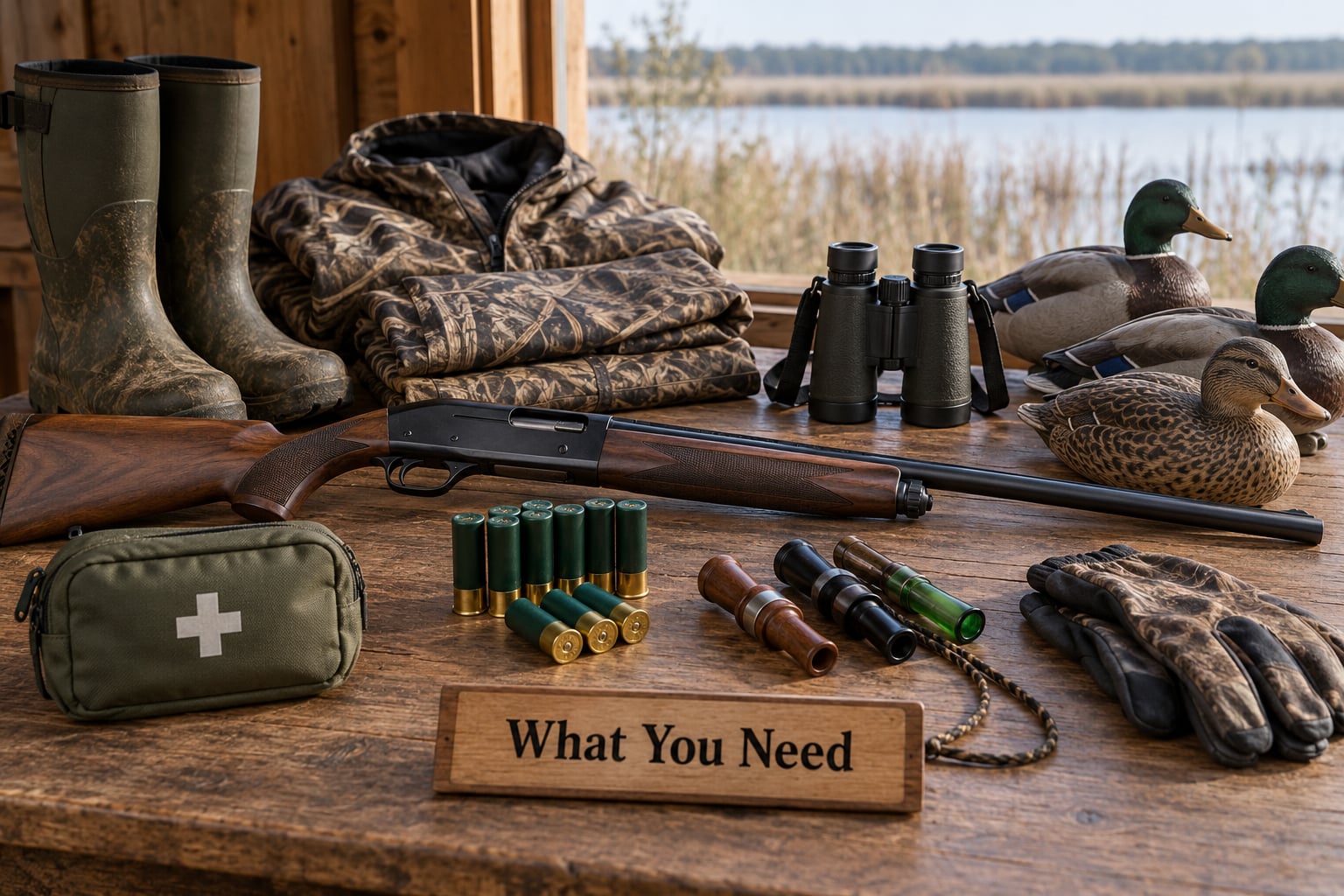
The short version: a license, warm rain gear, a shotgun with teal-appropriate shells, about a dozen teal decoys, a couple of calls, binoculars, and something that tells you where you are in flat country. Early teal hunting is not a gear-heavy sport, and the season is short enough that buying less is usually the better call.
Paperwork and licenses
Federal waterfowl stamps and your state license come first, and they are not optional. Some states also require a state waterfowl permit or a hunter safety course certificate before you can buy a license, so check that before you drive anywhere. Your state agency will also publish the shooting hours, the daily bag limit, the species you are allowed to take during the early season, and whether wood duck or other species are open in the evening where you hunt.
Clothing that suits warm water and tall grass
Early teal season usually happens in September, so you are dealing with heat, humidity, mosquitoes, and sudden rain rather than cold. Synthetic or merino layers, a packable rain shell, and breathable hunting clothes are more useful than a heavy jacket. Hunters on the waterfowl forums ask about this every year, and the answer is almost always the same: light, dark, quiet clothing you can change out of quickly.
Waders are optional and often a mistake. Teal feed in knee-deep or shallower water, and wading through a soft bottom will make noise, cost you time, and put you in water you cannot leave quickly. Chest waders earn their place on a cold, deep flooded field. Boots are usually enough, and rubber-bottom hunting boots handle the mud that a September storm leaves behind.
Optics and the glass you actually need
A pair of binoculars with a wide field of view is the single most useful tool in the blind, because you will be sorting a flock at 40 yards in low light. Ten power is plenty for species confirmation, and eight power helps you find birds. Glare matters here more than magnification, so look for a lens that sheds water and a body that is easy to hold steady without a tripod.
Gun and shells for small ducks
Teal are small, fast and close. A 12-gauge with a good teal load works for nearly everyone, and early teal season is a good excuse to try a 20-gauge or even a 28-gauge if you have been meaning to. A shortened smaller-bore gun is comfortable on a teal volley and easy on the shoulder during a long morning.
For loads, stick to waterfowl-legal steel or bismuth shot. Both are fine on teal; bismuth is the softer, more forgiving payload for a gun that may be new to smaller birds, and it performs well on the way to a limit. Whatever gauge you choose, pattern it at a field range before opening day. A pattern that looks good in the back of a barn and a pattern that puts birds down in front of a pit blind are not the same thing, and a Missouri knockdown pattern is not a waste of a load if you were expecting to pass a hen.
Decoys, calls, and the rest of the kit
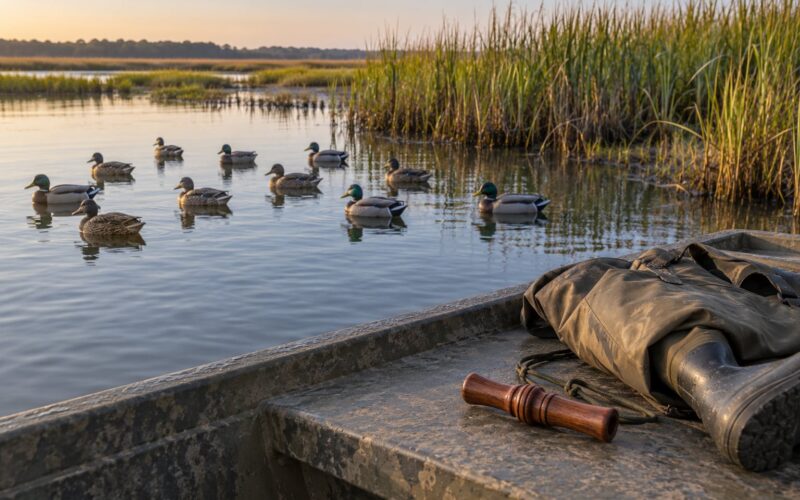
For decoys, a dozen life-size teal floaters or a similar number of duck floaters is a complete, portable run. Beginners on the r/Waterfowl forum make a point that cheap decoys work about as well as expensive ones, and for teal that is true: the birds are small, the water is often choppy, and the flock is usually working close. A few spinning-wing mojo decoys add motion and sound. Teal mojos work because their spin frequency sits closer to real teal wingbeat than a mallard motor does.
For calls, a handful of hen mallard calls plus one low-pitched duck call is plenty. A pack of strapping tape, a small knife, a headlamp with a red mode, insect repellent, a first-aid kit, a bird strap, and a charged phone complete the load. A mud boot pair and a rope for pulling yourself out of a soft bank are worth more than any gadget.
Practicing before opening day
Spend a few afternoons on the sporting clays or skeet range in the two weeks before the season, and pattern your teal load in the same trip. Teal fliers are fast and flat, which is the opposite of the high, slow clay most people are used to, and the muscle memory you build in September is what makes you willing to wait for a good bird in October. A week of practice also tells you whether your gun is cycling smoothly, which matters more for teal than a tighter pattern.
Public land basics
If you are not hunting private ground, decide in advance where you are going to be and when you are going to be there, and give other hunters room. Early teal water is small enough that two spreads on the same pond is a bad morning for everyone, and the pressure from crowding a public pond is exactly how a productive spot stops producing. Stay on the established access, pick up every shell and any spent hulls, and treat the next hunter’s spot as if it were yours.
Navigation and safety on small water
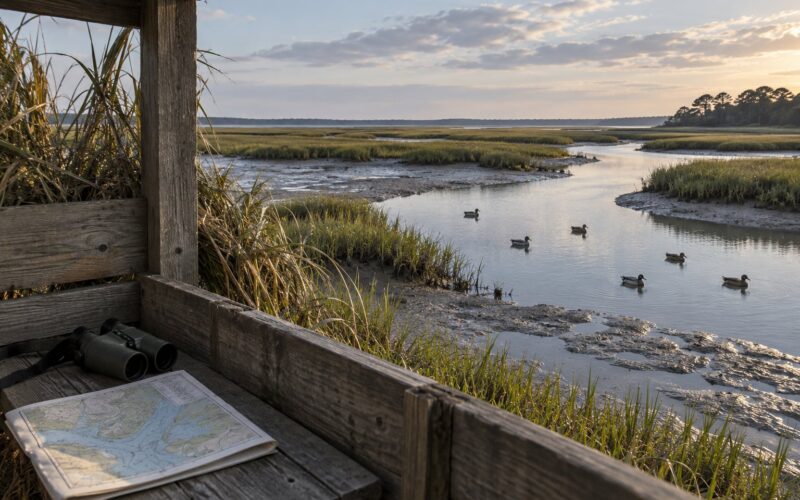
Most early teal water is flat, wet, and featureless. A handheld GPS or a phone with offline maps, a compass, a spare battery, and a headlamp that works when your hands are wet are not luxuries. Tell someone your float plan, carry a whistle, and check the weather forecast for a storm cell before you commit to a flooded field with no high ground in sight.
Step-by-Step
1. Check the Season and Local Bird Movement
Start at your state wildlife agency website, not a forum post or a mapper app. Find the early teal season dates, the daily start and end of shooting, the bag limit, and which species are open. Some states run the early season as a short standalone window in early September, while others fold it into a split season that also lists evening wood duck or duck hunting. Those details decide whether your morning plan is even legal, so read them first.
Then read the weather, and read it for the last two weeks rather than the last two days. Blue-winged teal leave the Prairie Pothole Region early and stage on shallow wetlands, flooded field edges, mud flats, and sheet water. Late-summer rain is what makes this hunting work, because here-today-gone-tomorrow water is exactly the exposed, short-vegetation edge teal want to feed on. A cold front pulls birds down, and heavy rain before they arrive pushes them through rather than parking them.
Build a scouting habit around migration reports. A public migration map where hunters log first flights and sightings gives you something real to plan from, and logging your own observations through opening day is the cheapest scouting tool you own. The birds you found last weekend may be gone this weekend; teal move with temperature and water, and that movement is the defining challenge of the early season.
How you know this step worked: you can name the dates, the hours, and the water you are targeting, and you have a backup water in case the first one plays dry.
One weather detail beginners miss: teal often move through a spot on the front of a system rather than the back. A warm spell pushes them north early, a hard front grounds them, and rain that falls after they arrive sends them south again. When the forecast shows two good days in the middle of a wet week, those two days are the season.
If you are deciding whether to drive for it, the honest answer is that most early teal seasons are not worth a long haul. The season is a few days, the birds are small, and a good local pond beats an expensive out-of-state trip almost every year. Drive when you have a specific piece of water with a specific species on it, or when you are combining the trip with something else on the calendar. Do not drive six hours for a general waterfowl hunt and call it a teal hunt, because teal will not wait around while you work a mallard spread.
The one exception is water you cannot get at home. The Dakotas, Texas, Louisiana, Arkansas and the coastal marsh states all hold blue-winged teal early in numbers that most states simply do not have, and the public marsh in a few of those places is genuinely good water. Weigh that against a season that may be eight days long, and check the shooting hours before you commit: a place with a 45-minute evening window and no morning shooting is a different hunt entirely.
2. Scout Safe Water Access and Cover
Early teal birds live on small water, and small water is easy to ruin. Scout from a distance with binoculars or a spotting scope, from a road, a levee, a tree line, or the high side of a levee. Do not launch a boat into a pothole at first light to look for birds; several hunters on r/Waterfowl and r/Duckhunting repeat the same warning, that driving the marsh at dawn bumps every bird off the water before you set up.
Walk the bank once, during daylight, in a position where the birds can see you coming slowly and settle behind you. You are looking for four things: an approach that stays below the birds eye line, water deep enough to hold a decoy spread and shallow enough to wade, a natural wind that carries scent away from you, and a clean route to the water that does not cross the birds feeding lane.
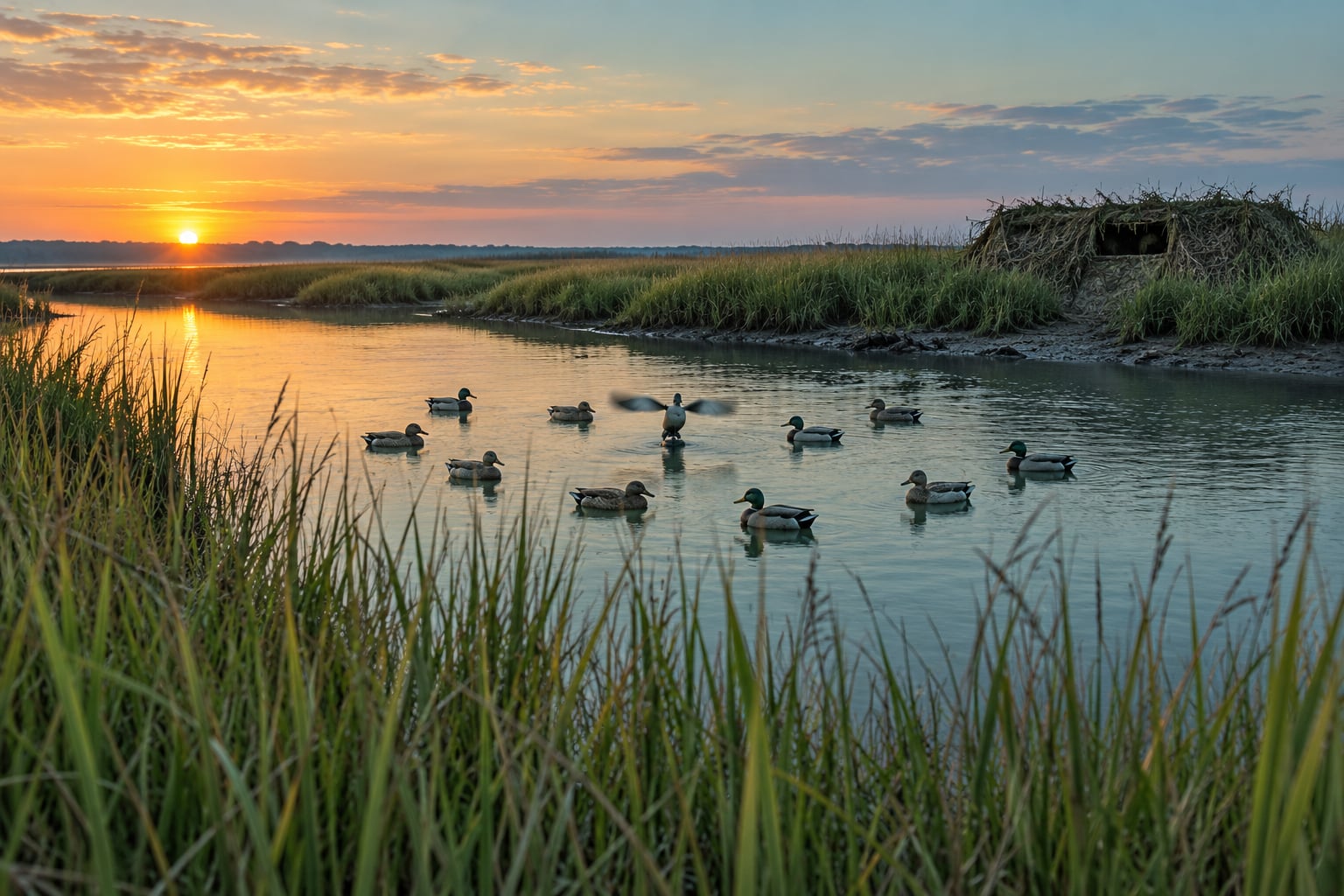
Cover is the difference between a morning and a wasted morning. That means a pit in a bank, a camo brush blind, a layout blind in a field edge, or, on flooded rice ground, a pit dug into the levee with sheet material over it. On tidal creeks and estuaries, a layout or boat over open water can be better than a pit, because the birds will come to you instead of you crowding them.
How you know this step worked: you can describe the shot without telling a story about what the birds did when you walked in, and you have a second position that works if the wind switches.
On tidal water, add the tide to your scouting. A creek that is a foot of water at high slack can be ankle-deep mud at low slack, and the difference decides whether your spread stays put or joins you in a channel. Watch the water at both ends of the tidal cycle if you can, and pick a position that stays workable for at least two hours either way.
What to do when the water is not what you scouted
Scouting goes stale fast in September. A week of hot weather can drop a pond from a foot of water to mud, a rain event can open water that was dry on your last walk, and a farmer can cut or flood a field without telling anyone. Treat the scout as a starting point rather than a plan, and re-check the water the night before and again at the access before you commit to walking in.
Two questions decide it quickly. Is there standing water deep enough to float decoys and shallow enough to set a spread you can pick up later? And is there any sign of birds on it right now, even distant? If the answer to the second one is no and the water is shrinking, move before you build a setup that will be standing in mud by noon.
The other thing a good scout checks is the walk itself. Mud banks, downed branches, and soft shoreline can turn a fifty-yard carry into a twenty-minute struggle, and you will do it in the dark. Note where you can put a bucket down, where a decoy bag will snag, and where you could run if a storm came through while you were set up. It is unglamorous work, and it is the work that decides whether you are hunting or hauling gear.
3. Build a Teal-Specific Decoy Spread
A dozen decoys, tight enough to read as a flock, with a gap in the middle for teal to pitch into. That is the whole spread. A hunter in the Eastmans early teal thread described five or six decoys spread out with a real duck planted in the group as a confidence bird, and a Louisiana pothole hunter put a similar number out and called a dozen plenty. Both are the opposite of the hundred-decoy field spread built for mallards.
Reasons specific to teal: the birds are tiny, so a huge spread looks like a flock of something else, and it gives them a reason to keep their distance. A small spread also fits in a couple of buckets, which matters when you are walking a levee or moving because yesterday’s water went dry. Teal mix with other dabbling ducks, so a mixed bag of decoys is honest, and adding a few coot decoys can give the flock confidence in the water, since teal regularly feed near coots.
Set the spread at a comfortable range from the blind, roughly where teal would want to land, and set the wind so the birds come into the open face of the decoys. Leave your shooting lane clear. If you are hunting a small pocket with birds feeding in front of you, a spread set 25 yards out will pull the flock to that pocket and give you the angles. Pull the spread a few yards closer if the birds are short or a few further if they keep drifting over you, which usually means your scent is on the water or your wind is wrong.
On mojos, use two or three, not six. Run them continuously and quietly before legal shooting time, keep them off once birds are inside landing range, and never leave them running while a bird is in the air. On flooded rice fields, Texas-style plugs anchored from shore keep a current-heavy spread from drifting into a corner.
How you know this step worked: birds circle the spread and come back three or four times, or they set without lighting at fifty yards. Both mean the setup is right.
Matching the spread to the water
The right setup changes with the terrain, and copying a setup built for flooded rice ground onto a public marsh pond is a common beginner error. A hunter from the Indiana Sportsman forum put it simply, teal want shallow water and you will not find a lot of them on big open water, and that single fact drives every decision below.
- Farm pond or pothole. A dozen decoys in one tight clump, two mojos, a pit or brush blind in the bank. Set the spread 20 to 25 yards out so arriving birds commit, and keep the back of the pond open so they have a place to sit after they land.
- Flooded field edge. Same small spread, but set it in a corner where the field sheet meets standing water. Teal work the edge, not the middle, and a blind dug into the field edge beats one in the open sheet.
- Rice field levee. A pit dug into the levee with the spread placed in the flooded field, and Texas-style plugs or line to hold the decoys against any current. Distance matters more here, and 40 to 50 yards gives birds room to work.
- Tidal creek or estuary. Fewer decoys, set at the tide line where the mud is just exposed, with a layout blind or boat. The birds here are often coming with the tide rather than to a fixed spot, so position beats decoy count.
- Public water with boat traffic. Go early, pick a position away from the launch, and set your spread before the first boats arrive. Decoys get run over constantly and you should not count on what you set up surviving the morning.
Across all of them, the same rule holds: the decoys exist to make the birds land where you can see them, not to impress the birds on the water. A spread you can carry with one hand in a bucket is a spread you will be able to place properly, before light, without a boat.
4. Use Calls and Movement Patterns Carefully
Beginners over-call teal. It is the most common fixable error in the sport, because teal come in tight and a hard push turns them off fast. A few soft hen calls, spaced, with the first note given the most weight, is the standard teal sequence. Hold a low call and a feeding-drake quack for the flock to answer, and stop talking the moment birds are visible.
Decoys do not call birds. They give the birds something to see after they have heard you. Work the wind so scent moves away from the flock, and if birds are drifting overhead with nowhere to put down, call them up, not away. Some beginners try to imitate a takeoff or splash, and it works, but the volume that makes it convincing is exactly the volume that pushes teal out of range.
What you do with the birds matters as much as what you say to them. A flock that settles onto a pocket and feeds hard, then throws up one late bird off the water, or a hen and drake breaking from a group at the far edge, is the pattern that produces teal hunting. A flock that sits tight and quiet is birds that are leaving.
How you know this step worked: you stopped calling because the birds told you to. If a third call sequence produces no answer, you are louder than you need to be.
What about the morning the first fifteen minutes go completely cold, which is the situation most early teal threads actually describe? Stay set. Sit down, stay quiet, keep working the decoys, and give the water time. A pod of teal that is sitting on a far pocket will often work toward your spread on the second pass, and a bird you do not hear is usually a bird you cannot see. The temptation to stand up, walk, or start the truck is exactly the mistake that empties the pond for the rest of the day.
5. Identify Teal Before You Shoot
Learn the field marks, and check them in this order: size, then shape, then wing, then color. Size is the reliable one. A blue-winged drake is roughly pigeon-sized with a small bill and a compact body, which is the first reason beginners call them something else. Wood ducks look bigger, a wigeon has a different head shape and a longer bill, and a floating mottled duck on the same water can throw you off if you are guessing rather than checking.
Blue-winged, green-winged, and cinnamon teal
These are three different birds with different water, different timing, and different calls. Knowing which one you are looking at tells you whether it is a legal bird in your state, and it changes how you set up.
- Blue-winged teal. The early-season bird, and the species most early teal seasons are built around. The drake has a slate-blue head with a bold white facial crescent, a white-bordered blue wing patch, and a horizontal white bar on the speculum. Most early-season flocks are drakes, which is what makes this hunt so approachable for beginners.
- Green-winged teal. Smaller, rounder, and a shade or two behind the blues, and they show up later, often in small groups rather than big early flocks. The drake has a vertical white bar on the speculum and no facial crescent. Where you hunt decides whether you will see many at all.
- Cinnamon teal. A western bird, all rusty-red drake, and a different hunt on a different water. Cinnamon arrive later, prefer dense marsh edge and flooded vegetation, and are a much smaller part of what a southeastern hunter will encounter. Know the drake and move on.
Hens are the real identification problem. A blue-winged hen is a mottled brown duck with a dark bill line and a bright blue wing patch you may only see when she flushes. She can look like a small mottled duck at 40 yards in low light, and she is usually in eclipse plumage this early, which means dull, worn, uneven-looking feathers. If the bird is brown and you are not certain, do not shoot. If you shoot a hen in early season, you take one of the few legal birds and one you did not need to take.
Eclipse plumage deserves its own note, because it confuses more beginners than anything else in the field. Drakes that paired in spring often still carry mostly female-looking brown feathers in early September, and a patchy blue-and-brown drake that looks like it is molting is usually a legal bird, not a strange one. Wait for the bird to settle, check the speculum, and let a strange-looking bird fly. The birds you are least sure of are never the ones worth the risk.
Field marks, in the order that actually works at dawn: size relative to a nearby duck, then wing shape and the speculum bar visible as the bird banks, then the blue patch, then head pattern last. Color is the least reliable mark in low light and the one beginners lean on hardest. If your state treats wood ducks or another mottled species as a protected bird during the early window, that ordering is what keeps you legal.
How you know this step worked: you can say the reason out loud. Wing patch, speculum bar, size, and shape, in that order, at 40 yards, before the bird is on the water.
6. Make a Clean, Legal Shot
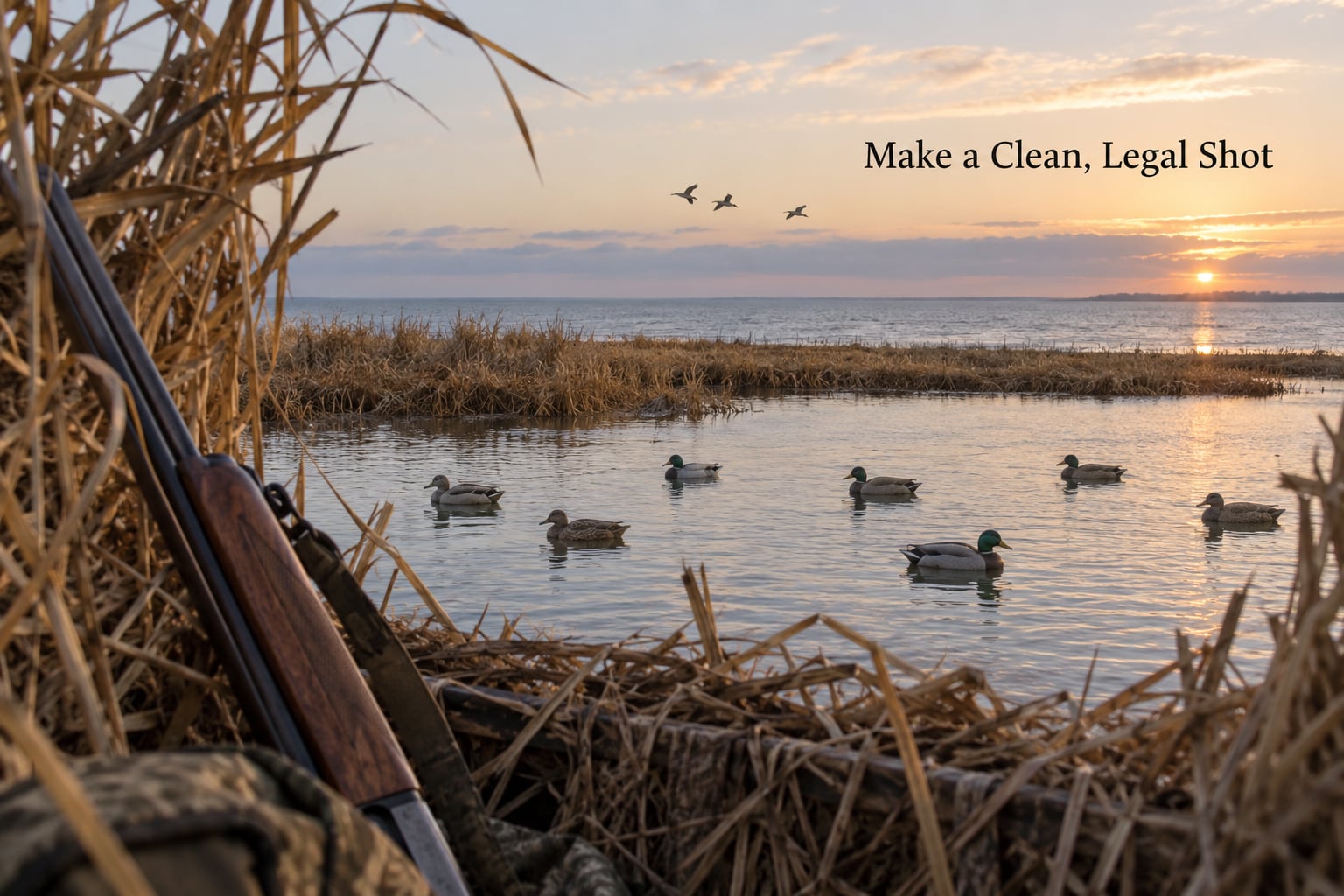
Teal are fast in short bursts, so position beats trigger discipline. On a pit blind or shoreline setup, the shot is a bird coming in over the decoys, not a bird crossing 40 yards. When a group works your spread, most of the birds will pitch, take a second pass, and come back. That second pass is your shot, and it is usually close and slightly downhill.
The reliable moment is a pitching bird that has pulled up, turned its head, and is dropping into the water, ideally with its head and shoulder exposed. The trap is firing at a jumping bird, which is the hardest shot there is, and the ethics of it are a live argument in this sport: some hunters take jumping birds because a teal that is going to leave the spread is one you will not get otherwise, and many do not. Either position is defensible, but decide it before the bird is on the wing, and know that the first pass is rarely the best look.
Stay on the trigger discipline you learned on the range. Shoot a bird that is inside your pattern and a bird you can legally identify. Lead a crossing bird for a flat bird, and lead it more for a bird that is up and turning, because teal are light for their size and drift a long way over a long pass. When a bird falls in the decoys, do not walk into the spread immediately; wait for the flock to settle or leave, and keep a retriever or a spare dog in the loop if you have one.
Legal identification is not a technicality. If you cannot identify a bird in hand, you cannot legally harvest it, and the field marks on the wing are the evidence. Retain the identification while the bird is carried to the bag, take only your state bag limit, and check whether your state requires a mandatory check or an electronic reporting step for teal.
After the shot
Let the flock settle before you move. Birds that were working your spread will return to a disturbed pocket eventually, and a patient hunter often gets a second look at the same birds while a restless one packs up and leaves. Send the dog on marked cripples if you have one trained for it, and keep an eye on the water above you in case a wounded bird flushes.
When you are back at the truck, look at the wings before anything else. Pull the wing out and check the speculum bar and the patch color against what you thought you saw in the blind. That thirty-second habit is how you stop making the same identification mistake twice, and it is the difference between a hunter who improves each season and one who keeps guessing.
Keep a short note of the day: water you hunted, birds you saw, birds you took, and the weather. Two seasons of those notes will tell you more about your water than any single morning ever will, and it is the same habit that makes scouting next year faster.
How you know this step worked: the birds that hit the water are dead, not swimming off, and everything in your bag is a bird you can name.
Make It Easier for the Next Hunter
Early teal season is the most forgiving waterfowl season there is, which makes it the right one to hand a kid or a brand-new hunter. The birds are small, the weather is warm, the limits are generous, and a modest morning still produces dinner. Teach the sequence in this article rather than the decoy count, and let them set up the spread while you scout the water.
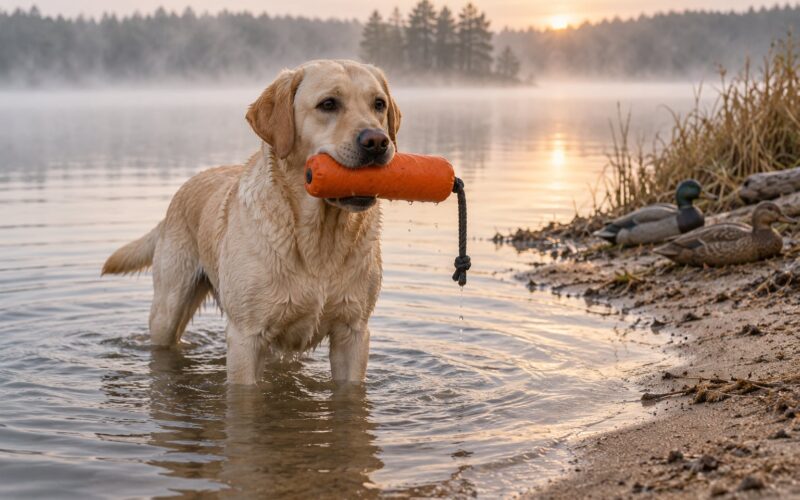
It is also a good season to run a young retriever on real birds, though keep expectations honest. Early teal fly in small groups over shallow water, and a young dog will find them; the discipline is the part that takes a season or two. A few honest retrieves in September build far more than a whole winter of drilling on a lawn.
And cook what you take well. Teal are lean and dark and easy to ruin; keep the skin on, cook them gently, and serve them hot. Hunters who bring birds home rarely argue about whether the trip was worth the gas.
Common Mistakes
Almost every bad early teal morning traces back to one of these. Most are free to fix.
- Bumping the birds at dawn. Fix: get in position before first light and stay there. If you are still driving a marsh when the shooting time starts, you are hunting an empty pond. Hunters on r/Waterfowl and r/Duckhunting say the same thing, and the fix is a car spot with a walk-in.
- Decoy counts built for mallards. Fix: cut to a dozen and pull the gap in the middle tighter. Early teal flocks are small, and a big spread in a small pocket is a spread the birds do not want.
- Calling nonstop. Fix: three to five calls, spaced, first note emphasized, then silence until the birds answer. Continuous calling is the fastest way to make a flock leave your spread.
- Firing on a brown bird you could not name. Fix: make identification part of the shot, not an afterthought. In early light a hen or a small duck looks exactly like the bird you wanted.
- Ignoring wind and tide. Fix: pick the position where the wind favors you, and on tidal water plan the height of the outgoing tide before you get there. A spot that works at high water can be a mud flat at low water.
- Wearing chest waders to a knee-deep pothole. Fix: boots and long pants. Wading is slow, loud, and cold on the way back, and it costs you the first flight of birds.
- Leaving the decoys out for the whole season. Fix: pull them at the end of each hunt. Decoys you leave out overnight attract thieves, collect weather, and put a visual lie in the water that birds read as someone living there.
- Planning one day and one spot. Fix: pick two spots and be willing to move. Water drops after a dry week, and a pot that held birds Tuesday can be dry by Saturday.
One more that beginners mention: assuming the morning decides it. Teal often show right at shooting time, and some of the best action in the Louisiana Sportsman account came just after the hours opened. Being set before legal shooting time, with the spread already in the water and the calls in hand, is what lets you take that window when it opens.
Frequently Asked Questions
What is the best time to hunt teal in early season?
Most early teal action happens in the first hour and a half after legal shooting time, and again in the last hour before birds leave for the morning. Be in the blind before legal hours, with the spread already in the water, because teal often arrive at the exact start. Check your state agency for the actual dates and hours, since the early window is only a few days long and moves each year.
How many decoys should I use when hunting early-season teal?
A dozen life-size teal floaters, in a tight group with a gap in the middle for teal to pitch into, is a complete spread. Early flocks are small, so a huge field spread of mallard decoys will look wrong and hold the birds at a distance. Add two or three spinning-wing mojo decoys for motion and sound, and set the whole run within a comfortable shooting range of your blind.
Should I use duck calls when teal are already feeding nearby?
Back off. If teal are feeding in front of you, the decoys and the birds are already working, and calling only risks pushing them off. Call before they are visible, and in short sequences of three to five soft hen calls with the first note emphasized. If birds are already up and circling, let the decoys do the work and stay quiet.
How can beginners tell teal apart from other ducks?
Work in order: size, shape, wing, then color. A blue-winged teal is about pigeon-sized with a small bill, a bold white facial crescent on the drake, a white-bordered blue wing patch, and a horizontal white bar on the speculum. Green-winged teal is smaller with a vertical white bar and no crescent. If a bird is brown and you are not sure, do not shoot.
Is it better to hunt teal from a blind, shoreline, or boat?
It depends on the water. On a pothole, flooded field, or marsh edge, a pit or camo brush blind keeps you hidden and lets the birds work your spread at close range. On a tidal creek or open sheet water, a layout blind or boat often does better because the birds come to you instead of crowding past. Whatever you choose, set up before legal hours and stay put.
What should a new teal hunter carry for safety and navigation?
Carry a phone with offline maps or a handheld GPS, a compass, a headlamp with a red mode, a whistle, a first-aid kit, insect repellent, and water. Most early teal water is flat and featureless, so a flooded field with no high ground nearby is the real hazard, along with a sudden storm. Tell someone your plan and your return time, and check the radar before you commit to a spot.
Start with the scouting, not the gun. Pull your state agency dates, look at two weeks of rain and temperature, and find a shallow flooded edge with cover and a wind that favors you. Then put out a dozen decoys with two mojos, be in the blind before legal hours, and call sparingly. If you do those four things, you already have a better morning than most beginners who buy a hundred decoys and drive the marsh at dawn.