Re-spooling a spinning reel takes about ten minutes. Open the bail, tie fresh line to the spool arbor, close the bail, then crank slowly while holding light, steady tension until the spool sits about 1/8 inch below the rim. Get the spool turning the right way and the line lays flat. Get it wrong and you get twist, backlash and a reel that spits line off the spool at the worst possible moment.
Most anglers know they should do this and roughly know how. The gap is in the details: how much line to put on, which direction the spool spins, what to do with braid, and how to fix a spool that already went wrong.
This guide covers all of it, works on any brand of spinning reel, and assumes nothing about the reel you own.
Table of Contents
- What You Need
- Step-by-Step: How to Re-Spool a Spinning Reel
- 1. Choose the Right Line and Spool Size
- 2. Remove the Old Line and Inspect the Reel
- 3. Secure the New Line to the Spool
- 4. Wind the Line Under Controlled Tension
- 5. Set the Drag and Check for Tangles
- Common Mistakes and How to Fix Them
- Frequently Asked Questions
- What type of line should I use when re-spooling a spinning reel?
- Can I put a larger spool of line on my spinning reel?
- How tight should the line be when winding onto the spool?
- Why does my line keep coming off the spool after winding?
- How do I know if the drag tension is set correctly?
- Conclusion
What You Need
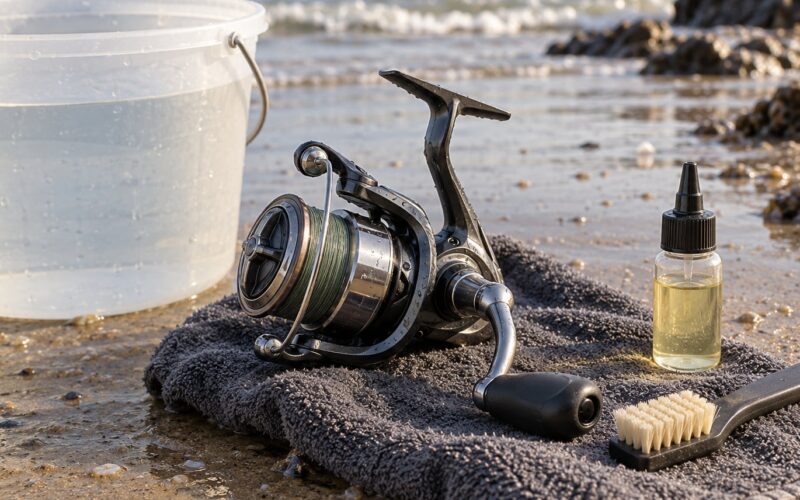
Gather everything before you strip the old line. A reel half-loaded with nothing to wind onto is how lines end up in a puddle.
- Fresh line matched to the reel size, the target species and the water you fish. Thin diameter mono or fluoro for light cover, braid for power and distance.
- Line clippers or small scissors. Dull scissors crush mono and leave a frayed end that slips off the spool arbor.
- A small flat-head screwdriver for the bail screw on models that have one, and for opening the spool retainer if the line is packed tight.
- A rubber band or a strip of electrical tape to hold the spool in place while you work.
- A clean, dry, well-lit surface. A towel on a boat deck or a picnic table beats a wet dock.
- Optional but helpful: a line spooler, a second reel to strip onto, or a pencil and a pair of hands.
Step-by-Step: How to Re-Spool a Spinning Reel
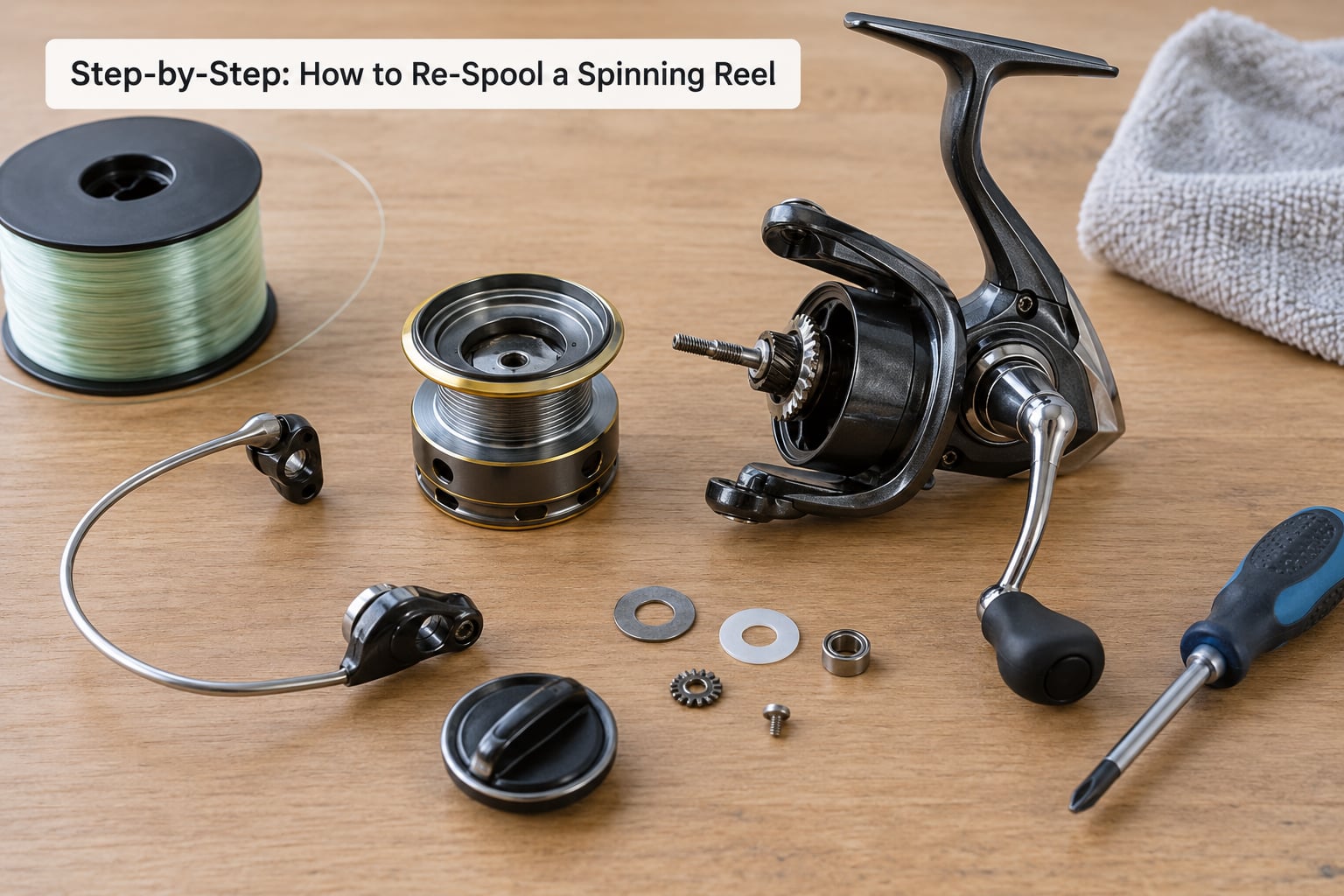
1. Choose the Right Line and Spool Size
Match the line to the reel and to what you are after. A reel rated for 8 to 12 pound test is not designed to run 20 pound braid, and forcing it wrecks the drag and makes casting feel like lifting a brick.
Monofilament stretches, feels alive on the bite and is the most forgiving choice for beginners. Fluorocarbon is stiffer and sinks, which makes it a good leader material and a poor choice for filling a whole spool. Braid has near-zero stretch, cuts through vegetation and casts a long way, but it is stiffer, harder to tie and prone to twist if spooled badly.
Capacity matters as much as strength. Under-fill and casting distance suffers. Over-fill and the line rides over the rim, catches on the bail and creates the exact problems you are trying to fix. Here are typical yards per spool, and every brand differs a little:
| Reel size | Line test | Approximate capacity |
|---|---|---|
| Size 1000 | 6 lb mono | about 190 yd |
| Size 1000 | 8 lb mono | about 140 yd |
| Size 2500 | 10 lb mono | about 140 yd |
| Size 2500 | 14 lb mono | about 110 yd |
| Size 2500 | 20 lb mono | about 80 yd |
| Size 3000 | 12 lb mono | about 180 yd |
| Size 3000 | 17 lb mono | about 135 yd |
| Size 3000 | 25 lb mono | about 90 yd |
| Size 3000 | 30 lb braid | about 150 yd |
| Size 4000 | 20 lb mono | about 190 yd |
Braid looks like a fraction of what you put on and that is normal. It is thinner than mono of the same test, so a size 3000 filled with 30 pound braid still has plenty of capacity. Wet braid with water from a bottle before you wind it on. Wet mono and fluoro too if you like, because it reduces friction and static. Do not wax braid or run line conditioner on it, the coatings stiffen it and make it worse.
2. Remove the Old Line and Inspect the Reel
Most guides skip this. Do not, because old line is also how you learn the reel.
- To a second reel or spooler: wind the old line onto a second reel, spooler or a large empty jar. This is the cleanest option and it leaves you with reusable line for leader material.
- By hand in a hurry: pull the line straight off the spool in long pulls, keeping it off the deck. Fast, but you will find bits of it later.
- Straight off the spool: set the spool retainer screw loose, lift the spool off and pull the old line off sideways. Works well on reels with a removable spool and gives you a chance to look at the spool.
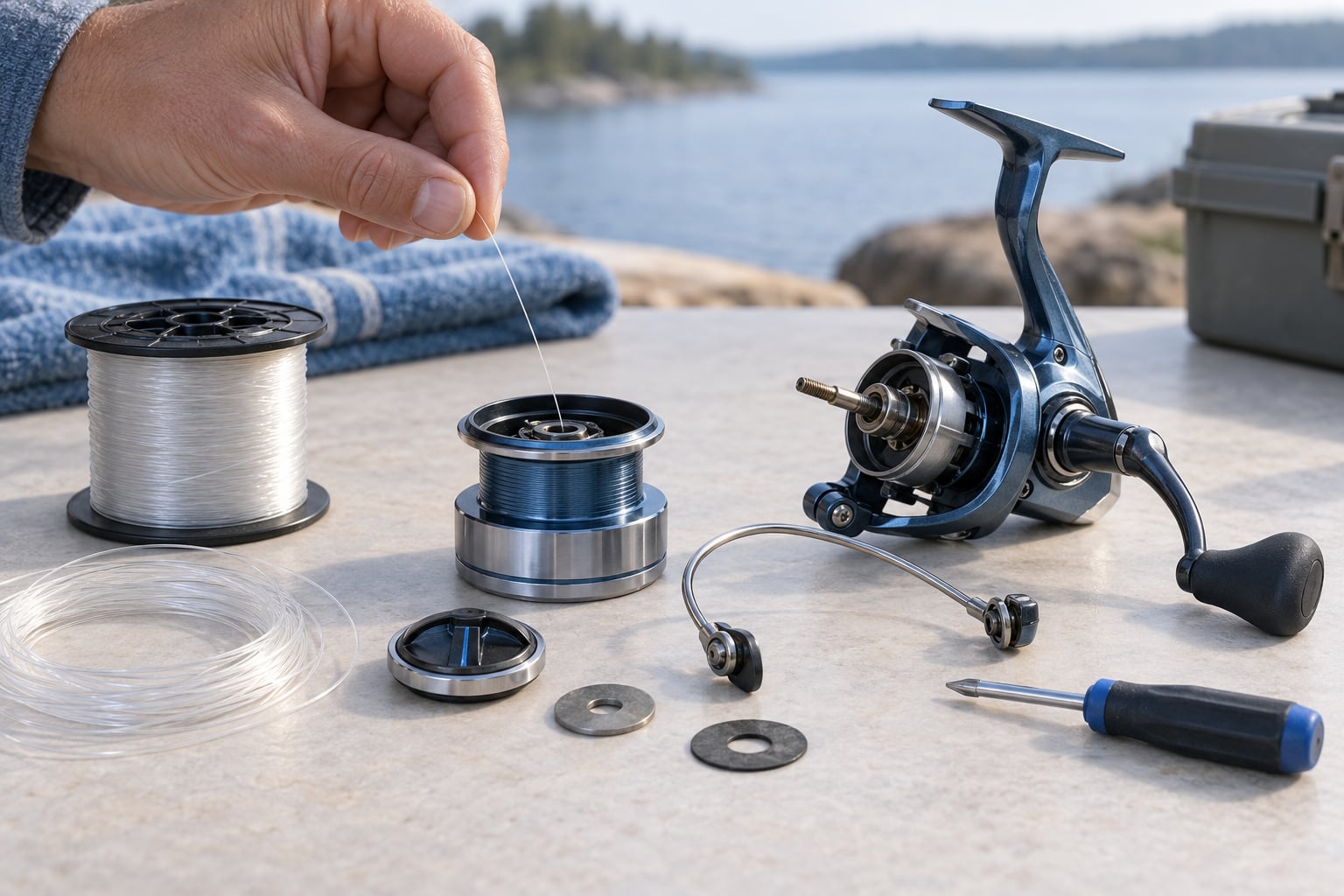
With the spool bare, check three things. Look at the spool grooves for flat spots, burrs or a worn groove where the bail wire has been cutting in. Check the bail wire itself, it should close firmly and the roller should spin freely. Open and close the bail a dozen times and turn the handle, everything should feel smooth with no grinding.
One warning from anglers who strip a reel bare: the drag often feels dead afterwards. That is usually because there was nothing left to pull against. Once the new line is on and you set a real tension, it comes back.
3. Secure the New Line to the Spool
Run the line through the bail roller, down through the line clip on the frame, and up through the rod guides up to the reel seat. Threading it through the rod first means the line rides through the guides the same way it will when you fish.
Tie the line to the spool arbor with an arbor knot. Wrap the line around the arbor twice, then around the standing part between the wraps twice more, back under the standing part and pull it snug. Trim the tag end close and pull the standing line hard so the wraps cinch down. That knot holds under the tension of winding and it is easy to undo later when you change line again.
Check the knot lies flat against the arbor. A knot sitting on top of the wraps will cut into them and throw line off the spool on the first cast.
4. Wind the Line Under Controlled Tension
Close the bail completely. Then work out which way the spool needs to turn. Most spinning reels retrieve counter-clockwise, so with the reel facing you, the line should come off the top of the spool toward you and the spool turns toward you. The simplest test is to hang the rod from a fixed point with the reel below, let the line hang straight down, and crank. If the line runs off the back of the spool or the spool spins away from you, remove the spool and flip it over.
Hold the line spool above the reel with the label facing up. A pencil through the spool center or a rod holder in the boat seat takes the weight off your hand so all you manage is tension.
Now crank slowly with your free hand pinching the line, keeping light tension the whole way. Not enough tension gives a loose, bulgy lay that unravels into a birds nest on the first cast. Too much crushes the line into itself and sets crease memory that no amount of dragging fixes later. You want firm and constant, the same feel as a line you would pull with a fingertip.
Check the spool every 20 to 30 cranks. Stop, let the rod hang, and look down the spool. A straight line running off the top means no twist. If the line forms a loop or comes off the side, you have twist. Do not crank past it, stop and fix the twist before it becomes a problem.
Fill to about 1/8 inch below the spool rim and no higher. If you have a spare inch of room, fine. That gap keeps line from jumping over the rim and catching in the bail. Then close the bail, cut the line with clippers, and tie the tag end to the reel seat with a small knot or wrap it and tape it so it cannot whip into the guides.
5. Set the Drag and Check for Tangles
With the line on, close the bail and turn the handle. The line should pull off the spool evenly as the spool rotates, with no clicking and no skipping.
Set the drag before you fish, not on the first fish. Turn the drag star clockwise until the spool stops turning freely under a firm pull, then back it off a quarter turn. For a rough check, hang a known weight or a heavy pouch from the line and confirm it holds at the test you set. If the spool turns when you lift, the drag is too loose and a fish will take line.
Finish with a practice cast into open water or across a lawn. Watch where the line lands and whether the spool spins cleanly. Then retrieve back slowly and check for twist one more time. If the line keeps jumping off, go back and look at the spool direction and your fill level.
Common Mistakes and How to Fix Them
Almost every re-spooling complaint traces back to one of six things.
| Symptom | Likely cause | Fix |
|---|---|---|
| Line twists and birds-nests | Wrong spool direction, or loose tension during winding | Hang the rod and inspect every 20 to 30 cranks; flip the spool if the line comes off the back |
| Line comes off the spool | Fill level too high, or line running over the rim | Re-spool to 1/8 inch below the rim and keep the bail closed while winding |
| Loose, lumpy line lay | Not enough finger tension | Use a spooler or pencil so tension comes from the tool, not your arm |
| Backlash on the first cast | Over-filled spool plus a loose lay | Strip the line and re-wind with steady tension; fill lower next time |
| Drag feels dead | Stripped reel with nothing to pull against, or line wound too loosely | Re-set the drag with new line under load; check the drag washer sits square |
| Casting distance dropped off | Under-filled spool or a spool with a bumpy lay | Fill higher within the 1/8 inch limit and lay the line evenly |
If the twist is already on the spool, do not just cut it off. Strip a few yards, retie, and re-spool. If you want to keep the line, hang the rod from a fixed point, let it hang for several hours, then run the line out through the guides and wind it straight onto a fresh spool or reel.
For twist-free braid specifically, put a nail, axle or spool through the center of the factory spool so braid comes straight off it. Many experienced anglers also run braid to a short mono or fluoro leader on spinning rigs, which nearly kills twist and adds cast distance.
On frequency, anglers on BassResource generally re-spool before every major trip or tournament unless the reel has been sitting unused. That is a sensible default. Also re-spool when line frays from guides or rocks, when the spool shows a flat worn groove, or when the line has been on through a season of heavy use.
Frequently Asked Questions
What type of line should I use when re-spooling a spinning reel?
Match the line to the reel size and to what you are targeting. Monofilament in the reel range printed on the handle is the safest all-around choice. Fluorocarbon is stiff, so it works better as a leader than as a full spool. Braid gives strength and cast distance in a thinner diameter, but it needs a wet spool and steady tension to lay flat.
Can I put a larger spool of line on my spinning reel?
You can, and most anglers do it with thinner line to gain capacity. The risk is under-filling, which costs casting distance, or over-filling, which pushes line over the rim and into the bail. Check the spool by eye and stay about 1/8 inch below the rim. Running line heavier than the reel is rated for puts extra strain on the drag and the handle gear.
How tight should the line be when winding onto the spool?
Firm and constant, more like a fingertip pull than a hard tug. Too loose gives a bulgy lay that unravels on the first cast. Too tight crushes the line into itself and sets a crease that causes problems later. A spooler or a pencil in the spool takes the weight off your hand so the tension stays even for the whole fill.
Why does my line keep coming off the spool after winding?
Two usual causes. First, the spool is filled too high and the line rides over the rim and under the bail. Second, the spool is turning the wrong way, so the line lays on top of itself and climbs off the side. Check the fill level is about 1/8 inch below the rim, then confirm the spool is oriented so the line pulls off the top toward you as you crank.
How do I know if the drag tension is set correctly?
Turn the drag star clockwise until the spool will no longer turn freely under a firm pull, then back it off about a quarter turn. To test it, hang a known weight from the line and confirm it holds. If the spool spins when you lift a light weight the drag is too loose, and a hooked fish will pull line instead of bending the rod.
Conclusion
Strip the old line, thread the new line through the rod, tie it to the arbor with an arbor knot, close the bail, and crank with steady tension while watching for twist every 20 to 30 turns. Stop the fill about 1/8 inch below the spool rim, cut the line, and tie it off.
Before the boat launches, look down the spool one last time for twist and set the drag under load. Ten careful minutes here saves the whole day.