Rigging a bottom fishing setup for sheepshead takes about five minutes and one small parts tray. You tie a weight above a short leader with a small, sharp hook, bait it with a crab or shrimp, and drop it to the bottom near structure. Learn how to rig a bottom fishing setup for sheepshead below, step by step.
Most anglers who struggle with these fish have the rig right and the hook wrong. Sheepshead have small mouths and teeth that crush anything not shelled, so a big hook gets straightened before it ever gets landed.
Table of Contents
- What You Need
- Step-by-Step
- Choose a Rod, Reel, and Line Combination
- Build a Sheepshead Bottom Rig for Secure Bite Detection
- Choose and Attach the Right Bait
- Set the Hook and Check the Bottom
- Bite, Set, and Land Sheepshead Safely
- Common Mistakes
- Frequently Asked Questions
- What size hook should I use for sheepshead?
- What is the best bottom rig for sheepshead fishing?
- How much weight should I use on a sheepshead bottom rig?
- How do I keep my sheepshead rig from twisting?
- What bait works best for sheepshead?
- How do I know when a sheepshead is biting?
- Start With the Simple Version
What You Need
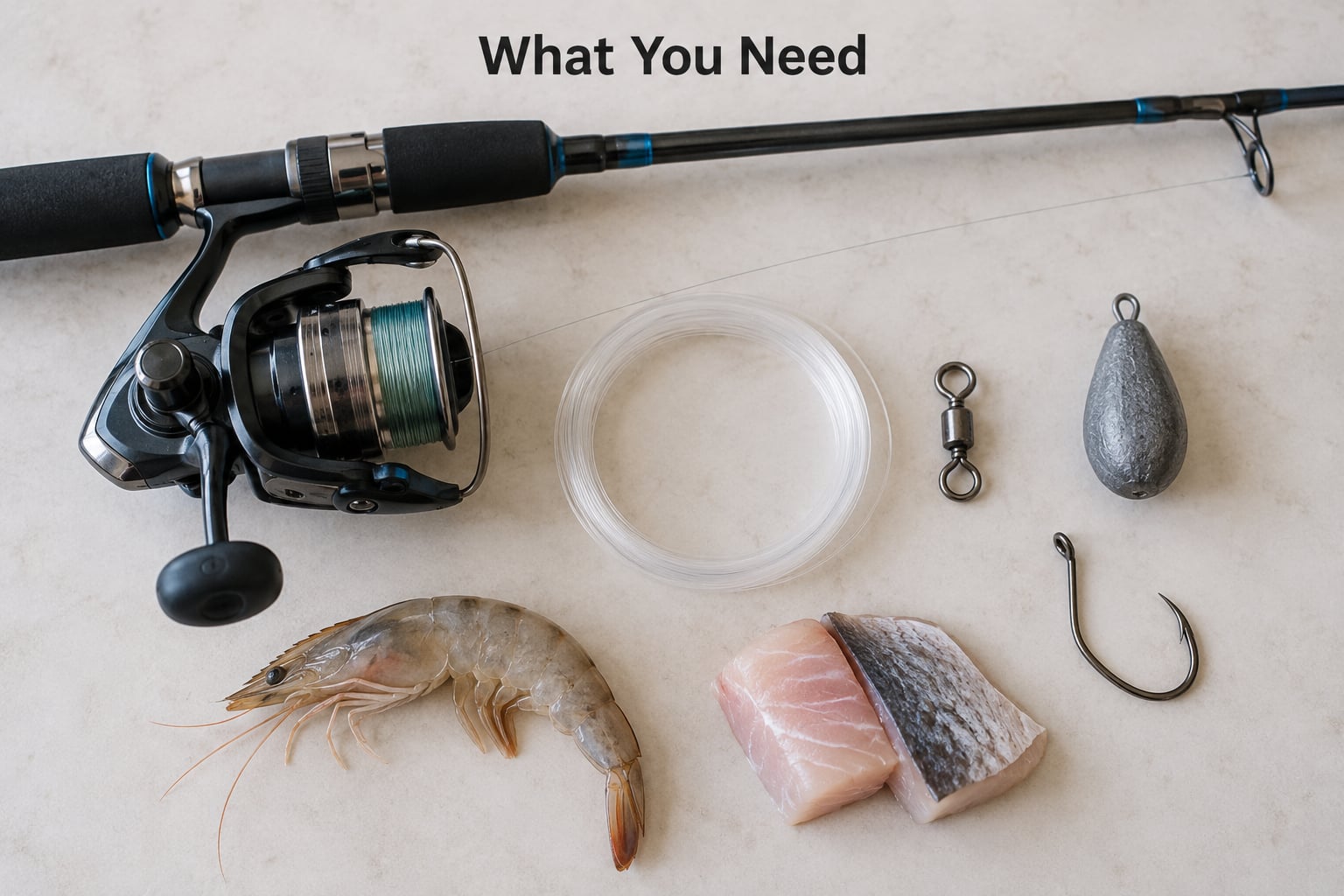
Everything below fits in one compartment of a tackle box, and you can tie the whole rig at home before you leave. Here is the full parts list.
- Rod and reel: a 6½ to 7 foot medium action rod, spinning or baitcasting. You want a tip sensitive enough to feel a tap and a backbone stiff enough to turn a fish off the bottom.
- Main line: 12 to 20 pound braid for general fishing. Go 30 to 50 pound when you are working bridge pilings or anything with barnacles on it.
- Leader: 15 to 20 pound fluorocarbon, 12 to 18 inches long. A heavier 40 to 60 pound fluorocarbon leader pays off when abrasion is a real risk.
- Swivel: one quality barrel swivel or ball-bearing swivel rated above the weight you use.
- Weight: an egg sinker or bullet sinker. Start at ½ ounce in slack water and go up from there.
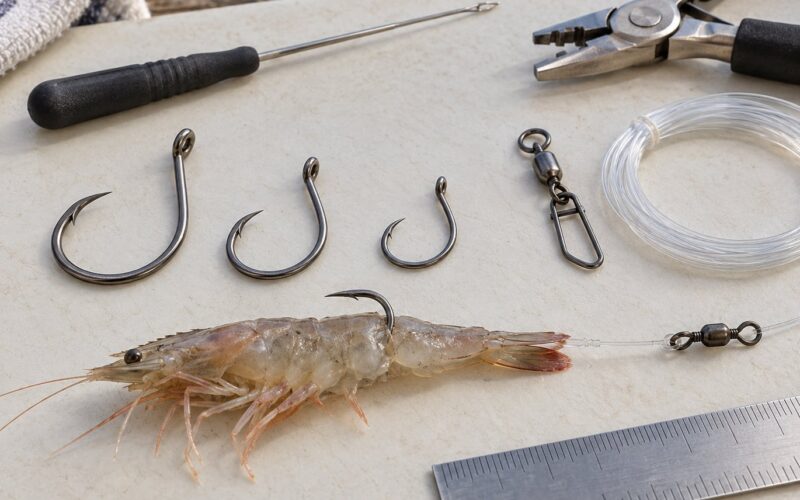
- Hook: a size 1 or 1/0 circle hook, or a 2/0 cutting-point J-hook for heavy structure. Sharpen or replace it often.
- Bait: fiddler crabs, sand fleas, shrimp, or pieces of oyster and clam. A small baitknife and a pair of pliers help.
Here is the same rig at a glance, with the simple version beside the one built for structure.
- Rod: 7 foot medium action for open bottom, 7 foot medium-heavy when you are working pilings and rock.
- Main line: 12 to 20 pound braid, stepping up to 30 to 50 pound in structure.
- Leader: 15 to 20 pound fluorocarbon at 12 to 18 inches, or 40 to 60 pound fluorocarbon at the same length where abrasion is likely.
- Swivel: a barrel swivel, or a ball-bearing barrel swivel in structure.
- Weight: a 1/8 to 1/2 ounce egg sinker, or 1 to 3 ounces when the current is moving.
- Hook: a size 1 circle hook, or a 2/0 cutting-point J-hook for hard structure.
- Leader length: 12 to 18 inches, shortened to 10 to 16 inches when the fish are holding up tight against cover.
Which specs flex depends on you. An angler fishing a calm lake-like bay for the first time can run light line and a ¼ ounce egg sinker. The same rig in a tide rip off a bridge needs twice the weight and a stronger leader, and that is fine.
Step-by-Step
Choose a Rod, Reel, and Line Combination
A medium action rod in the 6½ to 7 foot range covers almost every place you will fish these fish. Avoid ultralight and soft-tip rods, because sheepshead pick up a bait with a light nudge and a soft tip swallows that signal.
Braid has the sensitivity you need to feel a pickup in a foot of water, and it cuts through the water better than mono. The tradeoff is visibility, which is why a fluorocarbon leader is worth tying on. If you use mono, go up in test so the same diameter does the same job.
A spinning reel with a free-spool drag handles structure better than most people expect, and it is easier for beginners. A baitcasting reel gives you more control once you are comfortable casting a rig that lands softly. Neither is wrong. Skip the swivels with quality bearings you cannot afford to lose, and skip anything marketed as a multi-hook train for this species.
Build a Sheepshead Bottom Rig for Secure Bite Detection
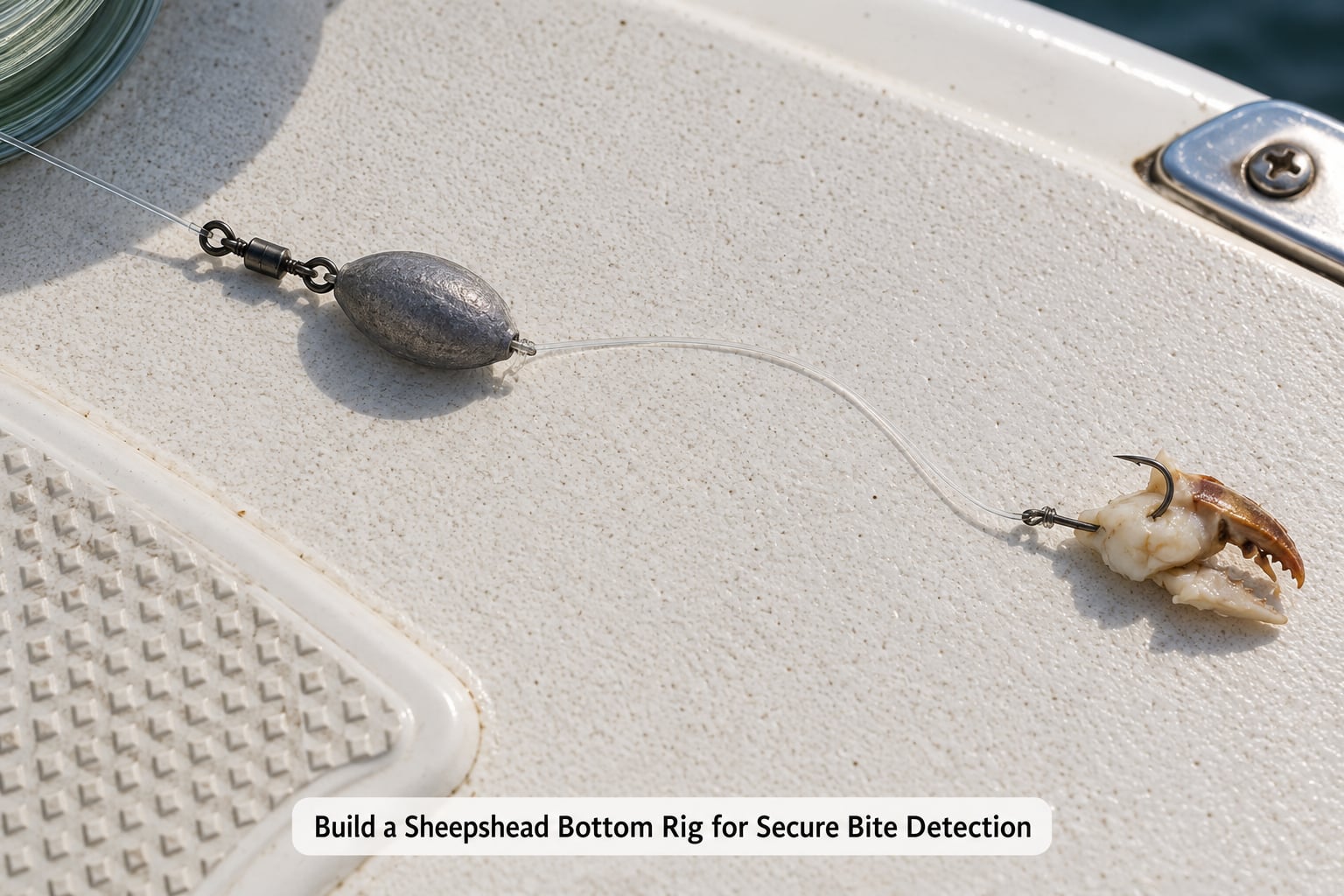
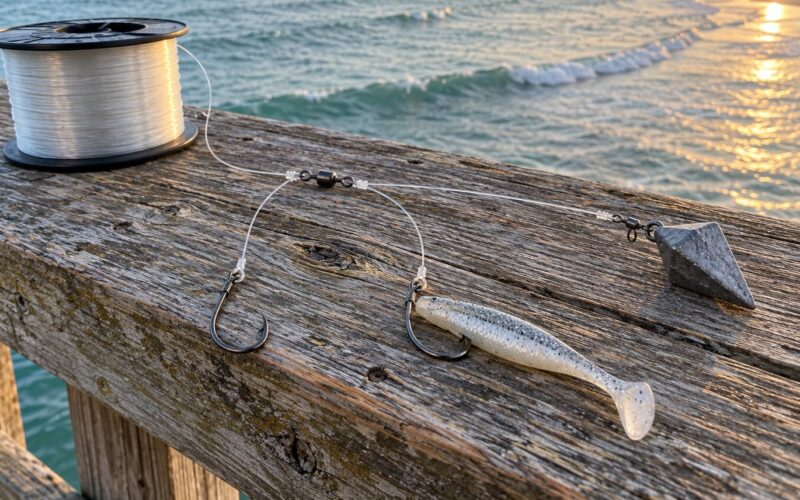
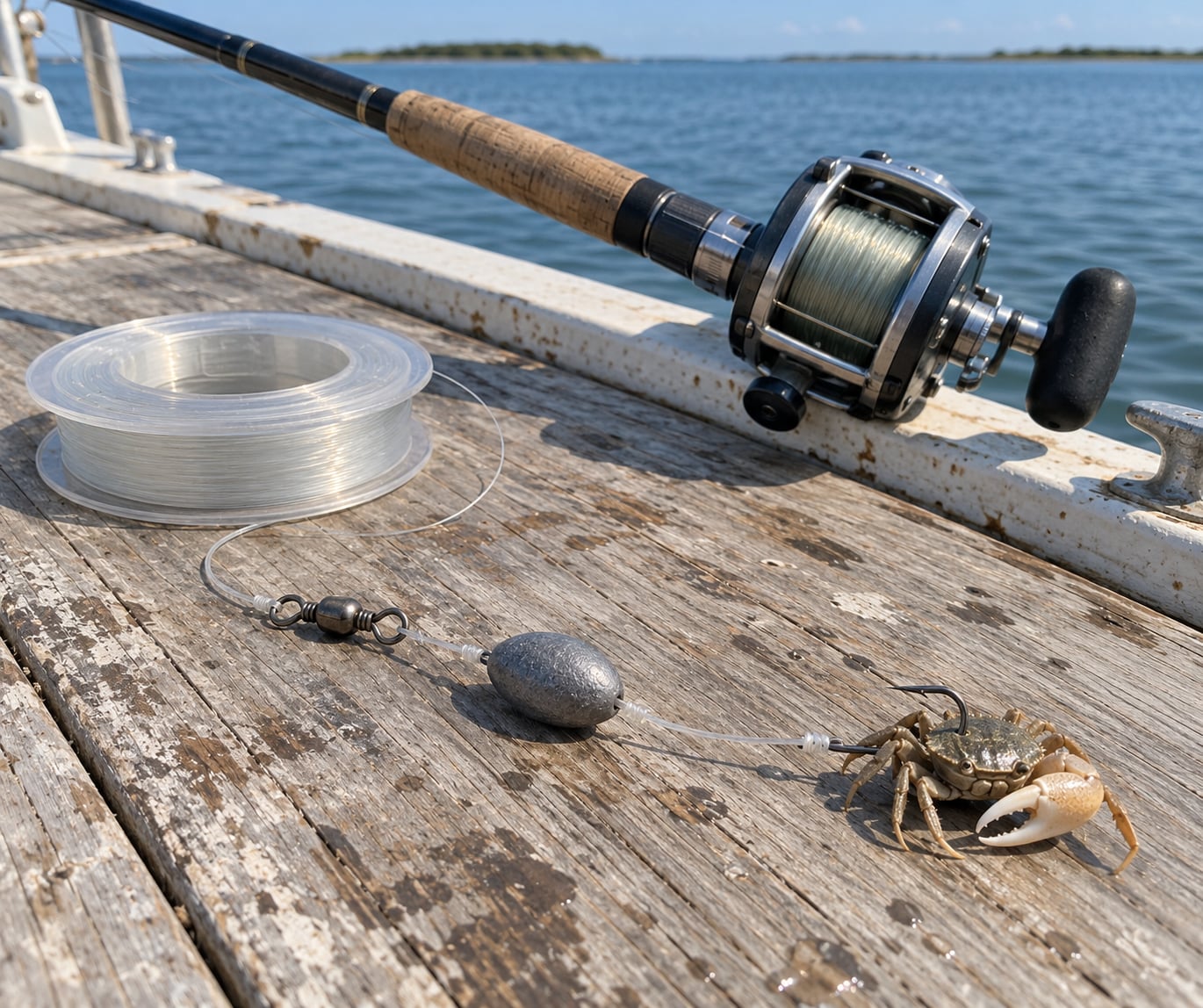
Tie a barrel swivel to the end of your main line. Slide the sinker onto the leader, not the main line, so the weight slides down and sits at the swivel instead of threading up the braid.
Next, tie a 12 to 18 inch section of fluorocarbon to the other side of the swivel. Fifteen inches is a solid middle number. A shorter leader of 6 to 7 inches keeps the bait right on the bottom when fish are feeding flat, and a longer leader lets a bait hover above a soft bottom in moving water.
Tie your hook to the end of that leader. An improved clinch knot is the standard choice for hook to leader, and a palomar works just as well if you tie it often enough to do it quickly. Leave a small gap at the eye, moisten the wraps, and pull hard.
Three arrangements cover nearly every situation.
- Single-hook bottom rig: swivel, weight, one leader, one hook. The simplest version and the one most beginners should start with.
- Dropper rig: one line with a leader 10 to 16 inches above the sinker plus a bottom leader. Two baits cover more water per drop, and it lets you fish a suspended fish and a bottom fish at once.
- Carolina rig: weight above a swivel with a short leader below. Clean and quick to re-rig, though it can swing the bait into the weight in a fast current.
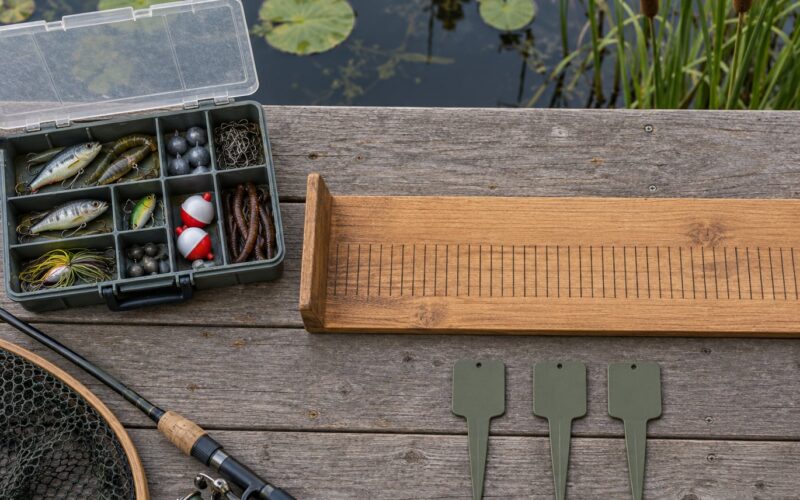
If you fish a lot of tight structure, build two or three rigs in advance and keep them in a leader wallet. Rock, oyster shell and barnacles chew through a setup every trip, and retying on a dock is no fun.
Choose and Attach the Right Bait
Sheepshead eat hard-shelled food, which is why they crush bait with teeth that look disturbingly human. Match that menu and keep pieces small.
Fiddler crabs are the classic. Thread the hook through the crab between the second and third legs, or take the big claw off and fish the claw alone, which some Chesapeake Bay anglers swear by. Pull the hook just through the shell so the point stays exposed.
Sand fleas and mole crabs get the same treatment: through the body lengthwise, point buried in the shell, tail hanging free. Shrimp work mid-season and later. Break off the head, run the hook through the tail, and bury the point. The fish picks the body up and the tail stays put.
Oysters, clams and mussels are the fallback when you cannot find crabs. Break them into small pieces and hook them like any other cut bait. Keep every piece under an inch or so, because a small mouth cannot commit to a big bait.
Check the bait every few minutes in warm water. An oily or soft shrimp will not survive long on the hook.
Set the Hook and Check the Bottom
Snug the hook down tight so it cannot swing and bounce against the weight. Pinch the barb flat if you are fishing deep structure or heavy cover. Make sure the bait sits over the point, not past it.
Balance the rig before you drop it. If the bait is noticeably heavier than the weight, add weight or cut the bait smaller, or the rig will roll and roll until everything wraps.
Lower it slowly and watch your line the whole way down. When you reach bottom, pull up a few inches until the line comes off slack, then feed line back out until you feel the drag move. That is your confirmation the rig is sitting on the bottom. If the line keeps giving as you feed, the weight is too light for the current there.
Give it a minute or two with no movement. Then raise the bait four or five cranks and hold it just off the bottom, since a lot of fish hold up under pilings and over soft sand rather than on the hard bottom itself.
Bite, Set, and Land Sheepshead Safely
The classic take is a tap, then nothing, then a pull that increases over a second or two. Anglers fishing in forums describe it consistently as a slow pickup that builds into pressure, more like setting the hook on a black drum than on a flounder.
So wait. Give a light pickup time to develop before you move. Setting on the first tap is the single most common way to come home with an empty hook and a straightened point.
When you feel a firm pull, set with a short, decisive snap of the rod tip rather than a huge sweep. Then pump, do not reel. Keep steady pressure, keep the rod tip up, and let the drag do its job. A loose drag in tight structure guarantees a wrap.
Because the mouth is small and the teeth are hard, do not power the hook all the way through. Bring the fish to hand quickly and calmly, and avoid long fights next to a piling.
Watch the dorsal and anal fin spines when you land it. Use a lip gripper or a wet cloth, and keep your hands well clear of the mouth.
Common Mistakes
Too much weight. If your drag never moves when the rig is on the bottom, you are probably too heavy and will not feel a bite. Drop down an egg sinker size and try again.
Too big a hook. A size 2/0 J-hook on a size 1 circle is a good pairing for hard structure, but a size 4/0 on a small bait is asking to be straightened. Go down a size when the fish are small or the water is calm.
A blunt point. Replace hooks the moment the point feels rounded, especially after any rock or barnacle contact. This is the most cited gear failure in angler reports.
Setting on the first tap. Sheepshead are bait stealers. Wait for a second and a building pull before you set.
Wrapping the line. If you feel line rubbing a piling, put the reel in free spool and move the boat by hand or paddle. Come back to the spot after you clear it.
Loose drag. Tighten it enough that the drag starts under steady pressure, not under a dead stop. Once the line is around structure, everything above this list matters less.
A few condition adjustments: in current, add weight before you add leader length, since a longer leader in fast water is harder to feel. In shallow water under a dock, go lighter on weight and shorter on leader. After a fish works a piece off, give it a few minutes before switching baits, because losing bait early is normal. And if the fish have moved up off the bottom, shorten the leader so the bait sits where they are instead of where they were.
Frequently Asked Questions
What size hook should I use for sheepshead?
Start with a size 1 or 1/0 circle hook for general sheepshead fishing, or a 2/0 cutting-point J-hook when working close to rock, pilings or barnacles. Sheepshead have small mouths, so going up in hook size is usually a mistake. Keep the point sharp and replace it as soon as it feels rounded, since these fish crush dull hooks in seconds.
What is the best bottom rig for sheepshead fishing?
A single-hook bottom rig is the best starting point: swivel, egg sinker, 12 to 18 inch fluorocarbon leader, one small sharp hook. When you want more coverage, add a dropper 10 to 16 inches above the sinker. Pre-rig two or three of these in a leader wallet so you can change bait quickly without retying.
How much weight should I use on a sheepshead bottom rig?
Use the lightest weight that holds bottom in the current you are fishing. In slack or lightly moving water, that is often a 1/8 to 1/2 ounce egg sinker. In stronger tide or current around a bridge, go up to 1 to 3 ounces. The test is simple: with the rod tip up, the drag should just begin to move when the rig settles.
How do I keep my sheepshead rig from twisting?
Use a quality barrel swivel between the main line and the leader, and slide the sinker onto the leader instead of the main line so it seats against the swivel. That single change removes most twisting. If the rig still rolls at the bottom, lighten the weight or cut the bait smaller until the two balance.
What bait works best for sheepshead?
Fiddler crabs and sand fleas are the most reliable choices, with shrimp strong in warmer months. Oysters, clams and mussels work when crabs are hard to find. Hook crabs through the shell between the second and third legs, thread sand fleas lengthwise, and run shrimp through the tail with the head removed. Keep every bait piece small.
How do I know when a sheepshead is biting?
You will feel a light tap first, then a slow building pull over a second or two before the line comes tight. That gradual pressure is why a sensitive rod tip matters. Wait for the pull to firm up before you set, and keep the rod tip pointed up so a pickup does not pull slack out of your drag.
Start With the Simple Version
Buy one pack of size 1 circle hooks, a few egg sinkers from ¼ ounce up to 2 ounces, a barrel swivel, and a spool of 20 pound fluorocarbon. That is the whole rig, and it will fish nearly anywhere you find these fish.
Then tie it, bait it with whatever is available nearby, and drop it next to the closest structure. Adjust the weight until the drag just starts to move on the bottom, and adjust the leader length until the bait sits where the fish are actually holding.
That is the simple version of learning how to rig a bottom fishing setup for sheepshead. Everything else is a refinement, and the fish do not care about the refinement.