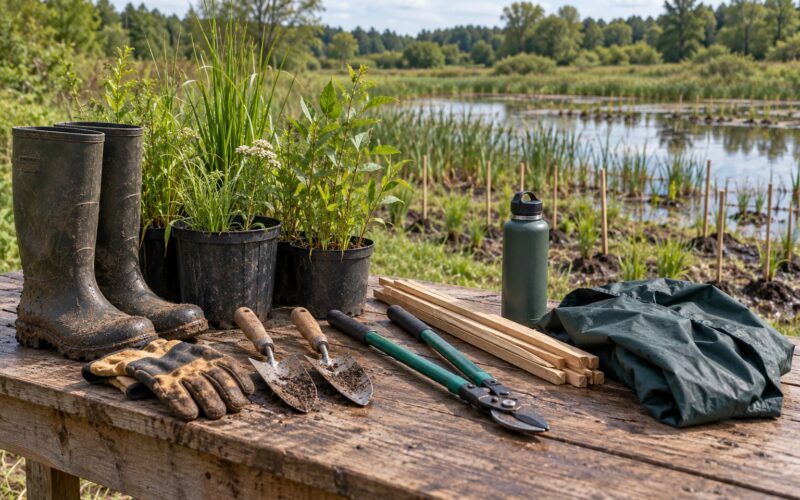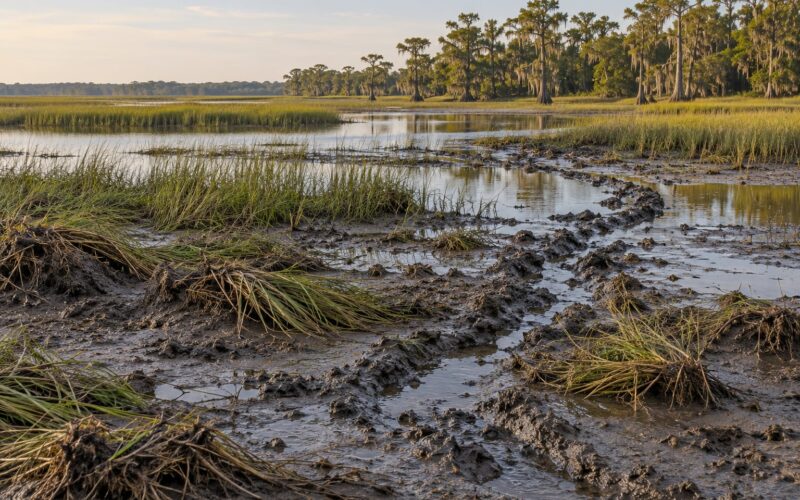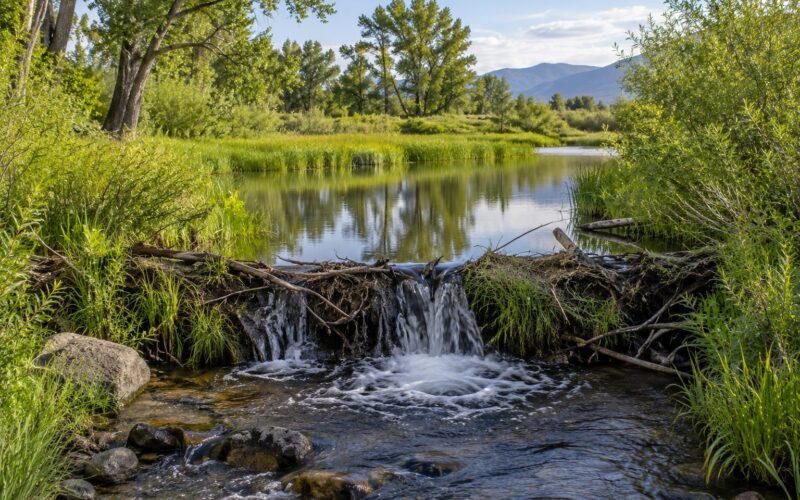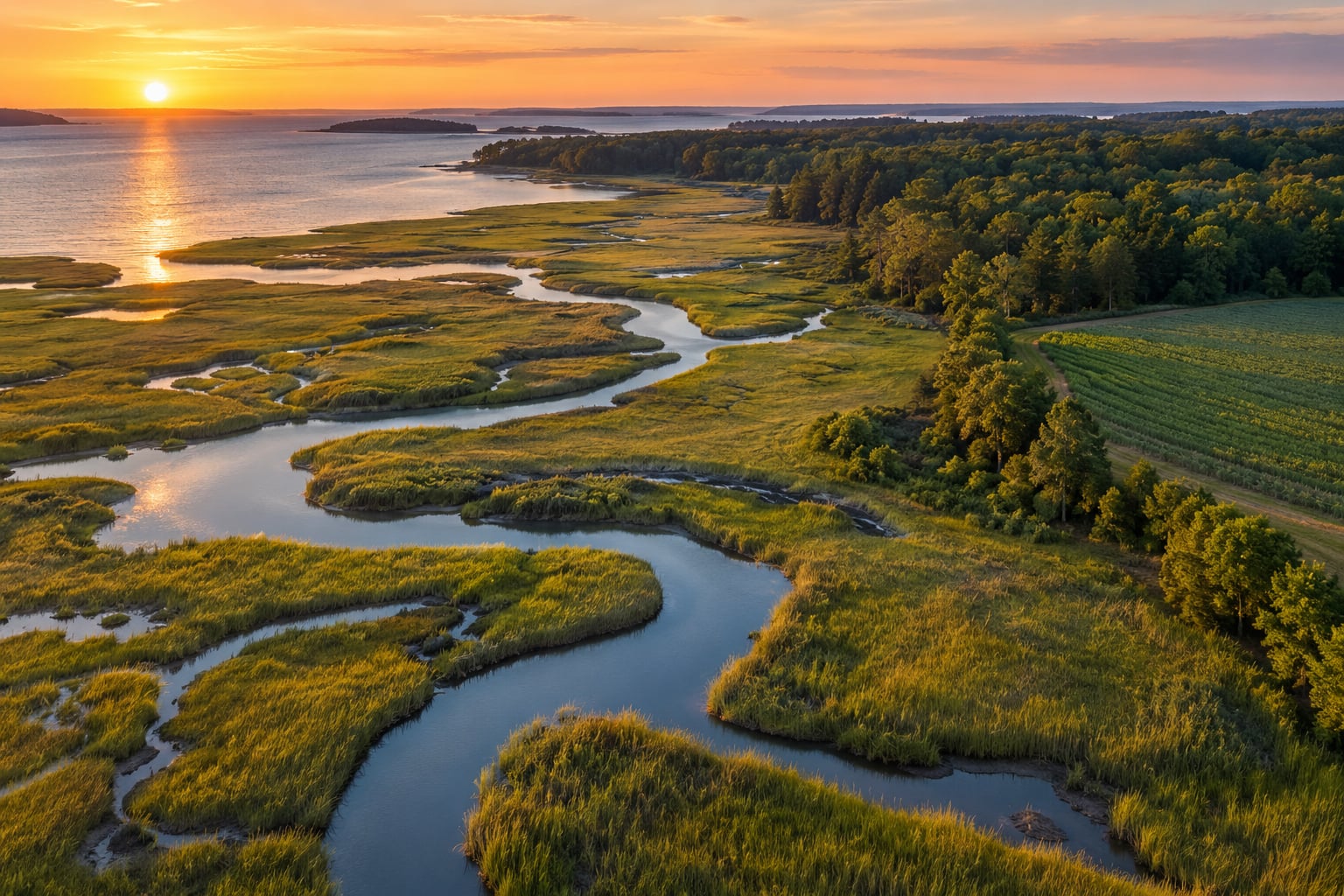
A land trust is a private nonprofit that protects land by buying parcels outright, or by taking a conservation easement that restricts how a landowner uses property they still own. How a land trust buys and protects land comes down to two tools, a long documented process, and a set of legal restrictions that have to keep working long after anyone signs.
The short version: a trust finds a parcel whose open space or habitat value is threatened, appraises it, works out who will pay and on what terms, completes the transaction, records the restrictions, and then keeps checking on the property for decades. Most of the work happens before anyone signs anything.
A note on terms first. Search results for this question are full of pages about title-holding trusts, often called Florida land trusts, which are asset-protection devices with trustees and beneficiaries. Those are a different thing. A conservation land trust, sometimes called a land conservancy, is a mission-driven nonprofit whose purpose is protecting natural, agricultural, scenic and wildlife habitat. It is not a government agency either, which matters because it can usually move faster than a public buyer.
Land trusts are the main private mechanism for permanent land protection in the United States. National groups such as The Nature Conservancy, the Trust for Public Land, the Conservation Fund and the American Farmland Trust work alongside more than a thousand local trusts, most of them run by a handful of paid staff and a board of local volunteers.
Table of Contents
- What Is a Land Trust and Why Does It Buy Land?
- How a Land Trust Buys and Protects Land
- How a Land Trust Buys and Protects Land Step by Step
- How Land Trusts Find and Prioritize Properties
- How Land Trusts Evaluate Conservation Value
- How Land Trusts Raise Money for a Purchase
- How Land Trusts Negotiate and Close a Purchase
- How Land Trusts Protect Land After the Purchase
- What Does a Land Trust Do With Protected Land?
- How Conservation Easements and Conservation Purchases Differ
- What Are the Main Risks and Challenges?
- Frequently Asked Questions
- How much does it cost for a land trust to buy land?
- Does a land trust own land forever or can it sell it later?
- Can a private landowner sell land to a land trust?
- What is the difference between a land purchase and a conservation easement?
- How do land trusts afford expensive conservation properties?
- Can the public still use land protected by a land trust?
- What to Do First
What Is a Land Trust and Why Does It Buy Land?
A conservation land trust is a nonprofit organization that holds land or land-use restrictions for a public benefit stated in its charter. Its purpose, not its owners, drives every decision it makes.
Trusts acquire land for four broad reasons:
- Habitat and watershed protection. Wetlands, forested corridors, stream buffers and nesting areas are bought or restricted before they fragment.
- Keeping working lands working. Farmland and ranches under easement can keep grazing, growing and harvesting while the development rights stay extinguished.
- Public access. Trail corridors, river frontage and lake access are secured so hunting, fishing and paddling survive a later sale.
- Growth management. Land bought at the edge of a town limits sprawl and can be transferred later to a city or county as a park.
Most trusts do not own everything they protect. An easement holding costs far less than acquiring fee title, so the same funds can protect many times the acreage.
How a Land Trust Buys and Protects Land
Every acquisition runs through the same nine stages, whether the buyer is a small county trust with two staff members or a national organization.
| Stage | What happens | Typical output |
|---|---|---|
| Identify | Parcel screened against the trust’s conservation priorities | Go or no-go decision |
| Due diligence | Title, survey, zoning, encumbrances and environmental review | Diligence report |
| Appraise | Independent appraisal of the property as-is and under restriction | Value opinion |
| Fund | Grants, revolving land fund, mitigation funds, private gifts assembled | Committed funding |
| Negotiate | Price, terms, closing conditions and access rights agreed in writing | Purchase or easement agreement |
| Close | Title cleared, documents signed, money disbursed | Recorded deed or easement |
| Steward | Management plan, baseline documentation, restoration work | Stewardship plan |
| Monitor | Periodic site visits and compliance checks by staff or trained volunteers | Monitoring report |
| Hold or transfer | Keep the land, or pass it to another qualified owner | Transfer or management agreement |
How a Land Trust Buys and Protects Land Step by Step
Stage one is a screen against written priorities. If a parcel does not advance habitat, farmland, water or access goals already on the books, the process stops there and no money is spent.
Stage two is due diligence. Staff pull the title record, order a survey, check zoning and floodplain maps, and look for existing liens, easements, mineral rights and contamination. A surprise right-of-way recorded in the 1970s can kill a river-front parcel, which is exactly why this happens before an offer goes out.
Stage three brings in an independent licensed appraiser. The trust needs two numbers: what the property is worth in an ordinary sale, and what it would be worth with conservation restrictions applied. The gap between them is the conservation value, and it is what donors and grantmakers are being asked to help cover.
Stage four is funding, which usually starts long before an offer is made. A trust with a revolving land fund can move in weeks; a trust waiting on a state grant cycle may take a year. Offers often go out with conditions attached, so nothing is final until money is committed.
Stage five is negotiation. Both sides settle on price, deposit, closing date, inspection period, and whether the owner keeps farming, timbering or leasing the land after the deal. Landowner attorneys usually handle the easement language, and the baseline report is negotiated here, not written after the fact.
Stage six is closing. Title must be insured, funds must be wired and received, and the deed or easement must be recorded with the county recorder. Recording is what makes the restriction visible to the next buyer, a lender and a title insurer.
Stages seven through nine are the ones that last. A stewardship plan sets out what happens on the property for years or generations. Monitoring visits confirm the terms are being honored. Transfers to a public agency or another qualified owner happen only when protection is already secured, never in exchange for it.
How Land Trusts Find and Prioritize Properties
Land trusts do not wait for sellers to call. Priorities come from a regional conservation plan, a watershed study, a habitat assessment or a state wildlife action plan, and parcels are then screened against that map.
Sources of leads include county GIS and tax parcel viewers, aerial imagery showing new fragmentation and tree loss, state wildlife inventories, wetland and floodplain maps, corridor and trail studies, and conversations with landowners who call in after hearing about a nearby deal.
Selection criteria are blunt and specific: does the parcel sit in a priority habitat block, does it connect to protected land, does it hold soil or water quality worth the cost, and is the asking figure within reach of the trust’s funding.
Then the hard part. Most desirable parcels cannot be purchased. A trust competing for a single farm in a hot development market will usually lose to a developer. So trusts favor fragmented holdings, buffer strips that fill gaps, and parcels whose threat is a single owner deciding to sell rather than a speculative market.
How Land Trusts Evaluate Conservation Value
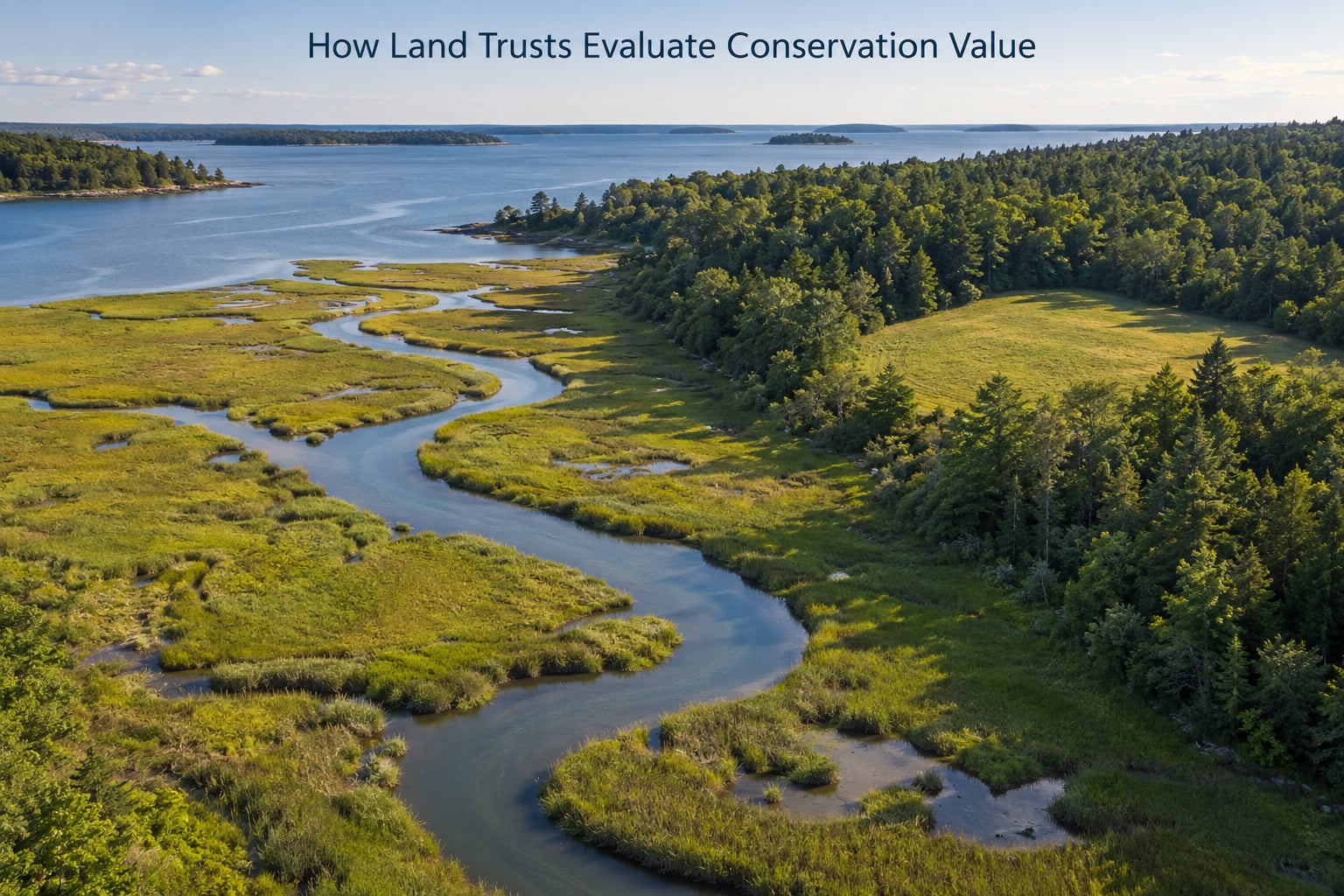
A parcel gets a score, and the score comes from people who know the resource, not from the landowner or the buyer.
Biologists and field ecologists assess habitat: what species use it, what is nesting or spawning there, whether the vegetation is intact or fragmented, and how the parcel connects to habitat on either side. Soil scientists and foresters look at erosion, drainage, species composition and regeneration. Hydrologists map water flow, wetland boundaries and stream buffers.
Agricultural viability is judged on soil quality, irrigation access and whether the land can realistically keep producing a crop or grazing income. Conservation values are scored for recreation, scenic quality and threatened species presence, sometimes against a state or federal species list.
None of this happens without specialists. Appraisers, wetland delineators, environmental consultants, attorneys and local wildlife agency staff all feed into the file, and a small trust will often borrow that expertise rather than hire it.
How Land Trusts Raise Money for a Purchase
No single source usually covers an acquisition. Trusts assemble money in layers, and the layering is a normal part of the work, not a sign of weakness.
- Revolving land fund. Money raised to be spent and replenished by later sales, often seeded by major donors and foundations. This is the fastest and most flexible source a trust has.
- Lines of credit. A local bank or credit union may lend against a future grant or pledge, bridging the gap between closing and reimbursement.
- Government programs. Federal appropriations, USDA Farm Bill conservation programs, and state grant programs fund acquisitions directly or pay stewardship costs afterward.
- Mitigation and impact fees. Developers, utilities and road agencies that must offset habitat damage frequently pay into mitigation funds, and trusts tap into that money for nearby parcels.
- Individual giving and campaigns. Capital campaigns, major gifts and bequests. Slower to raise, but unrestricted and dependable.
- Land trades and bargain sales. A trust acquires a more threatened parcel from the owner in exchange for an earlier, less vulnerable one it already holds. A bargain sale sells at well below appraised value in exchange for the tax deduction.
Compensation to the landowner varies widely by region, land type and how much restriction is accepted. There is no set per-acre rate. Landowners asking about payouts should get two appraisals, an independent attorney and a written comparison of selling versus donating before signing anything.
How Land Trusts Negotiate and Close a Purchase
Most offers are conditional. The trust writes an offer letter or purchase and sale agreement, states a price, a deposit and a closing date, and keeps the right to walk away if title, survey or environmental review turns up a problem.
Due diligence during the contract period includes a title search and insurance commitment, a boundary survey, an environmental site assessment, wetland and floodplain determinations, and a review of any existing leases, grazing agreements or timber contracts that will survive the sale.
Closing brings the deed or the recorded easement, a title insurance policy, the settlement statement and the transfer of any conservation restrictions to the qualified holder. For an easement, a baseline report with photographs and map layers is recorded at the same time, and it becomes the reference against which every later monitoring visit is measured.
Buying the land and buying the development rights are two different transactions. Acquisition transfers ownership. An easement purchase pays for restrictions and leaves title with the landowner. Both can be negotiated with the same appraisal, the same diligence and the same closing discipline, and both are routine parts of how a land trust buys and protects land.
How Land Trusts Protect Land After the Purchase
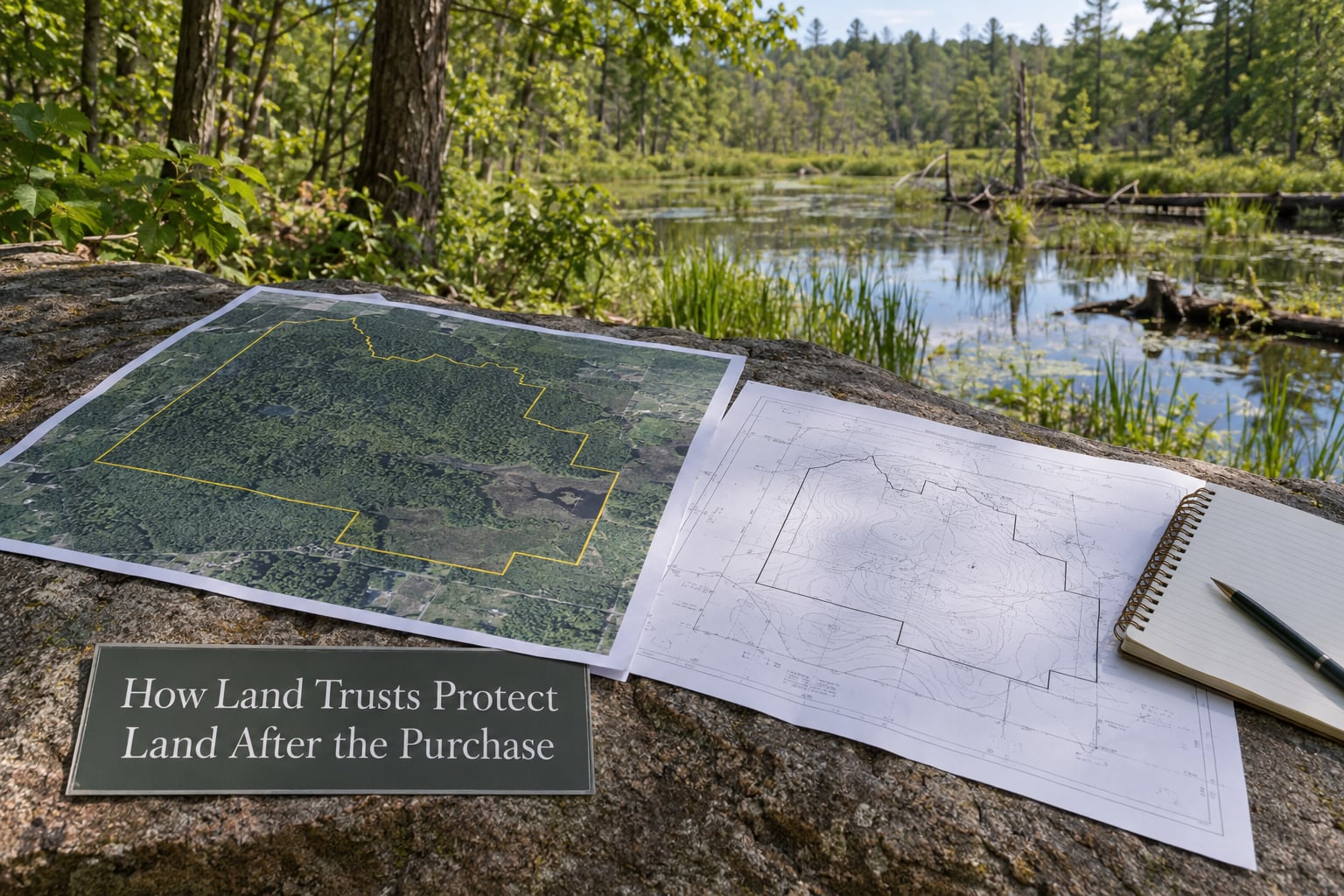
Protection is not the closing date. It is everything the trust does afterward, which usually takes more staff time than the purchase itself.
Ownership interests and deed restrictions establish what is legally protected. Perpetual conservation easements are drafted to last, and a due-on-sale clause requires a successor owner to notify the holder and confirm in writing that the restrictions still apply.
Management plans translate the legal terms into practice: which habitat work happens, where a trail runs, whether public access is allowed on foot or only from a designated trailhead, whether camping or motorized vehicles are excluded, and how fencing or water access is handled.
On the ground, stewardship work includes invasive species control, prescribed fire or mowing schedules, stream buffer restoration, trail maintenance and, on farm parcels, keeping soil covered and nutrients where they belong. Staff record everything they do because the monitoring file is what defends the easement if a dispute ever surfaces.
Monitoring runs on a cycle, often yearly or every few years, and unpaid volunteers walk the boundary and fill out a checklist more often than staff can. A satisfied holder is not the same as an enforced one, and a trust that never visits has no way to prove a restriction was honored.
What Does a Land Trust Do With Protected Land?
Some land is kept and managed indefinitely by the trust. Trusts that own farms often lease them to working farmers, which keeps the land in production and the fund flow going at the same time.
Often the land moves on to a public or institutional owner, once the protection is permanent and the acquisition has proved the parcel is worth it. Cities and counties frequently buy conservation land cheaply years after a trust assembled the surrounding holdings. Rail corridors become public trails, and residential developments report on a permanently protected greenbelt they no longer own.
Sale of a protected parcel is possible in some cases, and lawful, when the conservation purpose is secured another way and the deed or state law allows it. What cannot happen is a protected parcel quietly returning to ordinary ownership. Restrictions on protected land survive a change in owner, which is why buyers, lenders and title insurers all see them at closing.
How Conservation Easements and Conservation Purchases Differ
The choice between buying the land and buying the rights on it decides who manages the property, how much it costs and how much acreage a dollar protects.
| Factor | Conservation easement | Outright acquisition |
|---|---|---|
| Who owns the land | Landowner keeps title | Land trust holds fee title |
| Protection | Permanent use restrictions, typically perpetual | Ownership plus any restrictions the trust adopts |
| Landowner use | Continues farming, forestry, hunting or residence under the terms | Use is set by the trust’s management plan |
| Cost to the trust | Far lower; more acreage protected per dollar | Full acquisition price plus closing and long-term management |
| Ongoing burden | Holder monitors; trust administration only | Trust pays taxes, insurance, staff time and property upkeep |
| Public access | Only where the easement allows it | Set by the trust, often negotiated with a government partner |
| Landowner tax outcome | Deduction or credit if the easement is qualified, subject to federal rules | Generally a taxable sale, sometimes offset by a bargain sale structure |
| Best fit | Private land with continued use the owner wants to keep | Fragile land, blockages, and parcels headed for public ownership |
Tax treatment differs between federal income tax and local property tax, and both depend on whether the easement meets federal qualification rules. A qualified easement can generate a deduction or a limited credit. Property tax treatment varies by state and local law, and many states defer taxes on land under an easement rather than cancel them. Rules and rates change, so anyone weighing this needs a tax professional, not a webpage.
One more thing worth knowing: a conservation easement is close to a one-way door. A trust can amend or release an easement only when the purpose becomes impracticable, and a court must agree. Landowners who fear locking a family into permanent limits should understand that exit question before signing, not after.
What Are the Main Risks and Challenges?
Land trusts are small organizations doing a large job, and their weaknesses show up in predictable places.
- Thin staffing and budgets. A typical local trust runs on a few salaried people and a board of volunteers, which makes long monitoring timelines and slow grant cycles a permanent constraint.
- Title and encumbrance surprises. Old rights-of-way, oil and gas leases or boundary disputes can complicate a closing long after diligence supposedly finished.
- Deferred maintenance. Deferred maintenance is a budget item that never looks urgent until it does. Invasive species, trail washouts and erosion on a limited staff can degrade a parcel that a decade of legal protection did not.
- Climate exposure. Sea level rise, wildfire and changing rainfall affect the assumptions behind a purchase, and a parcel valued as permanent wetland habitat may not be one in fifty years.
- Funding gaps. A parcel under agreement with money not yet raised is a common failure point. Trusts that overextend on deals they cannot close end up losing both the land and the donor confidence.
- Conflicting uses. Hunting, farming, forestry, recreation and conservation rarely agree perfectly. Terms written loosely turn into arguments later, which is why the baseline report and the stewardship plan get negotiated so carefully.
- Illegal activity. Trespassing, dumping and off-road vehicle use on protected ground is routine work, not an exception to it.
Good agreements are the main defense against all of it. Clear terms, realistic budgets, honest baseline documentation and a monitoring schedule someone actually keeps are what separate durable protection from a deed that gets filed and forgotten.
Frequently Asked Questions
How much does it cost for a land trust to buy land?
The cost is set by an independent appraisal of the property plus closing fees, monitoring and long-term management, which can rival the purchase price for a small parcel over time. Easement purchases cost far less than outright acquisition, so the price alone does not tell you what protection costs. Ask for both an as-is and a restricted value before comparing offers.
Does a land trust own land forever or can it sell it later?
A land trust can sell or transfer land it owns, usually only once conservation is permanent and another qualified owner is ready to take it. A city or county often buys conservation land years after the trust assembled it. Restrictions on protected land survive a change of owner, so a sale cannot quietly strip the parcel of its protection.
Can a private landowner sell land to a land trust?
Yes, though most trusts will not buy on first contact. They screen parcels against written conservation priorities, order two appraisals, and usually buy only when a grant, revolving fund or donor commitment is already in place. Landowners should approach a trust well before the property is on the market, because timing drives whether the offer is competitive.
What is the difference between a land purchase and a conservation easement?
A land purchase transfers ownership to the trust, which then manages it. A conservation easement pays the owner to accept permanent use restrictions while the owner keeps the land and keeps using it, often for farming, forestry, hunting or a home. Easements cost the trust far less and protect more acreage per dollar.
How do land trusts afford expensive conservation properties?
They layer sources. A revolving land fund and a bank line of credit provide speed, while government programs, mitigation funds from development permits, foundations, individual campaigns and land trades fill the rest. Bargain sales can secure a parcel below appraised value in exchange for the deduction. Most acquisitions depend on three or four of these at once.
Can the public still use land protected by a land trust?
That depends entirely on the terms. Public access usually comes through negotiated trail easements, boat launches and river frontage, and many protected parcels deliberately exclude motorized vehicles, camping or off-trail access. Working farmland is rarely opened to the public. Ask the trust specifically what access the easement permits before assuming either way.
What to Do First
Start with a conversation, not an offer. Understanding how a land trust buys and protects land begins with finding the regional or subject-focused trust covering your watershed or county, telling them the conservation objective in plain terms, and asking what they can pay and what they would need to see.
Before anything is signed, get a professional property assessment and a realistic budget that covers closing, monitoring and management for decades, not just the purchase. Whether you are a landowner weighing a sale, a local government looking for a partner, or a reader tracking how protected land changes hands, that sequence is how the work actually gets done.