A yellow fly bite needs three things: clean the skin, put cold on it, and stop the itch before you scratch it open. Wash the area with soap and water, hold a cold compress against it for 15 to 20 minutes, use a labeled anti-itch product such as hydrocortisone or calamine lotion, and if a clinician has already told you an oral antihistamine is suitable for you, take it as the label directs. Relief usually starts within the hour and settles over 24 to 48 hours. Anything beyond that is worth a phone call to a healthcare professional.
Yellow flies, Diachlorus ferrugatus, are day-biting members of the horse fly family, Tabanidae, and they hit hardest in the southeastern United States during the warm months. Anglers, hunters, paddlers and anyone working a shaded tree line know the feeling well: a silent approach, then a sudden sharp stab that keeps burning long after the fly is gone.
This guide covers what to do in the first minutes after a bite, what a normal reaction looks like as it fades, which home remedies are worth the effort, and the signs that mean home care has run out of road. It is general information, not medical advice. Anything about your own situation belongs with a clinician or a pharmacist.
Table of Contents
- What You Need Before You Treat a Yellow Fly Bite
- How to Treat a Yellow Fly Bite: Step by Step
- Step 1: Move away from biting insects
- Step 2: Clean the bite
- Step 3: Apply cold to reduce swelling
- Step 4: Stop the itch
- Step 5: Control the ache and leave it alone
- Step 6: Watch it for a day, not a week
- Common Mistakes Anglers and Campers Make With Bites
- Scratching because the itch is unbearable
- Waiting until evening to deal with it
- Treating every welt like an allergy
- Applying unverified home remedies to broken skin
- Popping the welt because something is inside
- Taking a medication that is not safe for the person
- Ignoring the whole day because the bite is survivable
- Frequently Asked Questions
- How long does a yellow fly bite usually itch?
- Should I scratch a yellow fly bite?
- What helps reduce swelling from a yellow fly bite?
- Can a yellow fly bite cause an allergic reaction?
- When should I see a doctor for a yellow fly bite?
- Does a yellow fly bite need medical treatment?
- When to Seek Medical Care for a Yellow Fly Bite
- Get emergency help right away
- Contact a clinician the same day
- Ask before the season starts
- Bottom Line
What You Need Before You Treat a Yellow Fly Bite
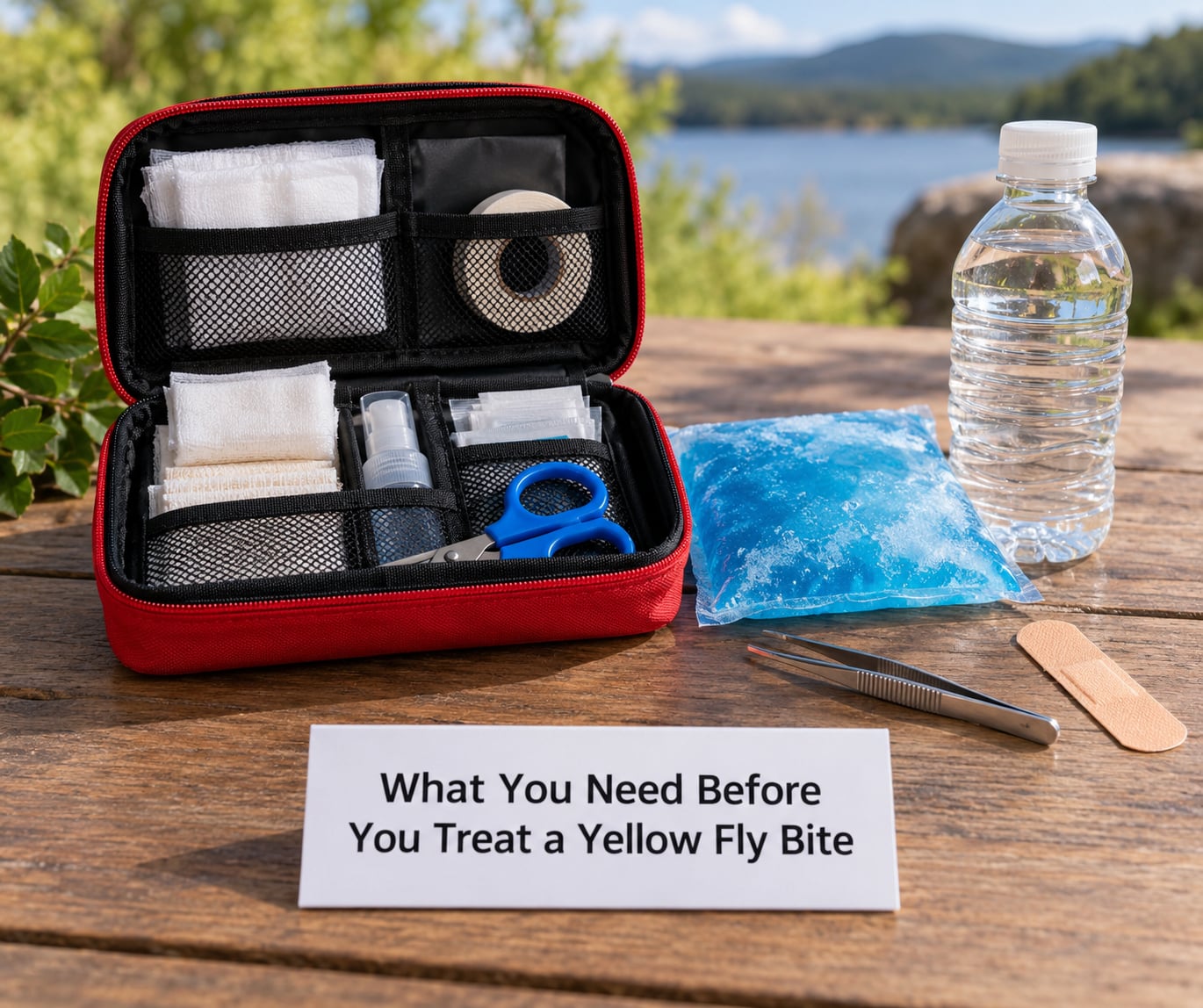
The first ten minutes decide how much trouble a bite becomes. Anything you have to improvise at the boat ramp or in a tree stand takes time you do not have, so pack it the night before.
- Clean water and mild soap for washing the bite as soon as you can get off the water or out of the stand.
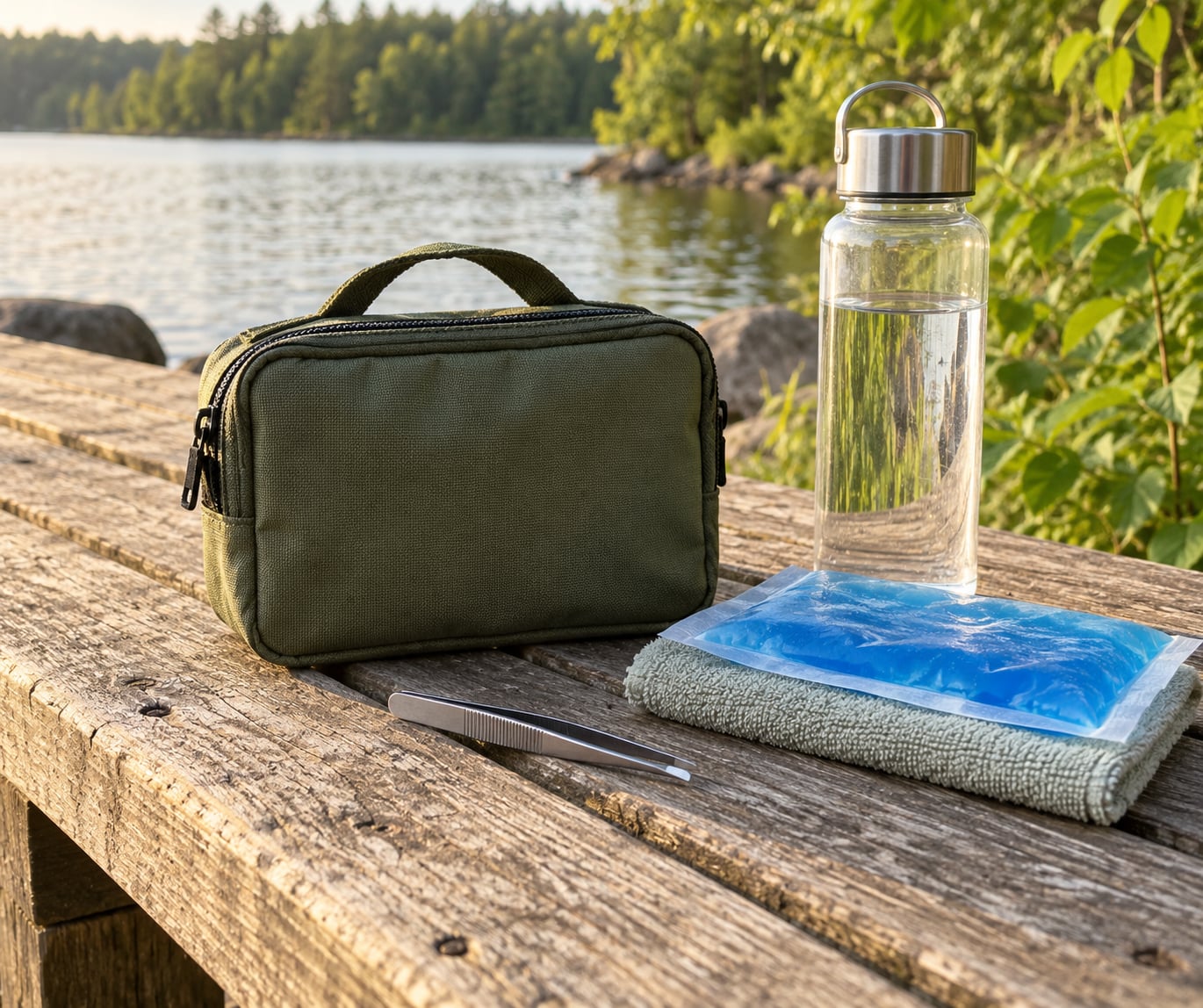
- A cold source — a sealed ice pack, a chilled water bottle, or a damp cloth. Anything cold works, including a soda can straight from the cooler.
- An antiseptic skin cleanser to reduce the bacterial load on skin that was already dirty or scratched.
- Calamine lotion or another labeled topical itch reliever that you have used before, so you know your skin tolerates it.
- Hydrocortisone cream if it is appropriate for the person treating the bite. Patch-test on a small area first if you have sensitive skin.
- An oral antihistamine you have already been told is suitable for you. This is the item most worth asking your pharmacist about ahead of a season on the water.
- A basic pain reliever you have used safely before, for the aching rather than the itching.
- Tweezers — not for pulling anything out, but for flicking off a fly that has not yet flown off your arm.
- A bandage or hydrocolloid dressing if the bite is in a spot your clothing will rub.
- A charged phone and the number of a clinician or urgent care, plus a roadside assistance number for the drive home.
A small zip bag of all of the above rides in a vest pocket or tackle bag without taking real space. The whole list costs less attention than one ruined afternoon of fishing you keep thinking about.
How to Treat a Yellow Fly Bite: Step by Step
Work through these in order. The order matters more than the products you choose, because the early steps are the ones that keep a bite from turning into a scratch.
Step 1: Move away from biting insects
Get out of the immediate area first, especially if several flies have already found you. Yellow flies are weak fliers, so a steady breeze or a change of location genuinely disperses them; wind, not a swarm of flies, is the tool that works. Once you are clear, deal with the bites you already have.
How to tell it worked: the biting stops within a couple of minutes instead of continuing.
Step 2: Clean the bite
Wash the area with clean water and mild soap, then pat it dry. If the skin is gritty from the boat ramp or your hands were dirty, follow up with an antiseptic skin cleanser. This step is boring and it is the one that decides whether the welt stays a welt or turns into a hot, angry patch.
How to tell it worked: the skin is visibly clean with no grit left in it, and there is no new bleeding.
Step 3: Apply cold to reduce swelling
Hold a cold compress or wrapped ice pack against the bite for 15 to 20 minutes at a time, with a cloth between the ice and your skin. Never lay ice directly on bare skin. Repeat a few times over the next couple of hours if the swelling is noticeable. Cold is the single most reliable thing you can do without buying anything.
How to tell it worked: the area feels numb and tight in a dull way rather than hot and throbbing, and the swelling flattens a little when you press it.
Step 4: Stop the itch
Apply a labeled topical itch reliever such as calamine lotion or hydrocortisone cream, following the product label. If an oral antihistamine has been cleared for you, take it as directed on the package. Itch is what drives the scratching, and scratching is what turns a simple bite into a skin infection.
How to tell it worked: the urge to scratch fades enough that you stop noticing the bite, even if a small bump remains visible.
Step 5: Control the ache and leave it alone
A basic over-the-counter anti-inflammatory taken as the label describes takes the edge off the deep aching that makes a leg or forearm throb. Then leave the area alone. Do not scratch, do not pick at the center of the welt, and do not bandage a bite you cannot see clearly.
How to tell it worked: the throbbing fades to a dull background ache and the skin stays intact.
Step 6: Watch it for a day, not a week
Take a photo of the welt with your phone, at the same time of day, for two or three days. A welt that shrinks steadily is normal. A welt that grows, reddens outward, runs pus, or starts to hurt more rather than less after 48 hours is not. The next section covers where that line sits.
How to tell it worked: day two looks smaller and quieter than day one.
Common Mistakes Anglers and Campers Make With Bites
Most of the bad outcomes I hear about come from a handful of repeat mistakes. Each one has a straightforward replacement.
Scratching because the itch is unbearable
Scratching is the single most common way a yellow fly bite becomes a problem. It opens the skin, spreads bacteria, and drags whatever is on your hands or your gear into the wound. Long nails do more damage than people expect. Replace scratching with cold, a labeled anti-itch product, and distraction, and keep nails short if you are the type to pick.
Waiting until evening to deal with it
The advice passed around on local fishing and hunting forums is consistent: what you do in the first ten minutes matters more than what you do six hours later. People who cleaned and cooled the bite immediately report far less swelling that night. If you do nothing else from the list above, do the wash and the compress.
Treating every welt like an allergy
A large, hot, itchy welt is usually a normal local reaction to the injected saliva, and it fades on its own. An allergy looks different: whole-body hives, swelling of the lips, tongue, face or throat, difficulty breathing, faintness. Treating the first with antihistamines is reasonable. Ignoring the second is not, and no amount of home remedy touches it.
Applying unverified home remedies to broken skin
Rubbing alcohol, hydrogen peroxide, ammonia-based sting sprays, lemon juice, and undiluted essential oils all have real downsides on an open welt. They can irritate, dry out, or chemically burn skin that is already inflamed, and a burned patch is easier to infect. A cool compress and a product whose label says it is for insect bites are the safer defaults.
Popping the welt because something is inside
There is a persistent myth that a yellow fly leaves its mouthparts behind the way a bee leaves a stinger. Yellow flies do not. Their blade-like mouthparts cut in and withdraw, so a yellow fly bite cannot leave a stinger to squeeze out. What sits in the center of the welt is a small puncture mark, sometimes with a tiny scab. Anything genuinely embedded in the skin needs a clinician and tweezers, not fingernails.
Taking a medication that is not safe for the person
Oral antihistamines and pain relievers have real cautions, including drowsiness, interactions with other medications, and specific advice for children and for pregnancy. Read the label every time, and ask a pharmacist before a long season on the water if you take anything regularly. No topical product is worth putting on broken skin.
Ignoring the whole day because the bite is survivable
Reaction size varies enormously from person to person, and a large reaction on one occasion does not predict the next. Note what happened, adjust your repellent and clothing for next time, and take early medication seriously if your history is of strong local swelling.
Frequently Asked Questions
How long does a yellow fly bite usually itch?
Most yellow fly bites stop bothering people within 24 to 48 hours. The sharp pain fades within the first hour, and the raised welt usually flattens over the same window. Itch often outlasts the visible swelling, which is why people say the itching is the worst part. Anyone whose welt is still growing after two days, or who develops spreading redness, pus or fever, should contact a healthcare professional rather than waiting it out.
Should I scratch a yellow fly bite?
No, and that is the hardest instruction in this guide. Scratching breaks the skin, which is the main route for a simple welt to become a secondary bacterial infection. It also spreads the reaction and makes the itch worse over time. If the urge is hard to handle, use a cold compress, a labeled topical itch reliever such as calamine lotion or hydrocortisone cream, and an oral antihistamine if a pharmacist has confirmed one is suitable for you.
What helps reduce swelling from a yellow fly bite?
A cold compress or wrapped ice pack applied for 15 to 20 minutes at a time is the most reliable step, and it works best right after the bite. Cleaning the area with soap and water first limits swelling later. A labeled topical anti-itch product helps, and an oral antihistamine can reduce a large local reaction if one has been cleared for you. Elevating a bitten limb also takes some of the throbbing with it.
Can a yellow fly bite cause an allergic reaction?
Most people react locally: a painful red welt that itches and swells, then fades. A smaller group develops a large local reaction, an exaggerated swelling that can spread well beyond the bite site. A true systemic allergy is uncommon but possible, and it shows up as hives, swelling of the lips, tongue, face or throat, difficulty breathing or faintness. Those signs need emergency care, not a home remedy.
When should I see a doctor for a yellow fly bite?
Get urgent help for trouble breathing, swelling of the lips, tongue, face or throat, faintness, widespread hives, repeated vomiting, or a reaction that is rapidly worsening. Contact a clinician for severe or increasing pain, redness spreading outward, pus, fever, swollen lymph nodes, or a bite that is still worsening after 48 hours of basic care. Fly bites can also rarely transmit tularemia, so a fever with an ulcer at the bite site deserves a same-day call.
Does a yellow fly bite need medical treatment?
Usually not. The standard care — washing with soap and water, a cold compress for 15 to 20 minutes, and a labeled topical anti-itch product — is enough for most people, and the welt settles within 24 to 48 hours without scarring. Medical care becomes worthwhile when the reaction is unusually large, when home treatments do not touch the itch after a day, or when signs of infection or a systemic allergic reaction appear.
When to Seek Medical Care for a Yellow Fly Bite
Most bites are painful and harmless, and home care handles them. The line between a normal local reaction and something that needs a professional is worth knowing before you are the one deciding in a truck bed forty minutes from a clinic.
Get emergency help right away
- Trouble breathing, wheezing, or a tight feeling in the chest or throat.
- Swelling of the lips, tongue, face or throat, or swelling that is spreading quickly.
- Faintness, severe dizziness, or feeling like you are about to pass out.
- Widespread hives across the body, or repeated vomiting after a bite.
Anyone who has had a serious reaction to an insect bite before should carry an auto-injector if their clinician prescribed one, and should have an action plan written down before heading into the woods.
Contact a clinician the same day
- Redness that spreads outward from the bite over the following day, or skin that feels hot to the touch.
- Pus, drainage, or a wound that is worsening rather than drying up.
- Fever, chills, or swollen lymph nodes near the bite.
- Pain that gets sharper or more intense after 48 hours instead of easing.
- A large local reaction that has not responded to cold compresses and a labeled topical product.
One infection deserves specific mention. Tabanid flies, including deer flies and yellow flies, can rarely transmit tularemia, sometimes called rabbit fever. Signs include a fever, feeling generally unwell, and sometimes an ulcer at the bite site. Tularemia is treatable, but it needs to be identified, so a fever after a fly bite is a reason to call rather than a reason to wait.
Ask before the season starts
If you know you react strongly to insect bites, your first move is a conversation with a clinician or pharmacist before peak season, not after a bad afternoon on the water. Ask which antihistamine is right for you, whether you should carry anything, and what your own escalation signs are. Doing it once, while you are comfortable, is far better than figuring it out with a swollen forearm.
For bites on a child or a dog, the same rule applies more firmly. Contact a pediatrician or a veterinarian rather than reaching for a product meant for adults, and never give a pet any human medication without a vet’s instruction.
Yellow fly activity in the Southeast generally runs from spring through fall and peaks in late spring and early summer, which is also when deer fly and horse fly pressure is highest. If you are reviewing this in 2026 and heading out soon, a five-minute conversation with a pharmacist is cheap insurance for a summer of mornings on the water.
Bottom Line
Move away from the biting flies, wash the bite with soap and water, hold cold on it for 15 to 20 minutes, and use a labeled anti-itch product rather than your fingernails. Do all of it in the first ten minutes if you can; that window does more good than anything you apply hours later.
Then watch it. A welt that shrinks each day is normal and clears within 24 to 48 hours. Spreading redness, pus, fever, swelling beyond the bite site, or any sign of a systemic reaction means you stop treating it yourself and contact a healthcare professional, or emergency services if breathing is involved.
Prevention is the better half of the answer: light long sleeves, an EPA-registered repellent, and staying out of shaded tree lines during the hottest part of the day. A dog in the boat deserves the same consideration, minus the human products.