Reviewed October 2026. This is general guidance based on CDC and public health recommendations, not medical advice.
The right way to remove a tick is to grasp it with fine-tipped tweezers as close to the skin as possible and pull straight up with steady, even pressure. No twisting, no heat, no petroleum jelly. The whole job takes under a minute once you know where to grab.
Speed matters more than anything else. The risk of Lyme disease and other tick-borne illnesses climbs sharply once a tick has been attached beyond 24 to 48 hours, which is usually about how long it takes for a blacklegged tick to transmit Borrelia burgdorferi. Get the tick off intact and quickly, then clean the bite and keep an eye on the site for a few weeks.
Table of Contents
- What You Need to Remove a Tick the Right Way
- How to Remove a Tick Step by Step
- How to Prepare the Bite Area
- Grasp the Tick Close to the Skin
- Pull Upward With Steady Pressure
- Clean and Check the Bite
- If the Mouthparts Stay Behind
- When to Call a Doctor
- Stopping the Next Bite
- Common Mistakes When Removing a Tick
- Frequently Asked Questions
- What is the best way to remove a tick from a human?
- What should I do after a tick is removed?
- What to apply after a tick is removed?
- Is it normal to feel pain after removing a tick?
- How quickly do Lyme disease symptoms appear after a bite?
- What happens if the tick head stays in your skin?
- Conclusion
What You Need to Remove a Tick the Right Way
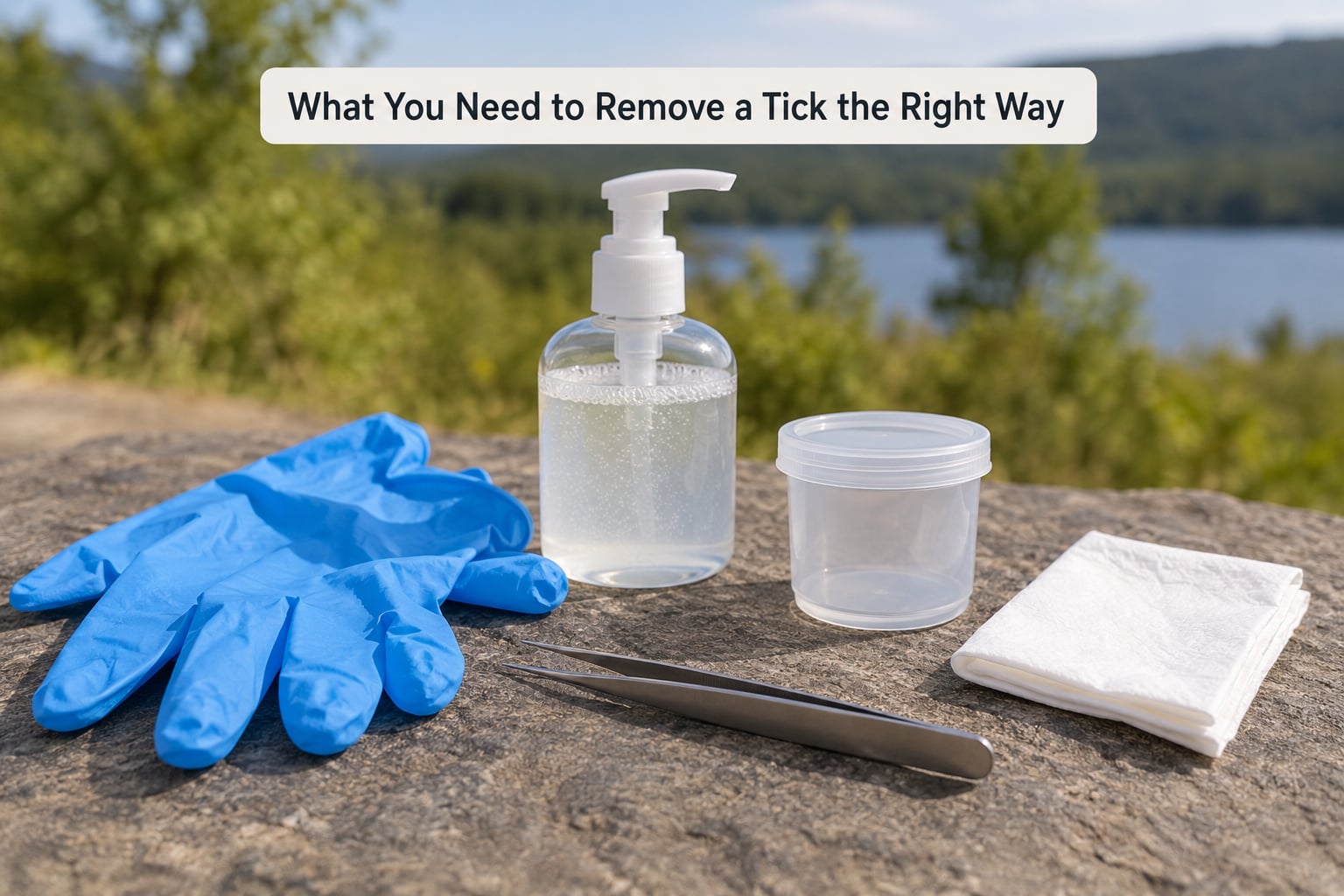
Gather what you need before you touch the tick. Scrambling for supplies while it stays attached is the most common reason people end up improvising badly.
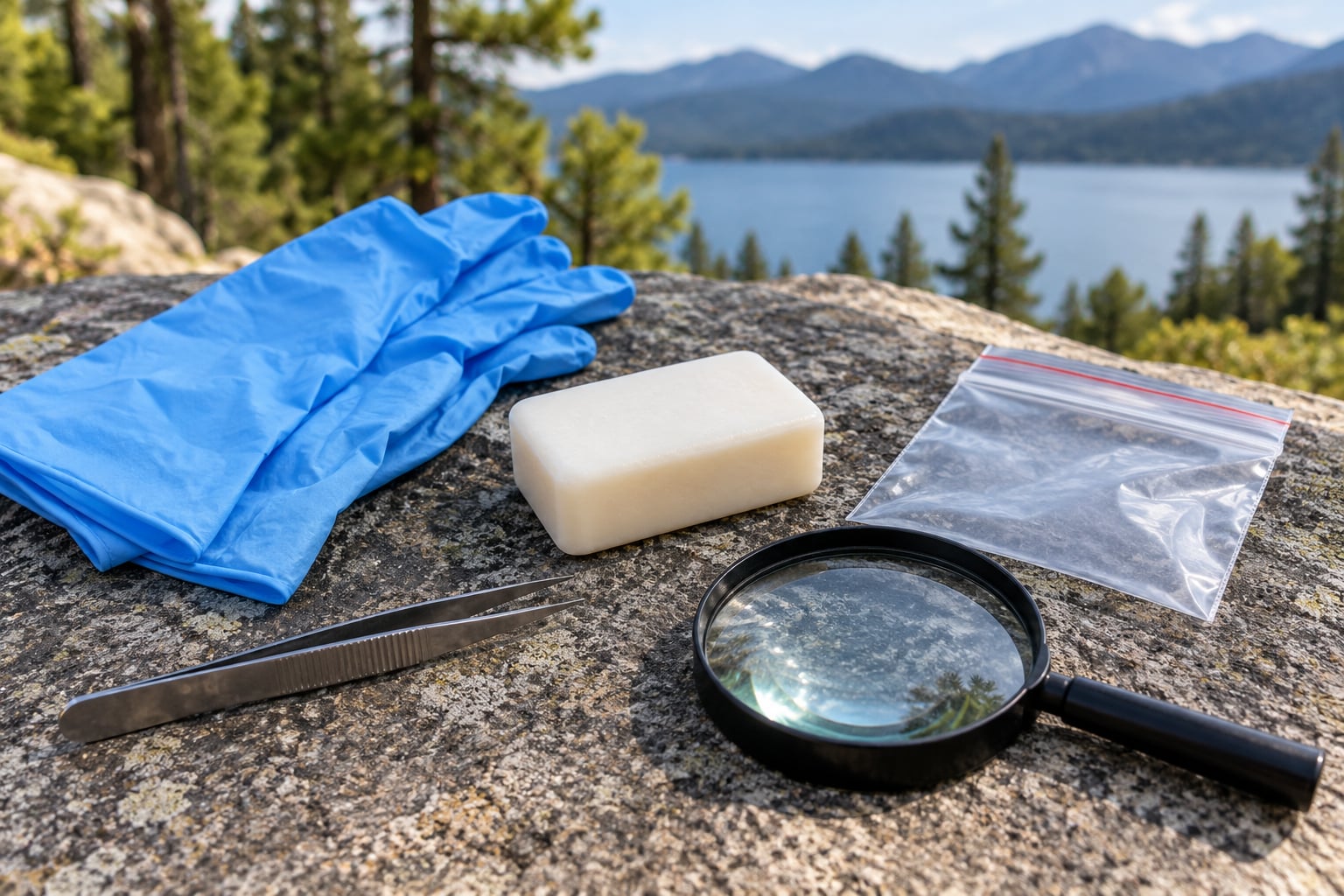
- Fine-tipped tweezers. Pointed or needle-tip style is what CDC recommends. Blunt eyebrow tweezers are the wrong tool, because you cannot get close enough to the mouthparts and you are more likely to crush the body.
- A magnifying glass, if you have one. Nymph ticks are roughly the size of a pinhead and are nearly impossible to see clearly without one.
- Soap and running water for your hands and the bite area.
- Rubbing alcohol or an antiseptic for disinfecting the bite once the tick is off.
- A small container, zip bag, or a folded tissue to hold the tick. A zip bag sealed with tape works well in the field.
- Gloves or a tissue if the tick is in a spot you cannot comfortably reach.
A tick twister or a slotted tick card also works if you own one, and I keep one in the truck first-aid box alongside the tweezers. Whatever tool you use, the grasp and the pull are the same motion.
How to Remove a Tick Step by Step
How to Prepare the Bite Area
Wash your hands and the skin around the tick with soap and water, then dry them. Put on gloves if you have them, mostly to protect you from whatever else is on that skin, not the tick.
Do not put anything on the tick first. Petroleum jelly, nail polish, toothpaste, essential oils, and hot liquids all appear in old advice and none of them belong here. A distressed tick can regurgitate into the bite, which is the opposite of what you want.
Ticks do not burrow into skin. They attach at the surface and feed in place, so once you find it, it is sitting where you can reach it.
Grasp the Tick Close to the Skin
Position the tweezers so the tips pinch the tick right at the point where its mouthparts meet your skin. That means grabbing the mouthparts or the head just above them, not the soft round body further up.
Squeeze gently enough to hold the tick and no harder. If the abdomen bulges or the tick bursts under the tweezers, you have gone too far. Most of the trouble people report happens right here, in the ten seconds before the pull.
Nymphs get a pass for being hard to see. If you can barely make it out, get close, use the magnifier, and take your time. Crushing a barely visible nymph with blunt tweezers is the most common failure mode I hear about.
Pull Upward With Steady Pressure
Pull straight up, away from the skin, with slow and even pressure. Vertical is the goal. The tick usually comes out in one clean motion, and it should look whole.
Do not twist and do not rock the tweezers back and forth. Twisting is the instruction that goes wrong most often, and it is the one thing CDC repeats in its removal guidance. Twisting tears the mouthparts and crushes the abdomen against the skin.
If it does not come free on the first steady pull, stop. Do not escalate to more force. Put the tweezers down, check that you have a firm grip on the head rather than the body, and try again once. Repeated hard yanking does more harm than waiting ten seconds.
Clean and Check the Bite
Wash your hands and the bite area with soap and water, then swipe the site with rubbing alcohol or an antiseptic. That is the whole after-care. People often ask what to apply, and the answer is a disinfectant and nothing more elaborate.
Before you throw the tick away, photograph it against a plain background with a coin for scale. If you want it identified, seal it in a zip bag or a tube of alcohol and label it with the date and the location where you found it. If you are not going to submit it, drop it in a cup of rubbing alcohol, seal it in a bag, tape it shut, or flush it down the toilet. Do not throw a live tick loose into the yard.
Now check whether the mouthparts came out. Hold the tick under light and look at the end that was against your skin: the body should be rounded and intact, with a small dark bar or cluster of spines at the tip where the hypostome was anchored. If the body looks ragged or torn open, the mouthparts are probably still in the skin. If the whole tick is smooth and complete, you are done.
It also helps to know how long you were being fed. A flat, unengorged tick is a male or an unfed stage and was probably on you for less than 24 hours. A nymph with a small, slightly rounded abdomen is usually in the 24 to 48 hour range, which is the window doctors care about most. A fully engorged, gray-blue, pea-sized tick has been on you several days and is worth mentioning to a clinician.
Write down the date. If symptoms show up in three weeks, knowing the bite date is the single most useful thing you can hand a doctor.
If the Mouthparts Stay Behind
A small piece of mouthpart left in the skin is irritating, not dangerous. What stayed behind is the hypostome, a rigid anchoring structure. It carries no body, no gut, and nothing that transmits infection, and the pathogens passed through the salivary route during feeding rather than staying lodged in the anchor.
Wash the area, let it be, and treat it like a splinter that will work its way out. A warm compress and ordinary antibiotic ointment help if it is tender. Do not dig for it with a needle. The forums fill up with people asking this exact question, and the consistent answer from clinicians is the same: leave it alone.
When to Call a Doctor
Call your doctor if you develop a fever or chills, a headache, fatigue that does not explain itself, joint pain or swelling, or facial weakness after a bite. An expanding rash that grows past two inches, especially one that clears in the middle, needs same-day attention.
Rashes are not always present. Fewer than half of people who get Lyme disease report a rash, so a clean bite site does not rule anything out. Timing varies too: symptoms usually start three to 30 days after the bite, which is exactly why the date you wrote down matters.
A physician may recommend a preventive antibiotic dose for a high-risk bite, particularly for a child or a pregnant person. That decision belongs to your clinician, not to a web page.
Stopping the Next Bite
Check yourself after every hike, hunt, or day in tall grass and brushy trail edges. Nymphs are the ones to worry about because they are small and easy to miss, so check behind the ears, at the hairline, in the groin, under the arms, and around the waistband.
Use a repellent registered for ticks, such as DEET or picaridin, and treat clothing and gear with permethrin, which kills ticks on contact and survives a wash or two. Peak activity for most species runs from spring through early autumn, with nymph activity in late spring and early summer usually the busiest stretch.
Common Mistakes When Removing a Tick
Most of the bad outcomes I see traced back to one of these. Each myth has a fix, and in every case the fix is the same simple motion described above.
- Smothering it with petroleum jelly or Vaseline. The tick suffocates slowly and struggles. That struggle is what makes it regurgitate, and you may wait a long time. Grab tweezers instead.
- Painting it with clear nail polish. Same problem as petroleum jelly. Old forum advice from the 2010s still recommends this; it is out of date.
- Using toothpaste, tick removal oil, or tea tree oil. Nothing makes a tick let go faster, and none of these are recommended for removal. Tea tree oil is marketed as a repellent, which is a different job.
- Burning it with a match or holding a lighter to it. Heat damages your skin and leaves the mouthparts behind. If you want to kill a tick after removal, alcohol or the toilet works.
- Crushing it with your fingers. You rupture the abdomen and can push gut contents into the bite. If it already happened, wash the area thoroughly and monitor it.
- Twisting or rocking the tweezers. This tears the mouthparts and crushes the tick. Pull straight up with one steady motion.
- Digging until it comes out, because it burrowed. Ticks attach at the surface and do not burrow. Nothing is hidden under the skin to excavate.
- Stepping on it. That kills a loose tick fine. It does nothing for an attached one, and it tells you nothing about whether it was feeding.
One more situation comes up constantly: no tweezers, miles from the car. A fingernail or the edge of a credit card held flat against the skin and dragged sideways will scrape the tick off, but it usually leaves the mouthparts behind and can irritate the skin. It is a reasonable last resort. Scrape rather than squeeze, clean the area afterward, and treat any redness the way you would treat a scrape.
Removing a tick from a dog or cat follows the same grasp-and-pull method, but a squirming animal makes it much harder to get a clean grip. Tick prevention on pets is the part that actually matters, and your veterinarian can tell you what to use in your area.
Frequently Asked Questions
What is the best way to remove a tick from a human?
Use clean, fine-tipped tweezers, grasp the tick as close to the skin as you can, and pull straight up with slow, steady pressure. Do not twist, rock, squeeze, or burn it. Wash your hands and the bite with soap and water, disinfect the site, then dispose of the tick in alcohol or a sealed bag. CDC lists those four steps in that order.
What should I do after a tick is removed?
Wash your hands and the bite area with soap and water, then wipe the site with rubbing alcohol or an antiseptic. Photograph the tick before you discard it, and write down the date and the location where you were bitten. If you want the specimen identified or tested, seal it in a zip bag or alcohol and label it. Then watch the bite for a few weeks.
What to apply after a tick is removed?
Rubbing alcohol or an over-the-counter antiseptic is enough for the bite itself. If the spot is tender or itchy, a thin layer of antibiotic ointment and a cool compress will settle it. Beyond that, avoid scar creams and homemade remedies. And if a piece of mouthpart is still in the skin, do not dig for it; treat the spot and let it work its way out on its own.
Is it normal to feel pain after removing a tick?
A small red, tender welt for a day or two is a normal reaction to the bite itself. Pain that keeps growing, spreads, or shows up with fever, headache, or a rash is not normal and deserves a call to your doctor. Persistent pinpoint pain weeks later usually means a piece of mouthpart is still in the skin, which is irritating but not a transmission risk.
How quickly do Lyme disease symptoms appear after a bite?
Symptoms usually start between three and 30 days after the bite. Early signs often look like a flu that will not go away: fever or chills, headache, fatigue, and aches in the muscles or joints. Not everyone gets an erythema migrans rash, and plenty of people who get Lyme never notice one. If symptoms show up in that window after a known bite, tell your doctor about the date.
What happens if the tick head stays in your skin?
The piece left behind is the hypostome, the rigid anchor the tick used to attach. It is not the head, it holds no gut, and it cannot transmit infection on its own. Wash the area, let the body push it out over the following days, and use a warm compress if it is sore. Do not try to excavate it with a needle or tweezers, which turns a minor irritation into a real wound.
Conclusion
Prepare the area, grasp the tick as close to the skin as you can with fine-tipped tweezers, pull straight up with steady pressure, and let go. No twist, no heat, no jelly. Then clean the bite, keep the tick or photograph it, note the date, and watch for fever, headache, an expanding rash, or joint pain over the next few weeks. Get a clinician involved if any of those show up.