Training a dog to retrieve ducks comes down to eight stages in a fixed order: obedience, a reliable dummy retrieve, marks, distance, water, water retrieves, hunt scenarios, then field readiness. Skipping ahead is the reason so many otherwise smart dogs end up as dogs that watch the whole hunt from the blind.
It is not quick. A well-built retriever usually spends somewhere between 10 and 18 months in real training before most handlers would put him in a spread blind, and Labs and Goldens reach that point a little faster than a Chessie or a pointer. Golden Retrievers make excellent duck dogs; they are soft-mouthed, eager and reasonably comfortable in cold water, though they can be slow to mature and stubborn about finishing a retrieve.
Everything below assumes a healthy, willing dog and reward-based training. Before any of it, talk to your vet if your dog is a puppy under 8 weeks, a senior, or has any joint, hip, or heart concern.
Table of Contents
- What You Need
- Training calendar at a glance
- Step-by-Step
- 1. Build Reliable Foundation Obedience
- 2. Introduce a Retriever Dummy and Mouth Delivery
- 3. Use Marks and Controlled Set-Ups
- 4. Add Distance and Distractions
- 5. Introduce Water Safely
- 6. Practice Water Retrieves and Handler Lines
- 7. Simulate Hunting Scenarios
- 8. Build Reliable Field Readiness
- Common Mistakes
- Frequently Asked Questions
- Can golden retrievers be duck hunting dogs?
- What is the easiest dog to train for duck hunting?
- How to encourage a dog into water
- What age should I start force fetching, and when can a puppy swim?
- How long does it take to train a duck dog?
- Can you train an older or adopted dog to retrieve?
- Conclusion
What You Need
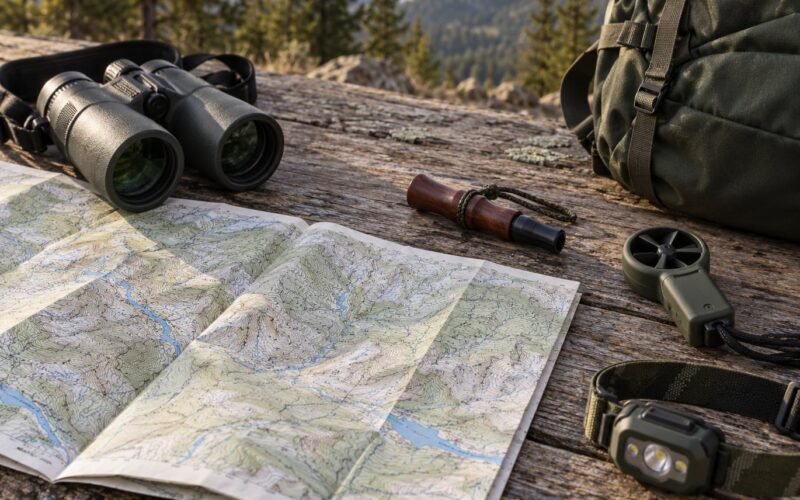
Start with a grippy training dummy, a long line, a dog whistle, and a pocket full of something your dog actually wants. That is the honest minimum.
- Dummies and bumpers: a hard plastic dummy that floats and a softer knotted rope bumper for land work. Neither one needs to be expensive to work.
- Long line (30 to 50 feet): for water and mark work while the dog is learning. It is also the safety line when a dog reaches a drop-off.
- Whistle: one consistent sound for the fetch command, one for no. Consistency matters more than the tone you pick.
- Retriever vest with handle: for cold water, and a genuinely useful way to lift a dog out of a boat or off a bank.
- Dummy launcher: lets you make long marks alone instead of needing a helper every session.
- Rewards: treat pieces your dog will work for, plus a favorite toy used only on the successful retrieve.
- Warm coat and a clean, shallow training pond or lake shore: a gradual water introduction needs gradual banks.
Avoid ice-covered water and water below about 50 F (10 C) until the dog is swimming confidently and has a proper vest. Hypothermia and cold shock kill retrievers, and neither is visible while the dog is having fun.
Keep sessions to about 15 minutes on one behavior, then stop while the dog is still winning. Most forum trainers land in the same place, and so does everyone who has watched a young dog quit on a bad day.
Training calendar at a glance
| Age | Focus | Milestone before moving on |
|---|---|---|
| 8 to 12 weeks | Name, sit, down, stay, come, puppy carries a bumper back to hand | Comes reliably in a quiet yard |
| 3 to 5 months | Force fetch with hold, fetch, hold, release | Returns the dummy to hand and gives it up calmly |
| 5 to 8 months | Simple marks on land, then shallow water | Swims out on command, no hesitation at the bank |
| 8 to 12 months | Water marks, distance work, steadiness in a blind | Steady on a flying bird without being told |
| 12 to 18 months | Blind retrieves, cold water, hunt test or amateur trials | Passes a hunt test or amateur stake |
| 18 months plus | Real waterfowl, plus off-season conditioning | Holds up over a full season |
Step-by-Step
Work in order and resist the urge to skip. Each stage gives the dog something it needs for the next one, and the stages in the wrong order are where most hunting dogs get lost.
1. Build Reliable Foundation Obedience
Sit, down, stay, heel, and a recall that works are prerequisites, not extras. A duck dog spends its life waiting next to a handler who fires a shotgun, so steadiness and focus under distraction get trained here, before any bird is in the picture.
Reward heavily for a fast recall every single time, even when it is easy. If your dog ignores recall, shorten the distance to four feet, add a high-value treat, and never repeat a cue he already failed. Ten clean short reps beat forty long ones every time.
How to tell it worked: the dog comes when called from across a distracting yard, on a single cue, within about two seconds.
2. Introduce a Retriever Dummy and Mouth Delivery
This is the force fetch: hold, fetch, hold, release. Sit the dog down, take the dummy, say hold, and slide it into his mouth while supporting his jaw. Hold his mouth closed gently for a count of five, then say fetch. When he brings it back, take the dummy, say hold again, then say release and let him take a treat.
That loop is the single technique every professional mentions and almost no article actually explains. Joe Nowakowski at Little River Kennels, Mike Stewart at Wildrose Kennels, and Lyle Steinman at Castile Creek Kennels all build the whole retrieving game on hold work, because a dog that will not pick up an object on command will not do much else you ask in a boat.
Grade the mouth the whole way through. If the bumper comes back with teeth marks deepening each session, back off and let him carry a soft, light bumper for a week instead. Swapping in a harder object to fix a hard grip does not work.
How to tell it worked: the dog brings the dummy straight back to your hand, holds it without you clamping his jaw, and gives it up when you say release.
3. Use Marks and Controlled Set-Ups
A mark is a spot the dog saw. Sending him is telling him where to go. Start by sending, and only start marking once the dog looks to you at the moment the dummy leaves the launcher. This is where most people trying to train a dog to retrieve ducks lose the plot and end up with a dog that only runs to the edge of the field.
Throw a bumper straight out in front of the dog, say your fetch whistle only after it lands, and let him run it in. Use flat ground, no cover, no water, and keep every mark short and visible for the first two weeks. As long a straight bank as you can find helps, because the dog cannot cheat by running the shoreline instead of swimming.
How to tell it worked: the dog is looking at you while the dummy is in the air, then goes on the fetch whistle without hesitation.
4. Add Distance and Distractions
Extend marks in small jumps, 10 to 15 yards at a time, rather than doubling distance overnight. Add one mild distraction at a time: a second person sitting down, a vehicle, wind, tall grass.
When a dog stops halfway, comes back short, or grabs a distraction, do not repeat the cue. Blow the stop whistle, walk out and get the dummy yourself, and end the session. Handlers teach that the dog cannot break before the fetch command, and a dog who keeps getting cues for breaking eventually stops breaking. If you see more errors than successes in two sessions, drop back a level and stay there until it is clean again.
How to tell it worked: the dog runs the extended mark past 50 yards with a person standing nearby.
5. Introduce Water Safely
Water confidence is built in shallow water on a gradual bank, never pushed. Handlers on gundog forums are consistent on this point: let a pup get used to water on his own terms, and do not start at drop-offs.
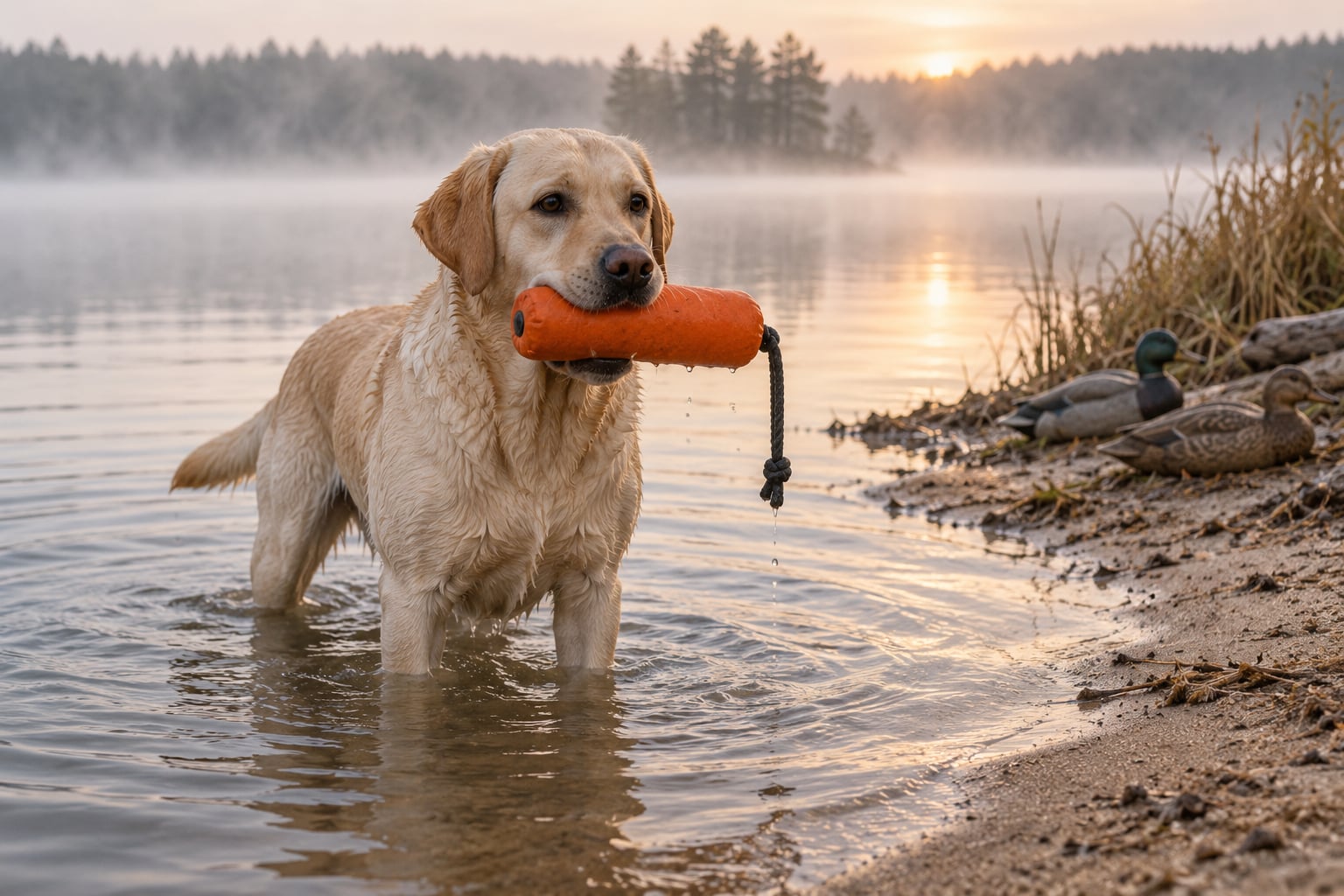
Start at the shoreline with a shallow puddle or a sandy shallow bay the dog can walk into chest deep. Reward him for putting his feet in. Then toss a floating bumper just a few feet out and let him walk to it. Only add depth once he is entering without hesitation, and only then add swimming. Some dogs are simply better swimmers than others, and a specific pond can unsettle a dog that swims fine somewhere else.
To encourage a dog into water when he hesitates: move further from the bank, not closer, and reward him for standing near the edge; wade in yourself so the water is boring rather than frightening; go back to the last step that was comfortable; use a warm day and shallow water; work near a second confident dog; and stop the session before he has a reason to worry.
How to tell it worked: the dog runs into water to get a floating dummy on the fetch whistle, without being pushed or coaxed in.
6. Practice Water Retrieves and Handler Lines
A long line keeps a young dog safe in water work, and it lets you stop a dog from running the bank instead of swimming. Attach it to the harness, never the collar, and pay it out in an arc behind the dog so a pull does not turn the dog around.
Reward each piece separately: entry, swimming, pickup, return, release. Then drop the line entirely and repeat the same short water retrieve, because a dog that only retrieves on a line has not learned to swim yet.
Never throw a hesitant dog into deep water or push it off a bank. Handlers who describe a dog popping at the line or refusing a drop-off generally trace it back to rushed earlier work, not to the dog.
How to tell it worked: the dog swims out, picks up a floating dummy, and brings it straight back on a loose or dropped line.
7. Simulate Hunting Scenarios
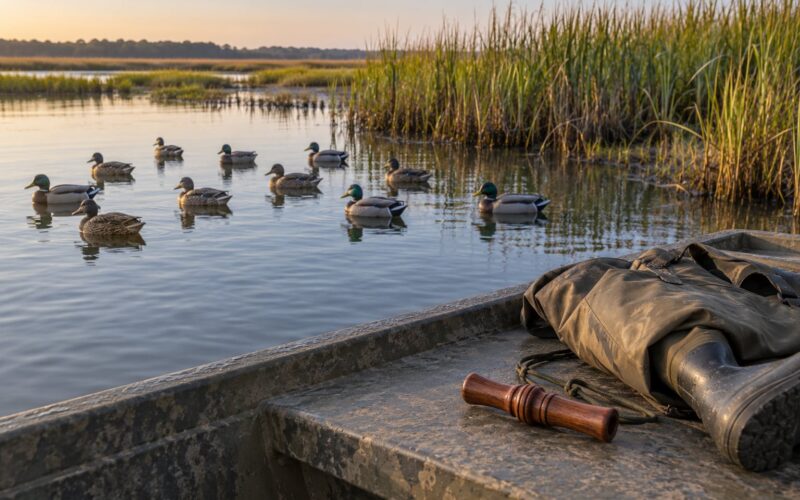
Combine what the dog already knows in places that feel like a hunt. Set up a portable blind or a shoreline blind, add decoys, sit down, and send the dog on marks into cover. Work from a boat or from shore so the dog learns to take the line you give it rather than running wherever it likes.
Vary the route and reward independent execution, which means less talking and more waiting. Keep real birds out of these sessions until the grip is proven; experienced handlers warn that working live ducks with a young green dog is how birds get killed. Control entanglement hazards too. Reeds, submerged brush, ice, and abandoned fishing line are the things that end careers.
How to tell it worked: the dog sits steady in the blind, works a decoy mark on the handler’s line, and ignores a flushed bird outside of range.
8. Build Reliable Field Readiness
The last stage is gradual exposure to the real conditions: colder water in a proper vest, retrieves of 100 yards and beyond, ice in early season, and birds flushing and falling while the dog works. Introduce gunshots early in life as a neutral sound. A dog that hears a loud noise for the first time on opening day may learn to hate it permanently.
Run a pre-hunt checklist the week before season: gear packed, vest fits, nails trimmed, dog’s stamina tested on a long walk, water temperature checked, and the dog’s vet history current.
If reliability is inconsistent or you are worried about the dog in cold or deep water, hire a trainer. Groups like the AKC, the North American Retriever Association, and Ducks Unlimited run clubs and trainers, and a few focused sessions with someone who has built retrievers will save a season.
How to tell it worked: the dog passes a hunt test or an amateur field trial stake, or handles three or four seasons of hunt tests without blowing up.
Common Mistakes
Starting bird work before obedience is solid. Fix: go back to stage one and stay there until the recall holds with distractions. Bird work makes obedience problems louder, not smaller.
Forcing a dog into water. It teaches fear, not courage, and some dogs never recover the trust. Fix: go back to the last comfortable step and shrink it.
Punishing commands. Corrections during retrieving create pressure at exactly the moment you need a dog making decisions. Fix: name the mistake once, mark it briefly with a remote collar if you use one, then set the dog up to succeed.
Training too long. Fifty minutes of marks produces a tired, bored dog with a lower drive tomorrow. Fix: 15 minutes on one behavior, then stop on a success.
Rewarding excitement instead of control. A dog that comes back wild is harder to live with in a boat than a dog that misses. Fix: require calm before the toy or treat appears.
Training with real birds too early. Grip is not proven until you have seen many successful retrieves. Fix: use wing-clipped or restrained birds, and keep the first live-bird session short.
Confusing the dog with inconsistent cues. Saying fetch, here, get, and go for the same thing slows everything down. Fix: one word, one whistle note, one hand signal per job.
Training only with dummies and bumpers. This is the trap retriever owners complain about most. A dog can look brilliant with bumpers and then refuse a real duck, because the goal was never retrieving ducks. Fix: introduce real birds, even a small number, once the grip is reliable.
Keep rest days. A young dog needs sleep and swimming and play that has nothing to do with you being in charge.
Frequently Asked Questions
Can golden retrievers be duck hunting dogs?
Yes. Golden Retrievers are one of the most popular waterfowl dogs because they are soft-mouthed, eager to work and generally comfortable in cold water. The main catch is maturity. A Golden is often the last to settle, and handlers usually wait until 14 to 18 months before asking for long marks and real birds.
What is the easiest dog to train for duck hunting?
Most handlers will point you to a Labrador Retriever, because the breed was bred for this job and carries retrieving instinct from birth. Goldens and Chesapeake Bay Retrievers follow closely. What matters more than breed is individual drive and swimming confidence, so choose a healthy pup from a parent with a hunting background.
How to encourage a dog into water
Move further from the bank, not closer, and reward him for standing near the edge. Wade in yourself so water is boring rather than frightening, use shallow water on a gradual slope, pick a warm day, and go back to the last step he handled comfortably. Never push a hesitant dog off a bank or into deep water.
What age should I start force fetching, and when can a puppy swim?
Most handlers start hold and force fetch work between 3 and 5 months, once the puppy has solid sit, stay and come. Swimming can be introduced in shallow water around the same age, but keep sessions short and positive. Avoid cold water and any pond with steep drop-offs until the dog is confident and older.
How long does it take to train a duck dog?
Expect 10 to 18 months of consistent work before your dog is ready for real waterfowl, and that assumes short daily sessions rather than occasional long ones. A hunt test or amateur field trial stake is a useful benchmark around 12 to 18 months. Adopted and older dogs take longer because the foundation has to be built from scratch.
Can you train an older or adopted dog to retrieve?
It is possible, and shelter dogs and older dogs do learn. Expect to rebuild basic obedience first, including a recall the dog trusts, and add any corrections or punishment the dog learned before. Cut distances and difficulty in half and progress slowly. Have a vet check joints and heart first, especially in a senior dog.
Conclusion
Start tomorrow with two things: a sit, stay, and come that holds your dog’s attention in a busy yard, and a hold, fetch, hold, release loop with a bumper on the living room floor. That is genuinely the whole beginning of the job.
From there, add one stage at a time, and expect this to be a season-long project rather than a weekend. Keep sessions short and rewarding, keep water introductions gradual and voluntary, and keep real birds out of it until the grip is proven. A dog who marks, holds steady and brings a duck back unharmed is worth every month that got him there.