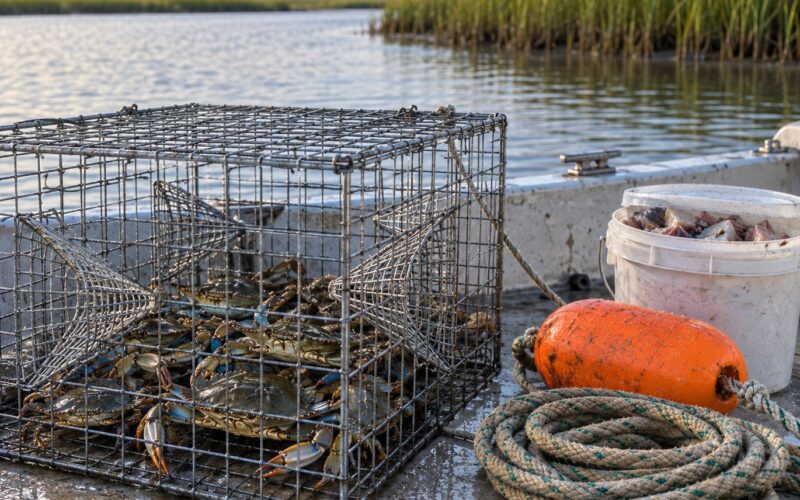
You pull up the ramp at dusk with a cooler full of live blue crabs and a kitchen that still smells like coffee from this morning. Here is the short version of how to cook blue crabs after a day on the water: keep them cold and damp in the cooler, steam them live for 20 to 30 minutes depending on size, and leave the lid alone until the shells are bright orange with no blue left anywhere on them. Cooler to table takes about an hour.
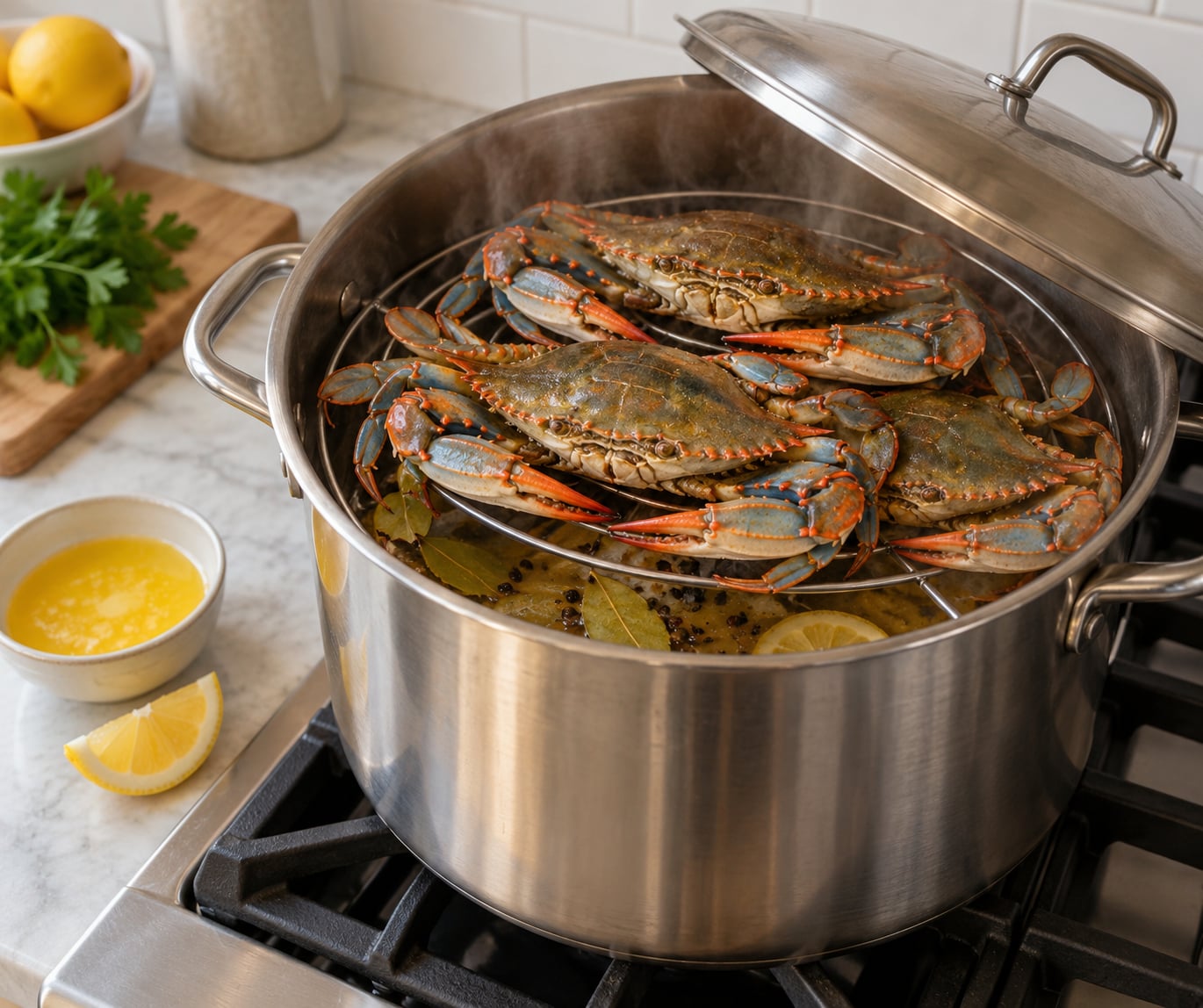
Steam them rather than boil them, and start a real clock when the lid goes on. The crabs sit on a rack above a shallow layer of seasoned liquid, so they cook in steam and pick up Old Bay-style seasoning on the shell instead of sitting in water like a sock.
If you have never cooked a crab before, read the whole guide once. There are only a few places where timing goes wrong, and every one of them is easy to avoid.
Table of Contents
- What You Need
- Step-by-Step: How to Cook Blue Crabs After a Day on the Water
- Clean and Rinse the Crabs
- Choose Steaming or Boiling
- Steam the Crabs
- Boil the Crabs
- Cool, Crack, and Serve
- Common Mistakes
- Frequently Asked Questions
- How long should I cook fresh blue crabs?
- Are blue crabs better steamed or boiled?
- How do I know when blue crabs are done?
- Can I cook blue crabs the next day?
- How should I store leftover cooked blue crab?
- What sides go best with blue crab?
What You Need
Most of this is gear you can throw in the truck and forget about.
- A large pot with a tight lid. A 12-quart stockpot handles about three dozen medium crabs in a single layer. A true crab pot with a divider lets you split a bigger load into two stacks.
- A steamer insert or wire rack that holds the crabs above the liquid line. A rimmed sheet pan with a rack laid across it works the same way.
- Tongs and thick gloves. Live blue crabs pinch hard, and they are at their feistiest when they come out of a cold cooler into warm air.
- Crab boil seasoning. That is the classic blend of black pepper, mustard powder, celery salt and paprika sold in the red cans, and it is interchangeable with Old Bay in this application.
- One to two inches of liquid. Water works. Water with a splash of white vinegar, or water with a beer, gives you options. Straight vinegar is too strong and will set the shells hard.
- Melted butter, lemon wedges, corn, potatoes for the table.
- Paper towels or old towels because everybody is going to be picking with their hands.
What you need for the holding phase matters just as much. A shaded cooler packed with ice and a damp towel keeps crabs fine for the better part of a day. So does a bucket of ice water in the shade of the truck, which puts the crabs into a dormant, slow-motion state before the pot goes on.
Chilled crabs bought from a wharf or a market work exactly the same way as a live catch. Freshwater or river crabs are the one case where you skip the soak and ice bath entirely, because the point is to get them cold fast and leave them alone.
Step-by-Step: How to Cook Blue Crabs After a Day on the Water
The timing people quote online ranges from 14 minutes to 35, and that spread is not because anyone is lying. It depends on whether the water is already boiling when the crabs go in, how many crabs are stacked in the pot, and how big they are. Use these as your working numbers from the moment the lid goes on with a cold pot:
- Small crabs, one layer: 18 to 20 minutes.
- Medium crabs, one layer: 20 to 25 minutes.
- Large crabs, one layer: 25 to 28 minutes.
- Jumbo crabs, one layer: 28 to 32 minutes.
- Any size stacked two deep: add 5 to 7 minutes for the second layer.
- Water already at a rolling boil before loading: subtract about 5 minutes.
Older guides often say to count 25 minutes from the moment the shells turn red. That rule is not wrong, it is just confusing, because a color change starts well before the meat is set. Run your timer from the lid instead and use color as the finish check.
Clean and Rinse the Crabs
Do not soak them and do not run the tap over them for ten minutes. Blue crabs live in brackish water and mud, and a quick rinse with a stiff brush is enough to clear the shell of the gunk that would otherwise steam into the meat.
Brush the top of the shell and the legs, snap off the apron flap and the small flap underneath it, and pull away anything loose inside the opening. Rinse briefly under cold running water and shake or blot the shells dry. That answers the question crabbers ask most: they do not need washing, but a rinse and a scrub of the gills and joints is a good idea before they go in.
Choose Steaming or Boiling
Steam whenever you can. Boiling works and plenty of people do it, but crabs that sit submerged take on the flavor of the water and the seasoning, and the meat turns watery and slightly stringy. Steaming keeps the crabs above the waterline where the seasoning lands on the shell as a crust and steams into the cracks.
Boiling earns its place in two situations: you have no rack and the crabs will sit in liquid either way, or you are deliberately making a broth for cioppino or a crab soup and you want the liquid to be part of the meal. Otherwise, steam.
Steam the Crabs
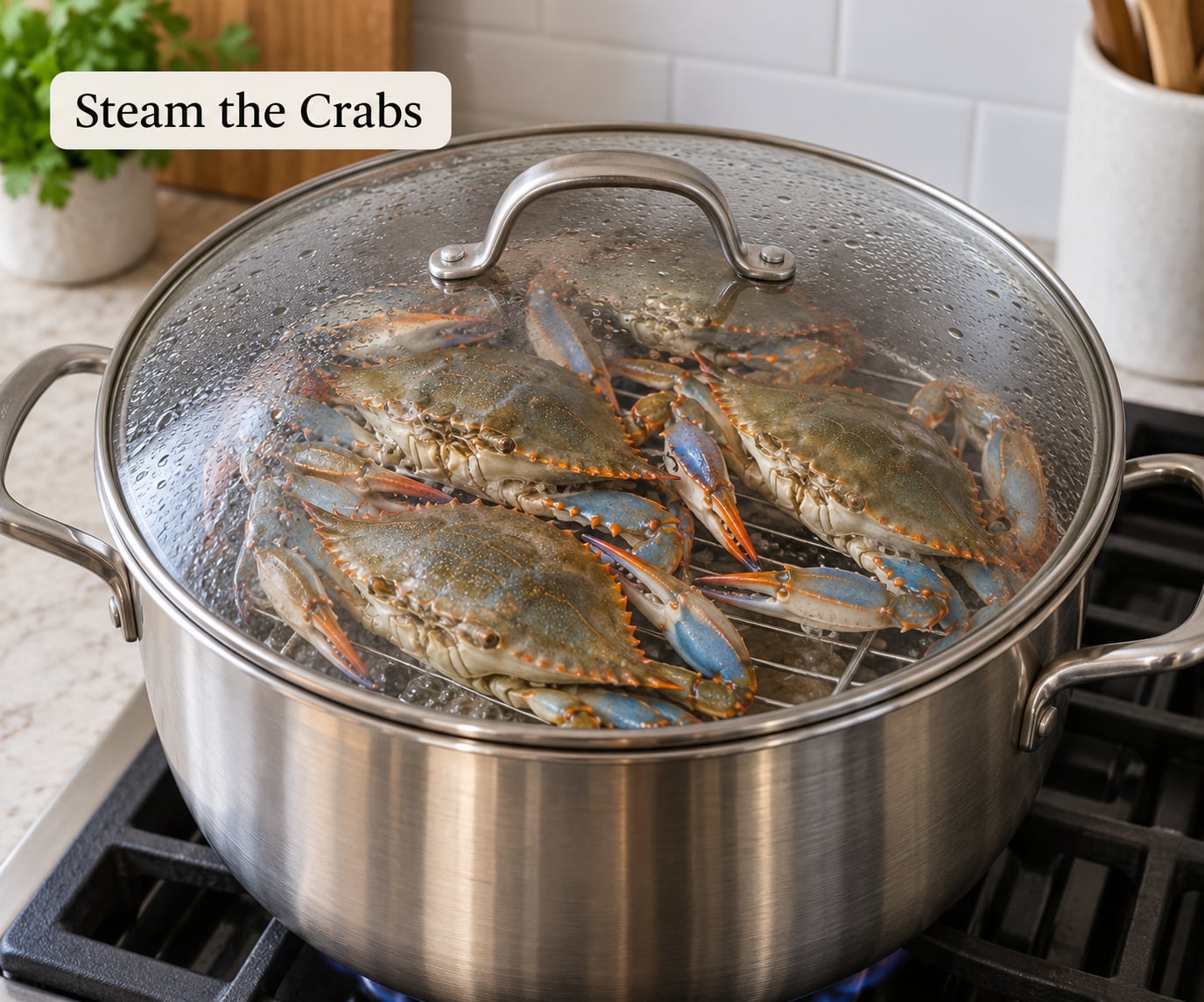
Put one to two inches of water in the bottom of the pot and bring it to a boil, then add a generous shake of crab boil seasoning. For a typical 12-quart pot that is roughly one 24-ounce can, or one seasoning packet, and you want the water to smell strong.
Load the rack in a single layer with the crabs belly side up. If you have to stack them, put the second layer on top and add time. Drop the seasoning between the layers rather than only in the water, then give the pot two or three firm shakes so it settles.
Put the lid on and set the heat high enough to keep a steady steam coming. Do not lift the lid for the first 20 minutes. Every peek drops the temperature and adds a few minutes, which is how a 22-minute batch quietly turns into a 35-minute one.
At the end of your timer, lift one crab out and check it. The shell should be bright orange to red with no trace of blue or green left, a leg should pull free with a light tug, and the white meat in the body should be opaque rather than translucent. Pull the whole rack, let the crabs drain for a minute or two, and hit them with the serving dishes.
On a charcoal grill or a camp stove, the same method works with the pot suspended over the coals. Set the rack high enough that the crabs never touch water, and keep the fire under the middle of the pot where the liquid is.
Boil the Crabs
Fill the pot so the crabs are covered by an inch or two of heavily salted water, and add crab boil seasoning until the water smells like a crab boil. If you do not have a lid that will hold the crabs down, improvise with a flat plate weighted with a couple of clean bricks or a couple of sealed cans.
Bring the pot to a boil, lower the live crabs in with tongs, and return to a boil as fast as you can. Keep it at a steady boil, not a rolling boil, or the shells crack and the meat tightens up. Check for the same orange shell and free-pulling legs as you would with steaming.
Boiling runs a little longer and costs you a little texture. It is the better choice when the crabs were sitting in a warm bucket and you want the heat to reach the center fast.
Cool, Crack, and Serve
Set the hot crabs on a towel or brown paper, not a plastic table, and give them five to ten minutes to cool enough to handle. Spread them out rather than piling them so they steam each other dry.
Pick the crab up, twist the top shell off the way you would open a jar lid, and discard it. Pull off the claws and the swimming fin. Peel the flapping swimming fin and the little V-shaped apron flap to get at the sweet meat tucked underneath. On the bottom half, the feathery gray gills come out next. Those are not meat and not good to eat. The mustard-yellow lump behind them, the tomalley, is the crab liver and it is edible.
That is also how to cook blue crabs after a day on the water without any of it going to waste: the parts you throw away are the shell, the gills and the digestive tract, and everything else on the crab is food. A mallet or nutcracker gets the claws open. Hands do the rest.
Serve corn, boiled potatoes, melted butter and lemon, with extra crab boil seasoning on the side. Count on about one medium crab per person if that is all you are serving, and two or three if you have corn and potatoes filling out the table.
Common Mistakes
Overcooking is the one that cannot be undone. Fix it by timing the batch instead of the color, and by pulling the first crab out at the end of the window to test. Crab that has gone past done goes from sweet to dry and stringy, and it happens fast.
Cooking crabs in muddy or fouled water. If your crabs came out of a bucket of bay water that has been sitting in the sun, dump that water and use fresh. Old waterfront crabs have also picked up Vibrio bacteria from the same environment, which is the reason to see them alive and vigorous before they hit the pot.
Confusing blue crabs with stone crabs. Stone crabs have two thick claws with black tips and come out of the Gulf waters, and they get picked for their claws. Blue crabs have slender blue claws, paddle-shaped rear legs, and you eat the whole animal.
Using too much water for steaming. A deep pot of water drowns the seasoning and puts the crabs back in the water you were trying to avoid. Keep it shallow and the crabs high.
Storing cooked crabs wrong, or leaving live crabs overnight in a bucket. Cooled crabs go straight into the fridge within two hours, covered, and get used within two or three days. Live crabs never go back into a bucket of standing water overnight; most die from the oxygen and salt-balance swings overnight, and a dead crab is one you should throw out rather than cook.
Leaving them to die quietly in a closed cooler. Check that the crabs are moving before you commit to cooking. If they are alive but sluggish, a short ice-water soak wakes most of them back up.
Frequently Asked Questions
How long should I cook fresh blue crabs?
Steaming live blue crabs in a cold pot takes 20 to 25 minutes for medium crabs and 25 to 30 minutes for jumbo ones, counted from the moment the lid goes on. If your water is already at a rolling boil before the crabs go in, take about 5 minutes off that. Shell color beats the clock: bright orange with no blue or green left means done.
Are blue crabs better steamed or boiled?
Steamed, in almost every case. Crabs that sit submerged take on the flavor of the water and the seasoning, and the meat comes out watery and slightly stringy. Steaming keeps them above the waterline so the seasoning settles on the shell as a crust and steams into the cracks. Boil only when you are deliberately making a broth.
How do I know when blue crabs are done?
Look at the shell first. Finished blue crabs are bright orange to red with no trace of blue or green, and a leg should pull free with a light tug instead of resisting. The meat in the claws and body should be opaque rather than translucent. Lift one crab out near the end of the timer and check it instead of cooking the whole batch blind.
Can I cook blue crabs the next day?
Yes, as long as they are still alive and well chilled. Hold them in a cooler on ice with damp towels, out of direct sun, and cook within 24 hours for the best texture. Do not keep them overnight in a bucket or tub of water; most die from the oxygen and salt-balance swings, and dead crabs should be discarded rather than cooked.
How should I store leftover cooked blue crab?
Refrigerate cooked crab within two hours, covered, and use it within two to three days. Keep picked meat in a sealed container in the coldest part of the fridge. Reheat in a 350°F oven for 8 to 10 minutes with a splash of water, or microwave in short bursts; the oven is gentler and keeps the meat from turning rubbery.
What sides go best with blue crab?
Steamed corn on the cob, boiled potatoes, and melted butter are the classic three, with extra crab boil seasoning on the side so people can add their own. Add a cold side such as coleslaw or a tomato and cucumber salad, and put out a towel or two. One medium crab per person works if corn and potatoes fill out the table.
Start at the cooler, not the stove. Get them cold, dark and damp, check that they are moving, then put the pot on and let the steam do the work for 20 to 30 minutes. Everything else on this page is a detail; live crabs over steam with the lid left alone is the whole trick.