The fastest way to treat a poison ivy rash after a hike is to wash the oil off within minutes, not hours. Get exposed skin under cool or lukewarm running water with soap, strip the clothes and gear that touched the plant, then use label-directed itch relief while you watch for signs that need a clinician.
That first half hour matters more than anything you do later. Urushiol, the oil in poison ivy, poison oak and poison sumac, binds to the outer layer of skin and can sit on tools, boot laces and dog fur long after you left the trail. Clean it off and a bad reaction sometimes never starts.
The catch is timing on the other side. The rash itself usually shows up 12 to 48 hours after exposure, which is why plenty of hikers feel fine at camp and wake up scratching three days later. Everything below follows mainstream CDC guidance and general dermatology practice. For treatment decisions about your own skin, ask a pharmacist or your clinician.
Table of Contents
- What You Need
- How to Treat a Poison Ivy Rash After a Hike: Step-by-Step
- Wash exposed skin immediately, before you think about the itch
- Wash pets and gear that may carry urushiol
- Relieve itching after you have cleaned the skin
- Monitor the rash while it heals
- Common mistakes to skip
- Frequently Asked Questions
- How long does a poison ivy rash last?
- Should I put hydrogen peroxide or rubbing alcohol on poison ivy?
- Can poison ivy blisters infect?
- When should I see a doctor after touching poison ivy?
- Can washing a pet remove poison ivy oil?
- What to Do First After a Hike
What You Need
None of this is specialized gear. If you can get to a sink with soap and cold water in the first twenty minutes, you have already handled the most important supply.
- Cool or lukewarm running water, and a source of soap
- A washcloth or soft brush, used only on the exposed skin
- Clean clothing you can change into immediately
- A washable bag for the contaminated clothes, gloves and boots
- A towel you are willing to give up
- Optional: an over-the-counter itch product already labeled for poison ivy or insect bites, plus cool packs
If you hike with a dog, add a pair of gloves you can handle with. If you do not have any of the optional remedies in your pack, none of them are required. Washing is not optional; everything past that is optional.
How to Treat a Poison Ivy Rash After a Hike: Step-by-Step
Wash exposed skin immediately, before you think about the itch
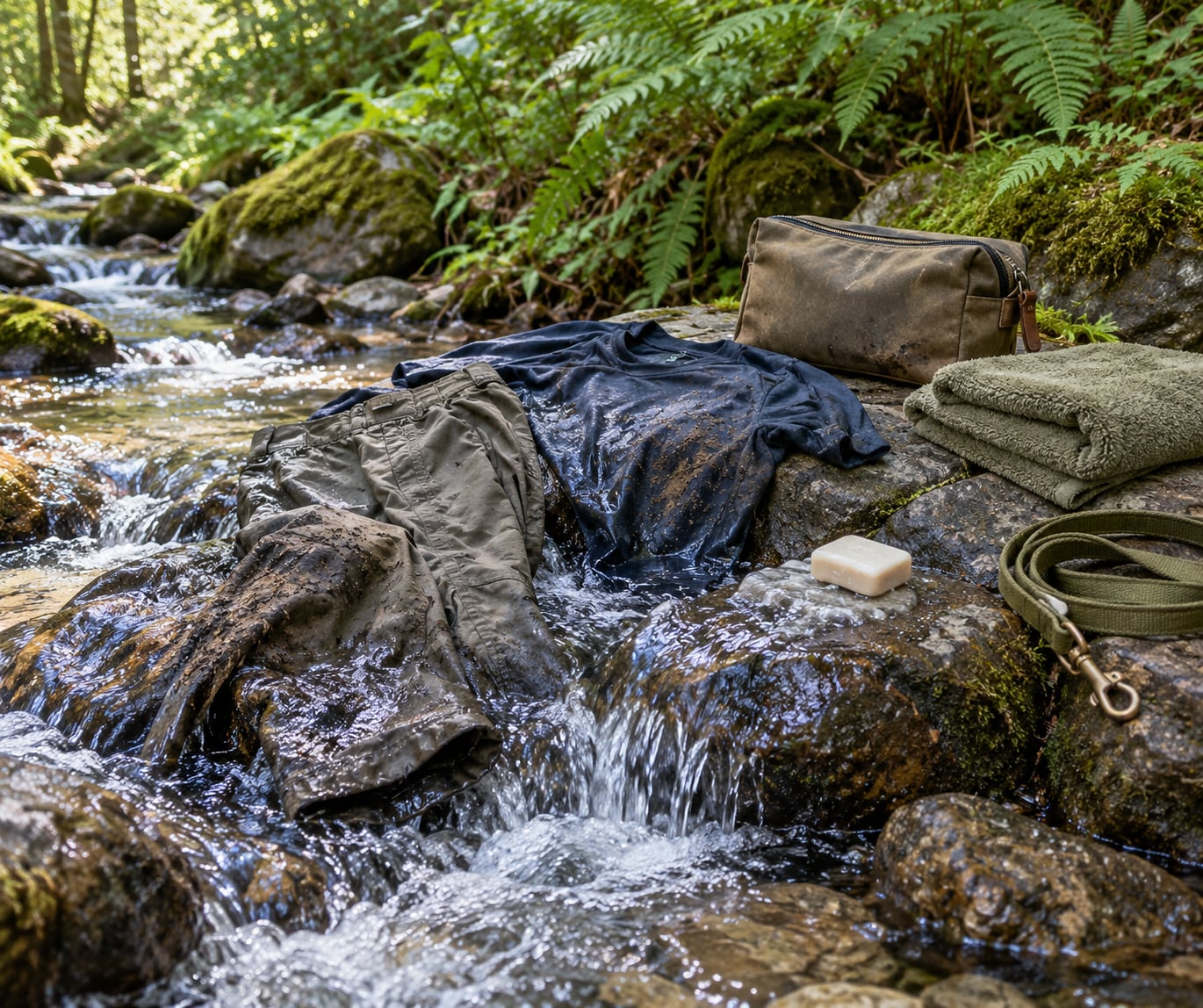
Urushiol stays active on skin and objects until it is washed away, so speed beats technique. The next time you brush against a suspicious vine, stop at the first stream or spigot on the trail rather than pushing on to camp.
- Keep your hands off your face, eyes and any open skin, then get out of the contaminated clothing.
- Rinse exposed skin with cool or lukewarm running water for a few minutes. Hot water feels good and opens the pores wider, which spreads the oil rather than clearing it.
- Lather with soap and work it over the exposed areas, under the fingernails and around the wrists and ankles where oil collects.
- Rinse, dry with the towel you brought, and put on clean clothes.
- Wash or bag everything that touched the plant. Launder clothing and towels with detergent and a normal cycle, and take gloves and boots through the same routine.
Wash away from streams and ponds if you can. Soap and the loosened oil do not belong in water a downstream camp draws from.
Wash pets and gear that may carry urushiol
A dog that brushed through poison ivy can re-oil your hands, your legs and your sleeping bag for days. Urushiol does not absorb through intact skin easily, which is why it transfers by touch and by fur-to-fabric contact.
Handle pets wearing gloves, wash the coat and the paws, and keep the wipe or towel you used on the animal separate from your own laundry. Handle contaminated gloves, boots, tools, rope and packs separately from clean kitchen gear. If your pet has a visible rash or significant exposure, call your veterinarian, and use poison control as a resource for questions about products.
Relieve itching after you have cleaned the skin
Once the oil is off, the goal is comfort until the reaction finishes. The most reliable home option is a cool, wet compress applied for 15 to 20 minutes at a time, repeated as needed.
Over-the-counter products commonly used for this include calamine lotion, colloidal oatmeal baths, hydrocortisone products and oral antihistamines. Follow the package directions exactly, and ask a pharmacist what suits your skin and any other medicines you take.
One caution from dermatologists: avoid topical antihistamine sprays and creams on the rash itself. They can cause their own contact reaction on top of what you already have.
Monitor the rash while it heals
A mild case typically runs two to three weeks. It often starts as red, itchy patches or streaks, can blister and ooze, then dries and scabs over as it fades.
Book prompt medical care if you notice spreading redness, warmth, swelling, increasing pain, pus, worsening fever, thick crusting around the nose and mouth, or if blisters are extensive. Get urgent help right away for trouble breathing, swelling of the face or throat, or a rash on the face, near the eyes or on the genitals.
Photo the rash on day one and again every few days. Seeing the difference yourself beats guessing, and it gives a clinician something concrete if you end up going in.
Common mistakes to skip
Most of the bad advice out there comes from a reasonable-sounding idea that makes the reaction worse. These are the ones worth knowing before you are standing in a creek bed at dusk.
- Scrubbing hard to get it off. Aggressive scrubbing irritates skin and spreads oil. Wash gently but do it right away.
- Using hot water because it feels better. It feels good because it is triggering histamine release, then it opens the skin to more oil and more itching. Use cool water.
- Sharing a towel or sleeping bag. That is a direct transfer route for urushiol. Give contaminated fabric its own wash cycle.
- Burning the plant and getting smoke. Burning toxicodendron sends urushiol into the air and can cause severe facial and airway reactions. Leave it alone.
- Picking blisters. The fluid is not infectious, but broken skin invites bacteria. Leave intact blisters alone unless a clinician says otherwise.
- Trying bleach, kerosene or unlabelled home brews. These damage skin and eyes. A pharmacist can recommend a wash made for removing plant oils.
- Assuming every new spot is spreading poison ivy. The rash can appear in stages as the immune response develops. A clinician can tell infection from reaction.
Frequently Asked Questions
How long does a poison ivy rash last?
Most mild cases last two to three weeks, with the mildest clearing in about a week. The rash can appear in stages, so new spots may show up several days after the first ones. It usually fades on its own once the oil is off your skin and your immune response settles. Get checked sooner if the rash looks infected, or if it lands on your face, eyes or genitals.
Should I put hydrogen peroxide or rubbing alcohol on poison ivy?
No. Peroxide, rubbing alcohol and bleach can irritate or burn skin, and they do not reliably remove urushiol from a rash. For cleaning skin right after exposure, use soap and cool or lukewarm water. For itch relief after cleaning, use a cool compress or an over-the-counter product whose label says it is for poison ivy or insect bites, following the directions.
Can poison ivy blisters infect?
Blister fluid is not contagious and does not spread the rash to other people. The infection risk comes from scratching or popping blisters, which breaks the skin barrier and lets bacteria in. Warning signs include increasing pain, warmth, swelling, pus, red streaks and fever. Leave blisters intact and get prompt medical care if those appear, since a clinician may need to drain them safely.
When should I see a doctor after touching poison ivy?
Get urgent help for trouble breathing, swelling of the face or throat, or widespread blistering, and seek prompt care if the rash involves the eyes, mouth or genitals, or shows signs of infection. Cases that cover a large area, disrupt sleep or persist past two to three weeks are worth a visit. A clinician can also confirm the diagnosis, since contact dermatitis from other plants looks similar.
Can washing a pet remove poison ivy oil?
Washing works, but do it while wearing gloves so the oil does not transfer to your hands, and keep the pet’s towels separate from your laundry. Wash the coat and paws thoroughly and check collars and harnesses too. Oil can remain on fur until it is washed. If your dog has a rash, swelling or eye irritation after an outing, contact your veterinarian rather than treating it yourself.
What to Do First After a Hike
If you brush something suspicious on the trail, wash the skin with soap and cool or lukewarm water right away, clean under the fingernails, and bag the contaminated clothing and gear before you head home. That is the whole emergency plan.
Once you are back, keep it conservative: cool compresses and label-directed over-the-counter relief, no hot water, no scrubbing, no picking at blisters. Watch it for two to three weeks and get urgent help for breathing trouble, and prompt medical care for severe swelling, facial or eye involvement, widespread blistering or anything that looks infected.