Prescribed burns help wildlife habitat by putting low-intensity fire back into places where it has been missing. A planned burn strips away accumulated thatch and brush, returns nutrients to the soil as ash, opens the canopy to sunlight, and knocks back invasive and woody growth. That combination resets succession back toward open grassland and savanna, and the food, cover and bare ground that quail, turkey, deer, grassland songbirds and reptiles need start coming back within weeks.
Most of the Southern United States used to burn on a schedule somewhere between one and three years. Then a century of fire suppression moved in, woody plants took over, and wildlife that depends on open habitat lost the ground it lived on. Putting fire back is the cheapest and fastest tool we have for reversing that.
Here is how prescribed burns help wildlife habitat on the ground, which habitat types respond fastest, and why timing decides the outcome.
Table of Contents
- What Does a Prescribed Burn Do to Habitat?
- How Prescribed Burns Create Better Wildlife Habitat
- Wildlife Benefits by Habitat Type
- Why Burn Timing Matters
- Why Fire Can Reduce Invasives and Encourage Native Plants
- How Managers Balance Wildlife Needs and Fire Safety
- Signs a Habitat Is Recovering After Fire
- Common Misunderstandings About Prescribed Fire
- Frequently Asked Questions
- Do prescribed burns kill wildlife?
- How long does wildlife habitat take to recover after a prescribed burn?
- Is it safe to burn during nesting season?
- How often should fire be used in wildlife habitat?
- When is prescribed fire more harmful than helpful?
- Conclusion: Start With the Goal, Not the Flame
What Does a Prescribed Burn Do to Habitat?
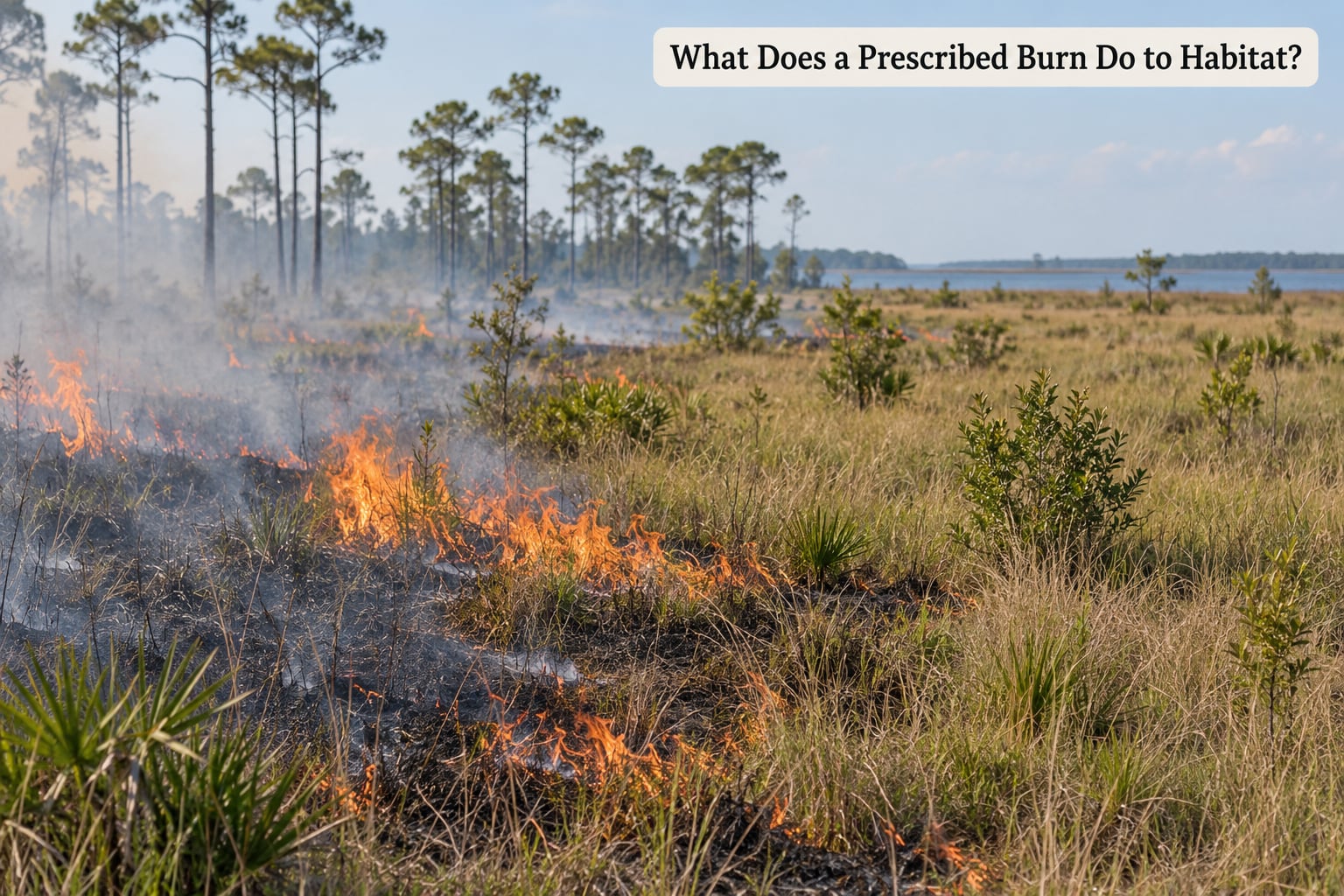
Prescribed fire is the planned application of fire to a defined area, done under a written prescription that sets acceptable limits for flame length, relative humidity, wind and fuel moisture. It is not the same thing as a wildfire, and the difference is not small. A wildfire is uncontrolled, arrives on its own schedule, and burns far above the conditions anyone planned for.
The word controlled burn gets used loosely. Managers use it as a synonym for prescribed fire, and some readers hear it as a milder version of the same thing. The more useful distinction is prescribed burn versus wildfire.
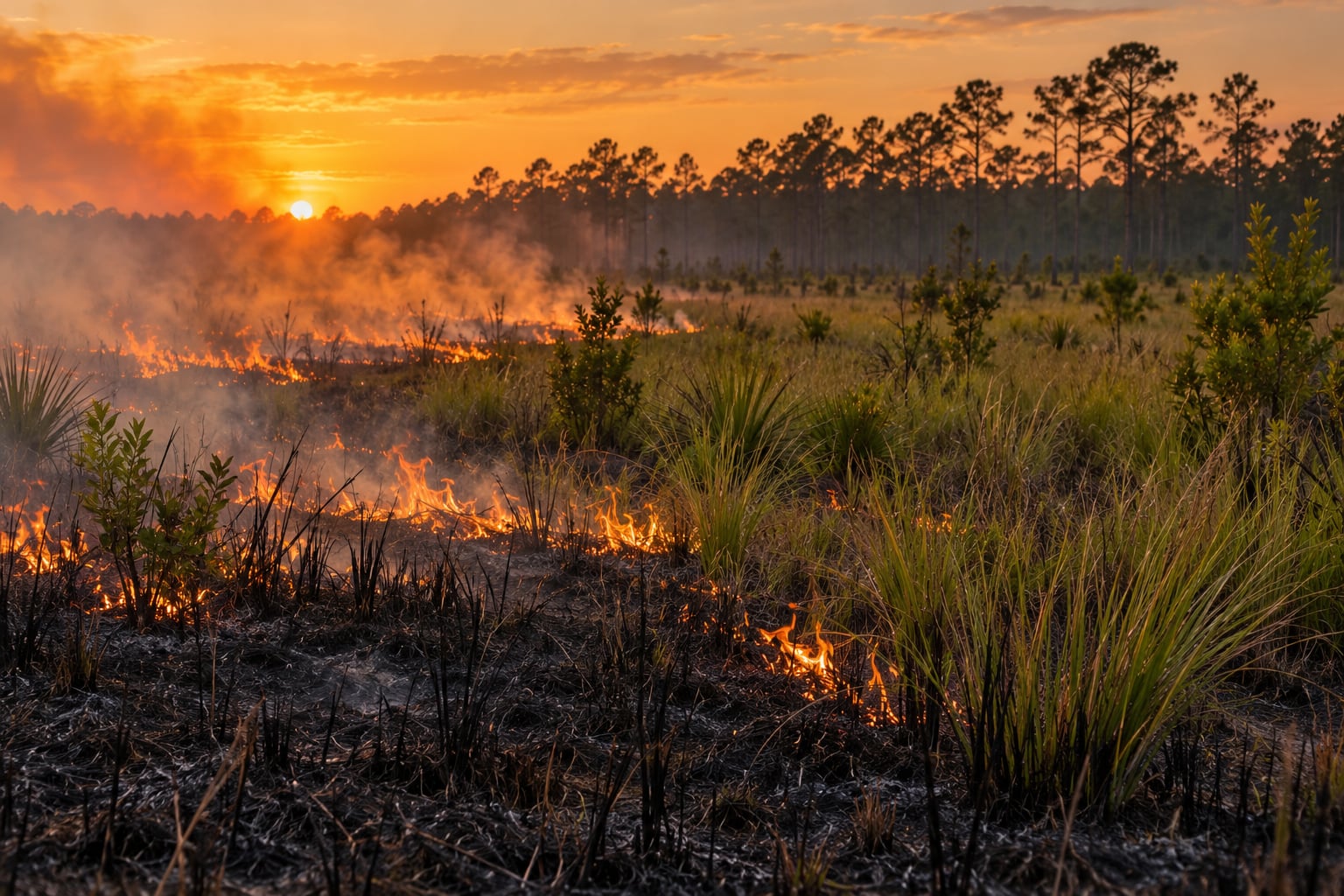
A low-intensity prescribed burn consumes standing dead grass, thatch, pine straw, leaf litter and small woody growth. It leaves large trees standing, keeps the soil damp underneath, and moves across the ground slowly enough for a crew to stay ahead of it.
The result is a change in structure. Where a dense midstory of oak and sweetgum had closed over the ground, sunlight reaches the soil again. Ash puts nitrogen, phosphorus and potassium back into the root zone. Seed that has been sitting under a thick thatch layer finally contacts bare ground and warmth, and a large share of Southeastern grassland species need exactly that trigger to germinate.
How Prescribed Burns Create Better Wildlife Habitat
The sequence runs from flame to food, and it starts faster than most people expect.
In the first week or two after a burn, the ground is blackened and the canopy is open. Light hits the ground at full strength for the first time in years. Green shoots push up from perennial root crowns that were never killed, because the growing points of most warm-season grasses sit below the soil surface.
Within about three weeks you can see new growth on the burned portion. Native bunchgrasses and forbs leaf out first, and they carry far more protein than the old senescent grass they replace. That matters for whitetail deer, which browse the new shoots, and for anything built on top of insects, because those insects live on the new growth too.
By mid-season the burned block produces seed. That seed feeds everything from grasshoppers and native bees to bobolinks, grasshopper sparrows and northern bobwhite. Insect abundance is the quiet hinge in this whole story, because insect-eating birds and the young of almost every ground-nesting species need insects during the nestling stage.
Cover comes in layers rather than one kind. Bare ground and short regrowth is nesting and travel cover. Standing dead stems left by a burn are insect habitat. Unburned patches within the unit provide escape cover for animals that flush. Read together, those layers are what managers call a habitat mosaic, and it is the reason burners deliberately leave unburned blocks inside a unit instead of blackening every acre evenly.
Wildlife Benefits by Habitat Type
Fire helps everywhere it belongs, but the payoff looks different depending on what grows there.
| Habitat | What the fire does | Wildlife that benefits |
|---|---|---|
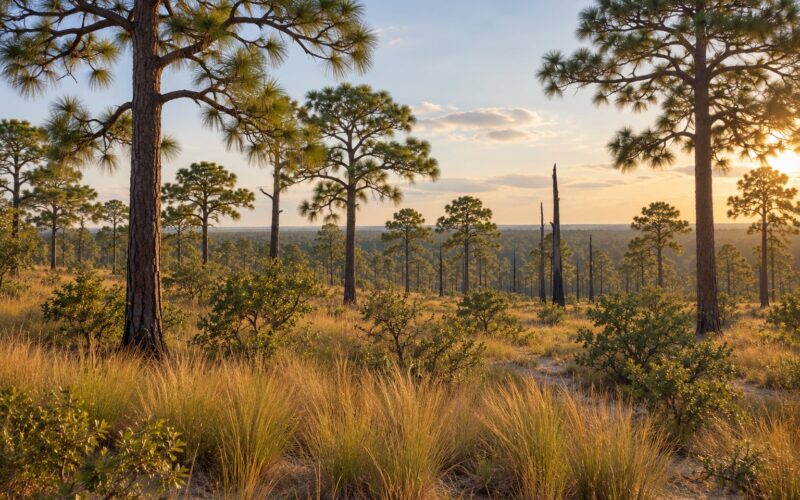
| Pine savanna | Holds an open understory of grasses and forbs by holding back hardwood encroachment | Northern bobwhite, wild turkey, grassland songbirds, gopher tortoise, red-cockaded woodpecker |
| Longleaf pine woodland | Reduces midstory hardwoods and recycles nutrients into pine straw | Red-cockaded woodpecker, deer, turkey, fox and gray squirrel, barred owl |
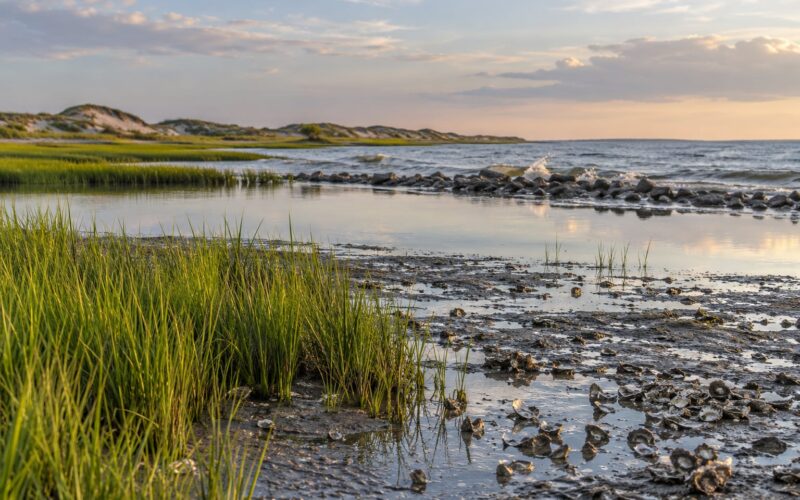
| Coastal grassland | Removes thatch, exposes forb seed and cuts invasive vines | Bobolink, grasshopper sparrow, seaside sparrow, rabbit, fox |
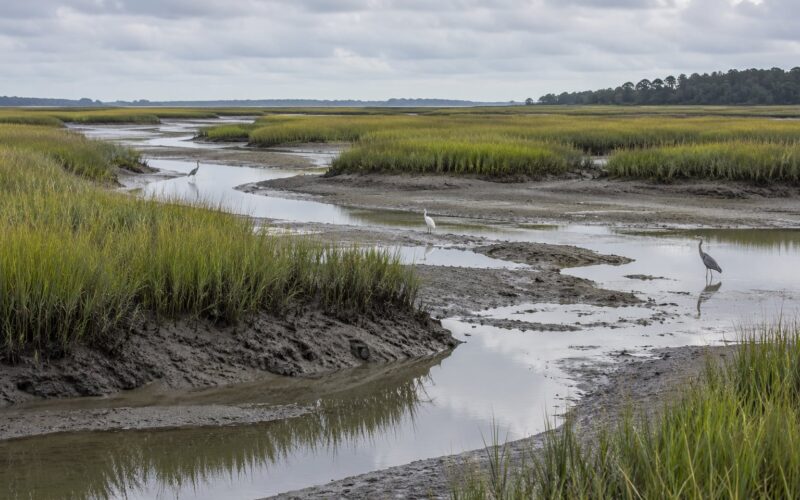
| Marsh and pocosin | Thins woody encroachment and reopens wet openings where crews can work safely | Waterfowl, wading birds, amphibians, songbirds using edge cover |
| Shrubland and rangeland | Sets succession back toward grass and forb dominance | Bobwhite, turkey, deer, small mammals |
| Bottomland forest | Opens the midstory and recycles leaf litter nutrients, usually in a patchy pattern | Prothonotary warbler, scarlet tanager, deer, turkey, songbirds |
Marsh and pocosin burns need the most caution. Managers burn those areas only where water levels and access allow it, and often under a permit from the state agency that owns the water.
Longleaf pine is the clearest example of why fire matters. The tree itself carries thick bark in maturity and survives low-intensity burns that kill its competitors. The Nature Conservancy notes that red-cockaded woodpecker fossils from the South show fire on the ground more than 120,000 years ago. Longleaf pines can live 250 years or more, which only makes sense on a landscape where fire returned often enough to keep the understory open.
Scale tells the same story. The North Carolina Wildlife Resources Commission burns close to 2 million acres of state land in a typical year, and the Columbus Zoo reported a spring 2026 burn of about 905 acres on its refuge property with roughly seven hours of ignition.
Why Burn Timing Matters
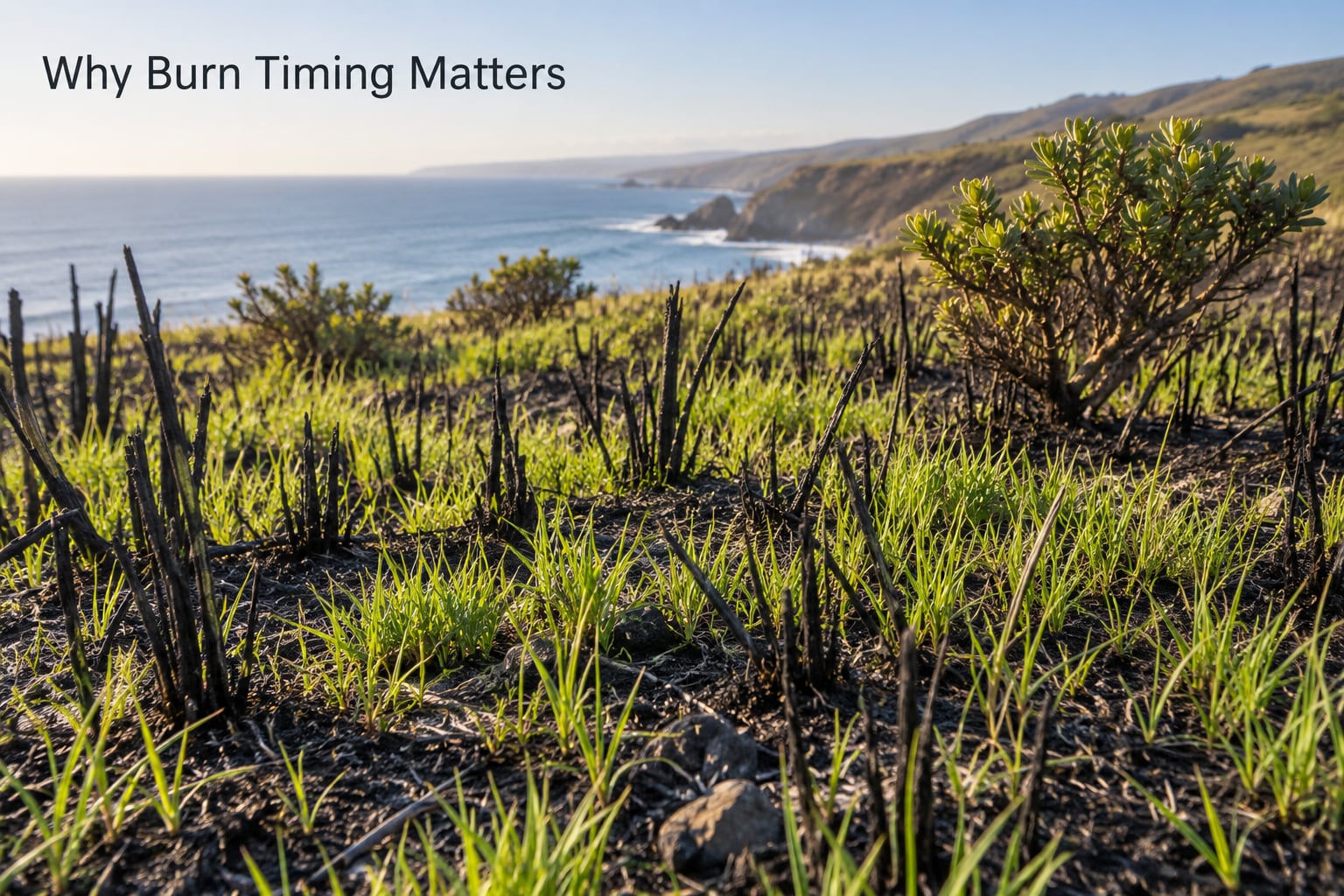
The season a burn happens decides what grows afterward, and it decides which animals are exposed while it happens.
A dormant-season burn, typically late winter, runs through last year’s dead grass and leaves green regrowth and root crowns untouched. Trees and shrubs are not actively growing, so hardwood resprouting is less of a problem. It is the standard choice when the goal is timber, pine straw or general habitat cleanup, and the safest choice for ground-nesting birds because there are no active nests in the unit.
A growing-season burn, often in late spring or summer, hits vegetation at its most actively growing stage. That is how managers set back invasive vines and shrubs and how they top-kill hardwoods in the understory. It also means the burn carries more heat and more smoke, and it has to be scheduled around nesting and brooding.
Other factors shift the result as much as the calendar. Wind direction and speed, relative humidity, fuel moisture and fuel type all sit in the prescription. Experienced burners work within roughly 3 to 8 mph of wind, do not ignite above 15 mph, and expect gusts above that. Weather that is too dry sends the burn out of its prescription, so crews stand down, even with the window closing.
This is where how prescribed burns help wildlife habitat stops being a simple story about nutrients and sunlight. Timing is the part readers rarely see, and it is the part that decides whether a unit becomes grassland next spring or a brush field in five years.
Why Fire Can Reduce Invasives and Encourage Native Plants
Fire works on plants in two different ways, and both favor natives in a fire-adapted system.
The first is physical. Heat kills plant tissue. Invasives that carry a heavy thatch layer, or that spread by seed after a burn, lose ground. The second is competition. Fire removes the accumulated litter that smothers new growth, and it opens light to the soil, so a native perennial with a deep root crown can outgrow an annual grass that needed the same window.
That is why fire belongs in a longleaf savanna. The system is built around fire-adapted species, and without fire it slowly succeeds into hardwood forest. The hardwoods are not bad plants. They simply do not belong there, and they push out the species wildlife depends on.
Fire is not universally beneficial. That is worth saying plainly, because a lot of the public conversation skips it. A burn run outside its prescription can top-kill mature pines, kill hardwoods that a landowner wanted, or drive soil temperatures high enough to damage seed banks. Repeated high-severity fire on the same ground is genuinely destructive, and it is not prescribed fire. Most of the harm done in the name of habitat improvement comes from burning too hot, too often, or without a written goal.
How Managers Balance Wildlife Needs and Fire Safety
Every burn starts with a goal written down before anyone lights a drip torch. The goal might be holding an open understory, controlling a specific invasive, maintaining a quail field, or cutting hazardous fuel along a road. Without that written objective, there is no way to judge whether the burn worked or when to do the next one.
Managers work inside a prescription that caps flame length and heat, sets humidity and wind limits, and names the fuel types that may be burned. Crews establish control lines, work from the back where behavior is predictable, and watch for the localized wind shifts that show up in hollows and saddles. A burn plan goes to local fire dispatch before ignition, and high-risk slopes are usually burned late in the day as humidity climbs.
Wildlife protections are built into the sequence. Timing avoids active nesting. Pre-burn vehicle activity flushes birds off the unit before flame arrives. Crews leave unburned refuge patches, especially on the upwind side, so animals can move a short distance and stay put. Burrows are a natural refuge, and the ground under the duff stays damp enough to protect soil fauna and overwintering invertebrates beneath it. Artificial nesting structures on a unit get removed before the burn so nothing is trapped.
Smoke gets managed the same way, with attention to wind direction, notifications to neighbors, and coordination with local authorities during drought or burn bans. Then the monitoring starts. Burned units are walked afterward to check for invasive flush, tree mortality and non-target effects, and the follow-up burn is scheduled off that record. Adaptive management means the second burn is a decision made from what the first one did.
None of this is a homeowner job. Burns on private land are run by trained, certified burn managers working under a plan, and several states offer a certification program that also provides liability protection to the landowner.
Signs a Habitat Is Recovering After Fire
You can judge a burn without equipment, mostly by watching what happens in the following weeks.
Green shoots from perennial crowns are the first sign, and they appear inside a couple of weeks in most Southeastern sites. Flowering forbs come next, especially in the second and third year, as the seed bank the burn exposed fills in. Then look for insects: grasshoppers, native bees, butterflies working the regrowth. Insect activity is the best single indicator that the food web is rebuilding.
After that come the birds. Insect-eating species work the new regrowth within the season, and ground nesters set up in short grass with open sightlines. Spotting activity by reptiles on open ground at warm parts of the day, or mammals using the burned edge as a travel lane between burned and unburned cover, tells you the unit is doing its job.
Vegetation structure should end up varied: short regrowth, standing dead stems, scattered shrubs and unburned patches. Uniform regrowth with no structure left in it is a sign the burn was hotter than intended.
Recovery time depends on the site and the severity. Regrowth shows in weeks, good seed production usually the first growing season, and full food-web response commonly takes two or three burn cycles rather than a single burn.
Common Misunderstandings About Prescribed Fire
Most objections I hear are reasonable questions about fire in general, answered with fire in general. The prescribed version behaves differently.
Fire does not kill all the animals. Low-intensity, fast-moving fire produces low mortality because animals burrow, retreat into unburned patches, use cracks in bark and logs, and stay below the soil surface where moisture buffers them. One line of reasoning from a woodland forum discussion is worth keeping: if fine fuels are allowed to accumulate until an inevitable high-intensity burn arrives, that burn bakes the ground and kills mature trees, which is the stronger argument for keeping fire on a schedule rather than waiting.
Fire is not always good. Burning outside a prescription, in the wrong season, or without a habitat objective can damage soils, kill mature trees and set back the very plants a landowner wanted.
Black ground does not mean ruined ground. A recently burned unit looks worse than it is for a few weeks, and that appearance gap is where a lot of the public resistance comes from.
Not every forest should burn every year. Return intervals differ by system. Alabama Extension guidance puts quail habitat on an annual cycle, pine savanna at roughly one to three years, longleaf pine woodland at two to three years, and woody cover at three to five years. Burning on the wrong interval either starves the habitat or scorches mature trees.
Fire is not destructive in general. It is destructive when it escapes its prescription. The scale of that difference is the whole difference between the two fires.
Frequently Asked Questions
Do prescribed burns kill wildlife?
Low-intensity prescribed burns cause relatively little wildlife mortality. Most animals burrow, retreat to unburned patches, or shelter in bark and log crevices, and the damp soil surface buffers burrows and overwintering invertebrates. Mortality rises when fire runs hotter than planned or when fine fuels have built up for years.
How long does wildlife habitat take to recover after a prescribed burn?
Green regrowth from perennial crowns shows up in two to three weeks in most Southeastern sites. Seed production and insect abundance usually return within the first growing season. Full wildlife response commonly takes two or three burn cycles, so habitat managers treat a single burn as the start of a schedule rather than a one-time fix.
Is it safe to burn during nesting season?
Most managers avoid it. A dormant-season burn in late winter works through dead grass while ground-nesting birds are absent and woody plants are dormant, which lowers both wildlife exposure and regrowth from hardwoods. Growing-season burns are sometimes used deliberately to set back invasive vines and shrubs, but they carry more heat and smoke and need careful scheduling around nests.
How often should fire be used in wildlife habitat?
It depends on the system. Alabama Extension guidance puts northern bobwhite habitat on an annual cycle, pine savanna at roughly one to three years, longleaf pine woodland at two to three years, and woodland with a woody midstory at three to five years. Too frequent and mature trees start losing tops; too infrequent and brush closes the understory back in.
When is prescribed fire more harmful than helpful?
It becomes harmful when it burns outside its written prescription, during extreme drought, in the wrong season, or without a habitat objective. Repeated high-severity fire can top-kill mature pines, raise soil temperature high enough to damage seed banks, and set back the native species the burn was meant to favor. Trained burn managers are the safeguard against that.
Conclusion: Start With the Goal, Not the Flame
If you want to see a prescribed burn on ground you own or hunt, the first step is the written objective and the certified burn manager who will write the prescription with you. Ask your state forestry division or wildlife agency about assisted burn programs, because they run burns at a fraction of what mowing or disking the same acreage would cost, and they absorb the crew and equipment problem that stops most private landowners from starting.
Last reviewed October 2026.