Wood ducks are most active in the first 45 to 60 minutes after sunrise, and on a flooded timber hole the shooting is usually over inside that first hour. To hunt wood ducks at dawn well, you need one thing above the rest: a legal, scouted position on feeding water, set before first light with a small spread and a call you use sparingly.
That is the whole game, and it is harder than mallard hunting. Wood ducks are tree ducks. They roost in hardwoods overnight, drop into feeding water right at first light, and bail for thick cover the moment anything looks wrong. They rarely mix with puddle ducks, they spook fast, and most hunters who spread a hundred decoys on a timber hole go home wondering why nothing landed.
Here is the routine I use, written out in order, with the small details that decide whether birds come in or peel off.
Table of Contents
- What You Need
- Licenses, stamps, and the rules that actually change
- Gun, shells, and the load you will actually shoot
- Concealment, cold weather, and water
- Optics, calls, decoys, and cleanup
- How to Hunt Wood Ducks at Dawn: The Step-by-Step
- 1. Check Conditions and Legal Access
- 2. Scout Feeding and Roosting Water
- 3. Read Wind, Weather, and Tide
- 4. Position the Blind and Hunt Ethically
- 5. Set a Believable Decoy Spread
- 6. Call Wood Ducks at Dawn
- 7. Make the Shot and Recover Safely
- 8. Finish the Hunt Responsibly
- Common Mistakes That End the Hunt Early
- Frequently Asked Questions
- What calls work best for wood ducks at dawn?
- How loud should a hunter call wood ducks?
- What is the best decoy pattern for wood ducks?
- Can you hunt wood ducks from a boat or blind?
- How early should a wood duck hunter arrive?
- Conclusion
What You Need
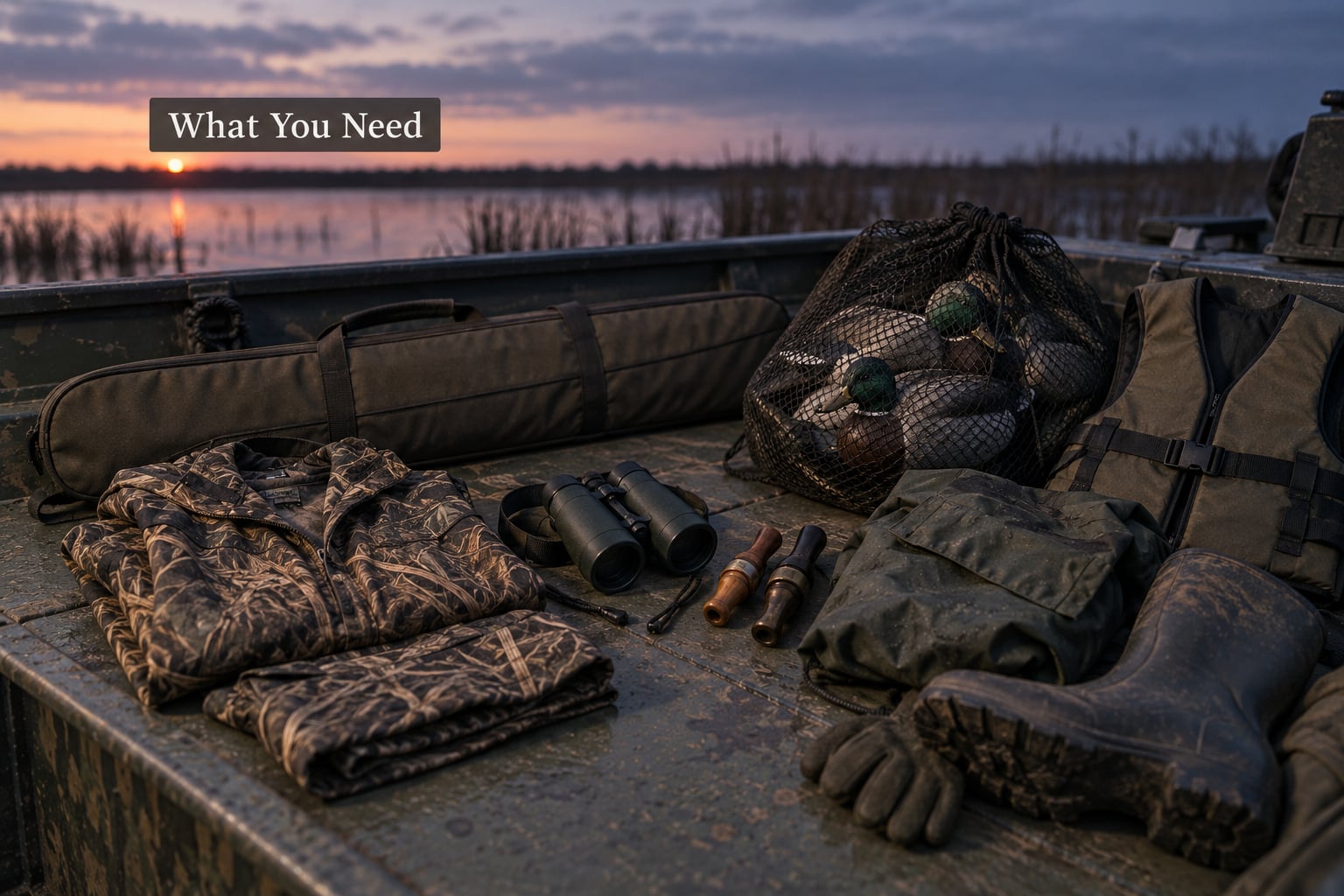
Most of the failure in a dawn wood duck hunt happens before anyone fires a shell. It happens at the truck, at the launch, and on the walk in. Sort the gear the night before, put it in one bag, and walk out of the house in the dark without thinking about it.
Licenses, stamps, and the rules that actually change
You need a valid state waterfowl hunting license, the federal Migratory Bird Hunting Stamp, and any state duck permit or habitat stamp your agency requires. Season dates, daily shooting and bag limits, legal ammunition, and the hours you may shoot all vary by state and they change year to year, so read your state wildlife agency regulations before you leave the house rather than assuming last season’s rules carried over.
Shooting hours differ enough between states that one state’s waterfowl window may start 30 minutes before sunrise and run to sunset, while another starts at a fixed clock time that lands well after birds have left the water. Hunting hours are a common trap for visitors, so check them for the specific water you plan to hunt.
Gun, shells, and the load you will actually shoot
A 12 gauge is the standard waterfowl gauge, and for close-range timber birds the shotgun matters less than the choke and the load. Wood ducks are small, fast, and often at awkward angles in broken light, so a full choke with a tight shot pattern that you have patterned at short range beats a wide open barrel. Pattern your gun with the load you plan to hunt with, not the target load you practice with.
Concealment, cold weather, and water
Waders with boots rated for the mud and depth you will stand in, a dry layer underneath, and a camo jacket that breaks your outline are the basics. Add a hat, gloves you can pull a trigger in, and a headlamp with a red mode so you can read a map or check a water level without lighting up the whole timber.
Wear or carry a personal flotation device whenever you are in or over water in a boat or canoe, and keep a whistle on your vest. Flooded timber hides submerged stumps, logs, and sudden drop-offs in water that will drop a cold hunter faster than the air temperature suggests.
Optics, calls, decoys, and cleanup
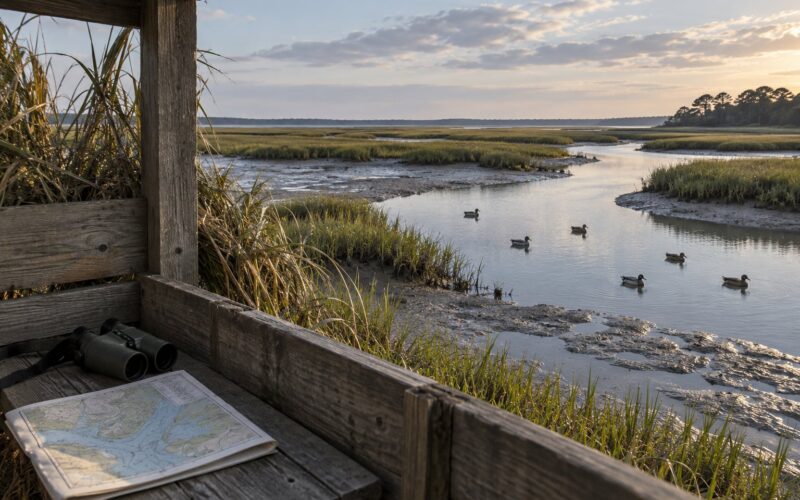
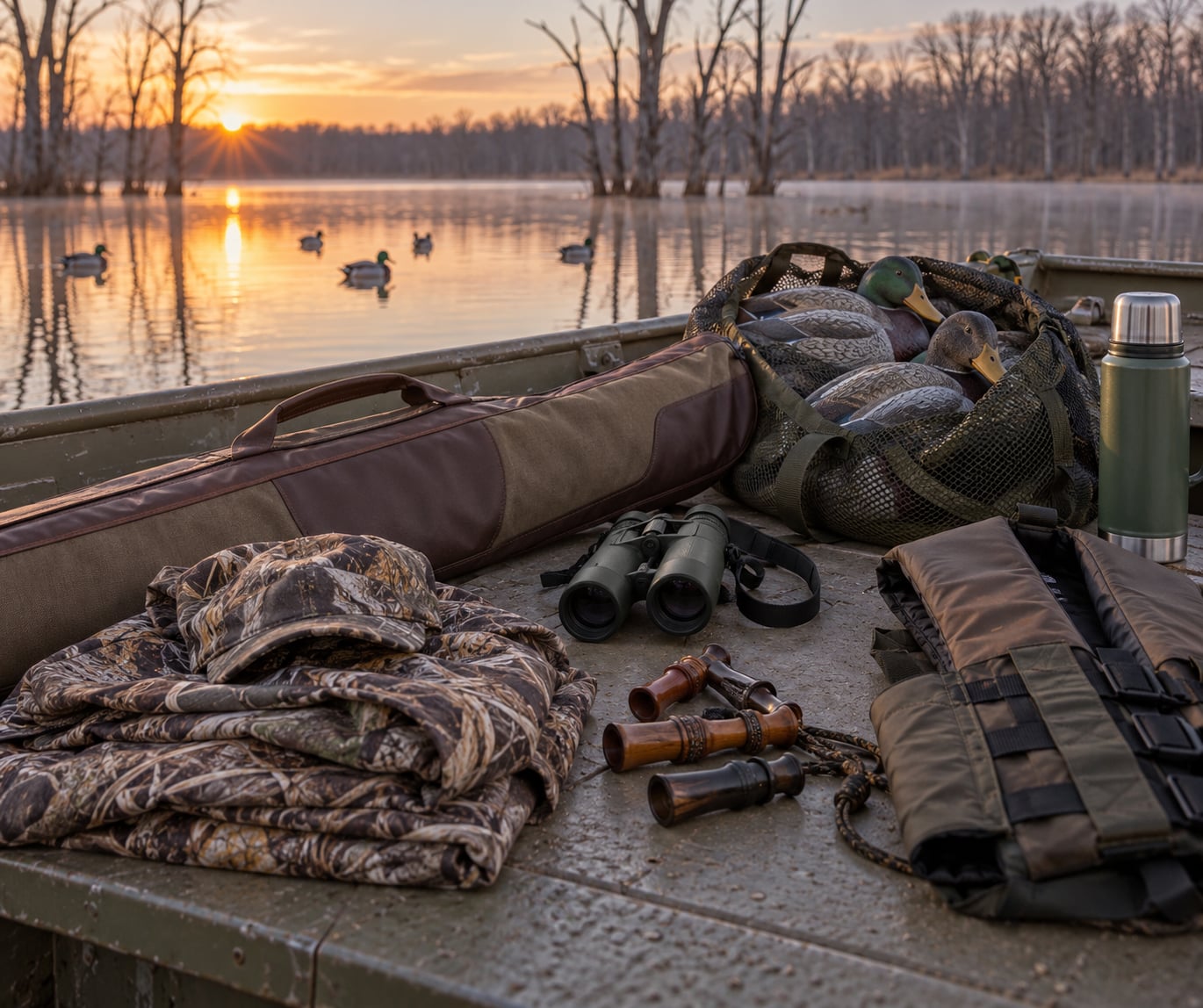
Eight power or ten power binoculars let you read a distant timber edge without showing a silhouette. Bring at least two calls, ideally a wood duck hen call and a mallard hen call, and six to twelve wood duck decoys plus one or two motion decoys if you have them. A small bag for spent shells keeps the water and the bank clean.
Finish the kit list: a boat, canoe, or watercraft rated for the water you are on, a paddle, a bow or stern light, a thermos, and a hunter orange vest or other legal requirement for the area. If you bring a dog, add a dog stand in the timber so a nervous retriever is not working the hole while you are watching a flight come in.
How to Hunt Wood Ducks at Dawn: The Step-by-Step
Work through these in order. Each step has a visible signal that it worked, and if the signal does not appear, change one thing rather than everything at once.
1. Check Conditions and Legal Access
Before leaving, check the forecast, water levels, tide or stage, wind, and your state’s regulations. Confirm season dates, daily and bag limits, legal ammunition, shooting hours, and whether the water you want is public, private, or tribal, and get permission before you go if it is not public. How you know it worked: you can state your legal shooting window out loud and you know exactly whose permission you are hunting under.
On public water, note the parking rules. Some ramps close overnight and some require a boat launch reservation, and a hunt that starts with a parking ticket ends badly. If you plan to arrive in the dark, drive the route once in daylight so you are not finding the boat ramp by headlights at 4 a.m.
2. Scout Feeding and Roosting Water
Find a hole with working water, not dead water. Timber that flooded recently tends to hold more birds in the first weeks, when invertebrates and falling acorns are at their peak. Look for open water inside standing hardwoods, acorn-producing oaks nearby, and a bank or trail where birds can reach the water without flying far.
Then work out what the birds are doing. Ducks already on the water before sunrise, or pouring in just before sunset, are holding or roosting there. Birds actively working an edge, dabbling, and leaving again are feeding. Those two behaviours call for different setups, and setting up on roosting birds as if they were feeding is the most common wasted morning in timber country. How you know it worked: you can point to where birds are working food, not just where you have seen birds fly.
3. Read Wind, Weather, and Tide
Fog is your friend at dawn, rain is neutral, and a hard wind will push birds to leeward cover. Note the wind direction, pick a position that puts the sun behind your shoulder as it rises, and check the tide or stage so you know whether the hole will be deeper or shallower at shooting time. A falling water level can strand a spread in a place birds no longer use.
Pick your setup based on the wind rather than on the trail that is easiest to walk. If the fog is so thick that you cannot see the decoys you set or the water in front of you, that is a reason to move to a safer, shallower spot or to stay on shore, not a reason to wade out blind. How you know it worked: birds approach from upwind, and you can see your water line before you enter it.
4. Position the Blind and Hunt Ethically
Set up inside the timber or on the bank well back from the water so the hole opens in front of you with the sun behind you. Keep a legal distance from neighbouring hunters, keep noise down, and avoid wading straight through the approach lane from the car to the water. If another hunter pushes birds off a roost before you are set, that is normal, and it is not a reason to push harder on approach.
Walk your landing lane in before you settle, so you know the footing, the depth, and where the hidden logs are. A broken silhouette beats a matching camo pattern, and staying still beats both. How you know it worked: birds pass within range without the group changing direction or climbing away.
5. Set a Believable Decoy Spread
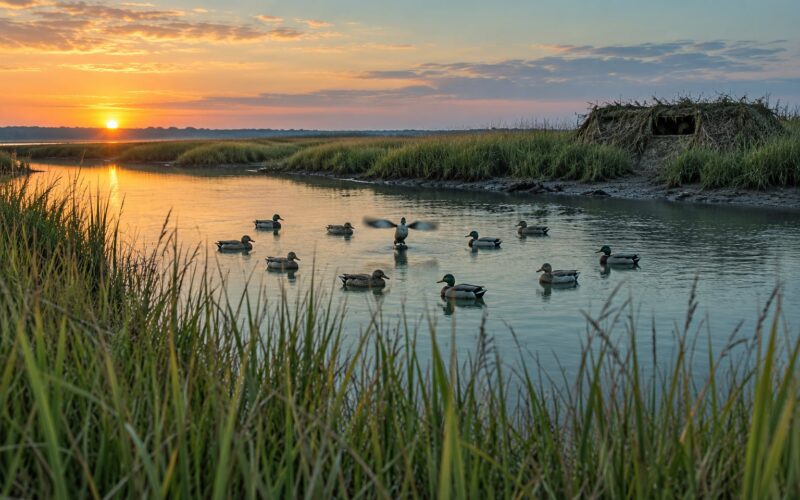
Keep the spread small and believable. Six to twelve decoys is the working range for a timber hole, and a dozen is plenty. Place most of them around the edge of the open water and leave the centre of the hole empty, because that open pocket is the landing area you want birds to commit into and it is also the open area you can see and shoot into. Overcrowding a hole with decoys reads as a trap, and wood ducks notice.
Vary the height and the orientation of the decoys, put a couple of them slightly off from the rest, and let the wind define the pattern. Use a jerk string or a motion decoy to give the surface some life. If the water is dead, with no current and no food, take the decoys out and spend the morning on better water.
| Water type | Typical depth | Decoys | Access | Best window |
|---|---|---|---|---|
| Flooded timber hole | 6 to 18 inches | 6 to 12 | Hard, boat or wade | First 45 to 60 minutes after sunrise |
| Bottomland creek | Under a foot, varies | 4 to 8 | Walk-in, often wade | Dawn flight and late return |
| Beaver pond | Under 18 inches at the edge | 4 to 8 | Walk-in | Short dawn flight, jump shooting after |
| Mill pond | Shallow margin | 6 to 10 | Easy, public access common | Early morning and evening |
| Acorn or oak edge | Water below the trees | 6 to 12 | Walk-in | Acorn mast season, dawn |
6. Call Wood Ducks at Dawn
Wood ducks respond best early, in the first minutes they are moving. Start with a soft hail call to let birds know a group is feeding there, then drop to a low feeding or content call as they come in, and save the rising, shrill wood duck hen call for birds working the treetops or trying to settle. Volume is the whole game, because over-calling will drive birds into a tight circling turn and blow the opportunity out.
| Call | Use it when | Bird distance |
|---|---|---|
| Soft hail | Birds are passing, nothing is committing | Any distance, 100 yards or more |
| Feeding or content | Birds are working the edge and slowing down | 40 to 80 yards |
| Wood duck hen, rising shrill | Birds are in the treetops or hesitating over the hole | Inside 50 yards |
| Nothing, just sit still | Birds are visible and committed | Any distance |
Stop calling the moment you can see birds. A calling hunter with visible decoys sounds like the trap it is, and most of the calling success happens in the minutes before you can see anything at all. How you know it worked: birds slow down and turn toward you instead of climbing away or veering off.
7. Make the Shot and Recover Safely
Wait until a bird clears the treeline or is committed to the hole, pick one bird, and let it come inside a range your pattern covers. Lead the bird properly, follow through, and keep the muzzle pointed where the bird is going. Be especially patient with birds crossing in front of standing timber, because a bird that flushes close overhead in broken light is the most common way beginners lose a bird and, on a cold morning, hurt themselves falling.
Recover downed birds promptly while the flight is still moving, and never step off a safe footing or duck under a snag to reach one. If a bird lands in water you cannot wade safely, note the spot, work the shoreline first, and give it a fair count before you give up on it. Report lost birds according to your state’s rules. How you know it worked: you take clean shots at birds you identified, and you are still standing and warm at the end of the flight.
8. Finish the Hunt Responsibly
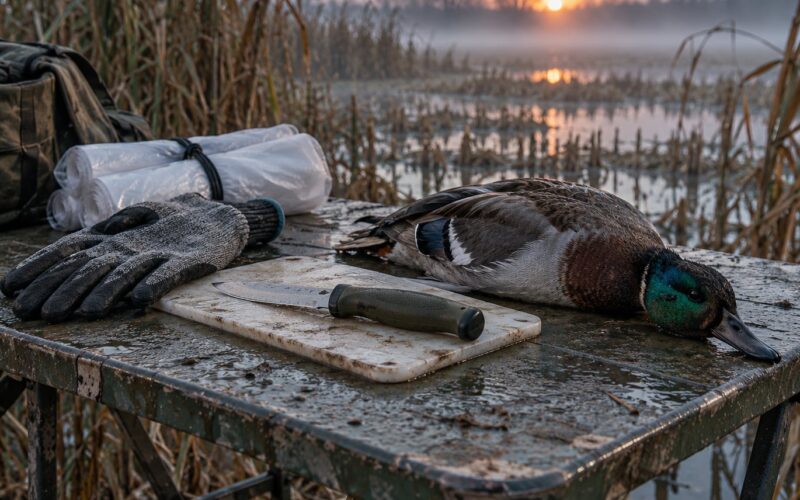
Check your bag against the daily limit as you go, not at the end. Cool harvested birds quickly and keep them out of the heat, following your state’s guidance for keeping game birds. Then pick up every spent shell, the broken decoy string, and any packaging, and leave the hole or the bank the way you found it.
If you owe a landowner a favour, leave the spot stocked with seed or make sure you did not tear up the bank walking in. A hole that is rested and fed keeps producing birds, and the hunters who treat private timber that way are the ones who keep access to it. How you know it worked: the water looks the same as when you arrived, and you know exactly what you brought home.
Common Mistakes That End the Hunt Early
- Calling too loud or too long. Fix: call softly, in short bursts, and go silent the moment birds are visible.
- Spreading too many decoys. Fix: 6 to 12 decoys, mostly on the edge of the hole, centre left open.
- Ignoring wind and water level. Fix: set up with the wind and pick a spot birds will actually approach.
- Moving after birds arrive. Fix: freeze once birds are in range; a standing hunter beats a hunting one.
- Taking bad shots. Fix: wait for a clear target inside your pattern range rather than shooting at a bird crossing a snag.
- Blind placement that is unsafe or visible. Fix: set inside cover, back from the edge, with a clear walk-in and a checked landing lane.
- Leaving too early, or ignoring the rules. Fix: stay for jump shooting after the flight dies, and check season dates, limits, and shooting hours before the season.
| Situation | What it looks like | What to do |
|---|---|---|
| The first hour | Birds coming in fast, working the decoys, calling works | Stay set, call sparingly, shoot committed birds |
| The flight dies | Fewer birds, mostly out of range, no response to calls | Go quiet, reload, and jump shoot birds that flush back |
| Mid-morning | Birds holding in heavy cover, acorns bobbing on the water | Work the edge, jump shoot with a partner, or move to a feeding pocket |
| Nothing at all | No birds ever show, decoys untouched | Cut it short and go find water with active food and some current |
Two hunters working together can keep a timber hole or a small water productive all morning. When the flight dies, split up and jump shoot the edges, which keeps birds moving instead of letting them settle into cover you cannot see into.
Frequently Asked Questions
What calls work best for wood ducks at dawn?
A wood duck hen call paired with a mallard hen call is plenty. Start with a soft hail call when birds are still passing, drop to a low feeding call as they slow down, and use the rising shrill wood duck hen call when birds are hesitating over the hole or in the treetops. Stop calling once you can see birds.
How loud should a hunter call wood ducks?
Quiet enough that a bird 60 yards away sounds comfortable, not alarmed. Wood ducks are jumpy and they rarely mix with other ducks, so a loud call reads as a threat instead of company. Call in short bursts with real pauses between them, and go completely silent as soon as birds are visible and turning toward you.
What is the best decoy pattern for wood ducks?
A small spread of 6 to 12 wood duck decoys, set mostly around the edge of the open water with the centre of the hole left open. That open pocket is where birds commit, and it keeps the spot readable as real feeding water rather than a trap. Add one motion decoy, vary the heights, and skip the spread entirely on dead water.
Can you hunt wood ducks from a boat or blind?
Yes, and both work well. From a boat, sit or stand below the rail so the gunwale hides your shape, keep the sun behind you, and set the spread on the edge of the hole with the boat already anchored. A portable blind on a bank or in the timber works the same way, just with less to move. Wear a flotation device either way.
How early should a wood duck hunter arrive?
Aim to be in the blind and set up 45 to 60 minutes before shooting light. That gives time to walk the landing lane, check footing, set decoys, and get still before birds are moving. Arriving after the first birds are up means pushing them off the water and hunting a hole that has already spilled its flight.
Conclusion
Learning how to hunt wood ducks at dawn comes down to arrival time, water choice, and restraint. Confirm your season dates, bag limits, ammunition rules, and shooting hours with your state wildlife agency first, then scout a hole that has working water, food, and an open centre.
Be set 45 to 60 minutes before shooting light with the sun behind you, a spread of 6 to 12 decoys on the edge of the hole, and a call you use softly and rarely. Most of the bag comes in the first 45 to 60 minutes after sunrise, so protect that window, then stay for jump shooting instead of packing up early.