Pressured public land deer punish the very habits that work on private ground. Learning how to hunt pressured public land deer comes down to reversing the routine: map where other hunters enter and go, hunt the hours when nobody else is there, and pick ground that is either much deeper than the parking lot or overlooked within sight of the road.
The good news is that pressured deer are predictable once you accept the pattern. They shift movement to daylight, hold to the hardest cover within reach of an access trail, and stop reacting to things that would have spooked them in September. The whole approach takes three to five serious days of scouting before you ever raise a bow or shoulder a rifle.
Table of Contents
- What You Need
- How to Hunt Pressured Public Land Deer: Step-by-Step
- How to scout pressured public land deer
- Move quietly and reduce your detectable signs
- Set up a legal, ethical shot opportunity
- Recover and report the deer correctly
- Common Mistakes
- Hunting the same spot twice
- Hunting dawn and dusk on ground that gets hammered there
- Ignoring where people actually walk
- Calling too loudly or too often
- Taking a shot you do not love
- Assuming regulations carry over from private ground
- Coming home empty and blaming the deer
- Frequently Asked Questions
- What is the 7 day rule for deer?
- Where do deer go when pressured?
- What is the 70 rule in deer hunting?
- How do deer react to hunting pressure?
- Is 20 mph wind too much for deer hunting?
- How many acres does a mature buck need?
- Conclusion
What You Need
Start with the paperwork, because regulations vary more on public ground than almost anywhere else you can hunt. Season dates, Sunday closures, bait bans, tag limits and weapon restrictions are set per unit, and a state park can ban hunting on ground that sits right next to open WMAs where the same deer live. Read the current regulation booklet for the exact unit you are entering, not the summary a friend recited at the truck.
- Clothing and footwear. Match the ground, not the catalog. Mismatched camo against bare timber or open prairie stands out worse than neutral earth tones. Soft brushed cotton or quiet fleece beats slick synthetics, and footwear should grip wet leaves without the crunch of a fresh boot.
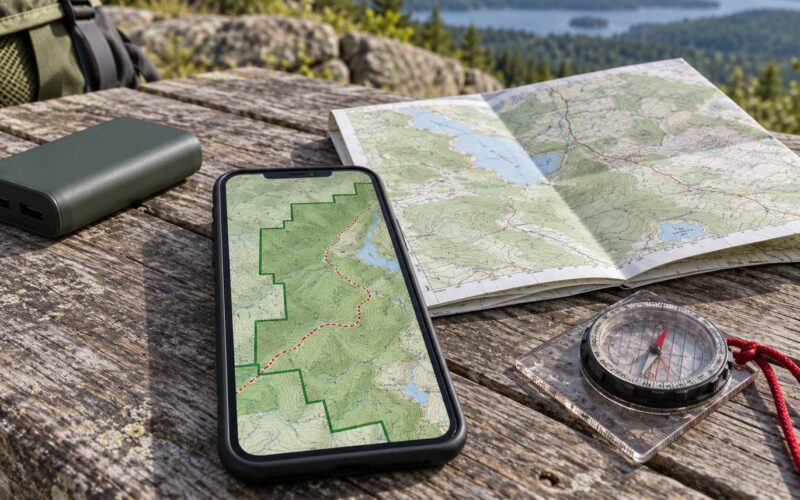
- Navigation. A paper topo map plus a mapping app such as HuntStand or onX. Cell service is unreliable in big woods, so download the area before you leave and carry a paper backup. A compass and a spare battery pack matter more than people expect.
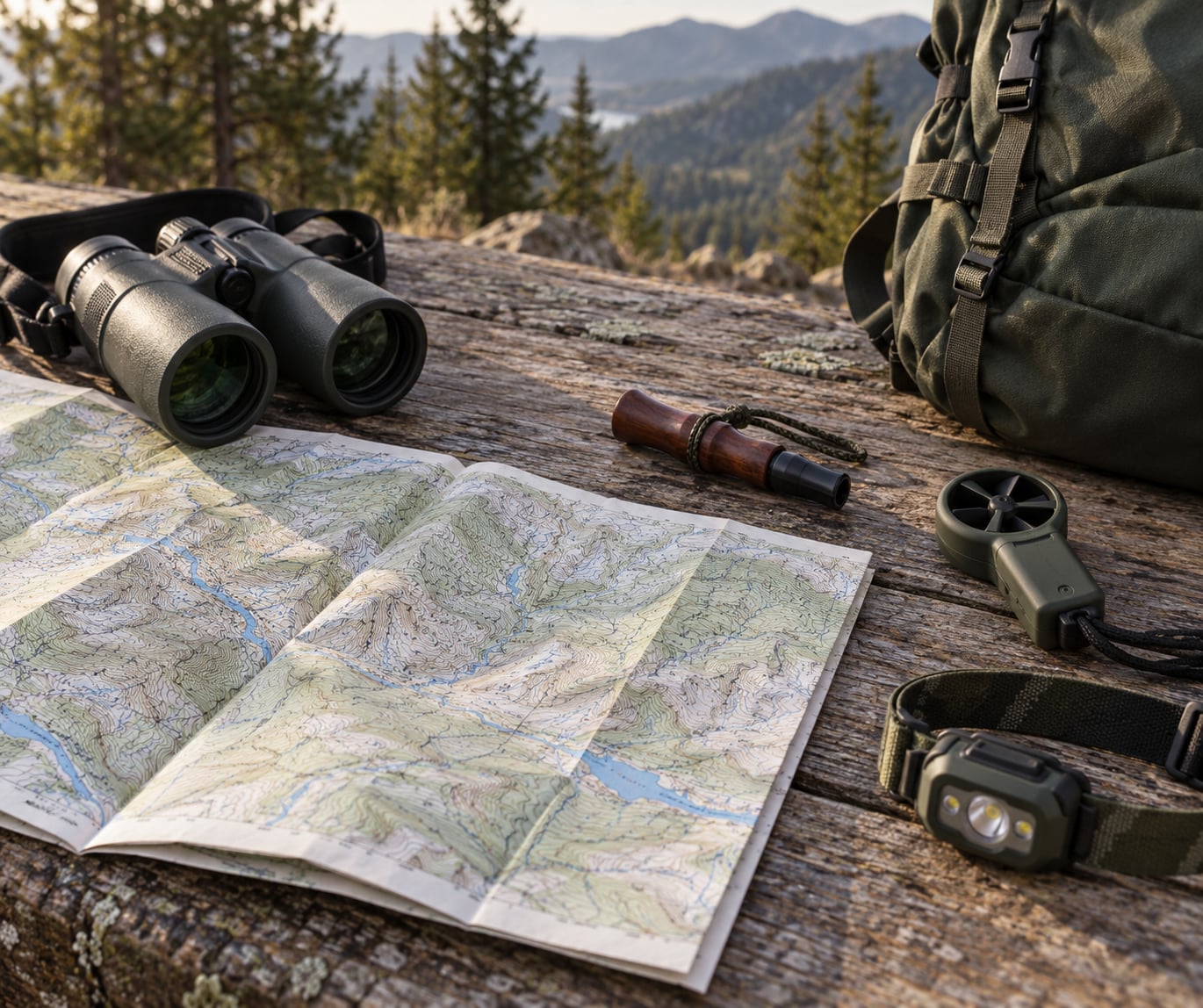
- Optics. Binoculars you can hold steady and a rangefinder. Under pressure you get one chance at a decision, and guessing distance on a 40 yards wide-open lane in brush is how clean shots get wasted.
- Calls. A set weighted toward low volume and mid-range tones. A grunt and a doe grunt cover most pressured situations. Save the loud rack-and-antler routine for a calm opening morning when nobody else is on the tract.
- Scent and wind tools. A wind meter or compass, scent-eliminating spray for boots and gear, and a habit of checking wind before you commit to a position.
- Weather and safety gear. Layers, a rain shell, a headlamp with a red mode, a first aid kit, a whistle, a knife, and blaze orange if you are carrying a rifle where required.
- A transport and bail-out plan. Decide your parking spot, your walk-in route and your exit route before daylight. On public land a blown approach means you walk out the way you came in, and you want that walk short.
Add one thing that is not gear: a time limit. Hunters who spend the entire season on one burned stand usually leave with sore legs and nothing else. Decide in advance how many mornings you give an area, then move.
How to Hunt Pressured Public Land Deer: Step-by-Step
The process works in a fixed order, and skipping straight to the stand is the single most common reason hunters see nothing. Work through scouting, movement, setup and recovery in that sequence.
How to scout pressured public land deer
Scouting on public land is about reading human pressure as carefully as you read deer sign, and doing it without tipping off anyone whose ground you are about to enter. Start at the access points before dawn on a weekday, which is usually the best scouting weather you will get all year.
Sit at the trailhead for an hour and count. One veteran Southeast Michigan hunter put it plainly: scope the parking lots around 9 am and figure most guys are not walking more than a couple hundred yards. Count vehicles, count how many people come out of each one, and watch where they turn off the trail. The first hundred yards of any public access trail are the most hunted ground on the unit, and a stand within earshot of a parking lot is a stand with a countdown on it.
Map the walk. Note every road, gate and trail junction where people leave the main path, and treat each one as a pressure source. Then layer the deer side of the map on top: worn deer trails, scrapes on trailside branches, rubs on saplings, and the creek crossings and ditch lines where those trails funnel together.
Check harvest reports and mapping layers for pressure from the previous season. Then pick observation points that show you the sign without showing you. Glass a rut line from a road shoulder or a ridge, not from the edge of a parking lot where every truck in the lot can see your vehicle. Most hunters quit scouting public land because they want to see the buck, when the better trade is spending a whole day learning the pressure map and confirming it on the second visit.
Move quietly and reduce your detectable signs
Once you are on the ground, how you arrive decides whether anything happens at all. Pick routes that avoid gravel, dry leaves, downed timber and open water crossings, and keep your pace slow enough that you stop hearing yourself walk.
Pause before you crest every rise. Most hunters are seen in the ten seconds before they know what is in front of them, so stop well back, glass first, and move on a count of thirty. Use whatever is between you and open ground: a ditch line, a hedgerow, a brushy draw, the lee side of a fallen log.
Manage the noise you make, not just the noise you think you make. Synthetics, velcro, zippers and hard plastic buttons all sound like a person in the woods to a deer with a nervous system. Keep calls and packs quiet until you are set, mute the phone, and skip the midday reset that puts a hundred hunters on the same ridge at the same hour.
Scent is the other half. Check wind every time you stop, work the downwind side of bedding cover and feeding areas, and approach so your scent travels away from where the deer are expected. Most guides rank wind above calling for pressured deer, and they are right.
One technique veterans use on low-pressure ground, such as non-WMA parcels and weapons-limited areas that get far less traffic, is entering by water. Water is a slow, silent approach nobody wants to make in November. Where you can do it without swimming, it puts you behind deer instead of announcing yourself half a mile early.
Set up a legal, ethical shot opportunity
A clean shot on pressured ground comes from patience and pre-decided standards, not from tightening your grip. Before you climb, confirm you are inside the legal shooting distance for your weapon and that your position, your arrow path or your lane of fire does not cross another hunter’s setup or an occupied camp.
Then choose a distance you can shoot well rather than the distance you hope to shoot at. A pressured deer may appear at fifteen yards in brush. Take the shot only if you can place it, because a wounded deer that survives is worse for the resource than one that was never pressured at all.
Work the middle of the day rather than the edges. Between roughly 10:30 am and 2 pm, when the deer that have been awake since dark are looking for a bed and the deer that are still bedding are about to get up, is the most productive block on pressured ground. Read the pressure before you pick a spot: does bedding lie on the downwind side of an obvious trail, or on ground that faces away from human approach? Does your stand have real cover on the human side, or are you exposed to every vehicle on the road?
Call selectively, because a blown out deer is not gone. Hunters on forums described starting a stand immediately after spooking deer and getting more shot chances than ever as a result. A Florida bowhunter set up about 25 yards from a bed at roughly 40 feet up; the deer came back, settled down again as he unpacked, and a trophy buck chased a doe straight to the bedded group within half an hour. If the wind still works and you still have time, set up again rather than fleeing the wood.
During the rut, wait for the does to bed and then work the downwind side of the bedding area. The big bucks come looking for does once the does stop moving, and smelling the bedding group from downwind is often how they find it.
Recover and report the deer correctly
Recovery is the last chance to do this right. Know your state’s rule on how quickly a harvested deer must be reported, because many require the harvest to be registered within a set window such as seven days, and others differ.
Track with intention. Follow the blood trail at a walk, patch by patch, and mark each one so you can come back to it if you lose the trail in leaves. Look for the angle of entry, the exit side, and the gap in the canopy overhead, then work downhill from where the deer landed because gravity does the rest.
When the deer is down, do it quickly and humanely, and document whatever the state requires, whether that is a tooth sample, a local registration or a mandatory check at a designated station. Retrieve the animal fully rather than leaving the rack. A deer left behind invites the population problem that created the pressure you are fighting in the first place.
Common Mistakes
Hunting the same spot twice
Every sit teaches the block something about you. Once the pattern breaks, that tree is a signpost pointing at a hunter who keeps coming back. Hunt a location once, keep the good ones for the rut or late season, and treat a stand you burned as gone.
Hunting dawn and dusk on ground that gets hammered there
The two hours other hunters want are the two hours you should give up. Shift your sit to the middle of the day and use the early morning for pressure mapping and sign reading instead. A mid-day sit on an overlooked location beats another dawn tree in a trail corridor.
Ignoring where people actually walk
Standing 100 yards off the only access road has produced more mature buck sightings for some hunters than anything they do deep in the woods. Count the parking lots and the trail junctions before you decide a location is too close to somebody.
Calling too loudly or too often
Pressured deer have already heard every scripted sequence a hundred times. Low volume, short bursts, and long silences get more responses than volume. If a deer does not answer after two honest attempts, the answer is no and it is usually no for the rest of the morning.
Taking a shot you do not love
Set your minimum standard in the truck, not in the tree. Range, angle, target size, and a safe exit behind the animal. Declining a bad shot on pressured ground costs you the rest of the season, not just that morning, because the deer that survives is one you will meet again.
Assuming regulations carry over from private ground
Sunday closures, weapons-limited areas and unit boundaries do not follow neat lines. Pull up the current map before every trip and check it at the truck. It takes five minutes and it is the cheapest part of the whole plan.
Coming home empty and blaming the deer
On heavily hunted public land, plenty of hunters who have hunted for decades will tell you plainly that old deer mostly end up on private ground. That is partly true and it is also the excuse people use when their plan never adapted. Set a season goal of two or three good sit locations instead of thirty mediocre ones, and stop burning mornings on ground you have already proven is empty.
Frequently Asked Questions
What is the 7 day rule for deer?
The 7 day rule is a regulation, not a hunting tactic. Many states require you to report, register or physically deliver a harvested deer within seven days of the kill, while others allow a longer window or a different method. Some units require the head or a tooth sample submitted for age data at the same time. Check the current regulation booklet for the specific unit you hunted, because a violation is a citation regardless of how the deer died.
Where do deer go when pressured?
Pressured deer cluster within about 200 to 300 yards of access points and lie tight in thick bedding cover that faces away from human approach. They feed along thicket edges in the middle of the day, follow ditch and creek intersections, and hold in deep timber reachable mainly by water. The other category is overlooked ground: spots a hundred yards off a road that everybody walks past without entering.
What is the 70 rule in deer hunting?
The 70 rule is a buck selection guideline, not a law. It refers to a rack where about 70 percent of the antler mass sits on one side, leaving the other side visibly lighter. Public land hunters use it as a quick read on age, since uneven racks often indicate an older animal. Treat it as a rule of thumb that varies with genetics and antler growth, and confirm age with a tooth sample where the state collects one.
How do deer react to hunting pressure?
Deer under pressure shift movement toward darkness, learn the routes people walk and start faster at any disturbance. Over time the surviving bucks hold tighter to secure cover, travel less, and respond to fewer things. Some units also hold fewer mature deer simply because hunters take them faster than the population replaces them, which is why late-season pressure can be light while mature buck availability stays low.
Is 20 mph wind too much for deer hunting?
Around 15 to 20 mph is where scent control effectively ends for a standing hunter. Above that, wind helps block your scent from reaching deer but carries yours straight to them, so quiet movement and downwind positioning carry more weight than spraying gear. Rather than abandon the hunt, shift to a saddle or a ground blind where wind matters less, or sit in heavy timber where the canopy breaks the air.
How many acres does a mature buck need?
It depends almost entirely on habitat. A mature buck in open farmland may range over a few hundred acres, while the same deer in big woods can cover well over a thousand. Public hunting pressure compresses the usable ground because deer stop using the zones people walk, so treat home range as the total area a buck might travel and available hunting ground as a much smaller piece of it.
Conclusion
Verify the regulations for your exact unit first, then spend a morning counting hunters instead of deer. Pick a location that is either far past where other people stop or overlooked within a hundred yards of the road, arrive quietly, read the sign and the wind before you commit, and be willing to sit through the middle of the day. Set your shot standard in the truck and keep it there. Learning how to hunt pressured public land deer is mostly patience applied in the right place at the right hour.