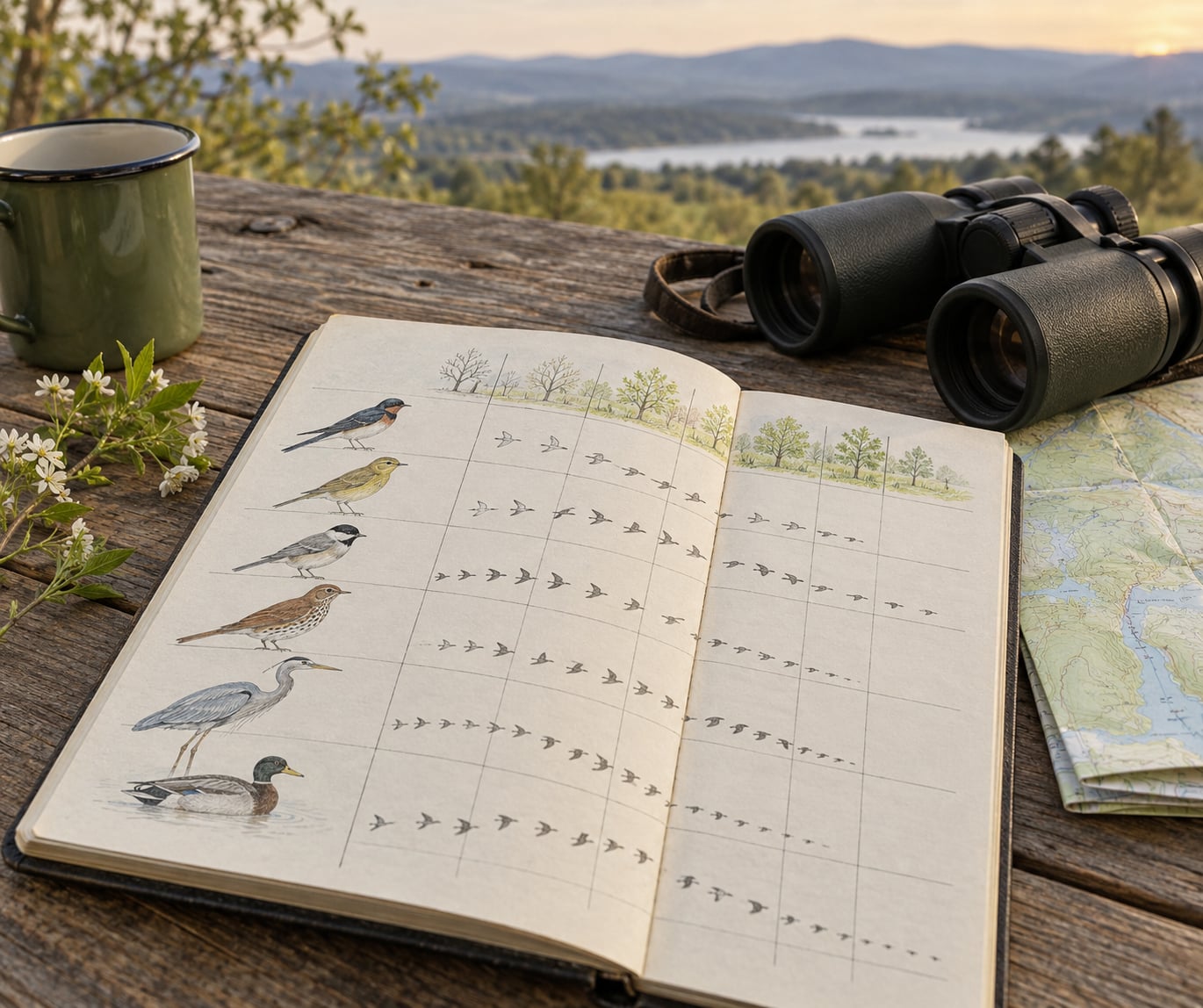
Spring migration timing varies by species because each bird runs on a different set of clocks: how far it has to fly, when its food becomes available, how quickly spring reaches its breeding site, and how an inherited migration program responds to lengthening daylight. Short-distance movers reach the Southeast weeks ahead of long-distance Neotropical warblers, and within a single species, males usually arrive first, then females, then juveniles on their first migration north.
The order is repeatable enough to plan a season around and loose enough that a generic calendar will send you to the wrong place on the wrong weekend. Here is how the timing actually works in the Southeast, and what to watch in the field when the calendar and the birds disagree.
Table of Contents
- How Spring Migration Timing Varies by Species
- Why Birds Do Not Migrate on the Same Calendar
- How Spring Migration Timing Varies Across Species and Habitats
- Early Migrants: Long-Distance Insectivores and Swallows
- Songbirds: The Variable Middle of the Season
- Shorebirds and Waterfowl: Weather-Dependent Late Arrivals
- What Makes Arrival Dates Shift From One Year to the Next?
- How to Plan Birding Trips Around Spring Migration
- Frequently Asked Questions
- Which bird species usually arrive first in spring?
- How early can spring migration start in the Southeast?
- Should I trust the first bird of a species seen each spring?
- How do warm fronts and cold fronts affect migration timing?
- Can tides change when migratory shorebirds appear?
- How can I estimate spring arrival dates without a local bird report?
- Conclusion: Start With Habitat Cues, Not One Fixed Date
How Spring Migration Timing Varies by Species
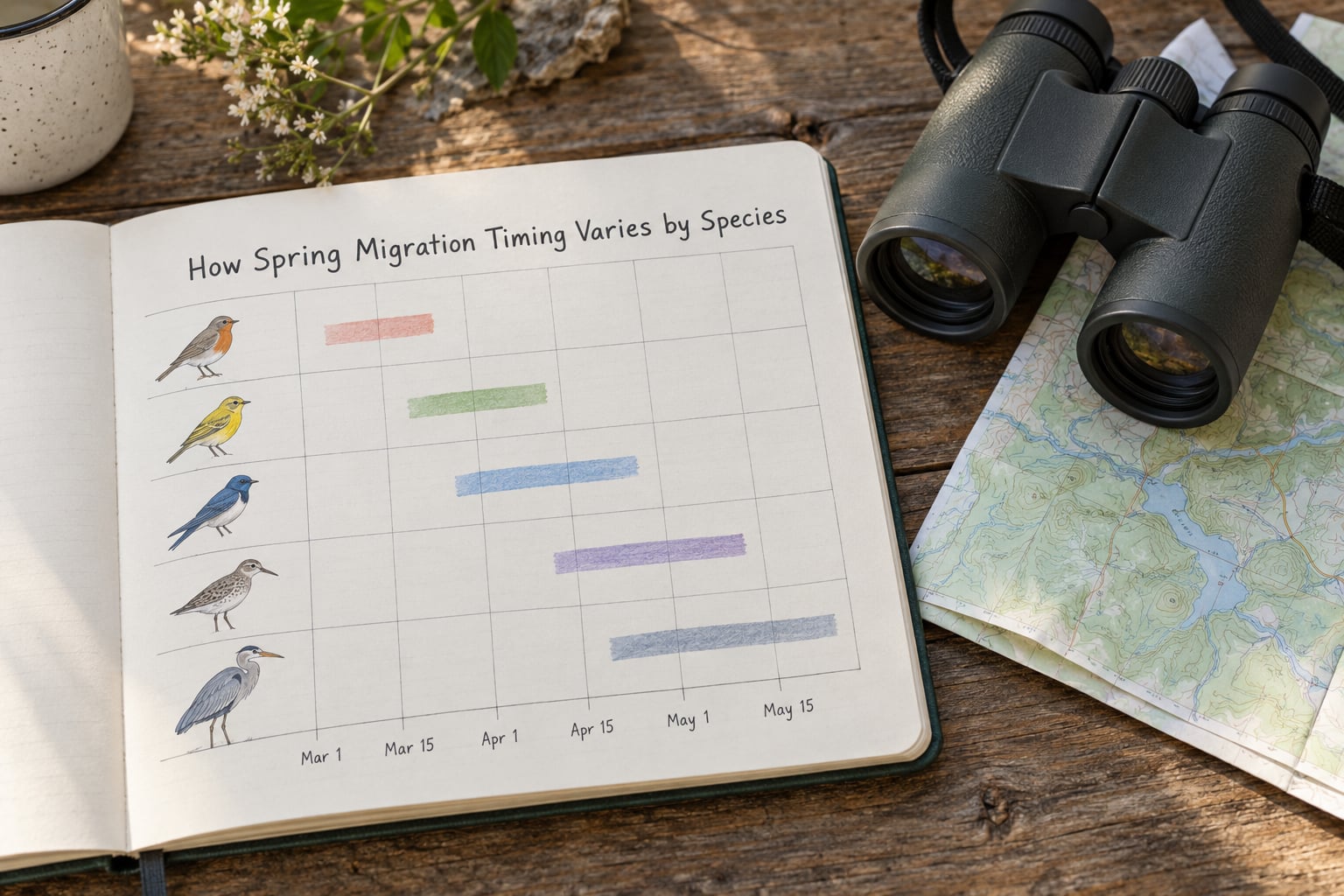
Four things set arrival dates: migration distance, the food a bird depends on, a daylight-driven internal clock that launches the trip, and the weather the bird has to fly through. Breeding latitude adds another layer, because a bird heading to Ontario is moving toward a later spring than one heading to coastal South Carolina. That combination produces arrival windows that overlap heavily but rarely line up.
| Timing group | Representative species | Habitat cue | What shifts the window |
|---|---|---|---|
| Earliest, February to early March | Eastern Phoebe, Purple Martin, Ruby-throated Hummingbird (Gulf Coast) | First flying insects over open water and bare ground | A warm spell followed by a hard freeze |
| Early, March | Eastern Bluebird, American Robin, Cedar Waxwing, Purple Finch | Snowmelt, earliest buds, fruiting shrubs | Ground warmth and shrub bloom dates |
| Mid-season, mid-March to mid-April | Yellow-rumped Warbler, Black-and-white Warbler, Eastern Wood-Pewee, Great Crested Flycatcher, White-eyed Vireo | Leaf-out and the first sustained caterpillar emergence | Warm fronts followed by stalled fronts |
| Main wave, mid-April to early May | Blackburnian Warbler, Canada Warbler, Blackpoll Warbler, Scarlet Tanager, Indigo Bunting | Full canopy, peak caterpillar biomass | Storm systems that ground flights for a day or more |
| Late songbirds, mid to late May | Summer Tanager, Yellow-throated Vireo, late Indigo Bunting | Warmed forests well past full leaf-out | Local weather in the Deep South versus the breeding range |
| Shorebirds, March to May | Black-bellied Plover, Whimbrel, Sanderling, Dunlin, Least Sandpiper | Opening mudflats and inland snowmelt | Fronts, wind, tide stage, exposed flats |
| Waterfowl, February to April | Wood Duck, Black-bellied Whistling-Duck, Snow Goose, Gadwall | Ice melt, warming water, mast and seed availability | Winter weather north, water temperatures, rainfall |
| Raptors and western specialties | Red-tailed Hawk, Golden Eagle, Rufous Hummingbird, Swainson’s Hawk | Ridge lift and the first thermals | Wind direction, cloud cover, regional divergence |
Read those windows as medians, not promises. A species can beat its median by two weeks during a warm, southerly-flow spring and miss it by nearly as much when northerly winds dominate March. Nobody can tell you a single date that covers all of these groups, which is why learning how spring migration timing varies by species matters more than memorizing one.
Why Birds Do Not Migrate on the Same Calendar
Every migratory bird carries an inherited migration program, and that program runs on daylight rather than on the calendar. As days lengthen, hormonal changes trigger a restless pre-migratory state that ornithologists call Zugunruhe, and that sets the earliest departure a bird can make. Everything after departure is negotiation with weather, food, and habitat.
Short-distance migrants negotiate well. An Eastern Bluebird wintering a few states away can linger until conditions actually improve, then move a few nights’ distance when temperatures and insect activity cooperate. A Prothonotary Warbler wintering in Central America has to commit to departure weeks before it reaches the Gulf Coast, because it needs a buffer for the Gulf and the long overland push north. By the time it lands, spring may not have arrived yet.
That split explains most of the confusion in arrival dates. The internal clock is punctual, so a given species often reaches its median arrival within a few days year to year. The weather is not. Storms, sustained headwinds, and warm or cold snaps add the variance on top of an otherwise steady schedule.
How Spring Migration Timing Varies Across Species and Habitats
Feeding style and breeding destination shape the window as much as distance does.
- Aerial insectivores such as swallows and Purple Martins track flying insects and warm air, so they follow the isotherm north and appear early in open country.
- Forest songbirds are tied to leaf-out, because their food lives in the canopy. They cannot exploit a warm early spell and then retreat, since the insects do not move south with the leaves.
- Grassland and shrub birds often arrive later than forest species of similar latitude, because nesting cover in short grass takes longer to develop than a full canopy.
- Shorebirds key on mudflat exposure and inland snowmelt rather than on temperature at the breeding site, which makes their passage sensitive to wind and tide.
- Waterfowl follow ice melt and water temperature, so their spring movement is a slow regional flood rather than a wave you can time to the minute.
Early Migrants: Long-Distance Insectivores and Swallows
The first movers in the Southeast are usually birds that eat insects in the air, because flying insects respond fast to warmth. Eastern Phoebes are routinely the earliest warbler-season singer, showing up in February along edges and parking lots once the first sustained warm front arrives. Purple Martins scout the airspace almost as soon as temperatures climb.
Swallows are the surprise in this group. Barn Swallows and Cliff Swallows winter in South America, which makes them true long-distance migrants, yet they show up in the Southeast surprisingly early. The reason is that their prey does not exist anywhere else during a cold snap, so they push north as soon as sustained warm conditions put flying insects over open ground. Warm-season insects, advancing warmth, and open flight conditions trigger their passage ahead of birds that nest in the same neighborhood.
A freeze after the first phoebes is the standard false alarm. The birds usually survive it by dropping to insects near the ground and eating fruit, but the calendar effectively restarts.
Songbirds: The Variable Middle of the Season
Songbird arrivals are staggered rather than wave-driven, and the stagger follows the food web. Flycatchers and vireos often precede the first warblers by a week because they are picking up aerial insects that appear before the canopy supports a caterpillar boom. The first warblers arrive next, then the bulk of the Neotropical migrants once leaf-out is well established and caterpillar biomass peaks.
Storms are the biggest disruptor. A spring storm crossing the Gulf grounds a night of migration, and the birds pile up at the first suitable stopover habitat they find. That is the mechanism behind the classic fallout: thousands of birds packed into a single woodlot or scrub island, visible from one trail in the morning and gone by the next day.
One recurring frustration is worth naming here. Warblers and vireos show up right in the middle of migration season and then completely ignore your feeders, because they are foraging in the canopy on insects, not visiting your jelly and suet. If your feeders go quiet in late April, that is not a feeder failure. It is the canopy doing its job.
Shorebirds and Waterfowl: Weather-Dependent Late Arrivals
Shorebirds are weather instruments rather than calendar entries. A Black-bellied Plover crossing the Atlantic does not care what date it is; it cares where the wind is. Sustained southerly flow carries waves of migrants up the coast in a few concentrated days, and a week of headwinds can stall that movement entirely. Along the Carolina coast, the birds that show up first are usually the ones that rode a favorable system through.
Tides matter just as much as fronts. A flock of Least Sandpipers working a mudflat at low tide is effectively invisible two hours later under six feet of water. Tide stage, not wind, often decides whether a stopover looks productive or empty.
Waterfowl move on their own slower clock. Ice melt in the north, water temperatures, and the availability of mast and submerged vegetation pull the movement south to north in a broad regional flood rather than a defined wave. Wood Duck and Black-bellied Whistling-Duck push up the rivers through March, while geese that wintered farther south can show up while snow is still on the ground locally.
What Makes Arrival Dates Shift From One Year to the Next?
Six things move the calendar enough to notice, and most of them are weather or habitat rather than biology.
- Warm or cool springs. A sustained warm run pulls insect emergence and leaf-out forward together, and long-distance migrants respond quickly.
- Sustained southerly winds. Favorable flow out of the Gulf and across the Atlantic compresses several days of arrivals into one night.
- Cold fronts and storms. Northerly flow after a front can hold birds south for days and concentrate the released movement afterward.
- Drought or flooding at stopover. A dry spring removes the invertebrate and plant biomass that fuel the next flight, and birds wait where they are.
- Breeding conditions. Snow cover, nest-site availability, and territory quality can hold a bird off its schedule regardless of the calendar.
- Observer effort. The single biggest distortion in any first-of-season record.
That last one deserves its own warning, because birders cite first-of-season dates as if they were measurements. They are not. Someone has to be in the right place, at the right hour, with the right habitat, and the first acceptable day for that effort is not the first day the bird was there. A species recorded on April 3 may have arrived a week earlier in an unmonitored swamp; a species genuinely absent until April 20 may only have been found April 20. Local sightings threads show the pattern clearly, with species after species logged inside a single regional window as a wave moves through, and nothing there tells you when the first bird of the wave actually landed.
How to Plan Birding Trips Around Spring Migration
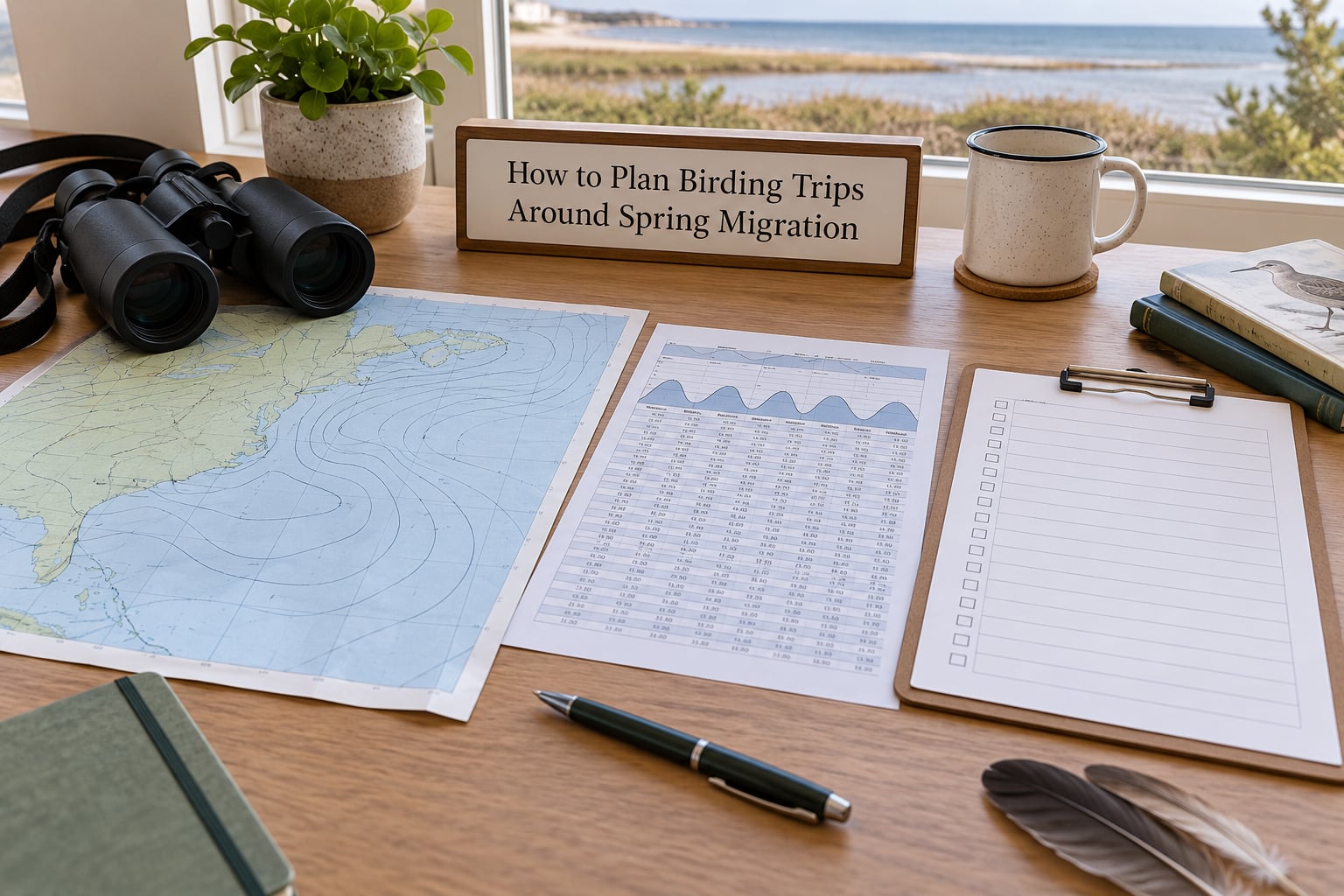
Build the trip around a cue, not a date. A workable routine runs like this.
- Pick target species first. Choose three to five birds, then write down where each is expected to be when it arrives, not just when.
- Identify the habitat cue for each one. Leaf-out for canopy warblers, first flying insects for phoebes and swallows, mudflat exposure for peeps, river ice melt for waterfowl.
- Watch the forecast for flow, not just temperature. Sustained south or southwest wind in the Gulf and along the Atlantic coast is the single best predictor of a heavy arrival night.
- Check local reports in the days before you go. Recent checklists and sightings threads tell you what has actually landed, which beats any printed calendar.
- Build a multi-day window. A three-day trip catches a stalled front; a single-day trip catches the weather, not the birds.
- Work tides and water level for coastal stops. Plan shorebird blocks around the falling tide on exposed flats.
- Log everything and submit it. Your checklists are what make regional arrival medians accurate enough for the next person.
Treat first-of-season dates as estimates to check, never as commitments. A median date is a summary of other people’s effort, and this season’s weather will decide how far off it runs. Knowing how spring migration timing varies by species tells you which of your target birds to trust the calendar for, and which ones to go look for after the wind shifts.
Frequently Asked Questions
Which bird species usually arrive first in spring?
In the Southeast, the earliest spring arrivals are usually Eastern Phoebe, followed closely by Purple Martin and Barn Swallow, with Ruby-throated Hummingbird reaching the Gulf Coast very early as well. These species share one trait: they eat flying insects, which respond to warmth within days. Species tied to leaf-out and caterpillar emergence, including most Neotropical warblers, arrive weeks later.
How early can spring migration start in the Southeast?
Meaningful migration activity in the Southeast can begin in January with ducks and geese pushing north, but the first songbird arrivals show up in February during warm spells. Those February records are often single birds followed by a freeze and a gap. A sustained run of warm nights in February or March is the first sign that the season is genuinely underway rather than a false start.
Should I trust the first bird of a species seen each spring?
Use it as a rough marker, not a measurement. First-of-season dates depend on who was looking, where, and for how long. A bird found early in a well-watched park may have arrived earlier in a remote swamp nobody checked. Reliable arrival estimates come from many years of checklists across many observers, which is exactly why eBird status and abundance data are more trustworthy than any single sighting.
How do warm fronts and cold fronts affect migration timing?
A warm front brings southerly flow, which lets birds move north and lets flying insects and leaf-out advance, pulling arrivals earlier. A cold front reverses both. Birds that launched on a favorable night can be forced to land, and the movement often resumes concentrated a day or two later. The practical effect is that arrivals cluster into bursts separated by quiet stretches rather than trickling in evenly.
Can tides change when migratory shorebirds appear?
Tides change what you see, not when birds arrive. A feeding flock on an exposed mudflat can vanish under rising water and reappear at the same spot hours later. Plan shorebird blocks around the falling tide on flats that are exposed at low water, and treat an apparently empty flat as a timing problem before treating it as an absence of birds.
How can I estimate spring arrival dates without a local bird report?
Anchor your estimate to habitat cues instead of dates. Watch when local trees leaf out, when the first flying insects appear, when the first sustained caterpillar emergence begins, and how far north snow and ice have retreated. Combine those cues with the wind pattern: sustained southerly flow in the Gulf and along the Atlantic coast is the most reliable short-term signal that a heavy arrival night is underway.
Conclusion: Start With Habitat Cues, Not One Fixed Date
Spring migration timing varies by species because distance, food, daylight, breeding latitude, and weather all pull in different directions, and no single calendar date will serve more than a handful of species. Start with the cues in your own area: leaf-out, first insects, ice melt, mudflat exposure, and the wind pattern offshore.
Then check what has actually landed, plan a window of more than one day, and submit your checklists so the next person’s median date is a little more accurate than yours was.